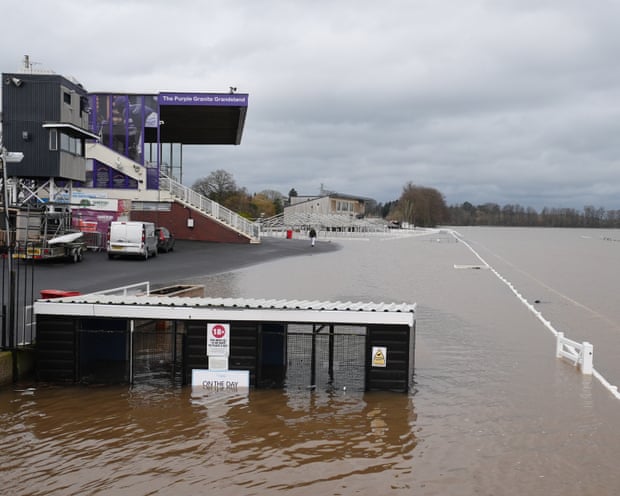
Flood water covering Worcester racecourse on Monday. Astwood Bank in Worcester has recorded rain every day of the year so far. Photograph: Jacob King/PA
It has rained in parts of the country every day of the year so far and downpours are expected to continue this week
In a “miserable and relentlessly wet” start to the year, rain has fallen somewhere in the UK every single day for weeks on end.
With more than 100 flood warnings in force across the country and further downpours forecast this week, scientists say the atmospheric forces behind Britain’s endless drizzle are the same ones driving devastating floods across Spain and Portugal.
…
Is the climate crisis making rainfall worse?
Scientists think fossil fuel pollution is making the jet stream more erratic, allowing extreme weather systems – from heavy rain to heat domes – to become stuck over the same areas for prolonged periods, amplifying their impacts. These so-called blocking systems are expected to become more frequent under medium- and worst-case emissions scenarios.
At the same time, global heating is intensifying rainfall. Warmer air can hold about 7% more moisture for every 1C rise in temperature, a shift that has contributed to increasingly wet UK winters arriving roughly two decades earlier than regional climate models had predicted. In January, however, Arctic air led to slightly cooler temperatures than usual, with high monthly rainfall totals more a result of persistence and duration than intensity.
Scientists project climate breakdown will bring wetter winters and drier summers to the UK. Neumann said: “One positive to come from the recent rainfall is the move to recovery status for UK water resources.” She added that England is now free from drought for the first time since May, with reservoirs and aquifers slowly restocking and recharging to healthy levels.
dizzy: The rich have destroyed the climate for profit despite fossil fuel industries knowing the consequences of their actions for 70 years or so. Donald Trump is further accelerating that destruction.
Donald Trump urges you to be a Climate Science denier like him. He says that he makes millions and millions for destroying the planet, Burn, Baby, Burn and Flood, Baby, Flood.Nigel Farage urges you to ignore facts and reality and be a climate science denier like him and his Deputy Richard Tice. He says that Reform UK has received £Millions and £Millions from the fossil fuel industry to promote climate denial and destroy the planet.Orcas discuss Donald Trump and the killer apes’ concept of democracy. Front Orca warns that Trump is crashing his country’s economy and that everything he does he does for the fantastically wealthy.
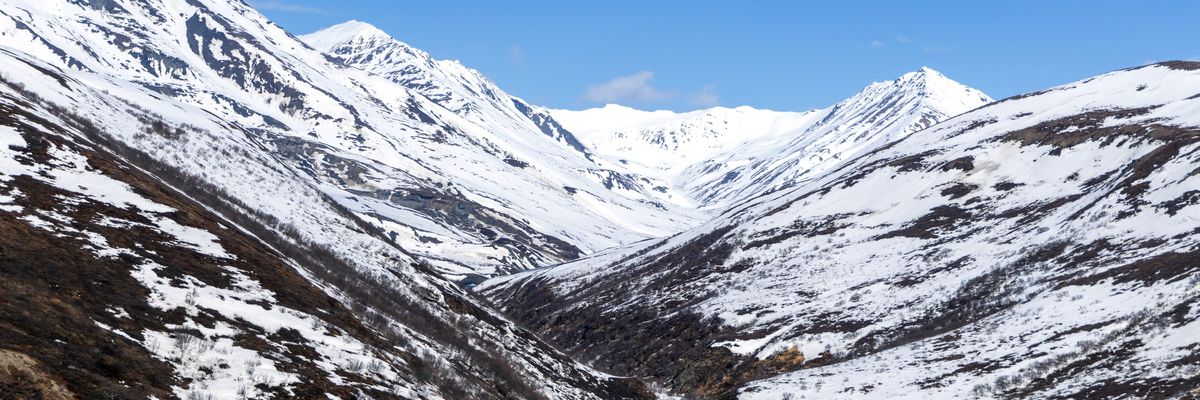
A view of Brooks Range as seen from the Dalton Highway on May 10, 2024 in North Slope Borough, Alaska. (Photo: Lance King/Getty Images)
“This is yet one more sign, predicted by scientists, of the consequences of inadequately reducing fossil fuel pollution,” said one scientist.
Permafrost in the Arctic has stored carbon dioxide for millennia, but the annual Arctic Report Card released by the National Oceanic and Atmospheric Administration reveals a concerning shift linked to planetary heating and a rising number of wildfires in the icy region: The tundra is now emitting more carbon than it is storing.
The report card revealed that over the last year, the tundra’s temperature rose to its second-highest level on record, causing the frozen soil to melt.
The melting of the permafrost activates microbes in the soil which decompose the trapped carbon, causing it to be released into the atmosphere as planet-heating carbon dioxide and methane.
The release of fossil fuels from the permafrost is also being caused by increased Arctic wildfires, which have emitted an average of 207 million tons of carbon per year since 2003.
“Our observations now show that the Arctic tundra, which is experiencing warming and increased wildfire, is now emitting more carbon than it stores, which will worsen climate change impacts,” said Rick Spinrad, administrator of NOAA. “This is yet one more sign, predicted by scientists, of the consequences of inadequately reducing fossil fuel pollution.”
Sue Natali, a scientist at the Woodwell Climate Research Center in Massachusetts and one of 97 international scientists who contributed to the Arctic Report Card, told NPR that 1.5 trillion tons of carbon are still being stored in the tundra—suggesting that the continued warming of the permafrost could make it a huge source of planet-heating greenhouse gas emissions.
Along with the “Arctic tundra transformation from carbon sink to carbon source,” NOAA reported declines in caribou herds and increasing winter precipitation.
The report card showed that the autumn of 2023 and summer of 2024 saw the second- and third-warmest temperatures on record across the Arctic, and a heatwave in August 2024 set an all-time record for daily temperatures in several communities in northern Alaska and Canada.
The last nine years have been the nine warmest on record in the Arctic region.
“Many of the Arctic’s vital signs that we track are either setting or flirting with record-high or record-low values nearly every year,” said Gerald (J.J.) Frost, a senior scientist with Alaska Biological Research, Inc. and a veteran Arctic Report Card author. “This is an indication that recent extreme years are the result of long-term, persistent changes, and not the result of variability in the climate system.”
Brenda Ekwurzel, a climate scientist at the Union of Concerned Scientists, emphasized that the continuous release of fossil fuel emissions from oil and gas extraction and other pollution has caused the Arctic to warm at a faster rate than the Earth as a whole over the past 11 years.
“These combined changes are contributing to worsening wildfires and thawing permafrost to an extent so historic that it caused the Arctic to be a net carbon source after millennia serving as a net carbon storage region,” said Ekwurzel. “If this becomes a consistent trend, it will further increase climate change globally.”
The Arctic Report Card was released weeks before President-elect Donald Trump is set to take office. Trump has pledged to slash climate regulations introduced by the Biden administration and to increase oil and gas production. He has mused that sea-level rise will create “more oceanfront property” and has called the climate crisis a “hoax,” while his nominee for energy secretary, Chris Wright, the CEO of the fracking company Liberty Energy, has claimed that climate warming is good for the planet.
“These sobering impacts in the Arctic are one more manifestation of how policymakers in the United States and around the world are continuing to prioritize the profits of fossil fuel polluters over the well-being of people and the planet and putting the goals of the Paris climate agreement in peril,” said Ekwurzel. “All countries, but especially wealthy, high-emitting nations, need to drastically reduce heat-trapping emissions at a rapid pace in accord with the latest science and aid in efforts of climate-vulnerable communities to prepare for what’s to come and help lower-resourced countries working to decrease emissions too.”
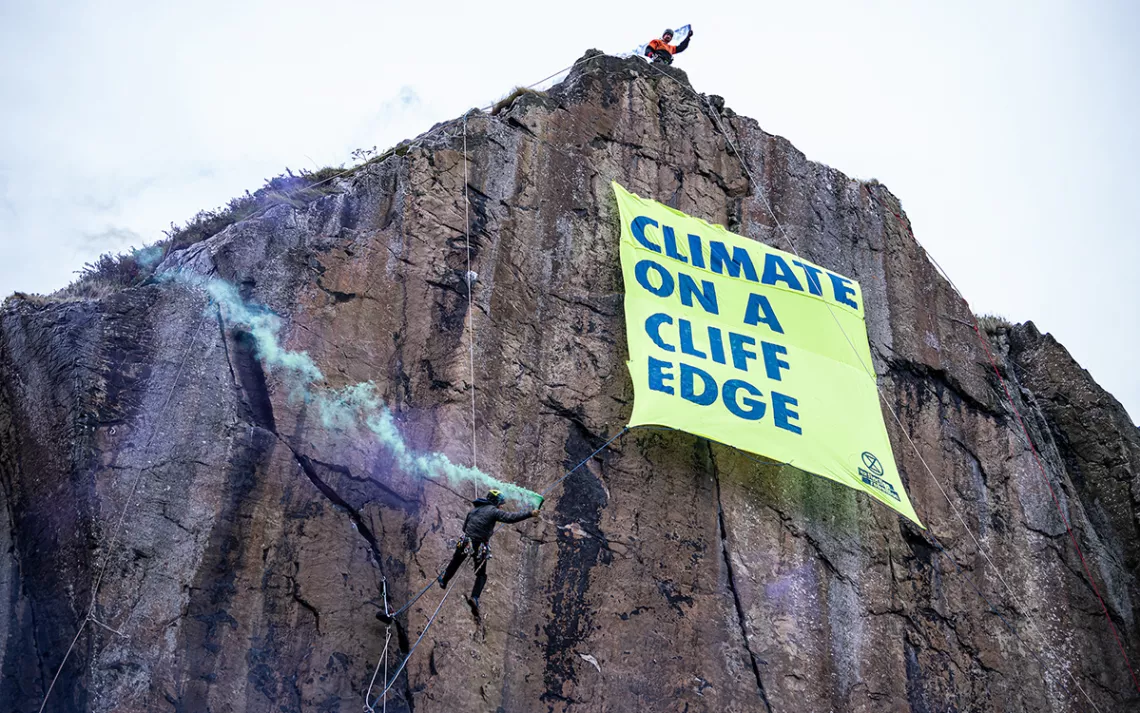
Experienced climbers scale a rock face near the historic Dumbarton castle in Glasgow, releasing a banner that reads “Climate on a Cliff Edge.” One activist, dressed as a globe, symbolically looms near the edge, while another plays the bagpipes on the shores below. | Photo courtesy of Extinction Rebellion and Mark Richards
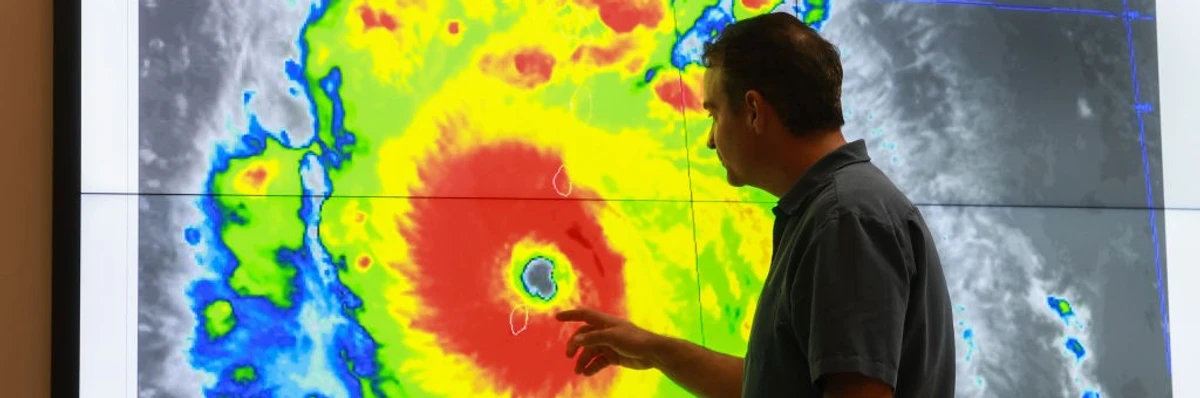
John Cangialosi, senior hurricane specialist at the National Hurricane Center, inspects a satellite image of Hurricane Beryl on July 1, 2024 in Miami, Florida. (Photo: Joe Raedle/Getty Images)
“Beryl isn’t ‘unbelievable,’” one expert said. “it’s what happens when you heat up the planet with fossil fuel pollution for decades.”
As Hurricane Beryl barreled toward Jamaica on Tuesday after killing at least four people in the Caribbean’s Windward Islands, climate scientists warned the record-breaking Category 5 storm is a present-tense example of what’s to come on a rapidly heating planet.
Even before the Atlantic hurricane season began on June 1, the U.S. National Oceanic and Atmospheric Administration predicted an 85% chance of above-normal activity and 17-25 total named storms this year. Matthew Cappucci, a meteorologist for The Washington Post‘s Capital Weather Gang, highlighted some records Beryl has already broken.
“There is a strong, well-documented link between the effects of human-induced climate change and the development of stronger, wetter storms that are more prone to rapidly intensify,” he wrote Tuesday. “Beryl sprung from a tropical depression to a Category 4 hurricane in just 48 hours, the fastest any storm on record has strengthened before the month of September.”
Hurricane Beryl has achieved the following: – Earliest Category 4 on record in Atlantic – Earliest Category 5 on record in Atlantic – Fastest intensification before September in Atlantic – Southernmost Category 4 on record
— Matthew Cappucci (@MatthewCappucci) July 2, 2024
Beryl is also the earliest Category 4 and 5 hurricane on record in the Atlantic, Cappucci pointed out. Previously, the earliest storm to reach the top level of the Saffir-Simpson Hurricane Wind Scale was Emily, in mid-July of 2005.
The Capital Weather Gang reported that Beryl “strengthened more Monday night, its peak winds climbing to 165 mph. It has surpassed Emily (2005) as strongest July hurricane on record. It’s early July but Atlantic is acting like late August.”
Certified consulting meteorologist Chris Gloninger emphasized that “the climate crisis has led to well-above-average ocean water temperatures and helped this storm explode.”
As Stefan Rahmstorf of the Potsdam Institute for Climate Impact Research and Potsdam University explained: “The heat in the upper ocean is the energy source for tropical cyclones. This heat is at record level, mainly caused by emissions from burning fossil fuel. That’s why an extreme hurricane season has been predicted for this year. It’s off to a bad start!”
Colorado State University meteorologist Philip Klotzbach on Monday shared graphics showing that “Caribbean ocean heat content today is normally what we get in the middle of September.”
One reason why #Hurricane#Beryl intensified to a Category 5 hurricane over two weeks earlier than any other Atlantic Cat. 5 on record is due to extremely high ocean heat content levels. Caribbean ocean heat content today is normally what we get in the middle of September. pic.twitter.com/dmEY7EFrLs
While some expressed disbelief over the storm, CNN extreme weather editor Eric Zerkel stressed that “Beryl isn’t ‘unbelievable’ or ‘defying all logic,’ it’s what happens when you heat up the planet with fossil fuel pollution for decades. The oceans store roughly 90% of that excess heat. The ocean is as warm as it typically is… when Category 4 storms form. June is now August.”
Acknowledging Beryl’s strength, Steve Bowen, a meteorologist who serves as chief science officer at the global reinsurance firm Gallagher Re, concluded that “this is a massive warning sign for the rest of the season.”
Looking beyond this hurricane season, which ends in November, University of Hawaii at Mānoa professor and [C]Worthy co-founder David Ho said, “Let’s remember that things are just going to get [worse] as we continue to consume nearly 100 million barrels of oil every day.”
The “historic” storm is sparking calls for action to phase out fossil fuels across the globe. Noting how Beryl “is breaking records and leaving a trail of destruction throughout the Caribbean,” the U.S.-based Sunrise Movementargued that “we must prosecute Big Oil for their role in causing devastation like this.”
In response to a climate scientist who shared a photo of some damage Beryl has already caused, Rahmstorf expressed hope that people around the world won’t “wait with voting for climate stabilization until extremes hit their homes.”
Let's hope that most people do not wait with voting for climate stabilisation until extremes hit their homes. Because then it's too late. https://t.co/0tjusPJuIu
— Prof. Stefan Rahmstorf 🌏 🦣 (@rahmstorf) July 2, 2024
Beryl made landfall Monday as a Category 4 hurricane on Carriacou, a Grenada island, and also affected St. Vincent and Grenadines. According to The Associated Press, at least four people were killed.
The U.S. National Hurricane Center said Tuesday afternoon that on its current path, “the center of Beryl will move quickly across the central Caribbean Sea today and is forecast to pass near Jamaica on Wednesday and the Cayman Islands on Thursday. The center is forecast to approach the Yucatan Peninsula of Mexico on Thursday night.”