Hezbollah denies role in attack that killed French UN soldier in southern Lebanon

Spread the love

This work by Middle East Monitor is licensed under a Creative Commons Attribution-NonCommercial-ShareAlike 4.0 International License.

The United Nations Interim Forces in Lebanon (UNIFIL) in Nabatieh, Lebanon on November 15, 2025. [Ramiz Dallah – Anadolu Agency]

Lebanon’s Hezbollah group on Saturday denied any involvement in an incident that killed a French soldier and injured three others serving with the UN Interim Force in Lebanon (UNIFIL) in southern Lebanon, Anadolu reports.

In a statement, Hezbollah said it “denies any involvement in the incident that occurred with UNIFIL forces in the Ghandouriyeh​​​​​​​ area in the Bint Jbeil district.”

The group urged caution, stressing the need “to avoid rushing to conclusions and accusations” before the circumstances of the incident are fully clarified.

Hezbollah also emphasized the importance of continued coordination between local residents, UNIFIL and the Lebanese army, particularly under what it described as sensitive conditions.

READ: French soldier killed in attack on UN peacekeepers in southern Lebanon: Macron

It further expressed surprise at what it called premature accusations, saying some parties were quick to assign blame “while remaining silent during Israeli attacks on UNIFIL forces.”

French President Emmanuel Macron said one French soldier was killed and three others wounded in the attack targeting UNIFIL troops.

“Sergeant Major Florian Montorio of the 17th Parachute Engineer Regiment in Montauban was killed this morning in southern Lebanon during an attack against UNIFIL,” Macron said in a post on the US social media platform X.

“Everything suggests that Hezbollah is responsible for this attack,” he added.

UNIFIL said it has launched an investigation after one of its positions “came under small-arms fire from non-state actors” in the southern village of Ghanduriyah.

READ: Trump says Israel, Lebanon agree to 10-day ceasefire starting Thursday evening

This work by Middle East Monitor is licensed under a Creative Commons Attribution-NonCommercial-ShareAlike 4.0 International License.
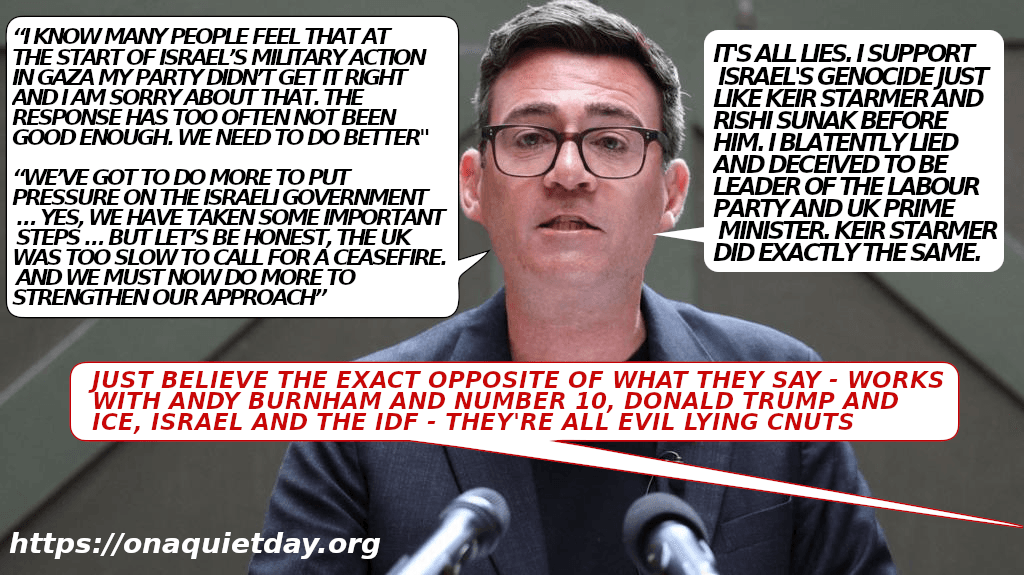
Donald Trump calls for help from NATO allies in securing the Straight of Hormuz despite saying on 7 March 2026 that they don't need people to join wars after they've already won. He's challenged with the claim that he lies as much as the IDF.
Donald Trump calls for help from NATO allies in securing the Straight of Hormuz despite saying on 7 March 2026 that they don’t need people to join wars after they’ve already won. He’s challenged with the claim that he lies as much as the IDF.
Orcas discuss rotting brain. Front Orca says "Wish someone would lock him up".
Orcas discuss rotting brain. Front Orca says “Wish someone would lock him up”.
Continue ReadingHezbollah denies role in attack that killed French UN soldier in southern Lebanon

France delivers 39 armored vehicles to Lebanese army

Spread the love

This work by Middle East Monitor is licensed under a Creative Commons Attribution-NonCommercial-ShareAlike 4.0 International License.

Military vehicles belonging to the Lebanese Armed Forces move in the Marjayoun area in southern Lebanon following Israeli attacks in the region on March 5, 2026. [Stringer – Anadolu Agency]

France has delivered 39 armored personnel carriers to the Lebanese Armed Forces, fulfilling a prior commitment made by French officials, the Defense Ministry said on Friday, Anadolu reports.

The delivery “aims to guarantee Lebanon’s territorial integrity, the protection of civilians, regardless of their faith, and the preservation of state institutions,” French Deputy Defense Minister Alice Rufo said during a handover ceremony at the port of Beirut on Tuesday.​​​​​

The armored vehicles, known as VABs, are designed to enhance troop mobility and enable operations in high-risk areas.

Each vehicle can carry about 10 fully equipped troops and is built with welded steel plates to protect against small-arms fire and shrapnel.

French President Emmanuel Macron announced in late March that France would continue supporting Lebanon’s armed forces, including the delivery of armored personnel carriers, while stressing the need to protect the country’s “territorial integrity” and civilians.

The Israeli army has pounded Lebanon with airstrikes and launched a ground offensive in southern Lebanon since a cross-border attack by Hezbollah on March 2.

The current escalation followed the Feb. 28 start of a joint US-Israeli offensive on Iran, which has since killed over 1,340 people.

Tehran has retaliated with drone and missile strikes targeting Israel, along with US military assets in Jordan, Iraq, and Gulf countries.

READ: France urges Israel to avoid any ground operations, attacks on civilian areas, densely populated areas in Lebanon

This work by Middle East Monitor is licensed under a Creative Commons Attribution-NonCommercial-ShareAlike 4.0 International License.

Climate science denier Donald Trump confirms that he knows nothing about democracy and that more liquid gold is being secured according to his policy of global privateering.
Keir Starmer explains that UK is actively supporting Israel's genocidal expansion and repeats his previous quotation that he supports Zionism "without qualification". Keir Starmer said “I said it loud and clear – and meant it – that I support Zionism without qualification.” here: https://www.jewishnews.co.uk/keir-starmer-interview-i-will-work-to-eradicate-antisemitism-from-day-one/
Keir Starmer explains that UK is actively supporting Israel’s genocidal expansion and repeats his previous quotation that he supports Zionism “without qualification”. Keir Starmer said “I said it loud and clear – and meant it – that I support Zionism without qualification.” here: https://www.jewishnews.co.uk/keir-starmer-interview-i-will-work-to-eradicate-antisemitism-from-day-one/
Palestinians barred from entering Al-Aqsa Mosque due to restrictions imposed by Israeli forces citing Iran’s retaliatory attacks perform Friday prayers on the streets surrounding the mosque in Jerusalem on April 03, 2026. [Mostafa Alkharouf – Anadolu Agency]
Orcas discuss rotting brain. Front Orca says "Wish someone would lock him up".
Orcas discuss rotting brain. Front Orca says “Wish someone would lock him up”.

Continue ReadingFrance delivers 39 armored vehicles to Lebanese army

Madagascar’s military seizes power after parliament impeaches fleeing parliament impeaches fleeing President Rajoelina

Spread the love

Original article by Nicholas Mwangi republished from peoples dispatch under a Creative Commons Attribution-ShareAlike 4.0 (CC BY-SA) license.

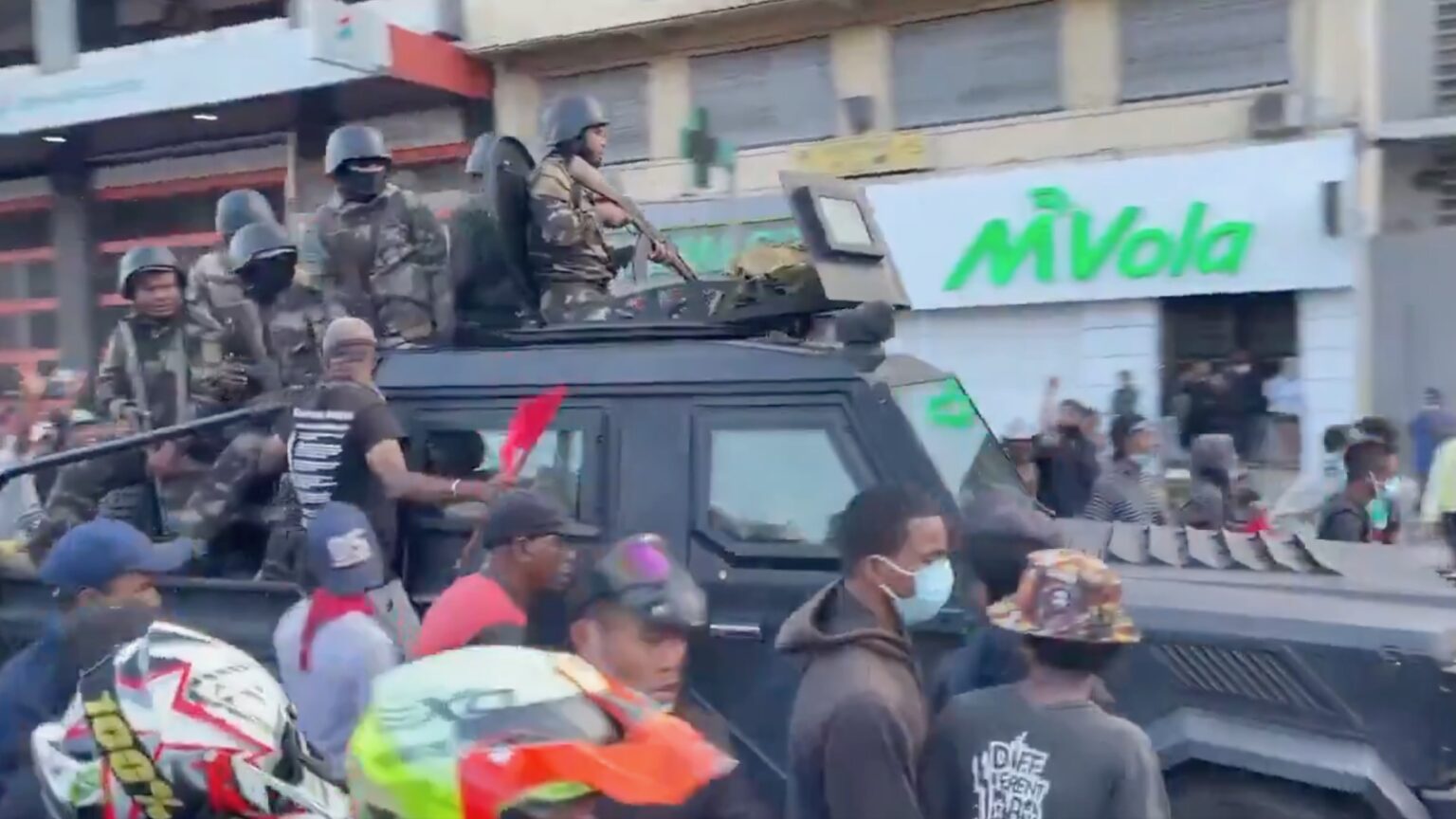
An elite army unit has announced it has taken control of the military as soldiers join anti-government protests. Photo: screenshot

According to reports, President Andry Rajoelina of Madagascar fled to France following an agreement with President Emmanuel Macron. While he insists that he remains the leader, the military has taken over and the National Assembly has impeached him.

Weeks of youth-led demonstrations against water and power shortages in Madagascar have escalated into a full-blown political crisis, with an elite military unit announcing that it now commands the armed forces in what President Andry Rajoelina has described as a coup d’état. 

On Tuesday October 14, Colonel Michael Randrianirina, acting commander of the elite CAPSAT military unit, announced on national radio that the military had taken control of state institutions and would form a transitional government. Randrianirina later told reporters that a committee led by the military would oversee the country for a transitional period of up to two years, working alongside a civilian government before organizing new elections.

This is after the National Assembly voted overwhelmingly to impeach President Andry Rajoelina (130 in favor, one blank), just hours after he attempted to dissolve parliament by decree on Monday.

The mass protests, described as the largest in the country in years, initially forced Rajoelina to dissolve his government in late September. But the move did little to quell public anger. Instead, demands intensified, with protesters calling for the president’s resignation after years of economic hardship and deteriorating public services.

Rajoelina, who was scheduled to address the nation on Monday evening, was reportedly evacuated from the capital following an arrangement brokered with French President Emmanuel Macron, according to Radio France Internationale (RFI). French authorities later stated that they were not intervening in Madagascar’s internal crisis, which has continued to escalate since September 25.

Elite military unit declares control

The escalation reached a new level this week when members of CAPSAT, an elite army unit, declared they had taken control of the armed forces. The declaration followed reports that some military soldiers had joined the protesters in the streets of Antananarivo and other cities last week. CAPSAT had a major role in the 2009 political upheaval that first brought Rajoelina to power.

Political shake-up fails to quell anger

The president had previously attempted to restore order by appointing Army General Ruphin Fortunat Zafisambo as prime minister, following the dissolution of his civilian government. However, the appointment appears to have failed to stabilize the situation.

Many had condemned the government’s heavy-handed response to the demonstrations in recent weeks. Security forces used tear gas, arbitrary arrests, and live ammunition against largely peaceful protesters, leaving at least 22 people dead and over 100 injured, according to UN human rights officials.

Deep-rooted discontent

Rajoelina’s 15-year grip on power, including his return to the presidency in 2018 and contested re-election in 2023, has done little to address Madagascar’s deep social and economic problems. The island nation remains one of the poorest in the world, with millions lacking reliable access to water, electricity, and essential services.

Popular anger, fueled by unemployment, corruption, and inequality, has been building for years and exploded into the current wave of protests, largely driven by young people.

Now as the situation rapidly unfolds, Madagascar faces deep uncertainty. If the military solidifies its hold, it could mark the second successful coup in the country’s modern history. 

With what is unfolding, whether this crisis ushers in a political transition and stability will depend on the coming days, but the anger driving Madagascar’s youth-led movement has already reshaped the nation’s political reality.

Original article by Nicholas Mwangi republished from peoples dispatch under a Creative Commons Attribution-ShareAlike 4.0 (CC BY-SA) license.

Continue ReadingMadagascar’s military seizes power after parliament impeaches fleeing parliament impeaches fleeing President Rajoelina

How MAGA Lobbying is Undermining EU Climate Rules

Spread the love

Original article by Sam Bright republished from DeSmog

Series: MAGA

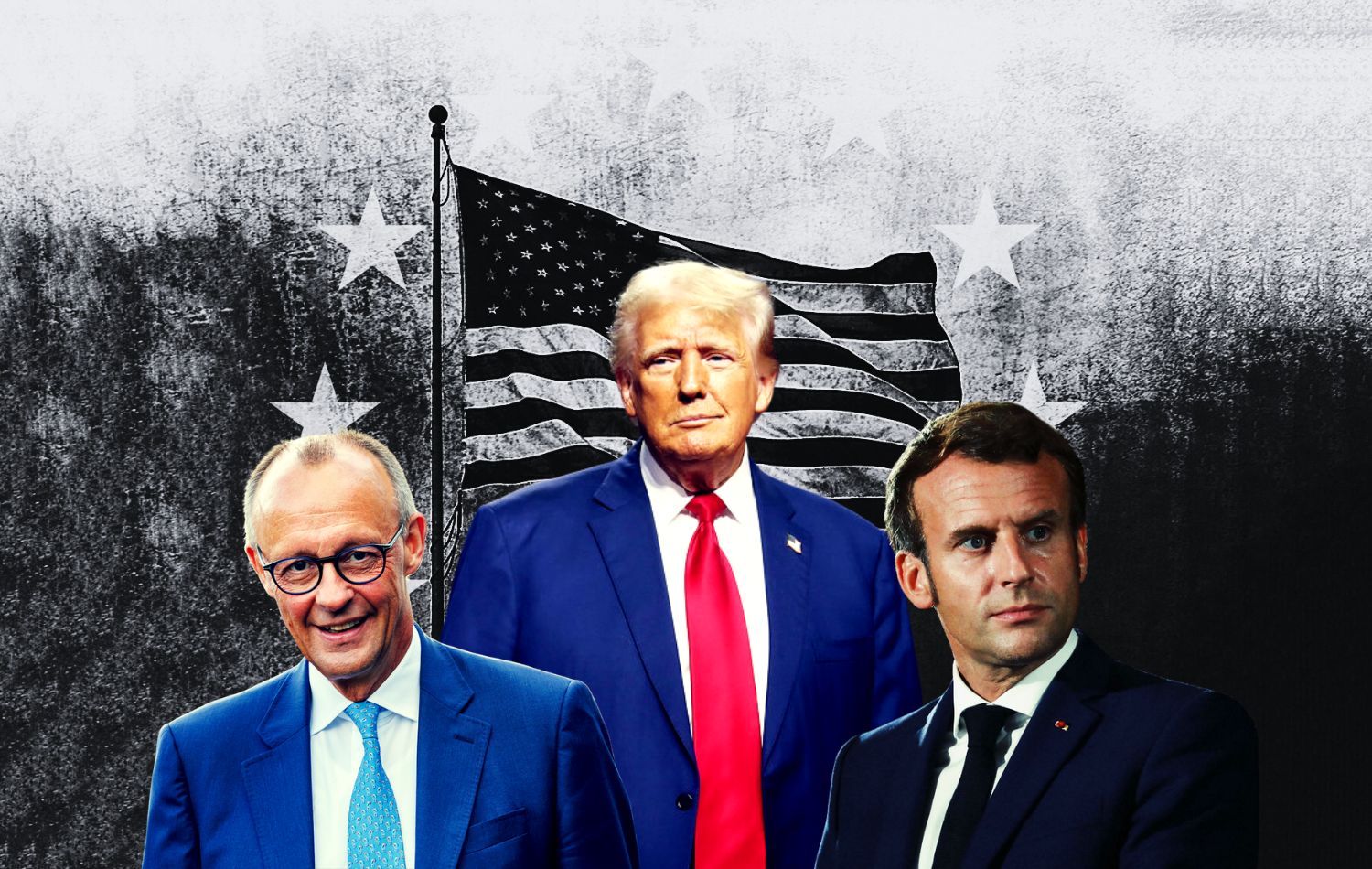
German Chancellor Friedrich Merz, U.S. President Donald Trump, and French President Emmanuel Macron. DeSmog collage. Credit: Faces of the World / Flickr (Macron), Steffen Prößdorf (Merz), Gage Skidmore / Flickr (Trump)

European leaders are bending to the demands of U.S. climate science deniers.

“The CSDDD is the greatest threat to America’s sovereignty since the fall of the Soviet Union,” the Heartland Institute, a pro-Trump U.S. think tank, tweeted on 31 March.

The Heartland Institute is one of the world’s leading climate science denial groups. It has helped to draft Donald Trump’s anti-climate policies, which have seen the president pledge to “drill baby drill” for more fossil fuels and once again pull the U.S. out of the flagship 2015 Paris Agreement.

Over recent months – along with a host of other Trump allies – the Heartland Institute has set its sights on a new target: the EU’s Corporate Sustainability Due Diligence Directive (CSDDD).

This vague acronym belies the potentially transformative impact of the new law. In its original form, the CSDDD sought to require large companies – and those in “high risk” sectors – trading in the EU to address human rights and environmental issues in their own operations and in their supply chains. High turnover companies would also have been forced to adopt a plan to align with the Paris Agreement, including setting emissions reduction targets.

The Heartland Institute and its anti-climate, anti-regulation peers are vocal opponents of the law – and launched an aggressive campaign to water it down, or even to see it scrapped entirely.

These groups, which are all part of the ‘Make America Great Again’ (MAGA) ecosystem, view the CSDDD as symbolic of the way in which “woke” governments are attempting to force citizens and global corporations to conform to a pro-diversity, pro-environment agenda.

Following Trump’s election in November, these MAGA groups wasted no time in formulating their plans to oppose this perceived agenda.

They focused in particular on diversity, equity and inclusion (DEI) initiatives, which attempt to create workplaces free from bias – and environmental, social and governance (ESG) schemes, which try to ensure that organisations are guided by responsible and sustainable practices, not just profit.

In December, barely a month after Trump’s victory, the Heritage Foundation – the group that wrote the key ‘Project 2025’ blueprint for the president’s second term – published a report entitled: “ESG, DEI, and What to Do About Them”.

In the report, the Heritage Foundation described ESG and DEI as “pernicious”, and called the CSDDD “a serious problem”.

Two months later, the State Financial Officers Foundation – an influential network of Republican finance officials – wrote an open letter calling on the new administration to “investigate” the CSDDD, claiming that the EU’s directives are based on “unscientific assumptions about the nature of climate change impacts” and “will force companies to incriminate themselves”.

This quickly filtered through to Trump’s Cabinet. On 12 February, Howard Lutnick, the president’s pick for commerce secretary, told a Senate committee that the CSDDD threatened to place “significant burdens” on U.S. companies, and that the Trump administration was exploring the use of “commercial tools” to mount a counter-attack against the EU’s environmental regulations.

Soon this rhetoric made its way to the White House. In March, as part of the worldwide tariffs implemented by the Trump administration, the president called the EU “one of the most hostile and abusive taxing and tariffing authorities in the world”.

But the EU hasn’t stood firm in the face of Trump’s war of words.

The EU has already announced that it will be scaling back the CSDDD and delaying its implementation. The number of companies within scope has been reduced by 80 percent. The firms in question will only be required to file due diligence reports every five years, and won’t be required to investigate the ESG operations of their indirect business partners. The implementation of the law has also been postponed until 2028.

But Trump’s MAGA hardliners are still not satisfied. In April, the Heartland Institute released an open letter signed by 31 other groups, calling for Congress and the Trump administration to “take immediate steps to counter the CSDDD’s implementation”, including “if necessary, imposing retaliatory trade policies that punish EU nations for eroding America’s sovereignty, freedoms, and prosperity.”

This backlash is now influencing European leaders. In late May, French President Emmanuel Macron and German Chancellor Friedrich Merz called for the CSDDD to be scrapped entirely. They claim it must be abandoned in order to defend the “competitiveness” of European corporations, with Macron stating that Europe must “synchronise with the U.S. and the rest of the world.”

This judgement signifies the appeasement of anti-climate pressure groups that are ideologically opposed to clean energy and climate science.

The Heartland Institute has denied that humans are driving climate change, which it has called a “delusion”, while the Heritage Foundation’s Project 2025 document urged Trump to “dismantle the administrative state”, reverse policies on climate action, slash restrictions on fossil fuel extraction, scrap state investment in renewable energy, and gut the Environmental Protection Agency.

If the EU waters down its climate policies in response to Trump’s pressure, it will have helped to send Project 2025 global.

The ‘Climate Cartel’

It’s unclear whether these MAGA groups – and the Trump administration – will ease up on the EU if the CSDDD is ditched entirely. They may simply use it as evidence that European lawmakers will buckle under enough pressure.

Indeed, MAGA’s opposition to the CSDDD is part of a multi-pronged campaign that seeks to dismantle global climate initiatives pioneered by both governments and corporations.

Much of the original groundwork for this campaign was undertaken by the U.S. House Judiciary Committee and its chair Jim Jordan, a leading Trump supporter.

Last year, Jordan’s committee produced reports – and demanded evidence from major corporations – on a supposed “climate cartel” of “left-wing activists and major financial institutions”.

The committee alleged that some of the world’s biggest asset managers – that have questionable climate commitments – are conspiring to force American companies to decarbonise against their wishes.

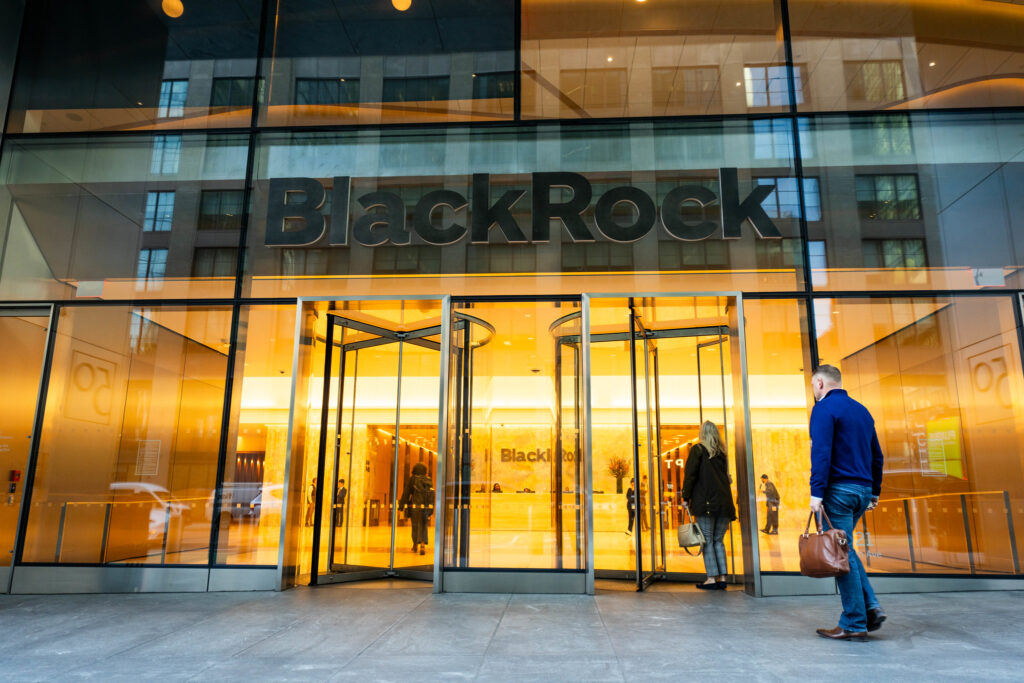
BlackRock’s New York office. Credit: Anthony Quintano / Flickr (CC BY 2.0)

As part of its “investigation”, the committee demanded information from more than 130 U.S.-based companies, retirement and pension programmes, as well as 60 U.S.-based asset managers.

In November, 11 Republican-led states sued BlackRock, Vanguard, and State Street – three of the world’s biggest asset managers – over their ESG policies. In West Virginia and Oklahoma, nearly two dozen banks have been barred from public contracts for trying to divest from fossil fuels.

These actions, along with the anti-climate rhetoric of Donald Trump, have had a chilling effect. In February last year, BlackRock, State Street, and JP Morgan Asset Management withdrew from Climate Action 100+, an investor-led initiative that works to ensure the world’s largest greenhouse gas emitters take action on climate change.

Fast forward a year, and a growing list of major U.S. corporations are either cancelling or delaying their sustainability reports – designed to show how they are meeting their climate commitments.

And a new story from the investigative outlet CORRECTIV today reports that German insurance giants and investment firms are withdrawing from climate agreements, while companies are quietly shelving their sustainability policies, amid the anti-ESG backlash orchestrated by Trump and his acolytes.

As one sustainability expert at a financial firm told CORRECTIV: “We have to be careful not to harm the cause by sticking our necks out and becoming a target in the U.S.”

This article was produced with support from the European Media and Information Fund, managed by the Calouste Gulbenkian Foundation. The sole responsibility for any content supported by the European Media and Information Fund lies with the author(s) and it may not necessarily reflect the positions of the EMIF and the Fund Partners, the Calouste Gulbenkian Foundation and the European University Institute.

Original article by Sam Bright republished from DeSmog

Continue ReadingHow MAGA Lobbying is Undermining EU Climate Rules