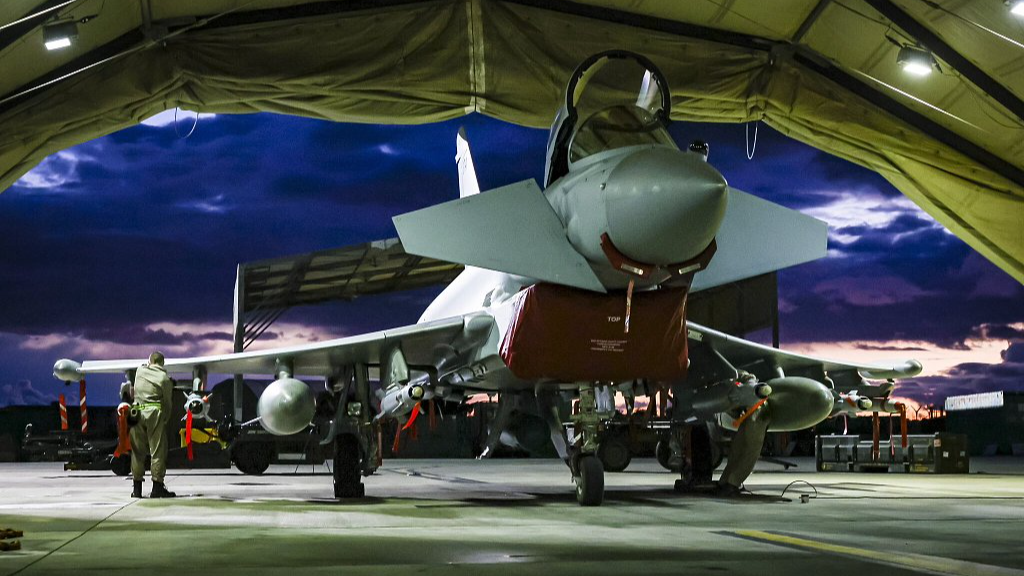
An RAF Shadow R1 spy plane over the Mediterranean. (Photo: Gordon Zammit / Alamy)
Declassified Exclusive: Royal Air Force has surveillance tape of Gaza from the day Israel killed British aid workers – but refuses to publish it.
Family of slain aid worker demands to see footage
UN expert warns British military may have to hand tape to International Criminal Court
Britain’s Ministry of Defence holds video surveillance footage of Gaza from the day that Israel killed seven international aid workers but is refusing to publish the tape.
Among those killed in the World Central Kitchen convoy on 1 April were three British military veterans: John Chapman, James Kirby and James ‘Jim’ Henderson.
The footage was taken by a Royal Air Force (RAF) surveillance plane which spent approximately five hours above Gaza that day.
It seemingly returned to base in Cyprus minutes before the airstrikes were launched.
The RAF may therefore have collected footage of events leading up to the tragedy, which could provide clarity over Israeli claims that “Hamas gunmen” were seen near the convoy.
The Ansar Allah-led Yemeni Armed Forces announced on Thursday July 18, that Hodeidah International Airport in western Yemen was hit by three airstrikes launched from American and British jet fighters. No further details were mentioned in the announcement which was broadcasted on Ansar Allah’s Almasirah news website.
Hodeidah airport was subjected to previous airstrikes by the United States and the United Kingdom on Friday, July 12. It has also been a vital target for the US and the UK for several months due to its location in Hodeidah Governorate, which overlooks the Red Sea. The airstrikes are believed to be launched to pressure Ansar Allah to stop its activities in the regional waters in solidarity with the Palestinian people.
The Yemeni Armed Forces have begun their activity in the Red Sea since the Israeli aggression began on Gaza in the aftermath of October 7 events, by launching scores of attacks on commercial ships connected with Israel in the Red Sea and the Gulf of Aden.
The airport was not the only location in Yemen to be targeted by US airstrikes during the course of the current week. “The US launched in its aggression on our country 13 raids this week in Hodeidah and Hajjah, but with no effect, neither in preventing our operations nor in limiting them,” Sayyed Abdulmalik al-Houthi, the leader of Yemen’s Ansar Allah, said during a televised speech on Thursday July 18.” We seek to increase operations targeting ships in Indian Ocean, Mediterranean Sea,” added Sayyed Abdulmalik.
The Yemeni Armed Forces’s attacks in the Red Sea have had a great impact on one of the most important maritime trade routes in the World, suspending the transit of vessels belonging to some of the biggest oil and shipping companies worldwide. Vessels had to sail additional thousands of miles around the continent of Africa instead of going through the Suez Canal due to the blockade of the Red Sea caused by Ansar Allah’s attacks.
According to the Arab Center Washington DC research organization, Ansar Allah’s attacks represent a new phenomenon in geo-economic conflict being launched by a non-state actor using asymmetric warfare in fighting conventional armed forces, and imposing targeted economic sanctions by attacking international shipment selectively. Shipping companies based in pro-Israel countries, and ships carrying cargos connected to these countries, have lost access to the Red Sea shortcut, namely the Suez Canal, between Asia and Europe and therefore endured additional cost and extended sail duration. Consequently cargo fees have witnessed an increase, including on routes that do not pass through the Red Sea.
The International Monetary Fund (IMF) mentioned in a report published in March, 2024 that attacks on vessels in the Red Sea reduced traffic in the Suez Canal, through which about 15% of global maritime trade volume normally passes. The attacks obliged shipping companies to divert their ships around the Cape of Good Hope in South Africa as an alternative route, increasing delivery times by an average of 10 days.
On the morning of Friday June 19, Ansar Allah claimed responsibility for a drone attack which struck Tel Aviv and killed one person.
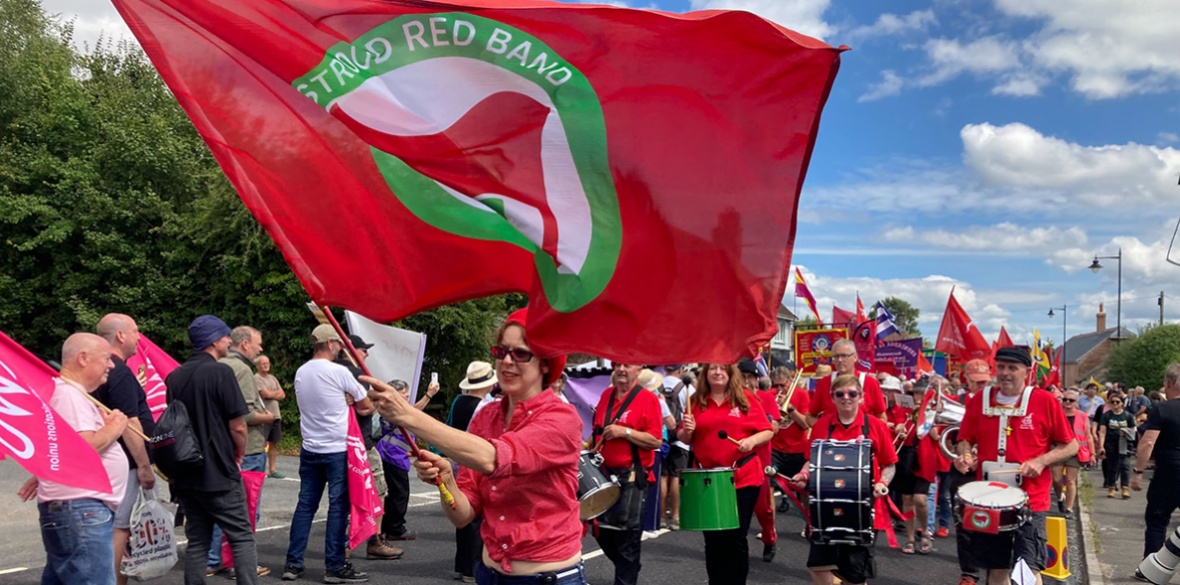
The Stroud Red Band take part in a march at the Tolpuddle Martyrs Festival in Dorset, July 21, 2024
Union leaders demand Labour deliver ‘deep and ambitious change’ as thousands attend the Tolpuddle Martyrs Festival in Dorset
UNION leaders issued a stark warning today, urging the new Labour government to deliver real change as thousands lined the streets at the Tolpuddle Martyrs Festival in Dorset.
Trade unionists taking part in the annual procession marched to brass bands and chanted “Oh Jeremy Corbyn” and “Keir Starmer you can’t hide, we charge you with genocide.”
They then cheered Bibby Stockholm refugees as they took centre-stage alongside general secretaries Matt Wrack (FBU), Paul Nowak (TUC) and Sharon Graham (Unite).
TUC president Matt Wrack said Prime Minister Sir Keir Starmer must raise expectation that Labour will use its overwhelming party majority to deliver the “significant change” the public wants to see.
“We want to see our rights restored, we want to see public services restored, we want to see homes rebuilt we want to see our wages rebuilt and restored after 14 years of attacks,” he said.
“I say this to the new Labour government as a Labour-affiliated union: this government needs to start to offer hope, because there are some stark warnings within that election.”
Noting the historically low vote share for Labour and high support for Reform in this month’s general election, he said: “What we cannot afford is further disillusionment within traditional Labour voters.
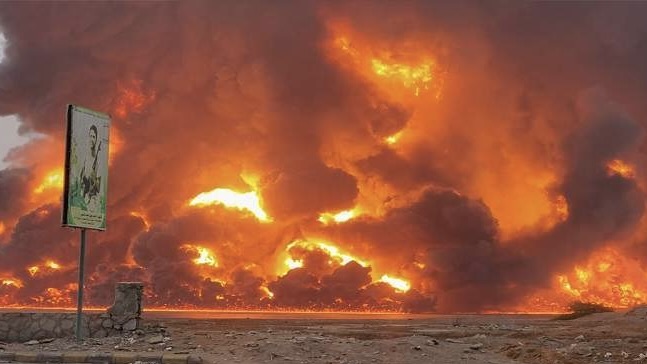
Israel launched a series of airstrikes on Yemen. Photo: TV Al Masirah
With its aggression against Yemen, Israel demonstrates its insistence to provoke an all-out regional war with support from the United States and its allies
The Israeli Occupation Forces launched airstrikes on the Red Sea port of the Hodeidah Governorate, in Yemen on Saturday, July 20. The Israeli airstrikes targeted gas, oil and power facilities within the Ansar Allah-run sea port with F-35 fighter jets, according to media reports.
The Yemeni Health Ministry announced that a number of people were martyred and wounded in the attack without providing further details. The Israeli airstrikes on Yemen came around one day after Ansar Allah-led Yemeni Armed Forces launched a drone attack against the Israeli city of Tel Aviv. This was part of the military operations which the Yemeni Support Front has initiated in response to Israel’s genocidal aggression on Gaza.
A couple of hours after Hodeidah port was attacked by the Israeli Occupation Air Force, the Yemeni Armed Forces announced in a televised statement, that the Israeli enemy targeted the power station, the port, and fuel tanks in the Hodeidah governorate with airstrikes, and that all these targets are civilian facilities.
The spokesperson of the Yemeni Armed Forces, Brigadier-General Yahya Sare’e, also said in the statement that Ansar Allah will respond to the blatant Israeli aggression on Yemen and will not hesitate to strike the enemy’s vital targets. He also reaffirmed what was declared in Ansar Allah’s previous statement in regard to considering the occupied Yafa area as an unsafe zone.
Sare’e confirmed that the Yemeni Armed Forces will continue their operations in support of their brothers and sisters in Gaza, regardless of the implications and consequences. He added that they have prepared the means for a prolonged war with the Zionist enemy until the aggression on the Palestinian people is halted and the siege is lifted.
The Palestinian Islamic Resistance Movement (Hamas) and the Palestinian Islamic Jihad Movement, also condemned the Israeli aggression on Yemen. Hamas called on all countries and forces of the Arab Islamic nations to condemn the aggression, urging them to unite, mobilize resources, and engage in confronting the usurping Zionist enemy. Islamic Jihad stated that the Zionist crime against Yemen confirms that the criminal entity poses a danger to all the peoples of the Arab and Islamic nations. It also pointed out that the aggression against Yemen would not have happened without the blatant Western support for the criminal entity, primarily by the US and UK who have also been launching airstrikes against Yemen since January.
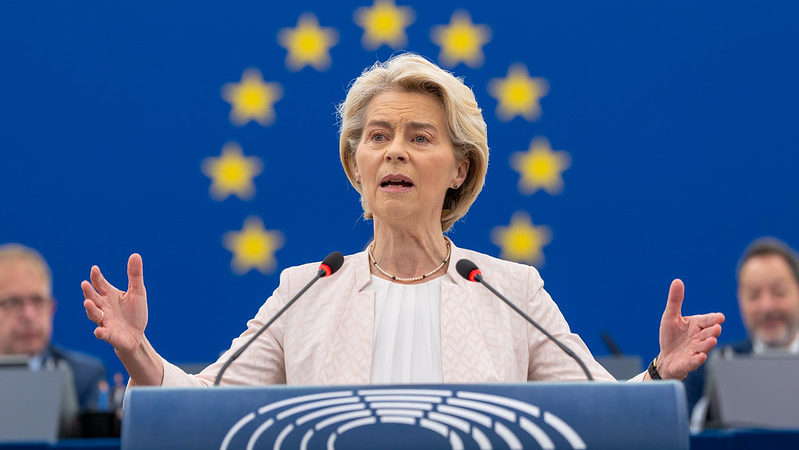
Ursula Von der Leyen announces increased funding for EU armament and border control as she is confirmed for a second term as President of the European Commission
On July 17, the European Court of Justice (ECJ) published a ruling holding the European Commission (EC), led by President Ursula von der Leyen, responsible for concealing segments of COVID-19 vaccine procurement contracts from the European Parliament. Less than 24 hours later, von der Leyen was confirmed for a second term during a parliamentary session in Strasbourg.
During her re-election campaign, von der Leyen worked diligently to secure support beyond her home European People’s Party (EPP) group. To ensure the required majority, she needed at least 173 additional votes, on top of the 188 guaranteed by the EPP. By July 18, members of the Socialists & Democrats, the liberal Renew group, and the Greens—who had initially filed the complaint to the ECJ—announced their support, describing von der Leyen as a stabilizing figure in uncertain times for Europe.
In her initial address to the parliamentarians, von der Leyen promised “prosperity and competitiveness” for the European Union over the next five years. She emphasized the European Green Deal, pledging further efforts towards renewable energy and environmental protection. However, several members of parliament called her out for what they described as greenwashing and failure to take concrete steps in this area. The Left parliamentarian Rudi Kennes criticized the vague character of von der Leyen’s commitment to just green policies, citing her inaction on preserving jobs in sectors that could prove crucial for the EU’s green transition. He pointed to the potential closure of an Audi factory in Brussels as an example.
Von der Leyen also prioritized security, defense, and border control in her speech, announcing the creation of a European Defense Union, new commissioner posts for defense and the Mediterranean, approximately tripling the number of Frontex guards, and just about doubling Europol staff. The aim of these measures, according to the EC President, is to “rebuild, replenish, and transform national armed forces” rather than breaking away from NATO. One of the first steps towards this better-armed EU will be incentivizing private defense investment with support from the European Investment Bank.
What the defense and international policy agenda will certainly not mean, judging from the guidelines presented on Thursday, is taking a strong stance on the genocide Israel is committing in the Gaza Strip. A side note in von der Leyen’s speech, the brutal attacks on Palestinians were reduced to an unfortunate bloodspill, with no guarantees given that the EC would act to stop it. Instead, von der Leyen stated she would work towards a two-state solution.
In her speech, Von der Leyen merely brushed upon the social and economic issues affecting millions in the EU. Her approach remained market-oriented, with only minor concessions on housing and living costs. Among others, Marc Botenga of the Workers’ Party of Belgium criticized her for inaction on tax justice and strengthening public services.
“Millions of Europeans are living in poverty or are at risk of falling into poverty. Did Ursula von der Leyen seek funds from multimillionaires [to address this]? No. Did she impose taxes on the excess profits of European multinationals? No. On the contrary, she provided support to these multinationals,” Botenga said.
There is little indication that von der Leyen’s policies will change in her new term. With expected austerity measures and increased defense spending, more Europeans will be deprived of basic social rights. Some parliamentarians have already pledged to oppose this direction actively.
“Your Europe is not our Europe, Mrs. von der Leyen. Against your Europe of austerity and the market, you can count on us defending the Europe of humanity and solidarity,” said Manon Aubry, co-chair of The Left, announcing the bloc’s vote against von der Leyen’s presidency