Despite Trump-Musk Feud, CO2 Milestone Is the ‘Important News of the Day’

Spread the love

Original article by Olivia Rosane republished from Common Dreams under Creative Commons (CC BY-NC-ND 3.0). 
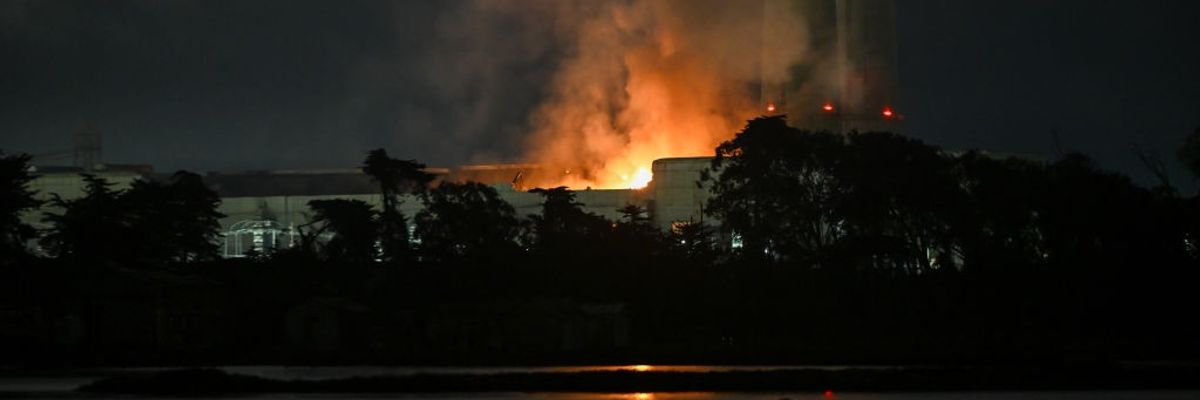
A view of flames and giant smoke is seen over the sky as a fire erupted at the natural gas Moss Landing Power Plant in Moss Landing of Monterey Bay, California, United States on January 17, 2025. (Photo: Tayfun Coskun/Anadolu via Getty Images)

Scientists said that atmospheric carbon dioxide concentrations peaked above 430 parts per million for the first time in perhaps 30 million years.

The concentration of carbon dioxide in the atmosphere peaked above 430 parts per million in 2025—the highest it has been in millions of years—according to data released by the National Oceanic and Atmospheric Administration and Scripps Institution of Oceanography at the University of California, San Diego on Thursday.

The news was overshadowed by the explosive feud between U.S. President Donald Trump and his erstwhile backer Elon Musk, but climate activist Bill McKibben argued that it was ultimately more consequential.

“In the long run, this is actually going to be the important news of the day—CO2 in the atmosphere passes another grim milestone,” McKibben wrote on social media.

In the long run, this is actually going to be the important news of the day–co2 in the atmosphere passes another grim milestone

Bill McKibben (@billmckibben.bsky.social) 2025-06-05T20:33:11.672Z

Carbon dioxide has been accumulating in the atmosphere due primarily to the human burning of fossil fuels, as well as by the clearing of forests and other natural carbon sinks. There, it acts as a greenhouse gas, trapping heat from the Earth, and is the primary gas responsible for the rise of global temperatures by approximately 1.1°C from the 1850 -1900 average. This warming has already had a host of dramatic impacts, from extreme weather events to sea-level rise to polar ice melt, and scientists warn these impacts will only accelerate under current energy policies, which put the world on track for around 3°C of warming by 2100.

The last time that atmospheric CO2 concentrations topped 430 ppm was most likely more than 30 million years ago, Ralph Keeling, who directs the Scripps CO2 Program, told NBC News.

“It’s changing so fast,” he said. “If humans had evolved in such a high-CO2 world, there would probably be places where we wouldn’t be living now. We probably could have adapted to such a world, but we built our society and a civilization around yesterday’s climate.”

“While largely symbolic, passing 430 ppm should be a wake-up call.”

Scripps and National Oceanic and Atmospheric Administration both measure carbon dioxide levels from NOAA’s Mauna Loa Observatory in Hawaii, where Charles Keeling began taking measurements in 1958. As CO2 levels rise over time, they also follow a seasonal cycle—peaking in May before falling in the Northern Hemisphere summer and rising again in the fall.

This May, Scripps Oceanography calculated an average of 430.2 ppm for 2025, which is 3.5 ppm over the average for May 2024. NOAA’s Global Monitoring Laboratory, meanwhile, calculated a monthly average of 430.5 ppm, a 3.6 ppm jump from the year before and the second-steepest yearly climb since 1958.

“Another year, another record,” Keeling said in a statement. “It’s sad.”

The news comes two months after Mauna Loa daily measurements surpassed 430 ppm for the first time in March, which Plymouth Marine Laboratory professor Helen Findlay called “extremely disappointing and worrying.”

“While largely symbolic, passing 430 ppm should be a wake-up call, especially given the accelerated response we are seeing of glaciers and ice sheets to current warming,” Dr. James Kirkham, chief scientist of the Ambition on Melting Ice coalition of governments, said at the time.

“This upward trajectory is a direct result of continued fossil fuel use, likely exacerbated by emissions from extreme wildfires last year, methane leaks from fossil fuel extraction and possibly greater permafrost emissions, alongside decreased ability of very warm oceans to absorb CO2,” Kirkham said.

The monthly record also comes a little more than a week after a United Nations report warned that there was a small chance global temperatures could surpass 2°C in at least 1 of the next 5 years, only a decade after world leaders pledged in the Paris agreement to keep global temperatures “well-below” that level.

“Carbon emissions are still rising, and the atmosphere is going to keep heating further until greenhouse gas concentrations stabilize,” Matt Kean, who chairs Australia’s Climate Change Authority, wrote in response to the Scripps and NOAA figures. “What sort of climate do we want to leave our children and those who come after them?”

Original article by Olivia Rosane republished from Common Dreams under Creative Commons (CC BY-NC-ND 3.0). 

Orcas discuss Donald Trump and the killer apes' concept of democracy. Front Orca warns that Trump is crashing his country's economy and that everything he does he does for the fantastically wealthy.
Orcas discuss Donald Trump and the killer apes’ concept of democracy. Front Orca warns that Trump is crashing his country’s economy and that everything he does he does for the fantastically wealthy.
Neo-Fascist Climate Science Denier Donald Trump says Burn, Baby, Burn.
Elon Musk urges you to be a Fascist like him, says that you can ignore facts and reality then.
Continue ReadingDespite Trump-Musk Feud, CO2 Milestone Is the ‘Important News of the Day’

After America’s summer of extreme weather, ‘next year may well be worse’

Spread the love
18 July 2021 California Wildfires. Image: Felton Davis

https://www.theguardian.com/environment/2023/aug/26/us-summer-extreme-heat-wildfires-climate-crisis

A freakish season of record temperatures, wildfire smoke and the destruction of Lahaina could soon become normal, climate experts say

It’s been a strange, cruel summer in the United States. From the dystopian orange skies above New York to the deadly immolation of a historic coastal town in Hawaii, the waning summer has been a stark demonstration of the escalating climate crisis – with experts warning that worse is to come.

A relentless barrage of extreme weather events, fueled by human-caused global heating, has swept the North American continent this summer, routinely placing a third of the US population under warnings of severe heat and unleashing floods, fire and smoke upon communities, with a record 15 separate disasters causing at least $1bn in damages so far this year.

The heat has been particularly withering in places like Phoenix, Arizona, which had a record 31 consecutive days at temperatures above 110F (43C), while an enormous heatwave across the central swath of the US this week caused schools to be closed in states such as Wisconsin, Colorado and Iowa and food banks to be shut in Nebraska.

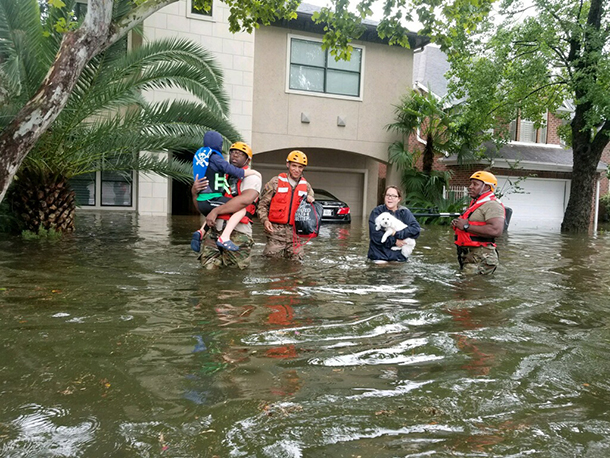
While the aftermath of hurricanes continue to affect residents, such as those in Houston, Texas devastated by Hurricane Harvey (see image), research has found that the frequency and intensity of these latest storms have done little to shift public opinion about their connection with global warming. (Photo: Texas Military Department, Flickr CC BY-ND 2.0)
While the aftermath of hurricanes continue to affect residents, such as those in Houston, Texas devastated by Hurricane Harvey (above), research has found that the frequency and intensity of these latest storms have done little to shift public opinion about their connection with global warming. (Photo: Texas Military Department, Flickr CC BY-ND 2.0)

In Miami, which had a record 46 days in a row with a heat index above 100F (37C), there was no respite even in the nearby ocean, with a raging marine heatwave turning the seawater to a temperature more normally seen in hot tubs, raising fears that Florida’s coral reef will be turned to mush.

“It’s been a shocking summer,” said Daniel Swain, a climate scientist at UCLA. “We know most of this is happening because of long-term warming of the climate system so it’s not surprising, sadly, but you still get shocked by these extremes. Records are not just being broken, they are being shattered by wide margins.”

https://www.theguardian.com/environment/2023/aug/26/us-summer-extreme-heat-wildfires-climate-crisis

Continue ReadingAfter America’s summer of extreme weather, ‘next year may well be worse’

Campaigner Blasts Climate-Denying ‘Arsonists’ as Maui Fires Kill at Least 36

Spread the love
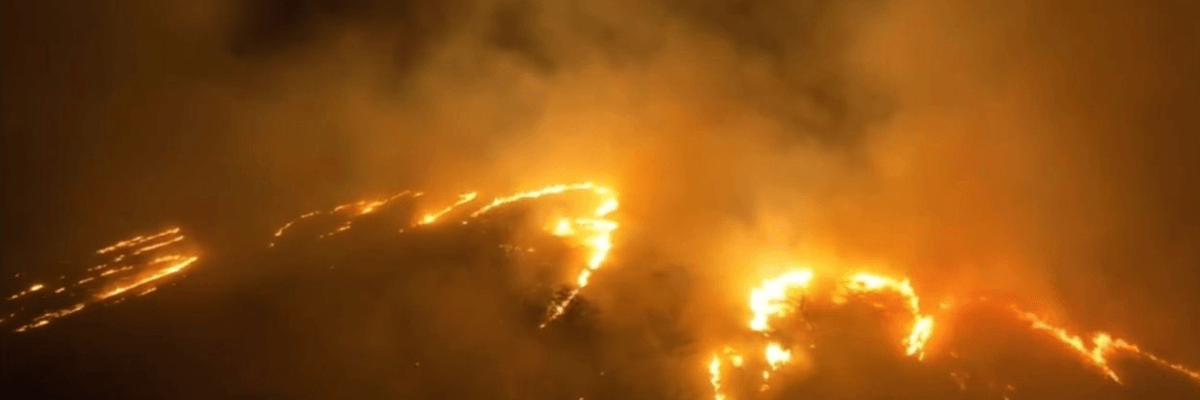
Wildfires are seen from above in Maui County, Hawaii on August 9, 2023.  (Image: screeshot/Clint Hansen)

https://www.commondreams.org/news/maui-wildfires-climate-emergency

The wildfires offer the latest evidence that President Joe Biden must declare a climate emergency, said one progressive economist.

With weather experts pointing to unusually dry conditions on the Hawaiian island of Maui that primed the area for the wildfires that have killed at least 36 people so far, climate advocates on Thursday said the devastation offers the latest evidence that U.S. President Joe Biden must declare a national climate emergency.

Major General Kenneth Hara, the top defense official in Hawaii, said early Thursday that the wildfires had been contained, but authorities are still assessing widespread damage, displacement, and loss of life following a disaster that sent residents frantically running into the ocean for safety.

The historic town of Lahaina, once the capital of Hawaii, was decimated by the fires on Wednesday, with its oldest building apparently burned to the ground.

Theo Morrison, the executive director of the Lahaina Restoration Foundation, told The New York Times that the town had “no preparation, no warning, nothing” as the flames—directly fueled by the 80 mile-per-hour winds of Hurricane Dora south of Hawaii and dry vegetation—spread to Lahaina and razed its historic town center in a matter of hours.

Kaniela Ing, a former Hawaii state representative and national director of the Green New Deal Network, expressed grief over the devastating fires and noted that while residents and local authorities were caught off-guard by the fast-moving blaze, U.S. officials have been warned for years that the continued extraction of fossil fuels is making parts of the country drier and hotter and creating conditions in which wildfires can become more damaging.

“My island is on fire. My heart is breaking at the utter devastation these wildfires are causing my friends, family, and community,” said Ing in a statement. “The extreme wildfires in Lahaina in this summer of climate disasters are yet more proof that we are in a climate emergency and this crisis is killing us. Our leaders in D.C. passed starting measures to tackle climate change—but we need legislation that is as bold and urgent as the scale of the wildfires choking Hawaii and Canada, the heatwaves suffocating Texas, and the extreme flooding drowning Europe.”

Ing suggested that Congress must pass legislation to expand investments in clean energy infrastructure and jobs, but also that Biden can and should act without Congress to significantly reduce the fossil fuel emissions which scientists have said are contributing to extreme heat and wildfires.

“How many more lives lost or families displaced in communities like mine is President Biden willing to tolerate before he declares a climate emergency and activates politicians to take further climate action?” said Ing.

The wildfires devastated Lahaina on the same day that Biden told a reporter on The Weather Channel that “practically speaking,” he has already declared a climate emergency by acting to protect some public land from certain types of mining and rejoining the Paris climate agreement.

The “apocalyptic scenes” in Hawaii, said economist Umair Haque, offer the latest proof that “practically” declaring a climate emergency is not enough.

Ing also condemned Republican politicians who continue to deny the existence of the climate crisis and that it’s being caused by the fossil fuel industry, including Sen. Tim Scott (R-S.C.), who dismissed the call for a climate emergency declaration in a Fox News interview.

Ron DeSantis, Tim Scott, oil companies, and anyone in power who denies climate change are the arsonists,” said Ing. “We are living the climate emergency.”

According to the U.S. Drought Monitor, more than a third of Maui was experiencing at least a moderate drought as of August 1, and nearly 16% of the island was in a severe drought the day before the flames engulfed parts of the island.

Climate scientist Michael Mann of the University of Pennsylvania said the fires are a “‘compound’ climate catastrophe”—made worse by the hurricane’s rapid winds, which interacted with the “background state” of extreme drought.

Gov. Josh Green, a Democrat, said an immediate issue the island is coping with is the displacement of several thousand people, and asked visitors to leave or cancel nonessential travel to Maui to ensure that hotel rooms and other accommodations are available for people in need of shelter.

https://www.commondreams.org/news/maui-wildfires-climate-emergency

Continue ReadingCampaigner Blasts Climate-Denying ‘Arsonists’ as Maui Fires Kill at Least 36