This work by Middle East Monitor is licensed under a Creative Commons Attribution-NonCommercial-ShareAlike 4.0 International License.
The displaced families who fled their homes in the Kadha area of western Yemen’s Taiz province due to clashes between forces affiliated with the Yemeni government and Iranian-backed Houthi forces are struggling to survive in temporary camps where basic necessities are scarce, in Al-Maafer, Taiz, Yemen on September 16, 2026. [Marwan Abdullah Yahya Saeed Al-shabi – Anadolu Agency]
Yemen’s latest conflict escalation is pushing its already fragile health system toward a “breaking point,” with casualties and displacement rising while essential services face mounting pressure, the World Health Organization (WHO) warned Tuesday, Anadolu reports.
Annette Heinzelmann, WHO regional emergency director for the Eastern Mediterranean, told journalists in Geneva that 4,481 casualties, including 838 deaths, have been reported since Aug. 6, citing data from the Health Ministry in Aden.
More than 180,500 people have been displaced across 10 governorates, while over 3,600 Yemenis have crossed into Djibouti since Sept. 10, nearly half of them children. Humanitarian partners are preparing for 5,000 to 10,000 arrivals in the coming weeks.
Heinzelmann said nine health facilities or assets have been damaged, forced out of service, closed or directly attacked in Taiz, Lahj and Al-Hodeidah.
Emergency obstetric and newborn care has also been suspended at two hospitals in Marib and Ras Al-Arah as staff and capacity have been redirected to trauma care.
Even before the latest escalation, only around 60% of Yemen’s health facilities were fully functional, she said.
Disease outbreaks are compounding the crisis, with more than 22,000 suspected measles cases and 128 deaths reported this year, alongside 7,784 suspected cholera or acute watery diarrhea cases and 9,604 dengue cases.
WHO has secured only $2 million of the $9 million required for its response, while stocks of some lifesaving supplies, including trauma kits and essential medicines, have already run out at its Aden warehouse.
This work by Middle East Monitor is licensed under a Creative Commons Attribution-NonCommercial-ShareAlike 4.0 International License.
Ed Miliband claims that he and Andy Burnham have reformulated Blair’s triangulation strategy. Their new formulation entails acknowledging that they were wrong on Israel and Palestine but entails doing absolutely nothing about it and continuing exactly the same policies hoping that you’re too stupid to notice.UK Prime Minister Andy Burnham admits to blatently lying and engaging in deception to become leader of the UK Labour Party and Prime Minister.
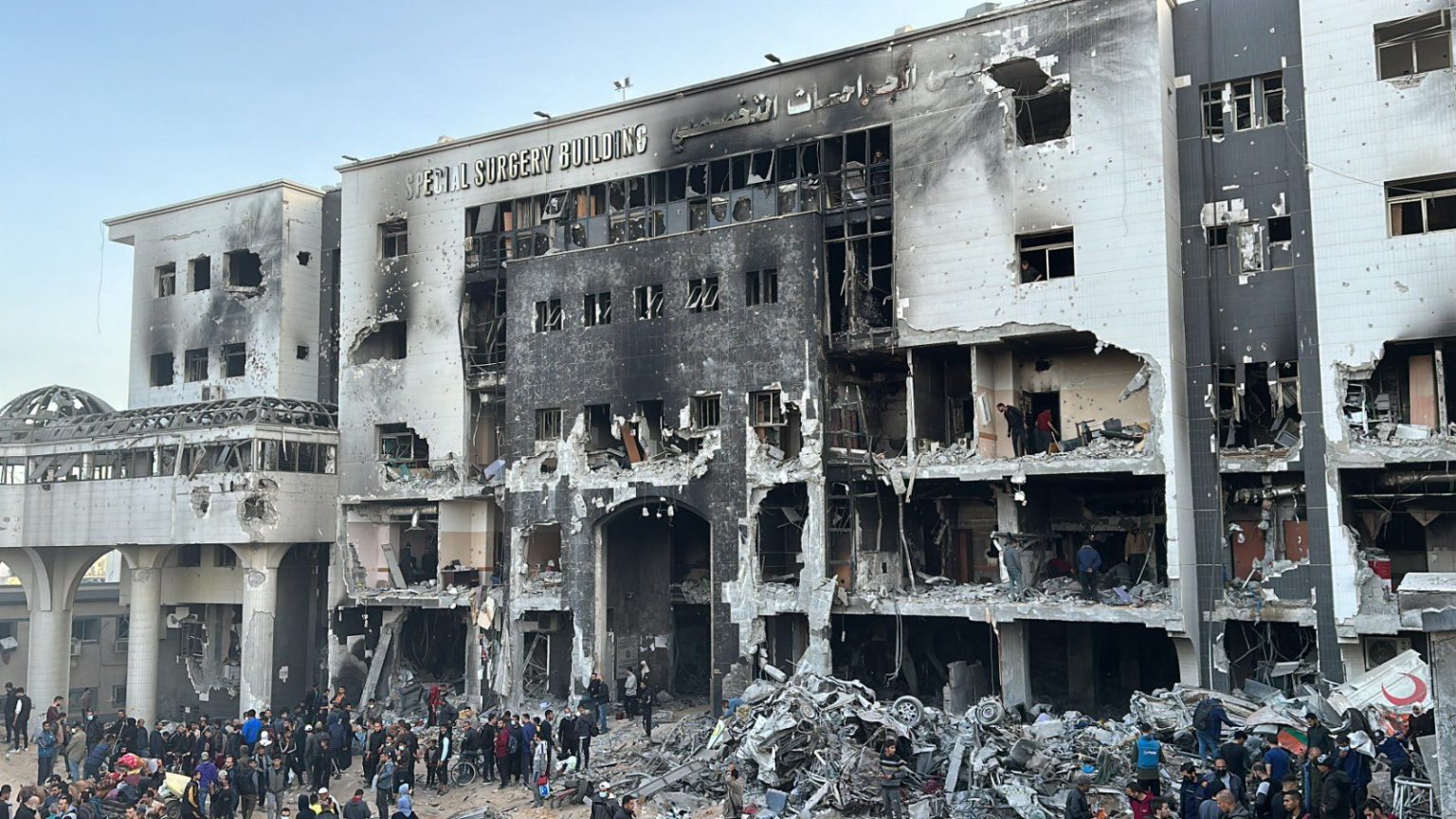
Al Shifa Hospital after a two-week Israeli siege, April 2024.
After a year of unrelenting Israeli attacks, Gaza’s healthcare system lies in ruins. Yet, health workers continue their steadfast efforts to provide care
After a year of relentless bombardment, Gaza’s healthcare system lies in ruins, and the warnings Palestinians have issued for decades are being confirmed: hospitals, clinics, and health workers are deliberate targets of Israeli Occupation Forces (IOF). What was once a systematic campaign against healthcare has escalated into an all-out assault, resulting in the decimation of most of the infrastructure. As the one-year anniversary of this ongoing genocide approached, Israeli forces continued their siege on northern Gaza, intensifying their attacks on health facilities.
Three hospitals still barely functioning in the area — including Al-Awda and Kamal Adwan — were just issued so-called “evacuation orders,” which, as pointed out by Medical Aid for Palestinians (MAP), are nothing short of forced removal orders. Kamal Adwan’s director, Hussam Abu Safiya, stressed the impossible position the hospital faced soon after the orders were issued. With critically injured children in their care, no means to safely evacuate them, and no other facility able to accept them, health staff are faced with the excruciating decision of either abandoning their patients or staying at the risk of their own lives.
“In between the constant bombardment occurring on the hospital and the surrounding buildings, the healthcare staff have become terrorized to a point where they are struggling to do their jobs,” Abu Safiya stated. Their situation is similar to that faced in other health facilities. Around the same time Abu Safiya recorded his statement, medics in Al-Awda were also issued forced removal orders—for the third time in a year—says Matilde De Cooman from Viva Salud, a Belgian organization partnering with the hospital.
The risks health workers face are all too real. Israeli forces have systematically besieged and destroyed healthcare infrastructure over the past 12 months, including Gaza’s largest hospitals, such as Al-Shifa. Under the pretext of searching for resistance fighters, the IOF raided operating rooms, destroyed medical equipment, and abducted patients and medical staff. In the aftermath of the attacks, civil defense teams discovered seven mass graves containing 520 bodies on hospital grounds.
Over 1,000 health workers have been killed since the genocide began, with hundreds more kidnapped and held in Israeli concentration camps. Those who have been released share harrowing accounts of torture: shackles, electric shocks, broken limbs, and sexual violence. Families of those still missing, like Dr. Ahmed Muhanna, the director of Al-Awda Hospital in northern Gaza, are not granted any official information about prisoners’ conditions. Dr. Muhanna was abducted in December 2023. Since then, no official word has emerged about his mental or physical condition, says De Cooman.
International campaigns to secure the release of Dr. Muhanna and other abducted health workers are ongoing, though disturbing reports of their treatment in Israeli camps have sparked both outrage and fear about what the future holds. Despite these developments, Gaza’s health workers remain resolute, refusing to abandon their patients. Their unwavering commitment, sumud (steadfastness), has been lauded by global health workers since the beginning of the genocide. Operating without pay or essential supplies due to the blockade, they have continued their work tirelessly since last October. “Even with Dr. Muhanna’s fate in mind, Al-Awda’s operating director, Mohammed Salha, never once considered abandoning the hospital,” says De Cooman. “As long as there is even one person left in the area, the hospital will remain open and stand by its people.”
The health suffering in Gaza extends far beyond the hospitals. With more than two million people pushed into poverty by the attacks and the aid blockade, food and clean water are scarce. Recent reports reveal that 35% of children and 40% of pregnant or breastfeeding women in Gaza are surviving on just one type of food. Malnutrition is rampant, and the World Health Organization (WHO) has documented cases of children starving to death as humanitarian aid convoys are blocked at Israeli-controlled checkpoints.
Hunger and disease go hand-in-hand, as the WHO continues to repeat. Gaza is witnessing a hard-to-imagine surge in infectious diseases—respiratory infections, skin diseases, Hepatitis A, and even polio, a virus that had been eradicated decades ago but resurfaced, paralyzing a 10-month-old child. The shortage of basic hygiene products, such as soap and clean water, only adds to the crisis.
The spread of diseases is anything but collateral damage: it is a calculated weapon in Israel’s strategy. As Jewish Voice for Peace remarked, in prisons, “skin diseases are a method of punishment. Prison authorities are allowing scabies to spread by restricting Palestinian inmates’ water supply and depriving them of clean clothes and medical care.”
On top of it all, Gaza’s whole environment is contaminated with asbestos dust raised by the constant bombardment. An estimated 800,000 tonnes of debris in Gaza could contain asbestos particles, as reported by Al Jazeera, raising the prospect of soaring cancer rates in the coming years.
“After a year, the occupying forces continue to practice an unprecedented genocide in modern history. What is particularly painful is the disgusting silence of the international community,” stated Hani Serag, Co-Chair of the People’s Health Movement. “We hope that activists across the world will continue expressing their solidarity to Palestinian people and refuse the barbaric practices of the occupying forces.”
Israeli crimes against healthcare are not confined to Gaza. In less than a month, Israeli forces have killed over 100 health workers in Lebanon and forced the closure of dozens of health centers. The destruction unfolding in Gaza serves as a blueprint for the invasion of Lebanon, raising the question: how long will the West look away while Israel continues its rampage?
People’s Health Dispatchis a fortnightly bulletin published by thePeople’s Health Movementand Peoples Dispatch. For more articles and subscription to People’s Health Dispatch, clickhere.
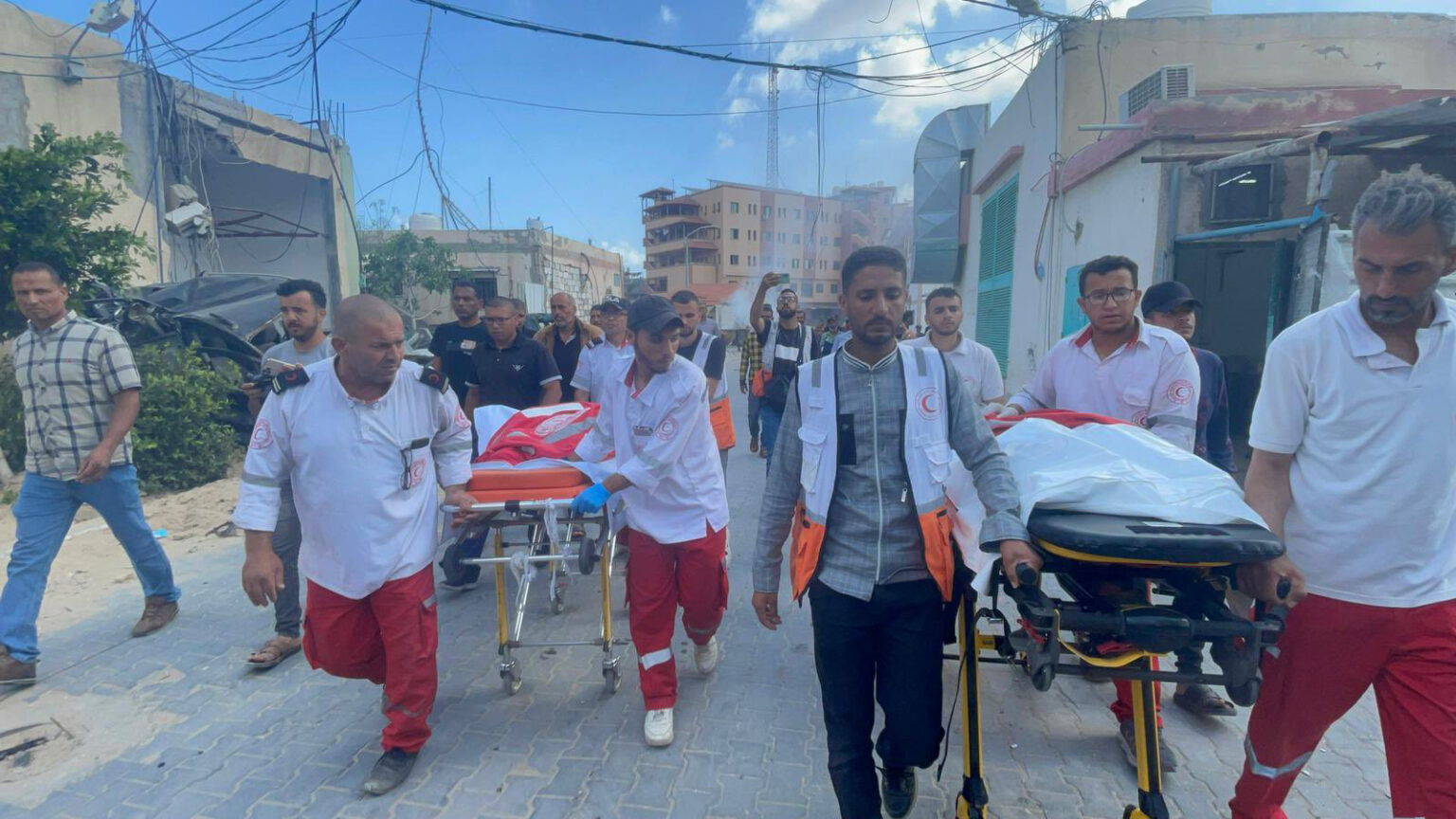
Palestinian Red Crescent crews mourn fellow paramedics Haitham Tubasi and Suhail Hassouna, killed by Israeli forced (Photo via PRCS)
A new report from the Palestinian Ministry of Health warns that over 1,000 health workers in Gaza have been killed by Israeli forces since October 2023. Meanwhile, a severe shortage of essential hygiene supplies continues to exacerbate the health crisis
Israel has killed 1,151 workers in Gaza’s healthcare system since October 2023, according to the Palestinian Ministry of Health. Among the dead are 260 nurses, 184 health associates, 165 physicians, and 76 pharmacists, along with hundreds of management and support staff. While most of the victims’ names have been confirmed by health authorities, over 150 confirmations are still pending due to Israel’s refusal to release the martyrs’ bodies.
In addition to those killed, hundreds of health workers remain imprisoned, where they face abuse and torture, as documented by international organizations. Ziad Muhammad Al-Dalu, a physician from Al-Shifa Hospital, was among those who died in Israeli custody, as reported by the Ministry of Health. His death serves as yet another example of Israel’s deliberate targeting of Gaza’s healthcare workers and infrastructure, actions that violate international humanitarian law.
The ongoing attacks on healthcare have left tens of thousands of people with life-altering injuries. According to the World Health Organization (WHO), approximately 25% of those injured between October 2023 and July 2024 have suffered burns, severe limb injuries, or amputations, with no access to rehabilitation services. Dozens of physiotherapists were killed in the attacks, and inpatient rehabilitation services have been shut down for months. “Even the most essential assistive devices, like wheelchairs and crutches, are lacking due to the restricted flow of aid,” the WHO said.
Israel’s blockade on humanitarian aid continues to choke Gaza’s healthcare system. At the moment, one of the most urgent problems is the shortage of soap and detergents. With the cost of a small bar of soap reaching USD 10—a price that could buy approximately 2 kilograms of soap in Germany—many families in Gaza are unable to afford basic hygiene supplies. “A family relying on cash-for-work income would spend 60% of the unskilled income on consumable hygiene products,” warned organizations monitoring water and sanitation in Gaza.
With soap being an omnipresent product, it might be difficult to imagine how severe the effects of a shortage might be, particularly for children. Health and hygiene officials estimate that adequate access to soap in the Gaza Strip could reduce respiratory infections by 20% and diarrheal diseases by up to 40%. This would potentially prevent illness in at least one in three children currently suffering from diarrhea. However, humanitarian organizations estimate that delivering the 5 million soap bars needed each month to meet demand in Gaza is basically impossible under the existing restrictions.
Despite this situation, Gaza recently completed the first phase of its polio vaccination campaign, with an 87% coverage rate among children—just below the 90% benchmark. The campaign is set to resume in the coming weeks, but incidents of Israeli forces obstructing access to those taking part in it persist, jeopardizing future public health efforts.
As winter approaches, the need for essential medicines, hygiene supplies, and nutritious food in Gaza becomes even more urgent. Concerns about potential floods and worsening living conditions highlight once again the critical need for an immediate ceasefire and rebuilding of the health system.
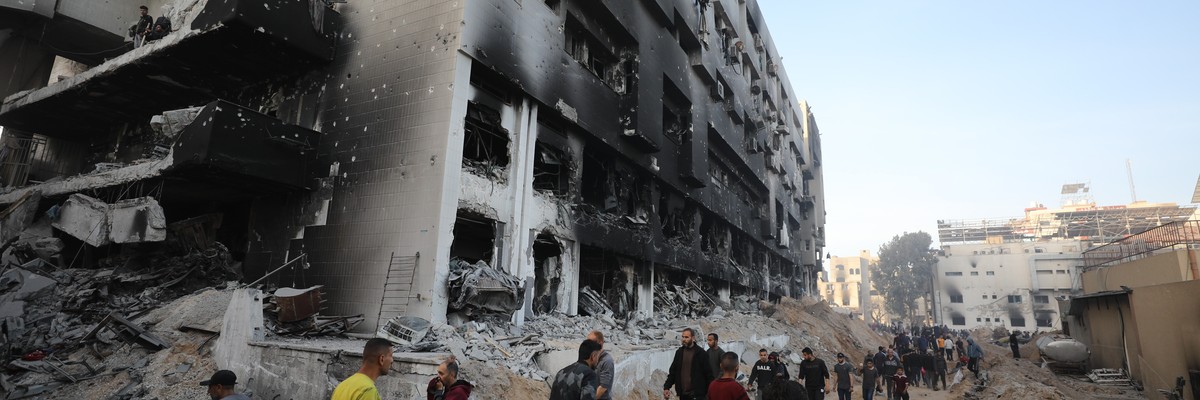
Palestinians walk among the damaged buildings near the Al-Shifa Hospital in Gaza City, Gaza on April 1, 2024. (Photo: Dawoud Abo Alkas/Anadolu via Getty Images)
“This is part of the genocidal machine,” said one surgeon who volunteered at the hospital. “The genocide can only take place if the health system is destroyed.”
The Israeli military withdrew from Gaza’s largest medical facility on Monday after a deadly two-week assault that left the only partially functioning hospital complex in famine-stricken northern Gaza in total ruins.
Israel’s military, which a United Nations expert has accused of waging an “unrelenting war” on Gaza’s healthcare system, claimed in a statement that it killed 200 “terrorists” inside and around the facility and arrested more than 500 people “associated with terrorist organizations” during its prolonged raid on al-Shifa.
The military did not provide evidence that those killed were militants; Israel has repeatedly been accused of labeling unarmed civilians “terrorists.”
According to eyewitness accounts of the raid, Israeli soldiers abused and executed civilians inside the al-Shifa complex, including more than a dozen children. The Euro-Mediterranean Human Rights Monitor said last week that its field team “received identical testimonies about the killings and executions of Palestinian children between the ages of four and 16” in and around the hospital.
Photographs taken in the aftermath of Israel’s assault show al-Shifa buildings scorched, riddled with bullet holes, and reduced to rubble. The hospital’s emergency, surgical, and obstetrics wards were reportedly devastated by Israeli forces, and an unknown number of bodies are believed to be trapped under building ruins.
World Health Organization Director-General Tedros Adhanom Ghebreyesus said Sunday that Israel’s siege of the hospital killed at least 21 patients and left dozens of critically ill or wounded Gazans without “necessary means of care—no diapers, urine bags, water to clean wounds.”
Al-Shifa hospital in #Gaza this morning, following the end of the latest Israeli siege.
I repeat: hospitals must be respected and protected; they must not be used as battlefields. pic.twitter.com/gcABzSxrqx
— Tedros Adhanom Ghebreyesus (@DrTedros) April 1, 2024
Hossam Shabat, a Palestinian journalist reporting from northern Gaza, said he witnessed “hundreds of bodies” outside of the hospital when he visited the compound on Monday.
“The bodies were in horrific conditions; many had their hands and legs tied behind their backs and were flattened by a bulldozer,” Shabat wrote on social media. “Many of the bodies were burned and left to be crushed to pieces. Several bodies were decomposed and partly eaten by stray dogs. Most of the bodies were unrecognizable; families could only identify them by their clothes.”
“Al-Shifa Hospital was considered the largest medical complex in the Gaza Strip, catering to many complex cases,” Shabat added. “It has been completely destroyed; they burned it down and destroyed all medical equipment. Israeli occupation forces [have] one goal and it’s to destroy every inch of Gaza.”
Al Shifa, Gaza's biggest hospital, a place of hope and healing. Turned to a burned out husk by Israel's marauding army.
There must be accountability for this crime. A shame on every politician who has failed to oppose this. pic.twitter.com/9caozTiCZH
Ghassan Abu Sitta, a surgeon who volunteered at al-Shifa, told Democracy Now! in an interview on Monday that prior to Israel’s assault on the hospital, al-Shifa “was 30% of the capacity of the health system in Gaza.” Israel raided the facility for the first time in November, and its latest attack began on March 18.
“The destruction of Shifa, the wanton destruction of Shifa, is a critical component of Israel’s plan to genocidally make sure that Gaza becomes an uninhabitable place, even after a cease-fire happens,” said Abu Sitta. “By destroying Shifa and making sure it is irreparable, the Israelis are trying to make sure that for years to come, Gaza does not have a functioning health system.”
Abu Sitta went on to criticize Western journalists for helping Israel perpetuate the narrative that al-Shifa was used by Hamas as a “command center” and thus an “acceptable” target.
“This is part of the genocidal machine,” said Abu Sitta. “The genocide can only take place if the health system is destroyed.”
Israeli troops have left Al-Shifa, Gaza's largest hospital, after a brutal two-week raid that left much of the complex in ruins and killed many civilians and medical staff there. “This is part of the genocidal machine," says Dr. @GhassanAbuSitt1, who has volunteered at Al-Shifa. pic.twitter.com/hwY6Gv4po1
Reuters described al-Shifa in the aftermath of the Israeli military’s two-week raid as a “wasteland of destroyed buildings” with “Palestinian bodies scattered in the dirt.”
Ismail al-Thawabta, director of Gaza’s media office, said in a statement Monday that Israeli forces “destroyed and burnt all buildings inside al-Shifa medical complex.”
“They bulldozed the courtyards, burying dozens of bodies of martyrs in the rubble, turning the place into a mass graveyard,” said al-Thawabta. “This is a crime against humanity.”