By the government’s own analysis, expansion will not improve outcomes for communities across the UK
…
Source: Civil Aviation Authority and ONS Travelpac
Of the 70-odd million additional passengers the proposed expansions of Heathrow, Gatwick, and Luton would put in the air at their peak, we can expect between two-thirds and three-quarters (or 45 – 50 million) to be UK residents on their way out of the country. Making air travel cheaper while the cost of domestic leisure, hospitality, and overland travel remains prohibitively high leaves many squeezed households with little choice. Between 25 – 50% of travellers report ‘cost’ as a key factor in their decision whether to stay in the UK or travel abroad.
…
From a high point in 2022, the UK’s domestic tourism industry has now seen two years of decline, contributing to the very stagnation that troubles the Chancellor. At the same time UK residents have poured overseas in record numbers, taking their hard-earned cash with them. New NEF analysis suggests trips to Mediterranean resort destinations and the Canary Islands hit a new record in 2024. Our top 20 direct routes saw passenger numbers rise from their 2019 peak of 52 million to 56 million last year.
The last line of economic defence of the proposed expansion of Heathrow is perhaps the weakest of them all. Many desire to increase Heathrow’s standing as a hub airport, this means capturing ”international to international” passengers changing flights in the UK. As these passengers stop in the UK for a matter of a few hours at most they leave little economic value behind. They also pay no air passenger duty so the benefit to the Treasury is minimal. Their flights do, however, come under the UK’s climate responsibilities. Transfer passengers are a boon for the airports and airlines, and the predominantly foreign-domiciled entities which own them, but of little value to the rest of us.
Today’s airport decisions hint of desperation from a government seemingly more interested in optics for a select group of wealthy international investors than actual improvements in economic outcomes for communities all across the UK.
I am only able to quote small sections of this copyrighted article by George Monbiot published in the Guardian. The whole article is here.
A plane comes into land at Heathrow airport, London. Photograph: Avpics/Alamy
Our rivers, our wildlife, the air we breathe: the government is sacrificing all to the insatiable god of GDP – and mocking our objections
I can scarcely believe I’m writing this, but it’s hard to dodge the conclusion. After 14 years of environmental vandalism, it might have seemed impossible for Labour to offer anything but improvement. But on green issues, this government is worse than the Tories.
The last prime minister to insist that growth should override every other consideration, and to fling insults at anyone who disagreed, was Liz Truss. She called those of us seeking to defend the living world an “anti-growth coalition”, “voices of decline” and “enemies of enterprise” who “don’t understand aspiration”.
Now Keir Starmer has picked up her theme and run with it. Those who challenge government policies that might promote GDP growth, however destructive and irrational, such as the planned expansion of Heathrow, Gatwick, Luton and Doncaster Sheffieldairports, are “time-wasting nimbys”, “zealots” and “blockers”, engaged in “self-righteous virtue-signalling”.
After all, these are the kind of people who might send “congratulations to the climate campaigners” whose legal challenge stopped plans to build a third Heathrow runway at the court of appeal. Or who insist that Heathrow expansion should be blocked because “there is no more important challenge than the climate emergency”. Oh, hang on, that was Starmer, writing in 2020. You know, the one you voted for, not the new model, channelling the worst Tory prime minister of modern times.
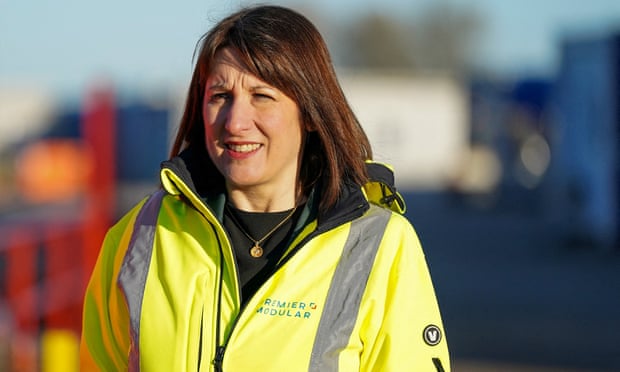
Now his chancellor, Rachel Reeves, insists that growth “trumps other things”, including the government’s environmental commitments. The verb is unfortunate. The government’s new rhetoric is horribly reminiscent of the convicted felon: monomania, slogans and insults take the place of nuanced and complex policy.
…
I am only able to quote small sections of this copyrighted article by George Monbiot published in the Guardian. The whole article is here.
Orcas comment on killer apes destroying the planet by continuing to burn fossil fuels.
Environmentalists and locals have resisted a third runway at London’s Heathrow, Europe’s busiest airport, for more than two decades. Today, their efforts took a major setback.
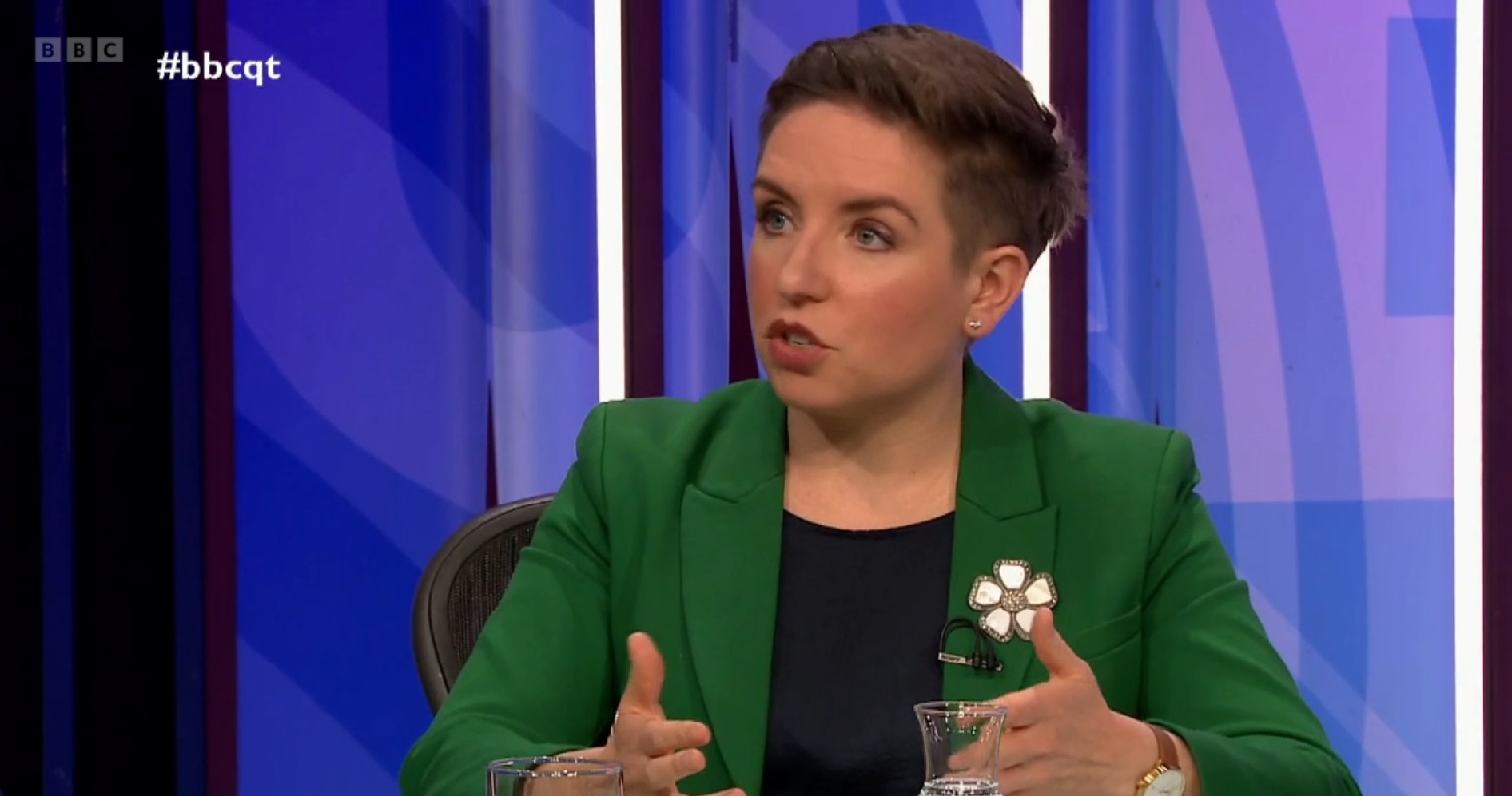
The UK government has announced it will give the green light to airport expansion. This is not guaranteed to increase growth in the national economy as Chancellor Rachel Reeves hopes. More flights and more emissions are certain, however, at a time when experts are practically screaming at governments to rein them in.
“No airport expansions should proceed” without a UK-wide plan to annually assess and control the sector’s climate impact said the government’s watchdog, the Climate Change Committee, in 2023. Aeroplanes are 8% of UK emissions and 2% of the world’s, but they also release gases that seed heat-trapping clouds in the upper atmosphere, which triples air travel’s greenhouse effect.
While the government’s own advisers have effectively ruled out new runways for the sake of net zero, airport and airline bosses play a different tune. So what does the sector propose to manage its own pollution?
Not enough cooking oil to save us
Aviation is a notoriously difficult sector to decarbonise says Richard Sulley, a senior research fellow in sustainability policy at the University of Sheffield: “If electric or hydrogen-powered planes are possible, it won’t be for many years yet.”
To justify air travel emissions ballooning in the meantime, the aviation sector has promised a mix of “supply-side” measures, like replacing kerosene with so-called “sustainable aviation fuel” (SAF), which Reeves described as “a game changer”, and making planes lighter and more fuel-efficient.
Efficiency, in this context, is a slippery path to decarbonisation. When a high-emitting activity is reformed so that it consumes less energy, the efficiency savings are generally eclipsed by the increasing demand it drives.
“Indeed, the sector’s own plans for growth will outstrip efforts to decarbonise through synthetic fuel, delivering a neutral effect at best,” Sulley says.
“Demand-side” measures like fewer flights, taxes on frequent flying and domestic flight bans (see France) could cut emissions, he notes, but are seldom mentioned.
The UK has set a target for airline fuel to be 10% SAF by 2030. So far we’re at 1.2% – and Sulley reports that the industry has not said how it will scale up in time.
Even if airlines start taking their commitment to SAF seriously very soon, it’s a dubious solution to aviation’s climate impact according to political economists Gareth Dale (Brunel University) and Josh Moos (Leeds Beckett University).
Earlier SAF test flights burned coconut oil – 3 million coconuts to power a journey from London to Amsterdam, as Dale and Moos calculate it. At that rate, they argue Heathrow would exhaust the world’s entire crop in a few weeks (there are 18,000 commercial airports worldwide).
Modern SAF is blended with waste products from farms and kitchens. But the pair argue that the market for used cooking oil is “notoriously unregulated”. SAF may in fact be relabelled palm oil from plantations that are erasing orangutan habitat in the tropics. Again, Dale and Moos argue there is not enough used cooking oil to meet existing, let alone future, demand.
Transport for the rich, by the rich
At least the hype around SAF addresses the main problem, albeit misleadingly. Policy experts David Howarth (University of Essex) and Steven Griggs (De Montfort University) marvel at how often “carbon-neutral airports” in aviation sustainability strategies simply mean terminals powered by renewable energy.
“A terminal’s heating or lighting is, of course, largely irrelevant when its core business is as emissions-intensive as flying,” says Sulley.
Unfortunately for Rachel Reeves, a 2023 report by the New Economics Foundation found that any economic benefits of airport expansion will be largely confined to the airports themselves. Meanwhile, a wealthy subset of UK society can be expected to capture the biggest share of any new flight capacity. Each year, around half of British residents do not fly at all, Sulley points out.
At the stratospheric heights of that subset are the private jet passengers who are served by “more or less dedicated airports” that are more obscure to the general public, says Raymond Woessner, a geographer at Sorbonne Université. A study published in November found that emissions from these flights rose by 46% between 2019 and 2023. The lead author described wealthy passengers using jets “like taxis”.
“Discretion and anonymity” is what one airport nestled in the Oxfordshire countryside promises for “routine celebrity, head of state and royal visits”. Without state direction or regulation, it is these people who are setting the agenda for air travel.
Woessner notes that the world’s richest man, Elon Musk, successfully lobbied to derail a high-speed rail project in California in 2013. Instead of an option that has shown its ability to cut flight demand, the US will be offered intercontinental rocket travel.
Musk’s company SpaceX says that rockets could ferry passengers between New York and Shanghai in under an hour. Rockets would burn “vastly more fuel per trip than conventional aircraft”, says aerospace engineer Angadh Nanjangud of Queen Mary University of London, but this might “drive critical research into carbon-neutral” methane-based rocket fuel.
It would not be the first time an industry seeking to grow has used an as yet fantastical fuel to justify more carbon in Earth’s atmosphere.
“There is the potential to create a good life for all within planetary boundaries,” say Dale and Moos.
“But getting there requires clipping the wings of the aviation industry.”
Commenting ahead of the Chancellor’s speech on growth when she is expected to signal government backing for airport expansion in the South East, including a third runway at Heathrow, Greenpeace UK’s chief scientist Dr Doug Parr said:
“The third runway at Heathrow is bad economics. There’s little evidence that airport expansion in the southeast will boost the economy – the only things that will grow for sure are noise, air pollution and climate emissions. The last thing our economy needs is more billions in damage from storms and floods.
“Fewer and fewer business people choose air travel – the vast majority of flights are taken by a wealthy elite of frequent leisure flyers. Most of the benefits of airport expansion will go to jet-setters, airlines and airport bosses, leaving taxpayers and holidaymakers to pay billions for new infrastructure and transport links.
“Chasing growth for growth’s sake is not an economic strategy. Instead of picking up any old polluting project from the discard pile, the Chancellor should focus on green industries that can attract investment and bring economic and social benefits for years to come, like secure jobs, affordable energy bills and cheaper, better transport.”
Orcas comment on killer apes destroying the planet by continuing to burn fossil fuels.
Planes queuing for takeoff at Heathrow airport in Britain. Credit: david pearson / Alamy Stock Photo
A forest twice the size of Greater London would need to be planted in the UK to cancel out the extra emissions from the expansion of Heathrow, Gatwick and Luton airports, Carbon Brief analysis reveals.
New runaways at these airports surrounding London would result in cumulative emissions of around 92m tonnes of extra carbon dioxide equivalent (CO2e) by 2050, if the number of flights increases in line with their operating company targets.
If the UK is to remain on track for net-zero, it would need to cut emissions further in other sectors of the economy or remove an equivalent amount from the atmosphere.
For example, offsetting these emissions would require more than 300,000 hectares of trees to be planted within just a few years. This equates to all the trees planted in the UK since 2000.
The Labour government is set to back all three airport expansions, according to mediareporting ahead of a speech by chancellor Rachel Reeves this week.
This is in spite of opposition from within the Labour party and the government’s climate advisors recommending against airport expansion.
Reeves has stressed that “sustainable aviation fuels” (SAFs) and electric planes could help to offset these emissions.
However, such technologies are still in the early stages of deployment and previous Carbon Brief analysis suggests the role of SAFs in achieving net-zero may be limited.
Two Londons
Reeves is expected to reveal plans for a third runway at Heathrow in a speech on Wednesday.
This, alongside suggestions she will also announce her support for the expansion of Gatwick and Luton airports, has prompted days of political debate over the friction between the government’s climate and economic plans.
Reeves sees the expansion of airports as a key part of the government’s “growth strategy”. However, senior Labour politicians, notably energy secretary Ed Miliband, have previously opposed such expansions on environmental grounds.
For her part, the chancellor told BBC News that she thought “sustainable aviation and economic growth go hand in hand”.
Carbon Brief has used estimates of passenger numbers from the airports’ planning applications, combined with assumptions used by UK government advisors the Climate Change Committee (CCC), to calculate emissions from the three expansions.
As the chart below shows, the CCC assumes aviation emissions fall in the coming years due to technological and efficiency improvements.
However, the expansion of Heathrow, Gatwick and Luton would drive an uptick in emissions around 2040 as the projects are completed, if the expected number of extra flights take off and if there are no additional improvements in aircraft efficiency.
This would amount to an additional 92MtCO2e being emitted cumulatively by 2050.
In order to remain on track for the UK’s net-zero target, these emissions would need to be avoided by additional technological innovations in the aviation sector, balanced by faster cuts in other parts of the economy – or removed from the atmosphere after being emitted.
Annual UK aviation emissions, MtCO2e. The blue line indicates the trajectory for emissions set out by the CCC. The three red lines indicate the additional emissions that would result from the expansion of Heathrow, Gatwick and Luton airports, plus the resulting flights. The airport expansions are assumed to follow approximate timelines based on their respective planning applications, with some dates assumed based on the views of AEF. The Heathrow expansion is assumed to be in operation in 2035 and at full capacity by 2040. The Gatwick expansion is assumed to be operational in 2028 and at full capacity by 2038. The Luton expansion is assumed to be operational in 2033 and at full capacity by 2043. Sources: DESNZ, CCC, AEF, airport planning documents.
Aviation is generally viewed as a difficult sector to decarbonise, due to the lack of cheap and effective technologies to cut emissions from planes.
This is why campaigners and researchers frequently stress demand reduction as the most effective way to cut aviation emissions.
The UK’s net-zero plans already allow for aviation to be one of the final sectors producing sizable volumes of emissions in 2050, when most of the economy has decarbonised.
One strategy to remove the excess emissions from the additional Heathrow, Gatwick and Luton flights would be to plant more trees. However, this would be a significant undertaking, as Carbon Brief analysis shows.
It would require planting around 301,000 hectares of new forest by around 2028 so that the trees are large enough by the middle of the century to absorb significant amounts of CO2.
This is equivalent to around twice the size of Greater London, which covers 157,000 hectares. It is 10 times higher than the UK’s most recent annual tree-planting target and equates to all of the trees planted in the past 24 years across the country.
More passengers
Government advisors at the CCC have recommended that there should be no more than a 25% growth in the number of air passengers from 2018 levels, in order to meet the UK’s net-zero goal by 2050.
This amounts to an increase from 292 million passengers to 365 million by 2050. The number of UK flights collapsed during Covid-19 lockdowns and has been slow to recover to pre-pandemic levels, but the number of air passengers in 2023 reached 273 million.
The CCC has consistentlystressed that there should be “no net increase” in airport capacity if the UK is to reach net-zero by the middle of the century, meaning any expansion is “balanced by reductions in capacity elsewhere”. It has also stated there should be no airport expansion without a UK-wide framework for managing capacity.
The committee criticised the previous Conservative government for setting “no plans” to limit growth in passenger numbers in its “jet-zero” strategy, which envisaged demand for flying increasing by 70% out to 2050.
Airport expansion at Heathrow, Gatwick and Luton would help bring the total number of passengers at these three sites up to 243 million in 2050, according to the airports’ own planning applications, compiled by the Aviation Environment Federation (AEF).
This amounts to an additional 100m passengers passing through these airports, compared to 2018 levels. This would bring the total number of UK passengers to 392 million – equivalent to a 34% increase in UK airport traffic – meaning that growth at Heathrow, Gatwick and Luton alone would be enough to breach the CCC’s guidance.
(In reality, more than 20 UK airports have plans for more capacity and some already have unused capacity, so it is unlikely that expansion would be limited to three airports around London.)
SAF concerns
The CCC leaves some flexibility in its advice to the government, allowing for future capacity growth, if “the carbon intensity of aviation is outperforming the government’s emissions reduction pathway”.
Essentially, if clean technologies slash aviation emissions faster than expected, then there will be space for more flights within a pathway to net-zero by 2050.
This has been alluded to by Reeves in recent days. She has stated that a “lot has changed in terms of aviation” and reportedly based an internal proposal to expand Heathrow on the use of “sustainable aviation fuels” (SAFs).
In reality, there has been very limited progress in developing SAFs or any other technologies to decarbonise planes in the UK. In 2023, the CCC chastised the Conservative government for “rel[ying] heavily on nascent technologies”.
Government modelling has shown SAFs will have a limited impact on cutting UK aviation emissions. Experts have pointed to the issues with the supply of materials for making SAFs and noted that none of the five SAF plants originally pegged to start construction in the UK this year are being built yet.
Methodology
This analysis is based on the CCC’s sixth carbon budget “balanced pathway” for the aviation sector, combined with data obtained from AEF on the expected increase in passenger numbers from the expansion of Heathrow, Gatwick and Luton airports.
The CCC pathway assumes that the emissions per passenger fall from 0.14 tCO2 in 2020 to 0.06tCO2 in 2050, accounting for the rollout of SAF and more efficient aircraft. It also assumes that no net expansion of airport capacity occurs.
Therefore, in this analysis, the three airport expansions are considered additional to the emissions included within the CCC pathway.
To calculate the additional emissions from the expansion of the three airports, the additional passenger numbers this would facilitate are multiplied by the emissions intensity per passenger in each year of the CCC pathway.
The additional passenger numbers from each airport are added to a Department for Transport pathway that assumes no further expansion. Each airport expansion is assumed to ramp up linearly from the year of operation to the year of operation at full additional capacity.
Based on the airport planning applications and AEF, it is assumed that:
The Heathrow expansion will be operational by 2035 and operating at full capacity by 2040.
The Gatwick expansion will be operational by 2028 and operating at full capacity by 2038.
The Luton expansion will be operational by 2033 and operating at full capacity by 2043.
The calculated CO2 removals from planting trees are based on assumptions used by the CCC’s sixth carbon budget “balanced pathway”, in which there is a 2:1 ratio of conifers to broadleaves planted across the country.
The CO2 removals per hectare for conifers and broadleaves are taken from the UK Centre for Ecology and Hydrology (CEH), whose numbers are also used by the CCC.
Based on these numbers, the cumulative emissions removed per hectare of forest after 22 years – from the start of airport expansion in 2028 to 2050 – is 304tCO2. Dividing this value by the total additional cumulative emissions from the airport expansion (92 MtCO2), gives a total area required of 301,000ha. Given that Greater London is 157,200ha, this corresponds to approximately two (1.91) times the area of Greater London.
Historical UK aviation emissions are taken from the Department of Energy Security and Net Zero (DESNZ) up to 2022. For 2023 and 2024, the emissions are estimated based on percentage annual changes in UK jet fuel use, which are then applied to the emissions from 2022.