Green MP, Adrian Ramsay, has responded to Ed Miliband’s speech at Labour conference, where he said that parties that deny the dangers posed by the climate crisis are a threat to national security. The foreign secretary went on to ask: “Let us therefore ask each and every party, where do you stand on tackling the climate crisis?
Adrian Ramsay said “Ed Miliband is right to highlight the threat that climate breakdown poses to our national security – though the government is still to release all the evidence UK intelligence agencies have provided on this.
“The Foreign Secretary also asked today where each and every party stands on tackling the climate crisis. Good question.
“The Green Party is unequivocal: no new drilling for oil and gas in the North Sea. No green light for a third runway at Heathrow. And we want to see massive investment in upgrading our homes, cleaning up our energy system, and improving transport to tackle the climate crisis and cut people’s bills.”
“So we ask Labour: where do you stand on these issues?”
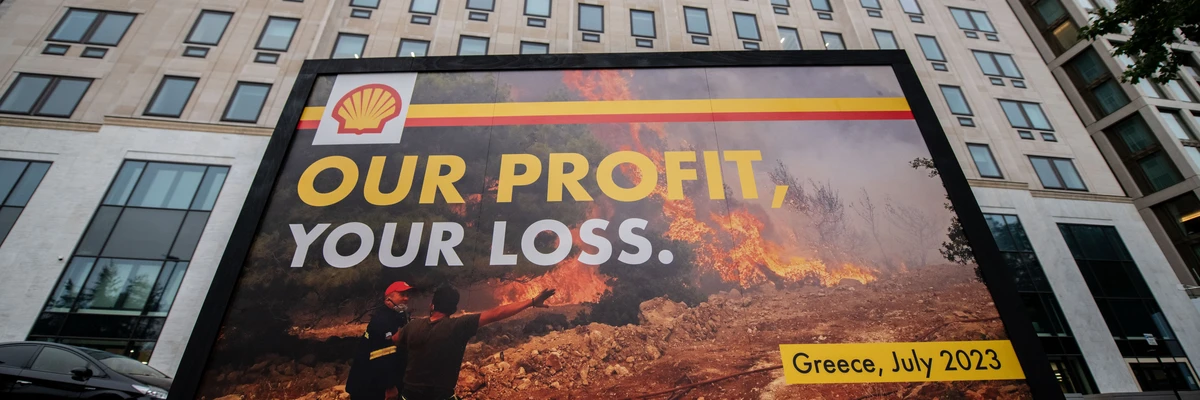
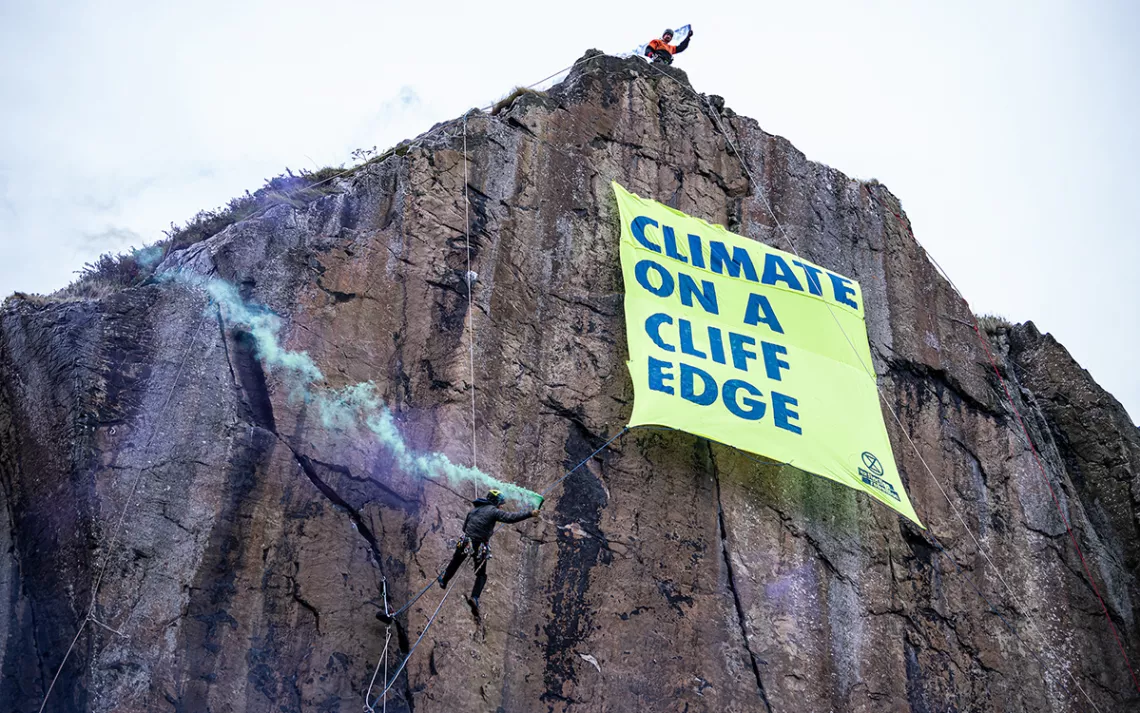
Greenpeace activists display a billboard during a protest outside Shell headquarters on July 27, 2023 in London. (Photo: Handout/Chris J. Ratcliffe for Greenpeace via Getty Images)Experienced climbers scale a rock face near the historic Dumbarton castle in Glasgow, releasing a banner that reads “Climate on a Cliff Edge.” One activist, dressed as a globe, symbolically looms near the edge, while another plays the bagpipes on the shores below. | Photo courtesy of Extinction Rebellion and Mark Richards
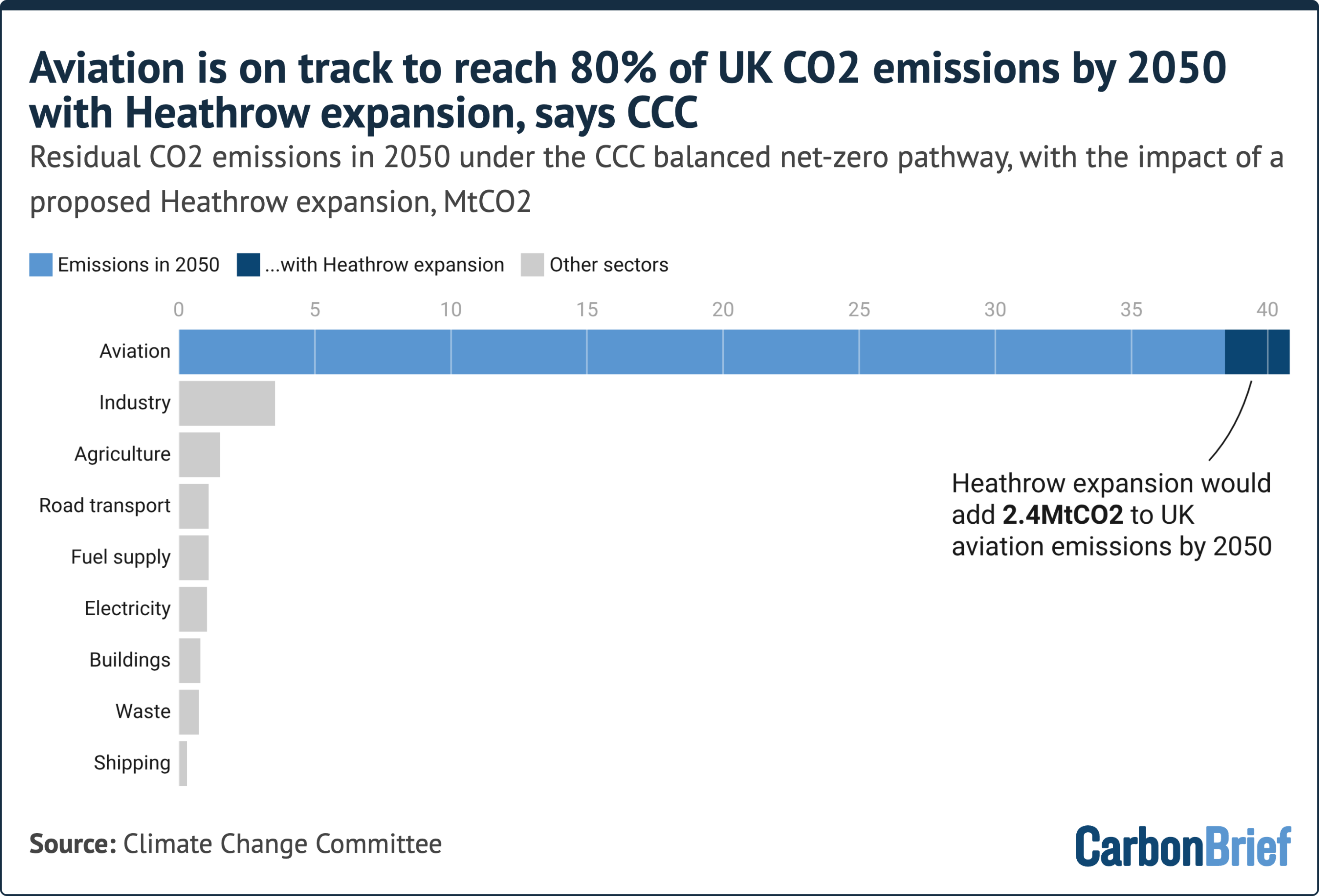
Aviation is on track to be responsible for 80% of the UK’s carbon dioxide (CO2) emissions by 2050, according to the Climate Change Committee (CCC).
Emissions from flying have more than doubled since 1990 – driven by rising passenger numbers – even as the climate impact of every other sector in the UK economy has fallen.
The UK does not have “credible” policies in place to reverse this trend of rising emissions, says the CCC in new advice to the government on future aviation policy.
Yet, even without Heathrow expansion, the CCC says aviation emissions are on track to be higher in 2050 than they are today – reaching 38m tonnes of CO2 (MtCO2).
As the chart below shows, this would account for most of the remaining CO2 from the UK economy, all of which would need to be removed from the atmosphere in order to meet the legal target of net-zero emissions.
Expanding Heathrow would add another 2.4MtCO2 in 2050, amounting to around 5% of all the UK’s emissions. (This would increase to 4.5MtCO2 when expansion is complete in 2054.)
With a final decision on Heathrow expansion expected by 2029, the government asked the CCC for its advice on whether the plan is compatible with the UK’s climate targets.
The CCC has concluded that the UK simply lacks sufficient policies to reduce aviation emissions and “expanding Heathrow would compound the problem”. In a press briefing, CCC chair Nigel Topping told journalists:
“The UK does not currently have a credible plan to reduce [aviation emissions] in line with net-zero, so that creates a serious challenge for meeting our climate commitments.”
The “jet-zero strategy”, launched by the previous Conservative government in 2022, set out plans to cut aviation emissions. However, the Labour government has since accepted that the strategy’s expectations for SAFs, electric planes and fuel-efficiency improvements were unrealistic.
The CCC says a “credible and robust net-zero policy framework for aviation” should be set out in a revised strategy, which is planned for 2027. Only then could Heathrow expansion be aligned with the net-zero goal, adds the committee.
As part of this new strategy, the CCC says the “aviation sector needs to take responsibility for its emissions”. It says policies should be designed based on the “polluter pays” principle, requiring the aviation industry to fund its own SAFs and CO2 removal.
Specifically, the committee says funding will be needed for “engineered removal” technologies, such as direct air carbon capture and storage (DACCS).
These technologies are currently “not yet available at the scale required”, but are vital for the kind of permanent CO2 removal needed to mop up aviation emissions, says the CCC.
(“Natural solutions” such as tree planting are the other main way CO2 is expected to be removed from the atmosphere. However, the CCC envisages these removals offsetting the remaining methane emissions from livestock agriculture in the UK, whereas it says “engineered removals” would be required to remove and store CO2 from flights.)
The CCC acknowledges that placing decarbonisation costs on airlines would likely lead to higher ticket prices. It estimates that this could mean an increase, in 2024 prices, of around £150 for a return trip to Alicante, Spain, and £400 for a return trip to New York by 2050.
However, it says this is preferable to a public spending approach, which would result in the roughly 50% of the population who do not fly paying for flight-related CO2 removals.
In addition, the committee notes that higher costs would help to manage demand for flights, which would otherwise be expected to increase considerably over the coming decades.
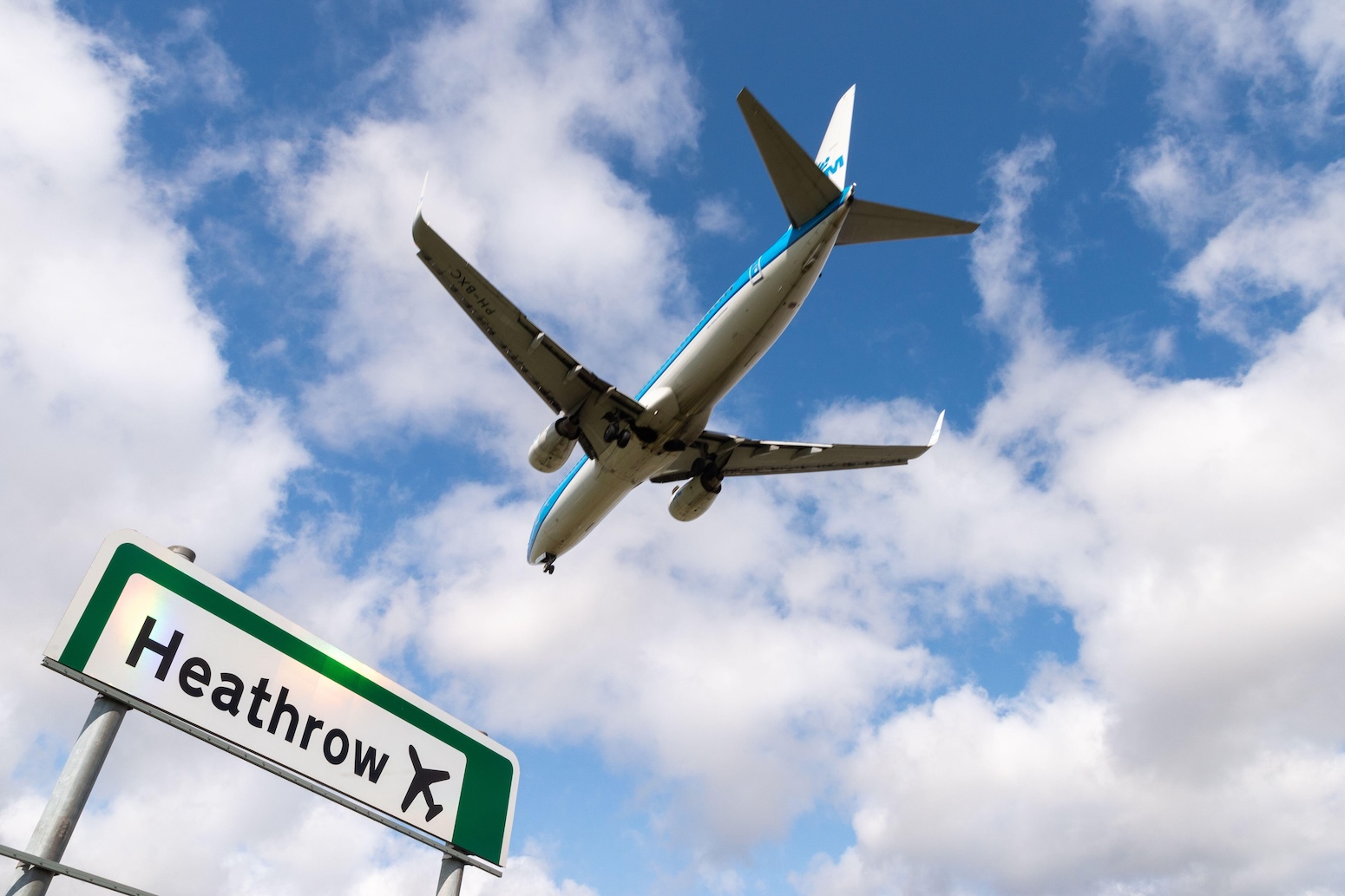
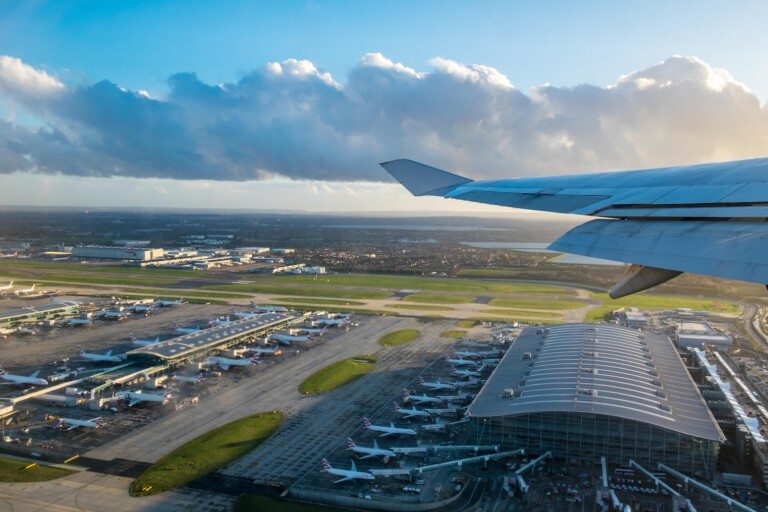
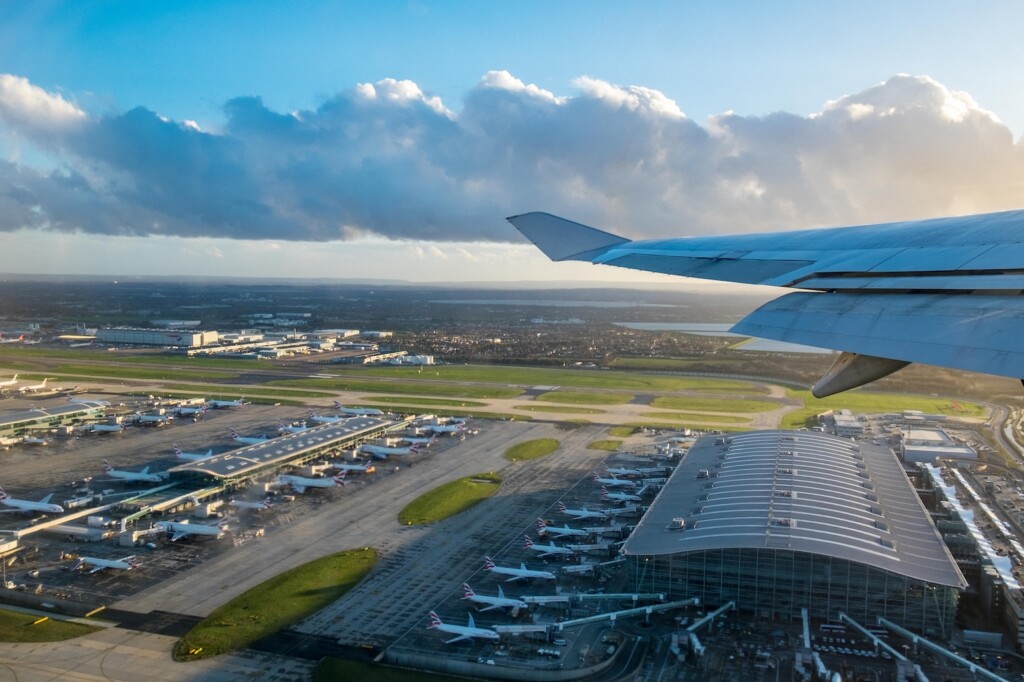
Heathrow airport wants to build a third runway and new terminals. Photograph: Toby Melville/Reuters
Climate Change Committee says government cannot expand airport without requiring aviation industry to clean up its emissions
Heathrow airport should be allowed to expand only if airlines pay for the removal of carbon dioxide from the atmosphere, the government’s climate advisers have said.
…
Nigel Topping, the chair of the CCC, said: “The government cannot expand Heathrow airport without requiring the aviation industry to clean up its emissions. Therefore, the government should legislate policies that require the aviation industry to fully address all of their emissions by 2050, either directly or by purchasing engineered removals. The polluter-pays principle must apply.”
…
But campaigners rejected the CCC’s plan of relying on nascent technologies to wipe out the impact of an expansion that would commit the UK to much higher emissions for decades, and called on ministers to halt all airport expansion.
Tony Bosworth, campaigner at Friends of the Earth, accused the CCC of “pulling its punches”, pointing to recent research by the Tyndall Centre that found SAF and carbon removals were unproven and unlikely to ramp up in time to the extent needed to justify airport expansion.
“The CCC should have made it crystal clear: there is no plausible way to expand Heathrow without wrecking the UK’s climate targets,” he said.
Frequent flying is overwhelming skewed towards the wealthy. In any year, only about half of people in England take a flight abroad, while about 80% of all flights abroad were taken by people who took two or more flights – about a quarter of the population. Frequent flyers – those who took five or more return flights abroad in 2024 – made up only 5% of the population, but accounted for a third of all flights.
Those in the highest income group took 38% of all flights abroad – four times as many flights as those in the lowest income group, according to the National Travel Survey of England in 2024.
The UK government has slashed its hopes for electric planes and “sustainable aviation fuels” (SAFs), ahead of giving the green light to a third runway at Heathrow.
An “ambitious” rollout of new technologies and efficiency upgrades will only cut flight emissions by a quarter over the next two decades, according to forecasts quietly released in June.
This would leave aviation emissions in 2050 nearly 50% higher than expected under the “jet-zero” strategy, launched by the previous Conservative government in 2022.
The Labour government has signalled its support for a contentious third runway at Heathrow airport, with a final planning decision expected by 2029.
Ministers have justified this expansion by citing the rollout of clean-aviation technologies.
Yet, the updated forecasts suggest that rising flight numbers and a reduced role for “techno-fixes” will leave aviation emissions stubbornly high in 2050 – the UK’s legal target for net-zero.
If this is to be compatible with UK climate goals, then these higher emissions from flights in 2050 would need to be taken out of the atmosphere using costly and largely unproven “carbon dioxide removal” technologies – or by planting gigantic new forests.
Emissions up
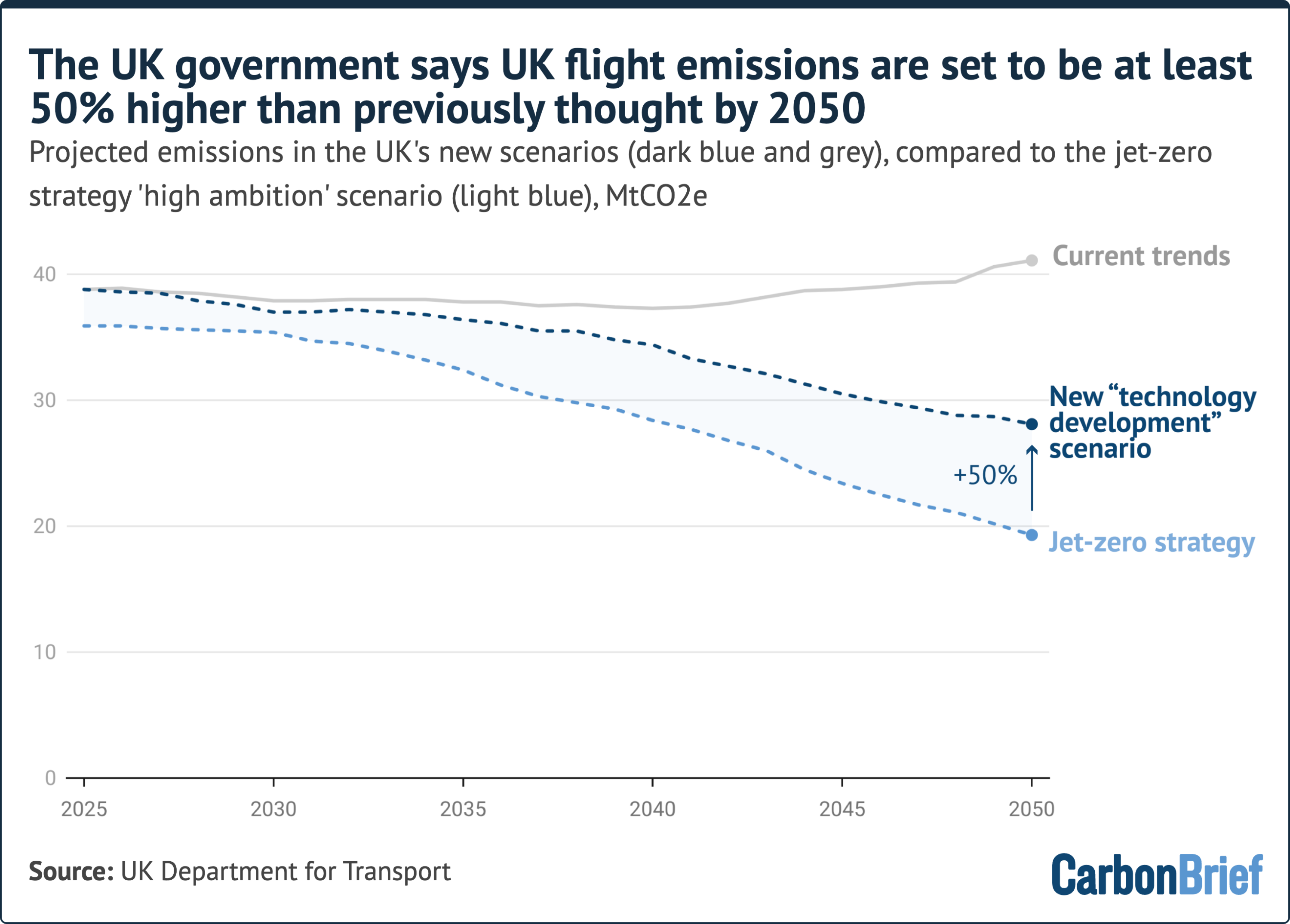
The previous government’s “jet-zero” strategy committed the UK to a “high ambition” pathway that would have seen aviation emissions peak at 38.2m tonnes of carbon dioxide equivalent (MtCO2e) in 2019 and drop to 19.3MtCO2e in 2050.
At the time, the Conservative government said this “clear goal” was achievable, alongside airport expansion and rising flight numbers.
Its strategy relied heavily on the extensive use of early-stage technologies, such as SAFs and battery-powered planes, as well as wider fuel-efficiency improvements.
In public statements, Labour has broadly continued this approach, backing new airport runways while supporting SAFs as a way to curb aviation emissions.
However, the government’s latest forecast, quietly published ahead of the formal approval of a new runway at Heathrow, sets far lower expectations for these technologies.
Its “technology development” pathway, with “ambitious carbon abatement measures”, only sees emissions drop to 28.1MtCO2e in 2050. As the chart below shows, this is around 9MtCO2e higher than the jet-zero strategy’s stated goal – a roughly 50% increase.
The shift is down to much lower expectations for SAF uptake, fuel-efficiency improvements and the roll-out of battery-powered planes, as well as lower international carbon prices.
The government now expects SAFs to make up 30% of aviation fuel by 2050, rather than 50%. It also concedes that SAFs will save less carbon over their lifecycle than previously thought.
SAFs have faced considerable criticism, due to limited supplies and uncertainty around the extent to which they cut emissions. Even meeting the UK’s relatively modest goal of 22% SAF uptake by 2040 would require enormous – potentially unattainable – volumes of waste products, which are currently the main source of the fuel.
For its new forecasts, the government commissioned a separate analysis of likely aircraft fuel-efficiency improvements over the next few decades. This analysis, from the Aviation Impact Accelerator, yielded “less optimistic” projections than earlier work.
Fuel-efficiency improvements have therefore been revised downward from 2% per year in the “jet-zero” strategy to 1.3% in the new “technology development” scenario.
There is also a reduced role for battery-powered planes, with only some of the smallest zero-emissions aircraft expected to be in use by 2035.
Crucially, even making the more limited emissions cuts in the new “technology development” pathway would require greater efforts to decarbonise the aviation sector.
If the UK fails to implement new policies or innovations, while flight numbers continue to rise, then aviation emissions would be even higher in 2050 than they are today.
This is illustrated by the pink “current trends” pathway in the chart above, in which emissions increase to 41.1MtCO2e by 2050.
This is roughly double the amount targeted by the jet-zero strategy and recommended by government climate advisors, the Climate Change Committee (CCC).
Budget ‘busting’
The new forecasts all account for the growth of several UK airports, including “planned Heathrow expansion”. Overall, passenger numbers would be at least 50% higher by 2050.
In contrast, the CCC and other experts have advised that the rise in passenger numbers may need to be limited, in order to keep emissions down.
In order to meet the UK’s net-zero target, any aviation emissions that remain in 2050 would need to be offset by planting many thousands of hectares of new forest, or by relying on costly and largely unproven CO2 removal technologies.
Tim Johnson, director at the Aviation Environment Federation (AEF), says the new forecasts present “a more honest and realistic vision of what’s possible in the next 24 years”. However, he tells Carbon Brief:
“Less reliance on cleaner technology and fuels reopens the debate about the role and scale of greenhouse gas removals and ways to tackle the projected 50% growth in demand for air travel.”
AEF calculations, based on government data and shared with Carbon Brief, suggest that emissions from the third runway at Heathrow would initially be relatively modest, reaching 3.5MtCO2e per year in 2050. Its emissions would then be expected to rise significantly beyond the legal 2050 net-zero deadline.
Previously, the Labour government has explicitly cited SAFs and other new technologies as part of its justification for expanding Heathrow airport.
Dr Lois Pennington, a research associate at the University of Manchester who has analysed Heathrow’s emissions impact, says the government’s new forecast shows “we are projected to be well over aviation’s share of the carbon budget even before a third runway is considered”.
She tells Carbon Brief:
“For Heathrow, it means expansion can no longer be waved through on the promise of technology, and any approvals will be in the full knowledge that it will bust our legally binding carbon budgets.”
Nigel Farage urges you to ignore facts and reality and be a climate science denier like him and his Deputy Richard Tice. He says that Reform UK has received £Millions and £Millions from the fossil fuel industry to promote climate denial and destroy the planet.Donald Trump urges you to ignore facts and reality and be a Climate Science denier like him. He says that he makes millions and millions for destroying the planet, Burn, Baby, Burn and Flood, Baby, Flood.Orcas comment on killer apes destroying the planet by continuing to burn fossil fuels.
“This Government is so pathetically in the pocket of Heathrow bosses and the most wealthy frequent flyers, that it will support this ridiculous and costly plan for expansion, despite the miserable disruption it will cause to everyone else’s daily lives.
“These plans will trash our vital climate targets, and meanwhile cause misery on the roads, all for the benefit of the very richest people.
“This Labour Government must fix its twisted priorities, ditch the aviation obsession, and invest its effort instead in a real green future with high-paid green jobs, warmer homes, and cheaper bills.”