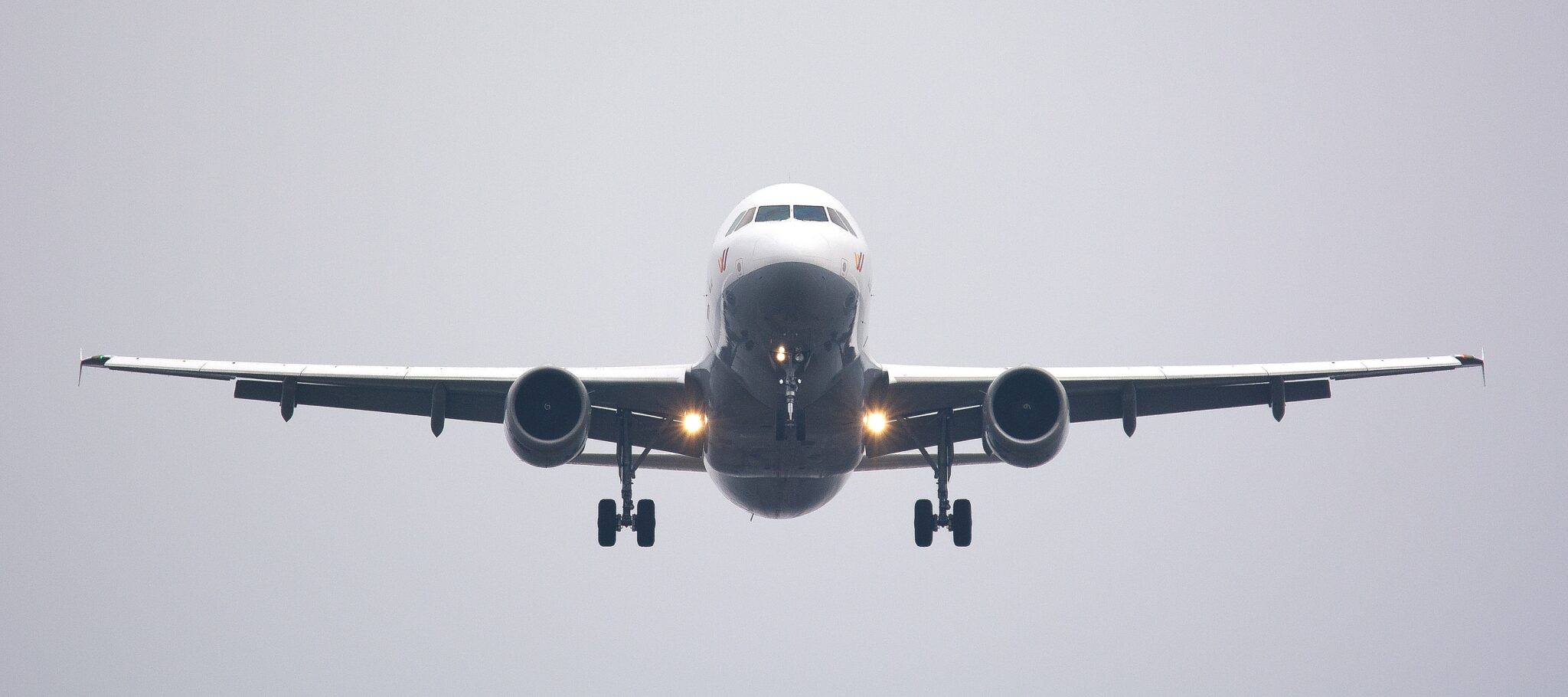
Expanding Heathrow is incompatible with net zero – here’s the evidence

Spread the love

Plane Photography / shutterstock

Richard Sulley, University of Sheffield

The UK government is set to back plans for a third runway at Heathrow, the country’s busiest airport, and to expand two other airports near London: Gatwick and Luton. The move is designed to support the government’s “mission” to grow the economy.

Air transport is notoriously hard to decarbonise. Unlike the energy system, or even road transport, there is no renewable alternative to switch to immediately. If electric or hydrogen planes become reality, it won’t be for many years yet. Therefore it’s not clear this airport expansion can fit within the UK’s legal and arguably moral requirement to cut emissions and remain within its carbon budget.

It certainly goes against what the government’s official advisory body the Committee on Climate Change (CCC) recommends. The CCC’s 2023 report to parliament stated that: “No airport expansions should proceed until a UK-wide capacity management framework is in place to annually assess and, if required, control sector GHG [greenhouse gas] emissions and non-CO₂ effects.”

Those non-CO₂ effects of aviation include water vapour, soot and other gases like nitrous oxides and sulfur dioxide, all released directly into the high atmosphere where they help form heat-trapping clouds. Estimates suggest they could triple the greenhouse impact of aviation.

In 2019, the last year of available data pre-COVID, domestic and international aviation accounted for around 8% of the UK’s total emissions. The non-CO₂ effects makes aviation a larger contributor to climate change than that number suggests.

The sector itself struggles to build a coherent decarbonisation roadmap based solely on “supply-side” improvements to things like fuel efficiency or, in a recent example from EasyJet, thinner paint. The demand side – taking fewer flights, frequent flyer levies, or restrictions on domestic flights as have been introduced in France – is rarely mentioned.

Unfortunately aviation is a prime example of the Jevons effect where any improvement in efficiency has been wiped out by increased demand. With a growing global middle class pursuing a higher consumption lifestyle, aviation emissions continue to grow even while other sectors have shows some efforts to reduce their own.

'3rd runway plane stupid'
A third runway at Heathrow was first proposed back in the 2000s. This photo is from a 2016 protest. Dinendra Haria / shutterstock

The UK has mandated that synthetic aviation fuel (SAF), a more sustainable alternative to regular jet fuel, must make up 10% of aviation fuel by 2030. But only 1.2% of aviation fuel is currently SAF and the industry has not published any plans to show it can scale up in time. Indeed, the sector’s own plans for growth will outstrip efforts to decarbonise through synthetic fuel, delivering a neutral effect at best.

The consumer-facing airport sector has also been accused of greenwash. For instance, Luton Airport recently published adverts making the claim that its own expansion would be stopped if it did not meet stringent environmental targets. However, the Advertising Standards Authority found that consumers would naturally believe that would include air traffic and not just terminal operations (a terminal’s heating or lighting is, of course, largely irrelevant when its core business is as emissions-intensive as flying).

The difficulty of decarbonising aviation while the sector still grows is exemplified by the government’s recently launched consultation on adopting the Corsia carbon offsetting scheme for international flights and how it might work with existing cap and trade schemes. All of which encourage or excuse excess emissions through a charging mechanism.

Growing pains

“Kickstarting economy growth” and “Make Britain a clean energy superpower” are two of the UK government’s six “missions”. However, by expanding airports in support of the former, it risks failing the latter.

A new report by thinktank the New Economics Foundation shows that airport expansion could balance out all of the emissions saved by the government’s clean power plans by 2050.

There is evidence that airport expansion can bring some of the economic benefit that government needs. However, another New Economics Foundation report has found that air travel is no longer a catalyst for productivity growth. So the economic benefits of a new runway are really confined to the airport operation itself – projects for engineers and builders, service jobs for people living near Heathrow, and so on.

Aviation is the privilege of the richer part of society, both globally and within the UK. Figures from Our World in Data shows the richest 50% of the global population produces 90% of the aviation emissions.

While many more UK residents have experienced flying than in the past, most flights are still taken by a small, wealthy subset of the population, which will typically capture the largest share of any new capacity. Each year, around half of British residents do not fly at all.

The focus on London airports for the largest scale expansions will shift the balance of the economy further towards south-east England, and increase inequality within the UK economy. And while these plans might bring some of the GDP gains the government is desperate to deliver, all the evidence shows they will be at the expense of its environmental targets.


Don’t have time to read about climate change as much as you’d like?
Get a weekly roundup in your inbox instead. Every Wednesday, The Conversation’s environment editor writes Imagine, a short email that goes a little deeper into just one climate issue. Join the 40,000+ readers who’ve subscribed so far.


Richard Sulley, Senior Research Fellow, Sustainability Policy, University of Sheffield

This article is republished from The Conversation under a Creative Commons license. Read the original article.

Orcas comment on killer apes destroying the planet by continuing to burn fossil fuels.
Continue ReadingExpanding Heathrow is incompatible with net zero – here’s the evidence

Just Stop Oil protester who scaled M25 gantry sparking Heathrow disruption says she’d do it again

Spread the love

https://www.standard.co.uk/news/london/just-stop-oil-protest-m25-heathrow-cressida-gethin-b1151683.html

Nearly 4,000 British Airways customers were affected by the protest

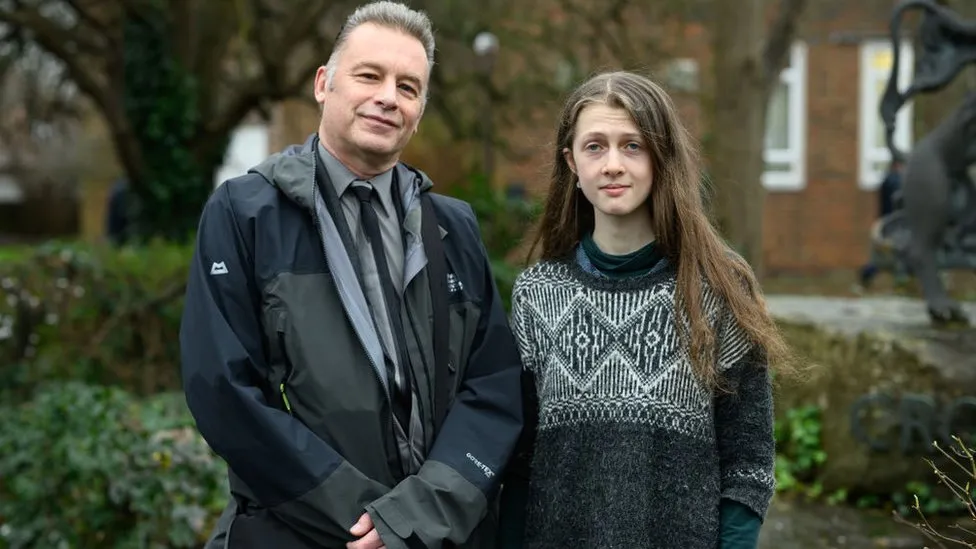
Just Stop Oil activist Cressida Gethin pictured with naturalist Chris Packham.

Just Stop Oil protester who disrupted thousands of journeys at Heathrow by scaling a gantry above the M25 has said she would repeat the stunt.

Cressida Gethin, 22, climbed the gantry in July 2022 to protest the UK reaching its hottest temperature on record, 40C (104F), the day before.

As a result of the protest by the climate activist group, 3,923 British Airways customers were affected by cancellations and delays, a court heard in February.

The protester faces being sent to prison when she is sentenced next month.

In an interview with environmentalist Chris Packham, Gethin said she would like to speak to some of the people affected by the protest as she said that she would have no hesitation protesting in the same way again.

Gethin added that she faced a “very real moral dilemma of knowing that people would be stuck in their cars and missing important events”. 

She continued: “I heard one person missed their parent’s funeral, which I would never want. It doesn’t sit easy with me.”

https://www.standard.co.uk/news/london/just-stop-oil-protest-m25-heathrow-cressida-gethin-b1151683.html

Continue ReadingJust Stop Oil protester who scaled M25 gantry sparking Heathrow disruption says she’d do it again

Tories have taken £291,000 in gifts from airports as Sunak eyes runway U-turn

Spread the love

Original article by Adam Bychawski republished from Open Democracy under a Creative Commons Attribution-NonCommercial 4.0 International licence.

Donations raise eyebrows with Rishi Sunak expected to reject Climate Change Committee advice on banning expansions

Image of a dirty jet passenger aircraft
A dirty jet passenger aircraft

Airport operators have lavished Britain’s last three prime ministers with VIP services worth more than £200,000 since the 2019 election, analysis by openDemocracy has found.

Liz Truss, Boris Johnson and Theresa May are among the Conservative MPs who have accepted more than £275,000 in donations-in-kind from airport operators, while Conservative Party HQ has also taken more than £13,500 in donations from airport operators.

It comes as the government signals its backing for airport expansions, in contrast with advice from its own climate advisers that adding runways to Heathrow and Gatwick would be incompatible with the UK’s net zero goals. The Department of Transport told openDemocracy it was “supportive of airport expansion where it can be delivered in a sustainable way”.

Peter Barclay, the chair of Gatwick Area Conservation Campaign, said gifts to the Conservative Party were “all part of the industry’s efforts to oil the government machine in their favour”.

“It makes you very suspicious of politicians,” he said.

Sarah Clayton, coordinator of climate campaign group AirportWatch said: “Rishi Sunak has no interest in the environment, his only interest is keeping the Conservative Party going.

“The airports will use every little trick in the book in order to make sure that the law isn’t changed so they can get their expansion plans through.”

Truss, Johnson and May have accepted tens of thousands of pounds in donations in kind from Heathrow Airport Ltd and Gatwick Airport Ltd in the last four years. Both airports are hoping to open additional runways.

Theresa May alone accepted donations in kind worth more than £183,000 for the use of the VIP Windsor suite at Heathrow Airport a staggering 44 times, according to declarations made on the Register of Members’ Financial Interests.

Heathrow advertises the private suite as a “unique and luxurious service” that includes a chauffeur and dinner prepared by a Michelin starred chef “served by your own personal butler”.

Boris Johnson also used the suite at least 34 times, accepting stays worth £58,000 from the airport, four of them while still in office. In addition, he made use of a VIP suite at Gatwick Airport for him and his family on three occasions after leaving office, a donation in kind worth more than £4,000.

His short-lived successor Liz Truss also made use of VIP suites at Heathrow and Gatwick, accepting 14 stays worth more than £24,000 after resigning as prime minister.

Theresa May accepted donations in kind worth more than £183,000 for the use of the VIP Windsor suite at Heathrow Airport a staggering 44 times

Tory Party HQ also accepted a £12,500 cash donation from London City Airport Ltd just days after it won the 2019 election, according to the Electoral Commission’s records, while Heathrow Airport Ltd made a “non-cash” donation worth the equivalent of £1,680.00 to the party in October 2022. It did not respond to questions about what the donation actually was.

A further six Conservative MPs have accepted gifts worth almost £7,000 in total from London City Airport Ltd since 2019. Orpington MP Gareth Bacon declared in the Register of Members’ Financial Interests that he received tickets to sporting fixtures worth £1,849 from the airport last year, which is the closest to his constituency.

Tory MPs Nigel Evans, Robert Neill, Paul Scully, Kevin Hollinrake and Gagan Mohindra also declared that they had accepted tickets to sporting events from the airport.

London City had an application to increase the size of its terminal refused by Newham Council in July, but has appealed the decision.

Operators of British airports including Heathrow and Gatwick, as well as the Airport Operators Association (AOA), also sponsor the Future of Aviation All-Party Parliamentary Group of MPs by donating £10,000 a year to pay for its secretariat.

Karen Dee, the chief executive of AOA, recently wrote that she had been “working with MPs on the Future of Aviation All Party Parliamentary Group to lobby the prime minister and chancellor to allow airports to establish arrivals duty-free stores and to restore VAT-free shopping for international tourists”.

Original article by Adam Bychawski republished from Open Democracy under a Creative Commons Attribution-NonCommercial 4.0 International licence.

Continue ReadingTories have taken £291,000 in gifts from airports as Sunak eyes runway U-turn