Why LA is on fire (it’s not just climate change)
The fires that have engulfed Los Angeles cap the hottest decade in history.
Each year in the last ten was record-warm, but 2024 was the warmest ever recorded. Last year, Earth was 1.6°C hotter than the temperature average of the late 19th century, which was before widespread fossil fuel burning had significantly altered the climate.
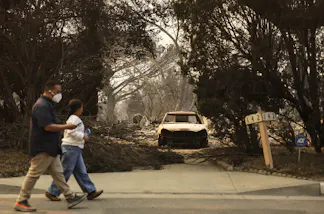
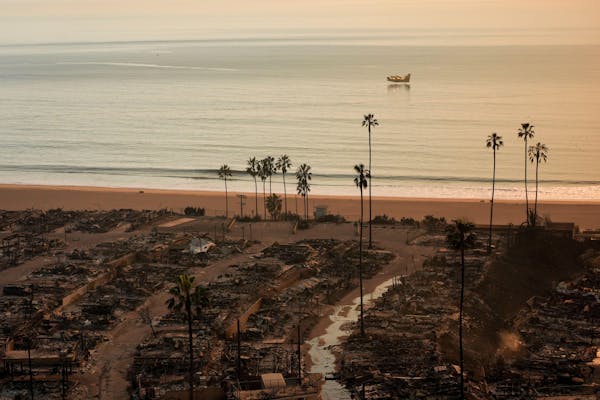
Still, the conflagrations which have so far claimed 25 lives and razed thousands of homes are not inevitable – even on our overheating planet.
“While climate change sets the stage for larger and more intense fires, humans are actively fanning the flames,” says Virginia Iglesias, a climate scientist at the University of Colorado Boulder.
This roundup of The Conversation’s climate coverage comes from our award-winning weekly climate action newsletter. Every Wednesday, The Conversation’s environment editor writes Imagine, a short email that goes a little deeper into just one climate issue. Join the 40,000+ readers who’ve subscribed.
Extreme heat dries out vegetation and the soil. Wildfires ignite more easily, spread faster and burn with greater intensity in these conditions, as parched land is more flammable. In the western US, aridity caused by climate change has helped double the amount of combustible forest since 1984.
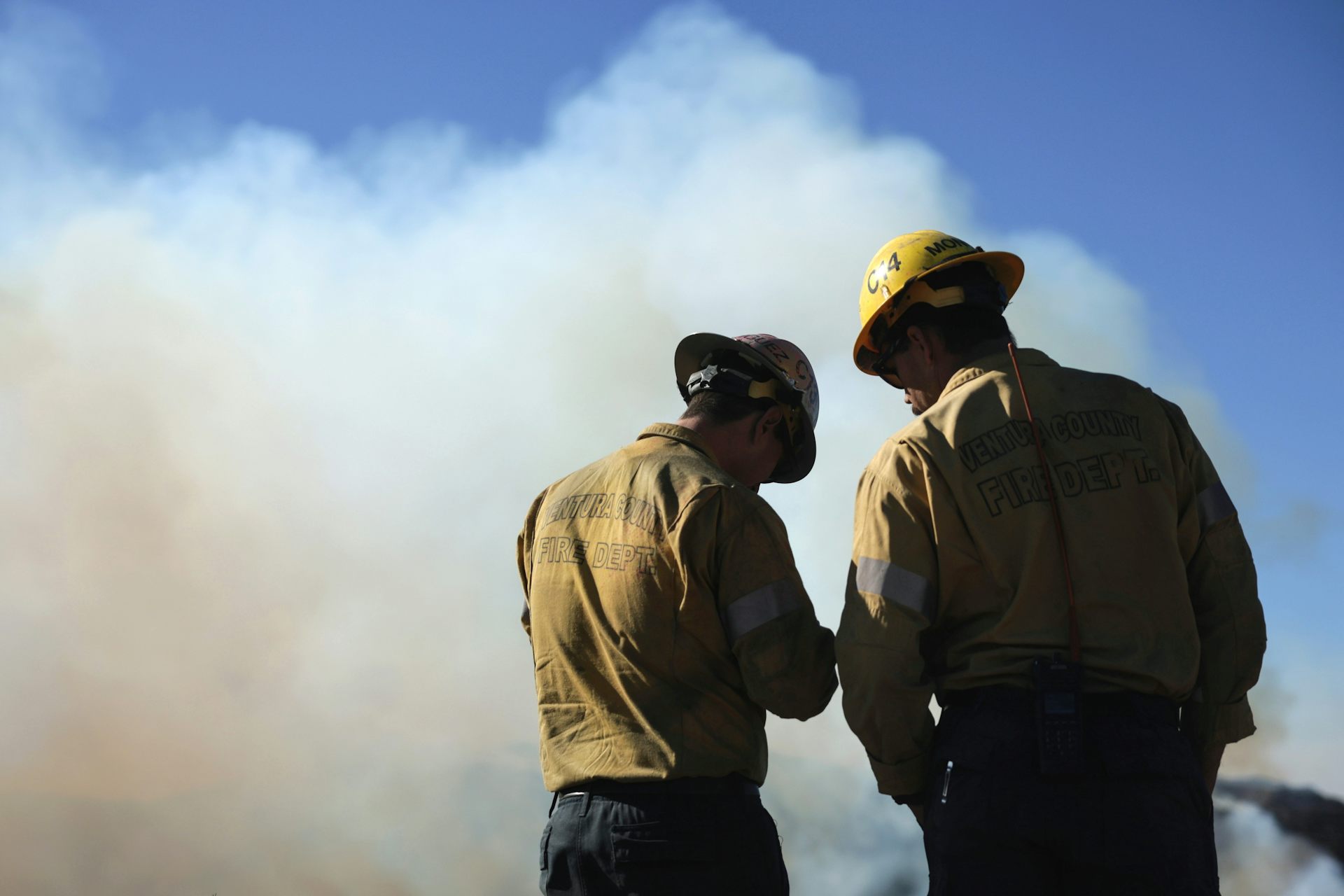
Nights are warming faster than days globally, and dusk has brought no reprieve from the fires menacing the residential areas of Pacific Palisades and Altadena. It’s been more than a week since the first spark but firefighters warn several more may pass before the flames are fully contained.
High winds and whiplash
Something is filling the fires with oxygen and spreading their embers to dry brush. The Santa Ana winds that blow down the San Gabriel Mountains between autumn and January lose moisture and gain heat as they rush downslope, and these gusts reached hurricane strength (exceeding 80 miles per hour) at the start of 2025.
“When the wind is blowing like this, there is very little chance of stopping fires,” says Jon Keeley, a plant ecologist at the University of California, Los Angeles.
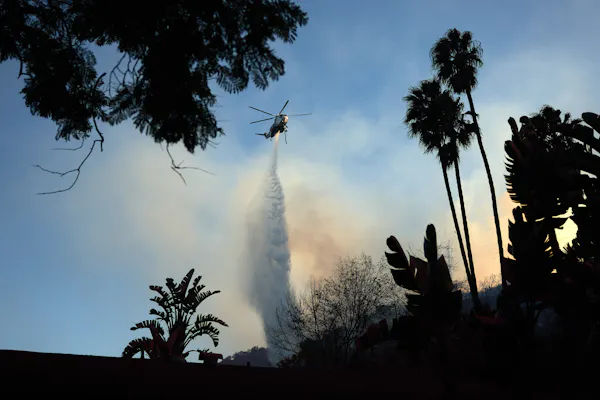
Santa Ana would cause much less havoc in a more typical wet season, which runs from October to April in California. Ming Pan, a hydrologist who tracks the state’s water supplies, estimates that soil moisture in southern California is in the bottom 2% of historical records for early January.
In other words, the area around LA is about as dry as scientists have ever known it to be at this time of year. Why? Well, southern California has received less than 10% of the rain it would normally get from October onward. But it had the opposite problem last winter.
“Unusually wet winters in both 2022-23 and 2023-24 led to increased vegetation growth, providing more fuel for the fires,” says Doug Specht, a geographer at the University of Westminster.
“This cycle of wet and dry extremes, known as ‘hydroclimate whiplash’, is part of the increasingly intense climate cycles caused by climate change.”
Affluent LA is the most recent arena of climate disaster to capture the world’s attention. Yet it is the poorest 20% of humanity who have felt the sting of whiplashes between drought and downpour most keenly according to Specht.
When unusually heavy rain meets baked ground that cannot easily absorb it, as it did across much of east Africa in spring 2024, flash floods and landslides follow.
‘Perpetually on the brink of catastrophe’
Now we come to the more immediately tractable causes of these fires.
“Fire is a natural process that has shaped ecosystems for over 420 million years,” Iglesias says.
“Indigenous people historically used controlled burns to manage landscapes and reduce fuel buildup. However, a century of fire suppression has allowed vast areas to accumulate dense fuels, priming them for larger and more intense wildfires.”
European colonisation has transformed relationships with the land. Subsequent arrivals to southern California have included invasive plants capable of overrunning native flora and forming dense, uninterrupted fuel beds.
The legacy of these fires may be more invasive plants, and more flammable landscapes. That’s because invasive species are typically better at exploiting extreme weather, their tendrils colonising land disturbed by fire before native species can recover.
The overwhelming majority of wildfires that affect people are also ignited by them, intentionally or otherwise. Lightning has been ruled out for the LA fires so that leaves a wealth of human explanations: arson, unattended campfires, overheating engines or sparks from power lines that utilities have neglected to replace.
“More people now live in and at the edges of wildland areas, and the power grid has expanded with them. That creates more opportunities for fires to start,” Keeley adds.
The Eaton fire which erupted near Altadena on January 7 would have probably burned out in citrus orchards 50 years ago. Today, there is no buffer between homes and the wildland, Keeley says.
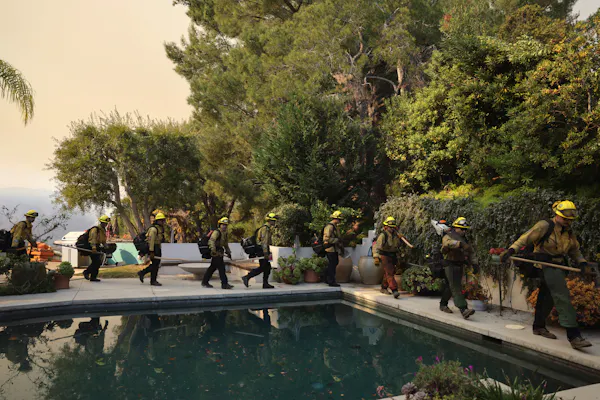
Whether it was wise to bring flammable homes and cars into this fire-adapted wildland is a debate that should have started nearly a century ago, after the catastrophic Malibu fire in 1930. It didn’t, and late urban historian Mike Davis had a lot to say about why.
“Davis, who died in 2022, painted a vivid, if pessimistic picture of Los Angeles as both a real and imagined city perpetually on the brink of catastrophe,” says Alexander Howard, a senior lecturer in English and writing at the University of Sydney.
“Davis’ Los Angeles is a place where – as he comprehensively details – commercial greed overrides common sense and the social good, where institutional racism marginalises vulnerable communities, and where wilful political inertia ensures history repeats itself with devastating consequences.”
Davis criticised liberal California politicians who greeted each new fire with calls to cut greenhouse gas emissions, but continued to allow real estate developers to “profitably but insanely, [build] in high-fire-risk areas”.
Although motivated by greed, these developers were not alone in their assessment of southern California as a tranquil paradise ripe for luxury housing. LA’s urbanisation occurred “during one of the most unusual episodes of climatic and seismic benignity” according to Davis, who traced natural disasters and climate change back several centuries.
“These spans are too short to serve as reliable proxies for ecological time or to sample the possibilities of future environmental stress,” he writes. “In effect, we think ourselves gods upon the land but we are still really just tourists.”
Jack Marley, Environment + Energy Editor, The Conversation
This article is republished from The Conversation under a Creative Commons license. Read the original article.
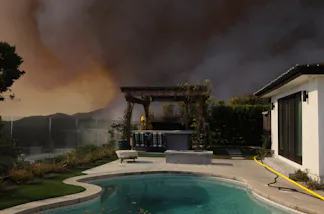
Ecology of Fear: Mike Davis’ history of LA and natural disaster is re-read whenever fire rages in California
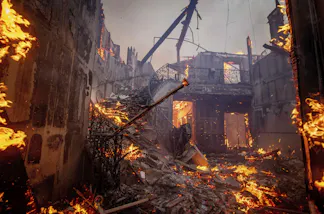
LA fires: Why fast-moving wildfires and those started by human activities are more destructive and harder to contain
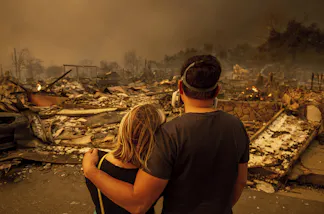
How Santa Ana winds fueled the deadly fires in Southern California