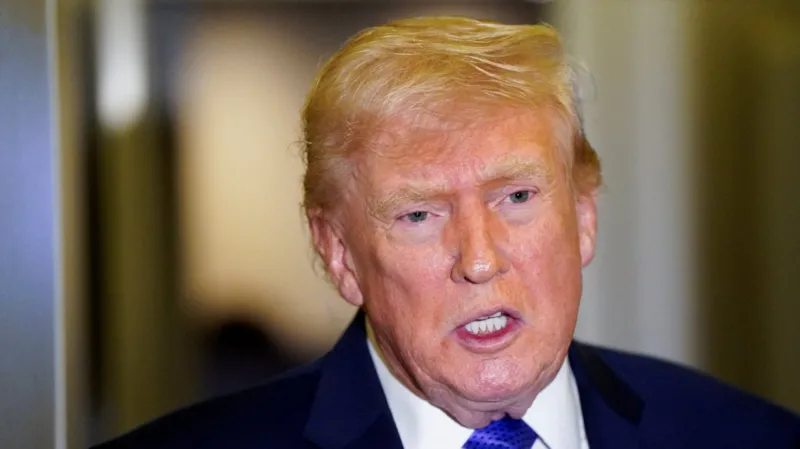
US President Donald Trump has expressed his opposition to the Chagos deal
The British government has not given permission for the US to use UK military bases to support potential US strikes on Iran, the BBC understands.
The US has in the past used RAF Fairford, in Gloucestershire, and the UK overseas territory of Diego Garcia, in the Indian Ocean, to carry out strikes in the Middle East region.
A UK government spokesperson said: “As routine, we do not comment on operational matters.”
The US has been pressuring Iran to agree to curb its nuclear programme.
It has threatened possible strikes if it fails to do so and has moved warships, aircraft and other military assets to the region in preparation for a possible strike.
At the same time, some progress has been reported at talks between American and Iranian negotiators in Switzerland.
…
Insiders believe the Pentagon’s preparations for possible strikes on Iran – which could potentially be launched from Diego Garcia – may have shifted the president’s understanding of the significance of the island, the largest in the Chagos archipelago.
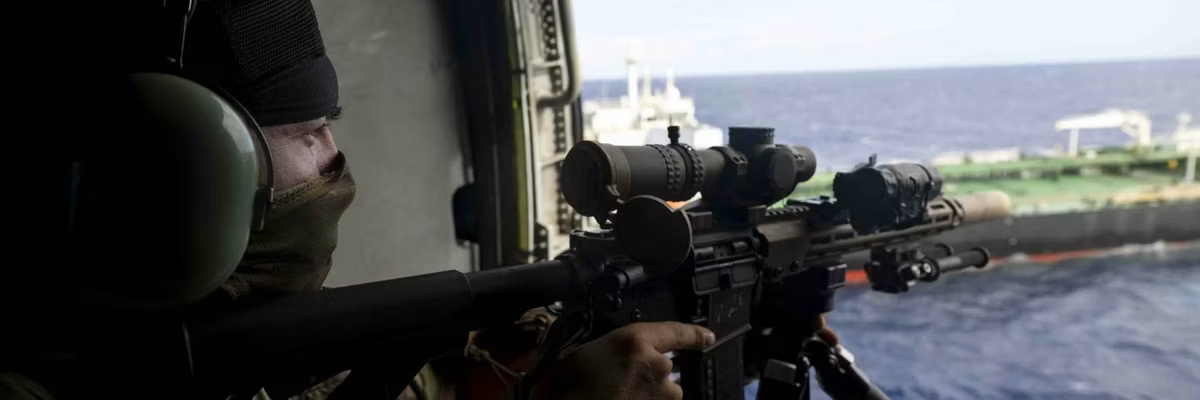
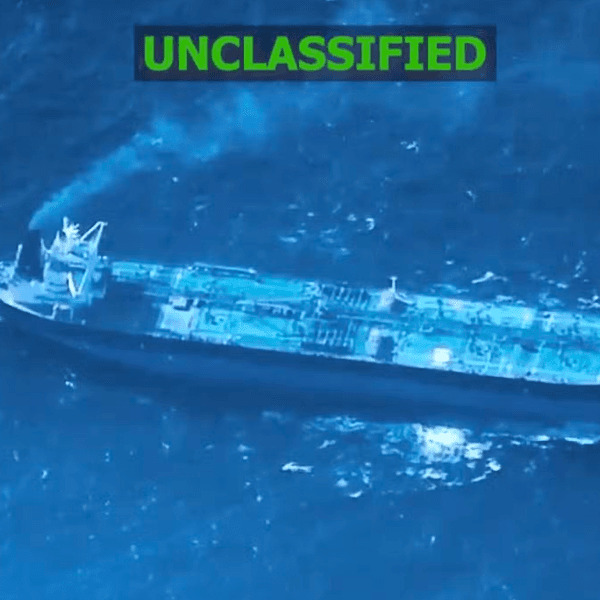
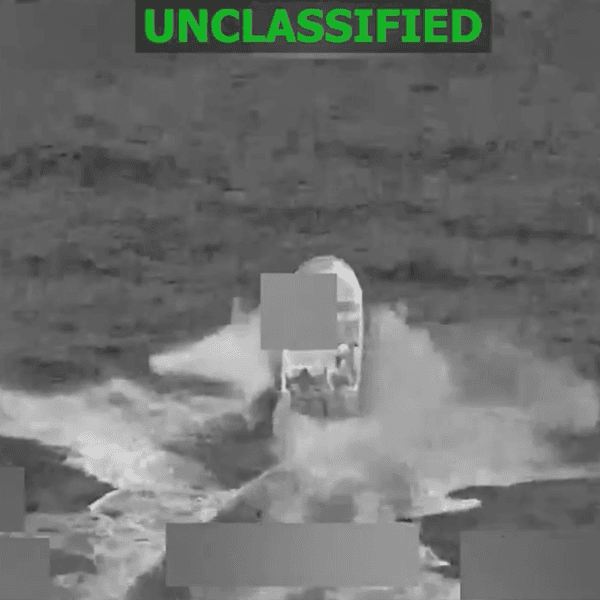
The US Department of Defense announced on February 9, 2026 that military forces boarded a tanker in the Indian Ocean sanctioned as part of President Donald Trump’s targeting of Venezuelan oil. (Photo by the US Department of Defense/X)
“The Donroe Doctrine is not simply a vision for the hemisphere. It is a doctrine of global domination,” said one critic.
President Donald Trump’s blockade of Venezuelan oil—condemned as “piracy” by critics around the world—continued on Monday, with the US Department of Defense announcing that overnight, “military forces conducted a right-of-visit, maritime interdiction and boarding on the Aquila II without incident” in the Indian Ocean.
“When the Department of War says quarantine, we mean it. Nothing will stop DOW from defending our homeland—even in oceans halfway around the world,” the Pentagon declared on social media, using Trump’s preferred department name. “The Aquila II was operating in defiance of President Trump’s established quarantine of sanctioned vessels in the Caribbean. It ran, and we followed.”
“The Department of War tracked and hunted this vessel from the Caribbean to the Indian Ocean,” the department continued. “No other nation on planet Earth has the capability to enforce its will through any domain. By land, air, or sea, our armed forces will find you and deliver justice.”
“You will run out of fuel long before you will outrun us,” the Pentagon added. “The Department of War will deny illicit actors and their proxies the ability to defy American power in the global maritime domain.”
The department also shared a video and photos from the operation, which Defense Secretary Pete Hegseth acknowledged during a visit to the Bath Iron Works shipyard in Bath, Maine, a stop on his national Arsenal of Freedom tour.
Following the US raid to apprehend then-President Nicolás Maduro in early January, several tankers fled the Venezuelan coast, including the ship that was boarded in the Indian Ocean overnight.
Hegseth vowed to eventually capture all those ships, telling a group of shipyard workers in Maine on Monday that “the only guidance I gave to my military commanders is none of those are getting away.”
“I don’t care if we got to go around the globe to get them; we’re going to get them,” he added.
Citing an unnamed dense official, the AP also reported that “the Aquila II has not been formally seized and placed under US control,” unlike seven other Venezuela-linked tankers previously taken by the Trump administration. Instead, the news agency explained, the Panamanian-flagged ship “is being held while its ultimate fate is decided by the US.”
Reutersnoted that Aquila II “was carrying about 700,000 barrels of Venezuelan heavy crude bound for China,” based on schedules from the Venezuelan state oil and gas company, PDVSA.
In addition to Trump’s efforts to hand Venezuela’s nationalized oil industry over to fossil fuel companies that helped him secure another term, the president is ramping up US pressure on the Cuban economy by depriving the island nation of Venezuelan oil.
As Common Dreamsreported earlier Monday, David Adler, co-general coordinator of Progressive International, accused Trump of “laying siege to the island of Cuba: asphyxiating its people, shuttering its hospitals, starving them of food.”
After news of US forces boarding the Aquila II broke, Adler added: “Jesus christ. The United States is now intercepting oil tankers in the INDIAN OCEAN that dare to carry oil to starving Cuba. The Donroe Doctrine is not simply a vision for the hemisphere. It is a doctrine of global domination.”
Donald Fuhrump says that Amerikkka doesn’t bother with crimes or charges anymore, not being 100% Amerikkkan and opposing his real estate intentions is enough.Elon Musk urges you to be a Fascist like him, says that you can ignore facts and reality then.Orcas discuss Donald Trump and the killer apes’ concept of democracy. Front Orca warns that Trump is crashing his country’s economy and that everything he does he does for the fantastically wealthy.
As threats of an Israeli strike on Iran grow louder, the United States is making quiet but unmistakable moves of its own. Over the past month, Washington has quietly repositioned strategic bombers and fighter squadrons to Diego Garcia, a remote U.S. military outpost in the Indian Ocean, squarely within striking distance of Tehran.
The official rationale is force protection. But the scale and nature of the deployments have sparked speculation that Washington is laying the groundwork for potential military involvement in an Israeli-led operation, or, at the very least, sending a message to Tehran that it won’t stand in the way.
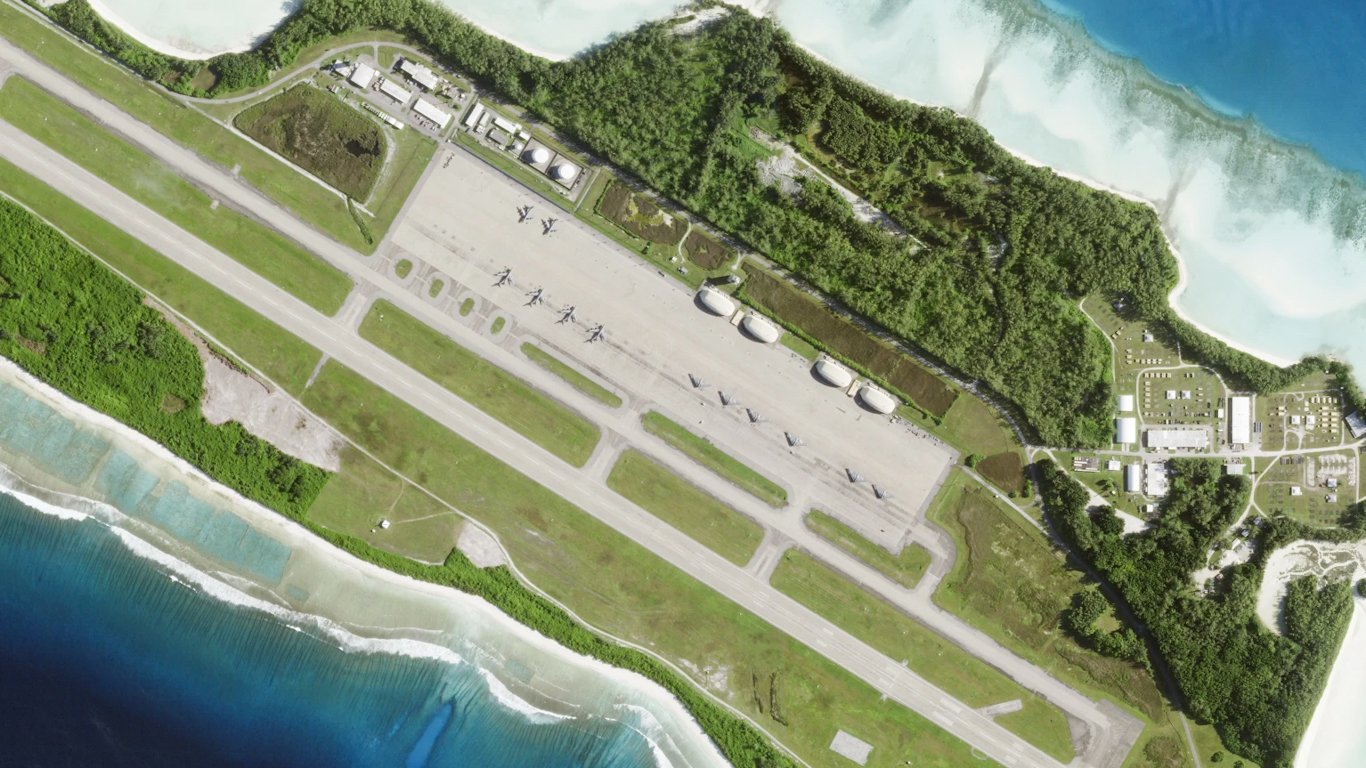
Roughly a month ago, the U.S. Air Force deployed six B-2 Spirit bombers to Diego Garcia, a third of its active fleet of nuclear-capable stealth aircraft. These bombers, capable of flying directly from the U.S. to targets across the globe, don’t require forward deployment to be effective. Which is why their presence on a remote island in the Indian Ocean is raising eyebrows.
The B-2s have reportedly been used in prior strikes against Ansar Allah targets in Yemen, though with limited strategic effect. Following the declared conclusion of U.S. operations in Yemen, at least some of the B-2s were replaced by four B-52 strategic bombers, another long-range platform associated with show-of-force missions.
But then, additional firepower arrived. An entire squadron of F-15E Strike Eagle fighter jets was flown to the base. While these jets have strike capabilities, open-source intelligence analysts suggest they were likely deployed for base defense. That assessment, if correct, underscores that the Pentagon sees Diego Garcia not just as a staging ground, but as a potential target in a broader escalation.
Meanwhile, intelligence signals point to real movement on the Israeli side. A CNN report this Tuesday cited intercepted communications and activity on the ground indicating that Israel is preparing to strike Iranian nuclear facilities. U.S. officials reportedly believe the plans are active and serious.
In April, Donald Trump remarked that Israel would “lead” any such operation. That comment was interpreted by many as a nod of support, if not a green light, from Washington. Israeli Prime Minister Benjamin Netanyahu, for his part, has repeatedly warned that his government will not allow Iran to become a nuclear weapons state.
Yet even as diplomatic channels remained open, the introduction of new U.S. “red lines” appears to have derailed progress. U.S. Middle East envoy Steve Witkoff recently declared that Iran must halt all uranium enrichment, a demand not included in the original 2015 nuclear agreement, the Joint Comprehensive Plan of Action (JCPOA).
Iranian officials rejected the move outright. Foreign Minister Abbas Araghchi reiterated that enrichment is a sovereign right and a non-negotiable issue. Ayatollah Seyyed Ali Khamenei dismissed the new U.S. conditions as “nonsense.”
And on May 22, Araghchi issued a sharper warning: Iran, he said, would take “special measures to defend its nuclear facilities” if Israeli threats continued. The statement was deliberately vague, but left little doubt that Tehran is preparing for contingencies.
In Washington, meanwhile, influential think tanks are ratcheting up pressure for a hardline approach. The Washington Institute for Near East Policy (WINEP) has called for the complete dismantling of Iran’s enrichment infrastructure. The Foundation for Defense of Democracies (FDD) has urged more sanctions. The Atlantic Council argues the U.S. must avoid “reviving Obama’s Iran deal.”
Simultaneously, Dana Stroul, a former Biden official now at WINEP, has argued that Iran’s current weakness presents an opportunity for military action. Her view echoes a growing consensus across Washington’s think tank circuit: that Tehran is vulnerable, and now is the moment to strike.
These are the same voices that helped shape past U.S. interventions in the region. Their resurgence now, alongside tactical military deployments and rhetorical escalations, suggests a familiar pattern.
What’s missing from the conversation is any real public debate about the consequences. Not just for Iran, but for U.S. interests, regional stability, and the American public. A confrontation with Iran would carry significant consequences, yet few in Washington have publicly questioned whether such a conflict serves America’s national interest, save for outliers like Rep. Thomas Massie, who has drawn fire from powerful lobbies simply for asking whether this is our fight to begin with.
The buildup at Diego Garcia may be interpreted as precaution. But it’s also a reminder of how quickly precaution becomes policy, and policy becomes war, especially when shaped by proxies, pressure groups, and allies with very different interests.
Wars don’t always begin with votes. In fact, they often begin with quiet deployments far from view, and even farther from the American people they will ultimately affect.
Feature photo | This satellite image from Planet Labs PBC shows six U.S. B-2 stealth bombers parked at Camp Thunder Cove in Diego Garcia on April 2, 2025. Though officially deployed for operations in Yemen, the presence of these nuclear-capable aircraft in striking range of Iran has raised concerns that the U.S. is quietly preparing to support a potential Israeli attack. Photo | AP
Robert Inlakesh is a political analyst, journalist and documentary filmmaker currently based in London, UK. He has reported from and lived in the occupied Palestinian territories and hosts the show ‘Palestine Files’. Director of ‘Steal of the Century: Trump’s Palestine-Israel Catastrophe’. Follow him on Twitter @falasteen47
Neo-Fascist Climate Science Denier Donald Trump says Burn, Baby, Burn.Elon Musk urges you to be a Fascist like him, says that you can ignore facts and reality then.
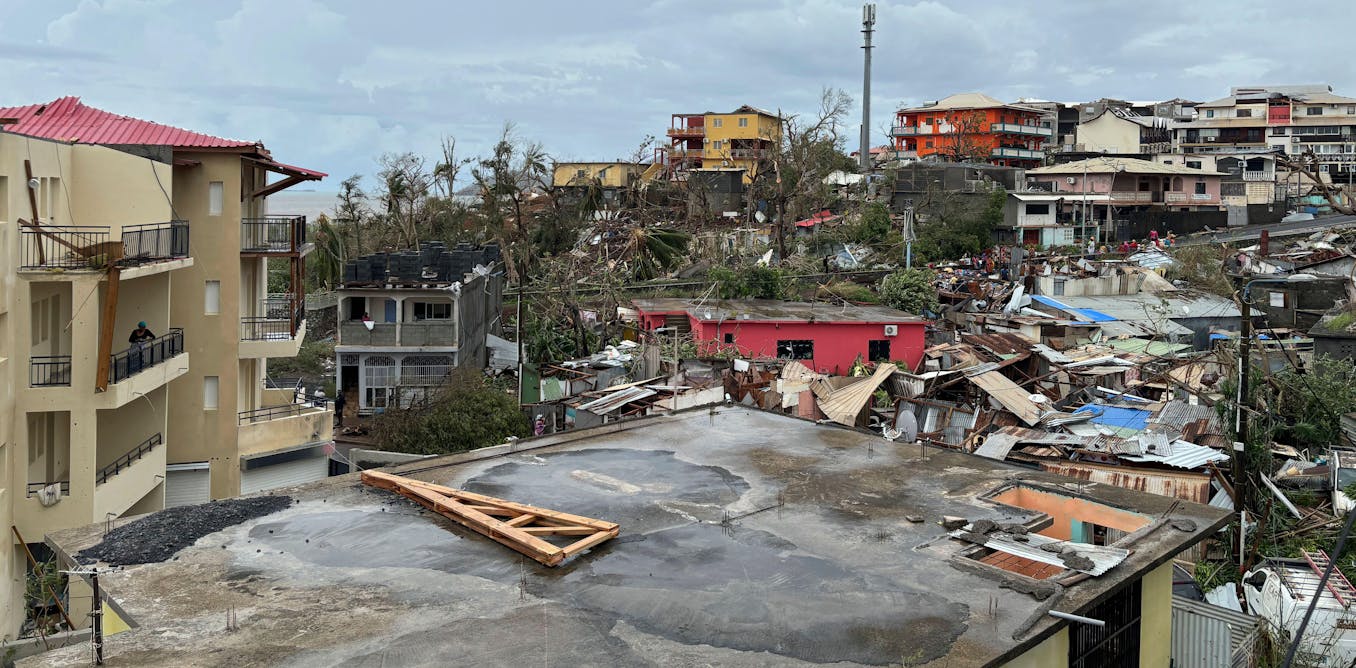
Damaged houses in Mamoudzou, in the French Indian Ocean territory of Mayotte on December 16 2024 after being battered by the islands’ worst cyclone in nearly a century. Associated Press / Alamy Stock Photo
Cyclone Chido was an “intense tropical cyclone”, equivalent to a category 4 hurricane in the Atlantic. It made landfall in Mayotte, a small island lying to the north-west of Madagascar on December 14, generating wind gusts approaching 155mph (250km/hr). Later on, it hit Mozambique, East Africa with the same ferocity.
This storm skirted north of Madagascar and affected the Comoros archipelago before making landfall in Mozambique. It is well within the range of what is expected for this part of the Indian Ocean. But this region has experienced an increase in the most intense tropical cyclones in recent years. This, alongside its occurrence so early in the season, can be linked to increases in ocean temperatures as a result of climate change.
News of the effects of tropical cyclone Chido in Mayotte, Mozambique and Malawi continues to emerge. Current estimates suggest 70% of Mayotte’s population have been affected, with over 50,000 homes in Mozambique partially or completely destroyed.
Ongoing conflict in Mozambique and undocumented migration to Mayotte will have played a key role in the number of deaths and the infrastructure damage.
Assessing how these cyclones characteristics are changing across southern Africa is part of the research we are involved in. Our team also studies how to build resilience to cyclones where conflict, displacement and migration magnify their effects.
A human-made disaster?
The risk that tropical cyclones pose to human life is exacerbated by socioeconomic issues. Migrants on Mayotte, many of whom made perilous journeys to escape conflict in countries such as the Democratic Republic of Congo, now make up more than half of the island’s population.
Precarious housing and the undocumented status of many residents reportedly made the disaster more deadly, as people feared evacuation would lead them to the police. On islands with poor infrastructure such as Mayotte, there is often simply nowhere safe to go. It takes many days for the power network and drinking water supply to be restored.
The situation is particularly complex in Mozambique. The ongoing conflict and terrorist violence, coupled with cyclones, including Kenneth in 2019, has caused repeated evacuations and worsening living conditions. Cabo Delgado and Nampula in the far north of Mozambique, the provinces most affected by both Chido and the conflict, rank among the poorest and most densely populated in the country due to limited education, scarce livelihood options and an influx of people displaced by violence.
As of June 2024, more than half a million people remained without permanent homes in the region, many living in displacement camps. That number is likely to rise significantly after Chido.
Compounding the crisis, Chido’s landfall so early in the cyclone season meant that the usual technical and financial preparations were not yet fully ramped up, with low stock levels delaying the timely delivery of aid. Unrest following elections in November hampered preparations further, cutting the flow of resources and personnel needed for anticipatory action and early response.
Tropical cyclones in a warmer world
Warmer sea surface temperatures not only provide more fuel for stronger storms, but may also expand the regions at risk of tropical cyclones.
Climate simulations predict that storms will continue getting stronger as we further warm our world, and could even lead to an unprecedented landfall as far south as the Mozambican capital, Maputo.
Scientists carry out attribution studies to determine how climate change contributed to specific events. Scientists undertaking rapid attribution studies of Chido have found that the ocean surface temperatures along the path of the storm were 1.1°C warmer than they would have been without climate change. So, temperatures this warm were made more than 50 times more likely by climate change. Another study focusing on Chido itself concluded that the cyclone’s winds were 5% faster due to global heating caused by burning fossil fuels, enough to bump it from a category 3 to a category 4 storm.
Intense winds are not the only hazard. Scientists are confident that tropical cyclones will dump more rain as a result of climate change. A trend towards slower-moving storms has been observed, causing more of that rain to accumulate in a single location, resulting in floods.
Cyclone Freddy delivered a year’s worth of rain to southern Malawi in just four days in March 2023. Storm surges, exacerbated by sea level rise, also raise the scale of flooding, as in the devastating Cyclone Idai in March 2019. An increase in the number of storms that rapidly intensify, as Chido did before landfall in Mayotte has also been linked to climate change, which makes it harder to provide early warnings.
To improve resilience to future cyclones, conflict, migration and social dynamics must be considered alongside climate change, without this, displaced and migrant communities will continue to be the most affected by the risks that climate change poses.
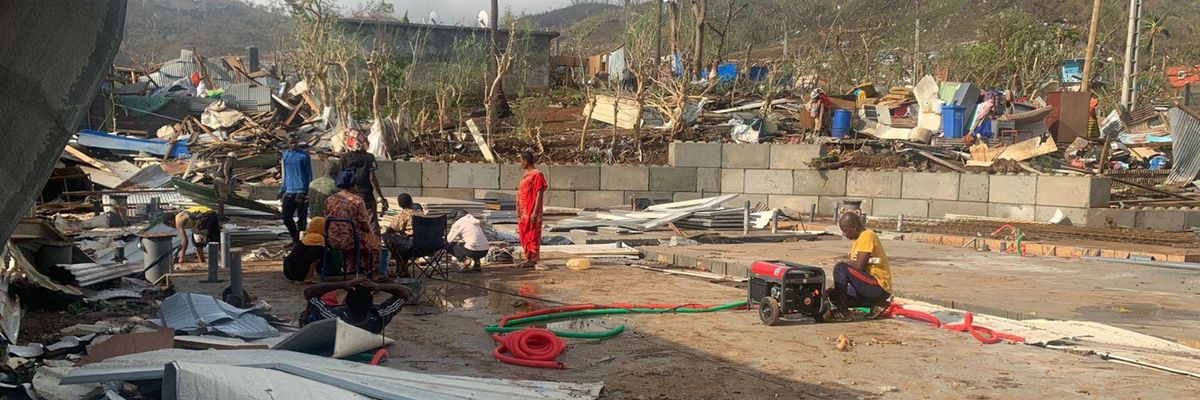
A photo taken on December 15, 2024 shows residents sitting among piles of debris of metal sheets and wood after homes were destroyed by the cyclone Chido that hit France’s Indian Ocean territory of Mayotte. (Photo: Kwezi/AFP via Getty Images)
“You feel like you are in the aftermath of a nuclear war,” said one resident. “I saw an entire neighborhood disappear.”
Undocumented migrants living in informal settlements in the French territory of Mayotte were among those whose lives and livelihoods were most devastated by Cyclone Chido, a tropical cyclone that slammed into the impoverished group of islands in the Indian Ocean over the weekend.
Authorities reported a death toll of at least 20 on Monday, but the territory’s prefect, François-Xavier Bieuville, told a local news station that the widespread devastation indicated there were likely “some several hundred dead.”
“Maybe we’ll get close to a thousand,” said Bieuville. “Even thousands… given the violence of this event.”
Mayotte, which includes two densely populated main islands, Grande-Terre and Petite-Terre, as well as smaller islands with few residents, is home to about 300,000 people.
The territory is one of the European Union’s poorest, with three-quarters of residents living below the poverty line, but roughly 100,000 people have come to Mayotte from the nearby African island nations of Madagascar and Comoros in recent decades, seeking better economic conditions.
Many of those people live in informal neighborhoods and shacks across the islands that were hardest hit by Chido, with aerial footage showing collections of houses “reduced to rubble,” according toCNN.
“What we are experiencing is a tragedy, you feel like you are in the aftermath of a nuclear war,” Mohamed Ishmael, a resident of the capital city, Mamoudzou, told Reuters. “I saw an entire neighborhood disappear.”
Bruno Garcia, owner of a hotel in Mamoudzou, echoed Ishmael’s comments, telling French CNN affiliate BFMTV: “It’s as if an atomic bomb fell on Mayotte.”
“The situation is catastrophic, apocalyptic,” said Garcia. “We lost everything. The entire hotel is completely destroyed.”
Residents of the migrant settlements in recent years have faced crackdowns from French police who have been tasked with rounding up people for deportation and dismantling shacks.
The aggressive response to migration reportedly led some families to stay in their homes rather than evacuate, for fear of being apprehended by police.
Now, some of those families’ homes have been razed entirely or stripped of their roofs and “engulfed by mud and sheet metal,” according to Estelle Youssouffa, who represents Mayotte in France’s National Assembly.
People in Mayotte’s most vulnerable neighborhoods are now without food or safe drinking water as hundreds of rescuers from France and the nearby French territory of Reunion struggle to reach victims amid widespread power outages.
“It’s the hunger that worries me most. There are people who have had nothing to eat or drink” since Saturday, French Sen. Salama Ramia, who represents Mayotte, told the BBC.
The Washington Postreported that Cyclone Chido became increasingly powerful and intense—falling just short of becoming a Category 5 hurricane with winds over 155 miles per hour—because of unusually warm water in the Indian Ocean. The ocean temperature ranged from 81-86°F along Chido’s path. Tropical cyclones typically form when ocean temperatures rise above 80°F.
“The intensity of tropical cyclones in the Southwest Indian Ocean has been increasing, [and] this is consistent with what scientists expect in a changing climate—warmer oceans fuel more powerful storms,” Liz Stephens, a professor of climate risks and resilience at the University of Reading in the United Kingdom, told the Post.
People living on islands like Mayotte are especially vulnerable to climate disasters both because there’s little shielding them from powerful storms and because their economic conditions leave them with few options to flee to safety as a cyclone approaches.
“Even though the path of Cyclone Chido was well forecast several days ahead, communities on small islands like Mayotte don’t have the option to evacuate,” Stephens said. “There’s nowhere to go.”