Climate scientists: concept of net zero is a dangerous trap

Spread the love
Thijs Stoop/Unsplash, FAL

James Dyke, University of Exeter; Robert Watson, University of East Anglia, and Wolfgang Knorr, Lund University

Sometimes realisation comes in a blinding flash. Blurred outlines snap into shape and suddenly it all makes sense. Underneath such revelations is typically a much slower-dawning process. Doubts at the back of the mind grow. The sense of confusion that things cannot be made to fit together increases until something clicks. Or perhaps snaps.

Collectively we three authors of this article must have spent more than 80 years thinking about climate change. Why has it taken us so long to speak out about the obvious dangers of the concept of net zero? In our defence, the premise of net zero is deceptively simple – and we admit that it deceived us.

The threats of climate change are the direct result of there being too much carbon dioxide in the atmosphere. So it follows that we must stop emitting more and even remove some of it. This idea is central to the world’s current plan to avoid catastrophe. In fact, there are many suggestions as to how to actually do this, from mass tree planting, to high tech direct air capture devices that suck out carbon dioxide from the air.

The current consensus is that if we deploy these and other so-called “carbon dioxide removal” techniques at the same time as reducing our burning of fossil fuels, we can more rapidly halt global warming. Hopefully around the middle of this century we will achieve “net zero”. This is the point at which any residual emissions of greenhouse gases are balanced by technologies removing them from the atmosphere.

This is a great idea, in principle. Unfortunately, in practice it helps perpetuate a belief in technological salvation and diminishes the sense of urgency surrounding the need to curb emissions now.

We have arrived at the painful realisation that the idea of net zero has licensed a recklessly cavalier “burn now, pay later” approach which has seen carbon emissions continue to soar. It has also hastened the destruction of the natural world by increasing deforestation today, and greatly increases the risk of further devastation in the future.

To understand how this has happened, how humanity has gambled its civilisation on no more than promises of future solutions, we must return to the late 1980s, when climate change broke out onto the international stage.
Steps towards net zero

On June 22 1988, James Hansen was the administrator of Nasa’s Goddard Institute for Space Studies, a prestigious appointment but someone largely unknown outside of academia.

By the afternoon of the 23rd he was well on the way to becoming the world’s most famous climate scientist. This was as a direct result of his testimony to the US congress, when he forensically presented the evidence that the Earth’s climate was warming and that humans were the primary cause: “The greenhouse effect has been detected, and it is changing our climate now.”

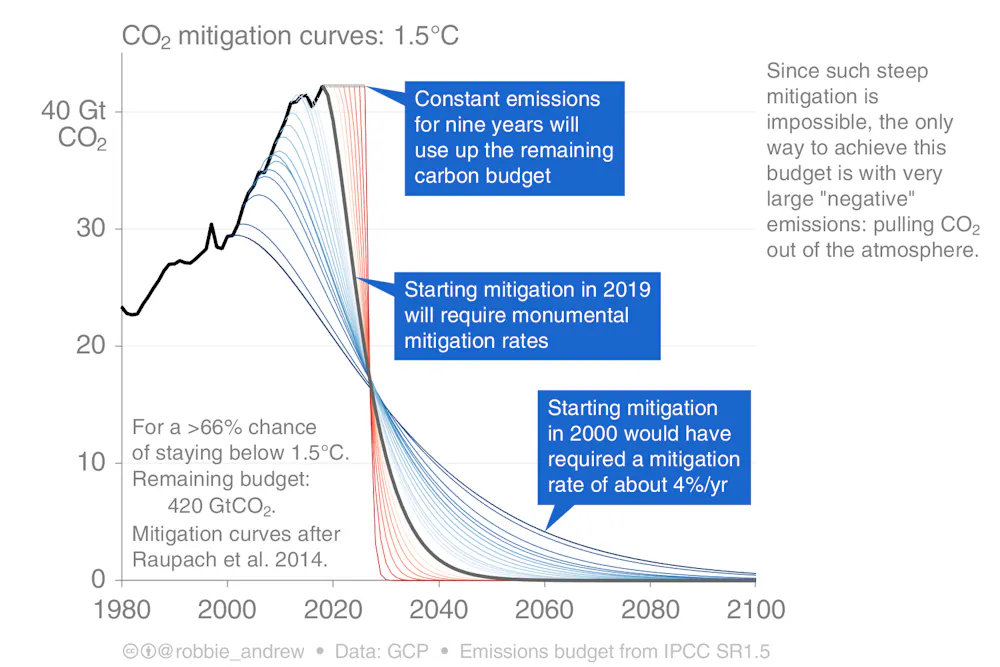
If we had acted on Hansen’s testimony at the time, we would have been able to decarbonise our societies at a rate of around 2% a year in order to give us about a two-in-three chance of limiting warming to no more than 1.5°C. It would have been a huge challenge, but the main task at that time would have been to simply stop the accelerating use of fossil fuels while fairly sharing out future emissions.
Alt text
Graph demonstrating how fast mitigation has to happen to keep to 1.5℃.
© Robbie Andrew, CC BY

Four years later, there were glimmers of hope that this would be possible. During the 1992 Earth Summit in Rio, all nations agreed to stabilise concentrations of greenhouse gases to ensure that they did not produce dangerous interference with the climate. The 1997 Kyoto Summit attempted to start to put that goal into practice. But as the years passed, the initial task of keeping us safe became increasingly harder given the continual increase in fossil fuel use.

It was around that time that the first computer models linking greenhouse gas emissions to impacts on different sectors of the economy were developed. These hybrid climate-economic models are known as Integrated Assessment Models. They allowed modellers to link economic activity to the climate by, for example, exploring how changes in investments and technology could lead to changes in greenhouse gas emissions.

They seemed like a miracle: you could try out policies on a computer screen before implementing them, saving humanity costly experimentation. They rapidly emerged to become key guidance for climate policy. A primacy they maintain to this day.

Unfortunately, they also removed the need for deep critical thinking. Such models represent society as a web of idealised, emotionless buyers and sellers and thus ignore complex social and political realities, or even the impacts of climate change itself. Their implicit promise is that market-based approaches will always work. This meant that discussions about policies were limited to those most convenient to politicians: incremental changes to legislation and taxes.


This story is a collaboration between Conversation Insights and Apple News editors

The Insights team generates long-form journalism and is working with academics from different backgrounds who have been engaged in projects to tackle societal and scientific challenges.


Around the time they were first developed, efforts were being made to secure US action on the climate by allowing it to count carbon sinks of the country’s forests. The US argued that if it managed its forests well, it would be able to store a large amount of carbon in trees and soil which should be subtracted from its obligations to limit the burning of coal, oil and gas. In the end, the US largely got its way. Ironically, the concessions were all in vain, since the US senate never ratified the agreement.
Aerial view of autumn foliage.
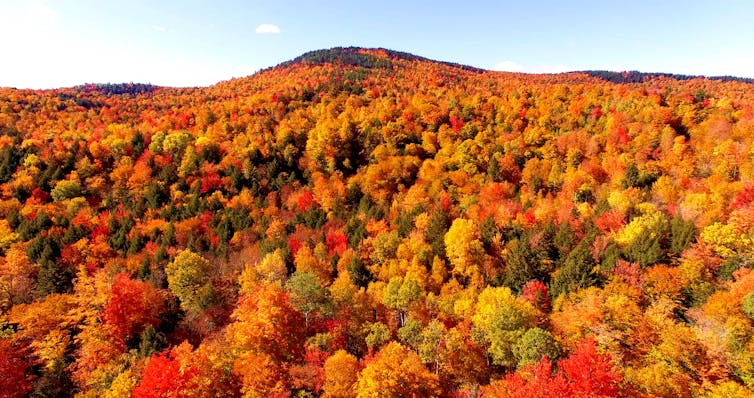
Forests such as this one in Maine, US, were suddenly counted in the carbon budget as an incentive for the US to join the Kyoto Agreement.
Inbound Horizons/Shutterstock

Postulating a future with more trees could in effect offset the burning of coal, oil and gas now. As models could easily churn out numbers that saw atmospheric carbon dioxide go as low as one wanted, ever more sophisticated scenarios could be explored which reduced the perceived urgency to reduce fossil fuel use. By including carbon sinks in climate-economic models, a Pandora’s box had been opened.

It’s here we find the genesis of today’s net zero policies.
That said, most attention in the mid-1990s was focused on increasing energy efficiency and energy switching (such as the UK’s move from coal to gas) and the potential of nuclear energy to deliver large amounts of carbon-free electricity. The hope was that such innovations would quickly reverse increases in fossil fuel emissions.

But by around the turn of the new millennium it was clear that such hopes were unfounded. Given their core assumption of incremental change, it was becoming more and more difficult for economic-climate models to find viable pathways to avoid dangerous climate change. In response, the models began to include more and more examples of carbon capture and storage, a technology that could remove the carbon dioxide from coal-fired power stations and then store the captured carbon deep underground indefinitely.

This had been shown to be possible in principle: compressed carbon dioxide had been separated from fossil gas and then injected underground in a number of projects since the 1970s. These Enhanced Oil Recovery schemes were designed to force gases into oil wells in order to push oil towards drilling rigs and so allow more to be recovered – oil that would later be burnt, releasing even more carbon dioxide into the atmosphere.

Carbon capture and storage offered the twist that instead of using the carbon dioxide to extract more oil, the gas would instead be left underground and removed from the atmosphere. This promised breakthrough technology would allow climate friendly coal and so the continued use of this fossil fuel. But long before the world would witness any such schemes, the hypothetical process had been included in climate-economic models. In the end, the mere prospect of carbon capture and storage gave policy makers a way out of making the much needed cuts to greenhouse gas emissions.

The rise of net zero

When the international climate change community convened in Copenhagen in 2009 it was clear that carbon capture and storage was not going to be sufficient for two reasons.

First, it still did not exist. There were no carbon capture and storage facilities in operation on any coal fired power station and no prospect the technology was going to have any impact on rising emissions from increased coal use in the foreseeable future.

The biggest barrier to implementation was essentially cost. The motivation to burn vast amounts of coal is to generate relatively cheap electricity. Retrofitting carbon scrubbers on existing power stations, building the infrastructure to pipe captured carbon, and developing suitable geological storage sites required huge sums of money. Consequently the only application of carbon capture in actual operation then – and now – is to use the trapped gas in enhanced oil recovery schemes. Beyond a single demonstrator, there has never been any capture of carbon dioxide from a coal fired power station chimney with that captured carbon then being stored underground.

Just as important, by 2009 it was becoming increasingly clear that it would not be possible to make even the gradual reductions that policy makers demanded. That was the case even if carbon capture and storage was up and running. The amount of carbon dioxide that was being pumped into the air each year meant humanity was rapidly running out of time.

With hopes for a solution to the climate crisis fading again, another magic bullet was required. A technology was needed not only to slow down the increasing concentrations of carbon dioxide in the atmosphere, but actually reverse it. In response, the climate-economic modelling community – already able to include plant-based carbon sinks and geological carbon storage in their models – increasingly adopted the “solution” of combining the two.

So it was that Bioenergy Carbon Capture and Storage, or BECCS, rapidly emerged as the new saviour technology. By burning “replaceable” biomass such as wood, crops, and agricultural waste instead of coal in power stations, and then capturing the carbon dioxide from the power station chimney and storing it underground, BECCS could produce electricity at the same time as removing carbon dioxide from the atmosphere. That’s because as biomass such as trees grow, they suck in carbon dioxide from the atmosphere. By planting trees and other bioenergy crops and storing carbon dioxide released when they are burnt, more carbon could be removed from the atmosphere.

With this new solution in hand the international community regrouped from repeated failures to mount another attempt at reining in our dangerous interference with the climate. The scene was set for the crucial 2015 climate conference in Paris.

A Parisian false dawn

As its general secretary brought the 21st United Nations conference on climate change to an end, a great roar issued from the crowd. People leaped to their feet, strangers embraced, tears welled up in eyes bloodshot from lack of sleep.

The emotions on display on December 13, 2015 were not just for the cameras. After weeks of gruelling high-level negotiations in Paris a breakthrough had finally been achieved. Against all expectations, after decades of false starts and failures, the international community had finally agreed to do what it took to limit global warming to well below 2°C, preferably to 1.5°C, compared to pre-industrial levels.

The Paris Agreement was a stunning victory for those most at risk from climate change. Rich industrialised nations will be increasingly impacted as global temperatures rise. But it’s the low lying island states such as the Maldives and the Marshall Islands that are at imminent existential risk. As a later UN special report made clear, if the Paris Agreement was unable to limit global warming to 1.5°C, the number of lives lost to more intense storms, fires, heatwaves, famines and floods would significantly increase.

But dig a little deeper and you could find another emotion lurking within delegates on December 13. Doubt. We struggle to name any climate scientist who at that time thought the Paris Agreement was feasible. We have since been told by some scientists that the Paris Agreement was “of course important for climate justice but unworkable” and “a complete shock, no one thought limiting to 1.5°C was possible”. Rather than being able to limit warming to 1.5°C, a senior academic involved in the IPCC concluded we were heading beyond 3°C by the end of this century.

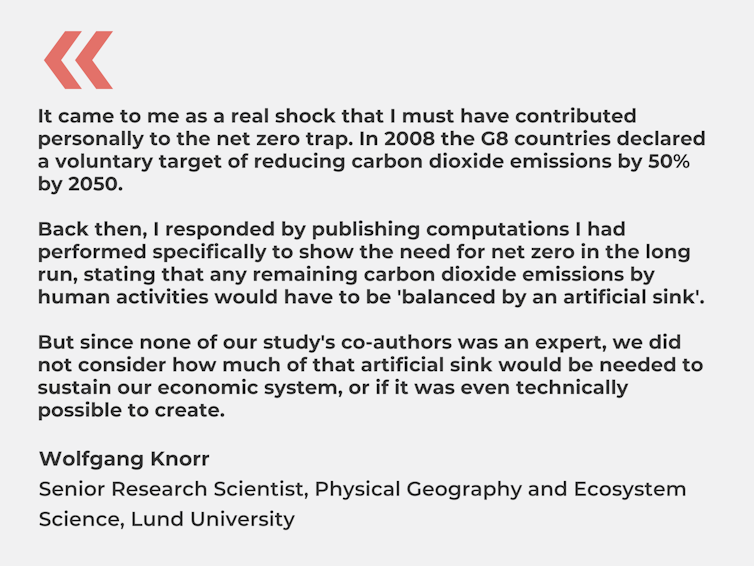
Instead of confront our doubts, we scientists decided to construct ever more elaborate fantasy worlds in which we would be safe. The price to pay for our cowardice: having to keep our mouths shut about the ever growing absurdity of the required planetary-scale carbon dioxide removal.
Taking centre stage was BECCS because at the time this was the only way climate-economic models could find scenarios that would be consistent with the Paris Agreement. Rather than stabilise, global emissions of carbon dioxide had increased some 60% since 1992.

Alas, BECCS, just like all the previous solutions, was too good to be true.

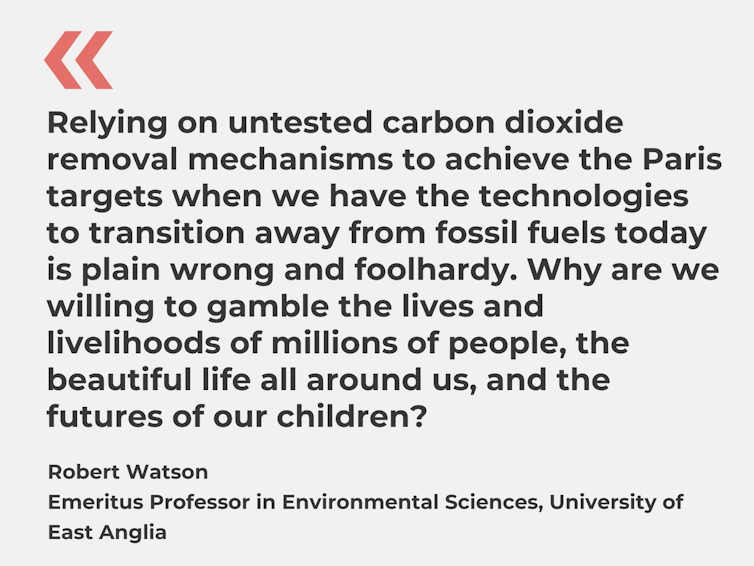
Across the scenarios produced by the Intergovernmental Panel on Climate Change (IPCC) with a 66% or better chance of limiting temperature increase to 1.5°C, BECCS would need to remove 12 billion tonnes of carbon dioxide each year. BECCS at this scale would require massive planting schemes for trees and bioenergy crops.

The Earth certainly needs more trees. Humanity has cut down some three trillion since we first started farming some 13,000 years ago. But rather than allow ecosystems to recover from human impacts and forests to regrow, BECCS generally refers to dedicated industrial-scale plantations regularly harvested for bioenergy rather than carbon stored away in forest trunks, roots and soils.

Currently, the two most efficient biofuels are sugarcane for bioethanol and palm oil for biodiesel – both grown in the tropics. Endless rows of such fast growing monoculture trees or other bioenergy crops harvested at frequent intervals devastate biodiversity.

It has been estimated that BECCS would demand between 0.4 and 1.2 billion hectares of land. That’s 25% to 80% of all the land currently under cultivation. How will that be achieved at the same time as feeding 8-10 billion people around the middle of the century or without destroying native vegetation and biodiversity?

Growing billions of trees would consume vast amounts of water – in some places where people are already thirsty. Increasing forest cover in higher latitudes can have an overall warming effect because replacing grassland or fields with forests means the land surface becomes darker. This darker land absorbs more energy from the Sun and so temperatures rise. Focusing on developing vast plantations in poorer tropical nations comes with real risks of people being driven off their lands.

And it is often forgotten that trees and the land in general already soak up and store away vast amounts of carbon through what is called the natural terrestrial carbon sink. Interfering with it could both disrupt the sink and lead to double accounting.
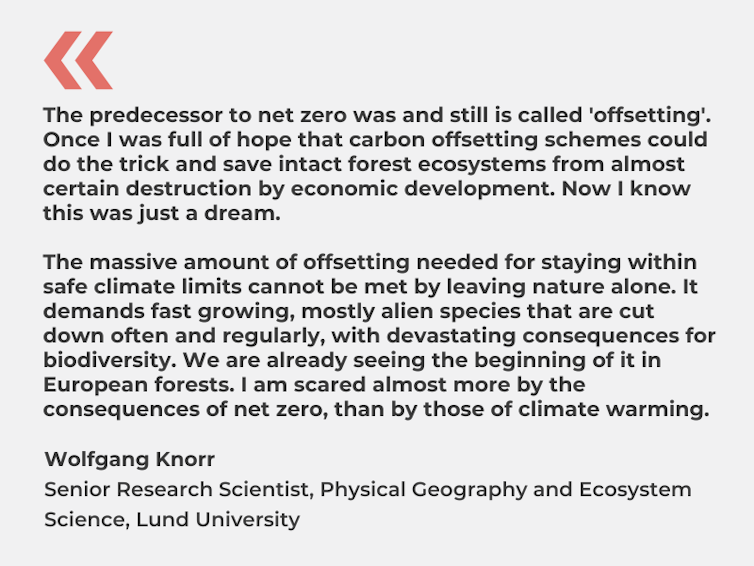
As these impacts are becoming better understood, the sense of optimism around BECCS has diminished.

Pipe dreams

Given the dawning realisation of how difficult Paris would be in the light of ever rising emissions and limited potential of BECCS, a new buzzword emerged in policy circles: the “overshoot scenario”. Temperatures would be allowed to go beyond 1.5°C in the near term, but then be brought down with a range of carbon dioxide removal by the end of the century. This means that net zero actually means carbon negative. Within a few decades, we will need to transform our civilisation from one that currently pumps out 40 billion tons of carbon dioxide into the atmosphere each year, to one that produces a net removal of tens of billions.

Mass tree planting, for bioenergy or as an attempt at offsetting, had been the latest attempt to stall cuts in fossil fuel use. But the ever-increasing need for carbon removal was calling for more. This is why the idea of direct air capture, now being touted by some as the most promising technology out there, has taken hold. It is generally more benign to ecosystems because it requires significantly less land to operate than BECCS, including the land needed to power them using wind or solar panels.

Unfortunately, it is widely believed that direct air capture, because of its exorbitant costs and energy demand, if it ever becomes feasible to be deployed at scale, will not be able to compete with BECCS with its voracious appetite for prime agricultural land.

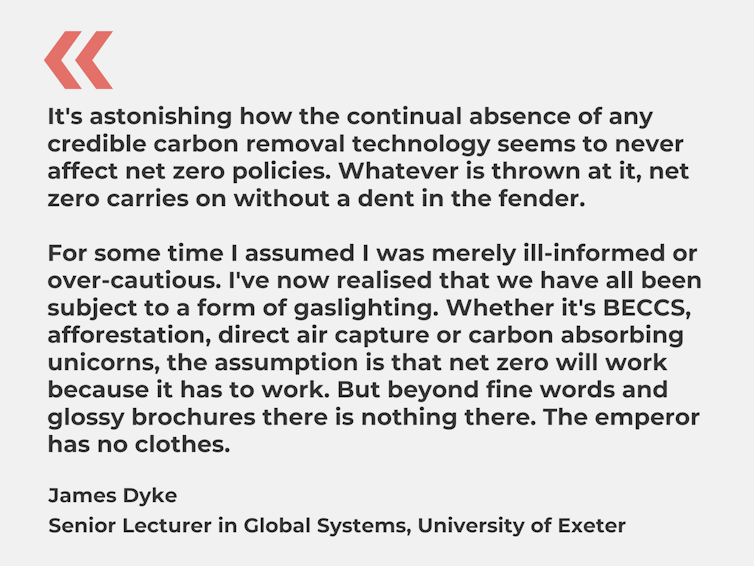
It should now be getting clear where the journey is heading. As the mirage of each magical technical solution disappears, another equally unworkable alternative pops up to take its place. The next is already on the horizon – and it’s even more ghastly. Once we realise net zero will not happen in time or even at all, geoengineering – the deliberate and large scale intervention in the Earth’s climate system – will probably be invoked as the solution to limit temperature increases.

One of the most researched geoengineering ideas is solar radiation management – the injection of millions of tons of sulphuric acid into the stratosphere that will reflect some of the Sun’s energy away from the Earth. It is a wild idea, but some academics and politicians are deadly serious, despite significant risks. The US National Academies of Sciences, for example, has recommended allocating up to US$200 million over the next five years to explore how geoengineering could be deployed and regulated. Funding and research in this area is sure to significantly increase.
Difficult truths

In principle there is nothing wrong or dangerous about carbon dioxide removal proposals. In fact developing ways of reducing concentrations of carbon dioxide can feel tremendously exciting. You are using science and engineering to save humanity from disaster. What you are doing is important. There is also the realisation that carbon removal will be needed to mop up some of the emissions from sectors such as aviation and cement production. So there will be some small role for a number of different carbon dioxide removal approaches.

The problems come when it is assumed that these can be deployed at vast scale. This effectively serves as a blank cheque for the continued burning of fossil fuels and the acceleration of habitat destruction.

Carbon reduction technologies and geoengineering should be seen as a sort of ejector seat that could propel humanity away from rapid and catastrophic environmental change. Just like an ejector seat in a jet aircraft, it should only be used as the very last resort. However, policymakers and businesses appear to be entirely serious about deploying highly speculative technologies as a way to land our civilisation at a sustainable destination. In fact, these are no more than fairy tales.

Crowds of young people hold placards.
‘There is no Planet B’: children in Birmingham, UK, protest against the climate crisis.
Callum Shaw/Unsplash, FAL

The only way to keep humanity safe is the immediate and sustained radical cuts to greenhouse gas emissions in a socially just way.

Academics typically see themselves as servants to society. Indeed, many are employed as civil servants. Those working at the climate science and policy interface desperately wrestle with an increasingly difficult problem. Similarly, those that champion net zero as a way of breaking through barriers holding back effective action on the climate also work with the very best of intentions.

The tragedy is that their collective efforts were never able to mount an effective challenge to a climate policy process that would only allow a narrow range of scenarios to be explored.

Most academics feel distinctly uncomfortable stepping over the invisible line that separates their day job from wider social and political concerns. There are genuine fears that being seen as advocates for or against particular issues could threaten their perceived independence. Scientists are one of the most trusted professions. Trust is very hard to build and easy to destroy.
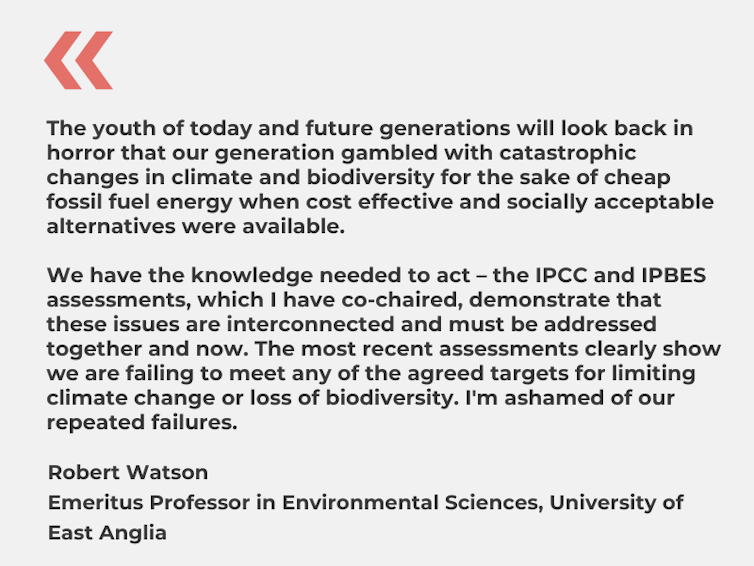
But there is another invisible line, the one that separates maintaining academic integrity and self-censorship. As scientists, we are taught to be sceptical, to subject hypotheses to rigorous tests and interrogation. But when it comes to perhaps the greatest challenge humanity faces, we often show a dangerous lack of critical analysis.

In private, scientists express significant scepticism about the Paris Agreement, BECCS, offsetting, geoengineering and net zero. Apart from some notable exceptions, in public we quietly go about our work, apply for funding, publish papers and teach. The path to disastrous climate change is paved with feasibility studies and impact assessments.

Rather than acknowledge the seriousness of our situation, we instead continue to participate in the fantasy of net zero. What will we do when reality bites? What will we say to our friends and loved ones about our failure to speak out now?

The time has come to voice our fears and be honest with wider society. Current net zero policies will not keep warming to within 1.5°C because they were never intended to. They were and still are driven by a need to protect business as usual, not the climate. If we want to keep people safe then large and sustained cuts to carbon emissions need to happen now. That is the very simple acid test that must be applied to all climate policies. The time for wishful thinking is over.


For you: more from our Insights series:

To hear about new Insights articles, join the hundreds of thousands of people who value The Conversation’s evidence-based news. Subscribe to our newsletter.The Conversation

James Dyke, Associate Professor in Earth System Science, University of Exeter; Robert Watson, Emeritus Professor in Environmental Sciences, University of East Anglia, and Wolfgang Knorr, Senior Research Scientist, Physical Geography and Ecosystem Science, Lund University

This article is republished from The Conversation under a Creative Commons license. Read the original article.
Continue ReadingClimate scientists: concept of net zero is a dangerous trap

The oil industry has succumbed to a dangerous new climate denialism

Spread the love
Opec predicts oil demand will be 10% higher by the 2040s.
Iurii

Adi Imsirovic, University of Surrey

If we have not been warned of the dangers of climate change this summer, we never will be. Extreme heat, forest fires and floods have been all over news reports. Yet the oil and gas industry remains largely in denial.

The International Energy Agency (IEA) says steep cuts in oil and gas production are necessary to reach the Paris (COP 21) goal of keeping global warming at 1.5℃. However, only a tiny fraction of the industry, accounting for less than 5% of oil and gas output, has targets aligned with the IEA’s “net zero” requirements.

The current secretary general of production cartel Opec, Haitham al-Ghais, expects global oil demand to rise by about 10% to 110 million barrels a day by 2045, a volume incompatible with the Paris goals. The UK government has just offered a helping hand, granting around 100 new North Sea licences. What are we to make of this mismatch?

The new denialism

Typical of the new breed of climate denialism is a recent report by the Energy Policy Research Foundation (ERPF), a body funded by the US government and various undisclosed corporate interests and foundations. It sees the IEA’s requirements as a “seal of approval … to block investment in oil and gas production by western companies”. The report views meeting the targets as too costly, too harsh on poor countries and too bad for the energy security of the west.

In fact, it is wrong on each account. Many eminent economists and scientists use the concept of the social cost of carbon (SCC), which is defined as the cost to society of releasing an additional tonne of CO₂. Expert estimates from 2019 put this at between US$171 and US$310 (£133 to £241). If we go with, say, US$240 per tonne, the social cost of continued carbon equivalent emissions comes out at almost US$8.5 trillion every year.

A recent study has factored into the calculation climate feedback loops. This is where one problem caused by global warming leads to others, such as melting permafrost unleashing stores of methane.

When the study estimated the economic damage that this could cause, it produced an SCC in excess of US$5,000. That implies annual costs of more like US$170 trillion a year, which makes the US$4 trillion investment into clean energy that the IEA thinks necessary to meet the Paris climate goals look like a drop in the ocean.

It may help to break this down to one barrel of oil. A special IEA report for COP28 estimates that on average, each barrel of oil emits 0.53 tonnes of CO₂ equivalent in greenhouse gas across its life cycle, 20% of which comes from production.

Going back to our average SSC per tonne of US$240, that points to a social cost of US$126 per barrel. With oil currently at US$85 per barrel, the societal damage from producing, transporting, refining and consuming it is far greater – and that’s before including climate feedbacks.

Meanwhile, the arguments by the EPRF and like-minded supporters about energy security are laughable. The history of the oil and gas industry is a history of wars and geopolitical tensions. Transitioning to cleaner fuels can only increase our energy security and reduce the need to police remote autocracies.

The argument that poor countries need to continue burning carbon for development reasons is no better. In its latest report from 2022, the Intergovernmental Panel on Climate Change (IPCC) said climate change would probably see an increase in “losses and damages, strongly concentrated among the poorest vulnerable populations”.

Equally, the World Health Organization estimates that: “Between 2030 and 2050, climate change is expected to cause approximately 250,000 additional deaths per year from malnutrition, malaria, diarrhoea and heat stress.”

How to respond

The denialists offer no alternatives to cutting carbon emissions, and often simply ignore climate change altogether. The recent ERPF report mentions climate change only four times. It is as if heatwaves, forest fires, flooding, rising sea levels and the demise of natural habitat caused by climate inaction were happening on another planet.

We still have time to limit global warming below 1.5℃. It is true that we will need oil and gas for many years, and that there are currently no alternatives for certain sectors such as air travel, shipping and some industries. Nonetheless, there is still much that can be done now to make a substantial difference.

To incentivise the transition to cleaner energy, governments need to end fossil fuel subsidies, which the IMF estimates amounted to US$5.9 trillion in 2020 alone. We also need to put a proper price on carbon – only 40 countries have attempted this so far, and none has it anywhere near the estimated social cost of emitting carbon.

Countries that resist charging their own polluters should face a carbon border adjustment mechanism, which is a tariff that effectively puts the polluter on the same footing as local players. If all the actors in the fossil fuel supply chain had to face the cost of the damage they cause, the need to phase out long-term investments in fossil fuels would become more obvious.

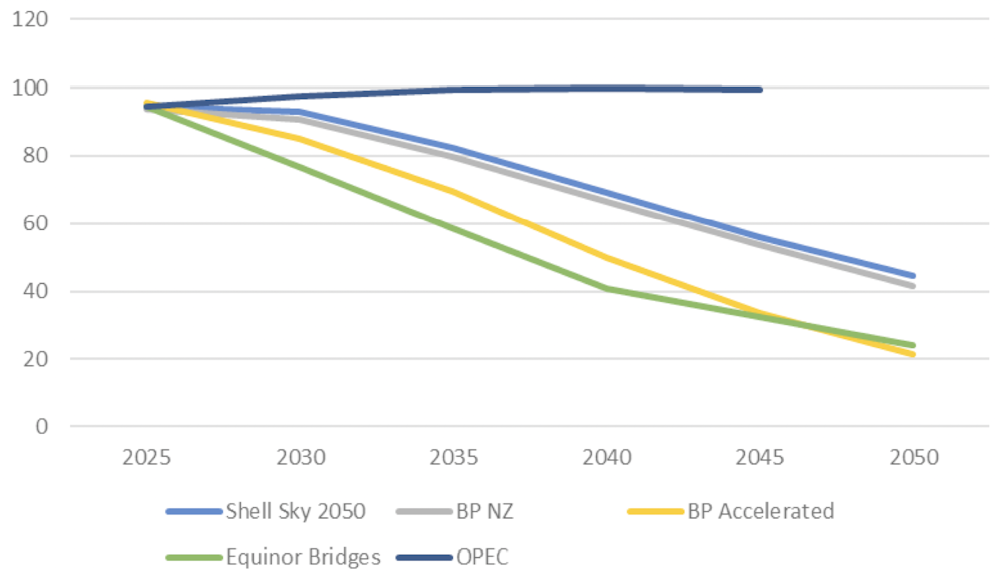
The IEA requirements for “net zero” are just one of the pathways towards meeting the Paris goal of 1.5℃ warming. Others are explored by some of the more credible actors in the petroleum industry, such as Shell, BP and Norway’s Equinor, but all require a substantial decline in oil demand and production by 2050.

Required production cuts

Graph showing the required production cuts to meet net zero
I left the IEA’s scenario off the graph because it published so few datapoints, but it is broadly in line with the others. Meanwhile, the Opec data is for reference and not a net zero scenario.
BP, Shell, Equinor and Opec

Instead of criticising efforts to slow climate change and sponsoring ridiculous reports calling for more fossil fuels, the oil industry should eliminate leakages, venting and flaring of methane, and electrify as many processes as possible using renewable power. It should also employ carbon capture, usage and storage technologies over the next ten years – yes this will increase the price of fossil fuels, but that is exactly what we need to make clean sources of energy competitive across the board and speed up the energy transition.

The sooner the industry starts facing up to the realities of climate change, the more chance it has to survive. The companies and even countries that produce fossil fuels will have to face and pay the cost for the damage they cause. Those costs are already massive and will grow. Those that survive will do so only as a provider of clean and sustainable energy.


Imagine weekly climate newsletter

Don’t have time to read about climate change as much as you’d like?

Get a weekly roundup in your inbox instead. Every Wednesday, The Conversation’s environment editor writes Imagine, a short email that goes a little deeper into just one climate issue. Join the 20,000+ readers who’ve subscribed so far.The Conversation


Adi Imsirovic, Fellow, University of Surrey

This article is republished from The Conversation under a Creative Commons license. Read the original article.

Continue ReadingThe oil industry has succumbed to a dangerous new climate denialism

Study Warns Climate-Driven Collapse of Critical Ocean Current System ‘Much Closer Than We Thought’

Spread the love

Original article by BRETT WILKINS republished from Common Dreams under Creative Commons (CC BY-NC-ND 3.0).

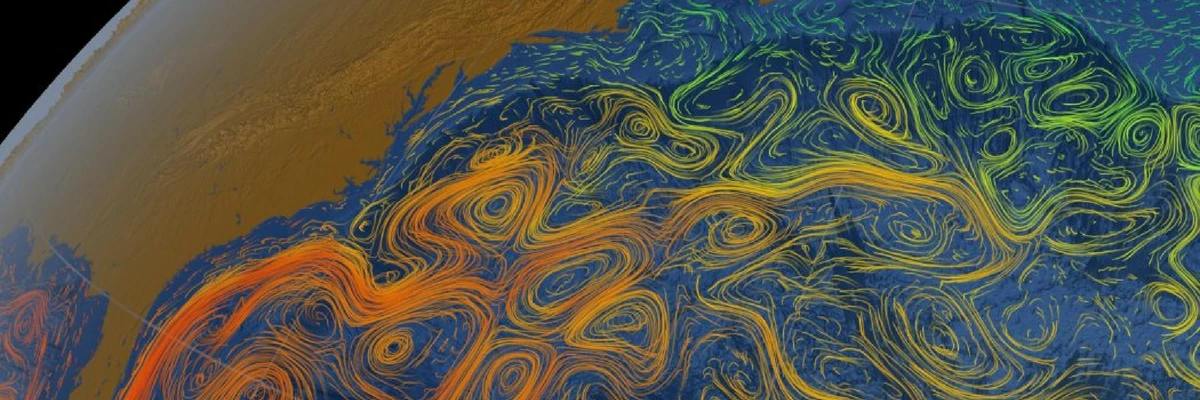
The Gulf Stream is an ocean current that carries warm water from the Gulf of Mexico into the Atlantic Ocean. (Image: NASA)

“It is very plausible that we’ve fallen off a cliff already and don’t know it,” said one researcher.

The system of Atlantic Ocean currents that drive warm water from the tropics toward Europe is at risk of collapsing in the coming decades, an analysis of 150 years of temperature data published Tuesday concluded.

“The Atlantic Meridional Overturning Circulation (AMOC), which includes the Gulf Stream, is a major tipping element in the climate system and a future collapse would have severe impacts on the climate in the North Atlantic region,” states the study, which was published in the scientific journal Nature Communications.

Although the analysis notes that “assessments by the Intergovernmental Panel on Climate Change (IPCC), based on the Climate Model Intercomparison Project (CMIP) model simulations suggest that a full collapse is unlikely within the 21st century,” the study’s authors “estimate a collapse of the AMOC to occur around mid-century under the current scenario of future emissions.”

“We show that a transition of the AMOC is most likely to occur around 2025-2095,” the paper states with “95% confidence.”

University of Copenhagen professor Peter Ditlevsen, who led the study, told The Guardian: “I think we should be very worried. This would be a very, very large change. The AMOC has not been shut off for 12,000 years.”

Bill McKibben, co-founder of the climate action group 350.orgtweeted that “Gulf Stream collapse used to be viewed as a far-off and remote possibility… Less so now.”

Meteorologist and climate journalist Eric Holthaus called the study’s findings “incredibly worrying.”

The Washington Postreports:

The new study adds to a growing body of evidence that this crucial ocean system is in peril. Since 2004, observations from a network of ocean buoys [have shown] the AMOC getting weaker—though the limited time frame of that data set makes it hard to establish a trend. Scientists have also analyzed multiple “proxy” indicators of the current’s strength, including microscopic organisms and tiny sediments from the seafloor, to show the system is in its weakest state in more than 1,000 years.

For thousands of years, the Gulf Stream has carried warm waters from the Gulf of Mexico northward along the eastern North American seaboard and across the Atlantic to Europe. As human-caused global heating melts the Greenland ice sheet, massive quantities of fresh water are released into the North Atlantic, cooling the AMOC—which delivers the bulk of the Gulf Stream’s heat—toward a “tipping point” that could stop the current in its tracks.

According toThe Guardian:

A collapse of AMOC would have disastrous consequences around the world, severely disrupting the rains that billions of people depend on for food in India, South America, and West Africa. It would increase storms and drop temperatures in Europe, and lead to a rising sea level on the eastern coast of North America. It would also further endanger the Amazon rainforest and Antarctic ice sheets.

“It is very plausible that we’ve fallen off a cliff already and don’t know it,” Hali Kilbourne, an associate research professor at the University of Maryland Center for Environmental Science, toldThe New York Times. “I fear, honestly, that by the time any of this is settled science, it’s way too late to act.”

Other studies—including one published in March and another in 2021—have also concluded that the AMOC is at risk of collapsing this century.

Meanwhile in the Southern Hemisphere, Antarctic currents that enrich 40% of Earth’s deep oceans with oxygen and nutrients essential for marine life have slowed dangerously in recent decades and could also collapse by mid-century, an Australian study released in May showed.

Original article by BRETT WILKINS republished from Common Dreams under Creative Commons (CC BY-NC-ND 3.0).

Continue ReadingStudy Warns Climate-Driven Collapse of Critical Ocean Current System ‘Much Closer Than We Thought’

Revealed: 1 in 3 GB News Hosts Spread Climate Denial On Air in 2022

Spread the love

Original article by Adam Barnett republished from DeSmog according to their republishing guidelines.

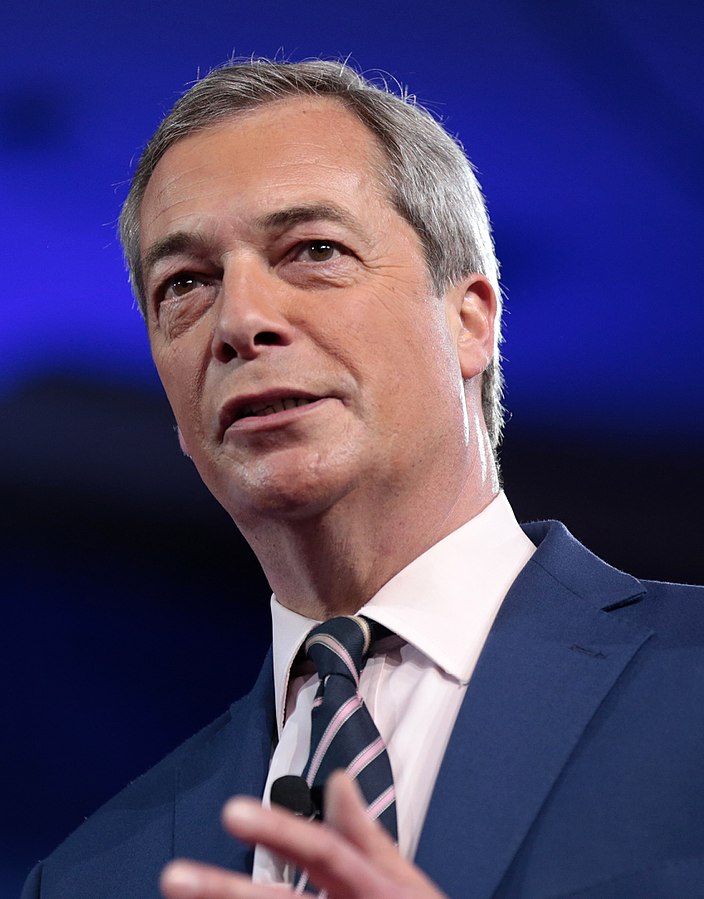
GBNews presenter Nigel Farage. Image by Gage Skidmore via wikimedia, Creative Commons Attribution-Share Alike 2.0 Generic license.

A majority of GB News hosts attacked climate action on the channel in 2022, while one in three spread climate science denial, a DeSmog analysis can reveal. 

Opponents of green policies have seized on the energy crisis sparked by Russia’s invasion of Ukraine to denounce the UK’s net zero target and push for new, environmentally-damaging fossil fuel extraction. 

Broadcaster GB News has faced criticism for spreading anti-green messages to millions of viewers since its launch in June 2021. GB News CEO Angelos Frangopoulos has previously defended the platform by claiming that it presents “multiple sides of the climate debate”.

However, an in-depth DeSmog analysis of GB News’s output from 2022 reveals a pattern of hostility to climate action, including outright climate science denial. 

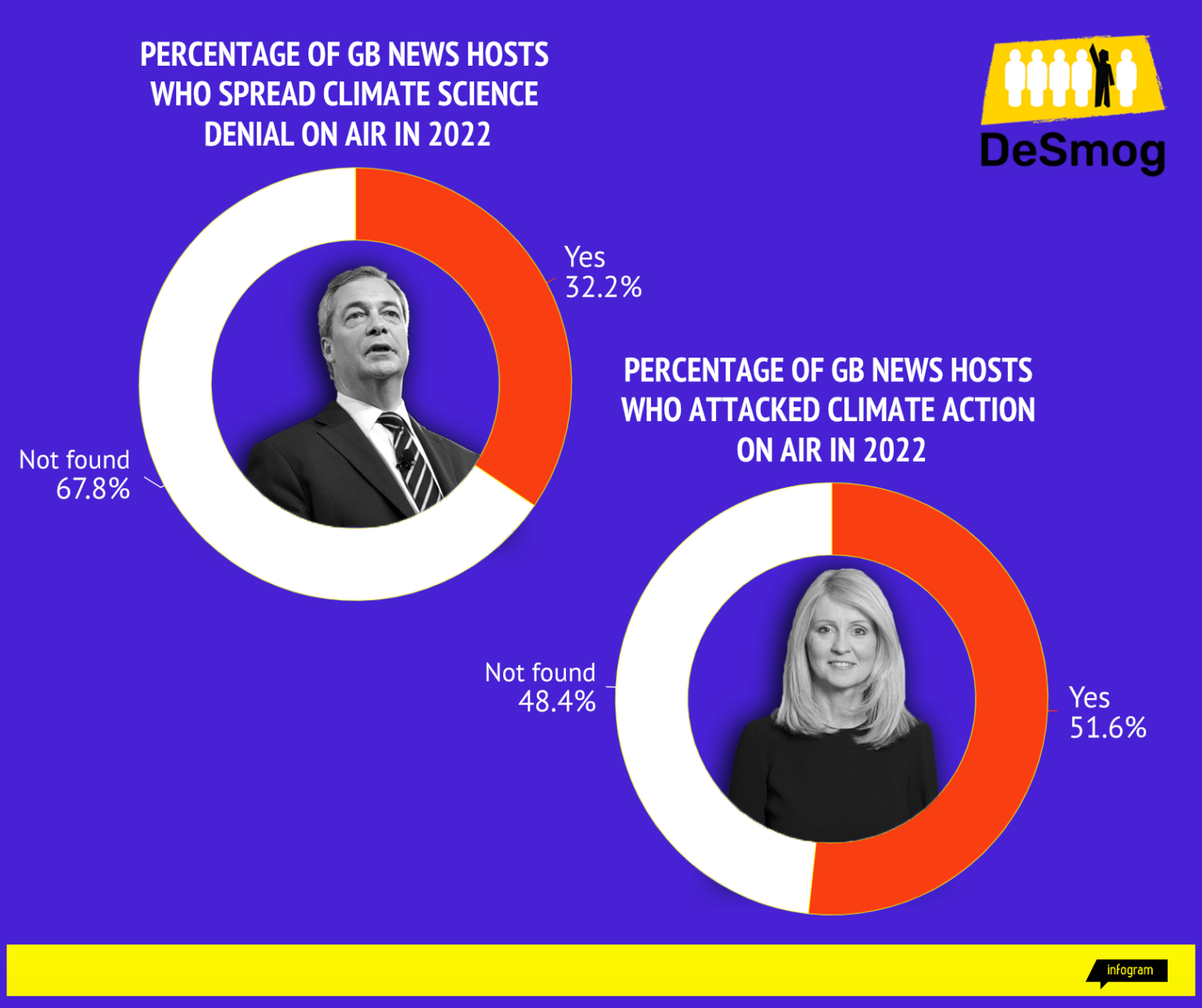
DeSmog reviewed dozens of YouTube video clips of 31 GB News hosts over a 12 month period. Our analysis found that at least 16 hosts (52 percent) attacked on air the UK’s climate policies, including its net zero target. 

Presenters claimed that net zero will cause “death by poverty and starvation”, “poses an existential threat to the free world”, and called for the UK to “drill, baby, drill” for more fossil fuels. 

The analysis also showed that ten hosts (32 percent) broadcast views in 2022 that challenged or rejected the scientific consensus on climate change. Presenters dismissed the role of climate change in extreme weather, such as the UK’s record 2022 heatwave, claiming “the polar bears are doing fine” and that “the ice in Antarctica is getting thicker every day”.

The world’s leading climate science group, the UN’s Intergovernmental Panel on Climate Change (IPCC) warned in 2022 that efforts to tackle climate change were being delayed by “rhetoric and misinformation that undermines climate science and disregards risk and urgency”.

The Scottish National Party (SNP) MP John Nicolson – who sits on Parliament’s Culture, Media and Sport (DCMS) select committee – called DeSmog’s analysis “damning” and urged Ofcom to take “urgent” action, while US-based media and climate expert Allison Fisher said that GB News was using “a similar playbook as Fox News”.

At least four GB News hosts have ties to right-wing political parties that are hostile to climate action, while its ranks include well-known anti-green MPs from the Conservative benches. The channel also frequently platforms activists from climate science denial groups such as the Global Warming Policy Foundation (GWPF). 

All but two of the hosts who spread climate delay and denial in 2022 are still working at GB News. And, in recent months, GB News has hired two more anti-green MPs as presenters: former Business Secretary Jacob Rees-Mogg, and current Conservative Party Deputy Chair Lee Anderson.

A GB News spokesperson told DeSmog: “GB News embraces a wide range of voices on all major issues such as climate change and policy.” They claimed that DeSmog’s research excluded “other hosts, guests, politicians, and commentators on GB News who have robustly and resoundingly argued different views on climate policy and science”.

Adapted image. Credit: Gage Skidmore (CC BY-SA 2.0), Lee Goddard (CC BY-NC-ND 2.0) / Infogram

‘Polluting Public Discourse’ 

Communications regulator Ofcom has repeatedly found GB News to have broken broadcasting rules with false claims about Covid vaccines, and is probing the channel’s use of MPs as hosts. But, until now, GB News’s climate coverage has largely evaded scrutiny.

“GB News prioritises polemicists over journalists,” Nicolson told DeSmog. “Many of GB News’s broadcasts pollute public discourse with right-wing propaganda.

“There is an urgent need for Ofcom now to act. We do not want to go further down the American Fox News route of unchallenged, often scientifically illiterate, culture war propaganda spewing into our homes.”

An Ofcom spokesperson told DeSmog: “In line with freedom of expression, broadcasters are free to broadcast programmes about climate change from a range of different perspectives. 

“Under our rules, however, any scientifically unsubstantiated claims must be handled with care and put properly into context – for example, by receiving adequate challenge – to ensure audiences are not misled.”

‘Net Zero Must Die’

In 2022, GB News frequently aired claims about climate policy that run counter to the scientific consensus, DeSmog’s findings show.

Net zero targets were a favourite topic. The UK’s 2050 net zero target is legally binding and backed by the world’s top climate scientists. Rapidly cutting carbon emissions is necessary to limit global warming to 1.5°C and avoid the worst impacts of climate change, including drought, famine, and ill health, according to the IPCC. 

Yet, net zero was the subject of attacks from GB News hosts last year, with the presenters often veering into conspiracy theories

For example on 5 November, host Neil Oliver used his show to attack “net zero [and] the green agenda”, which he claimed was part of “a hellish potpourri of policies guaranteed to condemn hundreds of millions to death by poverty, death by starvation”. 

Mark Steyn claimed on an 18 May episode of The Steyn Line that climate policy was part of a conspiracy to bring about “a controlled demolition of the western world” by “sinister globalist[s]”. Steyn parted ways with GB News this year after Ofcom ruled that his false claims about the safety of Covid vaccines had broken its standards over potentially harmful content. 

Flagship host Dan Wootton argued on 10 March that the war in Ukraine meant “for now the rush to net zero must die”. He urged the government to “frack, frack, frack” for shale gas. In a 2 November show, Wootton attacked Rishi Sunak for agreeing to attend the “eco doomfest” COP27 climate summit, while a graphic on the screen referred to “the deranged march to net zero”.

Mark Dolan, in a 22 September episode of Mark Dolan Tonight, said: “Blindly pursuing net zero threatens to hasten the decline of the west, and therefore poses an existential threat to the free world.” 

In a 9 December show, Dolan praised plans to open a new coal mine in Cumbria, saying the UK should “drill, baby, drill” for coal, oil and gas, and adding: “I think the push for net zero here is another element of liberal progressivism which is infecting the west.”

The International Energy Agency (IEA) has said that any new fossil fuel projects would be incompatible with limiting warming to 1.5°C. Coal emits the most CO2 of any fossil fuel. 

In July, star host Nigel Farage – who has a long record of opposing climate action – used his GB News platform to launch a campaign for a Brexit-style referendum on net zero. 

On 6 December, GB News host and Reclaim Party leader Laurence Fox argued for scrapping “those woke billions” that “we are spending each year to appease the sun monster with offerings of net zero”.

Fellow host Nana Akua claimed on 16 July that net zero was “a money-spinning, extreme and impossible goal” that “only relates to the zero sum you will have in your bank account by the time they’re done with you.” 

View the GB News climate disinformation profile

‘Man-Made Climate Change – I Don’t Buy It’ 

GB News hosts also frequently challenged or rejected the scientific consensus on climate change in 2022. 

On 16 July, during the UK’s record-breaking summer heatwave, host Calvin Robinson accused the Met Office of “alarmism”, adding: “Man-made climate change, I don’t buy it, because how much of an impact do we really make if we’re talking about carbon levels?”

On her 16 July show, Akua accused the print media of “climate alarmism” over warnings about the heatwave, which she said “really isn’t that bad,” adding of such warnings that “in any case, most of the time, they’re wrong”.  

Six days later, Akua said: “If we [humans] only generate 3.5 percent of CO2 and the rest of it is natural, then surely the CO2 is not the reason for the climate changing because it’s such a small proportion?” 

A day earlier, host Beverley Turner called heatwave warnings “fear mongering” in order to “facilitate state control over your life”. Turner also spread baseless claims warning viewers to “be aware of green issue propaganda which will serve large corporate interests”, which is “part of a plan to register us all to a Biometric ID and a social credit score system that’ll tell you when you can and can’t leave the house for the sake of the planet”.

On 8 August, Farage questioned the link between extreme weather and climate change, saying: “Which is it? Is climate change giving us floods in the [US] midwest or drought in southern England? I’m confused.”

These claims about the heatwave contradict the IPCC, the Met Office, and a study by the World Weather Attribution service that said the heatwave was made “at least 10 times more likely” by human-caused climate change. 

In a 22 September segment, Mark Dolan cast doubt on climate science, saying: “When it comes to global warming, my mind is open, but after two and a half years of, in my view anti-scientific Covid policies, and junk modelling in relation to the virus, forgive me for having questions and not slavishly following ‘the science’.”

In a 10 December show, Neil Oliver asserted that “the polar bears are doing fine” and “the ice in Antarctica is getting thicker every day” – claims not supported by the scientific evidence

Professor J. Timmons Roberts, co-author of an influential paper on the “discourses of climate delay”, told DeSmog that GB News presenters were “casting doubt on the urgency of meaningful action on climate change and the viability of solutions we now have to this urgent problem. 

“These are classic discourses of delay, honed by the fossil fuel industry and its allies, building on the decades of experience of the tobacco PR machine,” he said.

“GB News appears to be utilising a similar playbook as Fox News to push climate misinformation and throw sand in the gears of climate action,” said Allison Fisher, Climate and Energy Program Director for the US-based media watchdog Media Matters.

“Attempting to discredit climate science, denying the link between our warming planet and ever-increasing extreme weather, all while keeping up a steady drumbeat of attacks on climate solutions and policies intended to address the climate crisis, are tactics Fox News has used for years to misinform its audiences and delay action on climate change.” 

All of the hosts cited in this article have been approached for comment.

Anti-Green Politicians 

At least four GB News hosts have ties to political parties with a record of climate science denial: Nigel Farage, former leader of the Brexit Party (now Reform UK) who also heads up the anti-green group Vote Power Not Poverty; Calvin Robinson, who was a Brexit Party parliamentary candidate in 2019 and a former Reclaim Party advisor; Arlene Foster, former leader of the Democratic Unionist Party; and Reclaim Party leader Laurence Fox. 

Another host, Philip Davies, was one of five MPs to vote against the Climate Change Act in 2008. Davies, Anderson, and Esther McVey – who is also a GB News presenter – are all members of the anti-climate action Net Zero Scrutiny Group of backbench Conservative MPs. 

Owned by the Dubai-based investment firm Legatum Group, GB News reached 2.87 million viewers in December alone, reportedly beating rival station TalkTV in key time slots. Despite this, the broadcaster lost £30 million in its first year on air. 

The Legatum Institute think tank, which is run by the Legatum Group, has previously received donations from a foundation linked to the US-based Koch Industries oil dynasty. Three of the five parties with significant control of GB News’s parent company, All Perspectives Limited, are executives at Legatum.

GB News last year appointed a new chair, Alan McCormick, who is a partner at Legatum and previously shared articles online which dismissed the threat from climate change.

Legatum Group did not respond when contacted for comment. 

‘Biased Messaging’

GB News not only gives a voice to climate denial and delay via its hosts; it also platforms guests who are hostile to climate science and net zero policies.

Frequent guests include Lois Perry of the climate science denial group CAR26, as well as figures from the GWPF, the UK’s principal climate denial group, which campaigns as Net Zero Watch. On 30 April this year, GB News hosted the GWPF’s head of policy Harry Wilkinson in a segment on net zero. 

GB News has also promoted GWPF material under its own banner. In May 2022, GB News published an online story criticising government subsidies for wind farms which, although it was based on a Net Zero Watch analysis, did not reveal the group as its source. 

GB News’s online story carried quotes from Conservative MPs Steve Baker and Craig Mackinlay, both of whom are Net Zero Watch allies. These quotes were identical to the statements featured in the Net Zero Watch press release.

The on-air version of the story featured an interview with Andrew Montford, deputy director of Net Zero Watch, while the story was also cited in a new report by the influential Institute for Economic Affairs (IEA) think tank that called for a “phase out” of renewable energy subsidies.

Richard Wilson, board member of the Stop Funding Heat campaign, said GB News was pushing “biased messaging on climate change and net zero.”

Wilson urged advertisers to pull support for the channel, saying: “Any company that cares about climate change, and the future of humanity, should be steering well clear of GB News.” 

Fisher at Media Matters added: “At a time when the window to act on global warming is rapidly closing, the last thing the world needs is another Fox News.”

For a full breakdown of GB News’s record on climate, visit its new profile in DeSmog’s climate disinformation database.

Additional research by Joey Grostern

Methodology 
Using online video footage of GB News segments, mainly on YouTube, DeSmog analysed the comments made on air in 2022 by the presenters listed on the GB News website. 

We excluded six of these 37 listed hosts – Mark Longhurst, Rosie Wright, Darren McCaffrey, Mark White, Ellie Costello and royal correspondent Cameron Walker – as they were news anchors or reporters who did not regularly express opinions.

DeSmog’s analysis found that, of the 31 GB News hosts, 16 (52 percent) attacked climate action on air, while 10 (32 percent) challenged or rejected basic climate science. 

We defined “attacks on climate action” as hosts attacking “net zero” and efforts to cut CO2 emissions, or supporting a major increase in fossil fuel extraction, e.g. overturning the UK’s fracking ban or opening a new coal mine. We excluded specific calls for more North Sea oil and gas extraction because, while this still contradicts the IPCC and IEA, it is a more mainstream position, held for example by the current UK government.  

We defined “climate science denial” as hosts rejecting or casting doubt on the role of human-caused CO2 emissions on global warming, and on its role in extreme weather events such as last year’s record heatwave in the UK. 

The analysis did not include the regular attacks on climate protesters by GB News, or contestable claims about the UK being a “world leader” on climate action. 

In drawing up these definitions DeSmog was guided by the peer-reviewed 2020 “discourses of climate delay” paper published by Cambridge University. 

We were not able to review all of GB News’s 2022 output, as not all of it is currently publicly available after live broadcast, so there may be more examples that were not captured in this analysis. We also found that several hosts made delay or denial statements in 2021 or 2023 which fell outside the time frame and so were not included in this analysis. A full dataset is available upon request. 

Original article by Adam Barnett republished from DeSmog according to their republishing guidelines.

Continue ReadingRevealed: 1 in 3 GB News Hosts Spread Climate Denial On Air in 2022

Morning Star: Tories’ Powering up Britain plan condemns us to more climate change

Spread the love
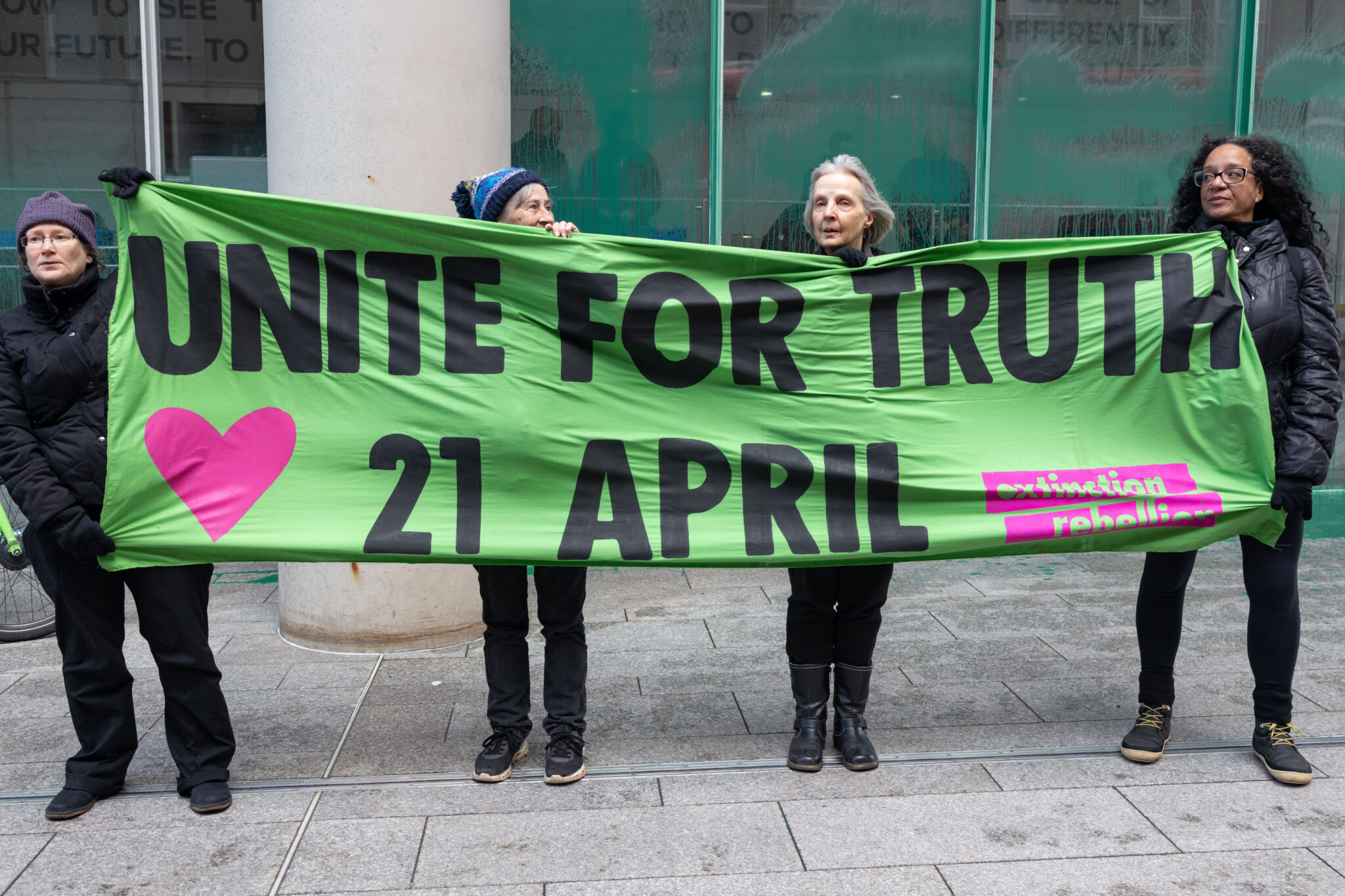
Extinction Rebellion promote 'The Big One' on 21 April 2023
Extinction Rebellion promote ‘The Big One’ on 21 April 2023

https://morningstaronline.co.uk/article/e/tories-powering-britain-plan-condemns-us-more-climate-change

THE government’s announcement of revised plans to reach net-zero carbon emissions today, Powering up Britain, needs to be judged against the latest report from the UN Intergovernmental Panel on Climate Change. The report, issued on Monday March 20, states: “There is a rapidly closing window of opportunity to secure a liveable and sustainable future for all.”

Global warming has been driven by the use of fossil fuels, which has increased the concentration of greenhouse gases, mainly carbon dioxide (CO2) and methane, in the atmosphere. The report calls for massive cuts in the use of such fuels, and instead the application of clean energy and technology.

Essentially the latest plans from the British government are business as usual — or at least as much as possible. There is no fresh funding, and the 60 points include many initiatives that have already been announced.

https://morningstaronline.co.uk/article/e/tories-powering-britain-plan-condemns-us-more-climate-change

Continue ReadingMorning Star: Tories’ Powering up Britain plan condemns us to more climate change