No time to recover: Hurricane Melissa and the Caribbean’s compounding disaster trap as the storms keep coming

Spread the love
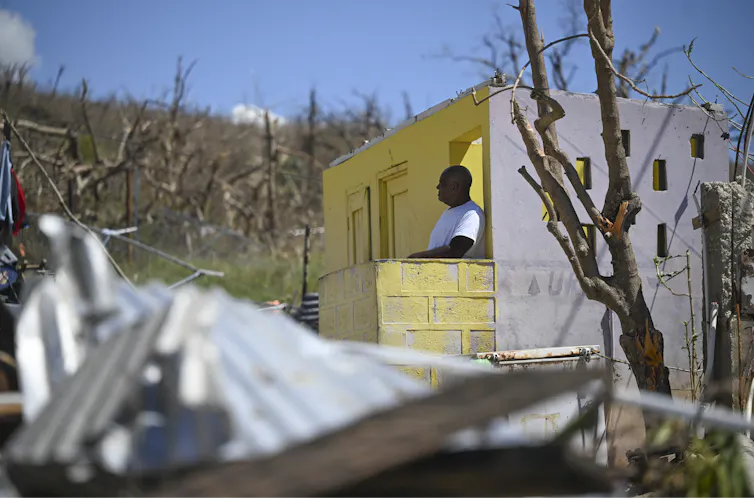
Hurricane Melissa tore off roofs and stripped trees of their leaves, including in many parts of Jamaica hit by Hurricane Beryl a year earlier. Ricardo Makyn/AFP via Getty Images

Farah Nibbs, University of Maryland, Baltimore County

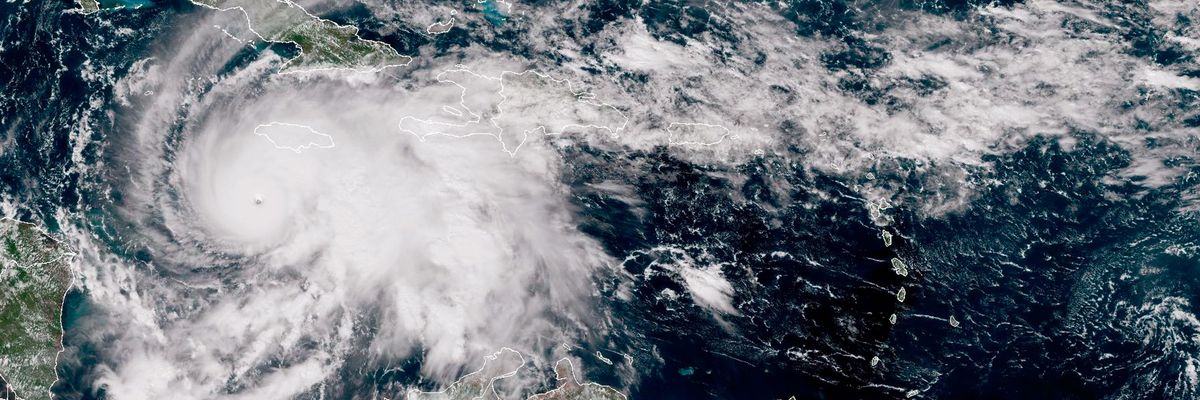
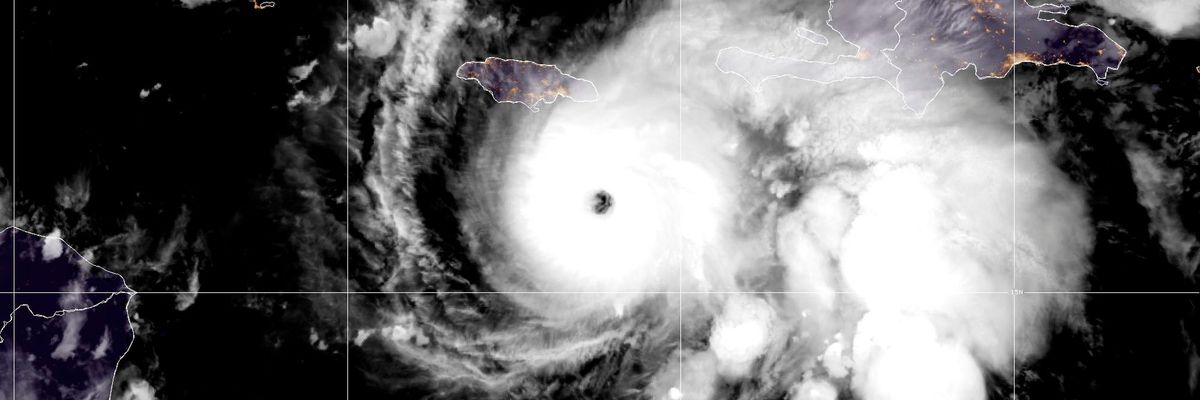
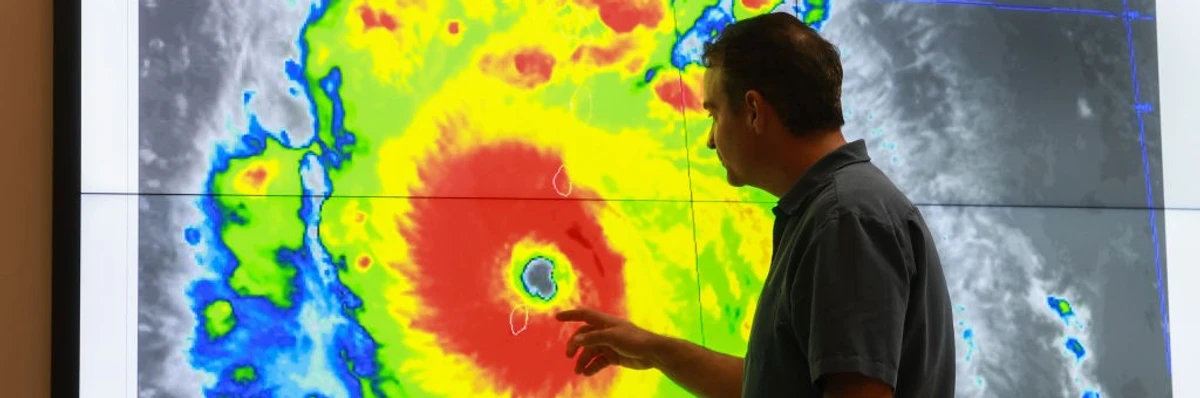
Headlines have been filled with talk of the catastrophic power of Hurricane Melissa after the Category 5 storm devastated communities across Jamaica, Cuba and Haiti in October 2025. But to see this as a singular disaster misses the bigger picture: Melissa didn’t hit stable, resilient islands. It hit islands still rebuilding from the last hurricane.

Jamaica was still recovering from Hurricane Beryl, which sideswiped the island in July 2024 as a Category 4 storm. The parish of St. Elizabeth – known as Jamaica’s breadbasket – was devastated. The country’s Rural Agriculture Development Authority estimated that 45,000 farmers were affected by Beryl, with damage estimated at US$15.9 million.

An aerial view of a city damaged by the hurricane. Mud is in the streets and buildings have lost roofs and walls.
St. Elizabeth Parish, Jamaica, suffered intense damage from both Hurricane Melissa in October 2025 and Hurricane Beryl a year earlier. Ivan Shaw/AFP via Getty Images

In Cuba, the power grid collapsed during Hurricane Oscar in October 2024, leaving 10 million people in darkness. When Melissa arrived, it struck the same fragile infrastructure that Cubans had barely begun to rebuild.

Haiti’s fragile situation before Hurricane Melissa cannot be overstated. The island nation was still reeling from years of cascading disasters – deadly hurricanes, political instability, gang violence, an ongoing cholera crisis and widespread hunger – with over half the population already in need of humanitarian assistance even before this storm hit.

This is the new reality of the climate crisis: Disasters hitting the Caribbean are compounding and can trigger infrastructure collapse, social erosion and economic debt spirals.

The compounding disaster trap

I study disasters, with a focus on how Caribbean island systems absorb, adapt to and recover from recurring shocks, like the nations hit by Melissa are now experiencing.

It’s not just that hurricanes are more frequent; it’s that the time between major storms is now shorter than the time required for a full recovery. This pulls islands into a trap that works through three self-reinforcing loops:

Infrastructure collapse: When a major hurricane hits an already weakened system, it causes simultaneous infrastructure collapses. The failure of one system – such as power – cascades, taking down water pumps, communications and hospitals all at once. We saw this in Grenada after Hurricane Beryl and in Dominica after Hurricane Maria. This kind of cascading damage is now the baseline expectation for the Caribbean.

Economic debt spiral: When countries exhaust their economic reserves on one recovery, borrow to rebuild and are then hit again while still paying off that debt, it becomes a vicious cycle.

Hurricane Ivan, which struck the region in 2004, cost Grenada over 200% of its gross domestic product; Maria, in 2017, cost Dominica 224% of its GDP; and Dorian, in 2019, cost the Bahamas 25% of GDP. With each storm, debt balloons, credit ratings drop and borrowing for the next disaster becomes more expensive.

Social erosion: Each cycle weakens the human infrastructure, too. More than 200,000 people left Puerto Rico for the U.S. mainland in Maria’s aftermath, and nearly one-quarter of Dominica’s population left after the same storm. Community networks fragment as people leave, and psychological trauma becomes layered as each new storm reopens the wounds of the last. The very social fabric needed to manage recovery is itself being torn.

The interior of a school that has been torn apart by hurricane winds. Desks and debris are scattered and light shines through the rafters
When schools are heavily damaged by storms, like this one in Jamaica that lost its roof during Hurricane Melissa, it’s harder for families to remain. Ricardo Makyn/AFP via Getty Images

The trap is that all three of these loops reinforce each other. A country can’t rebuild infrastructure without money. It can’t generate economic activity without infrastructure. And it can’t retain the skilled workforce needed for either when people are fleeing to safer places.

Rebuilding a system of overlapping recoveries

The Caribbean is not merely recovering from disasters – it is living within a system of overlapping recoveries, meaning that its communities must begin rebuilding again before fully recovering from the last crisis.

Each new attempt at rebuilding happens on the unstable physical, social and institutional foundations left by the last disaster.

The question isn’t whether Jamaica will attempt to rebuild following Melissa. It will, somehow. The question is, what happens when the next major storm arrives before that recovery is complete? And the one after that?

Without fundamentally restructuring how we think about recovery – moving from crisis response to continuous adaptation – island nations will remain trapped in this loop.

The way forward

The compounding disaster trap persists because recovery models are broken. They apply one-size-fits-all solutions to crises unfolding across multiple layers of society.

Breaking free requires adaptive recovery at all levels, from household to global.

A line of people pass bags of food items one to another.
Residents formed a human chain among the hurricane debris to pass food supplies from a truck to a distribution center in the Whitehouse community in Westmoreland, an area of Jamaica hit hard by Hurricane Melissa in October 2025. Ricardo Makyn/AFP via Getty Images

At the household level: Helping amid trauma

Recovery isn’t just about repairing a damaged roof. When families experience back-to-back disasters, trauma compounds. Direct cash assistance and long-term, community-based mental health services can help restore dignity.

Cash transfers allow families to address their own needs, stimulate local economies and restore control to people whose lives have been repeatedly upended.

At community level: Mending the social fabric

Repairing the “social fabric” means investing in farmer cooperatives, neighborhood associations and faith groups – networks that can lead recovery from the ground up.

Local networks are often the only ones capable of rebuilding trust and participation.

At the infrastructure level: Breaking the cycle

The pattern of rebuilding the same vulnerable roads or power lines only to see them wash away in the next storm fails the community and the nation. There are better, proven solutions that prepare communities to weather the next storm:

A man looks into an open drainage area that has been torn up out by the storm
Hurricanes can damage infrastructure, including water and drainage systems. Hurricane Beryl left Jamaican communities rebuilding not just homes but also streets, power lines and basic infrastructure. Ricardo Makyn/AFP via Getty Images

At the global level: Fixing the debt trap

None of this is possible if recovery remains tied to high-interest loans. There are ways for internal financial institutions and global development lenders to allow for breathing room between disasters:

The current international disaster finance system, controlled by global lenders and donors, requires countries to prove their losses after a disaster in order to access assistance, often resulting in months of delay. “Proof” is established by formal evaluations or inspections, such as by the United Nations, and aid is released only after meeting certain requirements. This process can stall recovery at the moment when aid is needed the most.

The bottom line

The Caribbean needs a system that provides support before disasters strike, with agreed-upon funding commitments and regional risk-pooling mechanisms that can avoid the delays and bureaucratic burden that slow recovery.

What’s happening in Jamaica, Cuba and Haiti today is a glimpse of what’s coming for coastal and island communities worldwide as climate change accelerates. In my view, we can either learn from the Caribbean’s experiences and redesign disaster recovery now or wait until the trap closes around everyone.

Farah Nibbs, Assistant Professor of Emergency and Disaster Health Systems, University of Maryland, Baltimore County

This article is republished from The Conversation under a Creative Commons license. Read the original article.

Elon Musk urges you to be a Fascist like him, says that you can ignore facts and reality then.
Donald Trump urges you to be a Climate Science denier like him. He says that he makes millions and millions for destroying the planet, Burn, Baby, Burn and Flood, Baby, Flood.
Nigel Farage urges you to ignore facts and reality and be a climate science denier like him and his Deputy Richard Tice. He says that Reform UK has received £Millions and £Millions from the fossil fuel industry to promote climate denial and destroy the planet.

Continue ReadingNo time to recover: Hurricane Melissa and the Caribbean’s compounding disaster trap as the storms keep coming

‘The Stuff of Nightmares’: Jamaica Braces for Catastrophic Landfall as Hurricane Melissa Horrifies Experts

Spread the love

Original article by Jake Johnson republished from Common Dreams under Creative Commons (CC BY-NC-ND 3.0).

A satellite image provided by the National Oceanic and Atmospheric Administration shows Hurricane Melissa churning northwest through the Caribbean on October 27, 2025. (Photo by NOAA via Getty Images)

“Unimaginable violence is hiding in the very small and compact eyewall of Melissa,” said one hurricane specialist.

Hurricane Melissa barreled toward Jamaica on Tuesday as a monstrous Category 5 storm as the island country braced for devastating landfall, humanitarian operations urgently mobilized, and experts voiced horror at the latest climate-fueled weather disaster.

Anne-Claire Fontan, the World Meteorological Organization’s tropical cyclone specialist, told reporters that “a catastrophic situation is expected in Jamaica” and described the hurricane as “the storm of the century” for the island. Melissa is expected to make landfall imminently, bringing extreme flooding, landslides, and other life-threatening impacts.

Tens of thousands of Jamaicans lost power as the slow-moving storm approached the island, bringing torrential rain and maximum sustained winds of 185 mph, with gusts over 220 mph. Storms like Melissa are the reason scientists are pushing to formally add a Category 6 for hurricanes.

“Unimaginable violence is hiding in the very small and compact eyewall of Melissa,” said Greg Postel, hurricane specialist at The Weather Channel. “Nearly continuous lightning will accompany the tornadic wind speeds.”

The International Federation of the Red Cross said up to 1.5 million people in Jamaica—roughly half the island’s population—are expected to be directly affected by Hurricane Melissa, one of the most powerful hurricanes ever recorded in the Atlantic Basin and the strongest storm on Earth this year.

“We are okay at the moment but bracing ourselves for the worst,” Jamaican climate activist Tracey Edwards said Tuesday. “I’ve grown weary of these threats, and I do not want to face the next hurricane.”

The International Organization for Migration warned that “the risk of flooding, landslides, and widespread damage is extremely high,” meaning that “many people are likely to be displaced from their homes and in urgent need of shelter and relief.”

Melissa’s landfall will come on the same day that United Nations Secretary-General António Guterres said the international community has failed to prevent planetary warming from surpassing the key 1.5°C threshold “in the next few years.”

Meteorologist Eric Holthaus wrote on social media that “this is the news I’ve dreaded all my life.”

“Humanity has failed to avoid dangerous climate change,” he wrote. “We have now entered the overshoot era. Our new goal is to prevent as many irreversible tipping points from taking hold as we can.”

Hurricane Melissa will make landfall in Jamaica in a few hours as one of the two strongest hurricanes ever to make landfall anywhere in the Atlantic Basin — on par with the 1935 Labor Day hurricane in south Florida.Just horrific. The stuff of nightmares.

Eric Holthaus (@ericholthaus.com) 2025-10-28T13:48:48.360Z

Climate experts said Hurricane Melissa bears unmistakable fingerprints of the planetary crisis, which is driven primarily by the burning of fossil fuels.

The warming climate is “clearly making this horrific disaster for Jamaica, Cuba, and the Bahamas even worse,” Jennifer Francis, a senior scientist at the Woodwell Climate Research Center, told the New York Times.

Akshay Deoras, a meteorologist at the University of Reading in the United Kingdomtold the Associated Press that the Atlantic “is extremely warm right now.”

“And it’s not just the surface,” said Deoras. “The deeper layers of the ocean are also unusually warm, providing a vast reservoir of energy for the storm.”

Amira Odeh, Caribbean campaigner at 350.org, warned in a statement Tuesday that “what is happening in Jamaica is what climate injustice looks like.”

“Every home without electricity, every flooded hospital, every family cut off by the storm is a consequence of political inaction,” said Odeh. “We cannot continue losing Caribbean lives because of the fossil fuel industry’s greed.”

“As world leaders head to COP30, they must understand that every delay, every new fossil fuel project, means more lives lost,” Odeh added. “Jamaica is the latest warning, and Belém must be where we finally see a steer to change courses. The Caribbean is sounding the alarm once again. This time, the world must listen.”

Original article by Jake Johnson republished from Common Dreams under Creative Commons (CC BY-NC-ND 3.0).

Orcas comment on killer apes destroying the planet by continuing to burn fossil fuels.
Donald Trump urges you to be a Climate Science denier like him. He says that he makes millions and millions for destroying the planet, Burn, Baby, Burn and Flood, Baby, Flood.
Nigel Farage urges you to ignore facts and reality and be a climate science denier like him and his Deputy Richard Tice. He says that Reform UK has received £Millions and £Millions from the fossil fuel industry to promote climate denial and destroy the planet.

Continue Reading‘The Stuff of Nightmares’: Jamaica Braces for Catastrophic Landfall as Hurricane Melissa Horrifies Experts

‘Jamaica Will Be Unrecognizable After This’: Hurricane Melissa Erupts Into Category 5 ‘Monster’

Spread the love

Original article by Jon Queally republished from Common Dreams under Creative Commons (CC BY-NC-ND 3.0).

In this handout satellite image provided by the National Oceanic and Atmospheric Administration (NOAA) , Hurricane Melissa strengthens into a Category 4 storm as it churns northwest through the Caribbean Sea captured at 7:40Z on October 26, 2025. Later, Melissa intensified into a Category 5 hurricane as it approached Jamaica. (Photo by NOAA via Getty Images)

One hurricane historian said the world is “witnessing history on satellite right now” as the people of Jamaica came under evacuation orders and braced for impact of a storm that threatens severe flooding, landslides, and winds of over 200 mph.

The people of Jamaica are making emergency preparations on Monday as Hurricane Melissa intensified overnight, with meteorologists in awe of the scale and shape of the “monster” storm now bearing down on the island nation, already saturated from previous rains and bracing for what could be a major climate-related catastrophe.

In a 5:00 am EDT advisory on Monday, the US National Hurricane Center said Melissa is “now a Category 5 Hurricane” and warned of “destructive winds and storm surge and catastrophic flooding” that would worsen across Jamaica throughout the day and into the night. Landfall is expected Tuesday morning, with devastating consequences across the island nation.

The storm, reports the Weather Channel, “will be one of the most intense, devastating hurricanes on record in Jamaica, with widespread flooding, landslides, and destructive winds.”

According to NBC News:

Some areas of eastern Jamaica could be inundated with up to 40 inches of rain, more than some areas of the country typically get in a year.

Wind speeds in mountainous areas could be 30% higher that the main storm, meaning potential winds of more than 200 mph.

With Cuba, Turks and Caicos, the Bahamas, and Haiti also within reach of the storm’s impacts, governments across the region are ordering evacuations of the most vulnerable areas and preparing infrastructure for the rescue and recovery operations from the life-threatening destruction almost certain to be unleashed.

“Hurricane Melissa could be one of the most intense and devastating hurricanes on record for Jamaica,” said Katharine Hayhoe, a professor of climate science, “and it’s rapidly becoming a textbook example of how climate change is making hurricanes more dangerous: explosive intensification, slow movement, and massive rainfall.”

In a Monday morning address to the nation, Prime Minister Andrew Holness urged “every Jamaican to prepare, stay indoors during the storm, and comply with evacuation orders. Check on your neighbours, especially the elderly and vulnerable, and continue to pray for our nation’s safety.”

Melissa is now the third storm of the 2025 hurricane season to reach Category 5 status, the first time that has happened in the Atlantic since 2005, the year a devastating Hurricane Katrina struck communities along the US Gulf Coast.

Weather experts expressed alarm about the storm’s size, power, and trajectory overnight.

Jordan Smith, a meteorologist with WJHG-TV in Panama City, Florida, said he was “absolutely speechless” after seeing the latest satellite images of the storm.

“This satellite image of Hurricane Melissa needs to be put in meteorology textbooks,” exclaimed Smith. “Please, everyone, send all your prayers and thoughts to the island of Jamaica. Catastrophic impacts are expected on so many levels. Jamaica will be unrecognizable after this.

Michael Ferragamo, a hurricane historian, said the world is “witnessing history on satellite right now,” just before Melissa officially hit Category 5 status.

In remarks to reporters on Sunday night, Desmond Mackenzie, Jamaica’s minister of local government and community development, warned that many Jamaican communities “will not survive” the flooding predicted for the island. McKenzie said all citizens, residents, and visitors to the island should follow the instructions of the government and emergency officials.

“This is not the time for people to become complacent. I believe that we have been giving Jamaicans adequate notice,” he said. “I can only urge Jamaicans to heed the warnings.”

Original article by Jon Queally republished from Common Dreams under Creative Commons (CC BY-NC-ND 3.0).

Orcas comment on killer apes destroying the planet by continuing to burn fossil fuels.
Donald Trump urges you to be a Climate Science denier like him. He says that he makes millions and millions for destroying the planet, Burn, Baby, Burn and Flood, Baby, Flood.
Nigel Farage urges you to ignore facts and reality and be a climate science denier like him and his Deputy Richard Tice. He says that Reform UK has received £Millions and £Millions from the fossil fuel industry to promote climate denial and destroy the planet.

Continue Reading‘Jamaica Will Be Unrecognizable After This’: Hurricane Melissa Erupts Into Category 5 ‘Monster’

Jamaica tables bill to remove King Charles as head of state

Spread the love

https://www.thenational.scot/news/24795208.jamaica-tables-bill-remove-king-charles-head-state

King Charles III during an audience with Alexander Williams, the High Commissioner of Jamaica (Image: Yui Mok)

JAMAICA has introduced a bill to remove King Charles at its head of state and become a republic.

Charles is currently King of Jamaica, but the country’s prime minister Andrew Holness is pushing ahead with plans to make the realm a republic.

The Jamaican government announced in February that it had begun the first step in the legislative process of constitutional reform, with the preparation of the Constitution of Jamaica (Amendment of Section 61) Bill.

It said establishing Jamaica as a republic would be a priority over the coming year.

Now, the bill has been tabled and will be reviewed by joint committees, a parliament vote and a national referendum.

Continue ReadingJamaica tables bill to remove King Charles as head of state

‘Historic’ Category 5 Hurricane Beryl Offers Terrifying View of Future

Spread the love

Original article by JESSICA CORBETT republished from Common Dreams under Creative Commons (CC BY-NC-ND 3.0).

John Cangialosi, senior hurricane specialist at the National Hurricane Center, inspects a satellite image of Hurricane Beryl on July 1, 2024 in Miami, Florida.
 (Photo: Joe Raedle/Getty Images)

“Beryl isn’t ‘unbelievable,'” one expert said. “it’s what happens when you heat up the planet with fossil fuel pollution for decades.”

As Hurricane Beryl barreled toward Jamaica on Tuesday after killing at least four people in the Caribbean’s Windward Islands, climate scientists warned the record-breaking Category 5 storm is a present-tense example of what’s to come on a rapidly heating planet.

Even before the Atlantic hurricane season began on June 1, the U.S. National Oceanic and Atmospheric Administration predicted an 85% chance of above-normal activity and 17-25 total named storms this year. Matthew Cappucci, a meteorologist for The Washington Post‘s Capital Weather Gang, highlighted some records Beryl has already broken.

“There is a strong, well-documented link between the effects of human-induced climate change and the development of stronger, wetter storms that are more prone to rapidly intensify,” he wrote Tuesday. “Beryl sprung from a tropical depression to a Category 4 hurricane in just 48 hours, the fastest any storm on record has strengthened before the month of September.”

Beryl is also the earliest Category 4 and 5 hurricane on record in the Atlantic, Cappucci pointed out. Previously, the earliest storm to reach the top level of the Saffir-Simpson Hurricane Wind Scale was Emily, in mid-July of 2005.

The Capital Weather Gang reported that Beryl “strengthened more Monday night, its peak winds climbing to 165 mph. It has surpassed Emily (2005) as strongest July hurricane on record. It’s early July but Atlantic is acting like late August.”

Certified consulting meteorologist Chris Gloninger emphasized that “the climate crisis has led to well-above-average ocean water temperatures and helped this storm explode.”

As Stefan Rahmstorf of the Potsdam Institute for Climate Impact Research and Potsdam University explained: “The heat in the upper ocean is the energy source for tropical cyclones. This heat is at record level, mainly caused by emissions from burning fossil fuel. That’s why an extreme hurricane season has been predicted for this year. It’s off to a bad start!”

Colorado State University meteorologist Philip Klotzbach on Monday shared graphics showing that “Caribbean ocean heat content today is normally what we get in the middle of September.”

While some expressed disbelief over the storm, CNN extreme weather editor Eric Zerkel stressed that “Beryl isn’t ‘unbelievable’ or ‘defying all logic,’ it’s what happens when you heat up the planet with fossil fuel pollution for decades. The oceans store roughly 90% of that excess heat. The ocean is as warm as it typically is… when Category 4 storms form. June is now August.”

Acknowledging Beryl’s strength, Steve Bowen, a meteorologist who serves as chief science officer at the global reinsurance firm Gallagher Re, concluded that “this is a massive warning sign for the rest of the season.”

Looking beyond this hurricane season, which ends in November, University of Hawaii at Mānoa professor and [C]Worthy co-founder David Ho said, “Let’s remember that things are just going to get [worse] as we continue to consume nearly 100 million barrels of oil every day.”

The “historic” storm is sparking calls for action to phase out fossil fuels across the globe. Noting how Beryl “is breaking records and leaving a trail of destruction throughout the Caribbean,” the U.S.-based Sunrise Movement argued that “we must prosecute Big Oil for their role in causing devastation like this.”

In response to a climate scientist who shared a photo of some damage Beryl has already caused, Rahmstorf expressed hope that people around the world won’t “wait with voting for climate stabilization until extremes hit their homes.”

Beryl made landfall Monday as a Category 4 hurricane on Carriacou, a Grenada island, and also affected St. Vincent and Grenadines. According to The Associated Press, at least four people were killed.

The U.S. National Hurricane Center said Tuesday afternoon that on its current path, “the center of Beryl will move quickly across the central Caribbean Sea today and is forecast to pass near Jamaica on Wednesday and the Cayman Islands on Thursday. The center is forecast to approach the Yucatan Peninsula of Mexico on Thursday night.”

Original article by JESSICA CORBETT republished from Common Dreams under Creative Commons (CC BY-NC-ND 3.0).

Continue Reading‘Historic’ Category 5 Hurricane Beryl Offers Terrifying View of Future