CCS can “no longer be considered an unlimited” climate solution, researchers caution after concluding most storage options are in risky regions
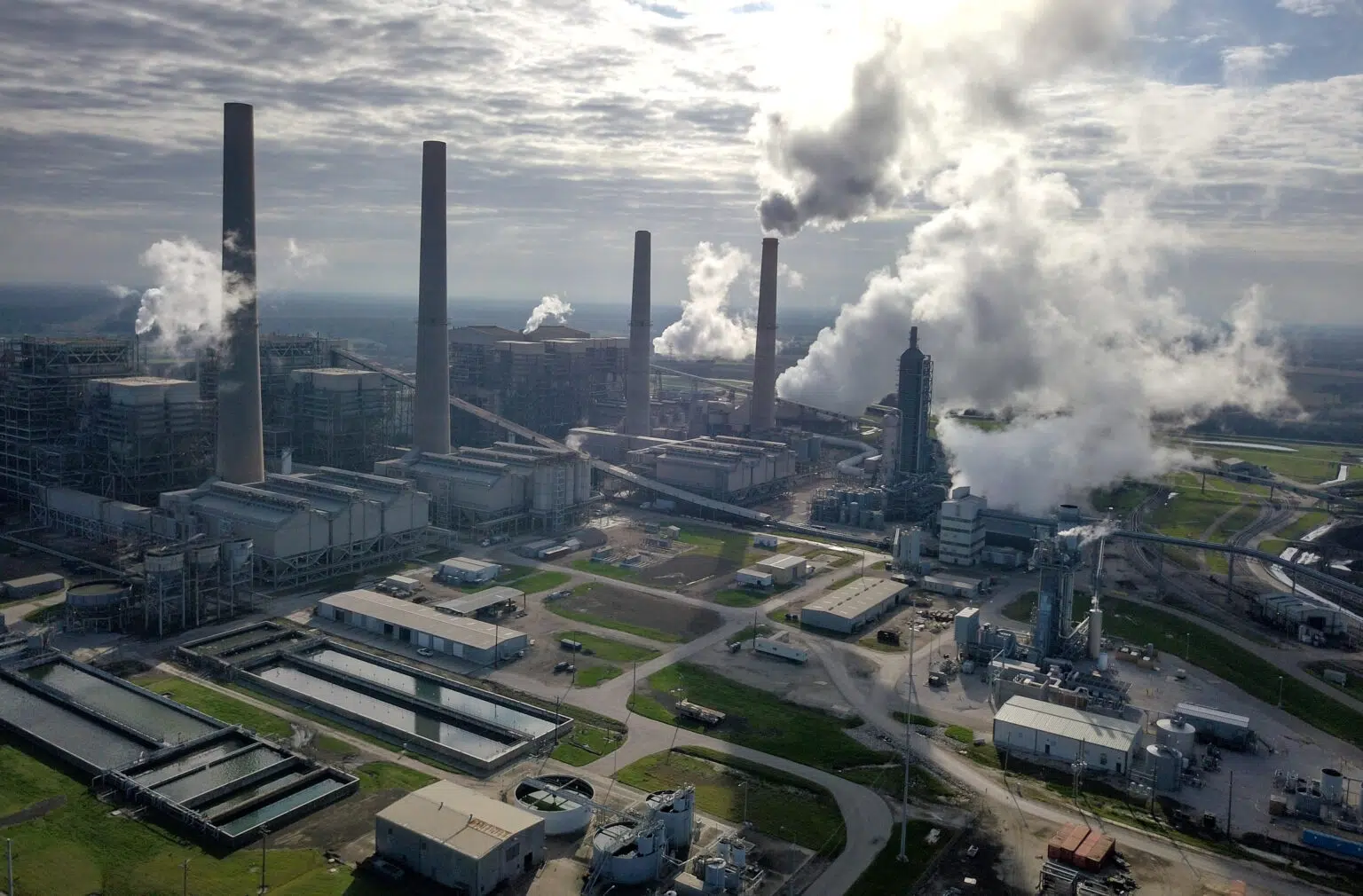
As the Trump administration seeks to wipe away environmental rules covering the oil, gas, and coal industries, fossil fuel producers and sellers are reassuring buyers that carbon capture and storage (CCS) could slash climate-altering emissions from a growing range of fossil-fuel projects — like blue hydrogen, LNG export terminals, and data centers.
“That’s right: data centers,” fossil fuel giant ExxonMobil wrote in December, adding that the need for more data centers for AI could represent a fifth of the world’s demand for carbon capture by 2050.
Carbon capture already faces significant skepticism from environmentalists who note that the industry’s past is littered with failed carbon capture projects, missed targets, and an overall net increase in emissions.
Now, a study published in the journal Nature calls attention to another issue that could loom in the future if CCS were to really take off — a lack of easy-to-develop locations where captured carbon can be buried underground.
The vast majority of places where you can find the kinds of sedimentary rocks that allow carbon dioxide to be stored underground sit in higher risk zones or in areas like the Arctic that are potentially off-limits for practical or political reasons, the study found.
That has big implications for the energy transition, since once carbon dioxide is put into storage, it’s supposed to stay there for as long as possible. Any storage sites we use today can’t be expected to be available for future generations — not just the children and grandchildren of people alive today but “more than ten generations into the future,” the study notes.
“This study should be a gamechanger for carbon storage,” coauthor Joeri Rogelj, director of research at the Grantham Institute at Imperial College London, said in a statement when the study was announced. “It can no longer be considered an unlimited solution to bring our climate back to a safe level. Instead, geological storage space needs to be thought of as a scarce resource that should be managed responsibly to allow a safe climate future for humanity.”
In fact, there may be only enough practical storage to potentially reverse between 0.4 and 0.7 degrees Celsius of warming — a tiny fraction of the five or six degrees experts previously estimated, the researchers said.
The carbon storage that is available “should be used to halt and reverse global warming,” Rogelj added, “and not be wasted on offsetting on-going and avoidable CO2 pollution from fossil electricity production or outdated combustion engines.”
On Track to ‘Overshoot’
International plans to limit climate change tend to assume that we can “overshoot” on climate pollution, pushing the Earth’s climate into dangerous territory past 1.5 or 2 degrees Celsius of warming. That’s because, the argument goes, carbon capture and storage could come to the rescue if we go too far, letting us draw carbon dioxide levels back down.
The new study calls that assumption into question, highlighting uncertainty about how effective carbon removal will be at curbing climate change, in addition to concerns over difficulties in accessing underground carbon storage.
“With current trends suggesting warming up to 3°C this century, using all of the safe geological storage wouldn’t even get us back to 2°C,” said lead author Matthew Gidden, research professor at the Center for Global Sustainability at the University of Maryland.
Industry estimates, like those from the Oil and Gas Climate Initiative (OGCI), suggest the world has plenty of storage potential to keep 14,000 gigatons of carbon dioxide buried below ground and out of the atmosphere.
That would be “more than enough to meet projected needs for CCUS [carbon capture, use and sequestration] over the coming century,” the OGCI wrote in a 2023 report it called a “playbook for regulators, industrial emitters and hub developers.”
The new study, however, takes a closer look at where that storage is located — and in particular whether it’s in regions at higher risk of earthquakes or groundwater contamination like locations deep in the ocean, or in the Arctic and Antarctic circles. The study concludes that nearly 90 percent of that storage capacity is in less-than-desirable locations.
The researchers estimate there’s just 1,460 gigatons worth of “prudent” storage available worldwide — a tenth of the industry estimates.
Some earlier estimates stretch even higher, suggesting there’s around 40,000 gigatons of CO2 storage capacity worldwide.
“These estimates are also important as they remove all the technical constraints from assessment and assume that cost and engineering challenges will pose no issue in the future,” coauthor Siddharth Joshi, a research scholar at the Integrated Assessment and Climate Change Research Group, told DeSmog, adding that “the shock value of technical potentials is enough to sometimes drive an industry forward.”
At the same time, focusing only on larger capacity estimates can create a “false sense of abundance,” Gidden noted, if policy-makers think the world has more room for overshoot than carbon storage can really offer.
The Nature study raises big questions about how the world’s carbon storage should be used long term.
“As [the study authors] point out, if we act to reduce emissions now, we probably have enough storage, but that ceases to be true really, really soon,” Rob Anex, professor at the University of Wisconsin-Madison who researches carbon capture technology, told Canada’s CBC News. “Global emission rates are so high that the window of time in which geologic storage is practical is shutting really, really fast.”
Trump Backs Carbon Capture Subsidies
Despite the federal government’s retreat from climate action, including Trump’s January executive order withdrawing the U.S. from the Paris Agreement, the Trump administration has moved to protect and expand some federal subsidies for CCS.
Lucrative tax credits for using captured carbon for enhanced oil recovery were expanded this summer as part of Trump’s “One Big Beautiful Bill Act.”
Given this political climate, experts didn’t expect to see a major direct impact from the study for blue hydrogen projects and other proposals aiming to use carbon storage.
“The pragmatist in me says it’s unlikely,” Anika Juhn, energy data analyst for the Institute for Energy Economics and Financial Analysis (IEEFA), told DeSmog. “I don’t see government taking those kinds of steps.”
The Nature study follows a precautionary approach to carbon storage, she noted. “The precautionary principle says if we don’t really know about it, then maybe we shouldn’t be rushing headlong into just applying this technology everywhere as fast as possible,” she said. “I think that’s really where the strength of it is, saying if you are interested in doing it safely, here are some key aspects that you should really focus on.”
“Because their estimate is so prudent, it really doesn’t reflect at all current industry practice,” Juhn noted.
So far, there’s not a lot of carbon storage operating worldwide, with the Nature study pointing out existing projects currently store just 49 megatons per year, with 416 megatons worth “either planned or in construction.” Meanwhile, annual global emissions from fossil fuels topped 37,400 megatons last year, according to the World Meteorological Organization, another record high.
But that small CCS industry has already caused significant safety incidents — including well blowouts and a major 2020 CO2 pipeline leak that hospitalized dozens of people.
Concerns over the potential for groundwater contamination — one of the factors highlighted in the Nature study — have already begun curbing real-world carbon storage availability at the state and local level.
Take, for example, Illinois, home to the nation’s first dedicated carbon storage project, the Archer-Daniels-Midland (ADM) carbon storage site in Decatur, Illinois.
Carbon injections were halted at ADM’s site a year ago, after the company discovered leaks below ground. “Given the extreme depth and the multiple layers of shale and other confining rock up to the surface, at no time was there an impact to the surface or groundwater sources, nor any threat to public health,” ADM said at the end of August, announcing the restart of operations at its Decatur site.
But the incident appears to have hit a nerve in the state, where nearly a million people rely on the Mahomet Aquifer in Champaign, Illinois, as their sole source of drinking water.
This summer, Illinois passed a law banning carbon storage below that aquifer, making roughly 15 percent of the state’s counties off limits for carbon storage. ADM’s leak had reached within about six miles of the Mahomet Aquifer, Taxpayers for Common Sense notes.
The Nature study notes that most of the carbon storage in operation today doesn’t actually offer any net climate benefit — because it’s used for enhanced oil recovery, which, the researchers wrote, “overall results in net-positive CO2 emissions.”
“After decades of bold projections, only around 10 million tons of CO₂ are captured and permanently stored each year (excluding enhanced oil recovery), representing less than 0.03% of annual global fossil fuel emissions,” Kevin Anderson, professor of Energy and Climate Change at the University of Manchester, said in a statement responding to the study. “Rather than serving as a credible mitigation technology, CCS has largely functioned as a rhetorical device to delay robust fossil fuel regulation.”