Congressional Dems Request DOJ Investigation into Big Oil’s Climate Deception

Spread the love

Original article by Dana Drugmand republished from DeSmog.
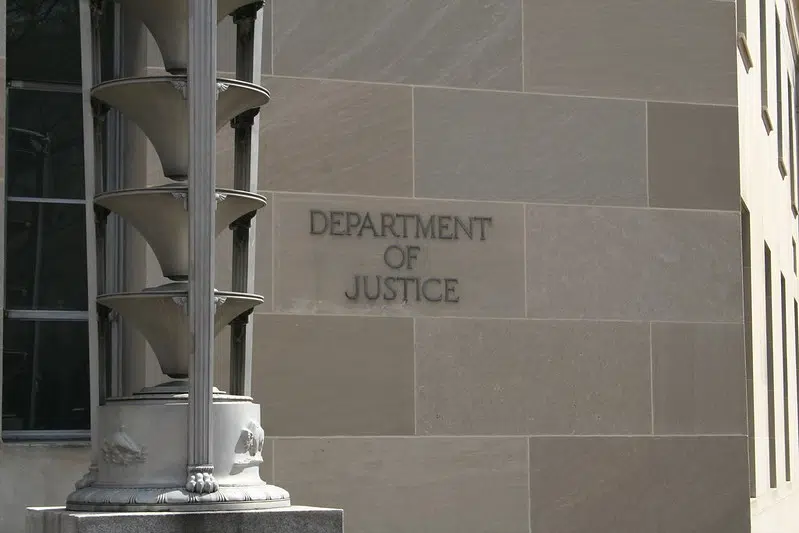
U.S. Department of Justice in Washington DC. Credit: Scott (CC BY-SA 2.0)

Citing “new evidence” of Big Oil firms’ advanced knowledge of climate risks and their actions to publicly conceal these risks, Democratic members of Congress are renewing calls for the U.S. Department of Justice to investigate carbon majors for potential violations of federal law.

In a letter sent to Attorney General Merrick Garland on Tuesday, the 20 congressional signatories, led by Sen. Richard Blumenthal (D-Conn.) and Rep. Ted Lieu (D-Calif.), compare Big Oil’s deceptive conduct to that of Big Tobacco. In 2006, major tobacco firms were convicted of violating the Racketeer Influenced and Corrupt Organizations (RICO) Act in litigation brought by the DOJ. The letter requests that the DOJ now open an investigation into ExxonMobil, Shell, and other oil majors to “determine whether they violated RICO, consumer protection, truth in advertising, public health, or other laws.”

The call for a federal investigation into the fossil fuel industry’s alleged climate deception follows new revelations further showing that Big Oil knew about the climate consequences of its products, yet actively worked to disseminate climate denial and block policy responses to protect profits.

As DeSmog reported in an investigation published March 31, oil major Shell sponsored climate research in the 1970s — years earlier than previously thought. Despite the stark warnings for society issued in internal reports, the company backed a series of industry publications that downplayed climate risks, emphasized uncertainties in climate science, and called for more fossil fuel use, particularly coal. The investigation was based on more than 200 documents uncovered and compiled by Dutch scholar and activist Vatan Hüzeir.   

One of those documents, an internal 1989 Shell scenarios report, discussed the potential for an unprecedented climate refugee crisis with global temperatures rising considerably beyond 1.5 degrees C (2.7 degrees F). The report warned: “Civilisation [sic] could prove a fragile thing.”

The congressional letter to DOJ cites this and several other Shell documents from the investigation, stating: “Despite these warnings, Shell continued to publicly promote the use of fossil fuels and participate in trade associations and other groups that pushed climate denial and opposed solutions.” As DeSmog’s reporting noted, Shell engaged in lobbying and trade associations in the 1990s and 2000s that did just that, such as the Global Climate Coalition and the American Petroleum Institute.     

The letter also points to two peer-reviewed studies indicating that Big Oil deceived and continues to deceive the public. One, published in January in the journal Science by researchers Geoffrey Supran, Stefan Rahmstorf, and Naomi Oreskes, demonstrated that Exxon’s climate modeling and global warming projections were exceptionally accurate, and explained that despite this skillful scientific understanding, the company’s public statements contradicted its internal knowledge of the climate risk. The other study, by Mei Li, Gregory Trencher, and Jusen Asuka and published in 2022 in the journal PLOS ONE, showed the disconnect between oil majors’ rhetoric and pledges around the low carbon transition and their actual actions and investments that prioritize their fossil fuel business.

“The available evidence that these companies lied — and continue to lie — to the public about their central role in exacerbating the climate crisis demands further investigation,” the letter contends. It alleges that this conduct may “constitute the most consequential deception campaign in history, with potentially existential consequences for our planet.”

Shell and ExxonMobil knew their products fueled the #ClimateCrisis, but lied to the public to protect their profits.

READ: Our bicameral letter, co-led by @SenBlumenthal, urging @TheJusticeDept to investigate whether their actions violated federal law. https://t.co/pg3vP9jPgm— Rep. Ted Lieu (@RepTedLieu) July 25, 2023

The letter comes amidst alarming signals of climate breakdown across the country, from the hot-tub-temperature water off the Florida Keys, to the worst flooding Vermont has seen in nearly a century, to punishing heat in the Southwest sizzling sidewalks and causing severe burn injuries.

The Democratic members of Congress who signed onto the letter along with Sen. Blumenthal and Rep. Lieu include Reps. Katie Porter, Jared Huffman, Mark DeSaulnier, Kevin Mullin, and Nanette Díaz Barragán, all of California; Reps. Kim Schrier and Pramila Jayapal of Washington; Rep. Kathy Castor of Florida; Rep. Rashida Tlaib of Michigan; Rep. Cori Bush of Missouri; and Rep. Alexandria Ocasio-Cortez of New York. Sens. Ed Markey of Massachusetts, Sheldon Whitehouse of Rhode Island, Peter Welch of Vermont, Mazie Hirono of Hawaii, John Fetterman of Pennsylvania, and Alex Padilla of California also signed on.

Just two weeks ago, during an online climate discussion, several members of Congress including Ocasio-Cortez, Whitehouse, and Sen. Bernie Sanders of Vermont, called on the Department of Justice to take legal action against Big Oil, with Sanders suggesting they pay the Attorney General a visit to make their request in person. He and other senators have previously written to the DOJ and President Joe Biden requesting an investigation into the fossil fuel industry’s climate deception.

Richard Wiles, president of the Center for Climate Integrity, which advocates for holding climate polluters accountable, said in an emailed statement that this deception amounts to the most “consequential fraud committed against the American people” ever. 

“Just as they did with the tobacco industry, the Department of Justice must exercise its unique power to hold the fossil fuel industry accountable and stop the lying,” Wiles said. “As long as Big Oil’s climate lies, both past and present, remain unchallenged by the DOJ, protecting the American public from the ravages of climate change will remain that much more difficult.”

Original article by Dana Drugmand republished from DeSmog.
Continue ReadingCongressional Dems Request DOJ Investigation into Big Oil’s Climate Deception

What Big Oil knew about climate change, in its own words

Spread the love


The oil industry was aware of the risks of climate change decades ago.
Barry Lewis/InPictures via Getty Images

Benjamin Franta, Stanford University

Leer en español.

Four years ago, I traveled around America, visiting historical archives. I was looking for documents that might reveal the hidden history of climate change – and in particular, when the major coal, oil and gas companies became aware of the problem, and what they knew about it.

I pored over boxes of papers, thousands of pages. I began to recognize typewriter fonts from the 1960s and ‘70s and marveled at the legibility of past penmanship, and got used to squinting when it wasn’t so clear.

What those papers revealed is now changing our understanding of how climate change became a crisis. The industry’s own words, as my research found, show companies knew about the risk long before most of the rest of the world.

Surprising discoveries

At an old gunpowder factory in Delaware – now a museum and archive – I found a transcript of a petroleum conference from 1959 called the “Energy and Man” symposium, held at Columbia University in New York. As I flipped through, I saw a speech from a famous scientist, Edward Teller (who helped invent the hydrogen bomb), warning the industry executives and others assembled of global warming.

“Whenever you burn conventional fuel,” Teller explained, “you create carbon dioxide. … Its presence in the atmosphere causes a greenhouse effect.” If the world kept using fossil fuels, the ice caps would begin to melt, raising sea levels. Eventually, “all the coastal cities would be covered,” he warned.

1959 was before the moon landing, before the Beatles’ first single, before Martin Luther King’s “I Have a Dream” speech, before the first modern aluminum can was ever made. It was decades before I was born. What else was out there?

In Wyoming, I found another speech at the university archives in Laramie – this one from 1965, and from an oil executive himself. That year, at the annual meeting of the American Petroleum Institute, the main organization for the U.S. oil industry, the group’s president, Frank Ikard, mentioning a report called “Restoring the Quality of Our Environment” that had been published just a few days before by President Lyndon Johnson’s team of scientific advisers.

“The substance of the report,” Ikard told the industry audience, “is that there is still time to save the world’s peoples from the catastrophic consequences of pollution, but time is running out.” He continued that “One of the most important predictions of the report is that carbon dioxide is being added to the earth’s atmosphere by the burning of coal, oil, and natural gas at such a rate that by the year 2000 the heat balance will be so modified as possibly to cause marked changes in climate.”

Ikard noted that the report had found that a “nonpolluting means of powering automobiles, buses, and trucks is likely to become a national necessity.”

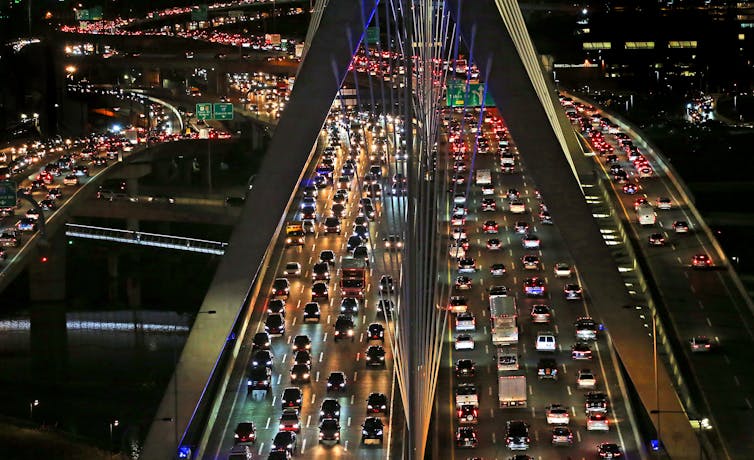
Traffic lights up the evening on a Boston bridge

Transportation is now the leading source of carbon dioxide emissions in the U.S., followed by electricity.
David L. Ryan/The Boston Globe via Getty Images

As I reviewed my findings back in California, I realized that before San Francisco’s Summer of Love, before Woodstock, the peak of the ’60s counterculture and all that stuff that seemed ancient history to me, the heads of the oil industry had been privately informed by their own leaders that their products would eventually alter the climate of the entire planet, with dangerous consequences.

Secret research revealed the risks ahead

While I traveled the country, other researchers were hard at work too. And the documents they found were in some ways even more shocking.

By the late 1970s, the American Petroleum Institute had formed a secret committee called the “CO2 and Climate Task Force,” which included representatives of many of the major oil companies, to privately monitor and discuss the latest developments in climate science.

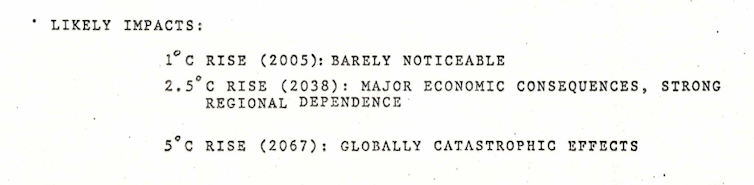
In 1980, the task force invited a scientist from Stanford University, John Laurmann, to brief them on the state of climate science. Today, we have a copy of Laurmann’s presentation, which warned that if fossil fuels continued to be used, global warming would be “barely noticeable” by 2005, but by the 2060s would have “globally catastrophic effects.” That same year, the American Petroleum Institute called on governments to triple coal production worldwide, insisting there would be no negative consequences despite what it knew internally.

A slide from John Laurmann’s presentation to the American Petroleum Institute’s climate change task force in 1980, warning of globally catastrophic effects from continued fossil fuel use.

Exxon had a secretive research program too. In 1981, one of its managers, Roger Cohen, sent an internal memo observing that the company’s long-term business plans could “produce effects which will indeed be catastrophic (at least for a substantial fraction of the earth’s population).”

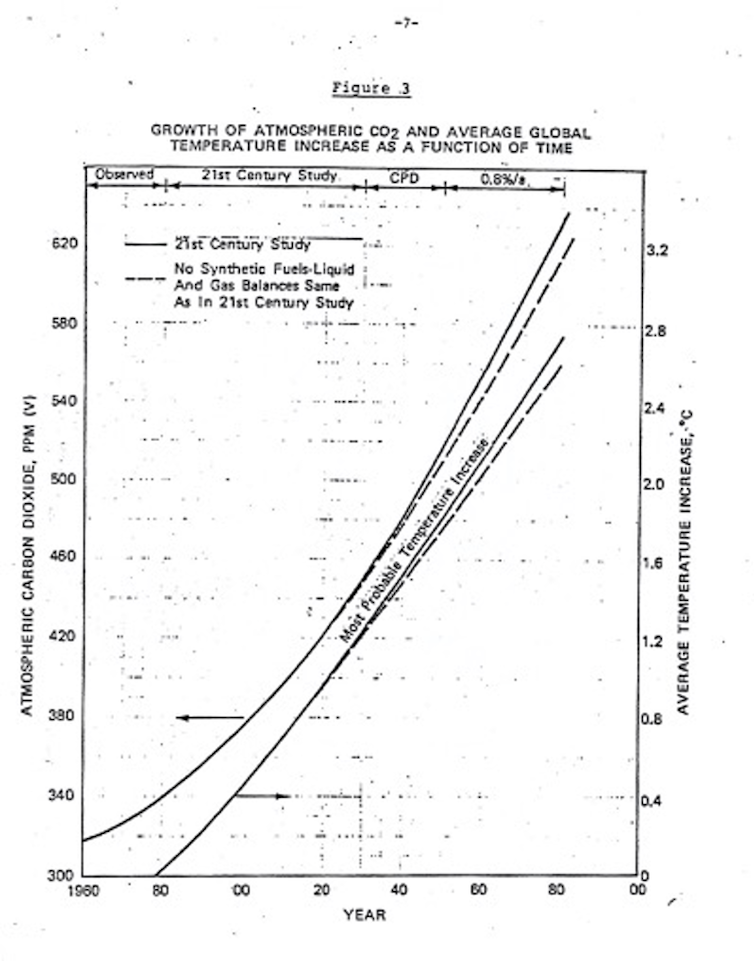
The next year, Exxon completed a comprehensive, 40-page internal report on climate change, which predicted almost exactly the amount of global warming we’ve seen, as well as sea level rise, drought and more. According to the front page of the report, it was “given wide circulation to Exxon management” but was “not to be distributed externally.”

And Exxon did keep it secret: We know of the report’s existence only because investigative journalists at Inside Climate News uncovered it in 2015.

A figure from Exxon’s internal climate change report from 1982, predicting how much carbon dioxide would build up from fossil fuels and how much global warming that would cause through the 21st century unless action was taken. Exxon’s projection has been remarkably accurate.

Other oil companies knew the effects their products were having on the planet too. In 1986, the Dutch oil company Shell finished an internal report nearly 100 pages long, predicting that global warming from fossil fuels would cause changes that would be “the greatest in recorded history,” including “destructive floods,” abandonment of entire countries and even forced migration around the world. That report was stamped “CONFIDENTIAL” and only brought to light in 2018 by Jelmer Mommers, a Dutch journalist.

In October 2021, I and two French colleagues published another study showing through company documents and interviews how the Paris-based oil major Total was also aware of global warming’s catastrophic potential as early as the 1970s. Despite this awareness, we found that Total then worked with Exxon to spread doubt about climate change.

Big Oil’s PR pivot

These companies had a choice.

Back in 1979, Exxon had privately studied options for avoiding global warming. It found that with immediate action, if the industry moved away from fossil fuels and instead focused on renewable energy, fossil fuel pollution could start to decline in the 1990s and a major climate crisis could be avoided.

But the industry didn’t pursue that path. Instead, colleagues and I recently found that in the late 1980s, Exxon and other oil companies coordinated a global effort to dispute climate science, block fossil fuel controls and keep their products flowing.

We know about it through internal documents and the words of industry insiders, who are now beginning to share what they saw with the public. We also know that in 1989, the fossil fuel industry created something called the Global Climate Coalition – but it wasn’t an environmental group like the name suggests; instead, it worked to sow doubt about climate change and lobbied lawmakers to block clean energy legislation and climate treaties throughout the 1990s.

For example, in 1997, the Global Climate Coalition’s chairman, William O’Keefe, who was also an executive vice president for the American Petroleum Institute, wrote in the Washington Post that “Climate scientists don’t say that burning oil, gas and coal is steadily warming the earth,” contradicting what the industry had known for decades. The fossil fuel industry also funded think tanks and biased studies that helped slow progress to a crawl.

Today, most oil companies shy away from denying climate science outright, but they continue to fight fossil fuel controls and promote themselves as clean energy leaders even though they still put the vast majority of their investments into fossil fuels.

A Congressional subcommittee on Oct. 28, 2021, questioned executives from Exxon, BP, Chevron, Shell and the American Petroleum Institute about industry efforts to downplay the role of fossil fuels in climate change. Exxon CEO Darren Woods told lawmakers that his company’s public statements “are and have always been truthful” and that the company “does not spread disinformation regarding climate change.”

As I write this, climate legislation is again being blocked in Congress by a lawmaker with close ties to the fossil fuel industry.

People around the world, meanwhile, are experiencing the effects of global warming: weird weather, shifting seasons, extreme heat waves and even wildfires like they’ve never seen before.

Will the world experience the global catastrophe that the oil companies predicted years before I was born? That depends on what we do now, with our slice of history.

This article was updated Oct. 28, 2021, with details from a Congressional hearing.

Benjamin Franta, Ph.D. Candidate in History, Stanford University

This article is republished from The Conversation under a Creative Commons license. Read the original article.

Related video

Continue ReadingWhat Big Oil knew about climate change, in its own words

Boris Johnson, COVID and the Media

Spread the love

The Pursuit of Truth – Or Not Boris Johnson, COVID and the Media Dorothy Byrne 21 June 2021

When a man lies often enough, every now and then, something he says will turn out to be true. And so it happened with Boris Johnson. He said our country would be “record-breaking” in this pandemic and it has been, twice over: at one point, the UK had achieved the highest rate of COVID-19 deaths per capita in the world; and it also suffered the worst fall in GDP in Europe.

How have the Prime Minister and his Cabinet fared when it comes to telling the truth about the greatest disaster our country has experienced since the Second World War?

Privately, radio and television journalists will reel off what they think are the most outrageous lies of this Government’s Coronavirus catastrophe – how it claimed that it was simply ‘following the science’ or ‘protecting the NHS and care homes’ or awarding contracts for personal protective equipment (PPE) sensibly. 

Back in autumn 2019, I condemned Boris Johnson as a known liar in the annual MacTaggart Lecture at the Edinburgh Television Festival. A number of my colleagues in broadcasting disapproved strongly even though they did not dispute the accuracy of my statement. That the Prime Minister is a notorious liar is accepted among journalists in the UK across the political spectrum.

Johnson was sacked by The Times early on in his career for an untruthful front-page story which he misattributed to his own godfather. As the Daily Telegraph’s Brussels’ correspondent between 1989 and 1994, he regularly disseminated ‘Euromyths’. He was sacked in 2004 as the Conservative Party’s vice-chairman and Shadow Arts Minister for dishonestly assuring the then leader Michael Howardthat reports he had had an affair with a columnist were an “inverted pyramid of piffle”.

Yet, almost all broadcast journalists believe that they should not use the ‘L’ word about Johnson.

Why? Firstly, it’s rude and we’re British. Secondly, they fear that the public could thereby think we have lost our impartiality. Well, that’s a risk we have to take. I am indeed not impartial between truth and lies. The public doesn’t have the wherewithal to research the facts about politicians’ statements and therefore judge accurately whether they are telling the truth. They rely on us for that. 

Ministers have made untrue statements over and over again and it has worked for them. A significant proportion of the population has accepted these statements. This is partly because they sympathised with a Government dealing with a plague without precedent for which it could not be blamed. But this is also because broadcast journalists have not said that we have been lied to in significant ways.

Back in 2019, I was complaining about Johnson’s lies concerning EU rules on condoms and kippers. What halcyon days they were, pre-pandemic, when a politician lying about fish seemed like a big deal. Now, he and his Cabinet lie about life and death. Previously, his lies were specific. Now, they are are so vast in their ambition that they create a parallel universe.

In the past, lying politicians were held to account on television and radio. They were not named as liars, but their statements were analysed forensically in lengthy interviews. Not any more.

During the Coronavirus crisis, we have not seen Boris Johnson putting himself up for the sort of grilling to which, for example, Margaret Thatcher subjected herself over the Falklands. Johnson and senior Cabinet ministers have failed to appear on Newsnight or Channel Four News, the two programmes with the time to carry out in-depth interviews. 

A leading broadcast journalist told me: “They just don’t believe in accountability. In one of the great crises of modern times, where is the major interview with the Prime Minister? I can’t think of a time when a Prime Minister in a crisis has put himself up so little. There is no proper scrutiny. It’s a complete contempt for accountability.” 

This is an edited extract from ‘Populism, the Pandemic and the Media: Journalism in the Age of Brexit, COVID, Donald Trump and Boris Johnson’ to be published on 24 June 2021 by AbramisDorothy Byrne is a television journalist and producer. She was formerly editor-at-large at Channel 4 Television, where she previously served as head of news and current affairs

Continue ReadingBoris Johnson, COVID and the Media

The lying liar Boris Johnson and more

Spread the love

It is documented and established beyond doubt that Boris Johnson is a lying liar. While that is enough to establish that he is totally unsuitable to hold any high office, there is further evidence that he is a dangerous, unstable twat totally unsuitable to be the UK’s prime minister.

Ridicule and disbelief as Boris Johnson insists he’s never told a single lie in his whole political career

Appearing on ITV, the prime minister was asked whether he could look the presenter “in the eye” and say he had never lied in his career – spanning back to 2001 when he was first elected as an MP. 

“Absolutely not, absolutely not,” Mr Johnson replied. “I have never tried to deceive the public and I’ve always tried to be absolutely frank.”

Pressed again, he continued: “I may have got things wrong, I may have been mistaken, but I’ve never tried to deceive people about the way I see things.” 

He’s recorded on video saying that lying lie.

The trouble for lying liar Boris Johnson is that it is widely accepted that he is a lying liar and that his lies are well documented. It is disappointing that he is permitted to lie so blatantly without being held to account.

https://www.independent.co.uk/news/uk/politics/boris-johnson-lies-conservative-leader-candidate-list-times-banana-brexit-bus-a8929076.html

Boris Johnson’s quotes in full

“We are getting ready to come out on October the 31st…Do or die, come what may” (25 June, TalkRadio interview)

“We are going to fulfil the repeated promises of Parliament to the people and come out of the EU on October 31, no ifs or buts” (25 July, first speech as Prime Minister)

“There are no circumstances in which I will ask Brussels to delay. We are leaving on 31 October, no ifs or buts” (2 September, speaking in Downing Street)

“I am confident of getting a deal. We will leave on 31 October in all circumstances. There will be no further pointless delay.” (3 September, speech in Commons)

“I’d rather be dead in a ditch” (5 September, asked to promise he would not request a delay to Brexit)

later: It’s an old joke but a good one. How can you tell when Boris Johnson is lying? You can see his lips moving.

The Brexit lies above were while he was campaigning to be leader of the Conservative Party. Now he’s lying to win a general election.

later still: More

There is a debate about BSters vs. Liars proposing that BSters are more dangerous than liars and have very little grasp of the concepts of truth and deliberate deception. It appears that Boris Johnson also has very little grasp of these concepts and is very willing to deliberately mislead without realizing or accepting that he is a lying liar e.g. his statement “I have never tried to deceive the public and I’ve always tried to be absolutely frank.” Should we instead regard him as a BSting BSter?

As well as being unable to trust anything he says Boris Johnson’s inattention to detail and/or his daytime drinking have had serious effects.

https://www.theguardian.com/news/2019/jun/30/nazanin-zaghari-ratcliffe-richard-ratcliffe-boris-johnson-gaffes

Johnson, who told a Commons committee when he was foreign secretary that Zaghari-Ratcliffe was “teaching people journalism” in Iran, should acknowledge his mistake, he said. Iranian officials cited his words as evidence that she had engaged in “propaganda against the regime”. The family have always maintained she was visiting relatives in Iran when she was arrested. She has strenuously denied spying. She was sentenced to five years in prison for attempting to overthrow the Iranian government.

Continue ReadingThe lying liar Boris Johnson and more

Commentary on and analysis of recent political events

Spread the love

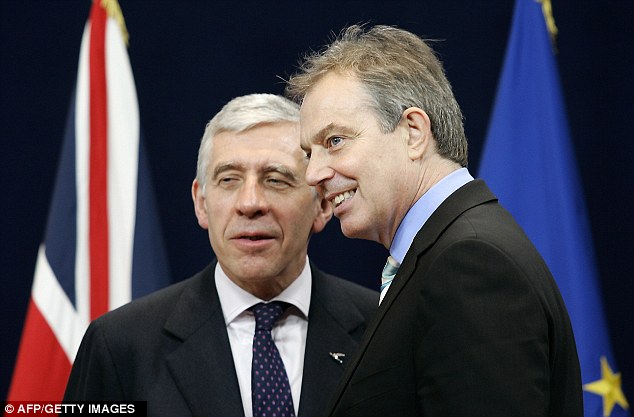
The big story today is the current UK coalition government’s attempts to hide the UK’s part in torture and rendition under the Tony Blair government. Despite repeated denials by liar Jack Straw at the time, evidence has surfaced that Tony Bliar’s government conducted illegal renditions. It is widely accepted that Blair’s government had little regard for the law, truth or justice.

Image of liars Jack Straw and Tony BlairUK inquiry on rendition and torture to be handed to ISC

The stalled official inquiry into the UK’s involvement in rendition and torture in the years after 9/11 is to be handed to the controversial intelligence and security committee (ISC), the government will announce on Thursday.

The decision follows years of assurances by ministers that the inquiry would be headed by a senior judge.

It is a move that will dismay human rights groups. The ISC is the oversight body that failed to report publicly on the bulk surveillance operations being conducted by the UK’s signals intelligence agency, GCHQ, and it has already conducted one inquiry into rendition, after which it cleared MI5 and MI6 of blame.

The extent to which the agencies were involved in the abuse of terrorism suspects may be outlined on Thursday with the publication of a redacted version of an interim report of the stalled inquiry that was led by Sir Peter Gibson, a retired appeal court judge.

Gibson is said to be calling for further investigation into the UK’s involvement in the rendition of two Libyan opposition leaders and their families to Tripoli in 2004, and the role played by Jack Straw, who was foreign secretary at the time. Straw was not available for comment but has previously denied any wrongdoing. MI6 is reported to have confronted him with documentary evidence that he personally authorised the agency’s involvement in the rendition operations.

NHS sign

Poorest areas to get extra NHS money to tackle ill health

The poorest parts of England are to receive extra money to tackle ill health after NHS bosses rejected plans to divert resources from there to wealthy areas.

NHS England’s decision means that scores of GP-led clinical commissioning groups (CCGs) in deprived areas will no longer see their budgets cut from April. Its board has defied the Department of Health by throwing out its plans to make the age of the local population, not the level of deprivation, a key factor in the allocation of NHS funding.

Labour MPs had claimed that such a move would lead to almost £1bn being shifted from poor areas which have low life expectancy to wealthier places where residents live longer.

Instead NHS England has opted to give all 211 CCGs rises of at least the rate of inflation both next year and in 2015-16, and give those serving the most deprived places extra money to help cope with the demand caused by ingrained health problems. It was obliged to do that to help meet its legal duty to reduce health inequalities and differences in life expectancy between rich and poor areas, said chief financial officer Paul Baumann….

For the Sake of Humanity Society Must Unleash War on the Tories

The campaign of hate being waged by this government of rich, privileged, and privately educated sociopaths against the poor, the unemployed, and those who dare try to claim the benefits to which they are entitled is unparalleled in modern history. Even Thatcher in her pomp was not as malicious in her treatment of the aforementioned demographic. This was not because she didn’t wish to be more malicious than she was, it was because when she came to power we still had trade unions capable and willing to resist such an onslaught, meaning that the cost involved in even attempting to rip up the foundations of the welfare state and the collective ethos which lies at its heart would have been too damaging to her government and party to make worthwhile.

Three decades on and the fruits of Thatcherism – with the corresponding neutering of the unions and other forms of working class solidarity – have culminated in a new normal of demonisation and the near criminalisation of poverty in Britain. Austerity has been sold to the country as a policy of necessity in response to years of Labour profligacy and a bloated public sector. It is a lie so bold and barefaced that even Joseph Goebbels would blush while repeating it.

Prisoners serving less than a year should be allowed to vote, says Parliamentary committee

Prisoners serving sentences of 12 months or less should be given the vote, the Government is today told by an all-party parliamentary committee.

It also called for all inmates who are within six months of release to be entitled to take part in elections.

The recommendations will not be welcome in Downing Street as David Cameron has said he would feel “physically sick” if prisoners were allowed to vote.

Britain is locked in an eight-year battle with the European Court of Human Rights (ECHR) which has ruled that the blanket ban on prisoner voting is incompatible with European law.

Government to make 40 per cent of Britain available for fracking

The vast disruption that could be caused across the country by fracking has been laid bare, with the Government announcing it would make 40 per cent of Britain available to companies to explore for oil and gas next year.

Local communities could be subjected to thousands of wells being dug every year in the search for fossil fuels – requiring billions of litres of water, with dozens of lorries passing by every day – after the Coalition said it would put oil and gas licences covering 100,000 square kilometres up for auction next summer.

The auction, which would give the licence-winners exclusive rights to explore an area for oil and gas, but would require additional permits for fracking, would add to the 19,000 square kilometres of licences that have already been sold to hydrocarbon producers.

Ian Watkins abuse: police forces to be investigated by IPCC

Investigations are under way to find out if three police forces should have done more to pursue allegations of sex abuse, dating back to 2008, against Ian Watkins.

Watkins, the 36-year-old former Lostprophets lead singer, is to be sentenced on Wednesday for a string of offences including the attempted rape of a baby.

Before his sentencing, the Independent Police Complaints Commission (IPCC) said it was investigating police forces in South Wales, where Watkins lived, but also South Yorkshire and Bedfordshire. One line of inquiry is whether officers failed to look properly into Watkins’s activities because of his celebrity status.

The IPCC’s commissioner Jan Williams said: “No one can fail to be shocked by the vile details of Ian Watkins’s offending that emerged in court last month.

“Questions are now rightly being asked as to whether Ian Watkins could have been brought to justice sooner, what steps were taken by police in response to allegations made against him as far back as 2008 and whether his celebrity status had any impact on the investigation.” He added, however, that the investigation was complex and would take time.

Continue ReadingCommentary on and analysis of recent political events