Tim Smyth, Plymouth Marine Laboratory
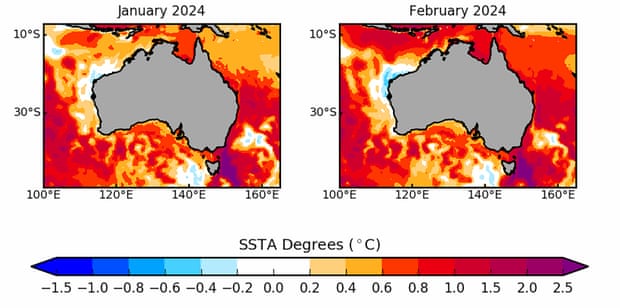
A marine heatwave has been building in the ocean surrounding the UK during an exceptionally warm and dry spring. In other words, the sea surface temperature has been within the top 10% of records for each day of the year since at least the beginning of 2025.
How can we know the temperature of the sea surface over such a large area? Throughout April and May 2025, scientists have been able to map and monitor the seas surrounding the UK via satellites, buoys and other floating devices, plus computer models that simulate the ocean’s physical and chemical properties.
Infrared detectors mounted on pole-orbiting satellites can infer the temperature of the top layer of the ocean and have been doing so continuously since the late 1970s. These sensors cannot “see” through clouds, which is why other sources of data are essential.
These datasets are now 45 years old, which is long enough to create a baseline assessment of the climate during that time. This is important to properly contextualise any departures from the long-term average. Without it, scientists would not know how severe and widespread a marine heatwave truly is.
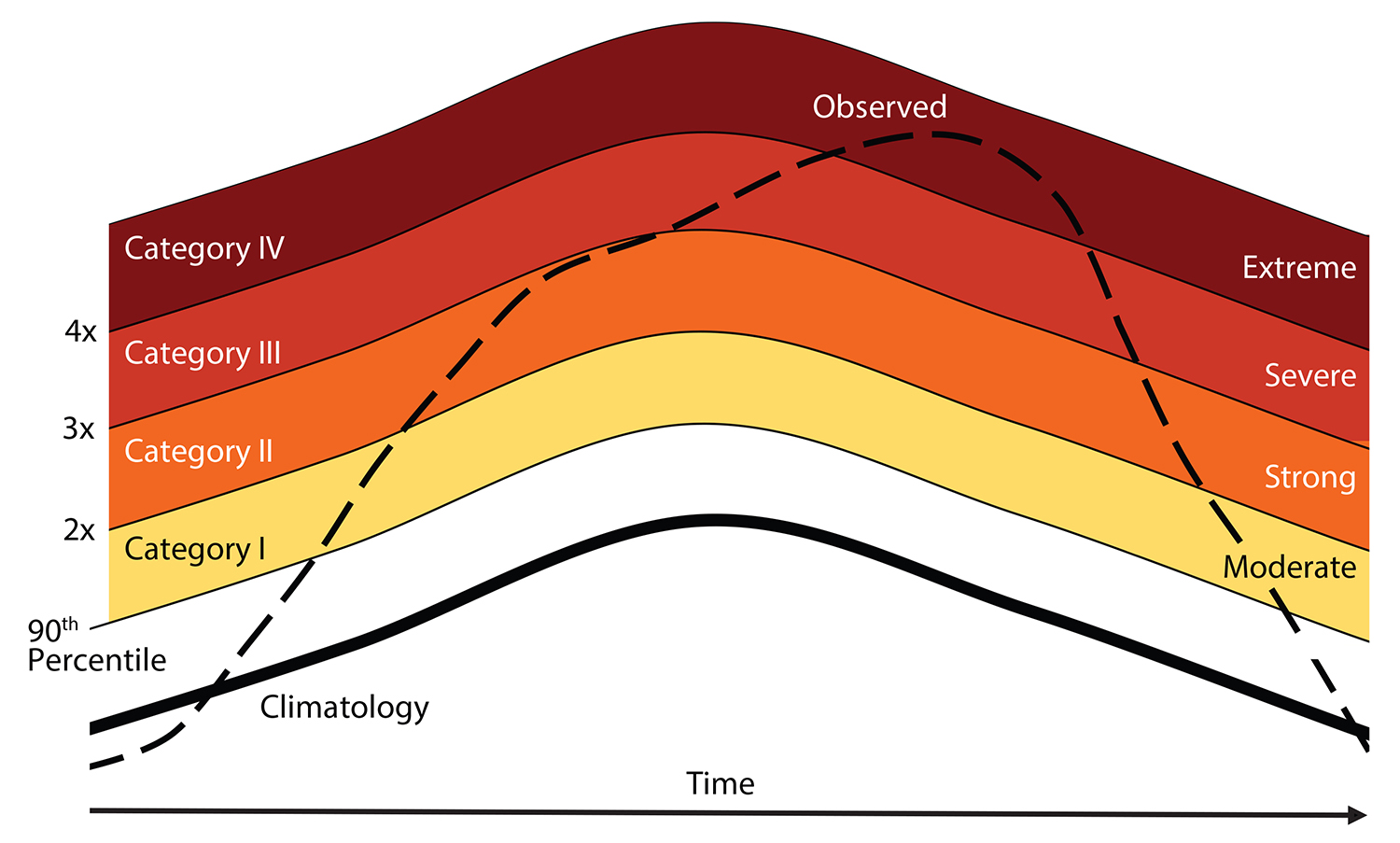
Thanks to a research station that has been collecting ocean temperatures in the western English Channel for over a century, we know that this part of the sea south of Devon is 2.7°C warmer than the 120-year average, which makes it a category II (“strong”) marine heatwave within the four-category scheme.
The importance of long-term monitoring
Marine heatwaves are different to what we expect in a meteorological heatwave. Since 2023, the waters around the UK have been regularly experiencing marine heatwave conditions, because the data shows that the sea temperature has been in the top 10% of records: but most of us would admit that a sea temperature of 10°C in early March doesn’t exactly conjure up the impression of a heatwave.
The search for better definitions of a marine heatwave continues among scientists, particularly as long-term baseline temperatures continue to warm and the top 10% of warm temperatures shifts upwards. Datasets gathered over several decades in the same place are valuable to this effort.
For example, the Plymouth Marine Laboratory and the Marine Biological Association have been monitoring conditions in the western English Channel for over a century. One of the longest running surveys in the world is situated 20 miles south of Plymouth.
Station E1 was originally founded by the International Council for the Exploration of the Seas in 1902, as part of the English (hence the “E”) effort in ocean observation.
What sets E1 apart is the near continuous nature of its recording since then, the frequency of its data collection (monthly in winter, fortnightly in summer) and its sampling throughout the entire water column (80 metres deep), not just at the surface. This enables scientists to observe the seasonal progression of water mixing and layer formation in that location.
The 123-year old dataset shows that sea surface temperatures have increased markedly within the past 40 years, at a rate of around 0.6°C a decade. Warm anomalies have been increasingly common, and cold anomalies increasingly rare.
Marine heatwave conditions have become increasingly frequent, particularly since 2010. The data also shows that at a depth of 50 metres – well below the top layer of the ocean – temperatures have also increased markedly. The ongoing marine heatwave is not just a surface phenomenon.

What caused this heatwave?
The marine heatwave of spring 2025 has resulted from a combination of factors. It boils down to the fact that more energy is being put into the ocean during the day than is being lost at night.
March 2025 was the sunniest March on record (since 1910), with UK Met Office statistics showing there were around 185 hours of sunshine. April set new records for UK solar power generation, with a peak of 12.2 gigawatts (GW) being produced on April 1 out of a possible solar generating capacity of 18 GW.
May continued that trend, with long periods of clear skies under areas of the atmosphere with persistent high pressure. High-pressure areas are also associated with relatively low winds, which restricts the mixing of the warm surface with cooler deep water.
During the spring, rapidly lengthening days mean the time for energy in (day) outweighs energy out (night). It has also been notable that the spring phytoplankton bloom was very early this year (during early March). This is when tiny plant cells at the seawater surface burst into life, like plants on land. The bloom finished relatively early and the surface waters cleared earlier.
The conditions during May at E1 resembled those we would ordinarily associate with midsummer, with the phytoplankton bloom sitting deeper in the water. The clearer water at the surface allowed sunlight to penetrate deeper.
It is evident from our century-plus of measurements that marine heatwaves are happening more frequently and that there appears to be an almost continuous marine heatwave state emerging around the UK.
The intensity of a marine heatwave is generally tied to persistent high-pressure areas remaining static over the UK, but it is still unclear whether or not this is an emerging climate pattern, or just an episode within the general patterns of change within UK seas.
Don’t have time to read about climate change as much as you’d like?
Get a weekly roundup in your inbox instead. Every Wednesday, The Conversation’s environment editor writes Imagine, a short email that goes a little deeper into just one climate issue. Join the 45,000+ readers who’ve subscribed so far.
Tim Smyth, Head of Group: Marine Processes and Observations, Plymouth Marine Laboratory
This article is republished from The Conversation under a Creative Commons license. Read the original article.