Israel’s latest massacres have exacerbated the crisis in Gaza’s healthcare facilities

Spread the love

Original article by Ana Vračar republished from peoples dispatch under a Creative Commons Attribution-ShareAlike 4.0 (CC BY-SA) license.

Al Shifa Hospital after a two-week Israeli siege, April 2024.

Gaza’s hospitals, already overwhelmed, are struggling with an influx of casualties following brutal attacks on refugee camps. Sugary drinks have become the most affordable food as aid delivery obstructions persist

Brutal attacks by the Israeli Occupation Forces (IOF) have, yet again, intensified pressure on the few functional hospitals in the Gaza Strip. Health workers at Nasser Medical Complex reported harrowing scenes following attacks on Khan Younis on July 13, where they received over 100 new casualties despite the hospital already operating over capacity.

“At one point, you had people in the hallway moaning in pain,” said Amy Kit-Mei Low, Doctors Without Borders (MSF) project medical referent. “Even though they had [wound] dressings, the dressings were oozing blood. […] the hospital was trying to cope, but it can barely cope with normal cases.”

UNRWA representative Scott Anderson described the scene at the hospital, stressing the lack of beds, disinfectants, and electricity to run ventilation at Nasser. “I saw toddlers who are double amputees, children paralyzed and unable to receive treatment, and others separated from their parents. I also saw mothers and fathers who were unsure if their children were alive,” Anderson said.

In addition to the relentless IOF attacks, including those targeting healthcare facilities that have killed 2.5% of Gaza’s health workforce since October 7, hospitals are also struggling with aid delivery restrictions imposed by Israel. Since the beginning of the war on Gaza, and especially since the beginning of May, the flow of essential goods to hospitals has been drastically reduced. Hospitals are particularly burdened by the ban on certain medications, including anesthetics, strong painkillers, and even diabetes drugs. Recently, a consortium of organizations providing health care in Gaza warned of a shortage of antibiotics safe for pregnant and breastfeeding women due to the blockade.

Read more: Israel continues its efforts to undermine UNRWA

Despite having hundreds of kilos of aid ready for dispatch, supplies are blocked from reaching hospitals and health centers. The blockade is reinforcing severe food shortages, exacerbating the health crisis. Reports indicate that Israel prioritizes commercial trucks over humanitarian ones at crossings, leaving people with limited and extremely expensive food options. The same consortium of organizations reported that sugary drinks are currently the most affordable food in Gaza.

Famine is spreading rapidly across all regions of Gaza. Nearly 10,000 pregnant and breastfeeding women are on the verge of famine, and 7,000 are already living in famine conditions, according to the United Nations. As a result, more babies are being born preterm and underweight.

Read more: UN experts say, there is already famine in Gaza

For older children, mental health persists as a critical issue. The Gaza Community Mental Health Program (GCMHP) recently estimated that half a million children in Gaza require mental health support. Displaced families report that children are struggling with bedwetting, continuous shaking, violent outbursts, and likely PTSD due to living under constant attack.

GCMHP warns that mental health is also deteriorating among adults, as needs in Gaza far exceed available services. Many people are becoming emotionally numb as a consequence of not being able to receive any mental health support, and are disillusioned by the international community’s failure to halt the genocide perpetrated by Israel. GCMHP teams have encountered people in a state of emotional stagnation, recounting the loss of entire families as if it were a routine event. While scaling up mental health services is crucial for addressing this, GCMHP and other organizations insist that this will not be enough without a ceasefire.

​​People’s Health Dispatch is a fortnightly bulletin published by the People’s Health Movement and Peoples Dispatch. For more articles and to subscribe to People’s Health Dispatch, click here.

Original article by Ana Vračar republished from peoples dispatch under a Creative Commons Attribution-ShareAlike 4.0 (CC BY-SA) license.


Continue ReadingIsrael’s latest massacres have exacerbated the crisis in Gaza’s healthcare facilities

How the UK’s social security system stopped tackling poverty

Spread the love
Ultraskrip/Shutterstock

Sharon Wright, University of Glasgow

The cost of living is the most important issue for many voters this election. It’s no surprise why. In 2022, nearly 4 million people in the UK experienced destitution, meaning they could not meet their basic physical needs such as having enough to eat and staying warm.

The UK’s social security system is failing in its core purpose to prevent poverty. And yet the Conservatives have promised more crackdowns on welfare, with the prime minister linking this with his pledge to lower taxes.

When the Conservative-Liberal Democrat coalition government came to power in 2010, they inherited a social security system in radically better shape than it is now. What happened?

During the previous Labour governments (1997-2010), 2.4 million people were lifted out of poverty, including 700,000 children. This was done during favourable economic conditions, but was also the result of progressive social security measures such as tax credits and child benefits.


Want more election coverage from The Conversation’s academic experts? Over the coming weeks, we’ll bring you informed analysis of developments in the campaign and we’ll fact check the claims being made. Sign up for our new, weekly election newsletter, delivered every Friday throughout the campaign and beyond.


People received working-age benefit payments for different needs: jobseeker’s allowance, income support for single parents and incapacity benefit for long-term illness and disability. Housing benefit went directly to landlords to cover claimants’ rent.

Enter the global financial crisis. The Conservative-led government’s response was austerity cuts: cutting back on welfare to tackle the budget deficit.

Lowering the value of benefits is the biggest austerity cut to have affected incomes. In 2010, the government switched from uprating the value of benefits each year in line with the retail price index to using a different measure of inflation, the consumer price index, instead. This is usually lower and effectively makes payments worth less.

This was expected to save the government around £6 billion pounds a year. In 2012, the value of benefits was capped to increase at 1% while inflation was forecast at 5.2%.

Benefit sanctions and caps

In 2012, the government introduced a new system of tougher rules and sanctions on people receiving benefits. Conservative politicians said this would end “the ‘something for nothing’ culture”, but the change has had lasting negative effects.

Benefit sanctions were always part of the system, but became extreme in 2012. If, for example, someone misses one Jobcentre appointment their benefit could be reduced or removed for 28 days.

Woman looking worried and tired sat by window with toddler
Many people receiving benefits have been penalised with sanctions. Bricolage/Shutterstock

Nearly a quarter of all jobseeker’s allowance claimants were sanctioned between 2010 and 2015. Research shows that sanctions have “profoundly negative outcomes”, including on people’s mental health.

Other cuts to incomes followed the Welfare Reform Act 2012. The “bedroom tax” penalised social housing tenants who had “extra” bedrooms. The idea was to reduce renters’ housing benefit so they would downsize to a smaller home. However long-term housing shortages mean that smaller properties are rarely available.

In 2013, the household benefit cap was introduced to limit the maximum amount a family could receive in benefits payments. It had the most impact on families with children and those with high rents.

Universal credit

Universal credit, introduced in 2013, was billed as the biggest shake-up of benefits in 70 years. It promised to make work pay and simplify the system. It replaced separate tax credit, unemployment, lone parent, disability and housing payments with a single payment.

Research from think tank the Resolution Foundation suggests that universal credit provides more support for working people who rent their homes than the previous system. But disabled people who cannot work are likely to be much worse off than under the old system.

There are other problems with universal credit. Unlike under the previous system that gave housing benefit straight to landlords, claimants have to pay their rent from a pot of money provided by the government that is almost certainly too small to cover all their costs.

The first universal credit payment takes around five weeks to arrive, meaning people may fall into rent arrears. A result is that some landlords take legal action to evict those receiving universal credit.

Further cuts

In 2015, the Conservatives abandoned targets set by Labour to reduce child poverty. Then in 2016, new legislation slashed spending again. Benefits were frozen for four years.

The two-child limit was applied to tax credits and universal credit in 2017 to remove income for third or subsequent children. Large families faced increased poverty as a result.

In 2020, the pandemic hit. Universal credit and tax credits were raised by £20 per week, but this ended in late 2021. The cost of living crisis has since widened the gap between benefits and prices.

Today, the value of universal credit falls £890 per month short of the cost of living for single people over 25. This is because of the changes to uprating and the benefit freeze.

In Feburary 2024, charity the Trussell Trust published research showing that over half of people on universal credit had run out of money for food in the previous month.

What can the next government do?

The next UK government must make emergency repairs to social security to halt harrowing declines in health and life expectancy. This should ensure a minimum acceptable standard of living, including restoring the value of benefits such as universal credit to cover the costs of living.

Since 71% of children living in poverty are in working families, employers should be required to pay the real living wage. In-work universal credit also needs to top up wages enough to make work pay.

Repairing the social safety net is an enormous challenge, but public support for it has been on the rise for years. In 2010, many people thought benefit claimants didn’t deserve any help. But from 2015 there has been a growing preference to help people receiving benefits.

Sharon Wright, Professor of Social Policy, University of Glasgow

This article is republished from The Conversation under a Creative Commons license. Read the original article.

Continue ReadingHow the UK’s social security system stopped tackling poverty

Vulnerable children locked up and ‘gravely damaged by the state’, England’s former top family judge warns

Spread the love

https://www.theguardian.com/society/article/2024/jun/09/locking-vulnerable-children-up-moral-failure-says-england-top-family-judge-james-munby

The 1,368 applications for ‘deprivation of liberty’ orders last year for children suffering psychological and behavioural difficulties has seen many put in unregulated placements. Photograph: RECVISUAL/Getty Images

Sir James Munby says measure reflects government’s ‘shocking moral failure’ to help those with complex needs

Vulnerable children with complex needs are being locked away in unregulated placements and are being “gravely damaged by the state” while their parents are driven to despair, according to England’s former top family judge. Sir James Munby terms the lack of provision of safe and therapeutic homes “a shocking moral failure”.

According to the Nuffield Family Justice Observatory, the number of applications for “deprivation of liberty” orders for children suffering from psychological and behavioural difficulties reached 1,368 last year.

Writing in the Observer, Munby, the immediate past president of the family division of the high court, said that soaring applications for this draconian measure were a sad reflection of the catastrophic failure to support children whose complex needs frequently lead to self-harm and suicide attempts.

In 2021, the supreme court called the plight of these children “a scandal containing all the ingredients for a tragedy”. Persistent efforts over years by journalists to publicise the escalating crisis mean no one can ever claim the scandal is a hidden one, Munby writes, citing the recent “shocking” investigation by the BBC, which interviewed children on their “heartbreaking” experiences of being forcibly detained in unsuitable placements under deprivation of liberty orders.

The Observer recently reported on hundreds of very vulnerable children being sent to unregulated homes because of a chronic shortage of secure local authority units.

Meanwhile, the government has done nothing of any substance or value to help these most vulnerable children, Munby says.

https://www.theguardian.com/society/article/2024/jun/09/locking-vulnerable-children-up-moral-failure-says-england-top-family-judge-james-munby

Continue ReadingVulnerable children locked up and ‘gravely damaged by the state’, England’s former top family judge warns

People with depression or anxiety could lose access to benefits in Tory welfare reforms

Spread the love

https://morningstaronline.co.uk/article/people-depression-or-anxiety-could-lose-access-benefits-tory-welfare-re

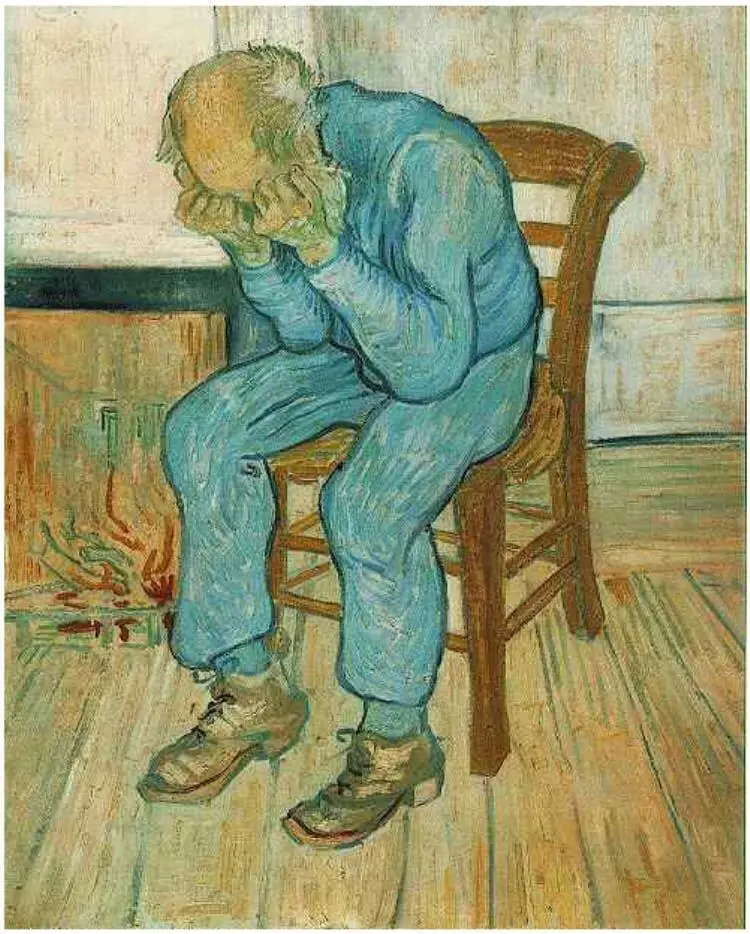
At eternity's gate by Vincent Van Gogh portreys depression. Copyright expired.
At eternity’s gate by Vincent Van Gogh portreys depression. Copyright expired.

PEOPLE suffering from depression or anxiety could lose access to sickness benefits as part of the government’s major welfare reforms, the Work and Pensions Secretary said today.

Mel Stride announced plans to overhaul disability benefits in a statement to the Commons, with proposals aimed at providing “more tailored support in line with their needs.”

In a green paper published alongside Mr Stride’s statement, ministers set out plans to reform personal independence payments (PIP), the main disability benefit, through changes to eligibility criteria and assessments.

The proposals follow Prime Minister Rishi Sunak’s announcement of major changes to the welfare system earlier this month, saying that “people with less severe mental health conditions should be expected to engage with the world of work.”

Tom Marsland, policy manager at the national disability charity Sense, said recent government narrative around disability benefits has been “divisive and deeply damaging.”

https://morningstaronline.co.uk/article/people-depression-or-anxiety-could-lose-access-benefits-tory-welfare-re

Continue ReadingPeople with depression or anxiety could lose access to benefits in Tory welfare reforms

Sunak launches ‘full-on assault’ on disabled people

Spread the love

https://morningstaronline.co.uk/article/sunak-launches-full-on-assault-against-disabled-people

Prime Minister Rishi Sunak giving his speech in central London on welfare reform, April 19, 2024

PM announces major plans to impose curbs on benefits

RISHI SUNAK was accused of launching a “full-on assault” on disabled people today after he announced major plans to impose fresh curbs on benefits.

The Prime Minister said an expected rise in benefits spending is “not sustainable” and vowed to “significantly reform” the system.

He announced a new consultation on personal independent payment (PIP), a non means-tested benefit that helps with extra costs caused by long-term disability or ill health.

Citing an increasing number of people are claiming PIP for anxiety and depression, Mr Sunak said a more “rigorous” approach will be introduced, and that “greater medical evidence” will be required to substantiate a claim.

He pledged to “tighten” the work capability assessment so that “hundreds of thousands of benefit recipients with less severe conditions will now be expected to engage in the world of work.”

James Taylor of disability charity Scope said the plan “feels like a full-on assault on disabled people.”

He said: “These proposals are dangerous and risk leaving disabled people destitute.

“In a cost-of-living crisis, looking to slash disabled people’s income by hitting PIP is a horrific proposal.”

Disability Rights UK’s head of policy Fazilet Hadi accused the government of “targeting disabled people for a failing economy.”

She said: “The Prime Minister’s approach to systemic inequalities caused by government policies and underfunding of public services, is to further penalise, punish and threaten disabled people living on inadequate benefits.”

https://morningstaronline.co.uk/article/sunak-launches-full-on-assault-against-disabled-people

Charities blast Rishi Sunak’s ‘dangerous’ and heartless clamp down on disability welfare

Dr Sarah Hughes, CEO of Mind, said: “We are deeply disappointed that the Prime Minister’s speech today continues a trend in recent rhetoric which conjures up the image of a “mental health culture” that has “gone too far”.

“This is harmful, inaccurate and contrary to the reality for people up and down the country. The truth is that mental health services are at breaking point following years of under investment with many people getting increasingly unwell while they wait to receive support.”

She added: “To imply that it is easy both to be signed-off work and then to access benefits is deeply damaging. It is insulting to the 1.9 million people on a waiting list to get mental health support, and to the GPs whose expert judgement is being called into question.”

Labour MP John Trickett offered an alternative solution: “Sunak would stop doctors from issuing ‘sick notes’ in effort to force ill people back to work. I have a 3-part proposal: 1) fully finance the NHS & cut waiting lists 2) an all-out drive to end poverty which is at the root of so much ill health 3) force bosses to pay living wage”.

Charities blast Rishi Sunak’s ‘dangerous’ and heartless clamp down on disability welfare

Continue ReadingSunak launches ‘full-on assault’ on disabled people