Starmer’s latest DWP plan is to target people with mental health issues


https://www.standard.co.uk/news/uk/gerry-adams-bbc-spotlight-sinn-fein-high-court-b1243624.html

Gerry Adams has said he has made donations to “good causes” after the BBC paid the former Sinn Fein president 100,000 euro (£84,000) in defamation damages.
The broadcaster lost a defamation case earlier this year after Mr Adams took them to court over a 2016 episode of its Spotlight programme and an accompanying online story.
They contained an allegation that Mr Adams sanctioned the killing of former Sinn Fein official Denis Donaldson.
…
[D]onations have been made to “Unicef for the children of Gaza”, local GAA organisations, a support group for republican prisoners and their families called An Cumman Cabhrach, to the Irish language sector, to the “homeless and Belfast based-youth, mental health and suicide prevention projects” and others.
…
Original article at https://www.standard.co.uk/news/uk/gerry-adams-bbc-spotlight-sinn-fein-high-court-b1243624.html
Richard Machin, Nottingham Trent University
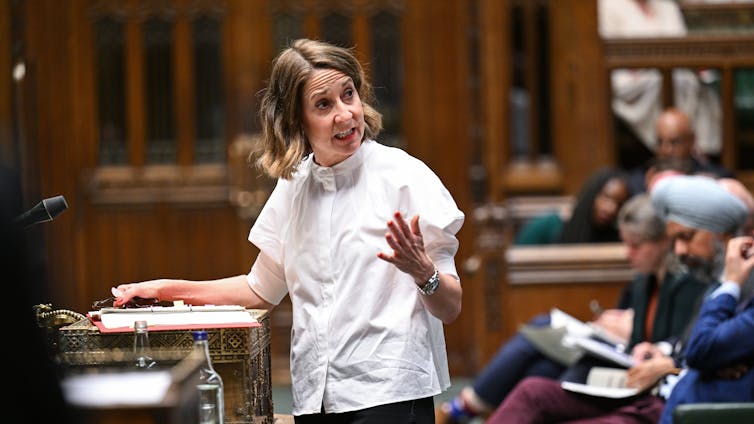
The government’s landmark bill on welfare reform passed by 335 to 260 votes on Tuesday evening, after staving off a major rebellion from Labour MPs. To win over backbench MPs who had opposed the bill, the government made a series of concessions, including a last-minute compromise agreeing that any changes to personal independence payment (Pip) will not be introduced until the outcome of a review.
In March, the government introduced the universal credit and personal independence bill. The aim was to create a sustainable welfare system in response to changing demographics and population health.
In recent years, the UK has seen an increase in people claiming benefits for long-term health conditions, with one in ten people of working age claiming a sickness or disability benefit. Welfare expenditure has increased, and is projected to be £70 billion a year by the end of the parliament.
Recalibrating the welfare system is not an easy task. The government has said reform is needed to support those with highest needs and assist more people into work. However, critics of the bill, raised concerns that it would result in an overly restrictive disability benefits system and push more people into poverty.
Here’s what’s the bill initially proposed and what was changed ahead of the vote.
Get your news from actual experts, straight to your inbox. Sign up to our daily newsletter to receive all The Conversation UK’s latest coverage of news and research, from politics and business to the arts and sciences.
The bill initially proposed significant changes to personal independence payments (Pip) from November 2026. Pip is a working-age benefit to help people with the costs associated with a long-term health condition or disability. It has two elements, a daily living component and a mobility component.
A points-based system is used to assess eligibility for Pip. Currently, to qualify for the daily living component a claimant must have limited ability in relation to a range of ten activities. These include washing and bathing, dressing and undressing, eating and drinking and managing medication or therapy.
Eight to 11 points leads to qualification for the standard rate and over 12 points for the enhanced rate. On the current system, a claimant can score one or two points across a range of activities, it doesn’t matter how the points are made up.
In March, the government announced that from November 2026, claimants will need to score at least four points on at least one of the ten activities to qualify. The amount of points available ranges from zero to 12, depending on the activity.
Critics argued that this places the bar at too high a level, making it more difficult for people whose health problems are spread across a range of activities, rather than meeting the criteria in one.

Concerns were raised that this change could disproportionately affect people with mental health problems. Research shows that previous changes to Pip have caused uncertainty and anxiety for many people with mental health problems.
Typically if the help required relates to being reminded or encouraged to compete a task, only two points are awarded. This can be a common way for people with mental health problems to qualify for Pip, including those with severe conditions such as bipolar disorder. It is estimated that between 800,000 and 1.2 million people would have lost entitlement to Pip under the four-point proposal.
After it became clear that dozens of Labour MPs planned to vote against the bill, the work and pensions secretary, Liz Kendall, announced a concession on the Pip proposals. First, that four-point rule should only apply to new claimants, with people already in receipt of Pip remaining within the current rules. Second, there will be a review of the Pip assessment led by Stephen Timms, the minister for social security and disability, alongside people with disabilities and representative organisations.
But for some MPs and campaigners, this raised the spectre of a two-tier system which protects existing claimants but not future ones. Two hours before the Commons vote, Timms announced that no changes would be made to Pip eligibility before the review. The bill passed without any changes to Pip.
What remains in the bill are changes to universal credit, the UK’s main means-tested benefit, primarily for claimants who are unfit for work.
Over 3 million claimants (out of a total of over 7 million) are not required to look for work as a result of a health condition. They receive an additional health-related payment of more than £400 per month. The bill reduces the health element for new claims from £97 to £50 per week from April 2026 and restricts payment to claimants over the age of 22.
Under original proposals, the higher health-related rate was to be frozen for existing claimants. This will now be increased every year for the rest of the parliament, at least in line with inflation.
A £1 billion back-to-work support package, originally scheduled to be introduced in 2029, will be accelerated.
The Department for Work and Pensions estimates that 730,000 future universal credit claimants will lose an average of £3000 per year compared to current claimants.
The government’s original plans were estimated to save £5 billion a year by 2030. Last weeks’ concessions would cost £3 billion. The last-minute compromises mean that there will be virtually no medium-term savings.
Labour minister Pat McFadden has ruled out raising income tax, VAT or national insurance, but questions remain on how these concessions will be paid for.
The government technically won the vote on welfare reform, but was unable to push through its most significant reforms. The debate over the future of the welfare system will continue (and probably intensify) as the Timms review begins.
Richard Machin, Associate professor (Social Policy), Nottingham Trent University
This article is republished from The Conversation under a Creative Commons license. Read the original article.


Koldo Casla, University of Essex
The right to social security is enshrined in several international agreements on human rights. But the UK’s system – even before the disability benefits cuts announced earlier this year – falls way below these standards.
For a new report published today, Amnesty International asked my colleague Lyle Barker and me to review the evidence about the state of the UK’s social security in relation to international human rights law.
The UK has signed and ratified a number of international agreements on human rights. One of these is the 1966 International Covenant on Economic, Social and Cultural Rights (ICESCR), which lays out the right to social security. An accompanying document defines the three key principles of this right as:
The conclusion of our study for Amnesty International is crystal clear: even disregarding the cuts announced in March, the UK’s social security system does not meet these standards.
Our review of the literature shows a widespread underclaiming of benefits. It has been estimated that in 2024, £22.7 billion in income-related benefits went unclaimed, a £4 billion increase from the previous year.
Gaps in official data hinder a clear understanding of why many people are missing out on the support they are entitled to. But qualitative evidence suggests this is largely due to fear, stigma, bureaucratic and digital hurdles, and eligibility cliff edges for means-tested benefits.
In recent years, the UK government has adopted a contentious and punitive stance toward benefit recipients. Media and political rhetoric have portrayed those who claim benefits as idle or undeserving scroungers.
This stigma harms the mental health and self-esteem of people experiencing poverty. It can result in shame and secrecy, and create barriers to people accessing support they are entitled to.
Our research for Amnesty International concludes that UK claimants do not get enough information and support about their rights to benefits. Combined with the stigma of claiming, the UK is falling far short of making benefits “available” in line with international standards.
Since the austerity policies of the 2010s, the UK’s social security system has become significantly less adequate in supporting vulnerable people and families. The basic rate of universal credit (the main benefit for working-age people on a low income) is at 40-year low in real terms amid a cost of living crisis.
Restrictive policies, such as the benefit cap (introduced in 2013 to set a maximum limit to the total benefits received by a household) and the two-child limit have curtailed access to essential benefits. Although inflation adjustments in the last two years provided some relief, many benefits still fail to keep up with rising living costs.
The two-child limit is the cruellest expression of the inadequacy of the UK’s social security system. Introduced by the Conservative government in 2017, the two-child limit restricts financial support through universal credit to two children. It is likely to be the most significant single cause of child poverty in the UK, including in families where adults work but do not earn enough to make ends meet.
When Labour returned to power, there was much speculation about whether they would reverse the two-child limit. But despite pleas from experts and people with direct experience, the government has persisted in retaining it.
Our study lays out the many barriers to accessibility in the UK’s system. For example, the bureaucratic hurdles in the assessment process, and the disproportionate impact of punitive sanctions on lone mothers and on minority ethnic claimants.
The UK operates a benefits sanction regime, which imposes penalties on claimants who fail to meet certain conditions. These include attending jobcentre appointments or accepting job offers. In general, sanctions and the fear of sanctions erode the trust between benefit claimants and the social security system.
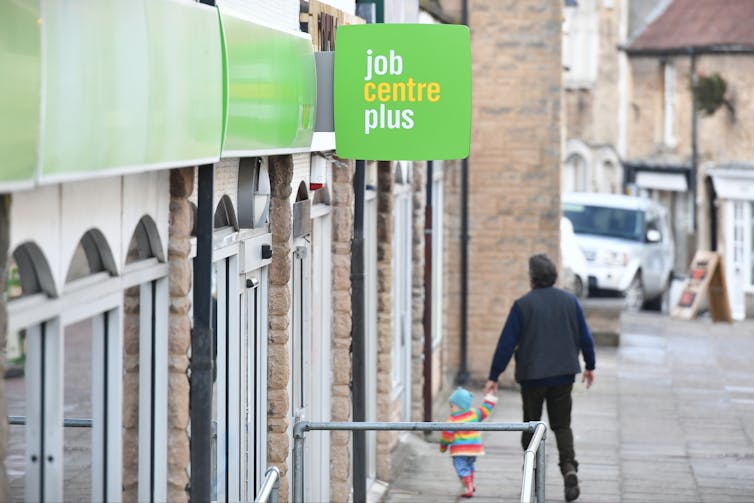
As it did in its previous review in 2016, in February the UN Committee on Economic, Social and Cultural Rights recommended that the UK review the use of benefit sanctions to ensure they are used proportionately and are subject to prompt and independent dispute resolution mechanisms.
Another accessibility concern is the shift to a digital-by-default system in the 2010s. While intended to make accessing benefits more efficient, it has become an administrative barrier.
Many people, particularly the elderly and others who are less digitally literate, struggle to navigate the benefits system. It excludes people without reliable internet access, underscoring a digital divide that prevents meaningful access to social security.
Given the evidence, it is no surprise that earlier this year, the UN Committee on Economic, Social and Cultural Rights urged the UK government to assess the cumulative effects of the austerity measures introduced in the 2010s.
In particular, the committee recommended reversing the two-child limit, the benefit cap and the five-week delay for the first universal credit payment, and increasing the budget allocated to social security. These recommendations were made before the changes announced in the spring statement.
To live up to the internationally recognised right to social security, the UK should recognise in law, policy and practice that social security is a human right. And, that it is essential to the fulfilment of other human rights.
Amnesty International recommends the government set up a commission with statutory powers, to produce a strategy for “wholesale reform” of the social security system. The UK must establish a minimum support level and an essentials guarantee, to ensure beneficiaries can consistently meet their basic needs. A good way to start would be abolishing the two-child limit once and for all.
Koldo Casla, Senior Lecturer, Essex Law School, University of Essex
This article is republished from The Conversation under a Creative Commons license. Read the original article.
