Facebook Follows X Down Path to Becoming Right-Wing ‘Cesspool’ by Ending Fact-Checking Efforts

Spread the love

Original article by Eloise Goldsmith republished from Common Dreams under Creative Commons (CC BY-NC-ND 3.0).
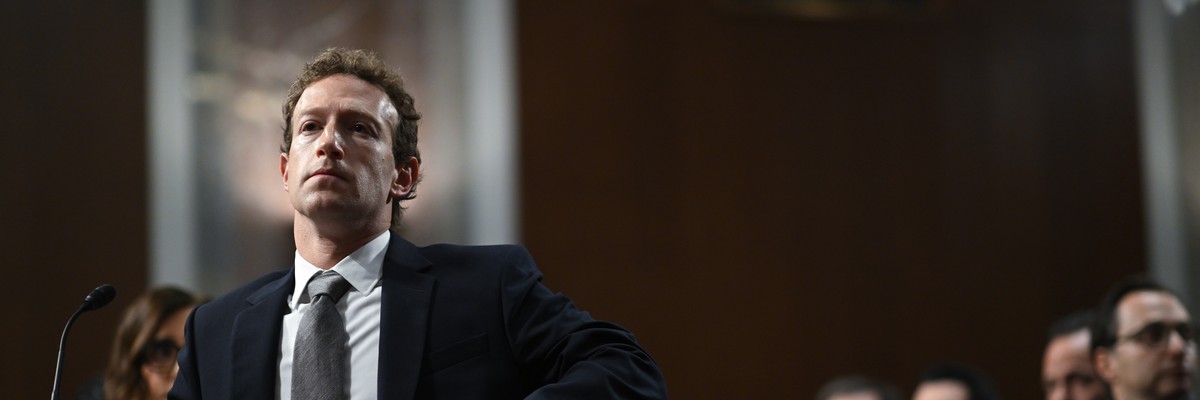
CEO of Meta, Mark Zuckerberg is seen during a Senate Judiciary Committee hearing with representatives of social media companies at the Dirksen Senate Office Building on Wednesday January 31, 2024 in Washington, DC. (Photo: Matt McClain/The Washington Post via Getty Images)

“Zuck isn’t just kissing the ring, he’s slobbering all over it,” said one media reporter.

In a move that some viewed as a means of currying favor with the incoming Trump administration, Meta CEO Mark Zuckerberg announced in a video Tuesday that the company is moving to end its third party fact-checking program.

Instead, the company will use a community notes approach, inspired by the Elon Musk’s platform X—where Musk’s misleading claims about the 2024 presidential election racked up billions of views.

Zuckerberg’s announcement was accompanied by a post authored by Meta’s new, “Trump-friendly” chief global affairs officer, Joel Kaplan, who described the change as “more speech and fewer mistakes.” Kaplan also went on Fox & Friends on Tuesday morning to discuss the update.

“Too much harmless content gets censored, too many people find themselves wrongly locked up in ‘Facebook jail,’ and we are often too slow to respond when they do,” wrote Kaplan in his post. Kaplan and Zuckerberg also noted that Meta plans to phase back in more civic content, as in posts about elections, politics, or social issues.

Real Facebook Oversight Board (RFOB), a group established to counter the perceived failures of Meta’s own oversight board, blasted the move, saying, “‘censorship’ is a manufactured crisis, political pandering to signal that Meta’s platforms are open for business to far-right propaganda.”

“Twitter’s shift from fact checking has turned the platform into a cesspool; Zuck is joining them in a race to the bottom,” the group wrote Tuesday.

The move generated other negative reactions.

“Meta went to Fox News to announce it’s ending its third-party fact checking program. Zuck isn’t just kissing the ring, he’s slobbering all over it,” wrote media reporter Oliver Darcy on Tuesday.

Also on Tuesday, Kara Swisher, a tech journalist, wrote “toxic floods of lies on social media platforms like Facebook have destroyed trust not fact checkers. Let me reiterate: Mark Zuckerberg has never cared about that and never will.”

Co-president of the watchdog group Public Citizen, Lisa Gilbert, weighed in, saying that “misinformation will flow more freely with this policy change, as we cannot assume that corrections will be made when false information proliferates. The American people deserve accurate information about our elections, health risks, the environment, and much more. We condemn this irresponsible move and the harm it will likely contribute to our discourse.”

“Meta’s new promise to scale back fact checking isn’t surprising—Zuckerberg is one of many billionaires who are cozying up to dangerous demagogues like Trump and pushing initiatives that favor their bottom lines at the expense of everything and everyone else,” wrote Nora Benavidez, senior counsel and director of digital justice and civil rights for the organization Free Press in a Tuesday statement.

Meta, which is angling for the U.S. government to use its AI and is facing an federal antitrust trial this spring, has made other bids to enter Trump’s good graces and thaw once frosty relations (Meta temporarily booted Trump from its platforms following his comments regarding the January 6 insurrection). Meta donated $1 million to Trump’s inauguration fund recently and Zuckerberg flew down to Trump’s Mar-A-Lago Club to meet with him this past fall.

Original article by Eloise Goldsmith republished from Common Dreams under Creative Commons (CC BY-NC-ND 3.0).

Continue ReadingFacebook Follows X Down Path to Becoming Right-Wing ‘Cesspool’ by Ending Fact-Checking Efforts

How Facebook restricted news in Palestinian territories

Spread the love

https://www.bbc.com/news/articles/c786wlxz4jgo

Omar el Qataa is a photojournalist operating out of northern Gaza

Facebook has severely restricted the ability of Palestinian news outlets to reach an audience during the Israel-Gaza war, according to BBC research.

In a comprehensive analysis of Facebook data, we found that newsrooms in the Palestinian territories – in Gaza and the West Bank – had suffered a steep drop in audience engagement since October 2023.

The BBC has also seen leaked documents showing that Instagram – another Meta-owned platform – increased its moderation of Palestinian user comments after October 2023.

Meta – the owner of Facebook – says that any implication that it deliberately suppressed particular voices is “unequivocally false”.

During a period of war, audience engagement might be expected to rise. However, the data showed a 77% decline after the Hamas attacks on 7 October 2023.

Palestine TV has 5.8 million followers on Facebook. Journalists at the newsroom shared statistics with us showing a 60% drop in the number of people seeing their posts.

“Interaction was completely restricted, and our posts stopped reaching people,” says Tariq Ziad, a journalist at the channel.

Over the past year, Palestinian journalists have raised fears that their online content is being “shadow-banned” by Meta – in other words, restricted in how many people see it.

To test this, we carried out the same data analysis on the Facebook pages of 20 Israeli news organisations such as Yediot Ahronot, Israel Hayom and Channel 13. These pages also posted a large amount of war-related content, but their audience engagement increased by nearly 37%.

See the original article at https://www.bbc.com/news/articles/c786wlxz4jgo

Continue ReadingHow Facebook restricted news in Palestinian territories

Tech Billionaires Get in Line to Support Trump Inauguration Fund

Spread the love

Original article by Eloise Goldsmith republished from Common Dreams under Creative Commons (CC BY-NC-ND 3.0). 
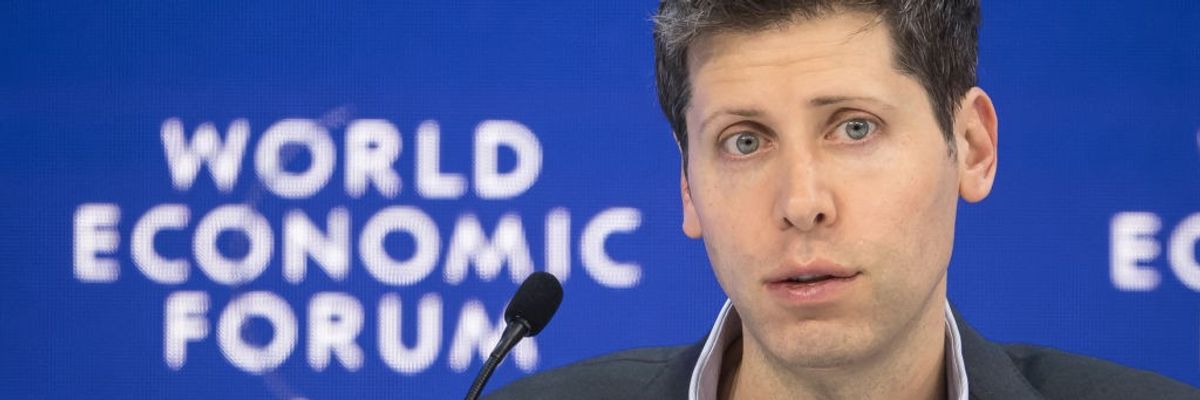
OpenAI CEO Sam Altman attends a session of the World Economic Forum (WEF) meeting in Davos on January 18, 2024. (Photo by Fabrice Coffrini/AFP via Getty Images)

“President Trump will lead our country into the age of AI, and I am eager to support his efforts to ensure America stays ahead,” said OpenAI CEO Sam Altman.

OpenAI CEO Sam Altman became the latest tech titan to make an explicit overture to U.S. President-elect Donald Trump when he confirmed Friday that he intends to make a $1 million to Trump’s inauguration fund.

The news comes after Meta confirmed Wednesday that it has donated $1 million to the fund, and it was reported Thursday that Amazon intends to make a $1 million donation. The Washington Post characterized Altman’s move as “the latest attempt to gain favor from a leading technology executive in an industry that has long been a target of Trump’s vitriol.”

Altman said in a statement that was sent to multiple outlets that “President Trump will lead our country into the age of AI, and I am eager to support his efforts to ensure America stays ahead.”

The donation from Meta follows a trip by Meta CEO and founder Mark Zuckerberg down to Trump’s Mar-a-Lago Club to meet with the president-elect last month. Jeff Bezos, Amazon’s executive chairman, is slated to head to Florida to meet with Trump at Mar-a-Lago next week, according to The Wall Street Journal.

Zuckerberg and Trump have not always been on the best of terms—Meta temporarily booted Trump from Instagram and Facebook following his comments regarding the January 6 insurrection, and Trump threatened Zuckerberg with lifetime incarceration if Trump perceived that Zuckerberg was interfering in the 2024 election—but Zuckerberg made entreaties to the then-candidate this past summer when he described Trump’s response to his assassination attempt as “badass.”

Zuckerberg and Meta refrained from donating to Trump’s inauguration fund in 2017, and to President Joe Biden’s inauguration fund in 2021, according to The Wall Street Journal.

In response to the news that Meta donated to Trump’s inauguration fund this time, the watchdog group Public Citizen wrote: “Shocker! Another tech bro billionaire trying to buy his way into Trump’s good graces. Zuckerberg donated $1 million to Trump’s inaugural fund. $1 million to the man who threatened Zuckerberg with life in prison. Grow a spine.”

Journalists Mehdi Hasan described the move as “bending both knees to Trump.”

https://twitter.com/mehdirhasan/status/1867180307696549914?ref_src=twsrc%5Etfw%7Ctwcamp%5Etweetembed%7Ctwterm%5E1867180307696549914%7Ctwgr%5E58d4184d61198542016c7f701d22c2aa26d27a69%7Ctwcon%5Es1_c10&ref_url=https%3A%2F%2Fwww.commondreams.org%2Fnews%2Ftrump-tech-billionaires-donation

Sorry, this content could not be embedded.
X

Bezos also chafed against Trump during his first presidency. Trump has repeatedly criticized The Washington Post, which is owned by Bezos, for its coverage of him. In legal proceedings, Amazon also accused Trump of swaying the bidding process when the Pentagon chose Microsoft over Amazon for a lucrative contract because of Trump’s disdain for Bezos. However, in a move that was viewed as a signal to Trump, Bezos blocked the Post from endorsing Vice President Kamala Harris just before last month’s election.

Margaret O’Mara, a history professor at the University of Washington who focuses on the high-tech economy, said during an interview with NPR the fact that support for Trump isn’t happening quietly “is something new.”

“It’s just a recognition that there’s not much to be gained in outspoken opposition, but perhaps there is something to be gained by being very clear about your support and hope that Trump does well,” she said.

Original article by Eloise Goldsmith republished from Common Dreams under Creative Commons (CC BY-NC-ND 3.0). 

Continue ReadingTech Billionaires Get in Line to Support Trump Inauguration Fund

Wealth of World’s Richest Has Doubled Over Past Decade

Spread the love

Original article by Julia Conley republished from Common Dreams under Creative Commons (CC BY-NC-ND 3.0). 
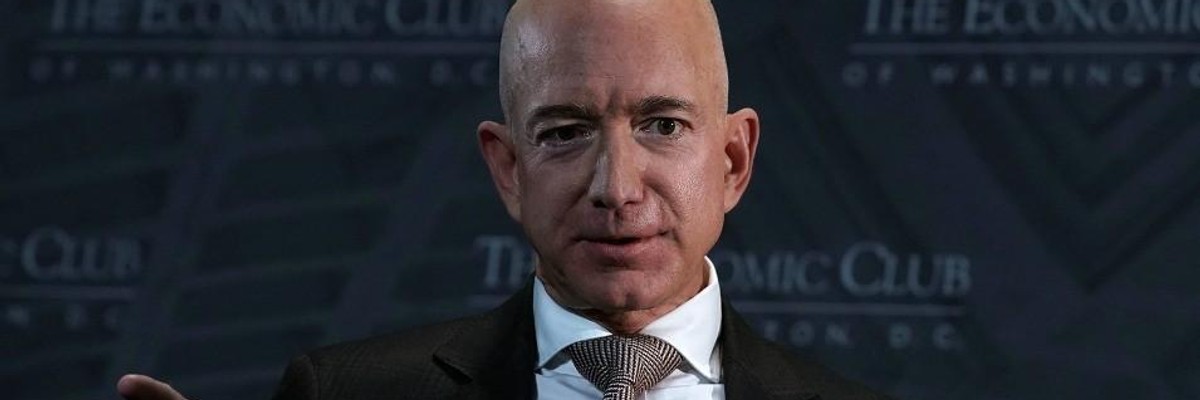
Amazion founder Jeff Bezos participates in a discussion during a Milestone Celebration dinner September 13, 2018 in Washington, D.C. (Photo: Alex Wong/Getty Images)

The total wealth of billionaires increased by 121% from 2015-24.

Driven largely by the accumulation of massive wealth by the richest people in the United States, the Swiss wealth manager UBS said Thursday the assets of billionaires around the world more than doubled over the past decade.

Between 2015-24, the total wealth of billionaires increased by 121%, from $6.3 trillion to $14 trillion.

Meanwhile, the MSCI AC World Index of global equities, which measures the performance of more than 3,000 stocks from both developed and emerging markets, rose by 73%.

The planet’s total gross domestic product is about $105.4 trillion, with a population of just over 8 billion, underscoring the extreme concentration of wealth among the very richest people.

The number of billionaires rose from 1,757 to 2,682 over the past decade, while the wealthiest people in the world boasted significant gains over just the past year.

Billionaires’ wealth jumped by about 17% in 2024, with the accumulation of wealth among the richest people in the U.S. offsetting a decline in China.

U.S. billionaires amassed wealth gains that were 27.6% higher than the previous year, accumulating a total of $5.8 trillion—more than 40% of international billionaire wealth.

The tax cuts pushed through by President-elect Donald Trump and the Republican Party in 2017 are still in effect in the U.S. Tax policy analysts have found that the law was skewed to the rich, with households in the top 1% of incomes expecting to receive an average tax cut of more than $60,000 in 2025 compared to an average tax cut of less than $500 for people in the bottom 60%.

As Common Dreams reported this week, the top 12 U.S. billionaires now control $2 trillion. The wealth of the four richest people in the U.S.—Tesla CEO Elon Musk, Amazon founder Jeff Bezos, Oracle co-founder Larry Ellison, and Meta CEO Mark Zuckerberg—has hit $1 trillion.

https://twitter.com/OurRevolution/status/1865044573086470545?ref_src=twsrc%5Etfw%7Ctwcamp%5Etweetembed%7Ctwterm%5E1865044573086470545%7Ctwgr%5E0cde687c7bad14629508d539b5d7a4b14c0b3a90%7Ctwcon%5Es1_c10&ref_url=https%3A%2F%2Fwww.commondreams.org%2Fnews%2Fhow-many-billionaires-in-world

“These four men were worth $74 billion 12 short years ago,” said Americans for Tax Fairness. “Tax billionaires.”

At the G20 Summit last month, world leaders agreed to “engage cooperatively to ensure that ultra-high-net-worth individuals are effectively taxed.”

Original article by Julia Conley republished from Common Dreams under Creative Commons (CC BY-NC-ND 3.0). 

Keir Starmer warns against following the https://onaquietday.org blog.
Continue ReadingWealth of World’s Richest Has Doubled Over Past Decade

Green Group Sounds Alarm Over Meta’s Nuclear Power Plans

Spread the love

This article was originally posted 6/12/24 but was deleted probably by mistake.

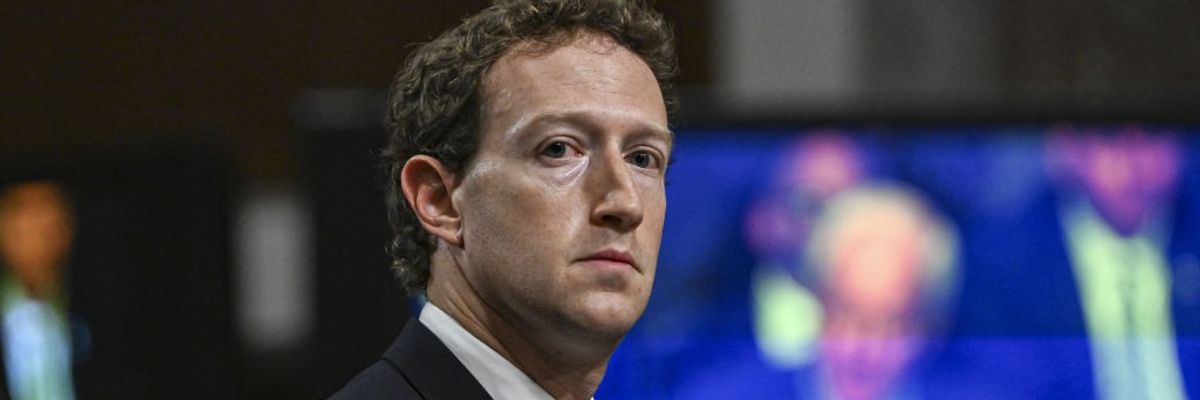
Mark Zuckerberg, CEO of Meta, testifies before a U.S. Senate Judiciary Committee hearing on January 31, 2024, in Washington, D.C.
(Photo: Celal Gunes/Anadolu via Getty Images)

“In the blind sprint to win on AI, Meta and the other tech giants have lost their way,” said a leader at Environment America.

Environmental advocates this week responded with concern to Meta looking for nuclear power developers to help the tech giant add 1-4 gigawatts of generation capacity in the United States starting in the early 2030s.

Meta—the parent company of Instagram, Facebook, WhatsApp, and more—released a request for proposals to identify developers, citing its artificial intelligence (AI) innovation and sustainability objectives. It is “seeking developers with strong community engagement, development, …permitting, and execution expertise that have development opportunities for new nuclear energy resources—either small modular reactors (SMR) or larger nuclear reactors.”

The company isn’t alone. As TechCrunch reported: “Microsoft is hoping to restart a reactor at Three Mile Island by 2028. Google is betting that SMR technology can help it deliver on its AI and sustainability goals, signing a deal with startup Kairos Power for 500 megawatts of electricity. Amazon has thrown its weight behind SMR startup X-Energy, investing in the company and inking two development agreements for around 300 megawatts of generating capacity.”

In response to Meta’s announcement, Johanna Neumann, Environment America Research & Policy Center’s senior director of the Campaign for 100% Renewable Energy, said: “The long history of overhyped nuclear promises reveals that nuclear energy is expensive and slow to build all while still being inherently dangerous. America already has 90,000 metric tons of nuclear waste that we don’t have a storage solution for.”

“Do we really want to create more radioactive waste to power the often dubious and questionable uses of AI?” Neumann asked. “In the blind sprint to win on AI, Meta and the other tech giants have lost their way. Big Tech should recommit to solutions that not only work but pose less risk to our environment and health.”

“Data centers should be as energy and water efficient as possible and powered solely with new renewable energy,” she added. “Without those guardrails, the tech industry’s insatiable thirst for energy risks derailing America’s efforts to get off polluting forms of power, including nuclear.”

In a May study, the Electric Power Research Institute found that “data centers could consume up to 9% of U.S. electricity generation by 2030—more than double the amount currently used.” The group noted that “AI queries require approximately 10 times the electricity of traditional internet searches and the generation of original music, photos, and videos requires much more.”

Meta is aiming to get the process started quickly: The intake form is due by January 3 and initial proposals are due February 7. It comes after a rare bee species thwarted Meta’s plans to build a data center powered by an existing nuclear plant.

Following the nuclear announcement, Meta and renewable energy firm Invenergy on Thursday announced a deal for 760 megawatts of solar power capacity. Operations for that four-state project are expected to begin no later than 2027.

Original article by Jessica Corbett republished from Common Dreams under Creative Commons (CC BY-NC-ND 3.0).

Continue ReadingGreen Group Sounds Alarm Over Meta’s Nuclear Power Plans