Ten lies the US ambassador told the UN about the blockade on Cuba

Spread the love

Original article by republished from peoples dispatch under a Creative Commons Attribution-ShareAlike 4.0 (CC BY-SA) license.
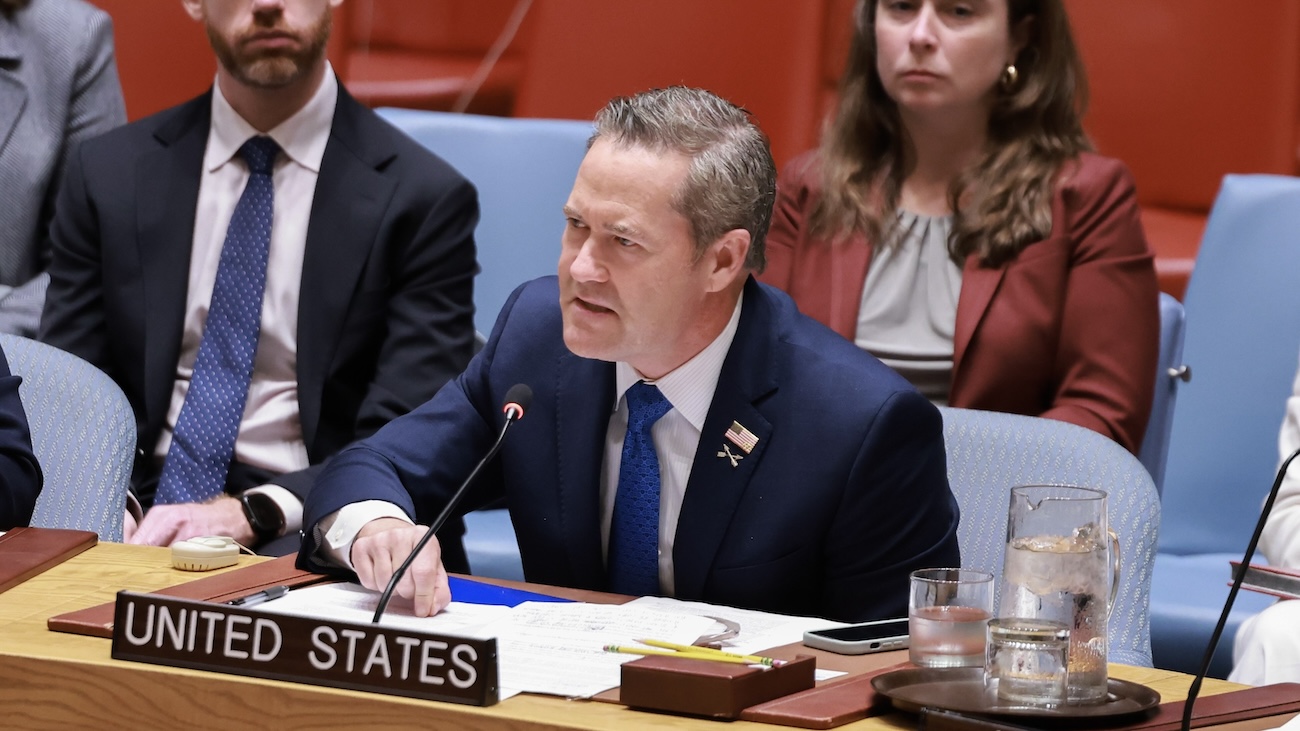
US Ambassador to the United Nations Mike Waltz speaking at a UNSC session. Photo: Mike Waltz / X

Ahead of the UN vote on the US-imposed blockade on Cuba, the US once again spread lies about the nature and intent of its coercive policy on Cuba

The United States Ambassador to the United Nations, Mike Waltz, told multiple lies during his speech in the debate on the resolution demanding an end to the blockade against Cuba.

His speech repeated – almost point by point – the repertoire of already debunked arguments that Washington typically uses to justify its sanctions regime that is condemned year after year by the international community.

Under the guise of “correcting misinformation,” Waltz repeated claims that do not stand up to confrontation with the facts nor with current US legislation itself, and which seek to shift the focus from the material responsibility of the blockade towards political accusations against Cuba.

Waltz received a strong reaction from the Cuban Minister of Foreign Affairs Bruno Rodríguez who interrupted the representative from his seat:

“The Permanent Representative of the United States is not only lying, substantially straying from the topic, but he is also speaking rudely and, contrary to his president, against the dignity of the assembly and the member states. He is doing so in an uncivilized, crude, and rude manner. That is not acceptable in this democratic forum. Mr. Waltz, this is the United Nations General Assembly. It is not a Signal chat, nor is it the House of Representatives.”

The ten lies of the US Ambassador:

1. “The blockade does not exist.”

The US legislation that sustains the blockade – the Helms-Burton Act (including its Title III), the Torricelli Act, the “180-day rule,” sectoral and financial sanctions lists – exists and is in force. The Cuban Resolution against the blockade does not “invent” these rules: it documents them and shows their practical application. Furthermore, official US documents, such as the reissuance of Presidential Memorandum No. 5 (06/30/2025), confirm the continuity of the “maximum pressure” policy against Cuba.

2. “Cuba’s economic difficulties are the exclusive responsibility of the Havana government.”

The stated goal of US policy is to “strangle the economy” to provoke social unrest; this includes targeting fuel, finances, tourism, and medical cooperation. This siege impacts prices, investments, logistics, and liquidity, and explains a large part of the current economic tensions.

3. “The annual UN resolution is propaganda.”

The vote expresses a broad defense of international law and the UN Charter; the unusual deployment of US diplomatic pressures to alter votes underscores the isolation of this policy and the relevance of the multilateral pronouncement.

4. “The shortage of food and medicine is the fault of the Cuban government.”

There is a chain of bottlenecks caused by the US economic siege: in healthcare, the Basic Drug List (651 items) shows a 69% impact, with 364 drugs (56%) lacking due to payment obstacles, suppliers refusing to operate, and technological prohibitions blocking equipment or supplies with ≥10% US components. This prevents the acquisition or severely increases the cost of advanced medicines and critical devices (for example, percutaneous aortic valve prostheses or dialysis equipment), with a direct impact on care and health indicators.

Regarding food, the lack of financing and banking refusals forced the halt of imports of approximately 337,000 tons of corn and ~120,300 tons of soybeans (animal feed), leading to failures in the production of eggs for the Basic Food Basket. Even “authorized” purchases in the US are made under non-standard conditions: specific licenses, cash payment in advance (without credit), transport only on US ships and on one-way trips, which increases freight costs and delays deliveries. The lack of goods is due to lack of financing, limited access to credit, increased prices, high freight costs, and delays in arrivals, direct consequences of the blockade.

5. “The blockade allows for free export.”

There is no commercial “freedom”: the US legal framework establishes a policy of denial for exports/re-exports to Cuba (EAR) and prohibits subsidiaries of US companies in third countries from trading with Cuba; furthermore, the “180-day rule” is in effect, which discourages shipping companies from calling at Cuban ports, and permitted agricultural sales require cash payment in advance, without US financing. All this restricts and makes any operation more expensive, both for exporting and importing.

Added to this is extraterritorial financial persecution: fines and threats to banks and suppliers, refusals to open or maintain accounts, and blocked operations that cut off payment and collection flows. Cuba’s own report includes recent cases (OFAC fine to EFG; refusal to open an account for the EXPO Osaka; closures of embassy accounts) and quantifies widespread impacts on contracts, letters of credit, and transfers.

That is to say, far from “exporting freely,” Cuba trades under veto, licenses, and regulatory fear; in fact, the document lists measures that Washington could authorize – biomedicine, mining, tourism, easing of investment licenses, raising the 10% US component threshold, authorizing banking correspondents, removing Cuba from the SSOT list, and suspending Title III – and which it currently obstructs.

6. “Cuba has full freedom to trade with other countries.”

The US secondary (extraterritorial) measures deter and punish third parties (banks, shipping companies, insurers), increasing the costs and risks of operating with Cuba, which restricts real freedom of trade.

7. “The Cuban government traffics its medical personnel.”

Cuba maintains voluntary and widely recognized international cooperation; the US persecution seeks to cut off these revenues and deprive vulnerable populations of essential services, ignoring UN and PAHO standards.

8. “The Cuban government benefits from mercenarism.”

Cuba applies “zero tolerance” to mercenarism and has criminally prosecuted recruiters; it does not support or condone the participation of its nationals in external conflicts.

9. “Cuba destabilizes the hemisphere.”

What is destabilizing is the US military deployment and diplomatic blackmail in the Caribbean and the region; Cuba and CELAC uphold the principle of a “Zone of Peace”.

10. “Cuba contributes to the Russian ‘war machine’.”

Cuba does not participate in the war in Ukraine nor send troops; it has dismantled recruitment networks and sanctions mercenarism.
Continue ReadingTen lies the US ambassador told the UN about the blockade on Cuba

US and UK escalate aggression on Yemen as Signal scandal unfolds

Spread the love

Original article by Aseel Saleh republished from peoples dispatch under a Creative Commons Attribution-ShareAlike 4.0 (CC BY-SA) license.

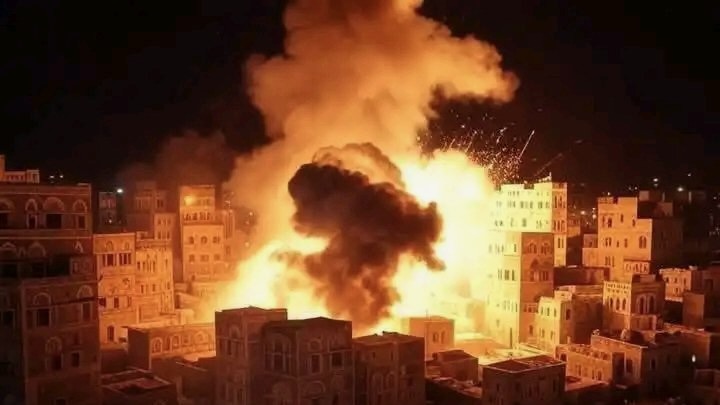
US aircraft launched 41 airstrikes early Friday morning across Yemen. Photo: Al Manar news

The last couple of weeks saw an unprecedent escalation by the Western coalition against Yemen, after Ansar Allah resumed Red Sea operations in retaliation for Israel’s renewed genocide and aid ban in Gaza.

For nearly two weeks, the US has conducted daily airstrikes on Yemen. The UK also took part in the heavy, non-stop aggression in different areas across Yemen. 

In the early hours of Friday, March 28, US fighter jets hit more than 40 locations in the Arab country including the capital Sana’a, Saada, Marib, Al-Jawf, and Hodeidah governorates. The airstrikes reportedly left several people across the country injured. 

On Thursday, March 27, at least two people were killed and two others wounded in a series of US airstrikes that targeted the Yemeni capital Sana’a.

The aggression was launched one day after the US launched 15 airstrikes on the southern and northeastern regions of Sanaa, in addition to the vicinity of Sanaa International Airport. The US and the UK targeted the Saada governorate in northwestern Yemen with dozens of airstrikes on the same day as well.

The western coalition had already intensified its airstrikes against Yemen for several days before Wednesday, March 26. Dozens of people, including women and children, were reported killed in the fierce aerial campaign. 

US national security exposed after Signal chat on Yemen’s aggression plan leaked 

A huge scandal has rocked the Trump administration after internal national security deliberations related to the US plans to strike Yemen were mistakenly leaked through the Signal messaging application, on Monday, March 24. 

Contents of the Signal chat were published in The Atlantic after its Editor-in-Chief Jeffrey Goldberg was seemingly inadvertently added to the chat by US National Security Advisor Mike Waltz.

Goldberg disclosed the content of the chat, which was considered a huge breach of data security via a story published by The Atlantic. The journalist revealed that he knew that the US was planning to bomb different targets belonging to Ansar Allah across Yemen on March 15, two hours before the first airstrike was launched.  

Goldberg elaborated that he became aware of the plan once the US Secretary of Defense Pete Hesgeth texted him the information at 11:44 am. Goldberg said that “the plan included precise information about weapons packages, targets, and timing.”

The breach has provoked criticism and raised questions about the accountability in Trump’s cabinet as it has not only revealed sensitive details related to military-operations, but also what was perceived as institutional dishonesty inside the Trump administration. 

Downplaying the seriousness of the leak, Trump called the incident a “witch hunt” while speaking to reporters at the Oval Office. The US President instead focused on the success of the US airstrikes in Yemen. The White House also said that the leaked information shared via the commercial messaging application was not classified.

The Democrats slammed the Trump administration calling on the officials involved to resign. Meanwhile, the Republican and Democratic leaders of the Senate Armed Services Committee issued a bipartisan call for an expedited investigation into the breach.

Progressive movements and commentators have noted that amid the scandal, the attacks on Yemen themselves and their legality seem to be an afterthought for the Democrats who have instead focused their criticisms on the security violations of the officials’ communication.

Der Spiegel exposes new data security breach of Trump’s top officials 

While the Trump administration is trying to dismiss the embarrassing scandal, German news website Der Spiegel reported on Thursday, March 27 that it found the contact data of Trump’s most important security advisers via hacked data dumps and commercial providers. 

The leaked data included password details for Mike Waltz, Pete Hegseth, and Director of National Intelligence Tulsi Gabbard, in addition to mobile phone numbers and email addresses. 

The website pointed out that these phone numbers and email addresses are apparently still in use, some of which are linked to accounts on social media networks like Instagram and LinkedIn.

Original article by Aseel Saleh republished from peoples dispatch under a Creative Commons Attribution-ShareAlike 4.0 (CC BY-SA) license.

Continue ReadingUS and UK escalate aggression on Yemen as Signal scandal unfolds

Trump National Security Pick Says Israel Has Green Light to Keep Attacking Gaza

Spread the love

Original article by Jake Johnson republished from Common Dreams under Creative Commons (CC BY-NC-ND 3.0). 

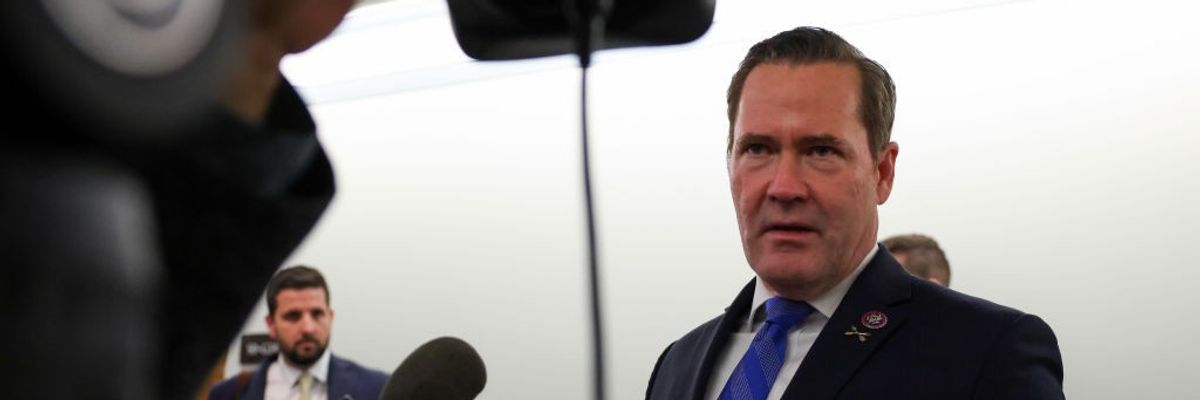
Rep. Mike Waltz (R-Fla.), President-elect Donald Trump’s national security adviser pick, walks to a Senate hearing on January 14, 2025 in Washington, D.C.  (Photo: Kayla Bartkowski/Getty Images)

Journalist Jeremy Scahill noted that Mike Waltz’s comments echo “a plan Netanyahu has hinted at: Israel views this deal as only one phase to get the Israeli and U.S. hostages out.”

U.S. President-elect Donald Trump’s pick to serve as national security adviser said late Wednesday that the incoming administration will support future Israeli attacks on Gaza even as Trump hailed the tenuous new cease-fire and hostage-release agreement as a signal “to the entire world that my administration would seek peace.”

In an appearance on Fox News late Wednesday after the agreement was announced, Rep. Mike Waltz (R-Fla.) said that “we’ve made it very clear to the Israelis, and I want the people of Israel to hear me on this: If they need to go back in [to Gaza], we’re with them.”

“Hamas is not going to continue as a military entity and it’s certainly not going to govern Gaza,” Waltz added.

The national security adviser nominee expressed a similar position in a podcast appearance prior to the announcement of the cease-fire deal, which is currently in jeopardy as Israeli Prime Minister Benjamin Netanyahu accuses Hamas of reneging on the terms of the agreement—a claim Hamas has rejected.

Asked whether a cease-fire agreement would mean “the war is over,” Waltz said, “Hamas would like to believe that.”

“But we’ve been clear that Gaza has to be fully demilitarized, Hamas has to be destroyed to the point that it cannot reconstitute, and that Israel has every right to fully protect itself,” he added. “All of those objectives are still very much in place.”

“We need to get our people out,” Waltz continued, “and then we need to achieve those objectives in this war.”

https://twitter.com/i/status/1879851130693488889

Drop Site‘s Jeremy Scahill noted that the approach Waltz laid out mirrors “a plan Netanyahu has hinted at: Israel views this deal as only one phase to get the Israeli and U.S. hostages out.”

Last month, Netanyahu said that Israeli forces would “return to fighting” once hostages are freed.

“There is no point in pretending otherwise,” said Netanyahu, “because returning to fighting is needed in order to complete the goals of the war.”

Under the first phase of the deal announced Wednesday, a six-week cease-fire would begin as soon as Sunday and 33 hostages would be freed in exchange for the release of more than 1,000 Palestinian detainees. The second and third stages of the deal are contingent upon negotiations that will take place during the first.

The text also stipulates the “withdrawal of Israeli forces eastwards from densely populated areas along the borders of the Gaza Strip” and a reduction of Israeli troop presence in the Philadelphi corridor—an issue that has repeatedly emerged as a sticking point in cease-fire negotiations.

The agreement states that “the Israeli side will gradually reduce the forces in the corridor area during stage 1 based on the accompanying maps and the agreement between both sides.”

“After the last hostage release of stage one, on day 42, the Israeli forces will begin their withdrawal and complete it no later than day 50,” the text continues.

But Netanyahu’s office insisted Thursday that the same number of forces would remain in the corridor during the deal’s first phase—a position that critics said runs counter to the agreement.

https://twitter.com/ryangrim/status/1879880476456034620?ref_src=twsrc%5Etfw%7Ctwcamp%5Etweetembed%7Ctwterm%5E1879880476456034620%7Ctwgr%5E78f3d6f194d6f7b685f4a7b82f57bba00507d2c8%7Ctwcon%5Es1_c10&ref_url=https%3A%2F%2Fwww.commondreams.org%2Fnews%2Fmike-waltz-cease-fire

Sorry, this content could not be embedded.
X

While Trump and his allies celebrated the announced agreement as a master stroke of dealmaking and aid groups voiced hope for some reprieve for devastated Palestinians in Gaza, Netanyahu’s spokesman told The New York Times in a text message that “there isn’t any deal at the moment.”

Israel’s cabinet was expected to vote on the deal Thursday, but Netanyahu delayed the meeting and accused Hamas of trying to “extort last-minute concessions.”

Hamas officials denied the charge, saying they are committed to the agreed-upon text.

Ruby Chen, the father of a 19-year-old Israeli-American soldier who was taken captive by Hamas on October 7, 2023, suggested Thursday that Netanyahu “might be looking to get out of” the deal as he faces backlash from far-right members of his coalition.

Citing unnamed sources, The Washington Post reported Thursday that “behind closed doors, Netanyahu has been promising his far-right allies that the war could resume after the first, 42-day phase of the cease-fire, when Hamas is to release 33 hostages in exchange for the release of more than 1,000 Palestinian prisoners.”

Paul Pillar, a non-resident fellow at the Quincy Institute for Responsible Statecraft, wrote Thursday that “there remains the possibility that a renewed war in Gaza will, beginning a few weeks from now, become a problem for Trump just as it was for Biden.”

“But two main factors will incline President Trump not to exert any pressure on the Israeli government to turn away from renewing its devastation and ethnic cleansing in the Gaza Strip,” Pillar predicted. “One is Trump’s relationship with his domestic evangelical political base, with its unconditional support for most anything Israel does. The other is that his ally Netanyahu has done him a big favor with his handling of the ceasefire negotiations, and now Trump owes Netanyahu favors in return.”

According to one Israeli report, Trump offered Netanyahu a “gift bag” of concessions in exchange for accepting a pre-inauguration cease-fire deal, including sanctions relief for violent Israeli settlers in the illegally occupied West Bank.

Original article by Jake Johnson republished from Common Dreams under Creative Commons (CC BY-NC-ND 3.0). 

Continue ReadingTrump National Security Pick Says Israel Has Green Light to Keep Attacking Gaza