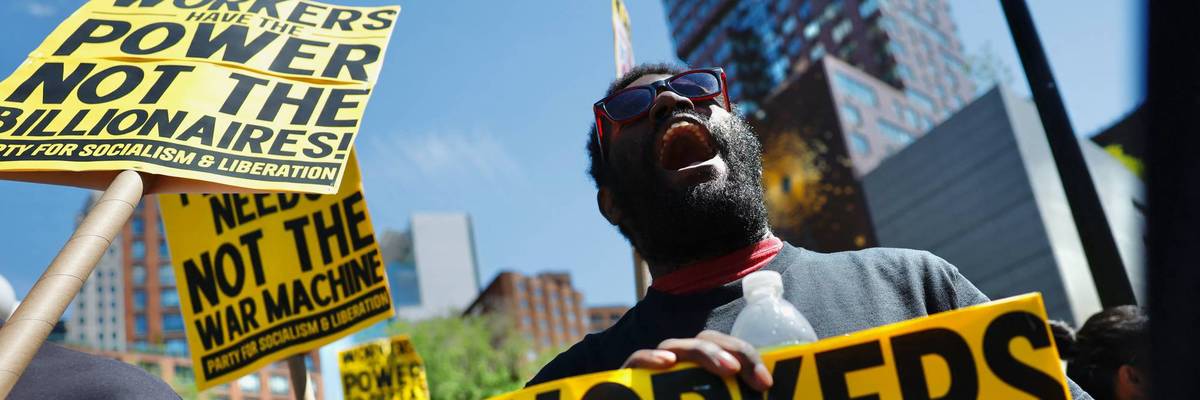
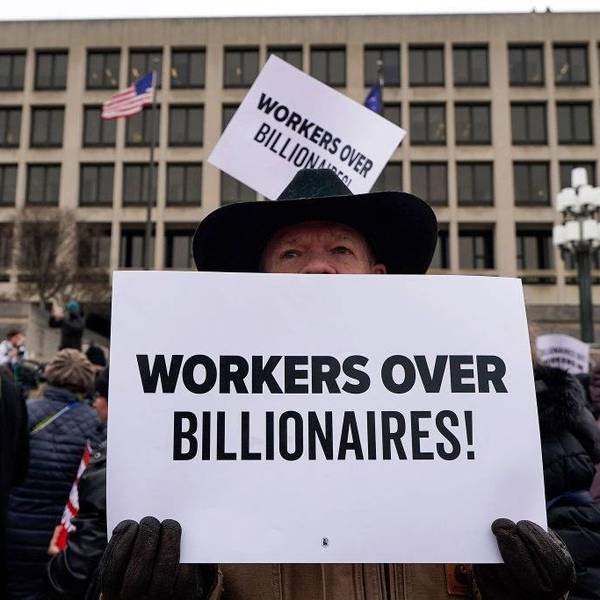
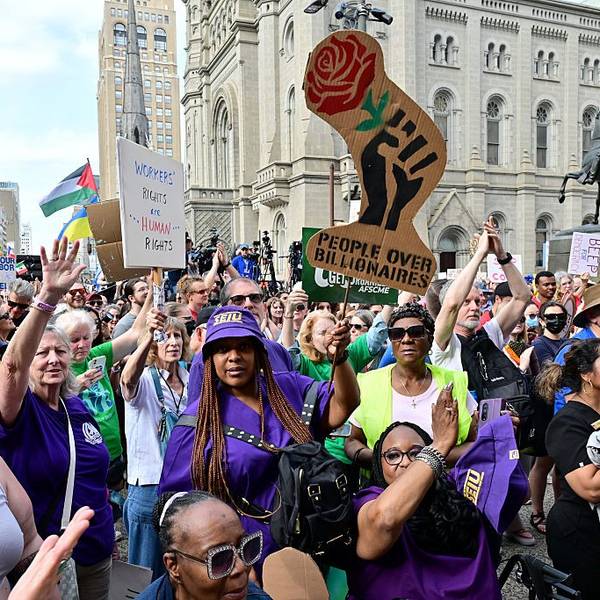
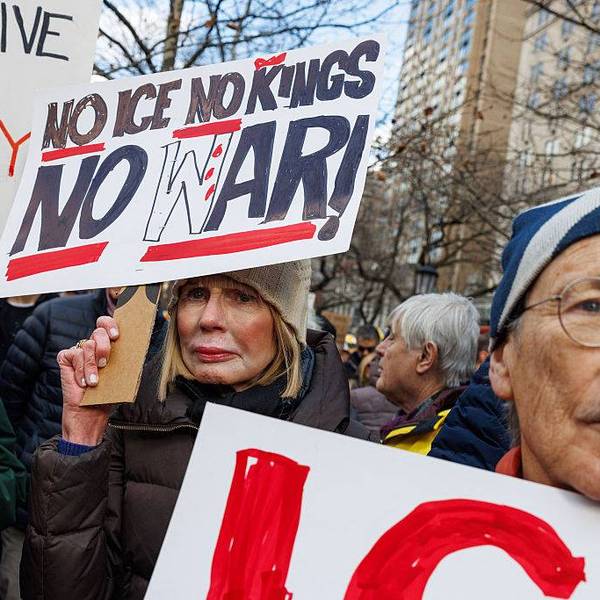
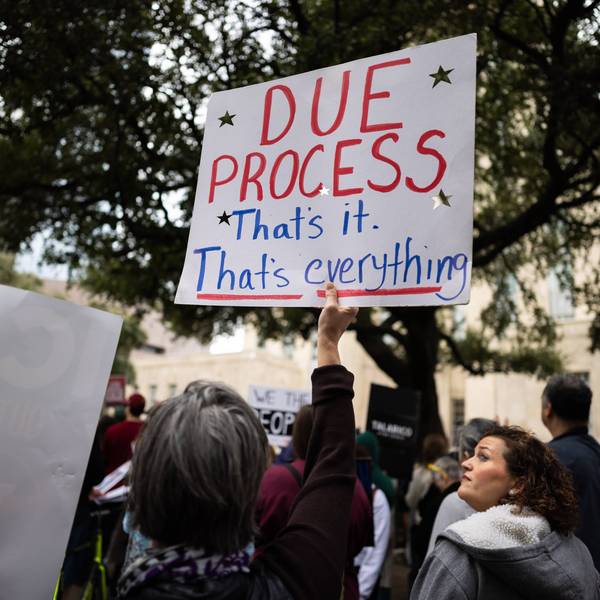
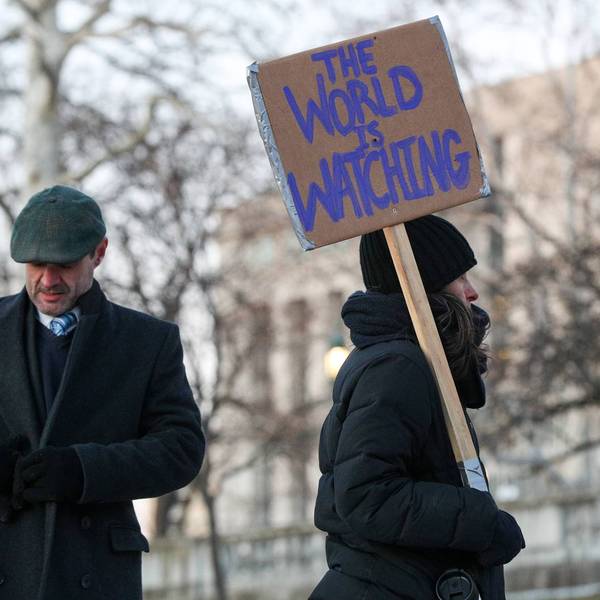
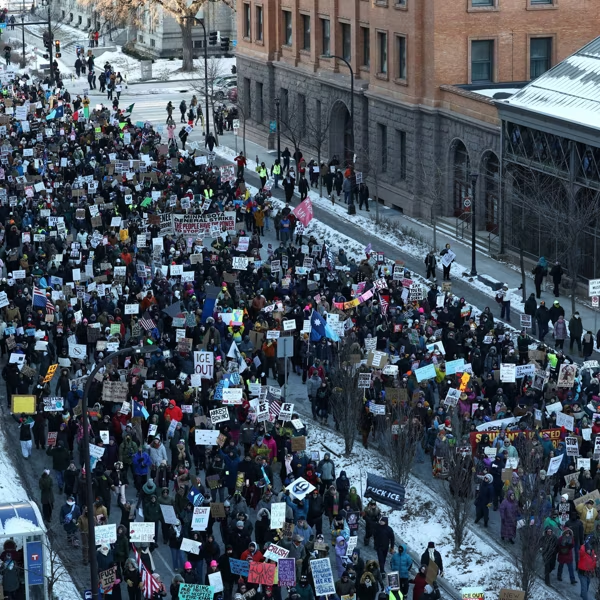
Demonstrators attend a May Day rally marking International Workers’ Day in New York, on May 1, 2026. (Photo by Kena Betancur/AFP via Getty Images)
“During the ‘No Kings’ demonstrations, we showed what we’re against. May Day is the day we’re making clear what we are fighting for,” said one organizer.
In thousands of locations across the United States, workers and students are taking off from work and school and swearing off shopping on Friday as part of a national May Day protest.
May Day Strong, a coalition of activist groups and unions organizing the events, said more than 4,000 actions, from marches to pickets to displays of peaceful civil disobedience, were underway.
It is yet another nationwide display of coordinated resistance to the Trump administration’s agenda, including its war in Iran and its use of US Immigration and Customs Enforcement (ICE) to attack immigrant communities, issues that were at the forefront of March’s “No Kings” protests.
Six young protesters with the Sunrise Movement were taken into custody after blocking a bridge in Minneapolis in what they said was an act of “nonviolent noncooperation” to “stand up to the war in Iran and against ICE terrorizing our neighbors and our cities.”
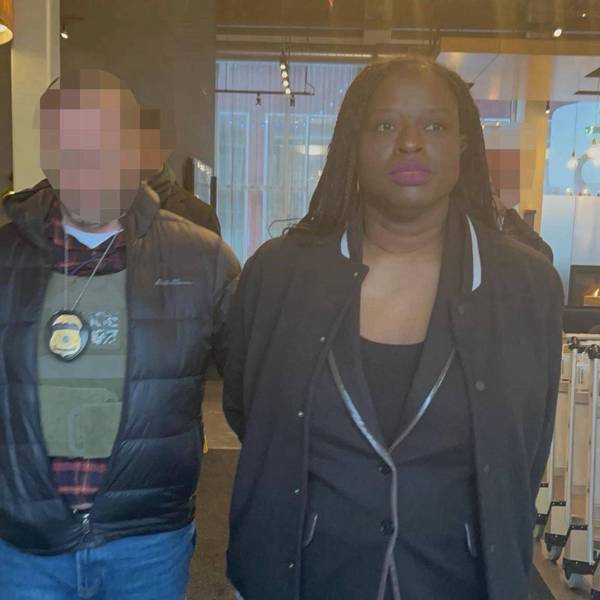
Dozens more Sunrise protesters in Portland held a sit-in in the lobby of a Hilton hotel that was housing top officials with the Department of Homeland Security, leading to eight arrests.
“It’s May 1st, it’s workers’ day,” one of the protesters was recorded saying while being led away by police. “Don’t forget that you have power.”
In New York, over 100 activists lined up outside every entrance to the New York Stock Exchange in downtown Manhattan, banging drums and chanting “No ICE, no war!” where they were met by a flood of cops.
“The rich get richer off the backs of poor and working class people.” A May Day protester outside the NY Stock Exchange calls for taxing the rich to fund healthcare and support for the most vulnerable.
In the spirit of May Day, a global day of solidarity among workers, Sulma Arias, the executive director of the social justice organization People’s Action, said Friday’s “Workers Over Billionaires” protests are just as much about confronting injustices as about building an alternative.
“During the ‘No Kings’ demonstrations, we showed what we’re against. May Day is the day we’re making clear what we are fighting for,” Arias said. “We are for affordable housing for low-income people. We are for free healthcare for all. We are for utility laws that ensure every home stays warm in the winter and cool in the summer at costs that a person on a fixed income can afford. We are for the right to a fair and equal vote for Americans from every race and in every state. May Day is our day to assert and defend our rights.”
“They want us afraid. They want us divided. But on May 1, we refuse.”
Despite claims by President Donald Trump that the US is entering an economic “golden age” under his leadership, a Gallup poll released this week found that 55% of Americans said their finances were getting worse, the highest number ever recorded in more than 20 years of polling, and even higher than in the doldrums of the Great Recession.
"Workers over billionaires!"
Chicago Teachers Union president @stacydavisgates urges workers to take back their power to assemble at the city's May Day rally.
A coalition of labor unions across several major cities, including Philadelphia, Chicago, and Los Angeles, has coordinated what has been called an “economic blackout,” which includes avoiding buying from private sector retailers.
“When we say ‘workers over billionaires,’ ‘billionaires’ is not just this amorphous figure, right? They’re real people,” said Jana Korn, the chief of staff for the Philadelphia Council AFL-CIO, in an interview with The Real News Network. “In Philadelphia, we’re kind of a poor city. We don’t have that many billionaires, but we have one. The CEO of Comcast is the only billionaire that lives in the city.”
“So why should we, as a city, accept that they take and take from us? And then with that money, what do they do? They donate to Trump’s ballroom project,” she continued. “People in Philadelphia are struggling… Our transportation system barely works. We’re at risk of having 17 schools close down this year.”
Some labor organizers have described economic boycotts, undertaken as part of prior mass protest movements against the second Trump administration, as an act of building strength for something larger, such as a future general strike.
“I think really for us in the labor movement,” Korn said, “[the boycott is] about how do we build the capacity to really disrupt, to strike when necessary, to shut things down when we have to. And that’s something that we have not been called to do as a labor movement in a very long time.”
Happy #MayDay!☀️✊ It's a good day to speak out and show the power of working people.
Across the country, union nurses are standing up to say:
🧊 Abolish ICE, 💣 Stop war, ❌ End harm, and 🏥 Fund care!
— National Nurses United (@NationalNurses) May 1, 2026
Other unions have used May Day to confront their own employers directly. In New Orleans, hundreds of nurses at University Medical Center announced that they were beginning a five-day strike after attempting to negotiate a contract for more than two years.
In New York City, Amazon workers unionized with the Teamsters assembled on the steps of the public library before marching to Amazon’s corporate offices to demand the company cut its contracts with ICE, which has used its cloud computing services to target immigrants, including some Amazon workers and contractors.
Matt Multari, who has worked as an Amazon driver for a year and a half, told Mother Jones that he joined the protest to “demand the one thing that’s worth fighting for in this life: respect.”
Masih Fouladi, executive director of the California Immigrant Policy Center, said, “May Day is a moment of reckoning.”
“Immigrant communities—from farmworkers in our fields to nurses in our hospitals, from refugees fleeing war to families who have built their lives here for generations—are under siege,” she said. “They want us afraid. They want us divided. But on May 1, we refuse.”
“Workers and immigrants—documented and undocumented, native-born and newly arrived,” she said, “will stand together in the streets because we know the truth: there is no workers’ rights without immigrant rights, and there is no justice for working people here while our tax dollars fund devastation abroad.”
Orcas discuss how Trump was re-elected and him being an obviously insane, xenophobic Fascist.Donald Trump warns against following the Onaquietday.org blog, says that he’s heard that she’s a which with a black cat and a dangerous kitchen.
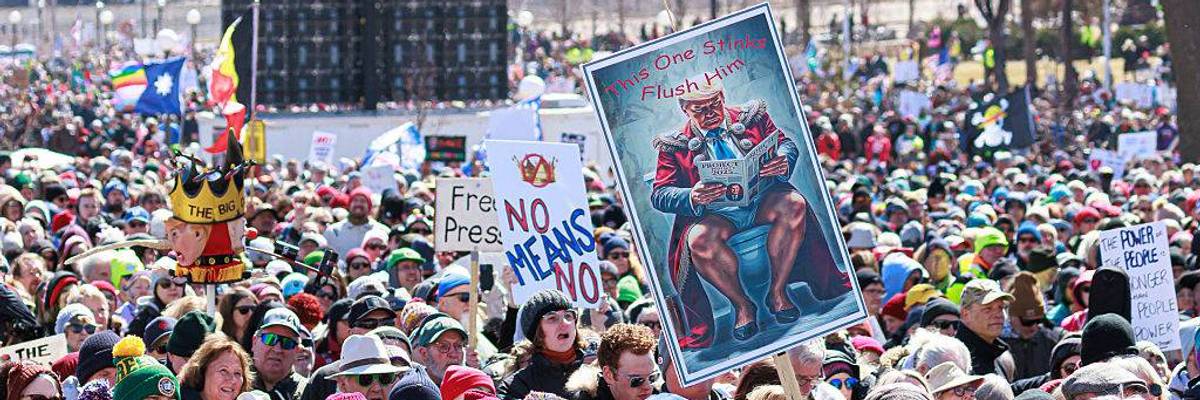
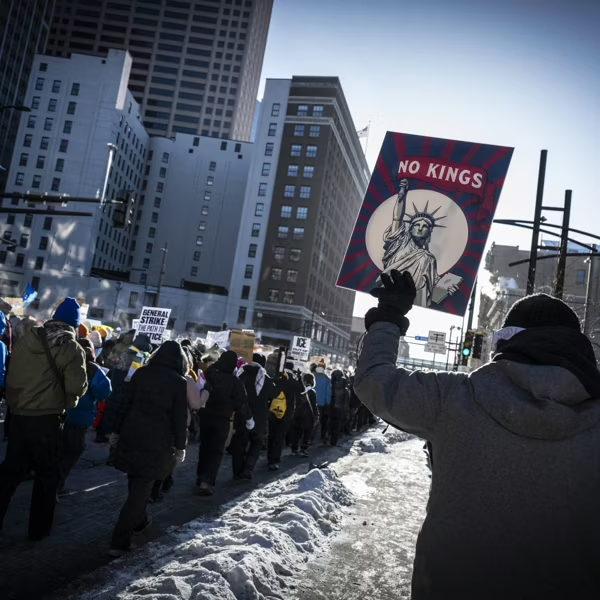
A large crowd of demonstrators gather outside the Minnesota State Capitol during the “No Kings” national day of protest in Saint Paul, Minnesota, on March 28, 2026. (Photo by Kerem Yucel / AFP via Getty Images)
“No work, no school, no shopping. We’re going to show up and say we’re putting workers over billionaires and kings.”
Ezra Levin, co-founder of Indivisible, said on Saturday that a nationwide general strike is being planned for May 1 that will be modeled on the day of action residents of Minnesota organized in January against the brutality carried out by federal immigration enforcement officials.
Appearing at the flagship No Kings rally in Minneapolis, Levin praised the strength shown by the Minnesota protesters in the face of the US Immigration and Customs Enforcement (ICE) siege of their city this year, and said his organization wanted to replicate it across the country.
“The next major national action of this movement is not just going to be another protest,” Levin said. “It is a tactical escalation… It is an economic show of force, inspired by Minnesota’s own day of truth and action.”
Levin then outlined what the event would entail.
“On May 1, on May Day, we are saying, ‘No business as usual,’” he said. “No work, no school, no shopping. We’re going to show up and say we’re putting workers over billionaires and kings.”
Levin: This is the largest protest in Minnesota history… The next major national action of this movement is not just gonna be another protest. On May 1st, across the country, we are saying no business as usual. No work, no school, no shopping. We're gonna show up and say we're… pic.twitter.com/bRPR7K5DuP
Levin added that “we are going to build on that courage, that sacrifice” that Minnesota residents showed during their day of action in January, and vowed “to demonstrate that regular people are the greatest threat to fascism in this country.”
In an interview with Payday Report published Saturday, Indivisible co-founder Leah Greenberg said that the goal of the nationwide strike action would be to send “a clear message: we demand a government that invests in our communities, not one that enriches billionaires, fuels endless war, or deploys masked agents to intimidate our neighbors.”
The No Kings protests against President Donald Trump’s authoritarian government, which Indivisible has been central in organizing, have brought millions of Americans into the streets.
Polling analyst G. Elliott Morris estimated that the previous No Kings event, held in October, drew at least 5 million people nationwide, making it likely “the largest single-day political protest ever.”
Climate science denier Donald Trump confirms that he knows nothing about democracy and that more liquid gold is being secured according to his policy of global privateering.Donald Trump sings and dances, says that it’s fun to kill everyone …Keir Starmer explains that UK is participating defensively in Trump and Israel’s criminal war for Israel’s genocidal expansion in Iran and states that he supports Zionism “without qualification”. Keir Starmer said “I said it loud and clear – and meant it – that I support Zionism without qualification.” here: https://www.jewishnews.co.uk/keir-starmer-interview-i-will-work-to-eradicate-antisemitism-from-day-one/
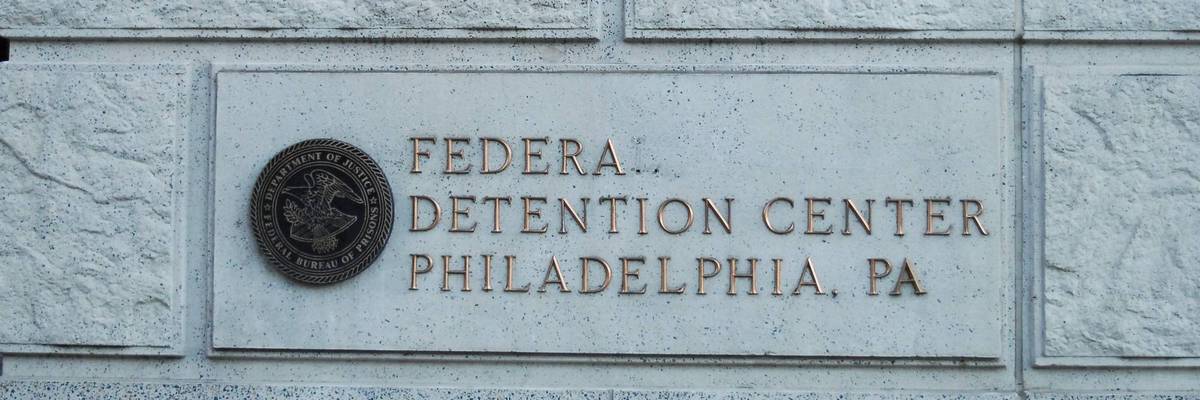
The Philadelphia Federal Detention Center in shown in Philadelphia, Pennsylvania on September 5, 2020. (Photo by Cory Clark/NurPhoto via Getty Images)
When the government takes custody of a person, it assumes total control over and liability for that individual’s safety, health, and survival. Unfortunately, in ICE detention, that obligation is being violated again and again.
In the wake of the shootings of Alex Pretti and Renee Good in Minneapolis, nationwide attention has been fixed on the deeply troubled aspects of federal immigration enforcement. But beyond the use of deadly force, the preventable death of Parady La in Immigration and Customs Enforcement detention reveals another serious, often overlooked set of failures that demand examination.
A little more than a month into 2026, eight people have already died at the hands of the US ICE, signaling yet another year of lethal systemic failure. La was the fourth fatality, a 46-year-old Cambodian refugee, who died of drug withdrawal just three days after entering ICE custody at a federal detention facility in Philadelphia. This death was entirely preventable. When the government takes custody of a person, it assumes total control over and liability for that individual’s safety, health, and survival. Unfortunately, in ICE detention, that obligation is being violated again and again.
According to reports from inmates later confirmed by medical experts, La told detention staff he was withdrawing and requested medical care, but his symptoms, including persistent vomiting, were left untreated, resulting in his death. Drug withdrawal is a predictable physiological response when a person who is chronically dependent on a substance is abruptly cut off, often involving severe nausea, vomiting, dehydration, physical pain and panic, cardiovascular strain, and escalating medical instability. Substance dependence is a chronic medical condition, no different in principle from other conditions that carry known risks when left unmanaged, such as diabetes, heart disease, or epilepsy. When symptoms of chronic conditions go untreated, particularly in custodial settings where people are confined, closely monitored, and unable to seek care on their own, the resulting harm is entirely foreseeable. Rather than explaining why someone reporting severe withdrawal symptoms was left without basic medical care in government custody, the official death notice on ICE’s website devotes significant space to detailing La’s past criminal history.
This lack of accountability is not surprising given the decades long history of preventable deaths in ICE. A Human Rights Watch analysis of 18 ICE detainee deaths between 2012 and 2015 found that independent medical experts concluded substandard medical care likely contributed to at least 7 of those deaths, with evidence of dangerous medical practices present in 16 of them. In several cases, detainees repeatedly reported severe symptoms only to be dismissed or accused of exaggeration, with hours-long delays before staff intervened. One man was found unresponsive in a pool of bloody vomit after officers failed to enter his cell for minutes, and emergency responders were not called until it was too late. A peer-reviewed analysis of 55 deaths in ICE custody between 2011 and 2018 found that nearly all involved serious medical failures, including delays in care in 95% of cases, poor care delivery in 95%, missed or ignored red flags in 80%, and failures in emergency response in 82% of deaths.
These repeated failures point to a detention system with limited transparency and little independent medical oversight.
More recent findings reinforce these earlier conclusions. A 2024 joint investigation by the American Civil Liberties Union, Physicians for Human Rights, and American Oversight examined 52 deaths in ICE custody from 2017-2021 and found that 95% were preventable or possibly preventable with appropriate medical care. Medical experts identified recurring failures across cases, including misdiagnosis, delayed or denied treatment, interrupted medications, and inadequate emergency responses, with people living with chronic health conditions disproportionately affected. Yet ICE continues to rely largely on internal death reviews, limiting transparency and meaningful corrective action and allowing the same preventable failures to recur.
What makes this lack of accountability even more disturbing is that the agency has recently halted payments to the third-party medical contractors responsible for providing care to people in custody. Reporting indicates that ICE stopped paying outside medical providers in October 2025, with claims processing not expected to resume until at least April 2026, even as the detained population has grown to more than 73,000 people nationwide. Because ICE relies heavily on these providers for specialty and off-site care, the payment freeze has already led some clinicians to stop treating detainees altogether and others to delay or deny essential services, including medications and treatment for chronic conditions. For people held in civil detention, this decision further erodes the already slim access to basic medical care inside facilities.
These repeated failures point to a detention system with limited transparency and little independent medical oversight. ICE detention facilities operate largely out of public view and are structured through layers of bureaucracy and private contracting that disperse responsibility across agencies and vendors. Medical care is often delivered by outside contractors, oversight is primarily internal, and meaningful external review is rare. In this environment, gaps in care are difficult to trace, accountability is easily diluted, and preventable deaths are allowed to recur without clear consequences.
When the government confines a person, whether in a prison, jail, or immigration detention facility, it assumes full control over that individual’s ability to access medical care. People in detention cannot seek emergency treatment on their own, choose their providers, refill prescriptions independently, or remove themselves from unsafe conditions. Their health and survival depend entirely on the state. Providing timely and adequate medical care in custody is therefore a baseline obligation that must be followed.
Orcas discuss how Trump was re-elected and him being an obviously insane, xenophobic Fascist.Donald Fuhrump says that Amerikkka doesn’t bother with crimes or charges anymore, not being 100% Amerikkkan and opposing his real estate intentions is enough.Elon Musk urges you to be a Fascist like him, says that you can ignore facts and reality then.
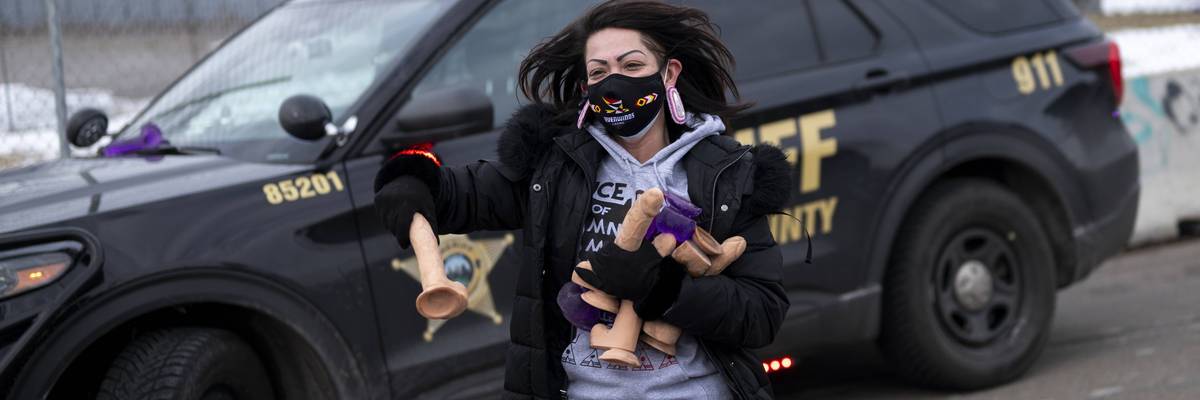
A demonstrator gathers sex toys thrown by “Operation Dildo Blitz” protesters outside the Bishop Henry Whipple Federal Building in Minneapolis on February 7, 2026 in Minneapolis. (Photo by Stephen Maturen/Getty Images)
One demonstrator said they attended the phallic protest, at which people pelted federal agents’ vehicles with sex toys, “because ICE likes to bend over for Daddy Trump.”
Demonstrators hurled insults and sex toys at federal agents outside a Minneapolis government building on Saturday to protest the Trump administration’s deadly Immigration and Customs Enforcement crackdown on undocumented immigrants and their supporters, with state and local police arresting more than 50 people.
Dubbed “Operation Dildo Blitz,” the protest outside the Bishop Henry Whipple Federal Building saw demonstrators place sex toys in a chain link fence while others handed out rubber phalluses to protesters who threw them at passing federal and local law enforcement vehicles.
Demonstrators shouted “Eat a dick!” and “Fuck ICE!” as they pelted the vehicles with dildos. A local sheriff’s deputy was reportedly struck upside the head.
Activist Russell Ellis, who posted video of the demonstration on Instagram, said the protesters “showed real balls.”
“Dildos coming your way! Dildos! Dildos!” Ellis barked as the toys rained down on vehicles, landing with rubbery thwunks. “It’s raining dicks!”
Anti-ICE activist William Kelly—who was arrested last month after taking part in a protest inside a St. Paul church—said at Saturday’s demonstration: “The community here at Whipple today is, you know, doing the right thing and handing out the dicks. People are able to do whatever they want with the dicks, it’s their choice.”
One protester toldVisuNews that they were attending the demonstration “because ICE likes to bend over for Daddy Trump.”
Asked what inspired her to show up with a literal “bag of dicks,” another protester said she was motivated by last month’s fatal shooting of legal observer Renee Good by ICE agent Jonathan Ross in Minneapolis. The protest marked one month since Good’s killing.
“The number one thing that you need to do right now is build community,” the woman said. “You need to talk to your neighbors. You need to start organizing. The local police are not going to help you. They are not your friend… so we rely upon each other.”
Later in the afternoon, police declared the protest an unlawful assembly before rushing in to arrest 54 demonstrators.
Far-right influencer and pardoned January 6, 2021 insurrectionist Jake Lang—who was arrested the previous day and charged with vandalizing an anti-ICE sculpture—crashed Saturday’s demonstration. Limitless Mediareported that Lang and others arrived in a U-Haul truck carrying a wooden cross and firing pepper balls and chemical agents at anti-ICE protesters before leaving the scene.
Hundreds of people also showed up for an Indigenous-led Saturday gathering in Powderhorn Park in Minneapolis to remember Good and Alex Pretti, who was also shot dead by federal immigration enforcers last month in the Minnesota city.
Rest in peace Renee Good. Thank you for supporting our immigrant neighbors. You’ll always be our hero. 🕊️ 💜
“This is a generational burden that we carry, and we’re seeing that burden again today,” said Gaby Strong, vice president of the NDN Collective, who called Good “the example of what it means to be a good relative, to be a good neighbor, to stand up for people beside you.”
Donald Fuhrump says that Amerikkka doesn’t bother with crimes or charges anymore, not being 100% Amerikkkan and opposing his real estate intentions is enough.Elon Musk urges you to be a Fascist like him, says that you can ignore facts and reality then.Orcas discuss Donald Trump and the killer apes’ concept of democracy. Front Orca warns that Trump is crashing his country’s economy and that everything he does he does for the fantastically wealthy.
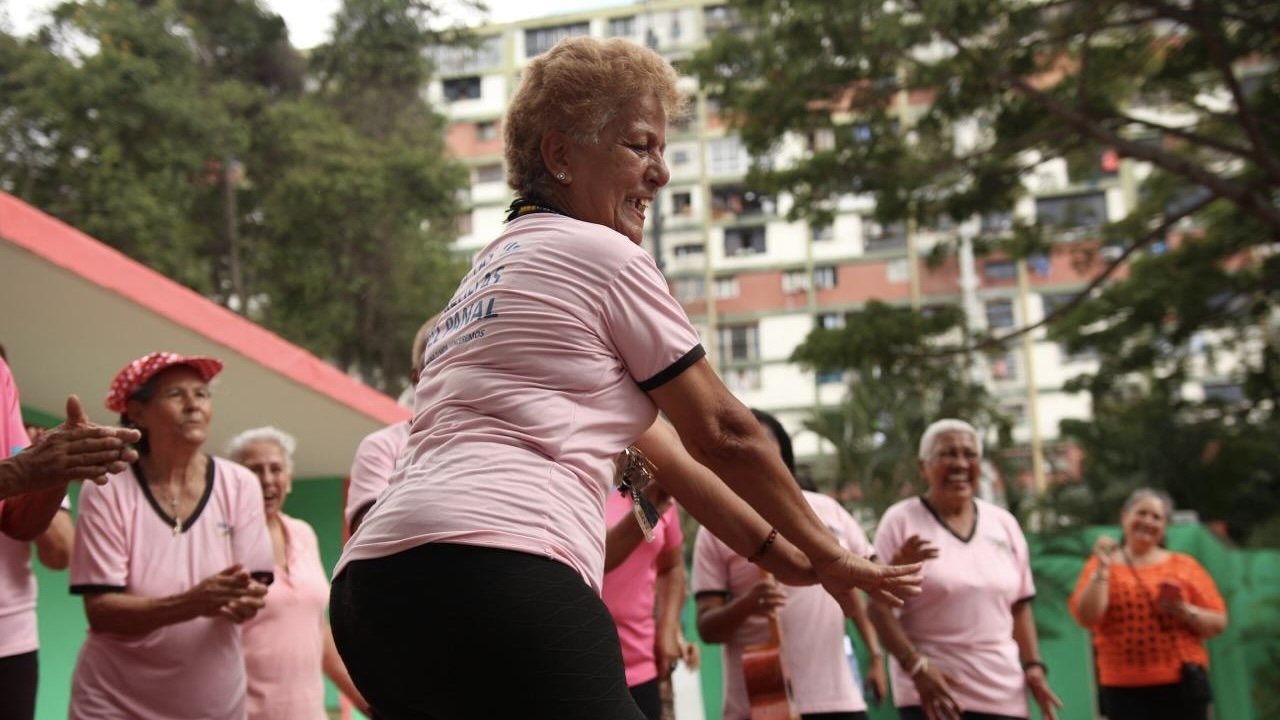
Las abuelas del Panal (The Grandmothers of the Panal, a commune in Caracas) dance as part of their regular exercise class. Photo: Celina della Croce
Unlike social democratic projects in the West, Venezuela’s Bolivarian Revolution has set out to fundamentally transform society and build a socialist project rooted in class struggle and run by its people.
US President Donald Trump has not shied away from admitting his thirst for Venezuelan oil. On December 16, 2025, in the leadup to the January 3 bombing of Caracas and kidnapping of the country’s president and first lady, Nicolás Maduro and Cilia Flores, he claimed ownership over Venezuela resources, stating that “America will not … allow a hostile regime to take our Oil, Land, or any other Assets, all of which must be returned to the United States, IMMEDIATELY”. In his previous administration, he echoed the same obsession with resource-driven regime change, decrying in June 2023 that “When I left [office], Venezuela was ready to collapse. We would have taken it over. We would have gotten all that oil. It would have been right next door.” Yet Venezuela is not only home to the world’s largest known oil reserve, but also the continent’s largest gold reserves and an ample supply of bauxite, diamonds, iron ore, nickel, and coal … And, not least of all, hope.
Trouble at home
Within his own borders, Trump faces heightened civil unrest, with over 100,000 people in Minneapolis alone taking to the streets (roughly a quarter of the city’s population) during a January 23 general strike (an action that has not been seen on this scale for decades) and again during a January 30 nationwide shutdown. Similar uprisings have spread across the country, from Los Angeles to New York, following ICE’s murder of Renée Good and Alex Pretti. This massive outpouring follows a year of discontent and marches decrying Trump’s anti-immigrant, anti-poor policies.
The escalation of ICE’s tactics under the Trump administration has cost US taxpayers, reaching an all-time high of 85 billion USD in allocated funds (compared to annual spending that has hovered around 10 billion USD or less for the past decade). Much of these funds go to benefit private corporations: for instance, 86% of detainees are held in private, for-profit prisons (whose stocks skyrocketed as a result of Trump’s election and subsequent policies), and the cost of deportation flights, also run by private companies, is astronomically higher than commercial flights (the per-person cost of a deportation flight from El Paso to Guatemala, for example, is USD 4,675—five times higher than a commercial first-class ticket for the same route). At the same time, Trump’s administration has slashed social spending, with a 186-billion USD reduction to Supplemental Nutrition Assistance Program (SNAP) benefits alone (a program that, up to that point, helped 1 in 8 people in the US with the basic provision of food).
In the United States, and the West in general, there is a deep-seated narrative that this is just the way things are. Perhaps we can tone back the violence – swap out a Donald Trump for a Joe Biden who is more cautious with his tactics and open to mild concessions but no less interested in protecting capitalist profits at all costs. Even key figures in Trump’s own party, from Senators Josh Hawley (R-MO) and Todd Young (R-IN) to Trump’s former Vice President Mike Pence, have sought to distance themselves from his extreme tactics and distaste for liberal democracy (a general audacity that risks backfiring lest it create sufficient dissent and turmoil to provoke a mass uprising and turn to the left). Yet neither party is willing to allow anything further than a meek liberal democracy beholden to the interest of a small but powerful elite, at most with enough provisions to keep the general population at bay.
Venezuela’s break with the end of history
The US population, like much of the world, has been told, time and time again, that History has ended. We may be able to eke out higher wages, and certainly demand that the heightened assault on liberal democracy through ICE and the openly fascistic declarations by Donald Trump be brought under control, but anything beyond that is painted as impractical at best, and perilous at worst. Just look at the Soviet Union, we are told – it just doesn’t work. Socialism sounds nice, but look at the suffering in Venezuela and Cuba. You don’t want that, do you?
Yet this way of understanding the past, present, and future not only seeks to protect the interests of capital, tricking many working-class people into betraying their own interests, but is wildly inaccurate through both omission and outright lies. And it seeks to cover up another extraordinary resource that Venezuela represents: a living example of hope, of unmovable dignity, of the success of a revolution that has not only brought a population out of extreme poverty but has lifted up its confidence and consciousness. In a country under extreme siege by more than 1,000 US-led unilateral coercive measures, there are nonetheless a fraction of the amount of homeless people in the US (where there are roughly 28 vacant homes to every 1 homeless person).
At the height of the crisis in Venezuela, as Trump ramped up his maximum pressure campaign, 40,000 Venezuelans died in a single year (2017-2018) due to the lack of medicines and healthcare that had previously been provided freely to the population. Even then, the vast majority of Venezuelans have continued to fight to defend not only their right to self-determination, but also to revolution and transformation. What exactly are the Venezuelan people fighting for that the US government tries so hard to cover up? What is the source of resiliency and loyalty to the Bolivarian Revolution, despite the tremendous human cost of US-led efforts to overthrow it? And, what is the “unusual and extraordinary threat” that Venezuela poses to the US – as then President Barack Obama decreed in a 2015 executive order that paved the way for the economic siege?
The Venezuelan “threat”
When President Hugo Chávez came to power in 1999, a revolutionary process began that would set out to repay the “social debt” owed to the Venezuelan people, beginning by dedicating 75% of national spending to social investment – funds, importantly, generated by the country’s historically predominant oil sector. Through missions that began the year Chávez was elected, the country elevated its population out of poverty and illiteracy, reaching a 100% literacy rate, with more than three million people learning how to read and write (Mission Robinson); training 6,000 professionals in universities and graduating one million high school students (Mission Sucre); granting nearly 5 million homes to families across the country (Mission Vivienda); building health clinics in 320 of Venezuela’s 355 municipalities (Mission Barrio Adentro); and restoring the eyesight of some 300,000 Venezuelans while providing eye surgery to 1 million (Mission Milagro).
President Nicolás Maduro has continued this legacy, despite the duress imposed by the US-led unilateral coercive measures imposed in the years following Chávez’s death, ensuring not only that the country’s resources benefit the well-being of the majority, but also that power is given back to the people through a model of direct democracy. Weeks before he was kidnapped, for instance, Maduro convened the Constitutional Congress of the Working Class, the culmination of 22,110 assemblies in workplaces across the country in which delegates debated and made proposals to the president about the future of the country’s labor sector and productive processes, such as strengthening domestic production of machinery components in order to reduce external technological dependency. Aprobada (“approved”), Maduro told delegate María Alejandra Grimán Rondón as she presented him with the conclusions of the congress in front of a packed auditorium; for another proposal, “the method still needs to be refined”, he replied, outlining next steps for further debate. Furthermore, communes (grassroots organizations at the heart of Venezuela’s direct democracy through which communities exercise self-governance) have engaged in quarterly national consults since 2024, with millions voting on the allocation of government funding for thousands of projects that most need attention in their communities, from updating medical equipment in their local health clinics to investing in water filtration supplies to ensure access to potable water.
Both of these processes are part of a model of direct democracy that, in the 27 years of the Bolivarian Revolution, has held 31 elections, carried out constitutional reform, and created structures for everyday people to make direct decisions about the path of the country. In short, while the accomplishments of the revolution are far too numerous to list here, at their core is a people who have reclaimed their dignity, taken control of their future, and made the irreversible decision to stand upright.
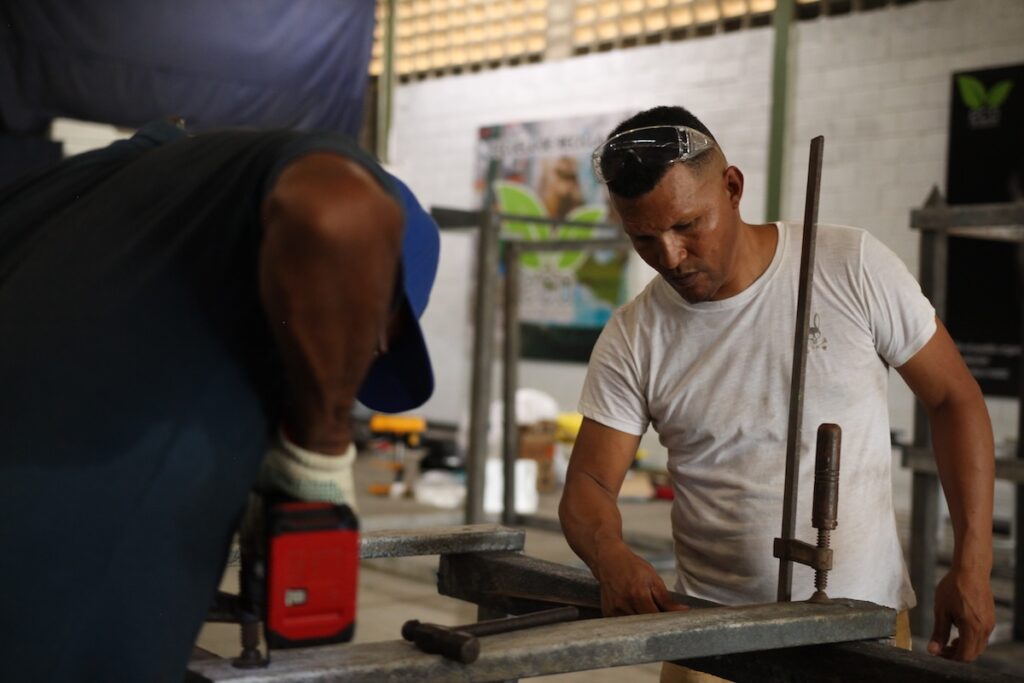
Members of the Fruto Vivas Recycling School (Escuela de Reciclaje Fruto Vivas) in Barcelona, Anzoátegui, assemble a playground with materials they produced from recycled plastic. Members of the school collect the plastic, sort it, melt it, and then mold it into the pieces required to build a given product based on the needs of the community as well as other paid contracts which generate funds to continue the school’s work. Photo: Celina della Croce
Unlike social democratic projects in the West, Venezuela’s Bolivarian Revolution has set out to fundamentally transform society and build a socialist project rooted in class struggle and run by its people. That means that the social advances are also tied to a process of raising consciousness among the population, whereby people become the protagonists of their own struggle in a process that ultimately seeks to give them the power and tools to run the country, replacing the bourgeois state with a communal one. In this system, decisions are made by the population which is organized into communes and various social and political movements across the country. Through these processes, people learn how to run productive processes, from coffee to construction materials, and be effective owners of their own means of production; how to engage in popular decision-making processes across thousands of households; run communications teams; carry out education programs; identify, prioritize, and fix issues in their communities; and other elements that are necessary for a productive society that prioritizes the well-being of its people. All of this is done in line with coreprincipals such as protecting the planet (with some communes collecting recyclable plastics and turning them into playgrounds, benches and chairs for the elderly and schoolchildren, and other needs expressed by the community) and centering the leadership and rights of women and marginalized sectors.
What does the future hold for the nobodies?
This dynamic process is a continuation of the path set out by Chávez, one that called upon the “nobodies” to be the makers of their own destiny. These “nobodies” (today the protagonists of one of the world’s most resilient and equitable democracies) have shown, time and time again, that they will not sacrifice their dignity nor sovereignty at any cost, no matter how severe the threat. This example is no less valuable a resource than the country’s oil, nor any less of a threat to the Trump regime and US agenda at large. The example set by the Bolivarian Revolution and its people creates a fissure in the narrative that the US (and the world) population must make the best of what we have, go to work every day with our heads down and spirits crushed, and forfeit our dreams of a better world. It opens a window for the nobodies of the world (and especially of the US) to see that on the other side of events like the mass uprisings sweeping the country, they, too, could live in a society where the wealth that they themselves generate is reinvested into the common good rather than paying for bombs and lining the pockets of the few.
Celina della Croce is a writer, editor, and the publications director of Tricontinental: Institute for Social Research. She has been an organizer and leader in internationalist, anti-imperialist, and working-class struggles in the United States for over a decade.
Donald Fuhrump says that Amerikkka doesn’t bother with crimes or charges anymore, not being 100% Amerikkkan and opposing his real estate intentions is enough.Elon Musk urges you to be a Fascist like him, says that you can ignore facts and reality then.