300 million on the streets in a historic national strike in India

Spread the love

Original article by Abdul Rahman republished from peoples dispatch under a Creative Commons Attribution-ShareAlike 4.0 (CC BY-SA) license. See the original article for embedded content.
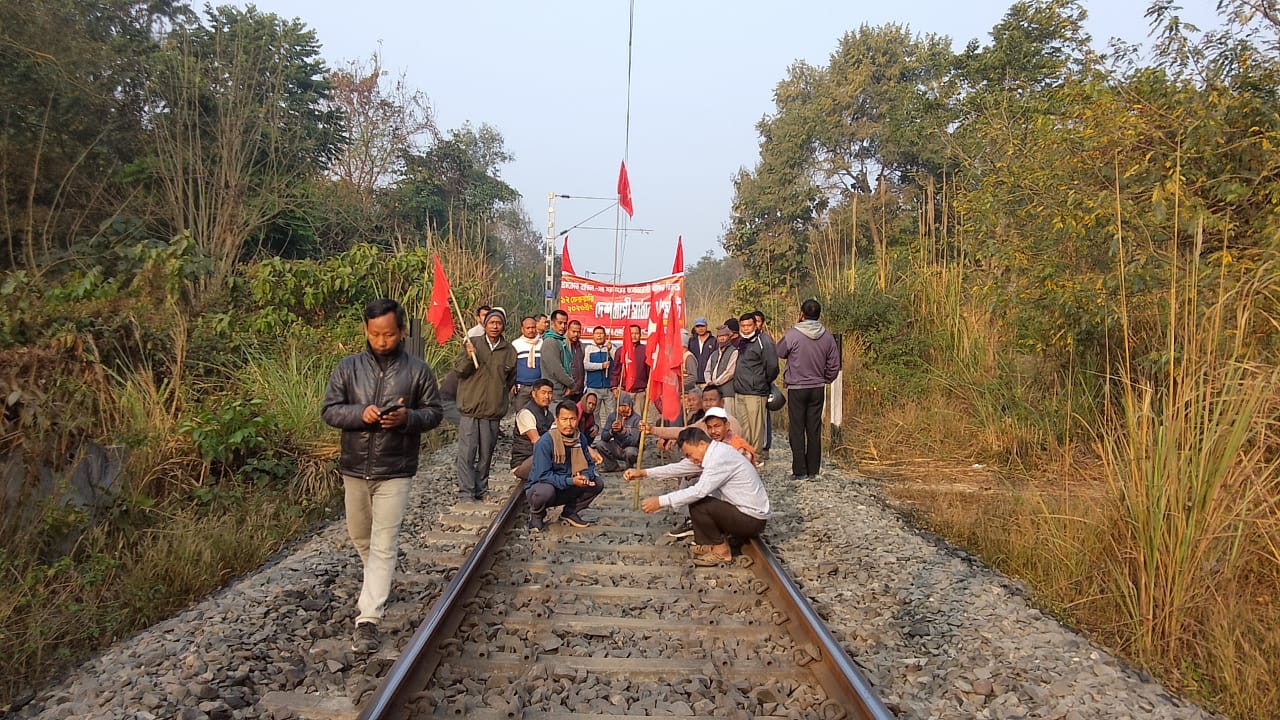
The strike was called jointly by the worker unions and farmers groups to demand the withdrawal of the anti-people policies, such as the four new labor codes and the recently signed trade deals with the US and the EU.

The strike was called jointly by the worker unions and farmers groups to demand the withdrawal of the anti-people policies, such as the four new labor codes and the recently signed trade deals with the US and the EU

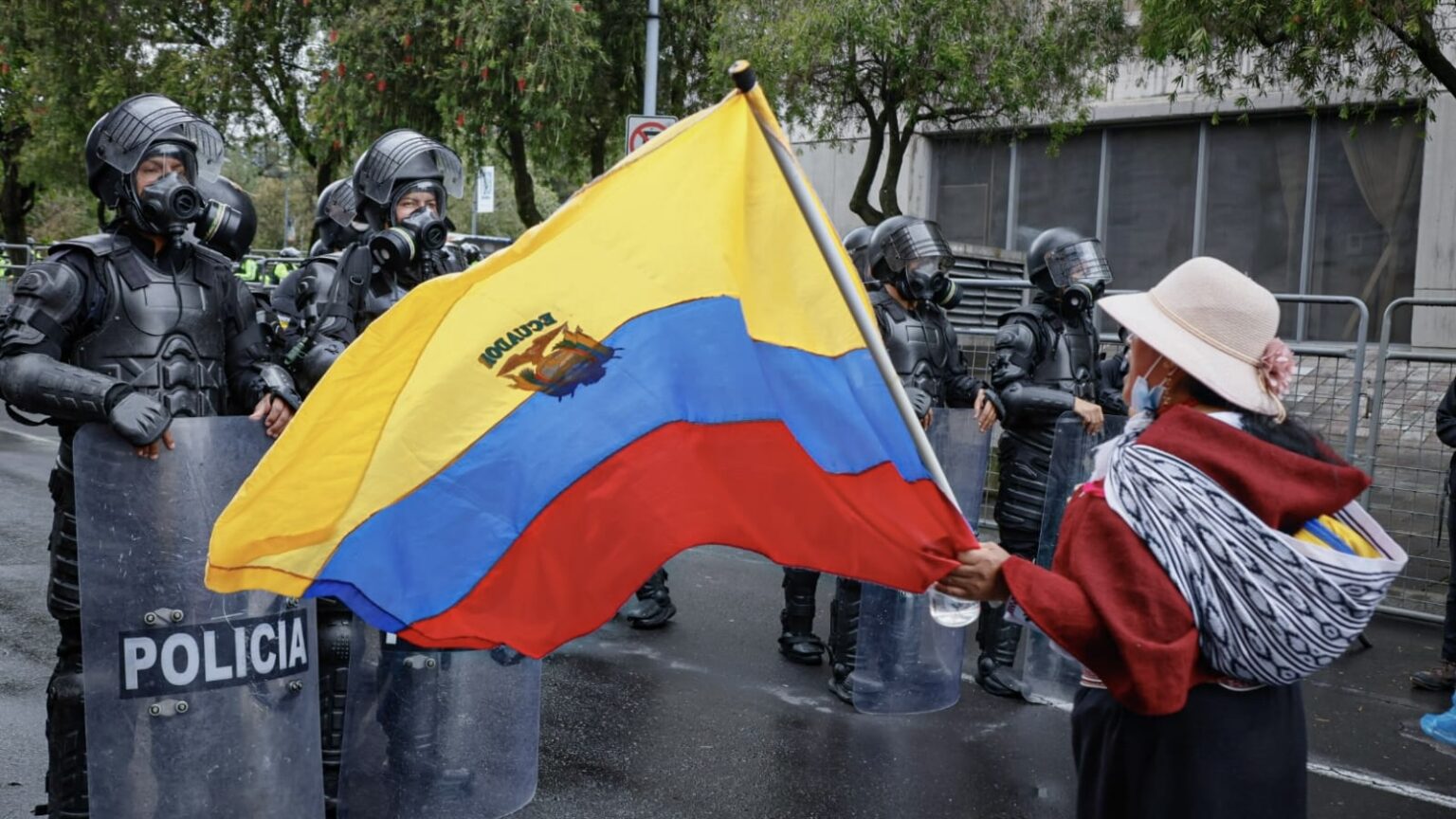
300 million workers, farmers, students, and professionals from various fields took to the streets across India on Thursday, February 12, in defense of their rights and to denounce the policies of the ultra-right-wing government in the country.

Workers went on strike shutting down thousands of coal fields, refineries, factories, banking, and transportation in remote corners of the country, heeding the call of the Central Trade Unions (CTUs), a joint platform of major trade unions in India, including the Centre for Indian Trade Unions (CITU), the All India Trade Union Congress (AITUC), the All India Central Council of Trade Unions (AICCTU), and the Hind Mazdoor Sabha (HMS), among others.

#12thFebruaryGeneralStrike a Historic Success

The All India Kisan Sabha (AIKS) congratulates crores of Indian workers, agricultural workers and toiling peasantry for making the 12th February 2026 General Strike a historic success. The anger of working people against the (1/n) pic.twitter.com/jfItzhDVeg

— AIKS (@KisanSabha) February 12, 2026 

The workers were joined by millions of farmers and agricultural workers from across the country under the call of the Samyukta Kisan Sabha (SKM) and the All India Agricultural Workers Union (AIAWA), among others. The farmers and agricultural workers demonstrated at all the district headquarters and the village centers across India.

is a warning to the ruling dispensation: Withdraw the slew of anti-people bills and acts and restore the pro-worker and pro-farmer policies. If the Modi government fails to respond adequately to the demands of the toilers of the country, it will be inviting a much longer (9/n) pic.twitter.com/UT0eVGOlqU

— AIKS (@KisanSabha) February 12, 2026 

In several places, workers and farmers were joined by students, women’s organizations, and other civil society groups who extended their solidarity with the strike call.

Strikers in many areas defied attempts by factory owners and security forces to stop the strike by picketing the factory gates and marching on the streets to implement the strike. 

https://www.facebook.com/plugins/video.php?height=476&href=https%3A%2F%2Fwww.facebook.com%2Freel%2F2229112557619929%2F&show_text=false&width=267&t=0

In several states, such as Kerala, Odisha, and Tripura, among others, most of the business establishments were shut in solidarity with the strike call. Demonstrations were held at government offices with thousands marching, shouting slogans, carrying banners, posters, and red flags.

general strike in the coming days.

Red Salute to the 12th February 2026 General Strike!

Long Live Worker-Peasant Unity!@DrAshokDhawale
President@VijooKrishnan
General Secretary pic.twitter.com/UJEBYFYoIq

— AIKS (@KisanSabha) February 12, 2026 

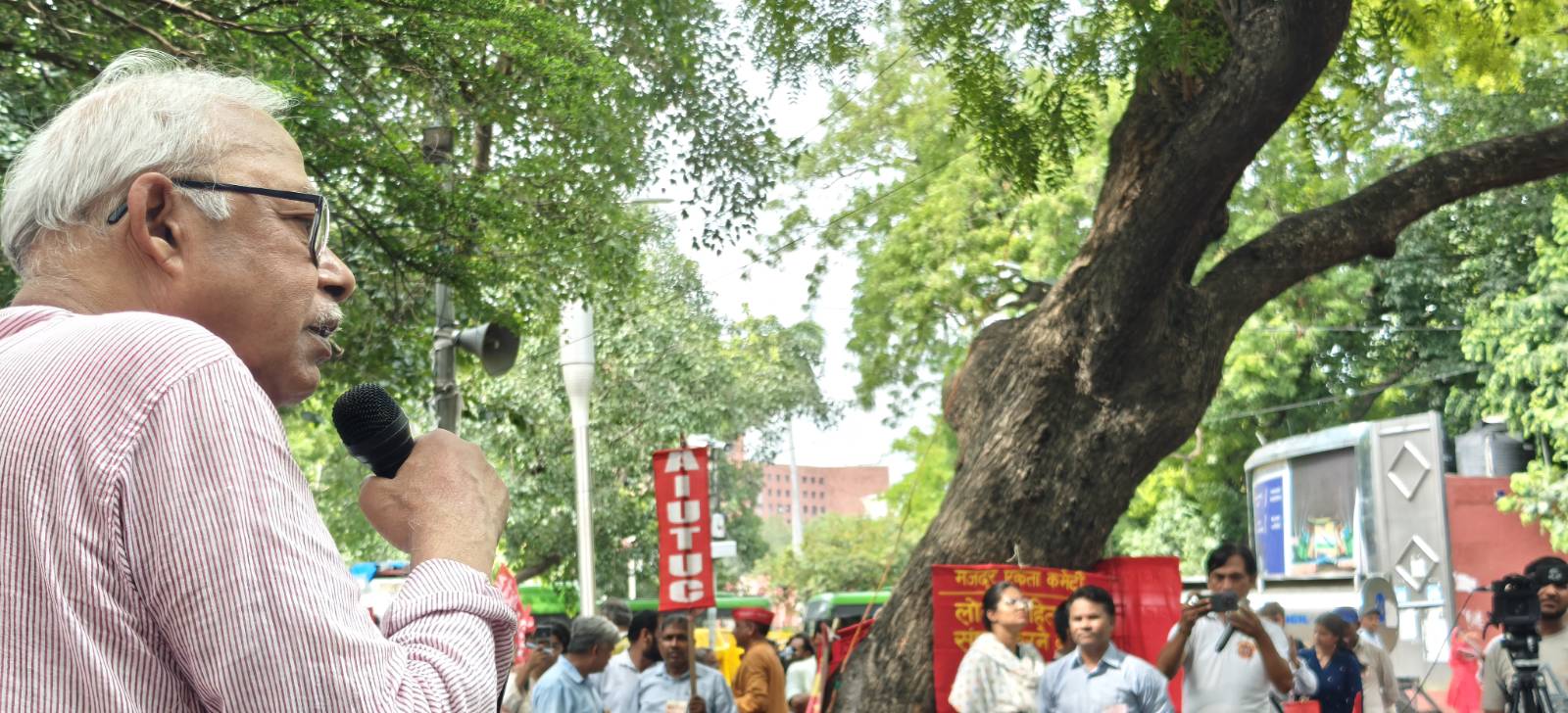
In the capital, Delhi, workers held large gatherings at the state secretariat. Later they also gathered at Jantar Mantar, where the central leadership of the CTUs and the SKM made speeches calling the strike a success.

Sudip Dutta, president of the CITU, claimed that the one day strike is just symbolic and if the Narendra Modi-led government fails to fulfill their demands it should be ready to see larger and longer strikes in the coming days as workers and farmers will not allow the government to harm their interests or sell India’s national sovereignty to the US and other foreign powers.

https://www.facebook.com/plugins/post.php?href=https%3A%2F%2Fwww.facebook.com%2Fphoto.php%3Ffbid%3D1462121498612975%26set%3Da.544818833676584%26type%3D3&show_text=true&width=500

Major demands

One of the major demands of the strike was the withdrawal of the trade deals India has recently agreed to with the US and the EU. The CTUs, SKM, and left parties in India have called the deals a surrender of the country’s sovereignty and harmful to the interests of the millions of farmers in the country as they allow open access of Indian markets to foreign farm products.

general strike in the coming days.

Red Salute to the 12th February 2026 General Strike!

Long Live Worker-Peasant Unity!@DrAshokDhawale
President@VijooKrishnan
General Secretary pic.twitter.com/UJEBYFYoIq

— AIKS (@KisanSabha) February 12, 2026 

Another key demand was the withdrawal of the four new labor codes brought by the Modi government despite long term opposition by the trade unions, and withdrawal of a new rural employment guarantee act called the VB GRAM G Act.

The SKM and the AIAWU have claimed that the VB GRAM G Act actually makes the right to employment ineffective. They want the earlier MGNREGA back which was withdrawn by the government.

general strike in the coming days.

Red Salute to the 12th February 2026 General Strike!

Long Live Worker-Peasant Unity!@DrAshokDhawale
President@VijooKrishnan
General Secretary pic.twitter.com/UJEBYFYoIq

— AIKS (@KisanSabha) February 12, 2026 

Farmers and workers in India have also been demanding the withdrawal of a series of laws brought by the Modi government, such as the electricity law, seed bill, and others, calling them pro-corporate and anti-people.

Punjab Electricity Employees, Peasants and Agricultural Workers on #GeneralStrike#12thfebgeneralstrike pic.twitter.com/RDDVwL10Zo

— CPI (M) (@cpimspeak) February 12, 2026 

The protection of India’s secular and democratic polity was one of the major demands raised during the strike. The CTUs, the SKM and others believe that the Hindu supremacist Bharatiya Janata Party (BJP)-government is threatening the secular and democratic nature of India by pursuing majoritarian and authoritarian actions.

The #12FebGeneralStrike was observed across West Bengal with marches and rallies. #GeneralStrike pic.twitter.com/icu1ZfPJFD

— CPI (M) (@cpimspeak) February 12, 2026 

The major left parties in the country: Communist Party of India (Marxist), Communist Party of India (CPI), Communist Party of India (Marxist-Leninist) Liberation and others also supported the strike call.

The CITU and the SKM thanked millions for participating in the strike on Thursday, calling it “historic”. They mentioned the large-scale participation of workers from unorganized sectors and peasants and cautioned the government to listen to their demands. 

Original article by Abdul Rahman republished from peoples dispatch under a Creative Commons Attribution-ShareAlike 4.0 (CC BY-SA) license.
Continue Reading300 million on the streets in a historic national strike in India

Ecuadorian government increases repression of Indigenous-led national strike

Spread the love

Original article by Peoples Dispatch republished from peoples dispatch under Creative Commons Attribution-ShareAlike 4.0 (CC BY-SA) license.
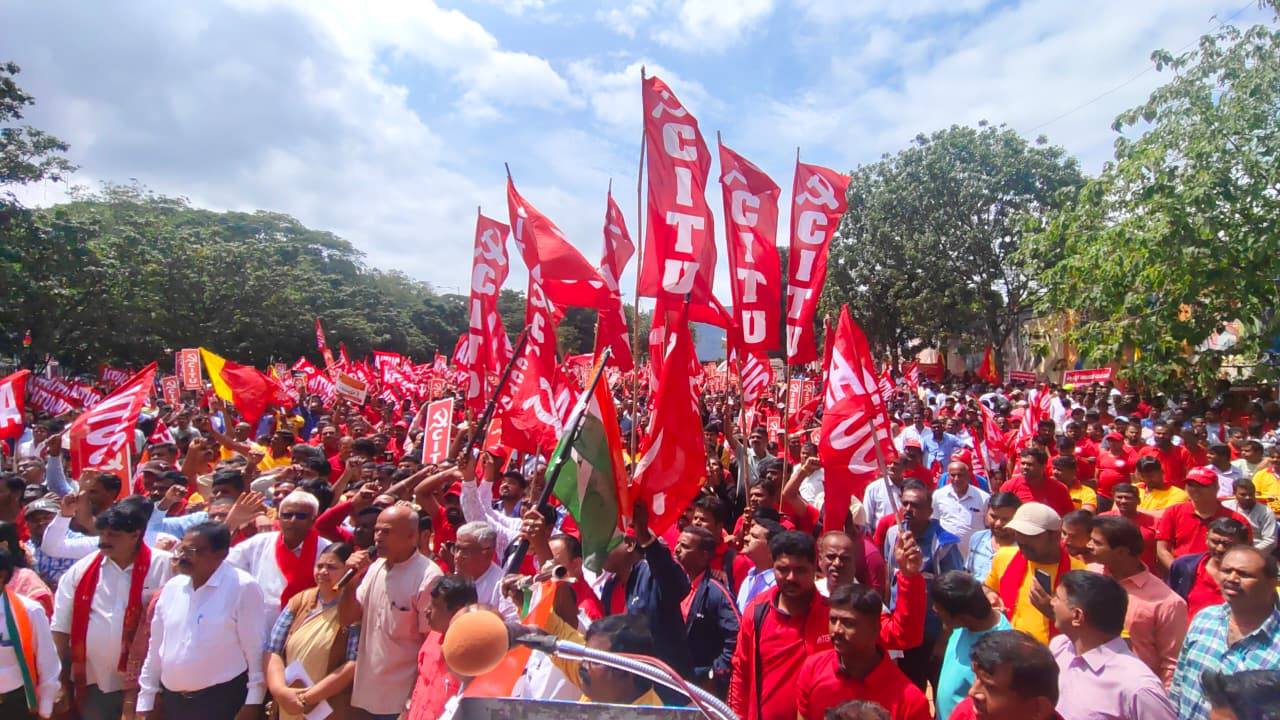
Protester in Quito on October 12, 2025. Photo: Alexander Crespo / Centro Nuestroamericano

CONAIE reports that at least two people have been killed so far and more than a hundred have been injured. The government defends the actions of the security forces and promises to end the national strike in a few days.

The government of Daniel Noboa has opted to reinforce the security forces to definitively suppress the national strike called by the Confederation of Indigenous Nationalities of Ecuador (CONAIE), which has now been going on for 26 days. The protests, which have been concentrated in the province of Imbabura (although they have also taken place in dozens of other locations), demand the repeal of a presidential decree that eliminates the subsidy on diesel fuel, which is used especially by transporters, farmers, and rural workers. However, little by little, the demonstrations have taken on an anti-government tone that is evident in the mobilizations.

On October 12, various protests were organized across the country in support of the demonstrations. In the capital, Quito, the police and army cracked down hard on demonstrators, who were unable to gather in one place as they were dispersed with tear gas. Subsequently, several media outlets reported on the repression of several demonstrators who were beaten, shot with rubber bullets, and tear-gassed and pepper-sprayed.

Humanitarian convoy or vanguard of repression?

A few hours later, the Executive announced that it would send a second humanitarian convoy to Imbabura to, as it claimed, assist families affected by the protests. However, the so-called humanitarian convoy quickly became an advance group that attempted, using force and tear gas, to open the roads closed by Indigenous groups.

In this regard, Interior Minister John Reimberg announced on October 13 that the national strike “is ending now.” “We are going to use the police to completely open the roads, because this is ending now… We are going to arrive, we are going to dialogue, and if there is no dialogue and they want to become violent, the police are there to act,” said the minister.

In effect, the government ordered law enforcement to act more harshly against protesters who refused to end their protest measures. Several media outlets showed how the police and army acted forcefully against protesters, which has been denounced by various human rights organizations and opposition politicians. Videos depicted how soldiers and police officers beat detained protesters in groups, or how soldiers attempted to enter people’s homes to arrest protesters.

Alleged raids on hospitals and an increase in deaths

However, what has caused the most controversy has been the allegations made by several civil society groups, such as the Regional Foundation for Human Rights Advisory Services (Inredh), which warned of alleged raids by the military on hospitals to arrest injured protesters. Inredh has also reported that several doctors have been asked not to assist the wounded.

The clashes between police and protesters have left more than just the wounded. Several days ago, a video showed the death of Efraín Fuérez. However, following the latest incursions by the military and police, CONAIE has reported that another Indigenous man, José Guamán, died because of was hit by projectiles.

“We sadly report the death of our brother José Guamán, shot in the chest by the armed forces in the massacre ordered by the National Government in Otavalo… CONAIE expresses its deep solidarity and condolences to the family and community of Chachimbiro for this cruel murder. We join in the grief of his loved ones and demand truth and justice for José and for all the social activists who have been detained and killed in defense of the rights of our people,” CONAIE wrote in a statement.

In addition, it was reported that a woman died from suffocation caused by tear gas, bringing the death toll to three. According to the Alliance of Human Rights Organizations, there have been 310 alleged human rights violations, 144 injuries, and 103 arrests.

While road closures and law enforcement actions continue, talks to reach an agreement between various Indigenous leaders and government representatives are still going on in Otavalo, Imbabura, said the city’s mayor, Anabel Hermosa.

A long struggle against neoliberalism

According to sociologist Soledad Stoessel, the strike is part of a prolonged state crisis that began when Lenin Moreno (2017-2021), followed by Guillermo Lasso (2021-2023), and now Daniel Noboa (2023-present) initiated a transformation of the state to benefit the economic elites through a neoliberal economic program: “The current Ecuadorian state crisis has its roots in a process of institutional dismantling that began during the government of Lenín Moreno (2017-2021). Under the discourse and with the aim of ‘de-Correa-izing’ the state, Moreno reversed the social gains of the progressive cycle and restored the power of the economic elites. The 2018 referendum and the Productive Development Law paved the way for the cancellation of corporate debts, the subordination of the state to local economic elites and international financial capital, and the political proscription of Correísmo as a political force.”

The strike has revived memories of the recent waves of national and cross-sectoral mobilization against the neoliberal governments of Lenín Moreno (2019) and Guillermo Lasso (2022). Those mobilizations were waged against similar policies to the ones Noboa seeks to implement by force today, yet importantly had great adhesion from across the left movements and political parties.

For now, the government is under pressure to put an end to the protests, which have shown extraordinary resistance to the enormous deployment of police and military forces. In less than a month, there will be a referendum that will decide, among other things, whether to draft a new constitution that will almost certainly structure the neoliberal transformation of the state.

On the other hand, CONAIE has once again proven to be the only social and political organization in Ecuador capable of standing up to the neoliberal project promoted by the economic elites and sponsored by international powers such as the IMF and the United States, one of the most important allies of the Noboa government, who, incidentally, belongs to the richest family in the country.

Original article by Peoples Dispatch republished from peoples dispatch under Creative Commons Attribution-ShareAlike 4.0 (CC BY-SA) license.
Continue ReadingEcuadorian government increases repression of Indigenous-led national strike

250 million Indian workers and farmers on the streets in a national strike

Spread the love

Original article by Abdul Rahman republished form peoples dispatch under a Creative Commons Attribution-ShareAlike 4.0 (CC BY-SA) license.
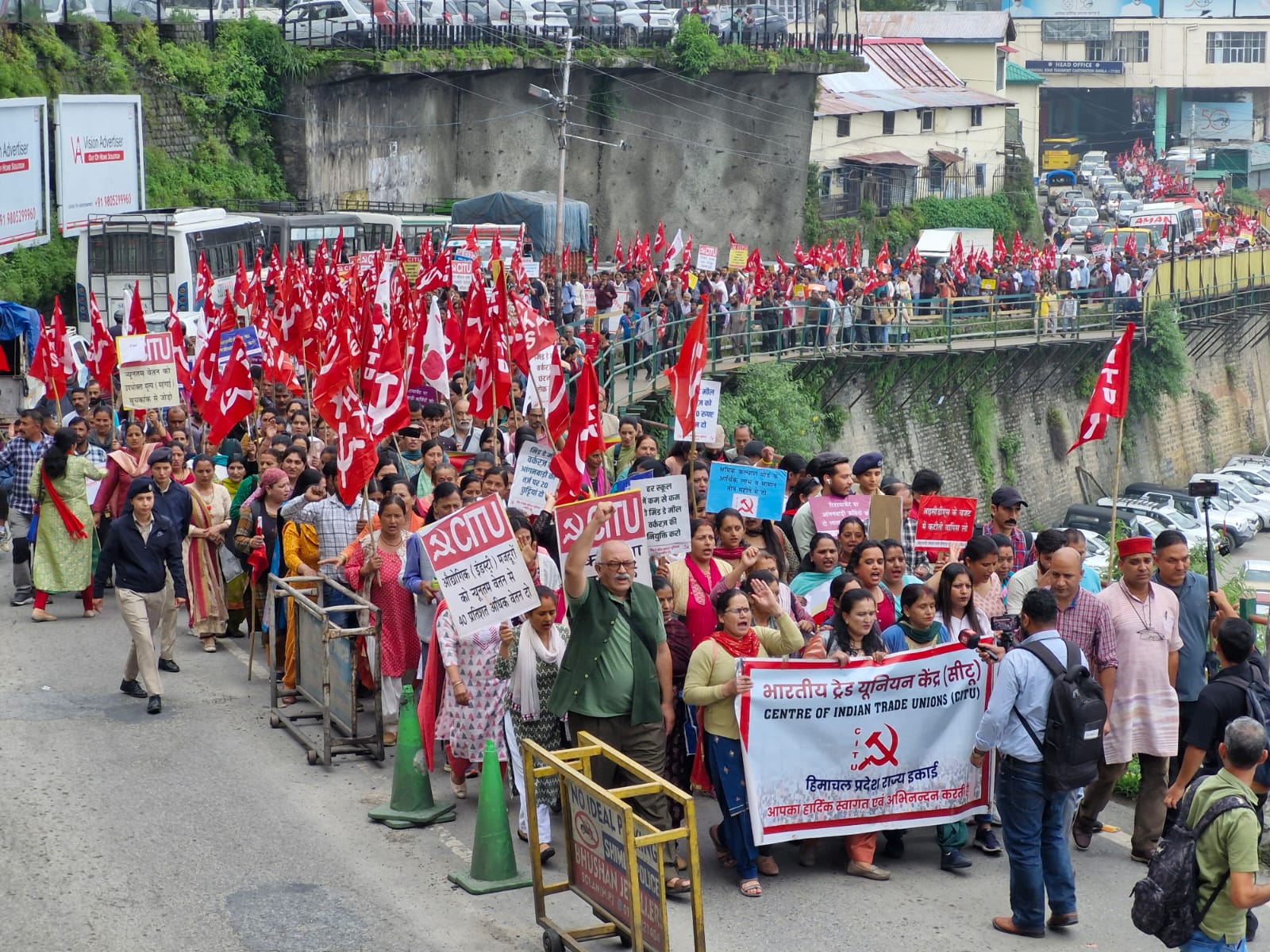
The strike was called by the trade unions and farmers groups against anti-workers labor codes and failures of the government to enact a legal support price for farm products.July 09, 2025 by Abdul Rahman

250 million Indian workers and farmers on the streets in a national strike

National strike against the “anti-worker” labor codes of the Modi government on July 9. Photo: CPI(M)

Millions took to the streets all over India on Wednesday, July 9, to observe a national strike call made by Central Trade Unions (CTU). They are striking against the anti-worker policies adopted by the ultra-right-wing government in the country. 

CTU is a platform of all the major trade union federations in the country, spanning the ideological and political spectrum. It includes the Center for Indian Trade Unions (CITU), the All India Trade Union Congress (AITUC), the Indian National Trade Union Congress (INTUC) and several others. 

The strike was also supported by all the major groups of farmers, students, women, and various professional unions such as teachers, journalists, and IT employees in the country. 

According to various estimates, more than 250 million workers and farmers – both in organized and unorganized sectors – directly participated in the strike and protests across the country. 

Workers in other organized sectors such as ports, airports, and banking also participated alongside those in various public sectors.

The strike affected most of the industrial activities in the country, particularly industries related to mining.

#Strike #GeneralStrike बी टी आर वाडको एम्पलाइज यूनियन के साथी अपनी कंपनी एस एफ सी सॉल्यूशन साहिबाबाद के गेट पर हड़ताल को कामयाब बनाते हुए। pic.twitter.com/311IoxICHS

— CPIM DELHI (@CPIMSTATEDELHI) July 9, 2025

In several places, workers blocked the movement of trains, blocked highways, and picketed factory gates to mobilize greater support. In some cases, such as the Kochi refinery in the southern state of Kerala, workers defied court orders and observed the strike.

Picket lines stand strong and militant in front of the factory gate.#9thJulyGeneralStrike pic.twitter.com/V2a33uoQT9

— CITU CENTRE (@cituhq) July 9, 2025

A total shut down of all major business was observed in various states in the country such as Kerala, Tripura, Bihar, Jharkhand, and others.

Anti-worker labor codes must be withdrawn

The workers were demanding immediate withdrawal of the new labor codes enacted by the ultra-right-wing government led by Narendra Modi at the center in 2020. CTU claims the four new labor codes are anti-worker, depriving them of their basic rights, including the right to collective bargaining, which was won through a historic and painful worker’s struggle.

The other major demands include: 

  • The end of the privatization and contractualization of jobs
  • A national minimum wage of Rs. 26,000 (USD 303)
  • Improvements in working conditions across all sectors for all kinds of workers

Trade union workers take out a march in West Bengal. #GeneralStrike #StrikeHard pic.twitter.com/hxrTd0AoYY

— CPI (M) (@cpimspeak) July 9, 2025

The strike also supported the demands raised by the country’s major farmers groups, led by the Samyukta Kisan Morcha (SKM), for a legal minimum support price for all farm produce, the waiving of loans for farmers, an end to all forced land acquisition, and better employment opportunities.

The strike was originally scheduled for May 19. It had to be postponed following the war-like situation in the region created after India attacked several locations inside neighboring Pakistan, accusing it of supporting armed groups who carried out attacks on tourists in Pahalgam.

Popular action defeats government lies

A central protest rally was held in the national capital Delhi. The protest was attended by all the constituents of CTU and SKM, the farmers collective which has extended support to the strike.

Millions of workers, farmers strike in India to protect their basic rights, livelihoods
CPI(M) Politburo Member and CITU General Secretary Tapan Sen addresses a strike demonstration in Jantar Mantar, New Delhi. Photo: CPI (M)

Addressing the rally, Tapan Sen, general secretary of CITU and a member of the Communist Party of India (Marxist) polit bureau, claimed that the success of the strike demolishes the myths created by the Modi government about the so-called economic prosperity his government’s policies have created.

Millions strike in India
Strike demonstration in Shimla, Himachal Pradesh. Photo: CPI (M)

Most Indians today are struggling to find a decent source of livelihood and those who have one are struggling to protect it from the effects of the various wrongful and pro-corporate policies of the Bharatiya Janata Party (BJP)-led government, Sen underlined.

The lies about India being the third or fourth largest economy in the world, propagated by the present government in the country and magnified by the complicit media, have been exposed by the sheer number of people who participated in today’s strike. It establishes the fact that under Modi’s decade-long rule the condition of the working classes in India has gone from bad to worse, Sen told the protesters gathered at the rally.

Millions strike in India workers and farmers
Photo: CPI(M)

Sen also warned the government against going ahead with the proposed trade deal with the US, claiming that would further compromise the interest of workers and farmers in India.

Amarjeet Kaur, general secretary of the AITUC, claimed that the BJP used pro-government unions to divide the working classes in the country and falsely called the strike “illegal”.

“The attempts to divide the working class, so that the interest of its corporate bosses are protected, was defeated by the successful strike” Kaur declared. She noted that this was the fourth such strike since 2020 and more such strikes will happen in the future, with more intensity, if the government fails to correct its ways and take back the four draconian labor codes, and enact laws which really benefit the working classes of this country.

Original article by Abdul Rahman republished form peoples dispatch under a Creative Commons Attribution-ShareAlike 4.0 (CC BY-SA) license.
Continue Reading250 million Indian workers and farmers on the streets in a national strike