Sweet like chocolate: Alan Milburn’s new deal

Spread the love

https://morningstaronline.co.uk/article/sweet-like-chocolate-alan-milburns-new-deal
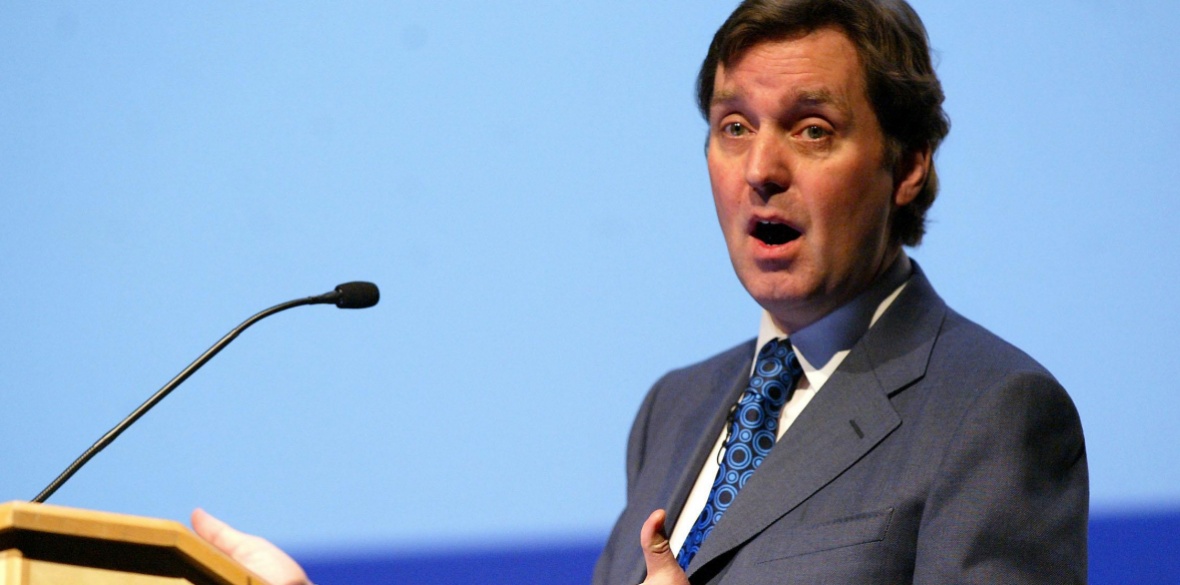
Alan Milburn speaks at the first national conference of the Social Enterprise Coalition, January 25, 2005

Behind a facade of flimsy restrictions, the man who was Tony Blair’s privatisation champion is back in an advisory role, despite the fact he already works for firms that will profit from the selling off of the NHS, writes SOLOMON HUGHES

HEALTH Secretary Wes Streeting says he put Alan Milburn, who was health secretary under Tony Blair, onto the board of the Department of Health “to help government fix health and care.”

But Milburn can’t talk about anything relating “to nutrition, diet, and food, including any work related to the department’s sponsorship of the Food Standards Agency” on that board because he has a part-time job working for Mars Inc.

Appointing someone who works for the firm making Mars Bars to the Department of Health board in the middle of an obesity crisis shows how Streeting values corporate interests above public services.

Milburn was health secretary under Blair from 1999 to 2003. He oversaw the wide-scale privatisation of the NHS. He continued the Margaret Thatcher and John Major governments’ plans to privatise NHS “support services” like cleaning, catering and building management, with the disastrous PFI scheme expanding on his watch.

Milburn also broke new ground by privatising “clinical” services by buying in private operations or giving NHS money to set up privately run clinics. Milburn then cashed in his experience by leaving government and taking on lucrative corporate jobs.

Milburn and his family get around £1-2 million a year from his “advisory” firm, AM Strategy, where all the funds for his “advisory” jobs are collected. Streeting clearly admires both Milburn’s record of privatisation when he was a minister and his highly paid post post-ministerial corporate work.

The Department of Health says Milburn will give up his job as an adviser to Mars Inc at the end of this year, so next year, he will be able to forget all about working for Mars Bars and start discussing obesity.

https://morningstaronline.co.uk/article/sweet-like-chocolate-alan-milburns-new-deal
Continue ReadingSweet like chocolate: Alan Milburn’s new deal

What the budget got wrong about the NHS and prevention

Spread the love

Lindsay Jaacks, University of Edinburgh

A healthy NHS and strong economy depend on healthy people, not just strong public finances. Chancellor Rachel Reeves’ budget was a missed opportunity for the government to get serious about public health by protecting citizens from the leading risk factor for death in the UK: unhealthy food.

If a multinational corporation was dumping a chemical into our water that was costing the NHS £19 billion a year (the cost of obesity), that company would be asked to pay the bills. This is the “polluter pays” principle.

The same principle should apply to food. Instead, multinational food companies are profiting from sales of unhealthy food. For example, PepsiCo, which includes brands such as Pepsi MAX, Walkers and Doritos, generated more than £70 billion net revenue in 2023, globally.

Reeves’ budget states that the soft drinks industry levy will rise in line with inflation. From April 1 2025, the lower rate of the levy will increase from 18 pence per litre to 19.4 pence per litre. And the higher rate will increase from 24 pence per litre to 25.9 per litre. (The lower rate applies to added-sugar drinks with a total sugar content of 5 to 7.9 grams per 100 millilitres, and the higher rate applies to drinks with 8 grams or more per 100 millilitres.)

Levies like this result in an increase in the price of food and drink if companies pass the levy on to citizens; which is exactly what they typically do.

Evidence suggests that the levy has been effective at reducing consumption of sugar in the UK, but it could do much more.

According to the World Health Organization, as of July 2022, 108 countries have sugary drinks taxes, many of them substantially higher than the rate in the UK. For example, in the United Arab Emirates (UAE), there is a 50% excise tax on carbonated drinks and 100% tax on energy drinks.

By comparison, in the UK, the changes to the soft drinks levy in the new budget are estimated to increase the price of a 330ml can of a “higher band” soft drink by just three pence by 2029 to 2030.

Many countries have gone beyond sugary drinks to tax other foods, such as those high in fat, salt or sugar. Again, in the example of the UAE, a 50% excise tax is applied to any product with added sugar or other sweeteners. Indeed, 18 countries have taxes on high fat, salt and sugar foods.

Mexico was among the first countries to adopt such a policy, applying an 8% tax on discretionary foods such as confectionary, chocolate, sugary breakfast cereals, crisps and other salty snacks. Following implementation, there was a significant reduction in sales of these unhealthy foods.

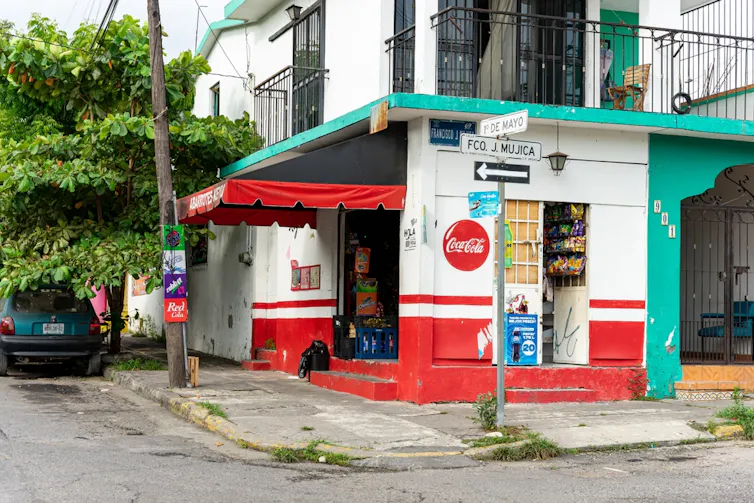
Corner shop in Mexico, featuring a Coca-Cola advert.
Mexico was the first country to introduce a tax on sugary drinks. JRomero04/Shutterstock

Make the polluter pay

The new budget in the UK could have gone much further in terms of raising funds and rebuilding the NHS by expanding the soft drinks levy to a levy on high fat, salt and sugar foods.

The government’s ten-year plan for the NHS is due to be published in spring 2025. Many have advocated for the plan to focus on prevention. But the idea that the NHS should be responsible for prevention perpetuates the idea that individuals are responsible for unhealthy diets and obesity. It moves the blame from companies that process, promote and profit from high fat, salt and sugar foods to individuals and the NHS. Instead, why not demand that the polluters pay?

A healthy population underlies economic growth. If the government wants a healthy NHS and a strong economy, make multinational corporations, not citizens, pay for the harms of their unhealthy products that are marketed to us and our children every day.

Lindsay Jaacks, Personal Chair of Global Health and Nutrition, University of Edinburgh

This article is republished from The Conversation under a Creative Commons license. Read the original article.

Continue ReadingWhat the budget got wrong about the NHS and prevention