Ocean Warming Drives ‘Deeply Concerning Loss of Marine Life,’ Study Shows

Spread the love

Original article by Jessica Corbett republished from Common Dreams under Creative Commons (CC BY-NC-ND 3.0).
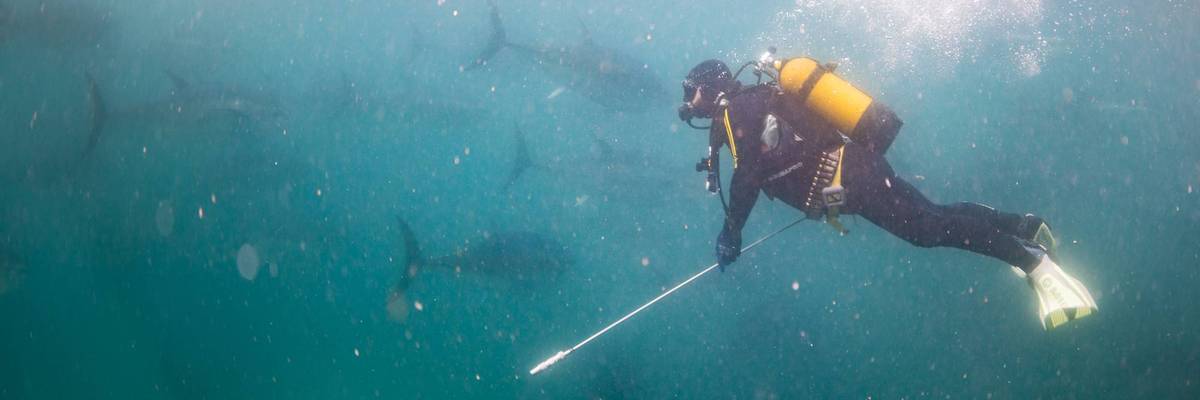
A diver hunts thunnus in Mediterranean Sea near Izmir, Turkey on November 19, 2024. (Photo by Mahmut Serdar Alakus/Anadolu via Getty Images)

Noting that species are at risk from not only warming waters but also overfishing, one expert argued that “any management reform must simultaneously address both drivers of change.”

Humanity’s continued reliance on fossil fuels led to last year being among the hottest on record, and oceans store over 90% of the excess heat from greenhouse gases. A study out Wednesday details how the related long-term heating, warm years, and marine heatwaves “pose serious but poorly quantified threats” to fish species.

“To put it simply, the faster the ocean floor warms, the faster we lose fish,” lead author Shahar Chaikin of Spain’s National Museum of Natural Sciences (MNCN) told the Guardian. “A 7.2% decline for every tenth of a degree per decade might sound small… But compounded over time, across entire ocean basins, it represents a staggering and deeply concerning loss of marine life.”

RECOMMENDED…
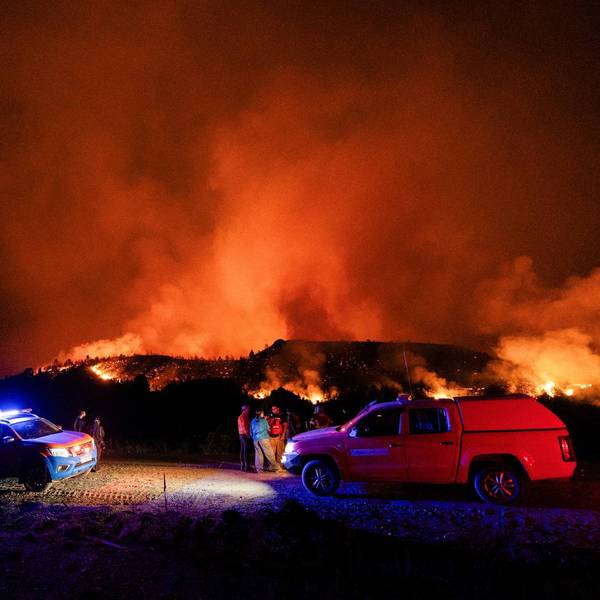
ARGENTINA-ENVIRONMENT-CLIMATE-FIRE

Earth Hurtling Toward ‘Hothouse Trajectory,’ Scientists Warn in Tipping Points Analysis

Data Center Giant Secures $14 Million Deal to Consume 40% of Pennsylvania Town's Excess Water

Data Center Giant Secures $14 Million Deal to Consume 40% of Pennsylvania Town’s Excess Water

For the study, published in the journal Nature Ecology & Evolution, Chaikin, his MNCN colleague Miguel B. Araújo and the National University of Colombia’s Juan David González-Trujillo analyzed 702,037 estimates of biomass change for 33,990 populations of 1,566 fish species across the Mediterranean, north Atlantic, and northeast Pacific between 1993 and 2021.

“On shorter timescales, warmer years and marine heatwaves were linked to sharp biomass losses of up to 43.4% in populations at the warm edge of the species’ range and biomass increases of up to 176% at the cold edge,” the study states. Chaikin warned in a statement that the temporary jumps in cooler areas could send misleading signals to managers of fisheries.

“Although this sudden increase in biomass in cold waters may seem like good news for fisheries, these are transient increases,” he explained. “If managers raise catch quotas based on biomass increases caused by a heatwave, they risk causing the collapse of populations when temperatures return to normal or when the effect of long-term warming prevails, because these are short-lived increases.”

González-Trujillo stressed that “unlike extreme short-term weather fluctuations, which can vary dramatically, this chronic warming exerts a constant negative pressure on fish populations in the Mediterranean Sea, the north Atlantic Ocean, and the northeastern Pacific Ocean.”

Specifically, Chaikin said that “when we remove the noise of extreme short-term weather events, the data show that this warming is associated with a sustained annual decline in biomass of up to 19.8%.”

Are warmer oceans good or bad for #fish? 🐟 The answer is a dangerous paradox. Our new paper in @natecoevo.nature.com shows how marine heatwaves may create “fake” fish gains that mask a large-scale crash. Read our findings here: www.nature.com/articles/s41…@mncn-csic.bsky.social #ClimateChange

Shahar Chaikin (@shaharchaikin.bsky.social) 2026-02-25T10:05:40.124Z

Given the findings, Araújo emphasized that fisheries’ managers “must balance localized increases with long-term declines extremely carefully to avoid overexploitation.”

“As ocean warming continues, the only viable strategy is to prioritize long-term resilience,” the study co-author said. “Management measures must plan for the biomass decline expected in an increasingly warm ocean.”

Carlos García-Soto is a scientist at the Spanish National Research Council, which manages MNCN. Although not a study co-author, he also highlighted the need for policymakers to understand the “clear risk of misinterpretation” detailed in the new paper.

“In a context of accelerated climate change, policies cannot react solely to extreme events or be based on short-term signals,” García-Soto said in a statement. “They need consistency between science, planning, and governance, especially in shared ecosystems or on the high seas.”

Also responding to the research on Wednesday, Guillermo Ortuño Crespo of the International Union for Conservation of Nature said that “I believe this is a methodologically sound and valuable study that provides valuable evidence on how different components of ocean warming affect fish biomass.”

While recognizing the well-documented and devastating impacts of fossil fuel-driven heating on marine species, Ortuño Crespo also warned that “there is a risk, in my opinion, that climate change will become the main explanation for changes in marine species biomass, leaving aside overfishing.”

“Historically, overfishing has been the main determinant of biomass declines in many fisheries around the world,” he noted, citing the United Nations Food and Agriculture Organization. “The proportion of overexploited stocks globally continues to increase, indicating that fishing pressure remains a dominant risk factor. The current challenge is that this overfishing crisis is being further exacerbated by ocean warming and deoxygenation.”

“In terms of public policy, the study is highly relevant because it emphasizes that fisheries management systems must become more climate-adaptive,” Ortuño Crespo said. “Any management reform must simultaneously address both drivers of change: climate and fisheries. Adjusting quotas solely on the basis of climate without reducing overcapacity and the impact of high-impact gear, such as bottom trawling, is likely to be insufficient to recover stocks.”

Original article by Jessica Corbett republished from Common Dreams under Creative Commons (CC BY-NC-ND 3.0).

Orcas discuss Donald Trump and the killer apes' concept of democracy. Front Orca warns that Trump is crashing his country's economy and that everything he does he does for the fantastically wealthy.
Orcas discuss Donald Trump and the killer apes’ concept of democracy. Front Orca warns that Trump is crashing his country’s economy and that everything he does he does for the fantastically wealthy.
Donald Fuhrump says that Amerikkka doesn't bother with crimes or charges anymore, not being 100% Amerikkkan and opposing his real estate intentions is enough.
Donald Fuhrump says that Amerikkka doesn’t bother with crimes or charges anymore, not being 100% Amerikkkan and opposing his real estate intentions is enough.
Elon Musk urges you to be a Fascist like him, says that you can ignore facts and reality then.

Continue ReadingOcean Warming Drives ‘Deeply Concerning Loss of Marine Life,’ Study Shows

Record January heat suggests La Niña may be losing its ability to keep global warming in check

Spread the love
The eastern Pacific is cooling, but the world keeps warming. Harvepino / NASA / Shutterstock

Richard P. Allan, University of Reading

January 2025 was the hottest on record – a whole 1.7°C above pre-industrial levels. If many climate-watchers expected the world to cool slightly this year thanks to the natural “La Niña” phenomena, the climate itself didn’t seem to get the memo. In fact, January 2025’s record heat highlights how human-driven ocean warming is increasingly overwhelming these natural climate patterns.

La Niña is a part of the El Niño southern oscillation, a climate fluctuation that slowly sloshes vast bodies of water and heat between different ocean basins and disrupts weather patterns around the world. El Niño was first identified and christened by Peruvian fishermen who noticed a dismal drop in their catch of sardines that coincided with much warmer than usual coastal waters.

El Niño is now well known to be part of a grander climate reorganisation that also has a reverse cool phase, La Niña. As vast swathes of the eastern Pacific cool down during La Niña, this has knock on effects for atmospheric weather patterns, shifting the most vigorous storms from the central Pacific to the west and disrupting the prevailing winds across the globe.

This atmospheric reaction also helps to amplify the sea surface temperature changes. Typically, La Niña will lower the global temperature by a couple of tenths of a degree Celsius.

In 2024 the Pacific swung from moderate El Niño conditions to a weak La Niña. However, this time around, it’s apparently not enough to stop the world warming – even temporarily. So what’s different this time?

Each La Niña cycle is unique

Scientists aren’t entirely surprised. Each El Niño and La Niña cycle is unique. Following a surprisingly lengthy “triple dip” La Niña starting in 2020, the El Niño that developed in 2023 was also unusual, struggling to stand out against globally warm seas. The switch to a weak La Niña has only slightly cooled a narrow band along the equatorial Pacific, while surrounding waters have remained unusually hot.

Recent research shows human caused warming of the ocean is accelerating – so a year on year rise in temperature is itself getting bigger – and this is dominating to an ever greater extent over El Niño and other natural oscillations in the climate. This means that even during La Niña – when equatorial eastern Pacific waters are cooler than normal – the rest of the world’s oceans have remained remarkably warm.

More carbon, less reflection

There is also a sense of inevitability as greenhouse gas levels continue to grow, even despite the demise of El Niño. During El Niño years, the land tends to absorb less carbon from the atmosphere as large continental areas, such as parts of South America, temporarily dry out causing less plant growth and more carbon-emitting plant decay.

La Niña tends to have the opposite effect. In the strong La Niña of 2011, so much extra rain fell on the normally dry lands of Australia and parts of South America and southeast Asia that sea levels dropped as the land held on to this excess moisture borrowed temporarily from the ocean. This meant more carbon was taken from the atmosphere to feed extra plant growth. But despite the switch to La Niña, the rate of rise in atmospheric carbon in 2024 and January 2025 remains above the already high levels of previous years.

To this we can also add the diminishing effects of particle pollution from industry, big ships and other sources of “aerosols”, which in some regions had added a reflective haze in the atmosphere meaning the world absorbed less sunlight. Clean air policies introduced over time have made the world less smoggy, but they also seem to have caused clouds to reflect less sunlight back to space, adding to global heating.

As industrial activity continues to spew greenhouse gases into the air, while air cleansed of particle pollution causes more sunlight to reach the ground, this growing heating effect is beginning to drown out natural fluctuations, tipping the balance toward record warmth and worsening hot, dry and wet extremes.

The long-term trend is clear

But, just as one swallow doesn’t make a summer, a single month is not reflective of the overall trajectory of climate change. Changing weather patterns from week to week can rapidly shift temperatures especially over big landmasses, which warm up and cool down more quickly than the oceans (it takes a long time to boil up water for your vegetables but not long to super heat an empty pan).

Large areas of Europe, Canada and Siberia experienced much less cold weather than is normal for January (by up to about 7°C). Parts of South America, Africa, Australia and Antarctica also experienced above average temperatures. Along with the balmy oceans, this all contributed to an unexpectedly warm start to 2025.

While this particular warm January isn’t necessarily cause for immediate alarm, it suggests natural cooling phases may become less effective at temporarily offsetting the impact of rising greenhouse gas levels on global temperatures. And to limit the scale of the inevitable, ensuing climate change, there is a clear, urgent need to rapidly and massively cut greenhouse gas emissions and to properly account for the true cost of our lifestyles on societies and the ecosystems that underpin them.


Don’t have time to read about climate change as much as you’d like?
Get a weekly roundup in your inbox instead. Every Wednesday, The Conversation’s environment editor writes Imagine, a short email that goes a little deeper into just one climate issue. Join the 40,000+ readers who’ve subscribed so far.


Richard P. Allan, Professor of Climate Science, University of Reading

This article is republished from The Conversation under a Creative Commons license. Read the original article.

Orcas discuss Donald Trump and the killer apes' concept of democracy. Front Orca warns that Trump is crashing his country's economy and that everything he does he does for the fantastically wealthy.
Orcas discuss Donald Trump and the killer apes’ concept of democracy. Front Orca warns that Trump is crashing his country’s economy and that everything he does he does for the fantastically wealthy.
Neo-Fascist Climate Science Denier Donald Trump says Burn, Baby, Burn.
Elon Musk urges you to be a Fascist like him, says that you can ignore facts and reality then.
Continue ReadingRecord January heat suggests La Niña may be losing its ability to keep global warming in check

February on course to break unprecedented number of heat records

Spread the love

https://www.theguardian.com/environment/2024/feb/17/february-on-course-to-break-unprecedented-number-of-heat-records

Experts struggle to explain how rises in sea-surface temperatures have accelerated so quickly. Photograph: PPAMPicture/Getty Images

Rapid ocean warming and unusually hot winter days recorded as human-made global heating combines with El Niño

February is on course to break a record number of heat records, meteorologists say, as human-made global heating and the natural El Niño climate pattern drive up temperatures on land and oceans around the world.

A little over halfway into the shortest month of the year, the heating spike has become so pronounced that climate charts are entering new territory, particularly for sea-surface temperatures that have persisted and accelerated to the point where expert observers are struggling to explain how the change is happening.

“The planet is warming at an accelerating rate. We are seeing rapid temperature increases in the ocean, the climate’s largest reservoir of heat,” said Dr Joel Hirschi, the associate head of marine systems modelling at the UK National Oceanography Centre. “The amplitude by which previous sea surface temperatures records were beaten in 2023 and now 2024 exceed expectations, though understanding why this is, is the subject of ongoing research.”

Humanity is on a trajectory to experience the hottest February in recorded history, after a record January, December, November, October, September, August, July, June and May, according to the Berkeley Earth scientist Zeke Hausfather.

Continue ReadingFebruary on course to break unprecedented number of heat records