Jensen Huang, CEO of Nvidia. A DeSmog collage. Credit: Simon Liu / Office of the President (Huang, CC-BY-2.0); Wikimedia Commons (Petrobas, CC-BY-SA-4.0); Wikimedia Commons (Nvidia, CC-Zero); Ivan Mlinaric (Amazon rainforest, CC-BY-2.0)
The tech giant was in Rio de Janeiro hawking AI software to fossil fuel firms just days before crucial climate crisis negotiations in the Amazon.
As world leaders prepared to descend on the small city of Belém in the Brazilian Amazon for the COP30 climate summit, artificial intelligence (AI) chip-manufacturer Nvidia was instead peddling its energy-guzzling AI tools to Brazilian oil and gas companies, DeSmog can reveal.
During the Offshore Technology Conference (OTC) in Rio de Janeiro last week, a gathering of over 23,000 oil and gas representatives, Nvidia sent a senior energy staffer to sell bespoke AI software to help oil giants dredge up ever-vaster troves of fossil fuels. Nvidia did so even though the tech giant markets itself as a creator of AI-driven climate crisis solutions, and has made the (contested) claim that 100 percent of its prodigious electricity consumption comes from renewable sources.
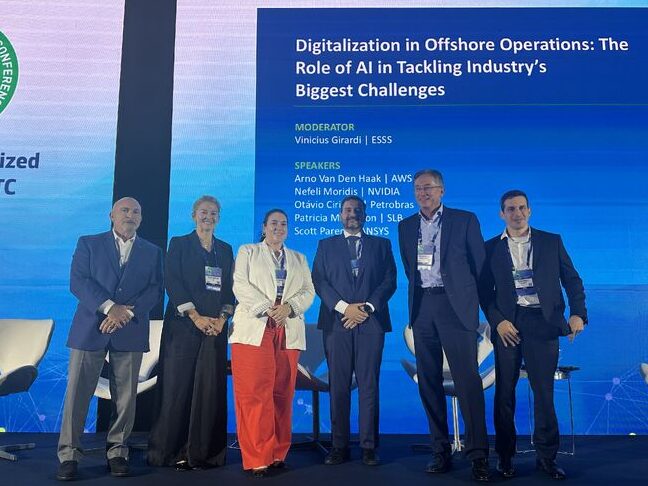
The company’s Global Head of Subsurface Energy Solutions, Nefeli Moridis, who is on the board of the Society of Petroleum Engineers International, joined an OTC Conference panel on 29 October which discussed how to use AI to tackle the “biggest challenges” in offshore oil and gas operations – including “optimizing production.”
A promotional banner for an event at the 2025 Offshore Technology Conference (OTC) in Rio de Janeiro.
Credit: OTC Brasil / Linkedin
The panel also featured representatives from the tech giant Amazon Web Services (AWS), who talked about “why Brazil is uniquely positioned to lead the global offshore AI transformation”, alongside a senior figure from one of the conference’s “master sponsors” – Brazilian state-owned oil and gas company Petrobras.
Petrobras, which has already garnered criticism for accelerating its exploration of new oil and gas reserves ahead of COP30, was granted a new license in late October from the Brazilian government (also a master sponsor) to drill on the Amazon coast.
“What a great discussion! Robotics can – and will – be leveraged in offshore environments to push the boundaries of what’s possible,” Moridis promised on social media platform LinkedIn after speaking on the panel.
An event at the 2025 Offshore Technology Conference (OTC) in Rio de Janeiro.
Speakers included Otávio Ciriblli from Petrobras (far-right); Nefeli Moridis from Nvidia (third from left); Arno Van Den Haak, Amazon Web Services (second from right).
Credit: OTC Brasil / Linkedin
Nvidia’s decision to flog its technology to fossil fuel firms at the OTC Conference was not a one-off. The tech giant, which was recently crowned the world’s largest public company and donated $1 million to Donald Trump’s inauguration ceremony, has a long history of selling its wares to oil and gas companies.
On the “oil and gas operations powered by AI” page of its website, Nvidia celebrates its recent work developing an AI assistant for Saudi Aramco, a customAI chatbot with expertise about chemicals for Shell, and an AI tool for Petrobras to “speedup… reservoir simulations”.
The contradiction between Nvidia’s climate claims and its courtship to oil and gas giants, particularly in the shadow of the upcoming COP30 negotiations, has sparked outrage among campaigners.
“This kind of hypocrisy undermines the credibility of tech companies heading into COP – they can’t present themselves as climate leaders while marketing AI to expand fossil fuel production,” said Holly Alpine, a former Microsoft employee turned campaigner for Enabled Emissions, which fights to stop big tech from enabling fossil fuel industry expansion.
Tech companies have been selling their services to the fossil fuel industry for a long time. A 2023 survey by consulting firm EY reported that 92 percent of fossil fuel companies are already using AI for their operations.
Nvidia’s Climate Contradictions
It is still unclear whether Nvidia will be attending COP30 – especially given the company’s increasing closeness to the administration of U.S. President Donald Trump, which has reversed American climate policy so dramatically that some experts are now calling the U.S. a “petrostate”.
The Trump administration has pulled out of attending COP in Brazil this year.
Nvidia, regardless of the company’s closeness to Trump, continues to trumpet its climate credentials.
Just a month ago at New York Climate Week, the world’s largest discussion of climate crisis solutions outside COP, Nvidia’s Head of Sustainability Joshua Parker spoke on a panel that celebrated the company’s “innovative climate technologies”, which Parker argued will “advance sustainability solutions at an unprecedented pace”.
Nvidia also had a presence at past COP summits. At COP29 in Baku, Azerbaijan, Nvidia sent its senior sustainability leader to sell the idea that “AI has the potential to make other sectors much more energy efficient”.
The previous year, at COP28 in Dubai, United Arab Emirates, Nvidia joined up with the Commonwealth Secretariat for a panel about using AI to support climate action in nations vulnerable to climate change, including to track sea level rise in countries like Tonga.
Its climate pledges are not without controversy. Nvidia’s claim that 100 percent of its electricity consumption in 2025 is powered by renewable energy was challenged by a report from Greenpeace in October that ranked Nvidia last among tech giants on the decarbonisation of its supply chain.
The Greenpeace report said that Nvidia relies on suppliers that use fossil fuels to power their operations, and criticised the company for failing to release data on how much electricity those suppliers use. In the 2025 fiscal year, Nvidia suppliers produced 6 million tonnes of CO2, according to Greenpeace – double what they produced just two years earlier.
Alpine goes further. “A company cannot claim to lead on climate while its technology drives the very emissions it vows to eliminate – or claim transparency while concealing those risks from shareholders,” she told DeSmog.
Nvidia was approached for comment.
Beyond Nvidia
This phenomenon goes well beyond Nvidia and COP30.
AWS and Microsoft, which fielded two of the OTC Conference’s AI panel speakers (the Microsoft representative did not ultimately attend), reportedly make vast sums from the fossil fuel industry.
A 2024 report by the group Amazon Employees for Climate Justice goes so far as to claim that by this year, AWS “could be making $9.6 billion annually from the oil and gas industry alone – about 10 percent of AWS revenue.”
Amazon is not hiding its work with these companies. In response to DeSmog, Amazon stated: “The energy industry should have access to the same technologies as other industries. We will continue to provide cloud services to companies in the energy industry to make their legacy businesses less carbon intensive and help them accelerate development of renewable energy businesses.”
As for Microsoft, documents viewed by The Atlantic last year suggest that oil and gas revenues may account for a market opportunity of $35 billion to $75 billion each year for the firm. Alpine told the Financial Times this may constitute up to half of the company’s cloud revenue.
Alpine’s campaign group, Enabled Emissions, argues that tech companies selling AI for fossil fuel expansion are causing “staggering emissions” by enabling increased oil and gas drilling with their software.
“AI isn’t neutral – it’s shaping the pace and scale of fossil fuel expansion,” Alpine told DeSmog.
AI at COP30
As the energy-intensity of the AI boom skyrockets, and big tech firms water down or even completely rescind their climate commitments, they are also reportedly shrinking from visibility at climate events.
Last year, the Financial Times reported that big tech firms had already begun stepping back from participation at COP29 compared to previous years.
On 28 October, Microsoft’s founder Bill Gates, a philanthropist worth an estimated $118 billion, wrote a memo addressed to COP30 attendees saying climate change won’t cause “humanity’s demise.”
Gates’s arguments in the memo have drawn outcries of dismay from some of the world’s top climate scientists, who have pointed out that “this memo is already being championed by those seeking to misinform and sow doubt about climate change and delay climate progress – up to and including the executive branch of the United States government.”
Whether big tech firms attend or not, COP30 is expected to involve discussions of the threats to climate change posed by the immense amounts of energy needed to fuel the global AI energy boom, as well as efforts to address the climate crisis using AI – an effort critics say is misguided.
“The fact is that the climate crisis is not primarily a technological problem: we have most if not all of the tech we need to fix it,” Adam Becker, science journalist and author, previously told DeSmog.
“Tech oligarchs think that they can burn fossil fuels with impunity and clean it up later with a magic wand given to them by a machine god. But that isn’t going to happen. The reality is that we need to save ourselves from the machinations of these cruelly myopic billionaires.”
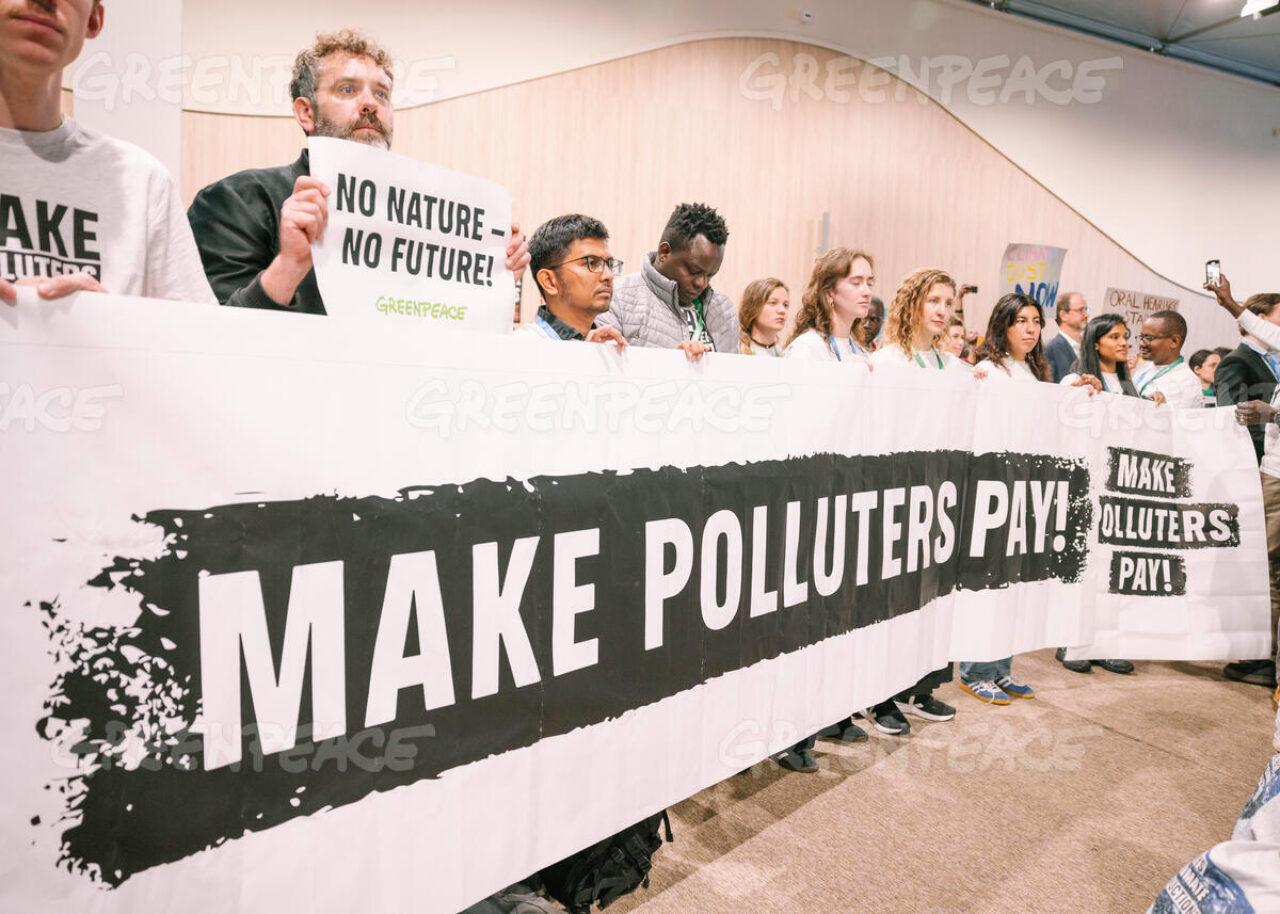
A small tax on just seven of the world’s biggest oil and gas companies could grow the UN Fund for Responding to Loss and Damage by more than 2000% and help address the costs of extreme weather events, according to new analysis published today by Greenpeace International and Stamp Out Poverty. The organisations are calling for a long term global tax on fossil fuel extraction, with year-on-year increases, combined with taxes on excess profits and other levies.
A ‘Climate Damages Tax’ would put a cost on every tonne of carbon emitted by the coal, oil and gas extracted – starting at $5 per tonne and rising each year thereafter. If it was imposed on ExxonMobil, Shell, Chevron, TotalEnergies, BP, Equinor and ENI it could raise $15 billion in the first year alone to help the world’s most climate-vulnerable countries pay for the escalating cost of damage caused by climate change. Currently, just $702 million has been pledged to the loss and damage fund, while the combined profits of those fossil fuel companies exceeds $148 billion.
Greenpeace activists display a billboard during a protest outside Shell headquarters on July 27, 2023 in London. (Photo: Handout/Chris J. Ratcliffe for Greenpeace via Getty Images)
Earlier this month, Barbados Prime Minister Mia Mottley, French President Emmanuel Macron and Kenyan President William Ruto stated their support for a Climate Damages Tax.
The briefing also highlights the financial costs of some of this year’s worst weather events that have been attributed to climate change, totalling over $64bn. These include Hurricane Beryl, Hurricane Helene, the heatwave in India in May, Typhoon Carina/Gaemi, the floods in Brazil in May, and the floods in Kenya and Tanzania in April. The costs of damage from the disasters surveyed range from US$2.9bn (Typhoon Carina) to US$ 25bn (heatwaves in India), and present just a fraction of the total cost of loss and damage globally over the last year.
A Climate Damages Tax imposed only on wealthy OECD countries could play an essential role in helping the poorest and most vulnerable to rebuild after climate-related disasters. Increasing annually by US$5 per tonne of CO2-equivalent based on the volumes of oil and gas extracted, the tax could raise an estimated US$900 billion by 2030 to support governments and communities around the world as they face growing climate impacts.
“While oil and gas giants keep raking in grotesque levels of profit from exploiting resources, the damages resulting from the industry’s operations are disproportionately borne by people who did not cause the crisis,” said David Hillman, Director of Stamp Out Poverty. “A climate damages tax – along with other levies on fossil fuels and high-emitting sectors – will make polluters pay for the cost of climate impacts, as well as supporting workers and affected communities in the transition to clean energy, jobs, and transport.”
“Who should pay? This is fundamentally an issue of climate justice and it is time to shift the financial burden for the climate crisis from its victims to the polluters behind it,” said Abdoulaye Diallo, Co-Head of Greenpeace International’s Stop Drilling Start Paying campaign. “Our analysis lays bare the scale of the challenge posed by climate loss and damage and the urgent need for innovative solutions to raise the funds to meet it. We reject Big Oil’s assault on people and democracy and call on governments worldwide to adopt the Climate Damages Tax and other mechanisms to extract revenue from the oil and gas industry.”
The Loss and Damage Fund was announced at COP27 in Egypt to help developing countries pay for impacts of natural disasters caused by climate change. Recently renamed the Fund for Responding to Loss and Damage (FRLD), it currently has US$702 million in pledged funds. According to Greenpeace International and Stamp Out Poverty’s calculations, a Climate Damages Tax levied on seven major international oil and gas companies would add in the first year alone US$15.02 billion, corresponding to over 21 times what is currently pledged to the fund.
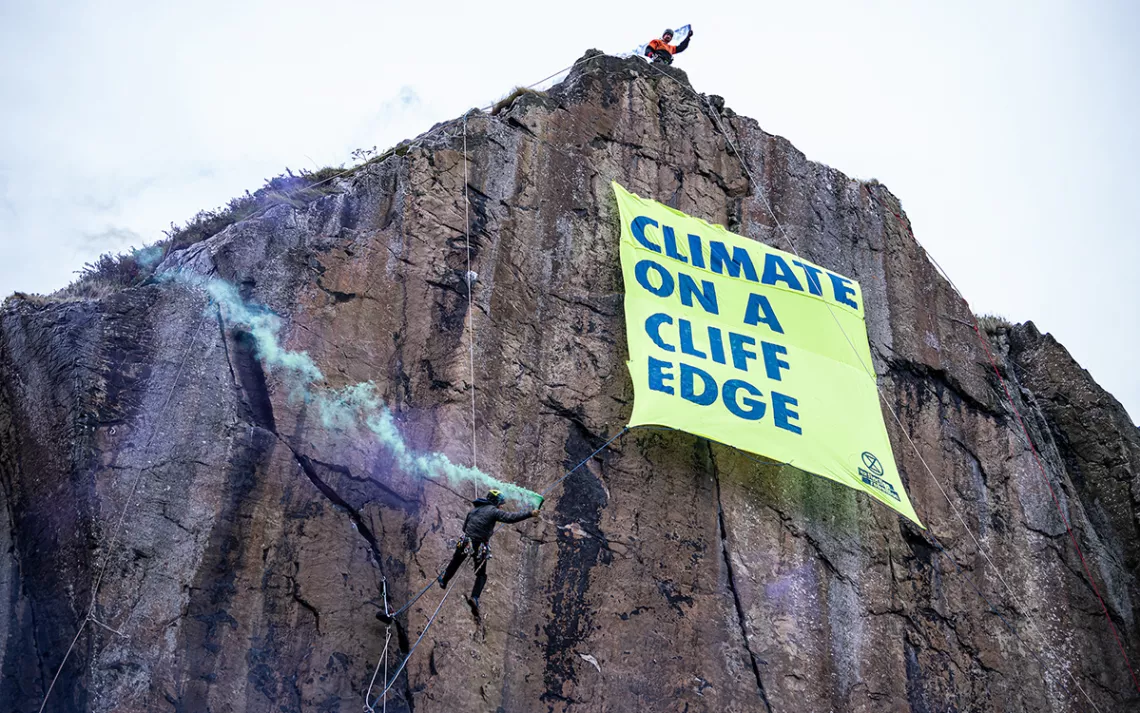
Experienced climbers scale a rock face near the historic Dumbarton castle in Glasgow, releasing a banner that reads “Climate on a Cliff Edge.” One activist, dressed as a globe, symbolically looms near the edge, while another plays the bagpipes on the shores below. | Photo courtesy of Extinction Rebellion and Mark Richards
The broadcaster’s in-house content studio has been paid to promote fossil fuel firms and petrostates with a history of persecuting journalists.
The BBC has produced dozens of films and articles for oil and gas companies, agricultural giants, fossil fuel states, and high-emission transport firms in recent years, DeSmog can reveal.
Experts say the BBC has been “greenwashing” the image of companies and countries contributing to global emissions by trumpeting their dubious climate credentials and promoting their favoured solutions to the crisis.
The content was produced by BBC StoryWorks, a studio that produces videos, podcasts, and articles paid for commercial clients, which it publishes on BBC channels outside the UK.
On its website, BBC StoryWorks boasts that it leverages the reputation of the BBC – “our century-long pedigree as the world’s most trusted storytellers” – to create content for commercial clients “that moves and inspires curious minds, across platforms and across the globe”.
BBC StoryWorks produces traditional adverts for its clients, as well as content “with an editorial style” (known as “branded” or “native” content).
Branded content appears outside the UK on the BBC website – the most viewed news platform in the world – and on its non-UK broadcast channels, in a similar format to normal editorial output. However, branded content promotes the paying client and typically features interviews with the client’s senior executives. It is only distinguished by a disclaimer that it has been paid for by an external organisation.
BBC Studios – which includes StoryWorks – generated £1.8 billion of sales in the year 2023/24, according to the broadcaster’s annual accounts. The BBC‘s financial deficit is projected to reach nearly £500 million next year, with the licence fee – its primary funding source – having been frozen for several years by the last Conservative government.
In recent months, the BBC has created content for a number of oil and gas companies, including the French fossil fuel company Engie, which owns a number of coal-fired power plants and relies heavily on gas for its energy production.
BBC StoryWorks has also produced content for liquified natural gas (LNG) companies, and has touted the energy source as a cleaner alternative to other fossil fuels. This is despite experts warning that the booming LNG industry could contribute more heavily to the climate crisis than the ongoing use of coal, the most carbon-intensive fossil fuel.
Agriculture accounts for 21 percent of global greenhouse gas emissions, and BBC StoryWorks has produced films for some of the world’s biggest food and farming firms, including Nestlé and Bayer, often promoting the disputed green technologies backed by the industry. As previously revealed by DeSmog, BBC StoryWorks has produced dozens of documentaries sponsored by the pesticide giant Corteva, publicising the technologies developed and sold by the firm.
Petrostates with a history of human rights abuses – including the imprisonment of journalists – have also been promoted by BBC StoryWorks.
An investigation by DeSmog and Drilled previously revealed that many of the world’s most trusted English-language news outlets regularly promote the fossil fuel industry’s narratives on climate-related topics. Bloomberg, The Economist, the Financial Times, the New York Times, Politico, Reuters, and the Washington Post all have internal commercial studios that create advertising content for fossil fuel firms.
The BBC is committed to science-led climate reporting and in 2021 signed the Climate Content Pledge, promising to do “more and better climate story-telling on screen across all genres.”
However, critics say that BBC StoryWorks is using the broadcaster’s reputation – including its role as a public service broadcaster – to make money from commercial content that often flouts its editorial values.
“The contracts to make this sort of content are won on the back of the BBC’s reputation as an honest and impartial broadcaster,” Patrick Howse, the BBC’s former Baghdad bureau chief, told DeSmog. “Accepting money from sources like this, to make content like this, risks undermining the BBC’s own hard-won reputation and will ultimately put it on the wrong side of history.
“This is a huge disservice to the BBC’s audiences, and a betrayal of the many brave and conscientious BBC journalists around the world who see holding power to account and telling the truth as their raison d’etre.”
Last year was the warmest year since global records began in 1850. The world’s foremost climate science body, the UN’s Intergovernmental Panel on Climate Change (IPCC), has said that “immediate and deep emissions reductions” are needed “across all sectors” to limit global warming to 1.5C – the global target established by the 2015 Paris Agreement.
In June 2024, UN Secretary-General António Guterres said that advertising agencies had “aided and abetted” the fossil fuel industry, “acting as enablers to planetary destruction”.
“Fossil fuels are not only poisoning our planet – they’re toxic for your brand,” he said.
A BBC StoryWorks spokesperson said that the studio “operates entirely separately from the BBC’s editorial operations” and that its output “is clearly labelled as commercial content”.
However, content labelling doesn’t always help readers and viewers to understand that it has been paid for by a commercial client. A 2018 Boston University study found that only one in 10 people recognised native advertising – which includes branded content – as advertising rather than reporting.
The BBC StoryWorks spokesperson added that, “BBC StoryWorks operates under robust and established governance and is required to comply with the BBC’s guidelines as set out in the publicly available Advertising and Sponsorship Guidelines.
“Central to these guidelines is a commitment to factual accuracy in any piece of content. All of the content cited in this article was approved as compliant with the BBC’s advertising guidelines prior to its publication.”
Fossil Fuel Firms and False Solutions
In April and June, BBC StoryWorks published two articles paid for by Engie, a global energy company with annual revenues of $60 billion, which is part-owned by the French state. The articles promoted Engie’s green credentials, claiming it has a mission “to accelerate the energy transition”, despite the firm’s extensive fossil fuel interests.
Though ENGIE has ambitious renewable development objectives, it plans to expand its LNG terminals in Europe, is one of the top European developers of gas power plants globally, and has agreed to import American shale gas beyond 2040.
Between 2016 and 2022, the firm sold 16 of its coal plants – a 60 percent reduction in its coal capacity. However, Engie chose to sell these assets rather than close them down. This transferred the polluting plants to different owners, meaning that the plants will still contribute to global emissions.
The BBC StoryWorks articles didn’t provide information about the company’s existing polluting activities, or the global need to rapidly scale-down oil, gas, and coal production.
Professor Peter Newell, an academic at the University of Sussex specialising in environmental politics, told DeSmog: “Because branded content looks like regular BBC journalism which the public trust as independent, it compromises the integrity of the organisation and its public role, including to help society respond seriously to the climate crisis.”
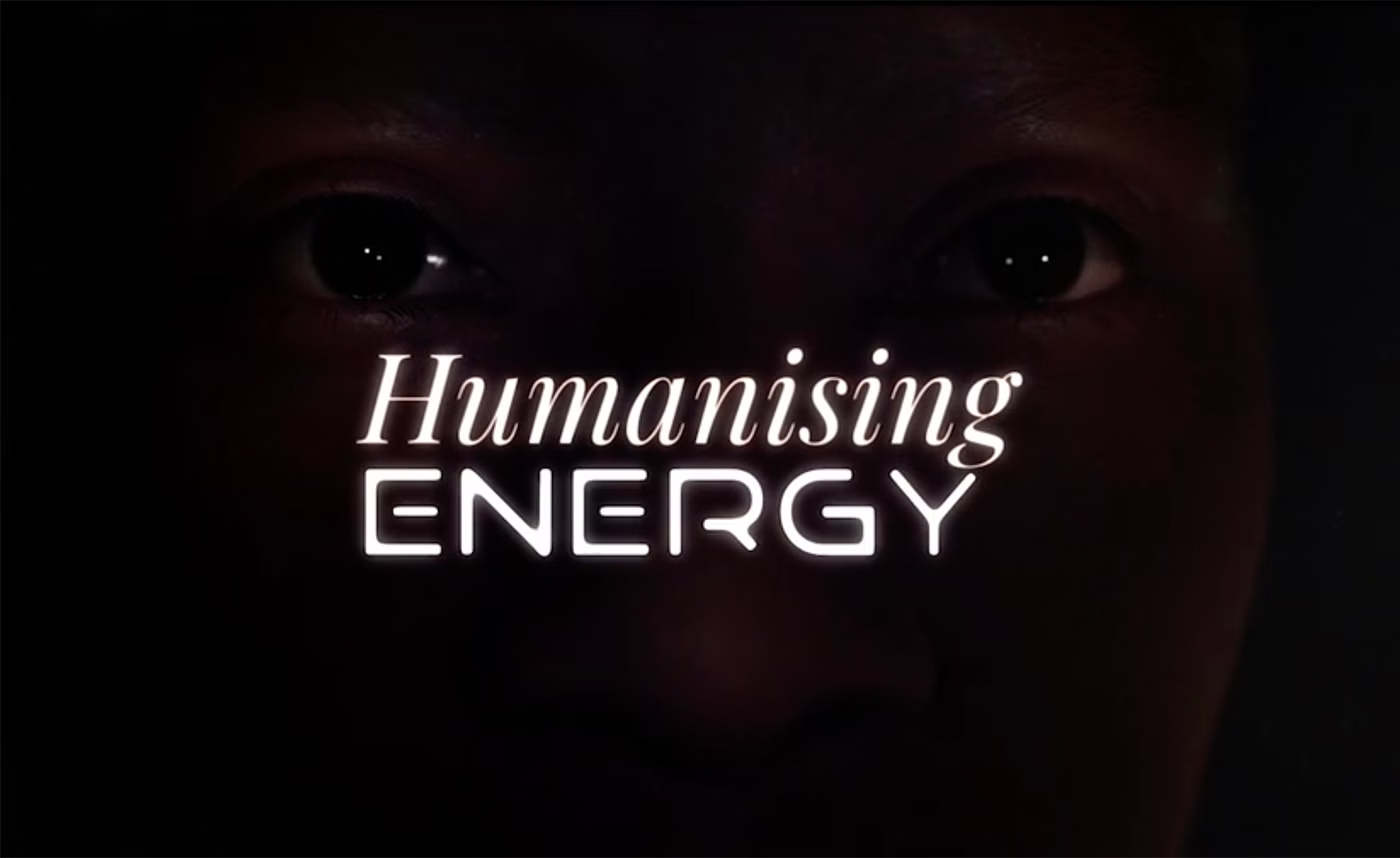
In 2021, the broadcaster launched a “Humanising Energy” series “presented by” the World Energy Council, a global forum for sustainable energy development, followed by a second series in 2023.
The two series featured dozens of five-minute films paid for by individual firms, showcasing their supposed climate solutions. These films typically involved one-on-one interviews with people either creating or benefiting from these green innovations, as well as cinematic shots of the technologies being deployed.
A screenshot of a BBC StoryWorks film from its ”Humanising Energy“ series. Credit: BBC
Sponsors of films in the two Humanising Energy series included the fossil fuel companies Engie Brazil, Gasum (the largest distributor of LNG in the Nordic countries), CLP Holdings (which has said it won’t phase out its coal assets before 2040, and hasn’t committed to phasing out its gas assets), Mabanaft, and Invenergy, the energy services firm Voith, and the engine manufacturer Cummins.
All of these films touted the supposed climate credentials of the featured companies, without examining their contribution to global emissions or the viability of the featured technologies.
In January 2024, Cummins agreed to pay a record $1.7 billion fine – the second largest environmental penalty ever in the U.S. – after facing charges that it equipped roughly one million vehicles with devices that bypassed emissions sensors. The company didn’t admit wrongdoing.
Just a few months earlier, BBC StoryWorks produced a film for Cummins boasting of the firm’s efforts to help decarbonise commercial vehicles.
The Invenergy film focused on its construction of an LNG plant in El Salvador. While the content attempted to show how the plant was providing energy and jobs to the local community, it also tried to tout the environmental benefits of natural gas.
During the film, an Invenergy spokesperson suggested that natural gas generates 30 percent less carbon dioxide than other fossil fuels, neglecting the fact that natural gas is composed largely of methane, which is over 80 times more potent than CO2 across a 20 year period. Even relatively small methane leaks during the process of extracting, shipping, and processing natural gas contribute significantly to global emissions.
One of the films in the Humanising Energy series – “The evolution of home energy” – promoted the role of hydrogen in supplying home heating. Yet, while green hydrogen is widely accepted as necessary for decarbonising heavy industry and other sectors where alternative renewable energy sources are unworkable, it is not considered viable for heating homes.
A peer-reviewed assessment of over 50 independent studies in 2024 concluded that hydrogen use in domestic heating is inefficient, costly and resource-intensive compared to other low-carbon options such as heat pumps.
The BBC StoryWorks film was paid for by DNV, a Norwegian company that claims to be “the world’s leading resource of independent energy experts and technical advisors”, including the oil and gas sector. DNV says on its website that it “delivers broad technical expertise and experience to enable hydrogen to play a key role in the energy transition”.
A DNV spokesperson said that, “While DNV does work with oil and gas companies and organisations across renewable energy production, it is not involved in the direct production or distribution of energy… Our approach to energy solutions is rooted in comprehensive research and rigorous testing, and our position as an independent third party is a central part of our identity and our work.”
The Humanising Energy series also featured twofilms advocating for the development and deployment of sustainable aviation fuels (SAFs) – one paid for by the aviation giant Boeing, and one paid for by the energy and chemicals company Sasol alongside the gas company Linde.
A screenshot of a BBC StoryWorks film, sponsored by Boeing, from its ”Humanising Energy“ series. Credit: BBC
SAFs have been criticised as being environmentally damaging and currently economically unviable. The Advertising Standards Authority this month banned a Virgin Atlantic advert for making the “misleading” claim that it had developed a “100 percent sustainable aviation fuel”.
In August 2022, the International Council on Clean Transportation (ICCT) said that the amount of money invested by airlines in SAFs was “insufficient” and that it seemed as though the technology was simply “about burnishing airlines’ images” by inflating their environmental credentials.
Sasol told DeSmog that its SAF initiatives were not an example of greenwashing and that it believes SAFs hold the “promise to be an enabler of our own decarbonisation and contribute to decarbonising aviation.”
Aviation contributes approximately 2.5 percent of worldwide greenhouse gas emissions, yet BBC StoryWorks has produced content for a number of airlines in recent months and years, including Uzbekistan Airways (March 2024), China Southern Airline (2022), and Korean Air (2017).
BBC StoryWorks has also worked extensively with other polluting transport companies.
It produced an advertising campaign for the shipping and cruise company Cunard that appeared on BBC StoryWorks social media pages in July 2024. Europe’s 218 cruise ships emitted as much sulphur oxides as one billion cars in 2022.
BBC StoryWorks has also produced brandedcontent for the car company Hyundai, as well as for Lexus, Volkswagen, and Jaguar. In addition, the studio has produced a six-part series paid for by the Indian multinational motorcycle company Royal Enfield.
Transport contributes roughly one quarter of all energy related greenhouse gas emissions, while outdoor air pollution is estimated to cause more than 3.2 million premature deaths worldwide every year.
“This important investigation reveals that BBC StoryWorks has been doing the greenwashing work of major polluting firms driving the climate crisis by obscuring their role and promoting their preferred ‘solutions’, however discredited by science,” Professor Newell told DeSmog.
Greenwashing is when a company falsely brands something as eco-friendly, green or sustainable. In 2017, the BBC itself produced a guide to the “seven ways to spot businesses greenwashing”.
Big Ag Polluters
BBC StoryWorks has also been paid to produce content for major agricultural polluters and their lobbyists. This content has often promoted the technological hacks that food and farming giants claim will reduce the sector’s emissions, rather than the more fundamental changes in production and consumption that scientists say will be crucial in limiting Big Ag’s climate impact.
In 2023, BBC StoryWorks produced an advertising campaign for the pesticides giant Bayer, the world’s second largest crop chemicals company, boasting of the firm’s efforts to facilitate “scientific breakthroughs”.
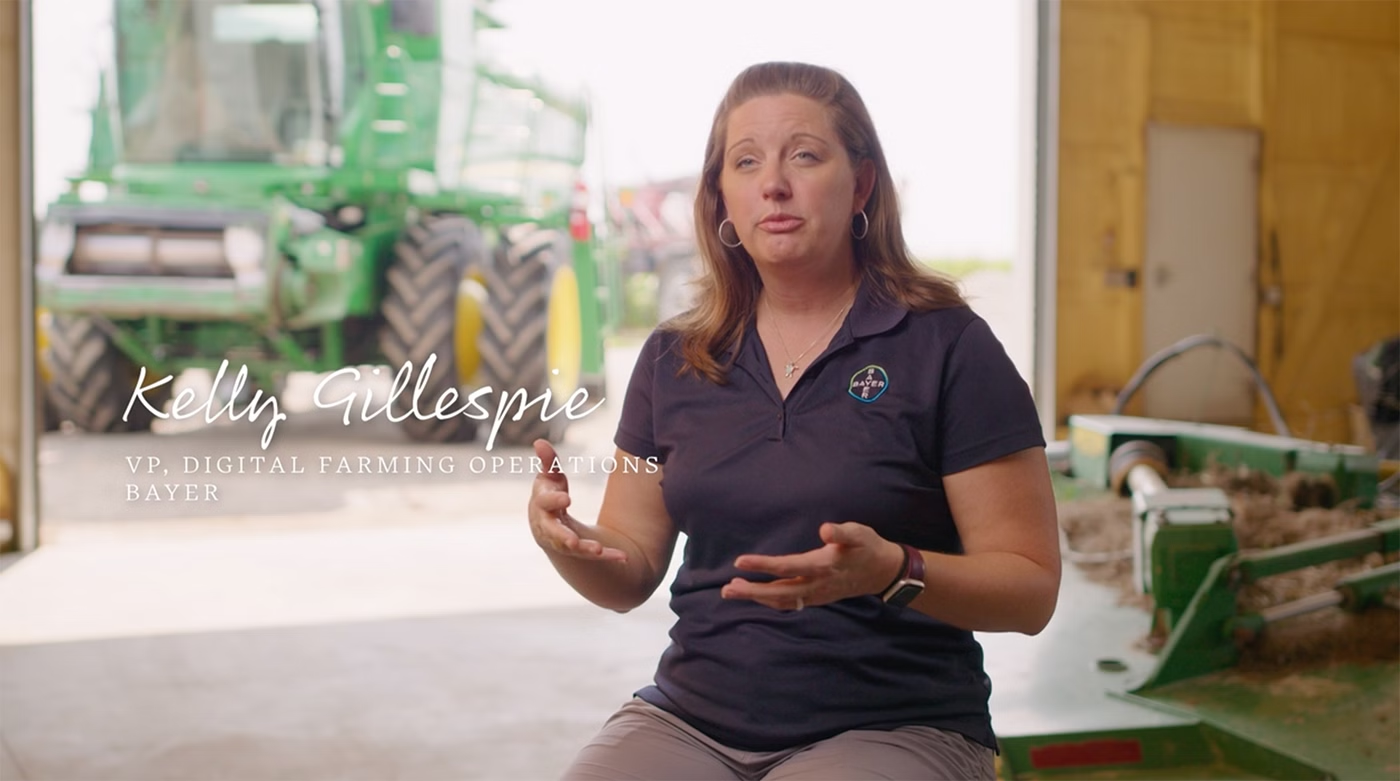
In addition, as part of a branded content series in late 2023 entitled “The Climate and Us”, BBC StoryWorks was paid by Bayer to produce a film on the digital apps helping farmers to monitor and reduce their emissions.
The film, which featured an interview with Bayer’s vice president of digital farming operations, promoted the firm’s technologies with no additional comment from experts on its efficacy, or Bayer’s stance on climate change.
A screenshot of a BBC StoryWorks film, sponsored by Bayer. Credit: BBC
According to the Pesticides Action Network, over a third of Bayer’s sales derive from products that are highly hazardous to the environment, animal or human health. (The methodology for this classification is strongly disputed by Bayer on the grounds that it uses different criteria to internationally accepted rules).
Bayer told DeSmog that it is “committed to ambitious sustainability goals and has a positive track record while recognising the ongoing challenge.”
Experts say that the overuse of chemical pesticides is harming the future of food production. Biodiversity is in sharp decline across the world, and numbers of birds and pollinators are plummeting in Europe.
Bayer, which makes almost $10 billion in agrochemical sales every year, has also faced millions of dollars in lawsuits over health issues allegedly related to its products, including from farmers.
In 2023, DeSmog revealed that BBC StoryWorks had produced three documentary series and 26 articles – viewed at least 65 million times – sponsored by Corteva, one of the world’s largest pesticide firms.
The BBC said that the Corteva-sponsored content, which focused on sustainable food production, was editorial in nature and not influenced by its corporate client. However, experts said the documentaries gave a “totally biased” picture of global food problems, while the content promoted a number of the technologies developed by Corteva.
BBC StoryWorks also produced two articles in 2023 paid for by Australian Dairy – the country’s industry trade group.
The first article promoted the supposed contribution of milk and dairy to a healthy diet, while the second advocated for “precision farming” – in other words, using technology to ensure that resources are used efficiently and to track climate impacts.
Scientists and health professionals agree that dairy products are not necessary for a healthy diet, and they agree that for people who are able to have a varied diet, lower meat and dairy consumption is healthier than diets higher in milk and dairy.
Experts also doubt that precision farming can be rolled out widely enough to meaningfully reduce agricultural emissions. The environmental group Friends of the Earth has said that: “Faced with global climate and biodiversity emergencies, better ‘optimisation’ of existing production processes cannot possibly go far enough to meet the challenges we face.”
According to a March 2024 Harvard Law paper, which surveyed more than 200 environmental and agricultural scientists, meat and dairy production must be drastically reduced – and fast – to align with the Paris Agreement. The report concluded that global emissions from livestock production need to decline by 50 percent during the next six years, with “high-producing and consuming nations” taking the lead.
Sophie Nodzenski, a senior campaign strategist on food and agriculture at Greenpeace International told DeSmog: “Tinkering with the status quo is no longer an option. Meat and dairy companies are climate killers. The livestock sector is one of the leading sources of human-made methane emissions, which move us faster and further past the 1.5C threshold, worsening global heating.
“Meat and dairy companies must stop misleading the public with pseudo solutions and focus on reducing their livestock herds drastically to bring down emissions instead. This reduction can give us a fighting chance against climate chaos.”
In 2023, BBC StoryWorks also produced content for the world’s largest food and drink company Nestlé, boasting of the company’s efforts to support sustainable farming through “regenerative agriculture”.
The film failed to acknowledge that Nestlé – whose 87.5 million tonnes of annual emissions are similar to those of Chile – spent 14 times more on “marketing and administration” in the last year than it did on regenerative agriculture over the previous five years combined.
A screenshot of a BBC StoryWorks film, sponsored by Nestlé. Credit: BBC
“Nestlé’s strong focus on using regenerative agriculture to compensate for the greenhouse gas emissions from livestock farming – one of Nestlé’s main strategies to achieve net zero – is not backed by robust scientific evidence,” Nodzenski said.
“Increasing carbon storage in soils, as well as forests and other vegetation, is necessary, but should not replace a drastic reduction of greenhouse gas emissions from livestock farming – one of the main sources of Nestlé’s emissions.”
The Nestlé film was part of a “Food for Thought” series backed by the trade body FoodDrink Europe, whose members feature major polluters including Cargill, Coca-Cola, and Unilever.
A Nestlé spokesperson said: “We continue to invest in and deliver on our net zero roadmap. By the end of 2023, we had reduced our greenhouse gas (GHG) emissions by 13.5 percent in absolute terms since 2018. Our GHG reduction targets are third-party approved by the Science Based Targets initiative and include a 20 percent absolute cut by 2025 and 50 percent by 2030 covering all sources of agricultural emissions in our supply chain.
“We continue to ramp up our climate efforts using world class research and development, including via the Nestlé Institute for Agricultural Sciences.
“Nestlé has committed to invest $1.2 billion to pay premiums to farmers for ingredients grown using regenerative agriculture practices, provide technical assistance and support investment.”
Petrostates
Over recent years, BBC StoryWorks has also produced content for some of the world’s leading fossil fuel states, many of which have a poor record on human rights and press freedom.
This year’s flagship COP29 climate summit will be held in Baku, Azerbaijan. The country is a petrostate with oil and gas production accounting for roughly half of its GDP and over 90 percent of its exports. The country, run under an authoritarian system with little effective political opposition, plans to increase fossil fuel production by a third over the next decade.
Azerbaijan’s government has also been accused by of a media crackdown by the advocacy group Human Rights Watch ahead of November’s summit, arresting 25 journalists and activists in the past year.
However, since November 2023, BBC StoryWorks has produced several adverts promoting Azerbaijan as a place to visit, while greenwashing its image.
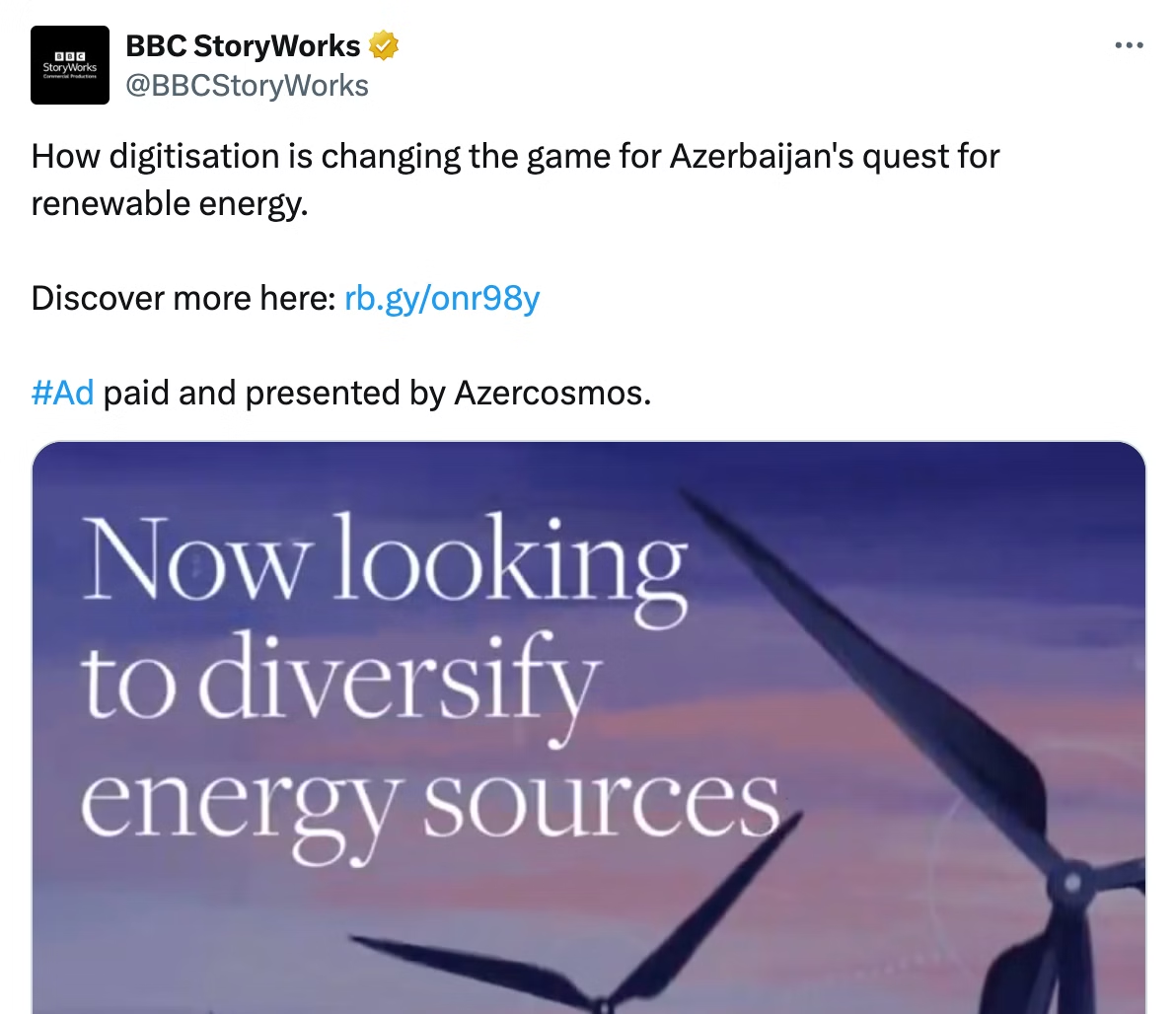
For example, in December 2023, the studio released an advert paid for by the country’s space agency Azercosmos, attempting to show “How digitisation is changing the game for Azerbaijan’s quest for renewable energy.”
The advert was accompanied by an article claiming that Azerbaijan plans to transition “from an oil- and gas-based economy into a thriving modern hub.” The article did not mention the country’s plan to expand fossil fuel production, which contravenes globally agreed efforts to limit rising temperatures.
A screenshot of a BBC StoryWorks advert, sponsored by Azercosmos. Credit: BBC
BBC StoryWorks has also produced content promoting the United Arab Emirates (UAE), the host of the 2023 COP28 climate summit and another petrostate with a poor human rights record.
In 2023, the studio produced a branded content podcast series on behalf of Abu Dhabi Tourism, featuring five 20-minute episodes each “highlighting the message that Abu Dhabi [the capital of the UAE] is a destination for every kind of traveller”.
The series was shortlisted for a 2023 World Media Award and, in the award submission, the BBC said it “challenged preconceived notions and [positioned] the city as a cultural gem worth exploring”. The series was downloaded 115,000 times, according to the BBC.
The UAE derives roughly 40 percent of its income from oil and gas, and this isn’t the only time that BBC StoryWorks has produced content promoting the petrostate.
The story stated that the UAE is “planning to increase oil production to more than five million barrels a day by 2030”, but said that the country “has been looking toward more sustainable energy sources”. It went on to say that “Clean energy projects are coming of age” in the UAE, “from record-breaking solar parks and green hydrogen to waste-to-energy plants”.
The UAE’s overall climate action has been rated as “critically insufficient” by the Climate Action Tracker, an independent scientific project that monitors government climate action and measures it against the Paris Agreement.
Weeks before COP28, the country’s national oil company, ADNOC, awarded contracts worth $17 billion for the development of new offshore gas fields.
The Gulf state also has a poor record on human rights and press freedom. The UAE continues to arrest and imprison activists, academics, and lawyers who speak out against its monarchic rulers. UAE authorities also continue to discriminate against women, LGBTQ communities, and migrants.
According to Reporters Without Borders, “The government prevents both local and foreign independent media outlets from thriving by tracking down and persecuting dissenting voices.”
“The rise of renewable energies in oil-rich regions” article also attempted to promote the ways in which “women are playing an increasing role in the renewable energy sector”. The story cited the fact that women are leading green initiatives in Kuwait, and Jordan.
However, many Gulf states routinely discriminate against women. In Kuwait for example, the country’s personal status laws discriminate against women in matters of marriage, divorce, and child custody.
Despite this, BBC StoryWorks has frequently promoted the country. In December 2023, the studio published an advert from the Kuwait Fund, the country’s state-run development agency, boasting of its efforts to help “disadvantaged regions, women and minorities”.
Reporters Without Borders states that Kuwait’s censorship laws prohibit journalists “from criticising the government, the emir, the ruling family, its allies or religion”. In particular, it is “difficult for journalists to tackle migrant worker rights, women’s rights and corruption.”
Oil and gas revenues account for roughly 60 percent of Kuwait’s GDP.
BBC StoryWorks has also produced content for the petrostate Qatar, promoting the country as a tourist destination despite its record of discriminating against women and minorities.
BBC StoryWorks has a history of working for repressive regimes, including China. The U.S. publication Deadline reported in December 2022 that BBC StoryWorks had partnered with at least nine Chinese state-affiliated bodies, including a media outlet banned from broadcasting in the UK.
“Those commissioning and paying for this content are deliberately using the BBC’s brand to greenwash or whitewash their own reputations. It’s an exercise of cynical manipulation,” the BBC’s former Baghdad bureau chief Patrick Howse told DeSmog.
“Commissions like this are lucrative and therefore attractive to a corporation that has been deliberately and severely financially squeezed by the UK government over a long period. This has forced the BBC to seek money from wherever it can find it, and this poses a risk to its editorial independence and honesty, which will ultimately undermine the trust of the BBC’s audience.”
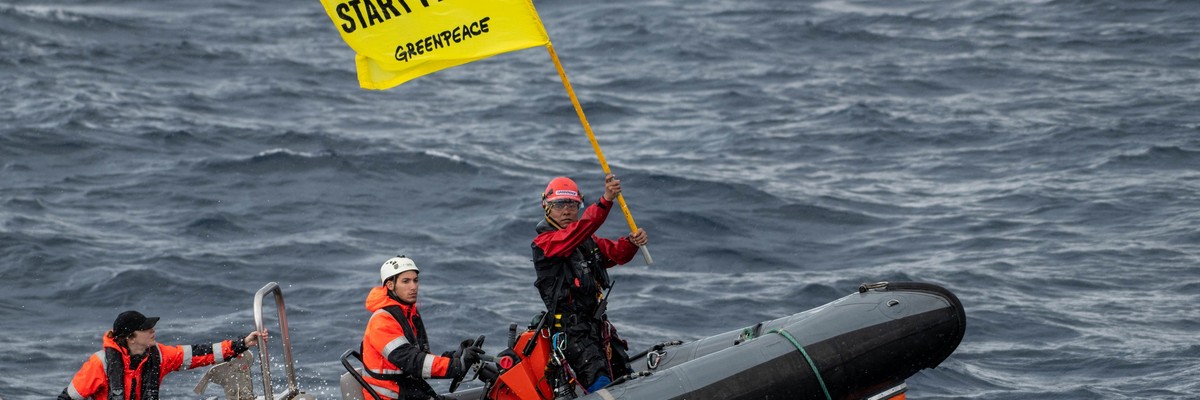
Greenpeace climate justice activists approaching Shell platform en route to major oilfield (Photo: Chris J Ratcliffe / Greenpeace)
“It has become clear: Eni is trying to silence anyone who dares to speak up and denounce the company’s contribution to the fueling of the climate crisis,” says Chiara Campione of Greenpeace Italy.
Greenpeace Italy revealed Wednesday that the Italian multinational energy company Eni is threatening a libel suit against it over reports the organization published about oil and gas companies.
Greenpeace said the potential lawsuit is related to a report on temperature-related premature deaths that may be caused by emissions from oil and gas companies like Eni and a report on the concept of “climate homicide.”
“We face yet another act of intimidation by Eni; it seems that threatening defamation lawsuits is the new sport which the company has decided to pursue most enthusiastically. But we won’t be silenced,” said Chiara Campione of Greenpeace Italy. “This new potential defamation lawsuit follows a similar case initiated by Eni against Greenpeace Italia only a few months ago.”
OOOPS ENI DID IT AGAIN! It seems that threatening defamation lawsuits is the new sport which the company has decided to pursue most enthusiastically. https://t.co/zZjhRdCa0f
Eni was given an opportunity to respond to the findings of the Greenpeace reports, but the group said Eni offered “no substantive rebuttal” and threatened legal action. The organization claimed other oil and gas companies mentioned in these reports have not threatened legal action.
Greenpeace Italy and the climate advocacy group ReCommon are currently suing Eni over its alleged contributions to the climate crisis. The first hearing for that case occurred last month.
“It has become clear: Eni is trying to silence anyone who dares to speak up and denounce the company’s contribution to the fueling of the climate crisis,” Campione said.
The multinational oil giant Shell sued Greenpeace in November for alleged damages related to Greenpeace activists boarding one of the company’s oil platforms. Shell is trying to get as much as $8.6 million in damages, which Greenpeace says would greatly threaten its ability to campaign.
The French multinational oil and gas company TotalEnergies is also suing Greenpeace France over a report that claimed it underestimated its 2019 greenhouse gas emissions.
Greenpeace said Wednesday that these companies are trying to “stop Greenpeace and other organizations from denouncing the damage the fossil fuel industry is causing to people and the planet.”
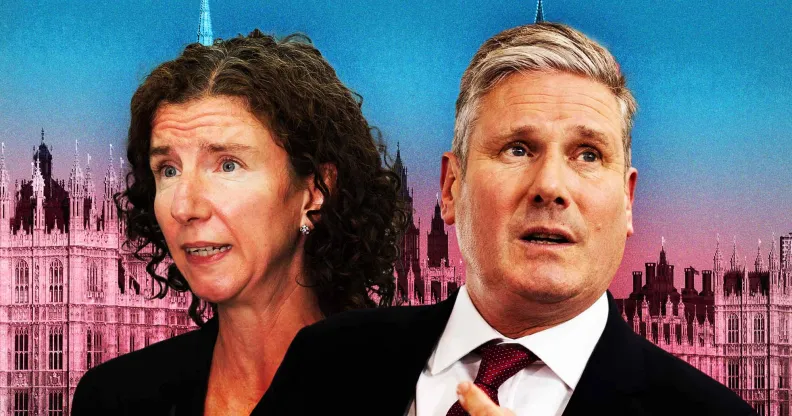
Image of Labour leader Keir Starmer and party chair Anneliese Dodds. A staffer in Starmer’s office works for consultancy firm Grant Thornton, while a Weber Shandwick lobbyist had a six-month stint in Dodds’ office
A staff member in Keir Starmer’s office is selling his knowledge of “politics, government and public policy issues” to corporate clients through a major consultancy firm, openDemocracy can reveal.
The staffer, who joined Starmer’s team in the summer, is listed as an associate director of Grant Thornton. The arrangement does not breach any regulations because Labour is not in power, though equivalent roles advising government ministers come with an obligation that holders must not “misuse your official position, for example by using information acquired in the course of your official duties to further your private interests or those of others”.
Corporate lobbying firms have started expanding their offerings to clients who are looking to influence a likely Labour government next year. In November, it was reported that two major lobbying outfits had set up ‘Labour Units’ to help clients influence the party.
Over the past year, three other corporate lobbyists have had roles advising the shadow cabinet while still employed by their corporate bosses, and another ten former corporate lobbyists are now working in the offices of members of the shadow cabinet, analysis by this website has found.
Nick Dearden, director of the campaign group Global Justice Now, called it “yet more evidence that there’s a revolving door between big business and the top layers of the Labour Party”.
While Starmer’s staffer appears to work for Grant Thornton and Labour simultaneously, the other three had jobs in the offices of shadow cabinet members that were directly funded by lobbying firms in the form of secondments. One of these was placed in the office of Labour’s chair and equalities chief Anneliese Dodds for six months, while two more have been placed with shadow business secretary Jonathan Reynolds. Throughout their time in Parliament, their salaries were paid by the lobbying firms, none of which would disclose to openDemocracy whether any of their clients had funded the work.
Starmer’s staffer was formerly head of Grant Thornton’s Brexit advisory team. A page on the firm’s website advertises his knowledge of “politics, government and public policy issues” to corporate clients. He says he can “help our clients make sense of the current macroeconomic and political environment, providing insight and practical advice on what it means for them and their business”.
With a revenue of more than $7bn last year, Grant Thornton is one of the world’s largest professional services networks, offering clients a range of consultancy services. Its clients and partners in recent years have included the arms company BAE Systems, coal miners Adani and a range of oil and gas firms. In 2021, the firm was fined £2.3m for its involvement in the collapse of the bakery chain Patisserie Valerie. And last year, the company was found guilty of bribing officials in Western Australia.
The staff member appears to work part time on Keir Starmer’s team, and part time selling his political insights through Grant Thornton. Last year, before he took the role, he wrote a blog on Grant Thornton’s website discussing the likely priorities of a future Labour government.
A spokesperson for Grant Thornton would not disclose which clients their associate director had been advising since he started working for Starmer, or how he managed any conflict of interest.
They said: “As a leading provider of professional services in the UK, Grant Thornton has deep expertise in the public sector and has worked with a variety of government bodies and institutions over the years where our nonpartisan input has been of value. Whilst any such engagements will be a matter of public record, it would be inappropriate for us to comment on any specifics.”
In recent years, Grant Thornton has benefited from more than 300 public sector contracts in the UK. It also supports hundreds of major corporations on a range of projects, from the private healthcare sector to the oil and gas industry.
Two other staff members in Starmer’s office are former lobbyists who worked at the firm InHouse Communications, whose clients have included Google, e-cigarette company Juul, and a number of major alcohol brands. Starmer’s press officer worked for the firm until August last year, while one of Labour’s communications chiefs was previously a director at the firm.
Dodds, the Labour Party chair and equalities spokesperson, had a senior Weber Shandwick London staffer seconded to work in her office from September 2022 to March 2023. The staffer’s roles at the firm’s London office have included senior vice president and team director for corporate enterprise. Since her secondment ended, she has been heading up another team at Weber Shandwick. The company would not say whether she now has any involvement in lobbying Labour.
Weber Shandwick is perhaps most controversial for its historic role lobbying on behalf of the tobacco industry, and was recently linked to at least eight oil and gas companies, some of which have been accused of opposing or seeking to delay net zero policies. The firm also lobbies on behalf of the UK’s offshore oil and gas industry as a whole.
Former clients of Dodds’ staffer before her secondment to Labour include the snacks giant Mondelez, which owns brands including Cadbury’s chocolate. In recent years, Mondelez has been involved in opposing health measures like a sugar tax, faced legal action over alleged child slavery, and been accused of involvement in illegal rainforest deforestation. Mondelez has said it has “been working relentlessly to take a stand against” child labour, which it claims to prohibit, and says it has taken steps to ensure its chocolate doesn’t come from illegally deforested national parks.
The staffer’s other previous clients have included the estate and letting agency Knight Frank, the French spirits giant Pernod Ricard, which has been battling India’s alcohol tax over the last year and is a sponsor of the Labour Party conference, and the takeaway Just Eat, which has also given free events tickets to a number of Labour figures over the last year.
openDemocracy asked Dodds’s office what it thought Weber Shandwick had to gain by funding a staff member for six months and was told: “You’d have to ask Weber Shandwick.” Weber Shandwick did not respond to our request for comment.
From September to October 2022, a staffer was seconded from the PR and lobbying firm the Lowick Group to work in the office of shadow business secretary Jonathan Reynolds. Immediately before the secondment, he had worked as a lobbyist for another firm, Westminster Digital, best known for running Boris Johnson’s online campaign during the 2019 election, though he did not work there at the time.
Another one of Reynolds’ seconded staffers is a senior policy manager at HSBC, which was forced by US regulators in 2013 to pay then-record fines of more than a billion dollars after being found to be the “preferred financial institution” of Mexican and Colombian drug cartels.
Before working for HSBC, she was registered as a lobbyist for Portland Communications, a major lobbying agency.
As well as shadow cabinet staffers currently working as corporate lobbyists or political advisers, openDemocracy has found ten staffers for shadow cabinet members who previously worked as corporate lobbyists.
‘Worrying’
Responding to the revelations, the Green MP Caroline Lucas said: “Under this Conservative government we’ve seen the endless revolving door between MPs, Ministers and big business reach new heights. It’s deeply worrying that Labour already look set to follow in their footsteps.
“If they form the next government, they mustn’t be in the back pocket of any industry – we urgently need policies and legislation that consistently prioritise the greater public good over letting big corporations trouser ever bigger profits.”
Tommy Sheppard, MP for Edinburgh East and SNP constitutional affairs spokesperson said: “This is shocking and quite extraordinary news. I’ve not been aware of this before – I’ve known special advisers who went to work for Weber Shandwick, but I’ve never known people ride both horses at once.
“Labour ought to be aware that these companies are not doing this on behalf of the Labour Party – they are doing it because they want to influence [a potential future] government on behalf of corporate clients.”
He added: “Labour need to be more careful about where they take their staffers from.”
Dearden told openDemocracy: “Many parts of society with an alternative vision of the future are finding it really hard to even get a single meeting with shadow ministers.
“A Labour government in hock to corporate interests will be a very short-lived Labour government. The world has changed. Across the US, Europe and the emerging economies, the economic myths of the last 40 years are being punctured. Big business lobbyists do not have the answer to the problems we face. If Labour wants to govern successfully, they need to start listening to a much wider pool of people.”
A Labour spokesperson said: “Employment and secondment arrangements have been transparently declared in line with legal requirements and parliamentary rules.”
The UK Labour Party has hired a former Israeli spy to help manage its social media, The Electronic Intifada can reveal.
Assaf Kaplan will work in the office of Labour leader Keir Starmer, a source with knowledge of the hire said.
Kaplan was in Israeli military intelligence for nearly five years, an officer in Unit 8200, its cyberwarfare branch.
Unit 8200 specializes in spying, hacking and encryption. It carries out blackmail, mass surveillance and systematic discrimination against Palestinians.