Zarah Sultana: Palantir has no place in UK public services

Spread the love

https://www.opendemocracy.net/en/zarah-sutlana-palantir-no-place-uk-public-services-ministry-of-defence

Palantir is supporting violent US hegemony. It has no place in UK public services
 | Ina Fassbender / AFP via Getty Images

Palantir is not a normal software company. It was founded with an explicit mission which remains at the heart of its operations today: to maintain US global domination.

We know exactly what that means. Endless wars. Drone strikes. A vast machinery of surveillance and occupation stretching from Afghanistan and Iraq to the ongoing genocide in Gaza. A world in which Washington’s military reach grows ever longer, and the UK prime minister increasingly behaves less like an ally and more like a compliant poodle, nodding along to whatever the White House demands.

On an investor call last February, Palantir’s CEO, Alex Karp, said he was “super proud” of what his company does. Perhaps he was referring to Palantir’s role in enabling ICE to target migrant communities and tear families apart. Or perhaps he meant reports that its technology has allegedly helped the Israeli military generate “kill lists” – a practice condemned by human-rights organisations for contributing to the mass civilian casualties we are witnessing in Gaza.

Whatever Karp had in mind, Keir Starmer did not appear troubled. Later that month, he flew to Palantir’s Washington headquarters to kiss the ring of a corporation deeply embedded in the US military and intelligence infrastructure. He did so alongside his then US ambassador, Peter Mandelson – close friend of the late notorious paedophile Jeffrey Epstein – whose lobbying firm, Global Counsel, has long represented Palantir.

Since then, this government has only tightened its embrace. Building on ties established under the Conservatives, Labour is embedding a company accused by campaigners of facilitating human-rights violations deeper and deeper into our public life. Palantir already operates inside the NHS and across Whitehall – particularly within the Ministry of Defence – pulling Britain further into the slipstream of US military priorities and the worst excesses of the American security state.

No company so entangled in foreign military operations and border policing should be anywhere near our public services. Full stop.

Experts and civil liberties campaigners have repeatedly warned about Palantir’s expanding access to sensitive British data, including NHS medical records – data that the US private healthcare industry is eager to exploit. The risks to privacy, accountability and democracy are profound.

Yet, as with the Tories before them, nothing is off the table for this Labour government when it comes to carving up public services for multinational corporations and their lobbyists. Their deference to Washington is now so complete that they barely bother to conceal their enthusiasm for cosying up to Donald Trump’s network of tech-bro oligarchs. We saw this clearly last summer, when Starmer rolled out the red carpet for Palantir and signed off a £1.5bn “strategic partnership” – at the very moment public services across Britain were collapsing under austerity. It begs the question: who, exactly, is Starmer unwilling to roll out the blood-stained red carpet for?

Across the country, libraries are closing. Swimming pools are shutting. Councils are going bankrupt. But somehow, there is always money available for a CIA-funded contractor at the heart of the US war machine.

And it does not stop at Westminster. Palantir’s tentacles are already extending into our communities. In my constituency of Coventry, the Labour-run council awarded the company a £500,000 contract to develop an AI tool for children’s services. Yes – a firm implicated in military targeting abroad and the kidnapping of children as young as five in the US, was hired to shape how we safeguard children here at home.

We fought back. Led by Your Party councillor, Grace Lewis, and backed by our unions and community campaigners, we forced that contract into review. And let me be absolutely clear: we will not stop until it is cancelled entirely.

But this fight is bigger than one contract or one city. We need a politics that draws a clear line: Palantir – and every corporation that profits from occupation, surveillance, genocide and war – has no place in our society and should never again receive a penny of public money.

This country needs a party willing to resist a government that bows to Washington, sells off our public services and hands power to war-profiteering tech giants. That party is Your Party.

And our fight is only just beginning.


Zarah Sultana is the Your Party MP for Coventry South

https://www.opendemocracy.net/en/zarah-sutlana-palantir-no-place-uk-public-services-ministry-of-defence

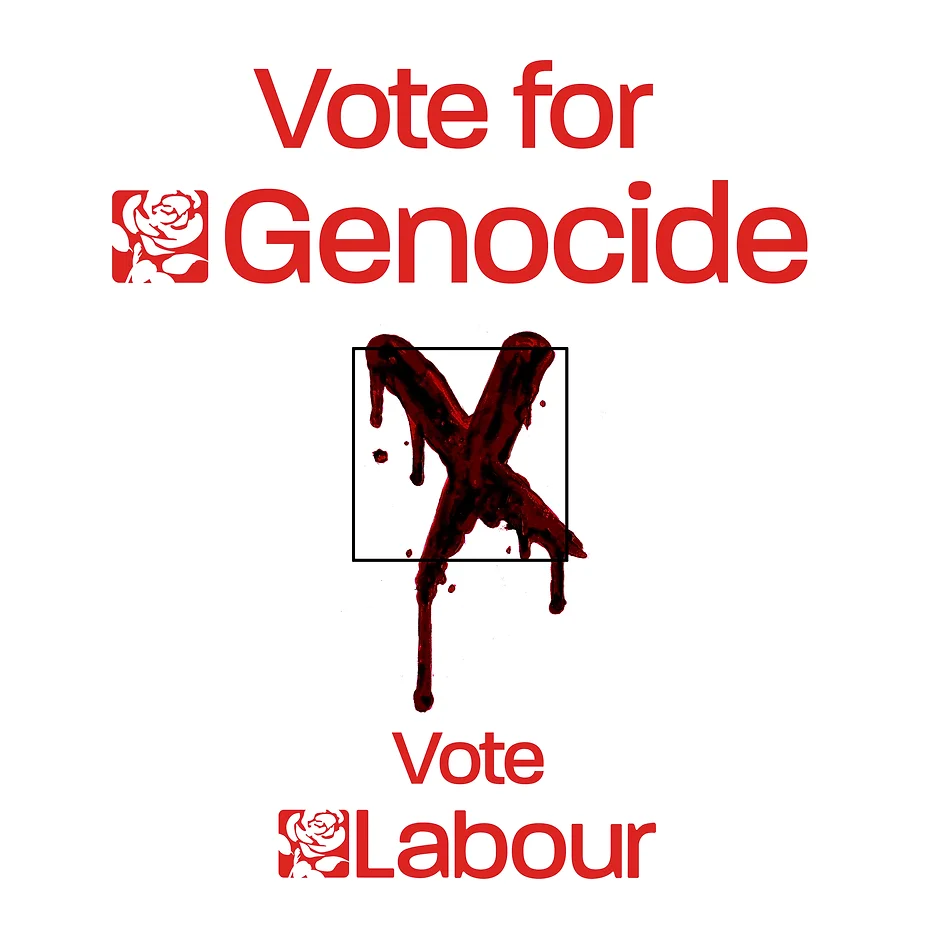
Experiencing issues with this image not appearing. I suspect because it's so critical of Zionist Keir Starmer's support of and complicity in Israel's genocides.
Genocide denier and Current UK Prime Minister Keir Starmer is quoted that he supports Zionism without qualification. He also confirms that UK air force support has been essential in Israel’s mass-murdering genocide. Includes URLs https://www.declassifieduk.org/keir-starmers-100-spy-flights-over-gaza-in-support-of-israel/ and https://youtu.be/O74hZCKKdpA
Keir Starmer objects to criticism of the IDF. He asks how could anyone object to them starving people to death, forced marches like the Nazis did, bombing Gaza's hospitals and universities, mass-murdering journalists, healthworkers and starving people queuing for food, killing and raping prisoners and murdering children. He calls for people to stop obstructing his genocide for Israel.
Keir Starmer objects to criticism of the IDF. He asks how could anyone object to them starving people to death, forced marches like the Nazis did, bombing Gaza’s hospitals and universities, mass-murdering journalists, healthworkers and starving people queuing for food, killing and raping prisoners and murdering children. He calls for people to stop obstructing his genocide for Israel.
Orcas discuss Genocide-supporting and complicit Zionists. Donald Trump, Keith Starmer, David Lammy, Rachel Reeves, Angela Rayner and Wes Streeting are acknowledged as evil genocide-complicit and supporting cnuts.
Continue ReadingZarah Sultana: Palantir has no place in UK public services

A global army to liberate Palestine: An investigative reading of Colombian President Gustavo Petro’s speech

Spread the love

This work by Middle East Monitor is licensed under a Creative Commons Attribution-NonCommercial-ShareAlike 4.0 International License.

Gustavo Petro, Colombia’s president, during the United Nations General Assembly (UNGA) in New York, US, on Tuesday, Sept. 23, 2025. [Photographer: Michael Nagle/Bloomberg via Getty Images]

by Dr Rassem Bisharat

In one of the most daring and controversial political interventions to echo through the halls of the United Nations in decades, Colombian President Gustavo Petro, in his address to the UN General Assembly on 23 September 2025, called for the creation of an international army that transcends the traditional balance of power and whose first mission would be the liberation of Palestine from Israeli occupation and the cessation of the ongoing genocide in Gaza.

The speech drew widespread global attention, opening the door to a complex debate on the future of the international order, the limits of international law, and the possibility of a fundamental transformation toward a new architecture of international relations that moves beyond bipolarity and the centrality of U.S. power.

Petro: The end of words and the beginning of action

In his speech, President Gustavo Petro sharply criticised the current international order, asserting that a world dominated by a single power and complicit in genocide cannot credibly claim to defend democracy or human rights. He emphasised that statements and declarations are no longer sufficient amid the mass killings in Gaza, calling for the creation of an international armed force composed of states that reject genocide, tasked with protecting threatened populations and enforcing international justice. Petro declared: “We need a strong army of nations that do not accept genocide… We must gather weapons and armies. We must liberate Palestine.”

Invoking Simón Bolívar, he added: “We are tired of words… It is time for the sword of liberty or death.”

In later remarks posted on X (formerly Twitter), Petro announced plans to submit a draft resolution to the UN General Assembly to establish a “global army for justice,” with its first mission focused on liberating Palestine,” marking a dramatic call for action over [sic]

READ: Saudi Arabia warns global inaction on Gaza war threatens regional, world stability

A paradigm shift in international politics

Petro’s proposal marks a significant shift in international political discourse. Since the UN’s founding in 1945, international forces have primarily focused on post-conflict peacekeeping, operating under limited mandates and with Security Council approval. Petro, however, envisions a force designed not to maintain the status quo but to actively change it, intervening militarily to prevent genocide and end occupation. This transition from neutrality to action challenges core principles of international law, including state sovereignty and non-intervention, while contesting the Security Council’s monopoly, particularly its five permanent members, over the authorised use of force. Petro suggested that such a force could be established through the General Assembly, referencing the 1950 “Uniting for Peace” resolution, when the Assembly bypassed a deadlocked Security Council to authorize military intervention in Korea, setting a precedent for acting when conventional mechanisms fail.

Enormous political and legal obstacles

Despite Petro’s bold proposal, formidable obstacles make its near-term realization highly unlikely. The UN’s legal framework restricts the use of force to the Security Council, where the US holds veto power and would never allow the creation of a force that could act against Israel, its key Middle Eastern ally. Geopolitical realities also hinder the formation of a global coalition outside the Western security umbrella. Even countries critical of Israeli policies, including EU members and Global South states, may resist joining a force that risks direct confrontation with Israel or the U.S Additionally, there is a significant lack of collective political will: while smaller and medium-sized states often use strong rhetoric, turning such words into military action demands a consensus that is currently absent. Past struggles to reform the Security Council or establish war crimes tribunals underscore how difficult it is to translate ambitious ideas into action within today’s entrenched power structures.

The significance and timing of Petro’s speech

Despite significant practical obstacles, Petro’s speech carries profound symbolic and political weight in shaping global discourse on Palestine and the international order. He reframes the Palestinian issue from a mere “conflict” to an act of “genocide,” shifting the debate from political negotiation to one centered on liberation and international justice. His references to “Bolívar’s sword” and an “army of justice” seek to place Palestine at the core of a broader struggle against double standards and for global legitimacy.

Moreover, Petro’s call sparks renewed debate on reforming the United Nations. Beyond advocating for a force dedicated to Palestine, he highlights the failure of the current system to prevent genocides in Rwanda, Syria, Myanmar, and now Gaza. The proposed army thus symbolizes a deeper demand for rebuilding the international order on fairer, more pluralistic foundations.

Finally, the speech underscores a shift within the Global South. From Colombia to South Africa and Brazil, states on the geopolitical periphery are increasingly using the UN stage to challenge the Global North’s dominance and redefine concepts of legitimacy. Petro’s message aligns with this momentum, adding new strategic depth to the Palestinian cause within emerging international alliances.

READ: Malaysia urges sanctions on Israel at UN meeting

Justice in the age of genocide

President Petro’s speech comes at a critical moment, as Gaza endures one of the most brutal Israeli military campaigns since the Nakba. UN agencies and human rights organizations, including OCHA, Oxfam, and Human Rights Watch, report the killing of tens of thousands of civilians and the widespread destruction of vital infrastructure, including hospitals, schools, and relief centers. The UN has also documented the deaths of hundreds of humanitarian workers, in what international organizations describe as the largest targeting of the humanitarian sector in modern conflict.

In this context, Petro’s speech becomes more than a theoretical proposal, it is a cry against a world that remains silent in the face of genocide. His call to form an “army of justice” is, at its core, an expression of the failure of the international system to fulfill its most fundamental duty: protecting civilians and enforcing international law.

And while the idea may be unattainable at present, it exposes the glaring gap between the UN’s rhetoric and its reality, opening the door to rethinking the mechanisms of collective international action.

Conclusion

President Petro’s project to form an international army to liberate Palestine may seem, in the realpolitik balance, a utopian dream difficult to achieve amid current power dynamics. Yet, in the realm of symbolic and strategic politics, it reflects a profound shift in how international justice, Palestine, and the global order itself are conceived.

The speech will not change the world tomorrow, but it could mark a turning point in a longer trajectory toward reshaping international institutions so that they are capable of confronting genocide and injustice. And just as Simón Bolívar’s words once ignited the liberation of entire continents, President Petro’s speech may, even if only in the long run, be the spark that drives the world to contemplate a global army for justice, one whose first mission would begin in Gaza, if Gaza, as we know it, still exists.

OPINION: Paraguay’s fluctuating positions on Palestine: Between interests and justice

The views expressed in this article belong to the author and do not necessarily reflect the editorial policy of Middle East Monitor.

Experiencing issues with this image not appearing. I suspect because it's so critical of Zionist Keir Starmer's support of and complicity in Israel's genocides.
Genocide denier and Current UK Prime Minister Keir Starmer is quoted that he supports Zionism without qualification. He also confirms that UK air force support has been essential in Israel’s mass-murdering genocide. Includes URLs https://www.declassifieduk.org/keir-starmers-100-spy-flights-over-gaza-in-support-of-israel/ and https://youtu.be/O74hZCKKdpA
Keir Starmer objects to criticism of the IDF. He asks how could anyone object to them starving people to death, forced marches like the Nazis did, bombing Gaza's hospitals and universities, mass-murdering journalists, healthworkers and starving people queuing for food, killing and raping prisoners and murdering children. He calls for people to stop obstructing his genocide for Israel.
Keir Starmer objects to criticism of the IDF. He asks how could anyone object to them starving people to death, forced marches like the Nazis did, bombing Gaza’s hospitals and universities, mass-murdering journalists, healthworkers and starving people queuing for food, killing and raping prisoners and murdering children. He calls for people to stop obstructing his genocide for Israel.
Vote Labour for Genocide.

Continue ReadingA global army to liberate Palestine: An investigative reading of Colombian President Gustavo Petro’s speech

No Pride in Genocide challenge Glasgow’s annual event over ties to genocide

Spread the love

https://morningstaronline.co.uk/article/no-pride-genocide-challenge-glasgows-annual-event-over-ties-genocide

 Glasgow Pride

CAMPAIGNERS challenged Glasgow’s annual Pride event over the weekend over its sponsorship ties to Israel’s violence against Palestinians. 

Hundreds of No Pride in Genocide (NPIG) activists gathered in Kelvingrove Park on Saturday, where the annual Pride march began, forming a “radical bloc” to demand that the event reject companies directly profiting from Israel’s illegal occupation of Palestinian land and the ongoing genocide in Gaza. 

Among the event’s sponsors is US financing giant JP Morgan, which holds $22 million (£16.4m) in shares in Israel’s largest weapons manufacturer, Elbit Systems, as well as $600m (£447m) in Israeli sovereign war bonds. 

Last year, NIPG mobilised a similar bloc within the 2024 Pride march, with their numbers making up nearly half the total procession.

Despite pressure over the past year, the group say that Glasgow’s Pride organisers have refused to engage directly with them.

NPIG accuse organisers of enabling “pinkwashing” — a term used to describe promoting LGBTQ+ inclusivity to deflect from broader human rights abuses.

Article continues at https://morningstaronline.co.uk/article/no-pride-genocide-challenge-glasgows-annual-event-over-ties-genocide

Continue ReadingNo Pride in Genocide challenge Glasgow’s annual event over ties to genocide

The ‘economy of genocide’ report: a reckoning beyond rhetoric

Spread the love

https://morningstaronline.co.uk/article/economy-genocide-report-reckoning-beyond-rhetoric

 Israeli army vehicles moves in the Gaza Strip as seen from southern Israel on July 6, 2025

RAMZY BAROUD highlights a new report by special rapporteur Francesca Albanese that unflinchingly names and shames the companies that have enabled Israel’s bloody massacre in Gaza

FRANCESCA ALBANESE, the United Nations special rapporteur on the situation of human rights in occupied Palestine, stands as a testament to the notion of speaking truth to power. This “power” is not solely embodied by Israel or even the United States, but by an international community whose collective relevance has tragically failed to stem the ongoing genocide in Gaza.

Her latest report, From Economy of Occupation to Economy of Genocide, submitted to the UN Human Rights Council on July 3, marks a seismic intervention. It unflinchingly names and implicates companies that have not only allowed Israel to sustain its war and genocide against Palestinians, but also confronts those who have remained silent in the face of this unfolding horror.

Albanese’s “economy of genocide” is far more than an academic exercise or a mere moral statement in a world whose collective conscience is being brutally tested in Gaza. The report is significant for multiple, interlocking reasons. Crucially, it offers practical pathways to accountability that transcend mere diplomatic and legal rhetoric. It also presents a novel approach to international law, positioning it not as a delicate political balancing act, but as a potent tool to confront complicity in war crimes and expose the profound failures of existing international mechanisms in Gaza.

Article continues at https://morningstaronline.co.uk/article/economy-genocide-report-reckoning-beyond-rhetoric

Keir Starmer objects to criticism of the IDF. He asks how could anyone obect to them starving people to death, forced marches like the Nazis did, bombing Gaza's hospitals and universities,mass-murdering journalists, healthworkers and starving people queuing for food, killing and raping prisoners and murdering children. He calls for people to stop obstructing his genocide for Israel.
Keir Starmer objects to criticism of the IDF. He asks how could anyone obect to them starving people to death, forced marches like the Nazis did, bombing Gaza’s hospitals and universities,mass-murdering journalists, healthworkers and starving people queuing for food, killing and raping prisoners and murdering children. He calls for people to stop obstructing his genocide for Israel.
Continue ReadingThe ‘economy of genocide’ report: a reckoning beyond rhetoric