The Global Sumud Flotilla: Over 50 ships will set sail for Gaza

Spread the love

Original article by Wahid Ben Ali republished from peoples dispatch under a Creative Commons Attribution-ShareAlike 4.0 (CC BY-SA) license.
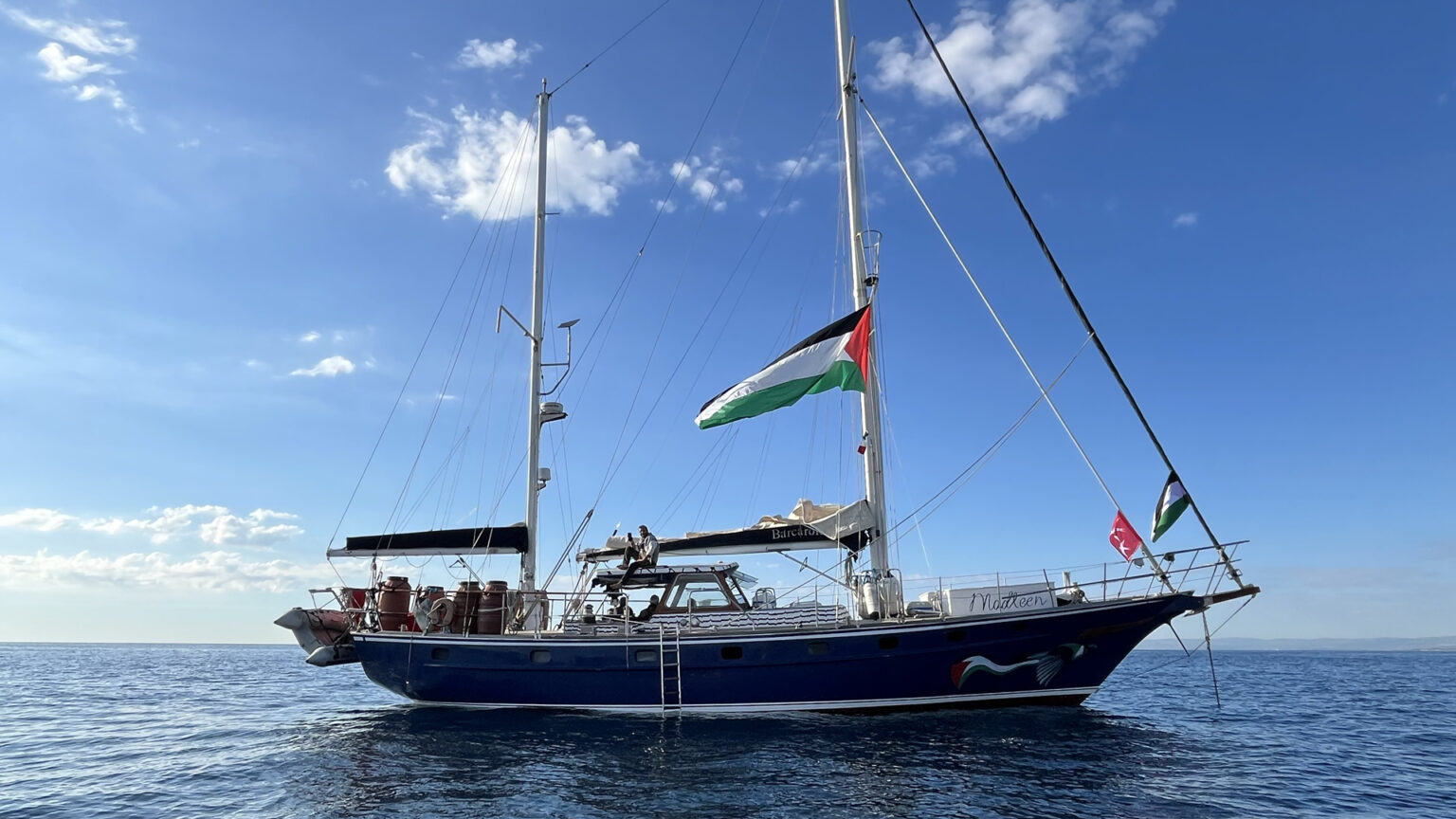
The Madleen before departure. Source: Tan Safi/Freedom Flotilla Coalition

Global Sumud Flotilla aims to break Israel’s illegal blockade on Gaza, to deliver urgent humanitarian aid, and to expose the genocidal war waged on Palestinians.

In July 2025, a new international maritime initiative was launched: the Global Sumud Flotilla. It was formed by four major coalitions: the Global Campaign to Return to Palestine, the Freedom Flotilla Coalition, the Maghreb Sumud Convoy, and the Southeast Asian Nusantara Sumud Initiative. The Global Sumud Flotilla is set to depart on August 31, 2025. Its goal is clear: to break Israel’s illegal blockade on Gaza, to deliver urgent humanitarian aid, and to expose the genocidal war waged on Palestinians. 

The flotilla is composed of dozens of small civilian vessels carrying activists, parliamentarians, doctors, and trade unionists, alongside humanitarian cargo. More than 39 national delegations have pledged participation, making this the largest people-led maritime effort in solidarity with Gaza since the 2010 “Mavi Marmara”.

Behind every flotilla passenger lies a story of conviction. Greek trade unionists brought banners pledging workers’ solidarity with Palestine. Doctors from Spain and Italy carried vital medicines banned from entering Gaza. Parliamentarians from South Africa and Norway insisted that breaking the siege is a moral and political duty.

This is not the first flotilla of its kind this year. The “Handala” and “Madleen”, two of the Freedom Flotilla’s flagship vessels, also set sail in an attempt to break the blockade of Gaza. However, they were attacked by drones and stormed by Israeli forces. Passengers were beaten, kidnapped, and deported. Phones were confiscated, activists were interrogated, and many went on hunger strike to protest their detention. The attack was not just on the Freedom Flotilla; it was an attack on the principle of global solidarity itself.

Read more: Freedom Flotilla en route to Gaza to deliver aid and “shift moral compass of the world”

The Global Sumud Flotilla insists that its mission is entirely lawful under international maritime law. Civilian vessels carrying humanitarian aid in international waters are protected under the UN Convention on the Law of the Sea. Israel’s interception of the “Handala” and “Madleen” constitutes nothing less than piracy and a war crime.

The flotilla’s organizers remind the world that Israel has maintained a land, air, and sea blockade on Gaza since 2007. As they prepared for upcoming missions, flotilla spokespeople declared:

“Our boats carry more than aid. They carry a message: the siege must end. The greater danger lies not in confronting Israel at sea, but in allowing genocide to continue with impunity.”

Criminalizing solidarity, violating international law

In recent months, Israel has escalated its campaign to silence international solidarity with Palestine by targeting civilian flotillas attempting to break the Gaza blockade. These ships, carrying activists, aid, and a message of defiance against siege, have become symbols of global resistance. Instead of engaging through diplomacy or respecting humanitarian principles, Israel has resorted to force on the high seas, treating peaceful civilian missions as military threats.

The assaults on the “Handala” and “Madleen” are more than acts of piracy, they are grave breaches of international law. The UN Convention on the Law of the Sea (UNCLOS) guarantees freedom of navigation in international waters. By seizing vessels outside its territorial jurisdiction, Israel has acted as a rogue state.

International legal experts have consistently affirmed that the blockade of Gaza since 2007 constitutes collective punishment, violating the Fourth Geneva Convention. The International Criminal Court has received multiple submissions documenting Israel’s starvation siege, now exacerbated by open genocide. Yet governments that loudly invoke “rules-based order” remain silent when Palestinians, and their supporters, are the victims.

Instead of protecting citizens, western governments have facilitated Israel’s repression. Passengers aboard the flotillas were stripped of their phones, interrogated, and some were denied re-entry into the Schengen zone. Western states’ silence amounts to complicity.

Some detainees launched hunger strikes in Israeli prisons to protest their abduction. Others returned home to smear campaigns. Western right-wing media accused activists of “provocation” or of “endangering security”. Once-beloved Swedish activist Greta Thunberg who joined the “Madleen” flotilla, received attacks from mainstream media, on social media, and from influential political figures. Such tactics aim to delegitimize solidarity and sow fear among those who dare to act.

But these campaigns have failed to extinguish the moral clarity of the movement. From dockworkers in Barcelona refusing to load arms to Israel, to students occupying universities in the US and Britain, the flotilla has become a symbol: solidarity cannot be blockaded.

The human face of global resistance

The Global Sumud Flotilla represents a convergence of struggles across continents:

  • The Global Campaign to Return to Palestine mobilized thousands of activists worldwide.
  • The Freedom Flotilla Coalition, with roots going back to 2010, brings long experience of organizing maritime resistance. 
  • The Maghreb Sumud Convoy, launched in June 2025, gathered over 1,000 participants from across North Africa under the banner of “coordinated action for Palestine”.
  • The Nusantara Sumud Initiative, launched from Malaysia and eight other Southeast Asian countries, embodies South–South solidarity inspired by Palestinian steadfastness.

Together, these four networks transformed the flotilla from a handful of ships into a people-powered humanitarian corridor. The first official mission is scheduled for August 31, 2025, from Spain, followed by a second launch from Tunisia on September 4, with more than 50 ships expected to participate.

At a press conference in Tunis, organizers emphasized that the flotilla is not merely logistical, it is symbolic:

“This will not only be a fleet. It will be a reminder that the world is watching, that Gaza is not alone, and that peoples will not remain silent.”

The Freedom Flotilla is part of a long lineage of resistance at sea. The 2010 assault on the “Mavi Marmara”, in which Israeli forces killed ten activists, shocked the world. But instead of stopping solidarity, it multiplied it.

The Global Sumud Flotilla marks a new stage. By linking Mediterranean ports, North African caravans, and Southeast Asian convoys, it builds a transnational infrastructure of resistance. Its Arabic name Sumud, steadfastness, reflects both Palestinian resilience and the determination of people across the world to act where governments have failed.

Breaking the siege, building the future

The choice is now clear. Israel will continue to attack peaceful ships in international waters, abduct activists, and suppress humanitarian efforts, because the siege is a cornerstone of its genocidal project. Western governments will continue to look away.

But ordinary people, from Greek dockworkers refusing to load weapons for Israel, to Tunisian unions welcoming flotilla missions, to students and parliamentarians raising their voices, are building a counter-power.

The Global Sumud Flotilla is both a lifeline and a warning: Gaza will not be starved into silence, and solidarity will not be blockaded.

As the flotilla prepares to set sail with more than 50 ships, its message resounds across seas and continents: The siege must fall. Gaza must live. Palestine must be free.
Continue ReadingThe Global Sumud Flotilla: Over 50 ships will set sail for Gaza

Morning Star Editorial: Blame British Steel’s crisis on privatisation, not China or Net Zero

Spread the love

https://morningstaronline.co.uk/article/editorial-blame-british-steels-crisis-privatisation-not-china-or-net-zero

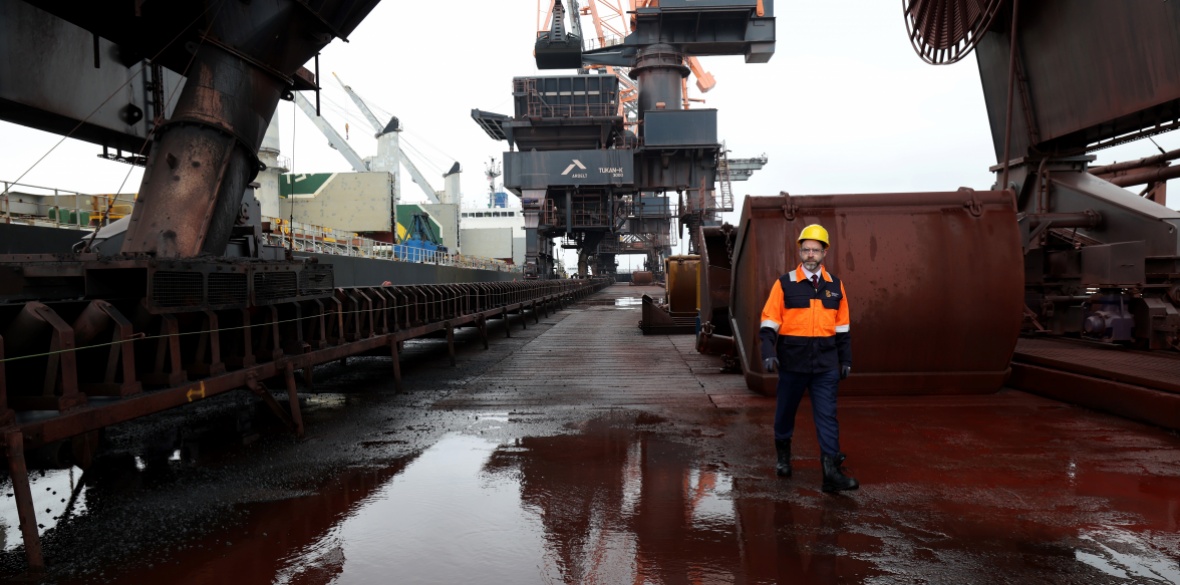
Business Secretary Jonathan Reynolds arrives as coking coal is unloaded at Immingham Port, northern England, as he visits the site in Lincolnshire to view raw materials destined for British Steel at Scunthorpe, being off-loaded, April 15, 2025

THE CRISIS at Scunthorpe steelworks, rightly if belatedly being addressed in the immediate term by state intervention, is the consequence of privatising critical national infrastructure so decisions on its future rest on the profit-and-loss calculations of private companies.

Right-wing media and parliamentarians, who are pro-privatisation and pro-war, want to avoid this conclusion. So we are seeing a propaganda campaign to blame it on other causes, each of which advances the right’s agenda.

One is that it is the result of pursuing “net zero” policies aimed at reducing greenhouse gas emissions. In fact, a planned and publicly directed green transition is essential to Britain’s industrial future: it is leaving it to the market which places jobs and industry at risk.

Turning our backs on the climate crisis cannot be an option as extreme weather events and crop failures grow more serious with each passing year. Labour should face pressure not to drop its already much reduced climate commitments, but to invest in measures that directly help people — restoring its original ambitious plans to insulate 19 million homes in a decade, cutting emissions and lowering household energy bills, for example — to stop the climate-denialist right claiming green policies lower living standards.

The other is to turn Jingye’s record at British Steel into a “security risk” because the company is Chinese, scaremongering over other Chinese investments in Britain and calling for trade decoupling in line with the new cold war being pushed from Washington.

Here, socialists must take a clear position that distinguishes our opposition to any company not accountable to the British people controlling assets of strategic importance from a China-bashing narrative that raises international tensions and risks advancing the US-led war drive.

That doesn’t mean defending the behaviour of a firm like Jingye, which seemed designed to force the closure of the Scunthorpe blast furnaces and whose negotiations with government involved demanding huge sums of money while offering little in return.

But it does mean identifying the parallels between its conduct and, say, that of the Indian conglomerate Tata, which has also taken hundreds of millions in public money while refusing to save the blast furnaces at Port Talbot, a move set to cost thousands of jobs. The common factor is not the country of origin, but the lack of democratic accountability of companies not owned by the British public.

Article continues at https://morningstaronline.co.uk/article/editorial-blame-british-steels-crisis-privatisation-not-china-or-net-zero

Continue ReadingMorning Star Editorial: Blame British Steel’s crisis on privatisation, not China or Net Zero

Dozens of New MPs Worked for Oil and Gas Lobbyists

Spread the love

Original article by Andrew Kersley republished from DeSmog.

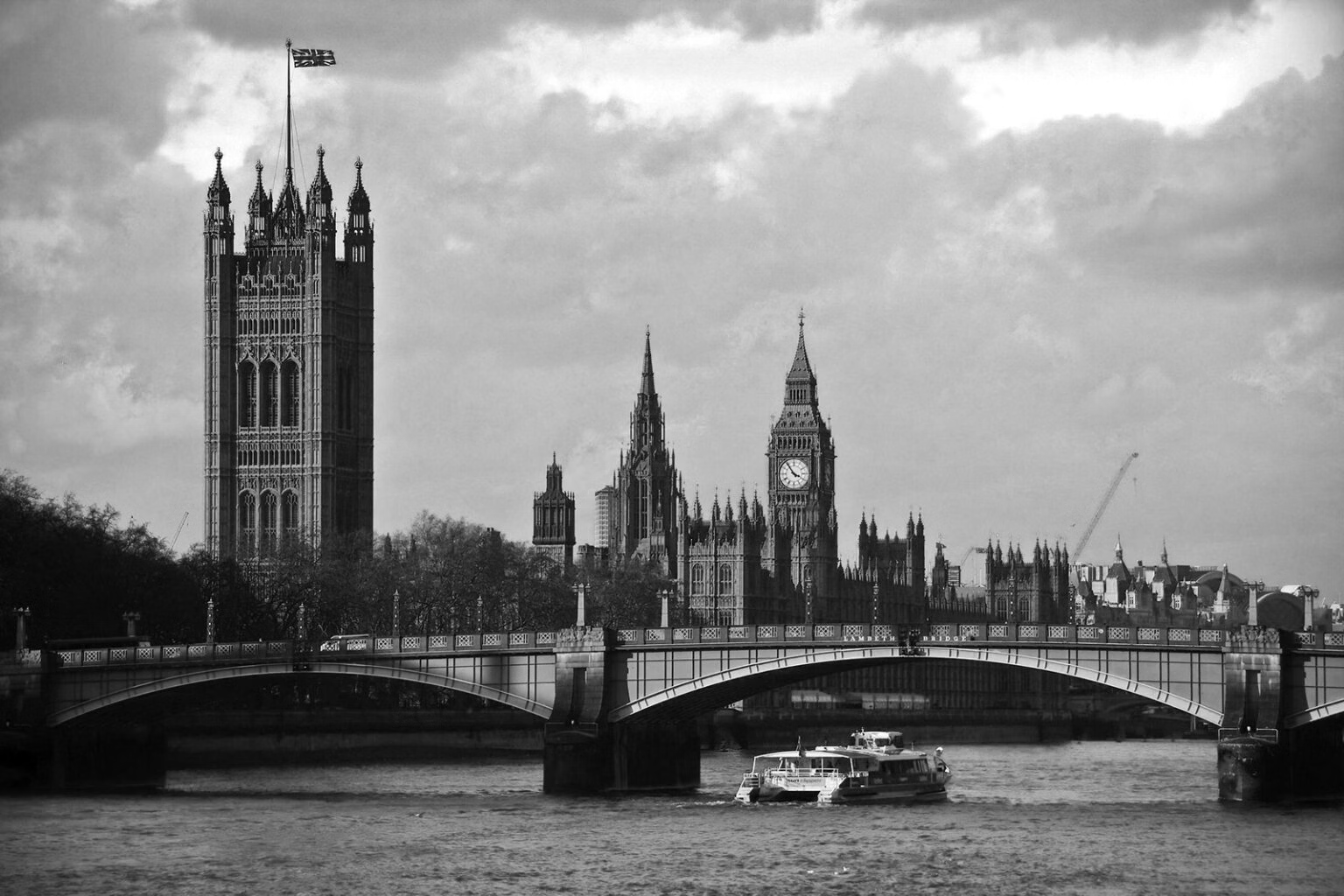
The Houses of Parliament in Westminster. Credit: Garry Knight / Flickr (CC BY 2.0)

A host of parliamentarians were previously employed by agencies with fossil fuel clients.

At least 24 newly elected MPs used to work for public relations, consultancy and lobbying firms that have a history of representing oil and gas companies, DeSmog can reveal.

A DeSmog analysis of the MPs entering Parliament after the 2024 general election found that two dozen had a background working for oil and gas giants, coal power station conglomerates, as well as other highly polluting clients.

The findings have sparked concerns that fossil fuel interests in Parliament may influence policy-making.

“I entered politics after working as an engineer in the renewables industry exactly because I could see we had the technology to make the transition to clean and green energy, but we were lacking the political will to make it happen,” said Green Party co-leader and Bristol Central MP Carla Denyer.

“Part of what stops this transition from occurring is the embedded influence of the fossil fuels industry in politics.”

Labour’s new Ossett and Denby Dale MP Jade Botterill started working at lobbying firm Portland after her parliamentary candidacy was announced in September 2023. Portland’s clients include oil major BP, French energy firm EDF, Heathrow Airport, and Chinese state-owned oil company CNOOC. Another Labour MP – Laura Kyrke-Smith – worked for Portland several years ago. She told DeSmog that she didn’t represent any oil firms while working for the company. 

Portland told DeSmog that they “do not comment on client relationships”.

At least three new Labour MPs – Oliver Ryan, Mary Creagh, and Steve Race – previously worked for Lexington Communications, a lobbying firm that works for oil giant Phillips 66, the International Airlines Group (IAG), and Eren Holding, a firm that runs coal-fired power stations in Turkey.

New Conservative MP for Bromsgrove Bradley Thomas spent at least five years working for Phillips 66, latterly as a strategy lead, before becoming an independent consultant to the sector.

Almost a third of Labour’s new MPs have a background working in communications and lobbying, according to the Sunday Times, a similar share to the Conservatives. Due to the UK’s limited transparency rules around lobbying, it’s often impossible to know whether these individuals worked on behalf of oil and gas clients.

However, we do know that several other major lobbying and consultancy firms with fossil fuel links – in addition to Lexington and Portland – used to employ a number of new MPs. These include:

  • Teneo (clients include BHP, Centrica, and EnQuest)
  • Arden Strategies (SGN, UK Power Networks)
  • Headland (London City Airport)
  • Weber Shandwick (ExxonMobil, Shell, Independent Fuel Suppliers Association, Cairn Oil and Gas)
  • Hanbury (Rockhopper Exploration, Spirit Energy)
  • Consulum (Saudi Arabia)
  • Hanover (Valero)
  • Camargue (Esso)
  • Four Communications (Oman Oil Company)

Four Communications emphasised that its work for the Oman Oil Company ended in 2019, though the firm also has offices in the petrostates United Arab Emirates, and Saudi Arabia.

In June 2024, United Nations Secretary-General António Guterres said that PR agencies had “aided and abetted” the fossil fuel industry, “acting as enablers to planetary destruction”. He called on these agencies to stop taking on new fossil fuel clients, and to set out plans to drop their existing ones.

“Fossil fuels are not only poisoning our planet – they’re toxic for your brand,” he said. 

All the MPs named in this article were approached for comment. 

Gas Lobbyists and Energy Consultants

Several new MPs have also worked for much smaller groups with links to the energy industry. This includes Labour’s new Cannock Chase MP Josh Newbury, who between 2019 and 2022 worked as senior parliamentary officer for the Energy and Utilities Alliance (EUA) – a trade group for the gas industry and fossil fuel boiler manufacturers.

DeSmog revealed in 2023 that the EUA, which is led by former Labour MP Mike Foster, was behind a barrage of negative press attacking heat pumps as a home heating source. Foster has repeatedly labelled pro-heat pump campaigners as a “green cult”.

New Liberal Democrat MP for St Neots and Mid Cambridgeshire Ian Sollom worked as the principal of StrategicFit, an energy sector strategic consultancy that has worked for the oil major ExxonMobil, and the Chinese state oil firm CNOOC.

Sollom told DeSmog that “as a scientist entering Parliament, I am committed to the phasing out of fossil fuels, and my previous career primarily focused on improving decision making and collaboration between energy companies, regulators and other stakeholders”.

Liberal Democrat MP for Cheltenham Max Wilkinson used to work for Camargue, which lobbied politicians in Westminster on behalf of the oil company Esso while he was employed by the firm. 

A spokesperson for the Liberal Democrats stressed that Wilkinson did not work for any oil and gas clients.

Fossil fuel companies have extensive existing ties to Westminster politics. DeSmog revealed that, from the 2019 general election to the start of the 2024 election campaign, the Conservative Party received £8.4 million from oil and gas interests, climate science deniers, and polluting industries.

Meanwhile, a number of leading right-wing think tanks have received direct funding from the fossil fuel industry. Onward, which hosted the most government meetings of any think tank in 2023, receives funding from Shell and BP.

All the agencies named in this article were approached for comment.

Original article by Andrew Kersley republished from DeSmog.

Continue ReadingDozens of New MPs Worked for Oil and Gas Lobbyists