Atlas Network-Affiliated Think Tank Wants Canada’s Greenwashing Law Repealed

Spread the love

Original article by Taylor Noakes republished from DeSmog.
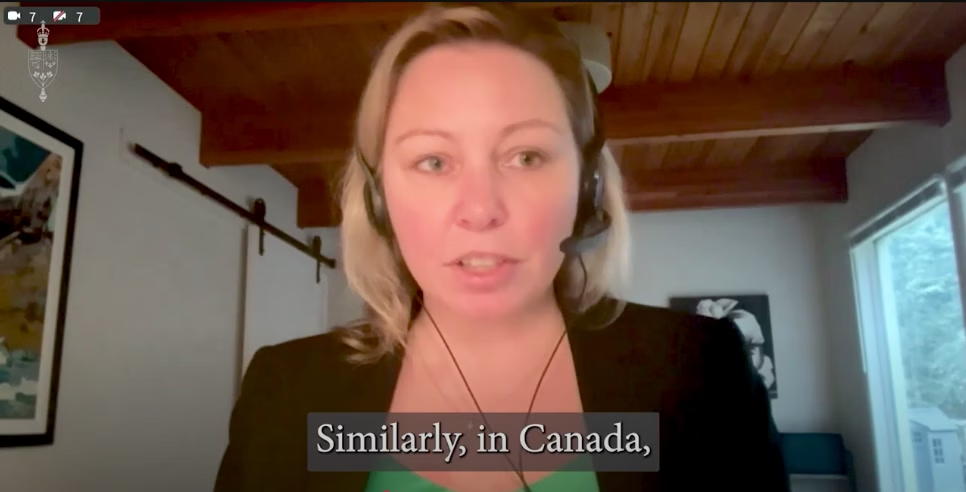
Co-author Heather Exner-Pirot is MLI’s director of energy, natural resources and environment. Credit: MLI / YouTube

Fossil fuel advocates argue Big Oil is being silenced by the consumer protection law.

The Macdonald-Laurier Institute (MLI) is calling to repeal Bill C-59 — commonly referred to as Canada’s anti-greenwashing law. 

Calling the bill a “failure of process and policy,” an MLI paper advocating for abolishment states that it has had a “dramatic silencing effect” on many nationwide businesses and associations that want to communicate their environmental goals. It also says the amendment’s wording exposes companies to frivolous lawsuits.

Canada’s Parliament adopted the omnibus Bill C-59, officially known as the Fall Economic Statement Implementation Act, 2023, in June 2024. The bill included anti-greenwashing amendments to the Competition Act, which came about as a result of public meetings held in the spring of 2023

The bill says that companies found deliberately misleading the public with false environmental claims could be fined up to $10 million.

Shortly before the law was adopted, DeSmog reported that Pathways Alliance — a consortium representing six Canadian tar sands oil producers — scrubbed its website of all content. Not long after, Canadian oil companies, the Canadian Association of Petroleum Producers (CAPP), and third-party advertisers that run pro-oil propaganda on social media, removed mentions of carbon capture and storage (CCS) from their websites. Imperial Oil also removed statements quoting its CEO that were supportive of carbon capture as a climate change mitigation technology. Shell Canada dropped its 2050 climate goals from its website altogether. 

While Canada’s oil industry argued that the new anti-greenwashing regulations necessitated the removal of advocating for carbon capture efforts as much as their Net-Zero goals, other major Canadian corporations did not have a similar reaction. In addition, major tar sands producers and Pathways Alliance partners, such as Cenovus and Canadian Natural Resources Ltd., blamed the regulations when they delayed environmental, social, and governance (ESG) reporting to investors.

Critics argue CCS is an ineffective climate change mitigation technology because it habitually underperforms at capturing carbon dioxide emissions. It’s also historically been used to extend the lifespans of otherwise derelict oil wells, and – irrespective of emissions captured during production – produces fossil fuels that create new emissions when combusted for energy or electricity. Because of these reasons, critics argue CCS’s only purpose is to provide the appearance of social acceptability while continuing fossil fuel production. 

Carbon capture has been widely promoted by the Pathways Alliance, which is seeking to develop a massive carbon capture project in Alberta that would link 13 tar sands facilities with 400 kilometers of carbon dioxide pipelines to a centralized carbon capture hub. CCS projects have historically underperformed in Canada; a 2020 report by Global Witness found that Shell Canada’s Quest hydrogen facility — which uses carbon capture — was actually emitting more carbon than it captured.

Recent research from the Institute for Energy Economics and Financial Analysis (IEEFA) reveals that the Pathways project is not financially viable, and is likely to be subsidy-dependent with limited revenue potential. The IEEFA also notes that Canada’s carbon capture projects have struggled to keep up with projected capture rates.

On the Offensive

Though Bill C-59 is designed to protect Canadian consumers from fraudulent advertising, just as other industries do, fossil fuel advocates — from conservative Canadian newspapers to Koch Brothers-affiliated Canadian think tanks and conservative Alberta politicians — immediately went on the offensive shortly after the bill became law in June 2024. 

Alberta Premier Danielle Smith described the new requirements as “draconian legislation that will irreparably harm Canadians’ ability to hear the truth about the energy industry and Alberta’s successes in reducing global emissions.” She also stated that the new law was “absurd authoritarian censorship.”

“Freedom for people to express themselves is crucial to a democracy,” said Emilia Belliveau, program manager, Energy Transition, Environmental Defence. “But giving businesses a free pass to spread disinformation and greenwashing isn’t.”

“Bill C-59 builds on the longstanding work of the Competition Bureau to protect fair business practices and ensure the public isn’t being lied to,” Belliveau said in a statement to DeSmog. 

“People have a right to know the truth — whether it’s about a product, a service, or the companies behind them. That’s why it’s imperative that our democracy has rules in place to stop ultra-wealthy CEOs and multi-billion-dollar corporations from spreading misinformation and manipulating the public for their own profits,” she added.

Advocates of C-59 have good reason to demand greater accountability from the oil and gas sector. Not only have fossil fuel companies known about the dangers of fossil fuel pollution’s contribution to climate change for decades, they have actively engaged in disinformation campaigns as well. Legislators created C-59 as a direct response to the ongoing disinformation efforts by Canada’s oil and gas industry, which has included everything from blaming stalled pipeline projects on “foreign funded eco-radicals” to outright denial of climate change and funding astroturfing groups to oppose climate legislation.

The MLI paper contains its own inaccurate and misleading statements, including an assertion that there was no opportunity for discussions. Despite making this statement several times, and including it as a key talking point in the paper’s executive summary, the paper’s authors conceded that a consultation process did take place roughly a year earlier. They said greenwashing was addressed, but still argued that a last-minute amendment is much broader and therefore deserved its own, separate consultation process.

Efforts to contact Charlie Angus, the NDP MP who sponsored the bill, were unsuccessful, as were DeSmog’s efforts at contacting MLI for comment.

Chief among MLI’s concerns are that the wording of the amended competition law puts the onus of proof on the person or company making a representation (such as an oil company claiming carbon capture is a viable climate change mitigation technology). With the C-59 amendment, companies and individuals now have to demonstrate their claims based on an internationally recognized standard. The MLI paper further argues that this exposes companies — such as multi-billion-dollar oil and gas companies — to frivolous lawsuits. MLI also claims that the new regulations open the door to too many potential complainants, such as environmental activists and climate advocacy groups.

“Should companies be allowed to exaggerate, cherry-pick, or straight out lie to us in their advertising? No,” said Melissa Lem, family physician and president of the Canadian Association of Physicians for the Environment (CAPE) in a statement to DeSmog. “But this is exactly what companies have been doing with their environmental claims for too long.” 

“This has had real impacts on our health due to unchecked pollution and escalating climate disasters,” she added.

“At its core, Bill C-59 is about truth in advertising — which ultimately protects us from corporate harm.”
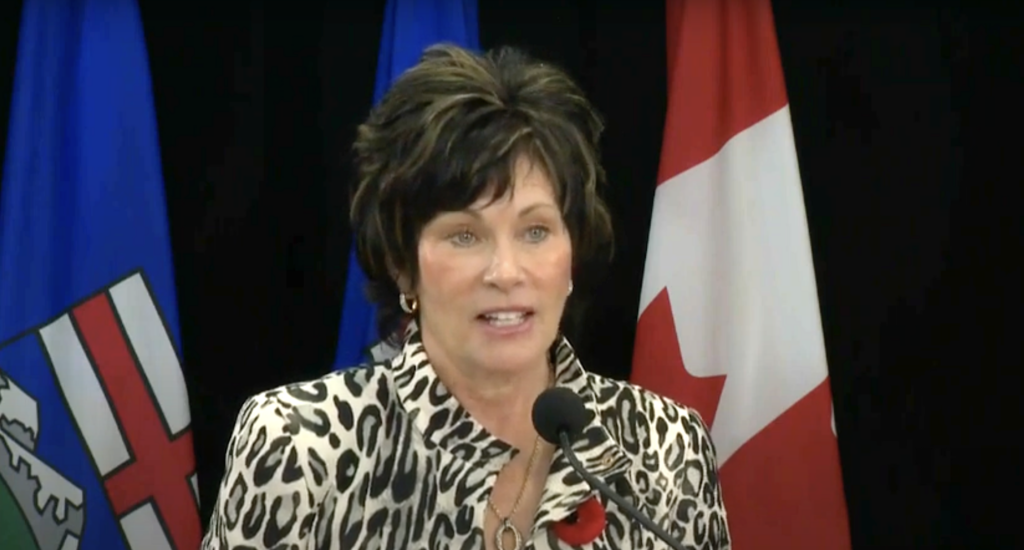
Former Alberta energy minister Sonya Savage
Former Alberta energy minister Sonya Savage has said bill C-59 will result in ‘green hushing.’ Credit: CPAC / YouTube

The MLI paper’s authors are former Alberta energy minister Sonya Savage and Heather Exner-Pirot, the institute’s director of Energy, Natural Resources and Environment. 

DeSmog previously reported on Savage’s public statements about her belief that the anti-greenwashing law was “silencing” Canada’s oil and gas sector. Savage was formerly a senior executive with the Canadian Association of Petroleum Producers (CAPP), as well as Enbridge, a multinational pipeline company. Exner-Pirot is well-known for her fossil fuel advocacy as much as for her campaigns on behalf of the MLI against everything from an emissions cap to electric vehicles

Both Savage and Exner-Pirot have made misleading statements in the past concerning various legislative efforts to control carbon emissions. For example, Exner-Pirot published op-eds criticizing the federal government’s electric vehicle (EV) mandate and characterized it as a quota, among several inaccurate statements about EVs in general. Savage has described C-59 as part of a global effort to silence Canada’s energy sector and that the regulations constituted an indirect ban on fossil fuel advertising, neither of which are true.

The Macdonald-Laurier Institute presents itself as a non-partisan and independent think tank, but is, in fact, part of the Atlas Network. Like Atlas, it has received funding from the Koch Brothers, and generally opposes government regulations — particularly on environmental issues or as they relate to the energy sector. MLI counts among its donors CAPP, Imperial Oil, Canadian Energy Pipeline Association and the Canadian Fuels Association, among others. 

MLI has considerable access to mainstream Canadian media and routinely criticizes the environmental movement, attacking efforts to curb emissions as responding to climate change “alarmism.”

Original article by Taylor Noakes republished from DeSmog.
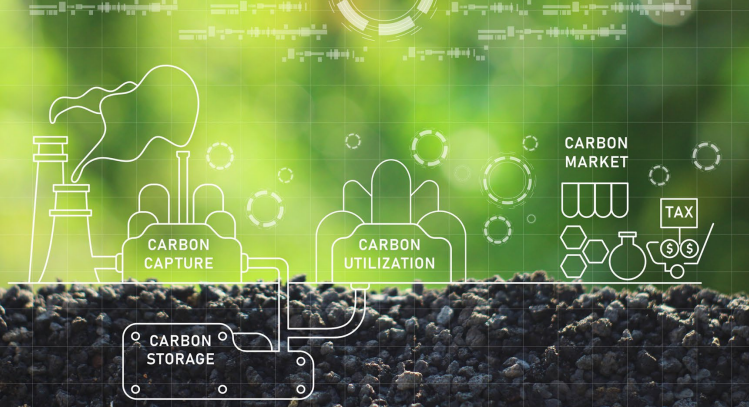
Continue ReadingAtlas Network-Affiliated Think Tank Wants Canada’s Greenwashing Law Repealed

Pathways Carbon Capture Project Is Not Viable, Expert Warns

Spread the love

Original article by Taylor Noakes republished from De Smog.

‘Public funding of CCS is a costly gamble,’ said IEEFA energy finance analyst Mark Kalegha. Credit: IEEFA

New report says CCS proposal is a subsidy-dependent ‘financial risk’ with ‘limited revenue potential.’

Pathways Alliance’s flagship carbon capture and storage project is not financially feasible without massive and consistent subsidies.

This is according to the most recent analysis of the venture, conducted by the Institute for Energy Economics and Financial Analysis (IEEFA), which identified multiple financial challenges.

The Pathways Alliance, a lobby group representing Canada’s six largest tar sands oil producers, proposed a massive carbon capture and storage (CCS) hub based near Cold Lake, Alberta, in 2022. The build-out includes a 400-kilometer pipeline network connecting the CCS hub with 13 tar sands facilities. The group’s members are responsible for approximately 95 percent of the tar sands’ annual output.

“The growing realization that carbon capture and storage projects are likely to require permanent government subsidies resets the discussion about the viability of CCS as a tool to effectively reduce carbon emissions,” Mark Kalegha, the IEEFA’s energy finance analyst for Canada and author of the report, said in a statement. 

“Public funding of CCS is a costly gamble that may not yield tangible returns on Canada’s journey towards achieving net-zero emissions,” Kalegha stated. 

“This is a financial risk the government should reconsider taking on.”

Among the study’s key findings, the IEEFA determined that the total costs — such as interest, insurance, depreciation, and taxes — for existing commercial-scale carbon capture plants in Alberta are approaching thresholds that threaten profitability. In addition, operating costs are increasing at roughly twice the rate of the amount of carbon dioxide that’s captured. 

Critics argue that Pathways will actually use the project for enhanced oil recovery (EOR), which is what carbon capture technology was initially developed to do in the 1970s. Companies have used other notable CCS projects explicitly in this way. In fact, Pathways Alliance has publicly stated on several occasions that it hopes its decarbonization efforts could result in increased oil production. Critics argue the oil industry proposes using carbon capture for EOR as a means to prolong fossil fuel production while appearing to work towards emissions reduction. Canadian federal and provincial governments have enthusiastically supported carbon capture initiatives by the oil and gas sector, despite the concerns and objections of environmentalists. 

But Kalegha is not convinced the Pathways project would be used for EOR. Instead, he believes the alliance’s business case is based on the use of Emission Performance Credit (EPCs) under Alberta’s TIER (Technology Innovation and Emissions Reduction) carbon pricing system. That said, the IEEFA isn’t certain the necessary operating revenue will manifest.

“An effective cap on emission performance credit (EPC) pricing of $170 (CAD) per tonne limits project revenue potential, while a looming oversupply of carbon EPCs is an example of risks to project cash flows,” the IEEFA report states. 

The report further notes that the option to combine Clean Fuel Regulation credits with EPCs is available to the ACTL (Alberta Carbon Trunk Line—one of the two operational carbon capture projects the IEEFA study investigated), but that this significant financial benefit is not currently available to the Pathways project.

The report warns that “without substantial efficiency improvements, the cost per tonne of CO2 captured is likely to exceed the revenue that the project can generate for each tonne captured.”

Kalegha noted that there is no guarantee carbon credits will trade for $170 and their value could face a limitless fall. “There is a severe oversupply risk, and over time, operating costs will likely increase while potential revenue will be stagnant,” he said.

The report indicates that an underperforming and unprofitable carbon capture project would invariably “struggle to bring lasting positive economic benefits to host communities and become dependent on external financial subsidies to maintain operations.”

Even under optimal conditions, “the Pathways project may struggle to break even,” the IEEFA noted. It further stated that real-world carbon capture operations are rarely optimal, echoing analysis by the International Institute for Sustainable Development (IISD), which also concluded carbon capture’s costs are persistently high in Canada, and unlikely to come down. 

Though details about Pathways’ project are scant — which the IEEFA noted in its report — the institute determined that Pathways could have an estimated annual carbon dioxide storage capacity of 10 to 12 million tonnes. If completed, it would be among the largest carbon capture facilities in the world.

Safety Risks

Whether storing such a large amount of CO2 is safe is a vitally important but unanswered question. The release of an estimated 100,000 to 300,000 tons of CO2 at Lake Nyos, Cameroon, in 1986 killed about 1,700 people and 3,500 livestock animals. The rupture of a CO2 pipeline near Satartia, Mississippi, in 2020, resulted in dozens of hospitalizations, the town’s evacuation, and a chaotic emergency response that underlined the public’s unfamiliarity with large-scale carbon dioxide poisoning.

A May 2024 article in The Narwhal revealed that Pathways Alliance made it clear to the federal government that it fully expects to depend on federal government subsidies in the tens of billions of dollars

In a letter to several federal ministers — including then-Finance Minister Chrystia Freeland and Environment Minister Steven Guilbeault — Pathways requested the government cover 50 percent of its estimated operating costs. The same letter also asked if the project would be eligible to generate Clean Fuel Regulation (CFR) for bitumen and crude oil exported using carbon capture technology. Pathways also demanded the federal government forgo an environmental impact assessment. At the provincial level, Pathways broke its project into 126 parts to avoid triggering an automatic environmental assessment.

Despite the growing body of evidence against the plan, it nonetheless maintains considerable political support in Canada. In October 2024, the Globe and Mail reported that the Canada Growth Fund (CGF) proposed funding support for the project. The CGF is a public fund of $15 billion (CAD) that supports implementing new technologies to reduce emissions, managed by the Public Sector Pension Investment Board.

“The Pathways Alliance has been in negotiations with the CGF for over a year, and wants the CGF to provide carbon contracts to mitigate financial risks and guarantee revenues,” Julia Levin, associate director of national climate with Environmental Defence, wrote in a statement to DeSmog. Levin noted that those negotiations ramped up last fall, and a decision is expected soon.

Despite Pathways’ request to abandon the environmental impact assessment, Levin also noted that the federal government is reviewing the project.

“In late November, following the Government of Alberta’s denial to conduct an impact assessment of the project, eight First Nations submitted a request that the federal government exercise its discretion to designate the Pathways Project for a federal impact assessment, given their concerns about the project impacts and the lack of a robust regulatory framework,” said Levin. “Minister Guilbeault has until the beginning of March to decide whether or not to designate the project.”

Little evidence exists showing carbon capture is effective at reducing emissions among Canada’s few extant commercial CCS projects and CCS projects worldwide.

Video rendering of Shell’s Quest carbon capture project. Credit: Shell / YouTube

“Neither Quest nor the Alberta Carbon Trunk Line (ACTL) have managed to keep up with projected capture rates,” said Kalegha during a recent IEEFA webinar, referring to Shell’s massive Quest CCS facility in Alberta. “Boundary Dam is struggling as well,” he added, referring to the Saskatchewan coal plant that received a $1 billion retrofit to capture carbon. The IEEFA estimates that the Boundary Dam CCS effort has never exceeded a 60 percent capture rate, despite claims by CCS advocates that it captures carbon at a rate exceeding 90 percent.  

“There’s a global trend of underperformance when it comes to carbon capture,” he noted.  

Kalegha’s analysis also points to considerable risk factors. He said that operating costs at ACTL and Quest appear to have doubled, while capture rates at both facilities have remained relatively flat. In addition, Pathways Alliance’s project will have to grapple with the combined performance of 13 separate carbon capture facilities.

While the oil and gas industry claims carbon capture technology is improving, Kalegha doesn’t see any data to support this.

“Current CCS projects in Canada are heavily subsidized by the public, anywhere between 50 to 85 percent,” he said during an IEEA online seminar. “This is a very expensive, subsidy-dependent technology experiencing severe technological challenges. The question is who should bear this risk?” 

Julia Levin is doubtful the Pathways Alliance partners are sincerely interested in committing any of their own funds to the project. She noted in a statement to DeSmog that Canadian Natural Resources Limited (CNRL) only committed $90 million to carbon capture in its 2025 budget, compared with $45 million to move offices.

“CNRL’s 2025 budget reveals that the Pathways Alliance has no plans to invest their own funds into carbon capture and storage, instead insisting the public cover over $12 billion of their costs,”  Levin noted. 

“Ninety-million dollars is an insignificant amount of money, compared with the cost of carbon capture projects, as well as CNRL’s operating budget and yearly profits,” she added 

“If these companies seriously believed in carbon capture as a waste management solution for their operations and were intent on moving these projects forward, they would be willing to invest more of their own funds,” Levin pointed out. “Instead they’re using the promise of capturing emissions one day as a rationale to delay the energy transition and weaken climate policy.” 

Original article by Taylor Noakes republished from De Smog.

Continue ReadingPathways Carbon Capture Project Is Not Viable, Expert Warns