“This is the moment to scale up mobilizations for Palestine,” says doctor from “Conscience”

Spread the love

Original article by Ana Vračar republished from peoples dispatch under a Creative Commons Attribution-ShareAlike 4.0 (CC BY-SA) license.
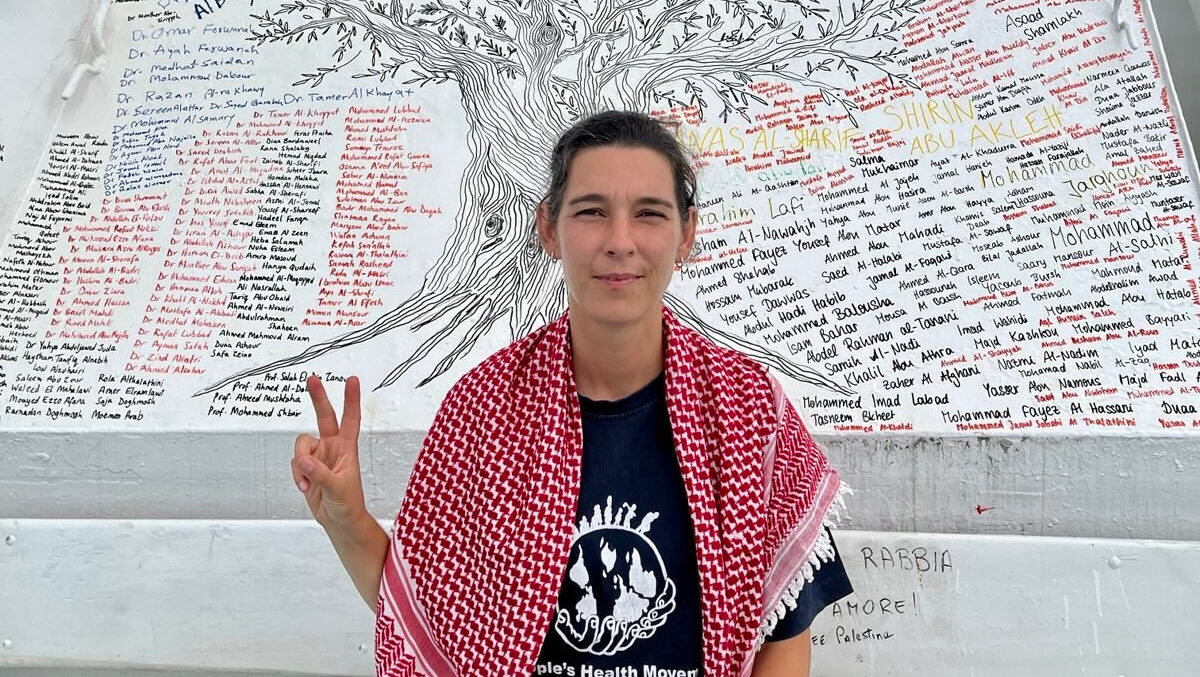
Hanne Bosselaers on the “Conscience”. Source: People’s Health Movement

Physician Hanne Bosselaers, from Medics for the People (MPLP-GVHV) and the People’s Health Movement (PHM), was among dozens of health workers aboard the “Conscience” – one of the vessels that recently sailed to break Israel’s illegal blockade of Gaza and draw attention to the targeting of medical and media workers during the genocide. People’s Health Dispatch spoke with Dr. Bosselaers about her experience following her kidnapping by Israeli occupation forces and about why continued mobilization, especially within the medical community, remains essential to the struggle for Palestinian liberation.

People’s Health Dispatch: Let’s begin with your experience on board the “Conscience”: what it was like to travel as part of that mission, and then to go through the violent interception and kidnapping by the Israeli occupation forces.

Hanne Bosselaers: It was a great honor to join the “Conscience”, a large ship with 92 participants. We were mainly medics and journalists because we wanted to emphasize that these are the two professions most targeted during the genocide in Gaza. We wanted to show solidarity with our colleagues there.

Almost all participants had direct links with people in Gaza through humanitarian work or Palestinian NGOs like Awda Association. Several doctors on board had worked in Gaza during the genocide, and many journalists were in touch with Palestinian citizen journalists and local news agencies. We wanted to reach Gaza to report and to offer medical assistance: that was the core message of the “Conscience”.

Normally, in any conflict, humanitarian workers and journalists have access to document conditions and preserve the right to health. Gaza is really an exception, with Israel’s illegal blockade preventing any such access. So we sailed this large ship together with eight smaller sailing boats from the Thousand Madleens mission. This was a second wave of boats, following the Global Sumud Flotilla, the 47 boats that left from Barcelona, Sicily, and Tunis at the end of August.

Read more: “It’s up to all of us”: British doctor shares why he is on Global Sumud Flotilla

It was a very positive experience on board. We had a strong sense of team spirit. Life on a large ship had to be organized: we took turns at chores, cleaning, cooking, and doing safety drills several times a day. We were led by four experienced women from the Freedom Flotilla Coalition, including Palestinian-American lawyer Huwaida Arraf, Vigdis Bjorvand, an activist from Norway who had previously sailed on the “Handala”, Zohar Regev a Palestinian-German activist, and Madeleine Habib from Australia, who steered the ship. These four women had all participated in earlier flotillas and prepared us very well. They knew what violent interception and imprisonment could look like because they had already experienced it, and they talked us through every step. Thanks to them, we were ready and united for what was ahead.

We kept our spirits high and held onto the hope of reaching Gaza. At one point, we had a call with my colleagues for Al-Awda. They told us: “This is exactly what we expect from you as Westerners, that you use your privilege to draw attention to our situation and to go as far as you can to reach us.” They deeply appreciated what we were doing.

I felt quite guilty not to make it to the shores of Gaza, but of course that was not in our hands. I think we did everything we could. The objectives of the flotillas were really met – the attention they drew, the participation of thousands, the local actions, the strikes in Italy, the massive demonstrations across many countries – all of this created significant pressure on Israel. I believe this helped bring about the ceasefire. Even if that ceasefire remains insufficient, it’s still a victory for the flotillas and the global movement that stood behind them.

PHD: You mentioned that the “Conscience” had a specific focus, its crew made up mostly of journalists and health workers. As a health worker, how did you experience the conditions during your imprisonment in Israel?

HB: In our case, the Israeli Occupation Forces (IOF) boarded our ship very violently. They came with three helicopters and a large navy frigate. More than 30 armed soldiers stormed our ship against 90 unarmed journalists and medics. It was clearly a show of force. We were still 200 kilometers from the Israeli coast, about 15 hours of full steam sailing from the port of Ashdod. So the interception itself was completely illegal and disproportionate.

During the whole voyage to shore, we were held in a small, confined, and very hot space. Some participants were elderly, the oldest was Isaline Choury, an 83-year-old French woman, the niece of Danielle Casanova, who was a well-known member of the French Resistance. She was experienced but had health problems, and she wasn’t allowed access to her medication for the entire 15 hours. She had to beg just to go outside for a few minutes of fresh air, which was sometimes refused. So even before imprisonment, our treatment amounted to captivity.

Once in prison, it became worse. What we experienced is only a fraction of what Palestinians face, but it was still meant to humiliate. Guards insulted us all the time. They used minor physical violence on me and other women – twisting arms, pulling hair – not severe beatings, but completely unnecessary since no one resisted. You could really feel that this is a society built on hate, racism, and violence.

We were taken to Ktzi’ot prison, the largest in Israel, because between our group and the Global Sumud Flotilla, there were around 500 detainees. The prison itself looks like a concentration camp: massive concrete walls, five to ten meters high, reminding you of the wall in the West Bank, topped with barbed wire, and surrounded by an army of guards.

Read more: The accursed fate of Palestinians in Israeli prisons

Access to medical care was extremely limited. You could request to see a medic, but they always made you wait. Some participants who depended on medication didn’t get it until their consular representatives managed to intervene, and sometimes they were only able to visit their citizens after hours of waiting, which is completely illegal. The prison authorities behave as if they are above the law and can do whatever they want.

If this is how they treat Europeans and US citizens, I don’t dare to imagine how Palestinians are treated. The food was scarce and very poor, and we didn’t receive bottled water, only tap water that looked brownish. Some people were isolated. We stayed for 48 hours, but if someone had to stay for months or years, the effects on both mental and physical health would be devastating.

PHD: You mentioned the psychological impact of imprisonment. Could you speak a bit more about what prolonged imprisonment means for Palestinians, what kind of mental health consequences it has, and how health workers like yourself react when hearing about the experiences of Palestinian political prisoners?

HB: They regularly use these tactics to break people mentally. Nothing is regular, nothing is certain. For Palestinians, this begins from the moment of arrest. They are often kidnapped – at work, at home, in the middle of the night – without trial or due process. There’s no chance to say goodbye to family members. Once they’re taken, everything becomes uncertain: the duration of detention, whether they’ll be charged, whether they’ll ever be released. The occupation authorities can prolong imprisonment whenever they want.

What they did with us, I imagine they do with Palestinians all the time: sleep deprivation, psychological manipulation. Every two hours the guards would bang on the door shouting: “You’re going home!” The first time we believed them, so we got up, went to the toilet, waited, but nothing happened. Two hours later, the same again. At this point we knew it was just about making us have less sleep. And when they finally came for real, we didn’t believe them anymore and stayed in bed until they shouted at us to get up. It’s a tactic to exhaust you, to destroy your sense of reality.

I actually had an exchange with the guard who made us enter our cell. She said: “Welcome to your new home. Welcome to hell.” I told her: “No, you are the one staying here. I’m going home soon. You’re the one trapped in this system of violence. I really pity you.” Because that’s what it is – industrial-scale violence.

Imagine the young Palestinians, some as young as fourteen, living under constant threat from these violent, vicious guards. You can see how this leads to psychosis, depression, and other severe mental disorders. There are already many reports documenting this.

To me as a health worker, it’s deeply concerning. We have to keep campaigning for the release of these people – these hostages, because that’s what they are. They’re not prisoners, they haven’t committed any crime, and they should not be in prison at all.

PHD: Before boarding the “Conscience”, you were also preparing to join the Global Sumud Flotilla with Aziz Rhali and James Smith, comrades from the People’s Health Movement. Why is it so important for health workers to take an active role in the struggle for the liberation of Palestine and to express solidarity? How does this connect to your mission as a health worker?

HB: I see a health worker as someone who defends the right to health for everyone, everywhere. And if you look at what has happened to health in Gaza, it’s the worst situation in the world. Every right related to health has been denied: the right to housing, to education, to clean water, food, and of course healthcare itself. These were the first targets of Israel’s attacks.

After October 7, several hospitals were bombed. But even before that, in every Israeli assault on Gaza, hospitals were hit and healthcare workers were targeted. The number of medical workers killed during the genocide is unprecedented: more than 1,500 have been killed, over 300 imprisoned, and many more injured while at work, inside hospitals. Patients have been killed in their hospital beds, and entire hospitals burned to the ground. It’s a genocidal strategy aimed at erasing the entire healthcare system.

Read more: Pharmacist on board the Global Sumud Flotilla: “Health workers’ solidarity with Palestine must be practiced on the ground”

Then there’s the blockade. No medicine, medical equipment, or supplies are allowed in. Even humanitarian workers face extreme restrictions. Only a few foreign health workers can enter, and when they do, they can’t bring medical materials, just a few kilograms of personal luggage and a small amount of money enough to sustain themselves, not to share with anyone else. These inhumane restrictions are illegal under international law. There is no other conflict where the destruction of health infrastructure reaches this scale. Of course, there are other very cruel conflicts – in Sudan, in the Congo – but there, at least some minimal humanitarian access and healthcare structures exist. Gaza is different. The healthcare sector has been a primary target.

And yet, when you look at the response of Palestinian health workers, it’s extraordinary. In Al-Awda, they continue to build and sustain field hospitals, expand capacity, and help their people. They’ve grown from 400 to over a thousand volunteers working in makeshift hospitals and camps. Their courage and resilience are deeply inspiring.

So as a defender of the right to health, standing with Palestine is not only a moral obligation, it’s also an act of professional solidarity. Palestinian health workers show us what it truly means to uphold dignity, even in completely inhuman conditions. They refuse to abandon their patients. They’ve said: “We will stay until the last unit of blood, until the last pill.”

These health workers are unique. They’re my greatest source of inspiration, and I feel honored to dedicate much of my activism to them. They deserve liberation, rights, and the full realization of the right to health for their entire people. For me, standing by them is not difficult, it’s the easiest and most natural thing to do.

PHD: It was really moving to see Dr. Ahmed Muhanna return to Al-Awda the other day, and to hear the speech he gave. It’s been impossible to ignore the incredible work Palestinian health workers have done over the past two years, it’s truly inspiring.

HB: Absolutely. That video made me cry with joy. Honestly, I had feared he wasn’t alive anymore, we hadn’t heard any news for such a long time. I wasn’t expecting to see him again. When I did, he looked physically exhausted, he’d lost so much weight, but the strength of his words, his spirit, was incredible. It was deeply inspiring.

Read more: Dr. Ahmed Muhanna of Gaza’s Al-Awda Hospital released after 665 days of illegal imprisonment

PHD: At the same time, we see the mainstream media and much of the political establishment in Europe talking about Donald Trump’s so-called peace plan. But even in the first hours and days after it was announced, Israel violated the ceasefire. For health workers, for Palestinians, and for those standing in solidarity with them, the struggle clearly continues. As someone who has been involved in this movement for a long time, what do you see as the most important priorities for activists in Europe and around the world in the coming weeks?

HB: You’re right, Israel is already violating the ceasefire agreement. I asked this morning [October 17] whether any of the supplies that entered Gaza had actually reached people, and the answer was no. There has been no scaling up of humanitarian aid, and the crossings are still closed. So Israel is already violating the most important parts of the agreement.

On the other hand, the fact that Gaza still stands and that there are talks about reconstruction is itself a kind of victory. It may seem small, and the situation remains a massive violation of rights, still colonization, but we shouldn’t underestimate it. We can’t expect anything good from Netanyahu, Trump, or Blair, but their plan was to create a “Gaza Riviera,” to completely cleanse the Strip, and they failed. They didn’t manage to empty Gaza of its people, and that’s also because of the global movement, the resistance, and partly the flotillas, which showed that we would not let that happen.

Gaza will stay, and this is the moment to scale up mobilizations and to fight for Palestinians’ right to self-determination over their land and to lead their own reconstruction. There’s a big danger now that all kinds of colonial NGOs will move in and take control of reconstruction efforts. Yes, there will be funding from Arab countries and others, but this process must be led by Palestinians, according to their own priorities.

We want to listen to our partners there, the grassroots Palestinian NGOs and community groups who know best what their people need. They must lead decisions about what is rebuilt and how. So right now, direct solidarity with Palestinians in Gaza and their organizations is absolutely essential. We’ll continue to speak about this, to show what they’re doing, and to raise support and mobilization in Belgium and across the world.

That’s also what we, as participants of the flotillas, agreed on: this ceasefire is not an end. It’s the beginning, a small but real moment of hope. And we need to nurture that hope and keep going.

PHD: You’ve already touched on what lies ahead, but maybe there’s more to add on how we can help ensure reconstruction and health justice?

HB: Yes, there’s an unimaginable amount of work to be done. Even just clearing the rubble and unexploded devices to make space for people to return to their land will be an enormous operation that takes a lot of time. But as I’ve said, this work must be in the hands of Palestinians. They are the ones best equipped to rebuild. They don’t need Western paternalism – and it’s Israel that must pay for what it destroyed.

That’s something we really need to fight for: accountability. You can’t just destroy the homes of two million people without any consequence. Israel must be held responsible and pay reparations for the devastation it caused. It hasn’t happened after previous assaults, but this time it must be part of the conversation within the solidarity movement. And of course there will be a need for international support, but we have to avoid a new wave of NGO colonialism. Organizations that stand in true solidarity with Palestinians should take the lead, not by flying in to “rebuild” or by constructing fancy projects nobody asked for, but by supporting Palestinians’ own initiatives and priorities. We can fund, assist, and advocate, but the leadership has to remain local.

Read more: Palestinian health workers are fighting for humanity

So when we speak of health justice, it means full justice: ending Israel’s impunity and the ongoing violations of all rights. There can be no right to health under apartheid and occupation. We have to break both, or any talk of health in all Palestine will remain meaningless. Because we have to remember that the West Bank is also severely affected by settler colonial violence, home demolitions, and mass arrests. We often focus on Gaza, but we must not forget the daily displacement and repression in the West Bank. It’s all part of the same system.

PHD: Thank you, Hanne. Is there anything you’d like to add before we close?

HB: Just that the flotillas have been incredibly inspiring for people all over Europe. You could really feel how this collective effort awakened and motivated so many who had never been involved before. For Medics for the People (MPLP-GVHV), joining the “Conscience” was a collective decision. We felt it was important for our organization to take part directly, to build international connections and send a clear message of solidarity. And it worked: people in Belgium who had never thought much about Palestine suddenly started to care and to learn.

Interview slightly edited for length.

People’s Health Dispatch is a fortnightly bulletin published by the People’s Health Movement and Peoples Dispatch. For more articles and subscription to People’s Health Dispatch, click here.

Original article by Ana Vračar republished from peoples dispatch under a Creative Commons Attribution-ShareAlike 4.0 (CC BY-SA) license.

Experiencing issues with this image not appearing. I suspect because it's so critical of Zionist Keir Starmer's support of and complicity in Israel's genocides.
Genocide denier and Current UK Prime Minister Keir Starmer is quoted that he supports Zionism without qualification. He also confirms that UK air force support has been essential in Israel’s mass-murdering genocide. Includes URLs https://www.declassifieduk.org/keir-starmers-100-spy-flights-over-gaza-in-support-of-israel/ and https://youtu.be/O74hZCKKdpA
Keir Starmer objects to criticism of the IDF. He asks how could anyone object to them starving people to death, forced marches like the Nazis did, bombing Gaza's hospitals and universities, mass-murdering journalists, healthworkers and starving people queuing for food, killing and raping prisoners and murdering children. He calls for people to stop obstructing his genocide for Israel.
Keir Starmer objects to criticism of the IDF. He asks how could anyone object to them starving people to death, forced marches like the Nazis did, bombing Gaza’s hospitals and universities, mass-murdering journalists, healthworkers and starving people queuing for food, killing and raping prisoners and murdering children. He calls for people to stop obstructing his genocide for Israel.
Orcas discuss Genocide-supporting and complicit Zionists. Donald Trump, Keith Starmer, David Lammy, Rachel Reeves, Angela Rayner and Wes Streeting are acknowledged as evil genocide-complicit and supporting cnuts.
Continue Reading“This is the moment to scale up mobilizations for Palestine,” says doctor from “Conscience”

“There is no peace and no plan” for Gaza, health workers warn

Spread the love

Original article by Ana Vračar republished from peoples dispatch under a Creative Commons Attribution-ShareAlike 4.0 (CC BY-SA) license.

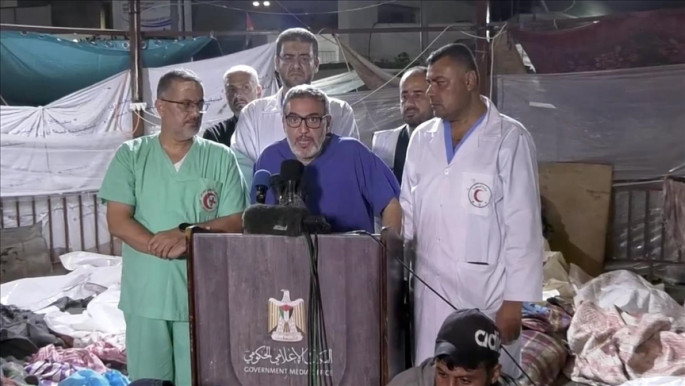
Ghassan Abu-Sittah and other health workers hold press conference after Israeli attacks on Gaza’s hospitals, October 2023. Source: Ghassan Abu-Sittah/X

Palestinian health workers and members of flotilla missions condemn Israel’s ongoing crimes in Gaza and the false promises of Donald Trump’s so-called peace plan.

“There is no peace and there is no plan,” Dr. Mustafa Barghouti emphasized during a discussion hosted by the People’s Health Movement (PHM) on Sunday, October 19, speaking about the situation in Palestine following the announcement of a ceasefire earlier this month. Together with Dr. Hanne Bosselaers and Aziz Rhali, both health workers and participants in recent attempts to break Israel’s illegal blockade of Gaza by sea, Barghouti addressed ongoing Israeli crimes and the need for international solidarity movements to keep mobilizing.

The outline proposed by US President Donald Trump, Barghouti argued, “does not mention once the necessity to end occupation. It does not mention the right of self-determination for the Palestinian people. It does not mention the right of the Palestinian people to be free and have a state of their own.”

Read more: Trump says Gaza ceasefire still in place after Israel kills over 100

All of these things, however, remain at the heart of the Palestinian liberation struggle, he said, and they rely also on international solidarity. According to Barghouti, it was this sustained global mobilization that pressured both the US and the Israeli government to reduce the intensity of the assault on Gaza. “I think the ceasefire happened only because of two factors: the steadfastness and heroism of the people of Gaza – of the Palestinian people in general – but also because of the international solidarity movement, which has become a revolution, a true revolution,” he stated.

Israeli abductions fail to break health workers’ solidarity

Bosselaers and Rhali have been active contributors to that movement, particularly over the past two years, including through their participation in the Global Sumud Flotilla and Conscience missions. Although both were illegally intercepted in international waters and kidnapped by Israeli forces on separate days, their experiences following these illegal acts have a lot in common.

“Every hour during the night, they came to wake us up just to count us,” Rhali described how Israeli soldiers tried to exhaust and break the determination of flotilla participants. “When we started protesting because one of us needed insulin, they refused to give it to him. They came armed, with dogs, to tell us we were simply being counted and that they weren’t going to give insulin to terrorists.”

Read more: Pharmacist on board the Global Sumud Flotilla: “Health workers’ solidarity with Palestine must be practiced on the ground”

“They tried everything in that prison to discourage us, to humiliate us, to make us afraid, to break us, but that didn’t work,” Bosselaers added. “We stayed dignified and kept thinking about all the Palestinian prisoners just one wall away from us.”

Bosselaers was one of more than 90 health and media workers aboard the Conscience, whose mission included exposing the deliberate targeting of Palestinian journalists and medical staff since October 2023. “When you are committing a genocide, you don’t want anyone to witness it or bring out the truth, that’s why more than 250 journalists were killed in Gaza,” she said. “And if you want to perpetuate a genocide, you don’t want people saving lives, so all health workers, all hospitals were heavily targeted – more than 1,500 health workers were killed in Gaza since October 7, 2023.”

Attacks on healthcare in Palestine continue

Despite the ceasefire agreement, Israeli attacks on Gaza’s health system continue in other forms. “It was completely heartbreaking to see [Palestinian Medical Relief Society] structures and clinics we spent 30 years building destroyed in just a couple of minutes,” Barghouti said. Equally painful is knowing that occupation forces still block the entry of essential equipment and medicine, and prevent thousands of Palestinians in need of care from seeking treatment abroad. “They are preventing the passage of medical materials and medicines that we need very badly,” he emphasized. “They are preventing any construction materials from reaching Gaza, and you know most of the infrastructure there is destroyed.”

“Nobody should think the war in Gaza is over, it’s still going on,” Barghouti warned, adding that the so-called peace plan celebrated by Western leaders is an insult to Palestinians, particularly where it envisions foreign rule over the Gaza Strip. “Why do we need foreign rulers? We struggled for decades against British colonialism and now we’re struggling against Israeli colonialism, certainly not just to have another foreign body ruling us in Gaza.”

Instead, Barghouti said, the focus must remain on maintaining international pressure through grassroots movements and workers’ solidarity. He referred to the recent general strikes in Italy and mass protests in Spain, France, and elsewhere as examples of how the Western working class can play a role in ending Israel’s impunity. “We need to enhance the Boycott, Divestment, and Sanctions campaign against the Israeli occupation,” he said. “Because our goal is not just to end the war on Gaza. Our goal is to achieve freedom. Our goal is to end occupation. Our goal is to end the system of apartheid that we are subjected to.”

People’s Health Dispatch is a fortnightly bulletin published by the People’s Health Movement and Peoples Dispatch. For more articles and subscription to People’s Health Dispatch, click here.

Original article by Ana Vračar republished from peoples dispatch under a Creative Commons Attribution-ShareAlike 4.0 (CC BY-SA) license.
Keir Starmer objects to criticism of the IDF. He asks how could anyone object to them starving people to death, forced marches like the Nazis did, bombing Gaza's hospitals and universities, mass-murdering journalists, healthworkers and starving people queuing for food, killing and raping prisoners and murdering children. He calls for people to stop obstructing his genocide for Israel.
Keir Starmer objects to criticism of the IDF. He asks how could anyone object to them starving people to death, forced marches like the Nazis did, bombing Gaza’s hospitals and universities, mass-murdering journalists, healthworkers and starving people queuing for food, killing and raping prisoners and murdering children. He calls for people to stop obstructing his genocide for Israel.
Experiencing issues with this image not appearing. I suspect because it's so critical of Zionist Keir Starmer's support of and complicity in Israel's genocides.
Genocide denier and Current UK Prime Minister Keir Starmer is quoted that he supports Zionism without qualification. He also confirms that UK air force support has been essential in Israel’s mass-murdering genocide. Includes URLs https://www.declassifieduk.org/keir-starmers-100-spy-flights-over-gaza-in-support-of-israel/ and https://youtu.be/O74hZCKKdpA
Orcas discuss Genocide-supporting and complicit Zionists. Donald Trump, Keith Starmer, David Lammy, Rachel Reeves, Angela Rayner and Wes Streeting are acknowledged as evil genocide-complicit and supporting cnuts.

Continue Reading“There is no peace and no plan” for Gaza, health workers warn

“It’s up to all of us”: British doctor shares why he is on Global Sumud Flotilla

Spread the love

Original article by Ana Vračar republished from peoples dispatch under a Creative Commons Attribution-ShareAlike 4.0 (CC BY-SA) license.
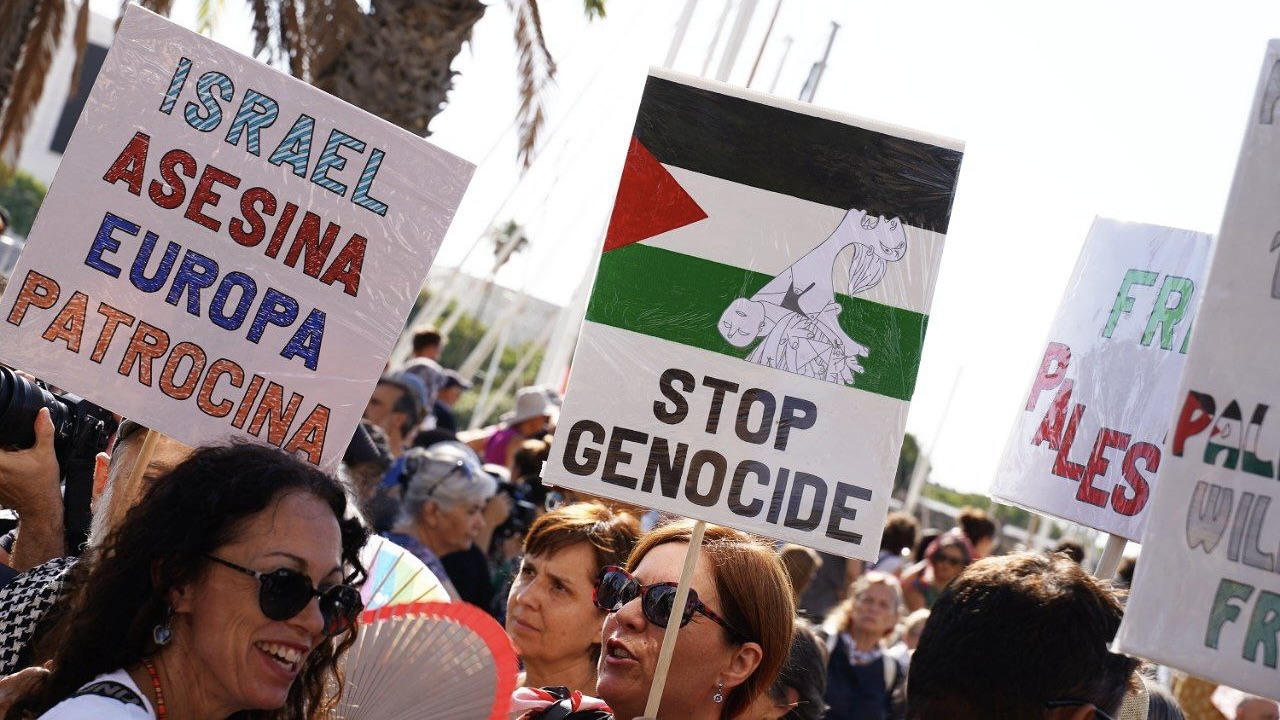
Supporters gather in Barcelona to see of the Sumud Freedom Flotilla to Gaza. Photo: Podemos / X

British doctor James Smith tells People’s Health Dispatch why he is joining the Global Sumud Flotilla and why health workers must organize against Israel’s genocide.

Health workers are among the dozens preparing to join the Global Sumud Flotilla, setting sail in the first week of September from ports in Tunisia, Spain, and Italy to break Israel’s blockade of Gaza. As at least 50 ships get ready to cross the Mediterranean, People’s Health Dispatch spoke with Dr. James Smith, a British doctor and health activist with Medact and the People’s Health Movement (PHM). Having volunteered in Gaza during the genocide – and repeatedly blocked from returning by Israeli authorities – Smith now continues his solidarity work through the Flotilla’s latest launch.

People’s Health Dispatch: To start, could you briefly introduce yourself? What do you do, and how did you decide to join the Global Sumud Flotilla?

James Smith: I’m a doctor trained in the UK, and for most of the past decade I’ve worked on and off in the international medical humanitarian sector with various organizations. During that time, I’ve also maintained a strong interest in health justice and solidarity movements, and I’ve always followed the work of the People’s Health Movement (PHM).

I foremost came to connect with the Global Sumud Flotilla, I guess, because I worked in Gaza during the genocide. I spent about two and a half months there as an emergency doctor, and what I witnessed made it very clear how limited humanitarianism and the liberal political order really are. It’s clear in Gaza, as it should be in many other parts of the world, that we can’t rely on existing political or legal systems to uphold justice, fairness, or equality. Unfortunately, that responsibility often falls to ordinary folks.

We’ve seen this for decades, almost a century, in international solidarity movements around Palestine. More recently, there’s been a vibrant resurgence of direct actiondockworkers refusing to load military equipment directed to Israel and campaigns against the international arms trade in the UK and elsewhere. And, of course, we’ve seen the flotillas. They have existed since the 2000s: the Freedom Flotilla Coalition has organized more than 30 missions, but this is the biggest single international flotilla effort so far.

For me, as someone who has worked in Gaza, who has lobbied politicians, spoken to the media, and written in academic forums, there’s nothing else to do. It feels like every other avenue has already been tried. Nothing has worked. That’s why I believe it’s up to all of us – as citizens of the world, if I can use that phrase – to take action and force an end to Israel’s genocide, because that’s the only way it will happen. We need to be very aware that humanitarianism can’t solve a genocide. James Orbinski said this back in 1999, humanitarianism alone cannot stop genocide, it cannot stop atrocity crimes. So while I’ve been rejected from returning to Gaza, I also recognize that humanitarianism isn’t the answer. That’s one of the reasons why I’m joining the flotilla.

PHD: We’ve seen health workers in Gaza murdered, kidnapped, imprisoned, and tortured. As a health worker yourself – and perhaps in conversations with others joining the Flotilla – what is the driving motivation? What do you most want to raise, given the systematic attacks on Gaza’s health system, and more broadly on Palestine’s healthcare, including in the occupied West Bank?

JS: We’ve seen an unprecedented assault on health as part of the strategy of genocide. Approximately 1,600 Palestinian healthcare workers have been killed. The entire healthcare system, its infrastructure, its medical supplies, has been devastated.

I personally visited hospitals across Gaza, from north to south, all of which had suffered targeted attacks. Bullet holes in the walls. Generators destroyed by Israeli tanks. Whole wards shelled by artillery. At one hospital in Khan Younis, after Israeli soldiers occupied the building, they cut every single ultrasound probe before leaving. We’re seeing a meticulous, systematic assault on health as a way to ethnically cleanse and eliminate the Palestinian people.

Read more: Israeli destruction of Gaza’s healthcare is a blueprint for future imperialist wars

Even if this were not the case, as healthcare workers we have a responsibility that goes beyond treating the immediate pathologies that walk through the door. We also have to address the root causes of ill health, which always come back to justice, discrimination, and different forms of oppression – factors that shape how we live and relate to one another. For me, it’s a moral, professional, and political responsibility to engage in this work. And while I’ve had the privilege of working alongside many Palestinian health workers, I believe even those who haven’t shared this obligation, it is incumbent on us to resist what Israel is doing in Palestine.

PHD: To conclude, what can people who are not on the Flotilla do to support it? What should they prioritize over the next couple of weeks?

JS: The simple reality is that we live within a capitalist global order, and therefore some of our power lies in where we put our money. Francesca Albanese has published a report listing many corporations and institutions complicit in the genocide, those bankrolling it and profiting from it. One of the lowest bars for action, in this context, is to think carefully and ethically about where we spend our money. We must engage in the boycott, divestment, and sanctions (BDS) movement: boycott through our own purchasing choices, ensure our loved ones are also doing the same, and collectively support these efforts.

PHD: What kind of collective actions do you see as most urgent?

JS: Coordinated collective direct action is crucial: lobbying political powers to cut ties with Israel, impose sanctions, and sever economic, political, and diplomatic relationships. And we must ensure these ties aren’t reintroduced the moment a ceasefire is agreed.

In my lifetime, I’ve never seen this level of mobilization in support of Palestine. There’s been a real revival of the solidarity movement, but we still need to organize more coherently within our workplaces, friendship groups, and families. Even after two years of genocide, there is still so much work to do. As healthcare workers, we need to organize more cohesively. And these mobilizations must be sustained not just for days, weeks, or months, but for years and decades, in pursuit of a liberated Palestine.

The Sumud Flotilla is a privilege to be part of, but many people following Israel’s genocide might feel frustrated that they can’t do something, let’s say, physically. But there is always something to do, wherever we are in the world, from the remotest corners to towns and cities right next to Palestine. We need to build connections to sustain these movements and sustain each other. And we must recognize that all of these actions are interconnected: choosing not to buy an Israeli product, choosing a Palestinian one instead, or booking travel through a platform that doesn’t operate in the occupied West Bank. Each of these small acts is part of a wider movement for liberation.

Interview slightly edited for length

People’s Health Dispatch is a fortnightly bulletin published by the People’s Health Movement and Peoples Dispatch. For more articles and to subscribe to People’s Health Dispatch, click here.

Original article by Ana Vračar republished from peoples dispatch under a Creative Commons Attribution-ShareAlike 4.0 (CC BY-SA) license.

Experiencing issues with this image not appearing. I suspect because it's so critical of Zionist Keir Starmer's support of and complicity in Israel's genocides.
Genocide denier and Current UK Prime Minister Keir Starmer is quoted that he supports Zionism without qualification. He also confirms that UK air force support has been essential in Israel’s mass-murdering genocide. Includes URLs https://www.declassifieduk.org/keir-starmers-100-spy-flights-over-gaza-in-support-of-israel/ and https://youtu.be/O74hZCKKdpA
UK Labour Party government ministers Keir Starmer, Angela Rayner and Rachel Reeves explain that they are partners complicit in Israel's Gaza genocide. The UK has provided Israel with arms, military and air force support. They explain that they don't do gas chambers but do do forced marches, starvation, destroy hospitals, mass-murders of journalists and healthcare workers.
UK Labour Party government ministers Keir Starmer, Angela Rayner and Rachel Reeves explain that they are partners complicit in Israel’s Gaza genocide. The UK has provided Israel with arms, military and air force support. They explain that they don’t do gas chambers but do do forced marches, starvation, destroy hospitals, mass-murders of journalists and healthcare workers.
Vote Labour for Genocide.

Continue Reading“It’s up to all of us”: British doctor shares why he is on Global Sumud Flotilla

European dockworkers and medics to join Global Sumud Flotilla

Spread the love

Original article by republished from peoples dispatch under a Creative Commons Attribution-ShareAlike 4.0 (CC BY-SA) license.
Source: Freedom Flotilla/X

Delegations from 17 European countries, including trade unionists and health workers, will join the Global Sumud Flotilla to Gaza.

Delegations from at least 17 European countries are preparing to join the Global Sumud Flotilla, which will set sail on Sunday, August 31, in a new attempt to break Israel’s blockade of Gaza. Many of the crew members taking part in this effort to deliver urgently needed supplies have already been active in Palestine solidarity campaigns in their own countries over the past years. For them, joining the flotilla is a logical step in confronting Israel’s ongoing genocide.

Belgian physician Hanne Bosselaers, active with Medics for the People (MPLP–GVHV) and the People’s Health Movement (PHM), emphasized that it is impossible to remain idle while a genocide unfolds in Palestine. Like other PHM members who will also be on board, including British emergency doctor James Smith and Moroccan health activist Aziz Rhali, Bosselaers has long worked with Palestinian health organizations and highlighted the resilience and determination of Gaza’s health workers.

Read more: In Palestine, healthcare is also a form of resistance

For many European participants, the flotilla is also about holding their governments accountable for inaction and silence in the face of Israeli war crimes. “We have a collective responsibility to prevent atrocity crimes,” Smith said in a PHM statement. “Our governments and our courts have failed, and so we must do whatever we can to expose Israel’s crimes and break its brutal siege.”

“Workers can effectively oppose war”

Workers from different sectors will make up a significant share of the flotilla’s crew. Among them are members of the Autonomous Collective of Port Workers (Collettivo Autonomo dei Lavoratori Portuali, CALP), a group known for its consistent actions against arms shipments through the port of Genoa in Italy. CALP’s decision to participate comes alongside an intensive campaign carried out with Music for Peace, which collected more than 40 tons of supplies for Gaza in just a few days – reflecting the widespread opposition to Israel’s crimes.

“The decision by CALP members to take part in the Global Sumud Flotilla, not only by collecting humanitarian aid but also by boarding long-standing member José Nivoi, a leader of USB’s Sea and Ports Coordination, represents the outcome of a long trade union and political journey that is, importantly, oriented toward the future,” the trade union Unione Sindacale di Base (USB) wrote.

That vision of the future includes building international cooperation and solidarity, something already demonstrated by dockworkers’ coordinated refusals to handle arms shipments bound for Israel. “Dockworkers are sending out a hugely significant signal: workers can effectively oppose war, and they can do so even more powerfully if they unite internationally,” USB stated.

Read more: Italian city says no to warships and weapons for Israel

As dozens of send-off events are being prepared across Europe ahead of the flotilla’s launch, hope and determination remain strong among its supporters. “We do not know what will happen, and we are well aware of the Israeli government’s contempt for international law,” USB cautioned. “We are confident, but also concerned.”

Despite such concerns, the broad grassroots support for the Global Sumud Flotilla makes clear that across Europe, ordinary people, unlike their governments, reject war – and are prepared to mobilize for peace.

Continue ReadingEuropean dockworkers and medics to join Global Sumud Flotilla