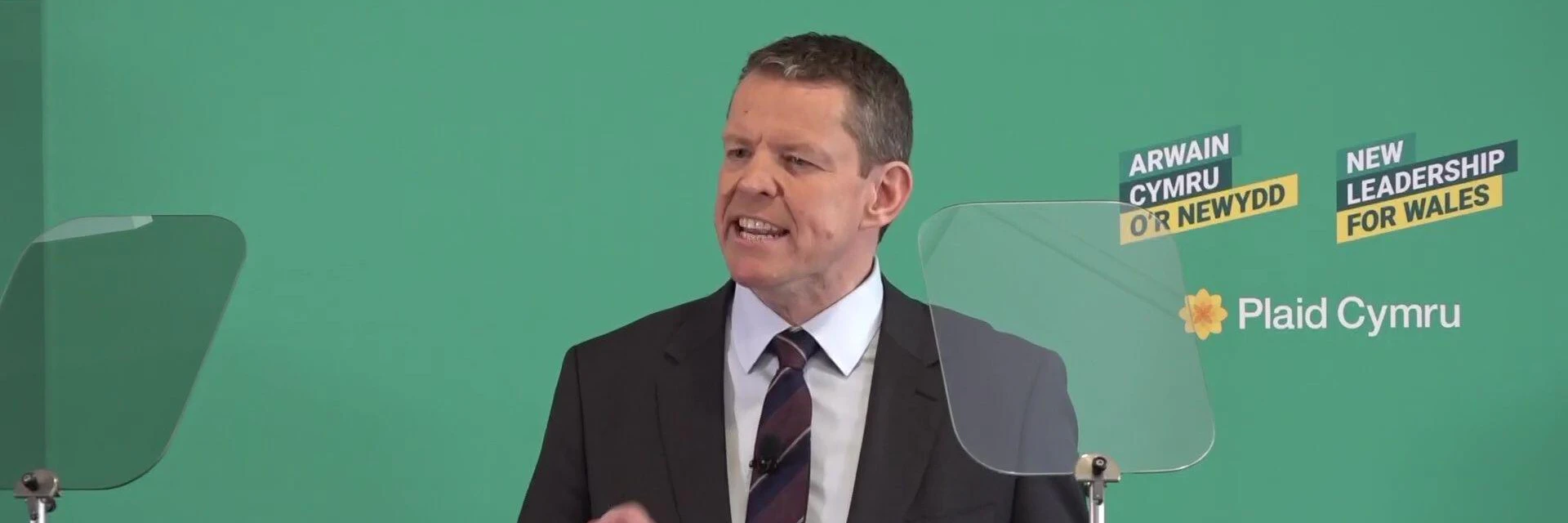
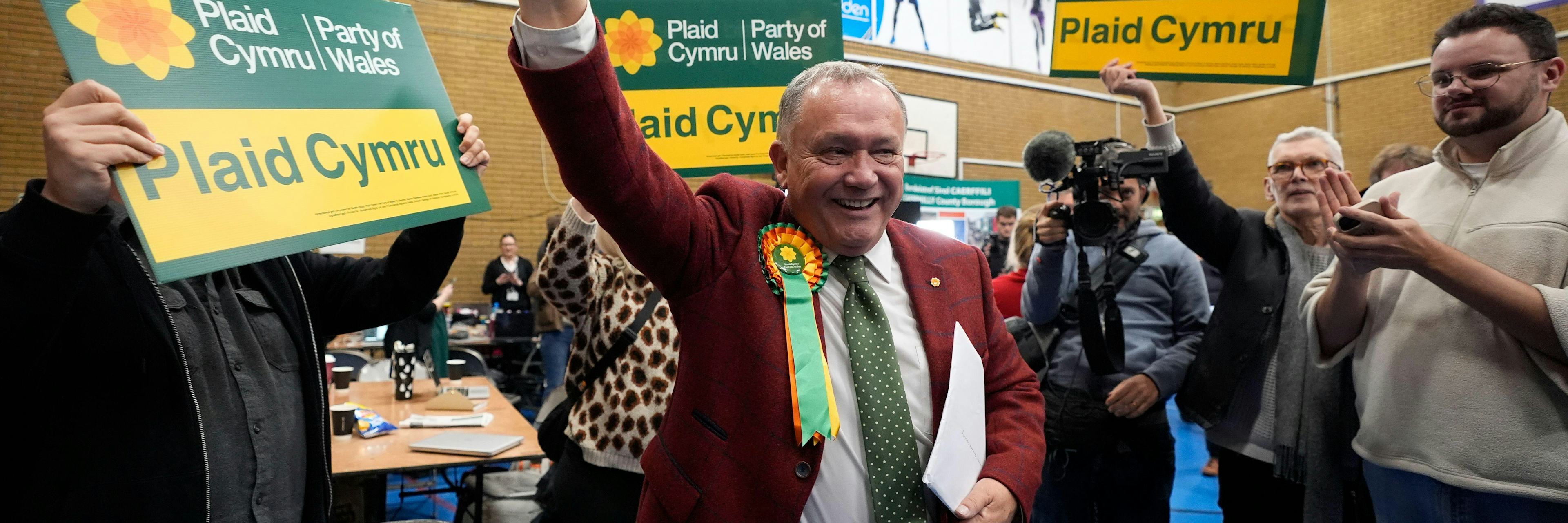
Our ‘Green objectives’ will be the price of any support for new government say Wales Green Party – as they welcome the defeat of Reform 

Spread the love
Wales Green Party Leader Anthony Slaughter. Image: NoBeefKieth, CC0, via Wikimedia Commons.

Wales Green Party will be looking to achieve the key manifesto pledges it promised to voters in any forthcoming arrangement with Plaid Cymru, their leader Anthony Slaughter announced today. At the same time, Slaughter welcomed the defeat of the ‘divisive, Trumpian’ Reform Party. 

Anthony Slaughter said: “We welcome the defeat of Reform and congratulate Plaid Cymru on their result – this is a victory for everyone who wanted to keep out Reform’s divisive, Trumpian politics out of Wales. We are a welcoming nation – and Wales needs to stay a place where everyone is treated with respect and dignity and can thrive. 

“When it comes to the next government of Wales, we are open to having conversations, but no decisions have been made at this point. In any negotiations we will be looking to deliver on the Green objectives that people voted on in this election – including action to address the cost-of-living crisis, protecting our NHS, fixing the renting crisis, and restoring our natural environment.” 

The declaration comes after Wales Green Party celebrated its historic breakthrough onto the Senedd with the election of their first ever two MSs – Leader Anthony Slaughter in Caerdydd Penarth and environmentalist Paul Rock in Caerdydd Ffynnon Taf.  

Wales Green Party’s key manifesto pledges include: 

  • Replacing council tax with land value tax paid by landlords not tenants 
  • Freezing rents, building 60,000 social homes and ending no-fault evictions 
  • Ending corridor care, addressing the mental health pandemic and putting the NHS on a sustainable footing 
  • Free bus fares for the under 22s, £1 for adults, more bus routes 
  • Extending free childcare from nine months to four years 
  • Taking back control of water to clean up our rivers and bring down bills 
  • Making sure every government decision supports climate and nature recovery 

Paul Rock was the second Green Party candidate to win a seat in the Senedd. He will serve in the Caerdydd Ffynnon Taf constituency where he has lived for 30 years. Paul is committed to the sustainability and resilience of Welsh communities, serving as UCU branch Environmental Officer at Cardiff University, and helping create the Gabalfa Library of Things. He has a long history of activism, with interests in sustainable transport, renewable energy and public access to land. 

Zack Polanski, Leader of the Green Party of England and Wales said: 

“When myself and my deputies Rachel Milward and Mothin Ali were elected a year ago we were very clear that breaking through and gaining representation in the Senedd was our number one priority. If you asked us six months ago no one expected us to get more than one seat but we have doubled that.” 

Continue ReadingOur ‘Green objectives’ will be the price of any support for new government say Wales Green Party – as they welcome the defeat of Reform 

A new Welsh electoral landscape puts Plaid Cymru within reach of power

Spread the love
Rhun ap Iorwerth, the leader of Plaid Cymru. PA Images/Alamy

Anwen Elias, Aberystwyth University and Elin Royles, Aberystwyth University

Plaid Cymru’s electoral hopes for May’s Senedd election are high. Polls suggest the party is competing with Reform UK to emerge as the largest group in the next Welsh parliament, putting it, for the first time, within reach of leading a government in Wales.

This marks a striking shift in Plaid’s electoral fortunes. At the first election to what was then the National Assembly for Wales in 1999, the party won 28.4% of the vote. That remains its strongest performance to date in what was widely described at the time as a “quiet earthquake” in Welsh politics.

Since then, Plaid has struggled to match that breakthrough in devolved elections. From 2011 onwards it has consistently been the third-largest party in the Senedd, behind Welsh Labour – which has led every government since devolution – and the Conservatives.

Even so, the arithmetic of Welsh politics has occasionally worked in Plaid’s favour. The party entered government in coalition with Labour between 2007 and 2011, and more recently struck a co-operation agreement from 2021 to 2024. But if Plaid ends up leading a government outright after May 7, it would truly set this election apart.

Positioning itself for power

Plaid Cymru’s strategy is to present itself as a credible government-in-waiting. Its focus is less about being a party of protest and more about delivery. In other words, what it would do in office, how it would tackle Wales’s major policy challenges, and how it would represent Welsh interests at Westminster after nearly three decades of Labour dominance.

In February, the party set out its plan for its first 100 days in government. This focused on improving healthcare, raising education standards, boosting the economy and reforming government.

Alongside these priorities, its manifesto calls for further powers to be devolved to the Senedd. These include greater tax powers, justice and policing, rail services and infrastructure, and the Crown Estate, which oversees things like the sea bed and mineral rights in much of the countryside.

Yet there has also been a noticeable change in tone on the party’s long-term constitutional aims. Our research examined how Plaid Cymru covered these issues in the 2021 Senedd election. Compared with five years ago, Welsh independence is significantly less prominent in both its current manifesto and campaign.

The timetable has softened too. There’s no longer a commitment to holding a referendum on independence in its first term of government. Instead, Plaid describes Wales as being “on a journey” to independence. It has committed to producing a policy on Welsh independence but with no referendum timeframe.

By downplaying its long-term constitutional ambitions in this way, and focusing on the more immediate policy challenges facing Wales, Plaid Cymru is approaching this Senedd election as many other pro-independence parties have done across Europe. A similar strategy helped the Scottish National Party win power in 2007 and remain in government for the next 19 years.

A ‘degradation in belief that Labour stood for Wales,’ says Plaid Cymru leader – Sky News.

From polling strength to political power

Strong polling does not guarantee power, however, and Plaid faces several obstacles. Opponents continue to highlight its commitment to independence.

Support for independence among the Welsh public remains relatively low – only 26% of respondents in a recent YouGov poll agreed that Wales should be an independent country. Plaid’s challenge is to persuade sceptical voters that this isn’t the most important issue in Wales for the next four years.

The new electoral system also presents fresh uncertainties. This election will use a fully proportional model, with 96 members elected across 16 constituencies. Success will now depend on broad support across Wales. That’s a test for a party whose organisational strength has traditionally been concentrated in the north and west.

The new system is also likely to produce a more fragmented Senedd, with a wider range of parties represented. That could make post-election negotiations decisive, shaping who is able to lead a government and how stable it is.

Anwen Elias, Reader in Politics, Aberystwyth University and Elin Royles, Reader at the Department of International Politics and Centre for Welsh Politics and Society, Aberystwyth University

This article is republished from The Conversation under a Creative Commons license. Read the original article.

Keir Starmer says that the Labour Party under his leadership is intensely relaxed about assaulting those least able to defend themselves - the very poorest and most vulnerable.
Keir Starmer says that the Labour Party under his leadership is intensely relaxed about assaulting those least able to defend themselves – the very poorest and most vulnerable.
Nigel Farage explains the politics of Reform UK: Racism, Fake anti-establishmentism, Deregulation, Corporatism, Climate Change Denial, Mysogyny and Transphobia.
Keir Starmer refuses to be outcnuted by Nigel Farage's chasing the racist bigot vote.
Keir Starmer refuses to be outcnuted by Nigel Farage’s chasing the racist bigot vote.

Continue ReadingA new Welsh electoral landscape puts Plaid Cymru within reach of power

Could tactical voting block Reform in future elections? Lessons from the Caerphilly byelection

Spread the love

Plaid Cymru’s Lindsay Whittle celebrates winning Caerphilly’s byelection. Andrew Matthews/PA Images

Thomas Lockwood, York St John University

Plaid Cymru’s overwhelming victory in the recent Caerphilly Senedd byelection shattered over a century of political tradition. Lindsay Whittle took the seat with 15,691 votes. Labour, which had held the seat since it was created, came away with just 3,713 votes.

Reform came second to Plaid, with 12,113 votes. And while this was an impressive performance, the fact that it failed to win Caerphilly even after vast amounts of time and money spent on the campaign has led to speculation that tactical voting played a part in this byelection.

A big clue that tactical voting was at work in Caerphilly was the recorded turnout. Typically, byelections in Wales have been low-key affairs. Turnouts are low and incumbents generally win. The national average for a Senedd vote in a constituency has never tipped over 50%. In Caerphilly, turnout climbed from 44% in the 2021 election to 50.4% in this byelection.

Plaid Cymru’s byelection in Caerphilly marks a big blow for the Labour party. GaryRobertsphotography/Alamy

And while local voters clearly backed Plaid Cymru for plenty of reasons, the extremely low vote count for other parties does suggest at least some lent their vote to Plaid to keep out Reform. The Conservative vote collapsed to fewer than 700 votes and the Lib Dems and Greens, so often the recipients of tactical votes themselves, each took just 1.5% of the votes in Caerphilly.

Anecdotes from the vote count support this. The BBC recounted “extraordinary stories” of habitual supporters of the Conservatives, a pro-union party, voting Plaid to block Reform.

The increased turnout and Plaid’s 27.4% swing both suggest a mobilisation, triggered by polling and a wider national narrative which persuasively contends that Reform is ahead of other parties. Does the result therefore imply that Reform can be beaten elsewhere if voters take the right approach to tactical voting?

The limits of Reform’s surge

Reform entered the Caerphilly race with no prior foothold in the constituency. The party mobilised heavily and, it had seemed, effectively. Nigel Farage and other senior Reform figures made multiple visits to the area to campaign for their candidate, Llŷr Powell. Pre-election polls, including one by Survation which had Reform leading Plaid by 42% to 38%, raised expectations of a breakthrough.

And it is true that Reform’s ultimate 36% vote share reflects its growing appeal among disaffected working-class voters. It did capitalise on the same anti-establishment sentiment that has seen the party top UK-wide polls for much of the past year.

Yet, the result also exposes Reform’s vulnerabilities. As with the Hamilton, Larkhall and Stonehouse byelection for the Scottish parliament earlier in the summer, Reform failed to convert intensive campaigning into victory.

The role and reach of tactical voting

Underneath the hype, Farage is unpopular. Polls suggest as many as 60% of voters are opposed to him being prime minister. That presents an opportunity for opponents to unite behind a more broadly acceptable candidate.

In this volatile political era, where voters show little loyalty to tradition, smaller parties like Plaid Cymru, the SNP, Greens and even Pro-Gaza independents could frame themselves as the “real alternative” to Reform. Depending on local dynamics, they could attempt to draw tactical support.

It should be noted, however, that tactical voting cuts both ways. While it denied Reform a victory in Caerphilly, the party could attract tactical support from Conservative voters eager to oust Labour governments.

In England, without equivalents to Plaid or the SNP to siphon anti-establishment sentiment, Reform may consolidate its grip on working-class disillusionment. This trend was evident in Labour’s collapse in the Runcorn and Helsby Westminster byelection in May 2025, which enabled Reform to take the seat.

In Caerphilly, Labour’s vote fell amid grievances including the slow pace of change to improve living standards, policy u-turns and a fatigue with Welsh Labour, which has been in power in the Senedd since its creation in 1999.

Such grievances can be felt across the UK more broadly – with winter-fuel policy u-turns, and a general dissatisfaction with how long it is taking Labour to deliver on promises to improve living standards. Concern about immigration is also used to punish Labour in both the regular voting intention polls and at the ballot box in council byelections.

An anti-Reform majority does exist – and it has shown up in several contests, including in races Reform has ultimately won but on less than 50% of the vote. Harnessing this anti-Reform majority, however, requires a level of co-ordination rarely seen in the UK’s electoral history.

Unlike the 1997 anti-Conservative wave, there is no single opposition brand. Instead, the anti-Reform vote is split across Labour, Liberal Democrats, Greens, nationalists and independents – and, arguably, the Conservatives too.

In Caerphilly, we saw this fragmentation briefly turn into coalescence. This implies that a clear polling trigger, showing Reform ahead in a seat, can focus the minds of voters and drive tactical thinking. It also helped that these voters were offered a Plaid candidate with deep community roots and a strong, progressive message.

What is potentially harder in a general election is the presentation of a local contest as extremely high stakes in the media. Caerphilly drew unprecedented attention precisely because it was being framed as a test case for Reform in Wales, which may explain the level of anti-Reform vote.

In a multi-polar UK, the anti-Reform majority is real – but not pro-any one party by default. Importantly, it is anti-populist, anti-incumbent and regionally variable. Nearly all of the mainstream parties on the centre ground and left wing of politics are claiming to be the real alternative to Reform.

Reform’s path to power lies in building a lead that is too large for tactical voting to overcome, or in electoral systems which reward vote share over seat efficiency. This is why it remains hopeful of success in May 2026 in Wales, where the election is being held under a proportional voting system.

As the UK heads towards the 2026 devolved elections and a likely 2029-30 general election, Caerphilly offers a blueprint for resistance to Reform’s national surge. It also offers a warning for the other parties: stopping Reform is not the same as winning.


Want more politics coverage from academic experts? Every week, we bring you informed analysis of developments in government and fact check the claims being made.

Sign up for our weekly politics newsletter, delivered every Friday.


Thomas Lockwood, PhD Researcher in Politics, York St John University

This article is republished from The Conversation under a Creative Commons license. Read the original article.

Nigel Farage explains the politics of Reform UK: Racism, Fake anti-establishmentism, Deregulation, Corporatism, Climate Change Denial, Mysogyny and Transphobia.
Nigel Farage urges you to ignore facts and reality and be a climate science denier like him and his Deputy Richard Tice. He says that Reform UK has received £Millions and £Millions from the fossil fuel industry to promote climate denial and destroy the planet.
Nigel Farage reminds you that he's the man that brought you Brexit and asks what could possibly go wrong.
Nigel Farage reminds you that he’s the man that brought you Brexit and asks what could possibly go wrong.
Continue ReadingCould tactical voting block Reform in future elections? Lessons from the Caerphilly byelection

Welsh by-election shows far right isn’t the only alternative to establishment parties

Spread the love

Original article by Ana Vračar republished from peoples dispatch under a Creative Commons Attribution-ShareAlike 4.0 (CC BY-SA) license.

Plaid Cymru celebrates by-election results. Source: Rhun ap Iorwerth/X

Plaid Cymru’s by-election win in Wales shows that space still exists for progressive politics despite Nigel Farage’s claims.

Welsh party Plaid Cymru, an advocate for independence from the United Kingdom, delivered a major blow to both the Labour Party and Reform UK in a by-election for the devolved parliament, the Senedd. Plaid candidate Lindsay Whittle won 47% of the vote in Caerphilly, leaving Reform behind at 36% and Labour at just 11% – an astonishing 35-point drop compared to the previous election. The result marks Labour’s first loss of the seat in more than a century.

“This result shows that Plaid is no longer just an alternative, we are now the real choice for Wales, the only party able to stop billionaire-backed Reform,” party leader Rhun ap Iorwerth said after the result was announced. Ahead of the election, Reform had invested substantial resources into the campaign, with Nigel Farage apparently confident a win in Wales would prove his claim that the far right has become the only true alternative to Britain’s two establishment parties.

In reality, while the by-election confirmed that both Labour and the Conservatives remain in crisis after years of backing austerity, it actually showed that the far right can still be stopped by more progressive alternatives. “In every corner of Britain, people are calling out for an alternative to the misery faced by millions and candidates who will stand up against the hate and division sold by Reform and the shameful parroting of Farage’s rhetoric by Keir Starmer and his weakling Labour government,” the Peace and Justice Project wrote on social media.

Read more: 140,000 march in Brussels against austerity

Since the 2024 general election, Prime Minister Starmer’s shift to the right on everything from austerity to migration and Palestine solidarity has alienated much of Labour’s base and beyond. Many polls now predict the party could be shattered in upcoming elections. Although Reform UK has so far benefited the most from the widespread frustration and anger, positioning itself as the main alternative, progressive political forces have also gained significant ground.

The early announcement of a new left party by independent MPs Jeremy Corbyn and Zarah Sultana drew more than 600,000 expressions of support, while the Green Party has seen thousands of new members join in recent months. Following the election of a new leadership team headed by Zack Polanski, the Greens announced their membership had doubled to 140,000. Both the groups have rejected Reform’s hate-driven narrative and scapegoating of migrants, while also condemning Labour for failing to address people’s real concerns since taking office.

“This Senedd by-election result shows that people are sick of the Westminster establishment and its persistent scapegoating of marginalized communities instead of effectively dealing with the issues we all face,” the Peace and Justice Project stated. While Reform’s failed bid in Caerphilly suggests that not everyone has accepted the idea that the far right is the only alternative to business as usual in British politics, progressives still face the enormous challenge of mobilizing on a larger scale ahead of future elections – including the 2026 run for the Senedd – to counter far-right narratives and build a vision of hope for working-class communities across Britain.

Original article by Ana Vračar republished from peoples dispatch under a Creative Commons Attribution-ShareAlike 4.0 (CC BY-SA) license.

Nigel Farage explains the politics of Reform UK: Racism, Fake anti-establishmentism, Deregulation, Corporatism, Climate Change Denial, Mysogyny and Transphobia.
Keir Starmer justifies why he has to travel abroad so much
UK Conservative Party leader Kemi Badenoch explains her reality that the Earth is flat, the Moon is made of cheese and that she was born from Unicorn horn dust
UK Conservative Party leader Kemi ‘not a genocide’ Badenoch explains her reality that the Earth is flat, the Moon is made of cheese and that she was born from Unicorn horn dust
Continue ReadingWelsh by-election shows far right isn’t the only alternative to establishment parties

Plaid Cymru ousts Labour in Caerphilly byelection

Spread the love

https://www.theguardian.com/uk-news/2025/oct/24/plaid-cymru-wins-caerphilly-byelection-result

The byelection victory for Lindsay Whittle is a huge boost for Plaid, which believes it can win next year’s Senedd elections, ending a century of Labour dominance in Wales. Photograph: Matthew Horwood/Getty Images

Rhun ap Iorwerth’s party seizes Senedd seat after Reform UK challenge

Plaid Cymru has won the Caerphilly byelection in south Wales, a dramatic result signalling a sharp realignment in Welsh politics with repercussions for the whole of Britain.

Rhun ap Iorwerth’s party, which wants Wales to become independent, seized the Senedd (Welsh parliament) constituency from Labour and resisted a fierce challenge from Reform UK.

Plaid candidate Lindsay Whittle received 15,961 votes, while Reform UK’s Llyr Powell won 12,113. Labour’s vote collapsed in what had been a stronghold, with its candidate Richard Tunnicliffe polling only 3,713 votes.

Plaid emerged with a majority of 3,848 votes, and a swing of almost 27% from Labour.

In his acceptance speech, Whittle … said: “There is deep, deep disillusionment with Labour, both on a UK level and at a Welsh government level, and the people are looking for new leadership. A Plaid Cymru win here tonight is the clearest evidence yet of who is in the driving seat to lead [Welsh] government for next year. I don’t think Reform have shown they are particularly interested in Wales. It’s all about getting [Reform leader] Nigel Farage to Downing Street.”

https://www.theguardian.com/uk-news/2025/oct/24/plaid-cymru-wins-caerphilly-byelection-result

Continue ReadingPlaid Cymru ousts Labour in Caerphilly byelection