Jeremy Corbyn: Keir Starmer says there’s no money – I don’t believe him

Spread the love

https://metro.co.uk/2025/03/05/jeremy-corbyn-keir-starmer-says-no-money-dont-believe-22673792/

I said that I would praise Keir Starmer when I thought he was performing well (Picture: Getty Images)

‘There’s no money’. 


That always seems to be the current government’s response when asked to tackle the enormous crises affecting the UK. 

But as Keir Starmer announces he will ramp up military spending, and as Rachel Reeves plans to slash welfare budgets, we must never forget what impact government funding choices have on the most vulnerable people in society. 

As we speak, 4.3 million children in the UK are living in relative poverty. Over 350,000 people are homeless in England. 

Millions are worried about the cost of heating their home, braced for yet another hike in energy bills. Meanwhile, billionaires are richer than ever. 

So what is the government doing? 

They could lift children out of poverty, if they wanted to, by scrapping the two-child benefit cap. 

STEADFAST DART 25 (STDT25), the principal NATO exercise for 2025, will be the first large-scale deployment of NATO?s Allied Reaction Force (ARF) exercise conducted across various geographical locations within SACEUR?s area of responsibility. It is the largest NATO exercise in 2025, with approximately 10.000 soldiers, sailors, airmen, and marines from 9 Allies, and it will be based on NATO?s new defence plans. NARRATIVE In response to an evolving and unpredictable security environment, NATO has implemented the biggest increase in collective defence since the Cold War. NATO has a new generation of defence plans, and is integrated with national military planning like never before. These defence plans make the Alliance stronger and better able to deter and, if necessary, defend against any potential adversary in any domain, and at any time. A critical component of NATO?s plans, which are designed to safeguard the Euro-Atlantic?s one billion inhabitants, is having high-readiness forces across all domains able to rapidly respond to any emerging or known threat. NATO?s new robust and agile Allied Reaction Force is central to this. Throughout January and February 2025, NATO will conduct Exercise Steadfast Dart in order to test and train the operational deployment of the Allied Reaction Force and rapid reinforcement of NATO assets located along its eastern flank. Steadfast Dart 25 is an alert and deployment exercise, and the first time the Allied Reaction Force will exercise an operational deployment since the Force?s establishment on July 1, 2024. The exercise will demonstrate NATO?s ability to activate the Allied Reaction Force, and coordinate its swift transit to where it can deliver strategic deterrence effects by bolstering forces already situated in location. Steadfast Dart 25 will showcase the Allied Reaction Force as a strategic, high-readiness, multi-domain and multinational capability that can be deployed and employed rapidly to strengthen deterrence in peacetime and crisis, and support the Alliance?s defence in conflict. NATO exercises such as this are defensive, transparent and proportionate, and conducted in full respect of our international obligations. Exercise aim: Exercise Steadfast Dart 2025 is the first large-scale deployment of NATO?s Allied Reaction Force (ARF). The aim is to test the deployable capabilities and procedures as well as the interoperability among the troop contributors and host nations. The NATO Allied Reaction Force (ARF) is a strategic, high-readiness, multi-domain capable force. It provides multi-domain forces from across the Alliance to produce effects at shorter notice than has previously been possible. STDT25 will demonstrate NATO's ability to rapidly deploy forces to reinforce NATO assets located along its eastern flank. This reinforcement will occur during a simulated emerging conflict scenario with a near-peer adversary. It will show that NATO Allied Reaction Force (ARF) can conduct and sustain complex operations across thousands of kilometers in the Eastern Europe, and in any condition. STDT25 will be a clear demonstration of NATO?s unity, strength and determination to continue to do all that is necessary to protect each other, our common values and the rules-based international order. NATO exercises are defensive, transparent, proportionate, and conducted in full respect of our international obligations.
Keir Starmer says that a changing world means we have to increase defence spending (Picture: Ministry of Defence)

They could help pensioners with energy bills, if they wanted to, by restoring universal winter fuel allowance. 

They could ensure nobody had to sleep rough on the streets, if they wanted to, by launching a massive council-house-building programme.  

Instead, they have signed off on a 13.4 billion increase in military spending. With that money, the government could scrap the two-child benefit cap 10 times over. 

Now, today, we’re told the government is preparing to cut billions from welfare budgets. 

GAZA CITY, GAZA - FEBRUARY 25: Palestinian Ismail Barud, whose house in Bureij Refugee Camp was completely destroyed in the Israeli attacks, tries to rebuild a house as his daily life, taking care of the 3 children of his brother who lost his life in the attack, and his family, continues in Gaza City, Gaza on February 25, 2025. Barud struggles to live under extremely difficult conditions in the midst of destruction. (Photo by Moiz Salhi/Anadolu via Getty Images)
Even David Lammy admits Gaza is in ‘rubble’ (Picture: Getty Images)

Put simply: there is never any money for the poor, but always enough money for war. I just wish the government was honest about that. 

Original article at https://metro.co.uk/2025/03/05/jeremy-corbyn-keir-starmer-says-no-money-dont-believe-22673792/

Keir Starmer says pensioners can freeze to death and poor children can starve and be condemned to failure and misery all their lives.
Keir Starmer justifies why he has to travel abroad so much

Continue ReadingJeremy Corbyn: Keir Starmer says there’s no money – I don’t believe him

Credible child poverty strategy must see two-child limit axed, says Resolution Foundation think tank

Spread the love

https://morningstaronline.co.uk/article/credible-child-poverty-strategy-must-see-two-child-limit-axed-says

A preschool age child playing with plastic building blocks

SCRAPPING the two-child benefit cap is essential for any credible poverty strategy, a think tank has said.

The Resolution Foundation projected that a three-child limit on benefits could cut child poverty by 320,000 by the end of this parliament.

Labour has been under pressure, including from within the party, to abolish the policy amid record highs rates of child poverty.

The government’s child poverty taskforce is due to present a strategy in spring.

Before the next general election, child poverty will hit a record high of 4.6 million on current forecasts, according to the Resolution Foundation.

The two-child limit was first announced in 2015 by the Conservatives and came into effect in 2017.

It restricts child tax credit and universal credit to the first two children in most households.

Article continues at https://morningstaronline.co.uk/article/credible-child-poverty-strategy-must-see-two-child-limit-axed-says

Keir Starmer says pensioners can freeze to death and poor children can starve and be condemned to failure and misery all their lives.

Continue ReadingCredible child poverty strategy must see two-child limit axed, says Resolution Foundation think tank

Labour continues the Tory war on the poor, sick and disabled

Spread the love

https://morningstaronline.co.uk/article/labour-continues-tory-war-poor-sick-and-disabled

DWP chief Liz Kendall

DR DYLAN MURPHY challenges the idea that social security places an economic burden on the public

THE current Labour government of red Tories has doubled down recently on its propaganda against those people claiming benefits in the UK.

These reactionary comments range from Starmer’s pledge in the Sun to be ruthless in his cuts to benefits, to Reeves making inflated claims in the same paper that spending on benefits has “spiralled out of control.”

In the same interview with the Sun Reeves bragged that Labour is “introducing the biggest welfare fraud and error package in recent history.”

The implication is clear: those claiming benefits, including those workers on low wages claiming elements of universal credit, are an undeserving burden on the British economy.

In the “golden days” of the Victorian era they at least maintained a distinction between the deserving and undeserving poor. Under Starmer’s Labour all people who claim benefits are clearly in the undeserving poor category and should be made to suffer ever greater poverty all to help “turbo charge” economic growth.

Article continues at https://morningstaronline.co.uk/article/labour-continues-tory-war-poor-sick-and-disabled

Keir Starmer confirms that he's proud to be a red Tory continuing austerity and targeting poor and disabled scum.
Keir Starmer confirms that he’s proud to be a red Tory continuing austerity and targeting poor and disabled scum.
Continue ReadingLabour continues the Tory war on the poor, sick and disabled

Morning Star Editorial: Reeves’s Labour is joining the corporate war on democracy [with extra images]

Spread the love

https://morningstaronline.co.uk/article/editorial-reevess-labour-joining-corporate-war-democracy

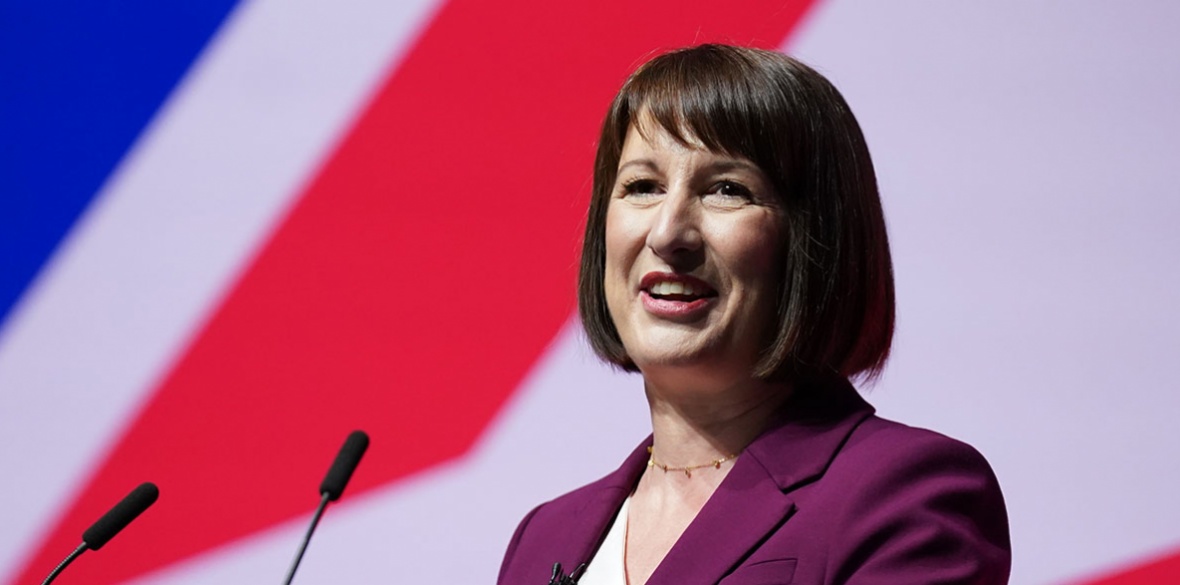
Chancellor of the Exchequer Rachel Reeves at the Labour Party Conference at the ACC Liverpool, September 23, 2024

One of Labour’s few redistributive policies attempting to tap the immense wealth of the filthy rich — a crackdown on the abuse of non-dom status to avoid tax — is to be softened, Chancellor Rachel Reeves says, because she has been “listening to the concerns” raised by the non-dom “community.”

She won’t listen to concerns over children trapped in poverty by the discriminatory two-child benefit cap.

Or over the impact of restricting winter fuel payments when energy prices are twice what they were a couple of years ago, even when those concerns convince her own party to vote against the policy at its conference, and prompt Labour’s biggest affiliate Unite to challenge the government in court.

Keir Starmer says pensioners can freeze to death and poor children can starve and be condemned to failure and misery all their lives.

Or even over the U-turn on compensating the Waspi women, despite leading Labour politicians having championed their cause for years.

Reeves’s selective approach to people’s concerns applies to the environment too, even as yet another severe storm closes schools and transport systems, and despite years of worsening floods and failing crops. Sod the science, says Reeves, growth trumps net zero.

Orcas comment on killer apes destroying the planet by continuing to burn fossil fuels.

Limiting action on the accelerating climate catastrophe to measures which don’t affect corporate profits is one reason the world continues to warm uncontrollably.

Labour’s growth policies across the board simply turn government into a doormat for big business. Rather than publicly fund infrastructure projects in the public interest, Labour will scrap regulations to weaken rights to object to construction by the private sector.

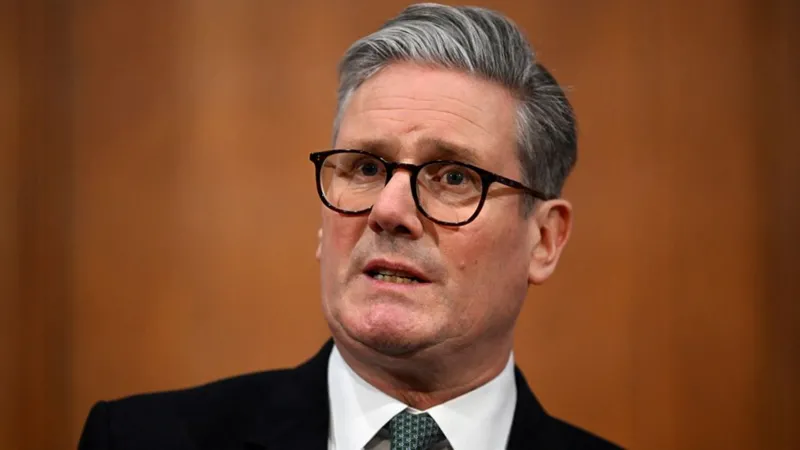
Keir Starmer, Angela Rayner and Rachel Reeves wear the uniform of the rich and powerful. They have all had clothes bought for them by multi-millionaire Labour donor Lord Alli. CORRECTION: It appears that Rachel Reeves clothing was provided by Juliet Rosenfeld.

Reeves dismisses the importance of ecological diversity (“bats and newts” are derided as reasons things can’t be built) though Britain has among the lowest biodiversity in Europe and the documented collapse of insect populations will have huge, and as yet partly unknown, effects on agriculture and the natural world.

The same deference to the right of construction firms to do as they please applies to housing. But it is not over-regulation which stymies house-building in Britain but land-banking aimed at keeping prices high. Urban development in major cities like London and Manchester is blighted by developers’ lack of accountability to communities, as working-class neighbourhoods are driven out by construction of luxury flats designed to accumulate value, not house locals.

Labour marches alongside the international radical right push to dismantle democratic curbs on corporate power. Less extreme than Trump or Musk, but in their camp. The intensified crackdown on protest is a logical part of this project.

Keir Starmer confirms that his government is cnutier than Suella Braverman on killing the right to protest.

The question of the day is democracy versus capitalism. Defending our communities and rights as citizens means building resistance through any means we can: trades councils, People’s Assembly branches, even Morning Star supporters’ groups can be hubs to bring activists together. The future is looking ugly if we cannot unite to do that.
Continues at https://morningstaronline.co.uk/article/editorial-reevess-labour-joining-corporate-war-democracy

Continue ReadingMorning Star Editorial: Reeves’s Labour is joining the corporate war on democracy [with extra images]

One year of Milei: hunger and resistance

Spread the love

Original article by Pablo Meriguet republished from peoples dispatch under a Creative Commons Attribution-ShareAlike 4.0 (CC BY-SA) license.

Argentine President Javier Milei. Photo: Milei / X

At one year of Milei’s presidency, we take stock of his economic policies, the impact on the working class, and perspectives for the future

A year ago, what many considered unthinkable a couple of years ago happened: Javier Milei, the eccentric libertarian economist who was almost compulsively invited by the media to increase ratings, was sworn in as president of Argentina. Gone was the neoliberal and demure option of the Argentine right wing that managed to triumph with Mauricio Macri, as well as the always latent Peronist option, which could not overcome the obstacles that the government of Alberto Fernandez left in its path.

Milei became a celebrated outsider who confronted his adversaries directly (often insulting and humiliating them), promising to lift the country out of poverty through a radical liberalization of the economy, with bold, or absurd, proposals to dollarize the economy and the eliminate the central bank. Indeed, his style as a guest on television programs was not too far removed from his actions as president of Argentina.

Erika Giménez, social communicator and a journalist with ARG Medios told Peoples Dispatch that Milei arrived with a promise that he was going to “break the State” and end all state social programs and aid to impoverished sectors because they are “a waste of money that prevents Argentina’s resurgence as a great country.” Did he succeed in his grandiose vision? What did the “lion” of Argentina manage to accomplish in his first year of governance?

Falling inflation and rising poverty

One of Milei’s main obsessions was to reduce inflation at all costs. After several setbacks that ended up increasing inflation, in October it was recorded that inflation had risen by 2.3%, the lowest percentage in several years. To achieve this, he had no qualms about firing tens of thousands of state workers (almost 36,000 according to the National Institute of Statistics and Census) and aggressively cutting the number of ministries (from 18 to 9). Social programs that had been a bulwark of the Republic for several decades were eliminated. Of the state workers who survived the layoffs, almost all have seen a reduction in their purchasing power as a consequence of the economic retrenchment policies.

Similarly, despite the fact that year-on-year inflation stood at 193%, retirees’ pensions only increased by 105%, meaning that retired elderly workers today, thanks to Milei’s government, can buy fewer things than before, because their pension was not adjusted for inflation. This incongruity provoked several mobilizations by retirees.

Likewise, Milei has refused to increase the public education budget so as not to affect the much-desired “fiscal balance”, which has led to a decline in the quality of education in the country. Also, hospital workers (doctors, nurses, and others) have reported that they have lost almost 104% of their purchasing power, which puts the country’s health care system at risk.

During Milei’s administration, poverty increased. According to data from the Observatory of the Argentine Social Debt of the Catholic University of Argentina, in the second half of 2023, 41.9% of the inhabitants of the South American country were poor, while, in the first half of 2024, the figure reached 52.9%. Similarly, private consumption fell by 9.8%.

In addition, according to Erica Giménez, inflation is currently decreasing, among other things, because people are not able to buy goods, which causes stores to reduce prices to sell more. This can lead to a distorted view of inflation as the only measure of economic improvement because, in reality, it is actually masking a more serious problem: people have lost purchasing power. “[The decrease in inflation] is quite a deceptive figure because people cannot consume because their salary is not enough to do so…The macroeconomic meters improve (as Milei wants) by not generating fiscal deficit, but this happens at the cost of the increase of unemployment, of retirement pensions, of the most needy, and of so many who are nowadays below the poverty line,” Giménez affirms.

One of the cases which shone a light on the ridiculous nature of his radical adjustment was what happened with the social kitchens, soup kitchens run oftentimes by left and progressive community organizations. Milei’s government and his Minister of Human Capital Sandra Pettovello were involved in a serious controversy when it was shown that, while the kitchens were subjected to serious budget cuts as part of the fiscal adjustment which made it impossible to feed the increasing number of hungry people, several tons of food were rotting in State warehouses. The Argentine courts had to order the immediate distribution of the food.

The defunding of university education

Probably the most important internal challenge faced by Milei during this first year was the massive demonstrations of students, professors, and university workers against the Executive’s refusal to increase the university budget. The Legislature had passed a law allowing for the budget increase, but Milei refused to comply with it and vetoed it completely. This generated a lot of discontent among Argentine students who took to the streets against the austerity policies of Milei’s libertarian government, and even went so far as to take over dozens of universities and hold university classes in the streets as a form of protest.

Giménez says in this regard, “Those who lose the most with [the veto of the law] are the professors of public universities who today are within the poor population…According to several surveys, the majority of the population agrees with the public character of health, education, etc., and of the Argentine State as protector and benefactor of these areas, so Mieli’s discourse against universities did not work because…public university education has great popular support.”

International relations

Milei has repeatedly stated that Argentina was, at some point in its history, the first world power. Therefore, what his government should do, according to his rhetoric, is to turn it into a great world power again. This “messianic” bet is synthesized in the often-used slogan “Make Argentina Great Again”, which evidently is reminiscent of Trump’s MAGA. “But Argentina never had a geopolitical weight that Milei says it once had as a first power,” Giménez tells us.

During the vote on whether or not to lift the US economic blockade of Cuba, Argentina voted along with almost all countries to call for an end to the blockade. In retaliation, Milei fired his foreign minister for this vote. According to Giménez, Argentina has historically voted against the blockade and supported other progressive international issues because it hopes that other countries will support its intention to recover the Malvinas Islands, which are currently under British control. Milei however, has wanted to assume a Trumpist international logic, says Giménez, and has assumed a fight against LGBTIQ+ groups and measures to curb climate change, while manifesting strong support in favor of Israel and the United States.

That is why the discussions at the UN on the prevention of violence against girls and women, the ceasefire in Palestine, and the withdrawal of the Argentine delegation from COP29, show the rejection of certain political causes which the president himself calls “the Cultural Battle”. As part of this battle he has attacked journalists, politicians and intellectuals, and founded the new think tank Faro Foundation whose objective is to: “To promote the ideas of economic liberalism and the historical values of Argentine culture, in order to contribute to the economic and social development of our Nation, fighting the cultural battle.” This confrontational attitude has led him to have several impasses with regional political leaders such as Colombian President Gustavo Petro.

But this confrontational attitude, more typical of a media commentator, has its limits. For example, Giménez reminds us that after announcing before his presidency that he would never negotiate with China because they are communists, Milei eventually had to negotiate with Beijing because of the importance of that country for the Argentine economy.

Read: Milei and Trump: allies in the battle for “freedom” and to combat “wokeism”

Likewise, Milei has openly positioned himself behind the geopolitical line of US President-elect Donald Trump, attending several select meetings organized by the US president. Milei, according to Giménez, intends to position himself, unsuccessfully, as an international leader who will inspire a global political transformation. Perhaps that is why he has made more trips abroad than within the country, especially to the United States. Likewise, his closeness with the International Monetary Fund stands out.

His revisionist ideological struggle

Milei has also had a significant impact on the ideological dispute in Argentina with his bizarre and aggressive speeches.

For example, he said that he would be delighted to drive the last nail in the coffin of former Peronist president Cristina Fernández, who is the subject of a judicial process that seeks to disqualify her politically and put her in prison.

He has also questioned the figures of human rights organizations on the number of dead and disappeared caused by the last military dictatorship in Argentina. His vice-president, Victoria Villarruel, is a descendant of a military family and before his death, had paid a personal visit to Rafael Videla, head of the last military dictatorship. Milei wants Argentines to forget the dictatorship as if it’s something that can be left behind, says Giménez. In order for Milei to advance his political and ideological project to “make Argentina great again”, he must break certain established and socially consensual notions “and generate other discourses closer to capitalism, revisionist, discuss the importance of the university and public employment…and that includes relativizing one of the darkest periods of Argentine history such as the military dictatorship,” Giménez explains.

Milei has vigorously gone after his ambitious goals of economic liberalization and austerity, without asking “at what cost?” The significant rejection of such policies by broad sectors of the population and the deepening of social conflict will continue and intensify. Milei still has three years left in his presidency, so the future of his government is uncertain. What is certain is that he does not seem to be slowing down his pretensions, but rather accelerating the radical neoliberal program that he defends to the hilt.

Original article by Pablo Meriguet republished from peoples dispatch under a Creative Commons Attribution-ShareAlike 4.0 (CC BY-SA) license.

Continue ReadingOne year of Milei: hunger and resistance