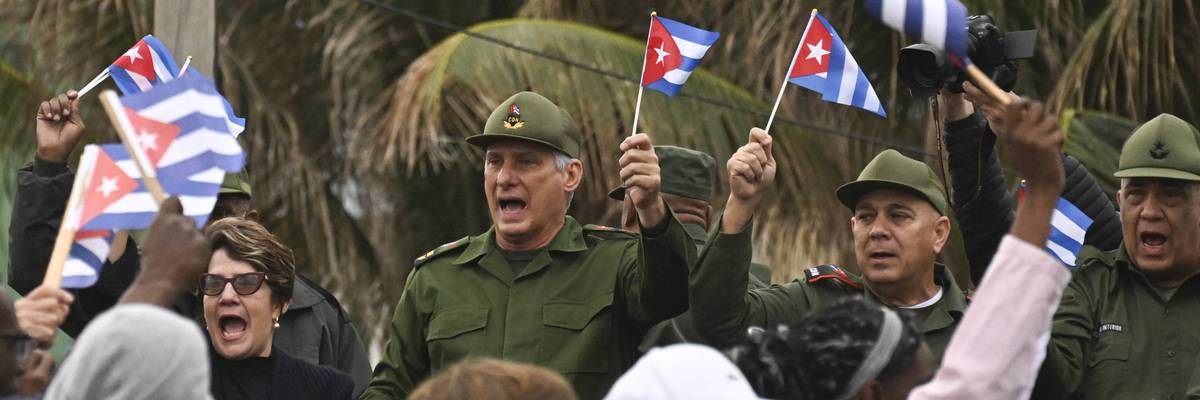
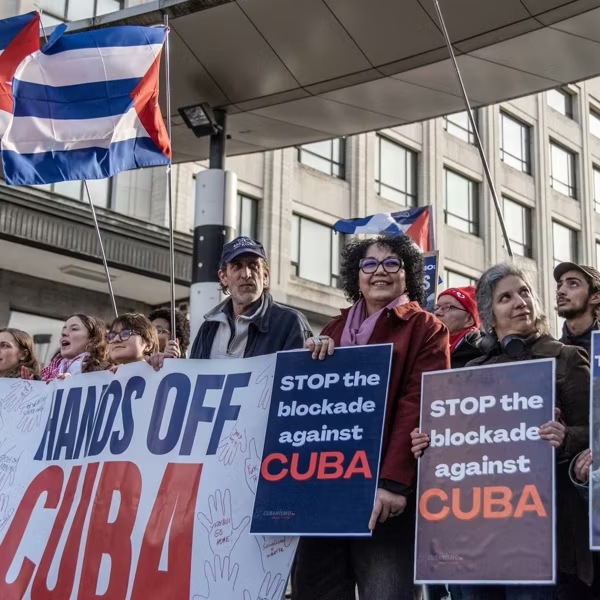
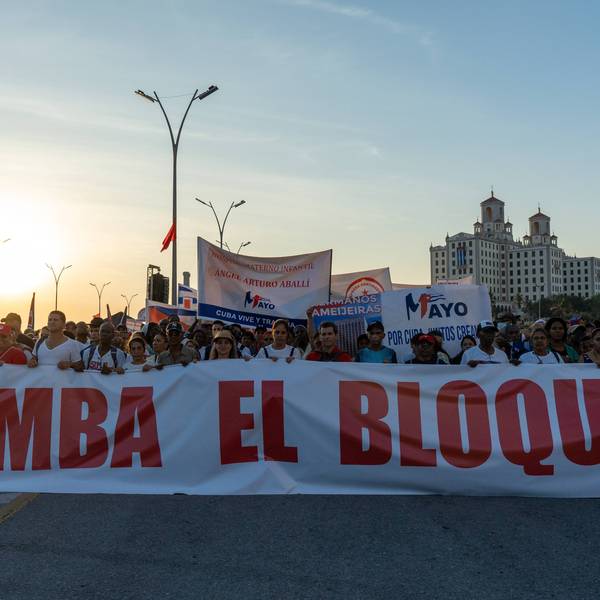
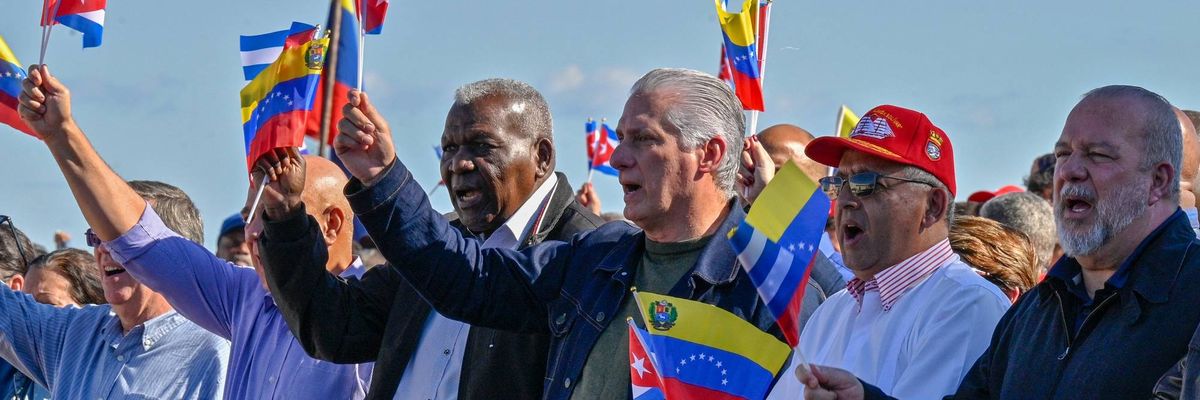
Cuba’s President Miguel Diaz-Canel (C) takes part in the “Anti-Imperialist” protest in front of the US Embassy against the US incursion in Venezuela, where 32 Cuban soldiers lost their lives, in Havana on January 16, 2026. (Photo by Yamil Lage/ POOL / AFP via Getty Images)
After the US president again threatened invasion, Cuban President Miguel Díaz-Canel Bermúdez said he would only “find a people determined to defend sovereignty and independence in every inch of the national territory.”
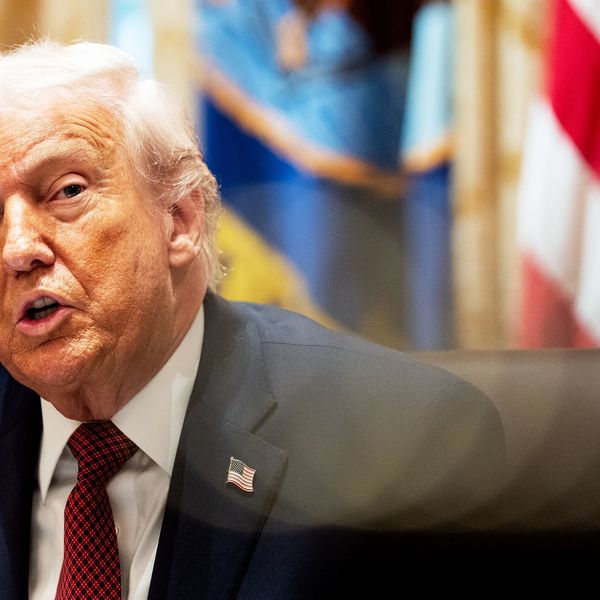
President Miguel Díaz-Canel Bermúdez of Cuba on Saturday responded with stark and defiant words to the latest attacks coming from US President Donald Trump, who on Friday signed a new executive order authorizing even more aggressive sanctions against the island nation and later threatened to invade the country.
“The President of the United States escalates his threats of military aggression against Cuba to a dangerous and unprecedented scale,” said Díaz-Canel in a statement. “The international community must take note and, together with the people of the United States, determine whether such a drastic criminal act will be allowed to satisfy the interests of a small but wealthy and influential group, driven by desires for revenge and domination.”
“No aggressor, no matter how powerful, will find surrender in Cuba,” he added. If Trump were to attack the country, the Cuban president said, “he will find a people determined to defend sovereignty and independence in every inch of the national territory.”
“What does ‘No Kings’ mean when one man can snap his fingers and kill innocent Cubans on a whim?”
In addition “to blocking the US assets of foreign individuals and entities operating in Cuba’s energy, defense, financial services, metals, mining, and security sectors, as well as anyone acting on behalf of the Cuban government,” as Drop Site News notes, Friday’s executive order also “authorizes sanctions on foreign financial institutions that conduct significant transactions with designated Cuban entities, potentially cutting them off from US correspondent banking.”
As such, the outlet continued, the new sanctions “could further isolate Cuba from the international financial system, limit foreign investment, and exacerbate the island’s already severely restricted access to medicine, food imports, and basic goods.”
In addition to the signed executive order, Trump said during a Friday campaign-style event in Florida that the US “will be taking [Cuba] over almost immediately.”
Upon their return from Iran, where Trump has waged a deeply unpopular war, the US president told the crowd, “We’ll have maybe the USS Lincoln [aircraft carrier] come in offshore, and they’ll give up.”
In a floor speech earlier this week, Sen. Chris Van Hollen (D-Md.) rebuked the Trump administration for the humanitarian disaster it has unleashed in Cuba, which follows what he described as a “failed” policy towards the island country over decades.
As Trump ramps up his threats of war against Cuba, we must understand what led us to this point: 65 years of a bankrupt Cuba policy.
If we want to avoid war with Cuba, we must rein in this lawless President & learn from the failed, bipartisan policies that led us to this point. pic.twitter.com/H9MqviSe6d
— Senator Chris Van Hollen (@ChrisVanHollen) April 30, 2026
“If we want to avoid war with Cuba,” said Van Hollen, “we must rein in this lawless president and learn from the failed, bipartisan policies that led us to this point.”
David Adler, the co-general coordinator of Progressive International, condemned the relative silence of US opponents to the Trump administration, who have not done, in his mind, nearly enough to challenge the blockade or condemn the administration’s repeated and ongoing threats to invade the island nation or overthrow its government.
“ Donald Trump has given [Secretary of State] Marco Rubio the green light to annihilate a peaceful nation and its people—and the ‘resistance’ is silent,” said Adler. “What does ‘No Kings’ mean when one man can snap his fingers and kill innocent Cubans on a whim?”
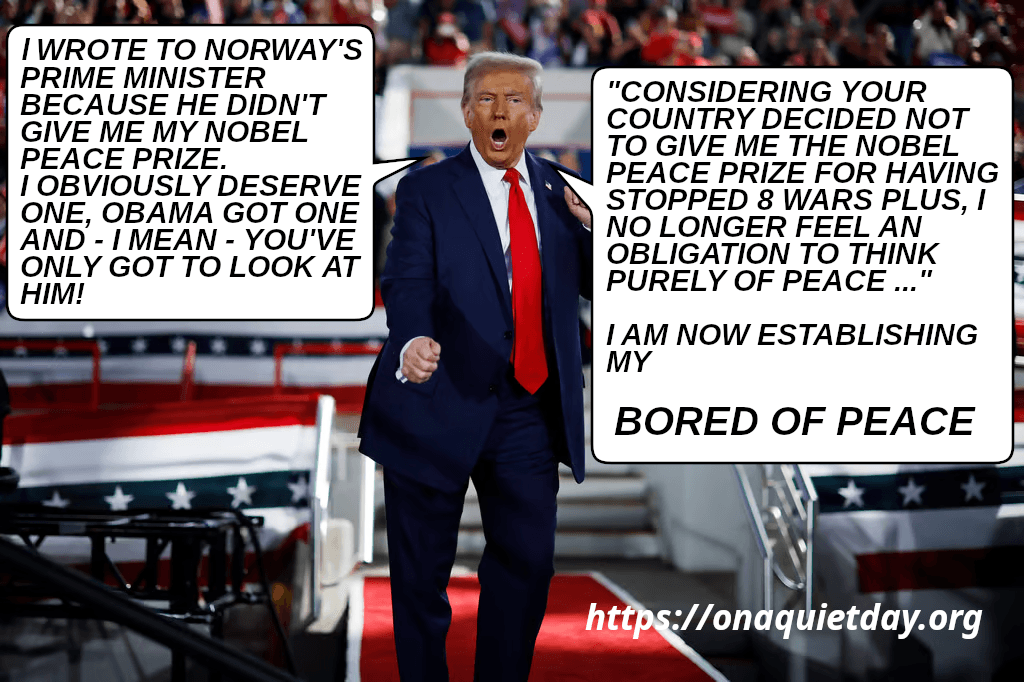
Orcas discuss how Trump was re-elected and him being an obviously insane, xenophobic Fascist.Donald Trump explains why he established his Bored of PeaceClimate science denier Donald Trump confirms that he knows nothing about democracy and that more liquid gold is being secured according to his policy of global privateering.
Cuban President Miguel Diaz-Canel waves a Venezuelan national flag in Havana on January 3, 2026. (Photo by Adalberto Roque/AFP via Getty Images)
“The ‘Trump corollary’ to the Monroe Doctrine—applied in recent hours with violent force over the skies of Caracas—is the single greatest threat to peace and prosperity that the Americas confront today,” said Progressive International.
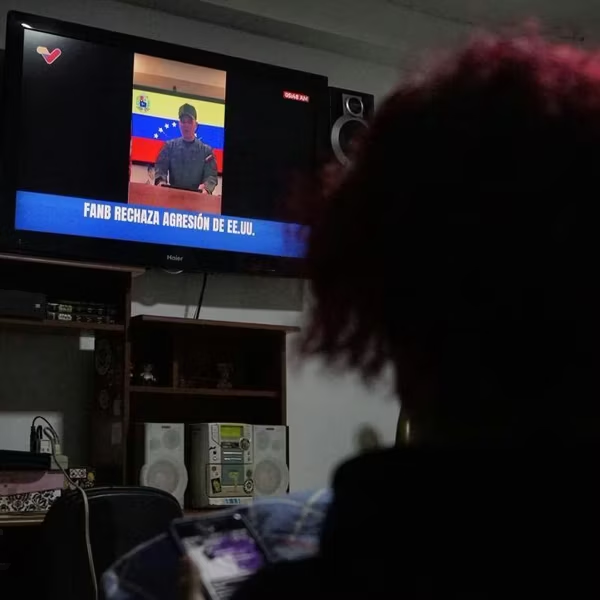
US President Donald Trump and top administration officials, including Secretary of State Marco Rubio, characterized Saturday’s assault on Venezuela and abduction of the country’s president as a warning shot in the direction of Cuba, Mexico, Colombia, and other Latin American nations.
During a Saturday press conference, Trump openly invoked the Monroe Doctrine—an assertion of US dominance of the Western Hemisphere—and said his campaign of aggression against Venezuela represented the “Donroe Doctrine” in action.
In his unwieldy remarks, Trump called out Colombian President Gustavo Petro by name, accusing him without evidence of “making cocaine and sending it to the United States.”
“So he does have to watch his ass,” the US president said of Petro, who condemned the Trump administration’s Saturday attack on Venezuela as “aggression against the sovereignty of Venezuela and Latin America.”
Petro responded defiantly to the possibility of the US targeting him, writing on social media that he is “not worried at all.”
In a Fox News appearance earlier Saturday, Trump also took aim at the United States’ southern neighbor, declaring ominously that “something’s going to have to be done with Mexico,” which also denounced the attack on Venezuela and abduction of President Nicolás Maduro.
“She is very frightened of the cartels,” Trump said of Mexican President Claudia Sheinbaum. “So we have to do something.”
“This armed attack on Venezuela is not an isolated event. It is the next step in the United States’ campaign of regime change that stretches from Caracas to Havana.”
Rubio, for his part, focused on Cuba—a country whose government he has long sought to topple.
“If I lived in Havana and I was in the government, I’d be concerned, at least a little bit,” Rubio, who was born in Miami to Cuban immigrant parents, said during Saturday’s press conference.
“It is the next step in the United States’ campaign of regime change that stretches from Caracas to Havana—and an attack on the very principle of sovereign equality and the prospects for the Zone of Peace once established by the Community of Latin American and Caribbean States,” the coalition said in a statement. “This renewed declaration of impunity from Washington is a threat to all nations around the world.”
“Trump has clearly articulated the imperial logic of this intervention—to seize control over Venezuela’s natural resources and reassert US domination over the hemisphere,” said Progressive International. “The ‘Trump corollary’ to the Monroe Doctrine—applied in recent hours with violent force over the skies of Caracas—is the single greatest threat to peace and prosperity that the Americas confront today.”
Orcas discuss how Trump was re-elected and him being an obviously insane, xenophobic Fascist.Donald Fuhrump says that Amerikkka doesn’t bother with crimes or charges anymore, not being 100% Amerikkkan and opposing his real estate intentions is enough.
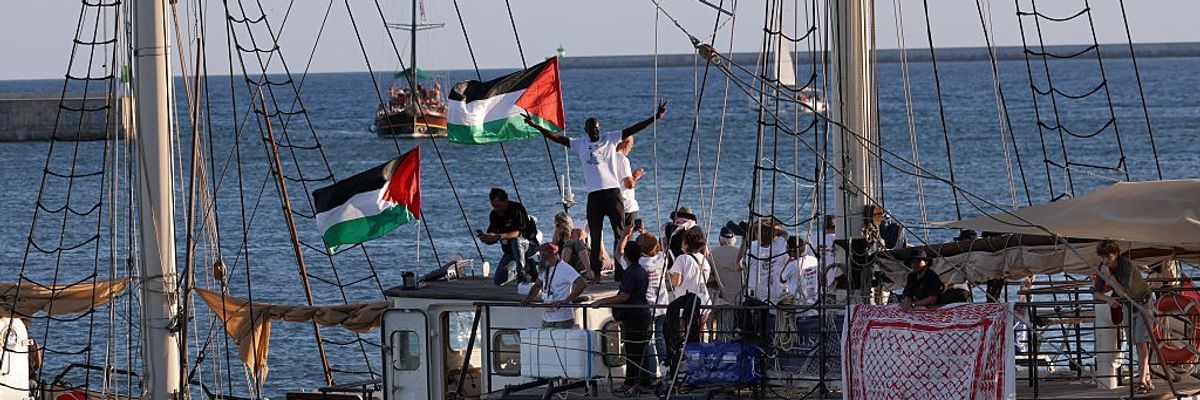
The first vessel “Sirius” of a civilian flotilla, carrying pro-Palestinian activists and humanitarian aid and aiming to break the Israeli blockade of the Gaza Strip, leaves the Barcelona port on September 1, 2025. (Photo by Lluis Gene/AFP via Getty Images)
“We are not sailing simply to deliver our cargo, but to pressure our countries to stop arming and funding Israel,” said one flotilla passenger.
The Global Sumud Flotilla, a fleet of dozens of ships heading toward Gaza to deliver humanitarian aid, has entered the final stretch of its journey in which it could soon face strikes from the Israeli military.
As described by Middle East Eye, the flotilla on Tuesday ventured into the “danger zone” where organizers are likely to be intercepted by the Israeli military.
Middle East Eye also cited reporting from Reuters that “flight tracking websites showed multiple drones originating from Turkey’s Corlu airbase circling over the flotilla” as it entered the zone.
As the flotilla approached its final destination, many organizers reflected on the journey that they’ve made and the goals they are trying to achieve.
David Adler, the co-general coordinator of Progressive International, linked his Jewish faith to the flotilla’s mission to help end mass starvation in Gaza.
“I believe it is a blessing that we are approaching interception at the onset of Yom Kippur—our annual day of atonement—which calls on us to reflect on our sins, and what can be done to repair them in the spirit of tikkun olam,” he wrote. “How can we atone for what has been committed in our name? How can we seek forgiveness for sins that multiply by the hour, as bombs and bullets rain on Gaza?”
Mandla Mandela, the grandson of former South African President Nelson Mandela who is a passenger on the flotilla, toldDemocracy Now that he wanted to show Palestinians the same international solidarity that activists once displayed for his country when his grandfather was working to free it from apartheid.
“Those that rallied behind our cause and stood side by side in supporting the anti-apartheid movement ensured that we attained our freedom in our lifetime,” he explained. “This is why today we utilize our voice to support the oppressed and most vulnerable nations across the globe.”
Another flotilla passenger, Irish writer Naoise Dolan, wrote an editorial for The Guardian in which she acknowledged that her ship was unlikely to reach Gaza while emphasizing the importance of showing solidarity in the face of atrocities being committed against the Palestinians.
“We are not sailing simply to deliver our cargo, but to pressure our countries to stop arming and funding Israel,” she argued. “All of our governments—French, Danish, Irish—participate in the genocide through maintaining ties with its perpetrator. We’re not even protesting inaction, but the active sabotage of Palestinian self-determination.”
The flotilla set sail one month ago with the goal of breaking through the Israeli military blockade that has for months prevented aid from reaching Gaza, which has caused a famine in the exclave, and starving to death at least 440 people, including 147 children, so far.
In addition to Adler, Mandela, and Dolan, other passengers on the flotilla include Swedish climate activist Greta Thunberg, American actress Susan Sarandon, Irish actor Liam Cunningham, Portuguese politician Mariana Mortágua, and former Barcelona Mayor Ada Colau.
Keir Starmer objects to criticism of the IDF. He asks how could anyone object to them starving people to death, forced marches like the Nazis did, bombing Gaza’s hospitals and universities, mass-murdering journalists, healthworkers and starving people queuing for food, killing and raping prisoners and murdering children. He calls for people to stop obstructing his genocide for Israel.
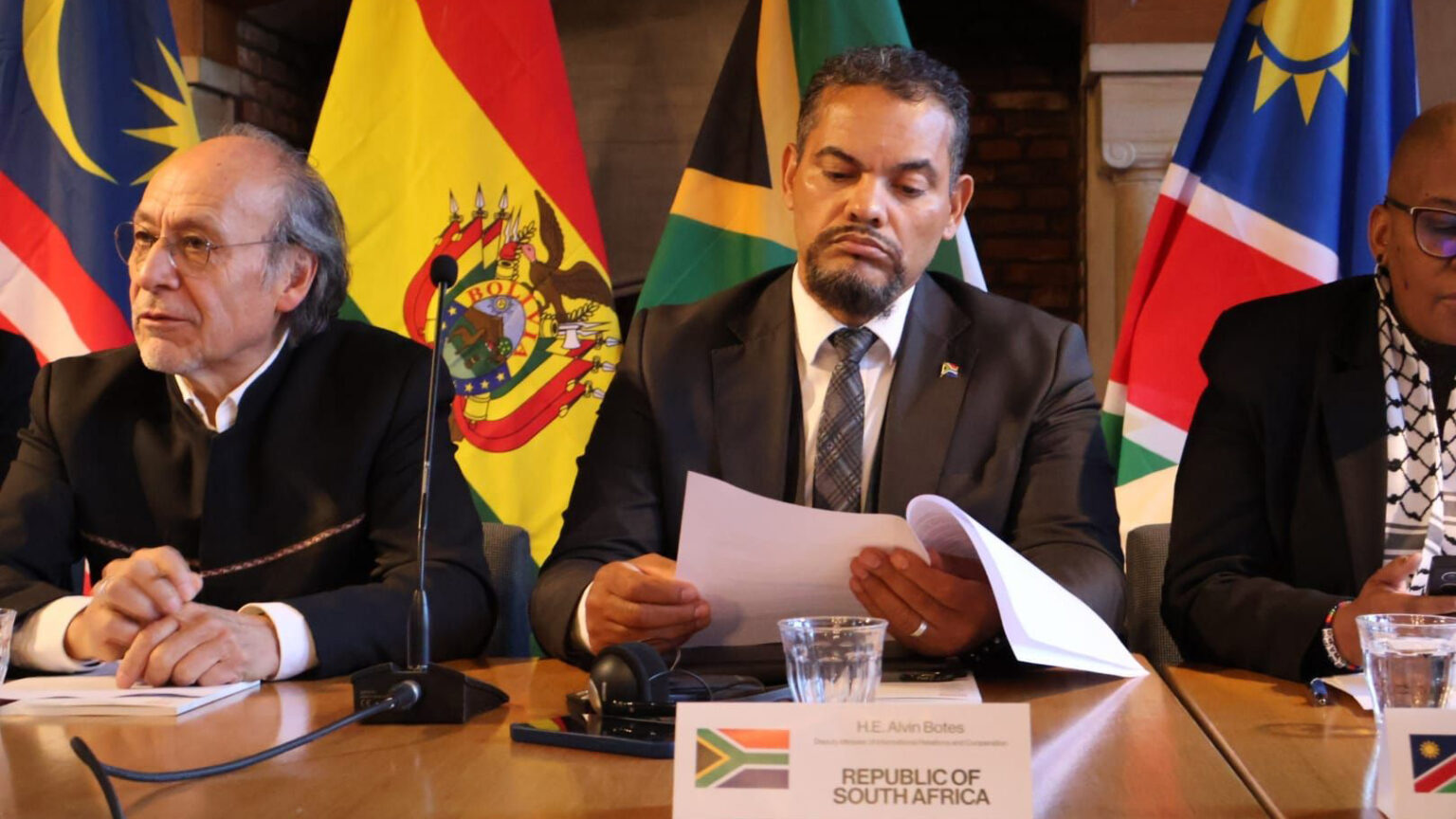
Nine countries including South Africa, Namibia, and Chile formed the Hague Group to hold Israel accountable for its crimes
On Friday, January 31, nine nations took coordinated action to form the Hague Group to hold Israel accountable for its violations of international law in Palestine. Representatives from the governments of Belize, Bolivia, South Africa, Namibia, Colombia, Cuba, Honduras, Malaysia, and Senegal gathered in The Hague, in the Netherlands, to inaugurate the collective action.
Today, nine nations — collectively known as The Hague Group — gathered in The Hague to coordinate legal, diplomatic and economic measures against Israel’s violations of international law. pic.twitter.com/uP1UCMAr4x
Jeremy Corbyn, former leader of the United Kingdom’s Labour Party, also joined the representatives at the Hague. “One year after the [International Court of Justice] heard the South African application on the issue of genocide by Israel against the people of Palestine, [nine nations] have declared their support for the outcomes of that legal process,” Corbyn said. These nine nations “are determined to hold Israel to account, and all those nations that are continuing to supply weapons to Israel that are being used in the genocide of the Palestinian people in Gaza.”
Together, the nine nations intend to uphold international law in the face of Israel’s crimes. This is in relation to the International Criminal Court’s arrest warrants against both Israeli Prime Minister Benjamin Netanyahu and former Defense Minister Yoav Gallant, and the the provisional measures of the International Court of Justice, issued on January 26, March 28, and May 24 of last year. The Hague Group also declared its intention to prevent the transfer of arms to the Zionist state “in all cases where there is a clear risk that such arms and related items might be used to commit or facilitate violations of humanitarian law” and also prevent the docking of vessels “in all cases where there is a clear risk of the vessel being used to carry military fuel and weaponry to Israel, which might be used to commit or facilitate violations of humanitarian law, of international human rights law, and of the prohibition on genocide in Palestine.” The nations referenced international action to implement an arms embargo against apartheid South Africa.
Former Labour leader Jeremy Corbyn explains why he’s at The Hague today as nine nations take co-ordinated action against Israel. pic.twitter.com/8lnOcRTXTw
“We will take further effective measures to end Israeli occupation of the State of Palestine and remove obstacles to the realisation of the right of the Palestinian people to self-determination, including the right to their independent State of Palestine,” read a joint statement issued by the representatives inaugurating the Hague Group. The representatives issued a call for other nations to join the Group “in the solemn commitment to an international order based on the rule of law and international law, which, together with the principles of justice, is essential for peaceful coexistence and cooperation among States.”
CodePink led a November 2, 2022 rally against the U.S. economic blockade of Cuba outside the White House in Washington, D.C. (Photo: CodePink)
“Seriously? You wait until six days before leaving office to do what you promised to do during your 2020 campaign?” said one observer.
In a move likely to be reversed by the incoming Trump administration, President Joe Biden on Tuesday notified Congress of his intent to remove Cuba from the U.S. State Sponsors of Terrorism list, a designation that critics have long condemned as politically motivated and meritless.
Noting that “the government of Cuba has not provided any support for international terrorism” and has “provided assurances” that it will not do so in the future, the White House said in a memo that the Biden administration is moving to rescind the first Trump administration’s January 2021 addition of Cuba to the State Sponsors of Terrorism (SSOT) list and take other measures to ease some sanctions on the long-suffering island of 11 million inhabitants.
Cuba’s SSOT designation was based mostly on the socialist nation’s harboring of leftist Colombian rebels and several U.S. fugitives from justice for alleged crimes committed decades ago, even though no other country has been placed on the SSOT list for such a reason and despite right-wing Cuban exile terrorists enjoying citizenship—and even heroic status—in the United States.
“Despite its limited nature, it is a decision in the right direction and in line with the sustained and firm demand of the government and people of Cuba, and with the broad, emphatic, and repeated call of many governments, especially Latin America and the Caribbean, of Cubans living abroad, political, religious and social organizations, and numerous political figures from the United States and other countries,” the Cuban Ministry of Foreign Affairs said in a statement.
“It is important to note that the economic blockade and much of the dozen coercive measures that have been put into effect since 2017 remain in force to strengthen it, with full extraterritorial effect and in violation of international law and human rights of all Cubans,” the ministry added.
For 32 straight years, the United Nations General Assembly has overwhelmingly voted for resolutions condemning the U.S. blockade of Cuba. And for 32 years, the United States, usually along with a small handful of countries, has opposed the measures. Last year’s vote was 187-2, with Israel joining the U.S. in voting against the resolution.
Cuba followed Biden’s move by announcing it would “gradually” release 553 political prisoners following negotiations with the Catholic Church, The New York Timesreported.
Many progressives welcomed Biden’s shift. Congresswoman Nydia Velázquez (D-N.Y.) said in a statement that Cuba’s SSOT designation “has only worsened life for the Cuban people without advancing U.S. interests” and “has made it harder for Cubans to access humanitarian aid, banking services, and the ability to travel abroad.”
“It has also deepened food and medicine shortages and worsened the island’s energy crisis, especially after Hurricane Rafael,” she added. “These hardships have driven an unprecedented wave of migration, leading to the largest exodus in Cuba’s history.”
Rep. Ilhan Omar (D-Minn.) called Biden’s move “a long overdue action that will help normalize relations with our neighbor.”
“This is a step toward ending decades of failed policy that has only hurt Cuban families and strained diplomatic ties,” Omar added. “Removing this designation will help the people of Cuba and create new opportunities for trade and cooperation between our nations. I look forward to continuing the work to build bridges between our countries and supporting policies that benefit both the American and Cuban people.”
David Adler, the co-general coordinator at Progressive International, called the delisting “far too little, far too late.”
“POTUS removing Cuba’s SSOT designation in the final days of his presidency only means one thing: He knew—from day one—that the designation was simply an excuse to punish the Cuban people,” Adler added. “But he maintained it anyway. Sickening.”
The peace group CodePink released a statement welcoming Biden’s shift, but adding that “it is unacceptable that it took this administration four years to address these injustices.”
“President Biden made the inhumane decision every single day to not alleviate the suffering of millions of Cubans by keeping this designation in place,” the group added. “As we mark this overdue progress, we can only hope that the Trump administration does not reverse these crucial steps towards justice and diplomacy.”
Trump’s nominee for secretary of state, Sen. Marco Rubio (R-Fla.) is the son of Cuban immigrants and a fierce critic of Cuba’s socialist government. In 2021, Rubio introduced legislation aimed at blocking Cuba’s removal from the SSOT list. Trump has also tapped Mauricio Claver-Carone—a staunch supporter of sanctioning Cuba—as his special envoy for Latin America.
Alex Main, director of international policy at the Center for Economic and Policy Research, said Tuesday that “while this decision, which comes years after 80 members of Congress urged Biden to reverse Trump’s ‘total pressure’ approach should have been made long ago, it is better late than never.”
“Sixty years of failed policy should be more than enough, and hopefully the new administration will have the wisdom and the courage to pursue a new course, one that’s in the best interest of both the U.S. and the Cuban people,” Main added.
Cuba was first placed on the SSOT list by the Reagan administration in 1982 amid an ongoing, decadeslong campaign of U.S.-backed exile terrorism, attempted subversion, failed assassination attempts, economic warfare, and covert operations large and small in a futile effort to overthrow the revolutionary government of longtime leader Fidel Castro. Cuba says U.S.-backed terrorism has killed or wounded more than 5,000 Cubans and cost its economy billions of dollars.
In stark contrast, Cuba has not committed any terrorism against the United States.
Former President Barack Obama removed Cuba from the SSOT in 2015 during a promising but ultimately short-lived rapprochement between the two countries that abruptly ended when Trump took office for the first time in 2017.
“Cuba will continue to confront and denounce this policy of economic war, the interference programs, and the disinformation and discredit operations financed each year with tens of millions of dollars from the United States federal budget,” the Cuban Foreign Ministry said Tuesday. “It will also remain ready to develop a relationship of respect with that country, based on dialogue and noninterference in the internal affairs of both, despite differences.”
The Biden admin has taken the long overdue step of removing Cuba from the State Sponsors of Terror list. Congratulations & thank you to @dsa_cuba organizers and our friends @AllianceForCuba@LAWGaction, @NNOCuba, & everyone who helped make the case for Cuba at home & in… pic.twitter.com/6fJkVF1Ldz
David Adler, the co-general coordinator at Progressive International, called the delisting “far too little, far too late.”
“POTUS removing Cuba’s SSOT designation in the final days of his presidency only means one thing: He knew—from day one—that the designation was simply an excuse to punish the Cuban people,” Adler added. “But he maintained it anyway. Sickening.”
The peace group CodePink released a statement welcoming Biden’s shift, but adding that “it is unacceptable that it took this administration four years to address these injustices.”
“President Biden made the inhumane decision every single day to not alleviate the suffering of millions of Cubans by keeping this designation in place,” the group added. “As we mark this overdue progress, we can only hope that the Trump administration does not reverse these crucial steps towards justice and diplomacy.”
Trump’s nominee for secretary of state, Sen. Marco Rubio (R-Fla.) is the son of Cuban immigrants and a fierce critic of Cuba’s socialist government. In 2021, Rubio introduced legislation aimed at blocking Cuba’s removal from the SSOT list. Trump has also tapped Mauricio Claver-Carone—a staunch supporter of sanctioning Cuba—as his special envoy for Latin America.
Alex Main, director of international policy at the Center for Economic and Policy Research, said Tuesday that “while this decision, which comes years after 80 members of Congress urged Biden to reverse Trump’s ‘total pressure’ approach should have been made long ago, it is better late than never.”
“Sixty years of failed policy should be more than enough, and hopefully the new administration will have the wisdom and the courage to pursue a new course, one that’s in the best interest of both the U.S. and the Cuban people,” Main added.
Cuba was first placed on the SSOT list by the Reagan administration in 1982 amid an ongoing, decadeslong campaign of U.S.-backed exile terrorism, attempted subversion, failed assassination attempts, economic warfare, and covert operations large and small in a futile effort to overthrow the revolutionary government of longtime leader Fidel Castro. Cuba says U.S.-backed terrorism has killed or wounded more than 5,000 Cubans and cost its economy billions of dollars.
In stark contrast, Cuba has not committed any terrorism against the United States.
Former President Barack Obama removed Cuba from the SSOT in 2015 during a promising but ultimately short-lived rapprochement between the two countries that abruptly ended when Trump took office for the first time in 2017.
“Cuba will continue to confront and denounce this policy of economic war, the interference programs, and the disinformation and discredit operations financed each year with tens of millions of dollars from the United States federal budget,” the Cuban Foreign Ministry said Tuesday. “It will also remain ready to develop a relationship of respect with that country, based on dialogue and noninterference in the internal affairs of both, despite differences.”