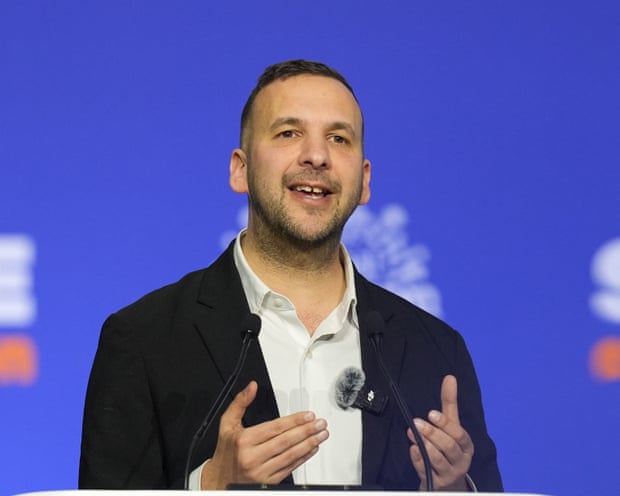
Zack Polanski has said he wants the Green party to replace Labour and is already building links with trade unions. Photograph: Gareth Fuller/PA
Leader understood to have spoken to 10 trade unions after party claimed working class voters are turning to them
Zack Polanski has kicked off a charm offensive designed to convince trade unions to stop funding Labour and throw their weight behind the Green party, as he delivered the first in a series of speeches to union conferences.
The Green leader has had “good conversations” with 10 trade unions, including some affiliated to Labour, according to party sources, and is due to address the University and College Union and the Bakers, Food and Allied Workers Union, not affiliated with Labour, in the coming months.
The UK’s largest unions – Unite and Unison – were among those that denied negotiating with Polanski and said they remained affiliated to the Labour party. However, Unite is holding internal discussions about its future relationship with Labour before a special conference in 2027 at which it could potentially decide to disaffiliate.
…
The Greens have enjoyed a huge boost in polling since their first national byelection victory in Gorton and Denton, and the party’s membership has tripled in England and Wales since last September to about 200,000.
A Green party source said: “When Zack became Green party leader he said his goal was to replace Labour – and building strong links with trade unions is a central part of that plan.
“Working class people are increasingly looking to the Greens as the only party which will tackle the cost of living crisis and stand up for their rights. Zack’s first priority is to push unions to stop funding the Labour party – a party which in opposition made huge promises to workers and is now watering down and U-turning on those promises.”
Hate speech on X was consistently 50% higher for at least eight months after tech billionaire Elon Musk bought the social media platform, new research has found.
The research looked at the prevalence of overt hate speech including a wide range of racist, homophobic and transphobic slurs.
The study, published today in PLOS ONE, was conducted by a team of researchers led by Daniel Hickney from the University of California, Berkeley.
On October 27 2022, Musk officially purchased X (then known as Twitter) for US$44 billion and became its CEO. His takeover was accompanied by promises to reduce hate speech on the platform and tackle bots and other inauthentic accounts.
But after he bought X, Musk made several changes to the platform to reduce content moderation. For example, in November 2022 he fired much of the company’s full time workforce. He also fired outsourced content moderators who tracked abuse on X, despite research showing social medial platforms with high levels of content moderation contain less hate speech.
This new study is the first to show that this wasn’t an anomaly.
Hate speech including homophobic, racist and transphobic slurs was significantly higher on X after Elon Musk bought the platform. The black lines represent standard errors. Hickey et al., 2025 / PLOS One
More than 4 million posts
The study examined 4.7 million English language posts on X from the beginning of 2022 through to June 9 2023. This period includes the ten months before Musk bought X and the eight months afterwards.
The study measured overt hate speech, the meaning of which was clear to anyone who saw it – speech attacking identity groups or using toxic language. It did not measure covert types of hate speech, such as coded language used by some extremist groups to spread hate but plausibly deny doing so.
As well as measuring the amount of hate speech on X, the study also measured how much other users engaged with this material by liking it.
The researchers’ access to X data was cut off during the study due to a policy change by the platform, replacing free access to approved academic researchers with payment options which are generally unaffordable. This significantly hampered their ability to collect sample posts. But they don’t mention whether it affected their results.
A clear increase in hate
The study found “a clear increase” in the average number of posts containing hate speech following Musk’s purchase of X. Specifically, the volume of posts containing hate speech was “consistently” 50% higher after Musk took over X compared to beforehand – a jump from an estimated average of 2,179 to 3,246 posts containing hate speech per week.
Transphobic slurs saw the highest increase, rising from an average of roughly 115 posts per week before Musk’s acquisition to an average of 418 afterwards.
The level of user engagement with posts containing hate speech also increased under Musk’s watch. For example, the weekly rate at which hate speech content was liked by users jumped by 70%.
The researchers say these results suggest either hate speech wasn’t taken down, hateful users became more active, the platform’s algorithm unintentionally promoted hate speech to users who like such content – or a combination of these possibilities.
The study also detected no decrease in the activity of inauthentic accounts on X. In fact, it found a “potential increase” in the number of bot accounts partly based on a large upswing in posts promoting cryptocurrency, which are typically associated with bots.
An important data-driving deep dive
There were a number of limitations to the study. For example, it only measured hate speech posts in English, which accounts for only 31% of posts on the platform.
Even so, the study is an important, data-driven deep dive into the state of X. It shows it is a platform where hate speech is prolific. It also shows Musk has failed to fulfil his earlier promises to address problems on X such as hate speech and bot activity.
As Musk himself said at the White House earlier this week: “Some of the things I say will be incorrect and should be corrected”.
Elon Musk urges you to be a Fascist like him, says that you can ignore facts and reality then.Power-mad orange gasbag Donald Trump says Burn, Baby, Burn.
Led by Donkeys remind Keir Starmer of his commitment to proportional representation.
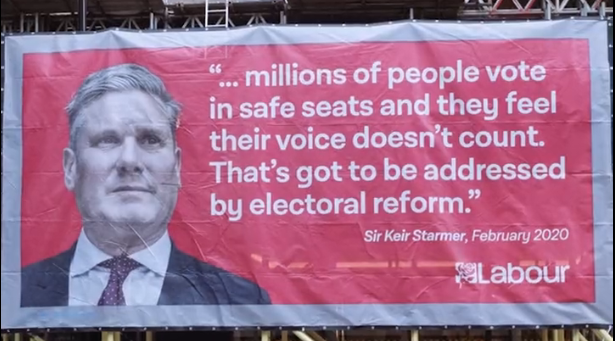
Campaigners have draped a giant banner outside the headquarters of the Labour Party to ‘remind Keir Starmer what he once said about proportional representation.’Led By Donkeys – a group which specialises in creative and high profile political stunts – organised the action.
The group installed a banner with a photo of Keir Starmer and a quote of comments he made during the Labour leadership election. The banner quoted Starmer as saying in February 2020: “…millions of people vote in safe seats and they feel their voice doesn’t count. That’s got to be addressed by electoral reform.”
Led by Donkeys shared a video of their banner drop on Twitter, and said: “We’ve scaled the scaffolding at Labour’s London HQ to remind Keir Starmer what he once said about proportional representation.”
Sir Keir Starmer has since distanced himself from his 2020 comments on electoral reform.
…
We’ve scaled the scaffolding at Labour’s London HQ to remind Keir Starmer what he once said about proportional representation. pic.twitter.com/oK9q0G5lzE
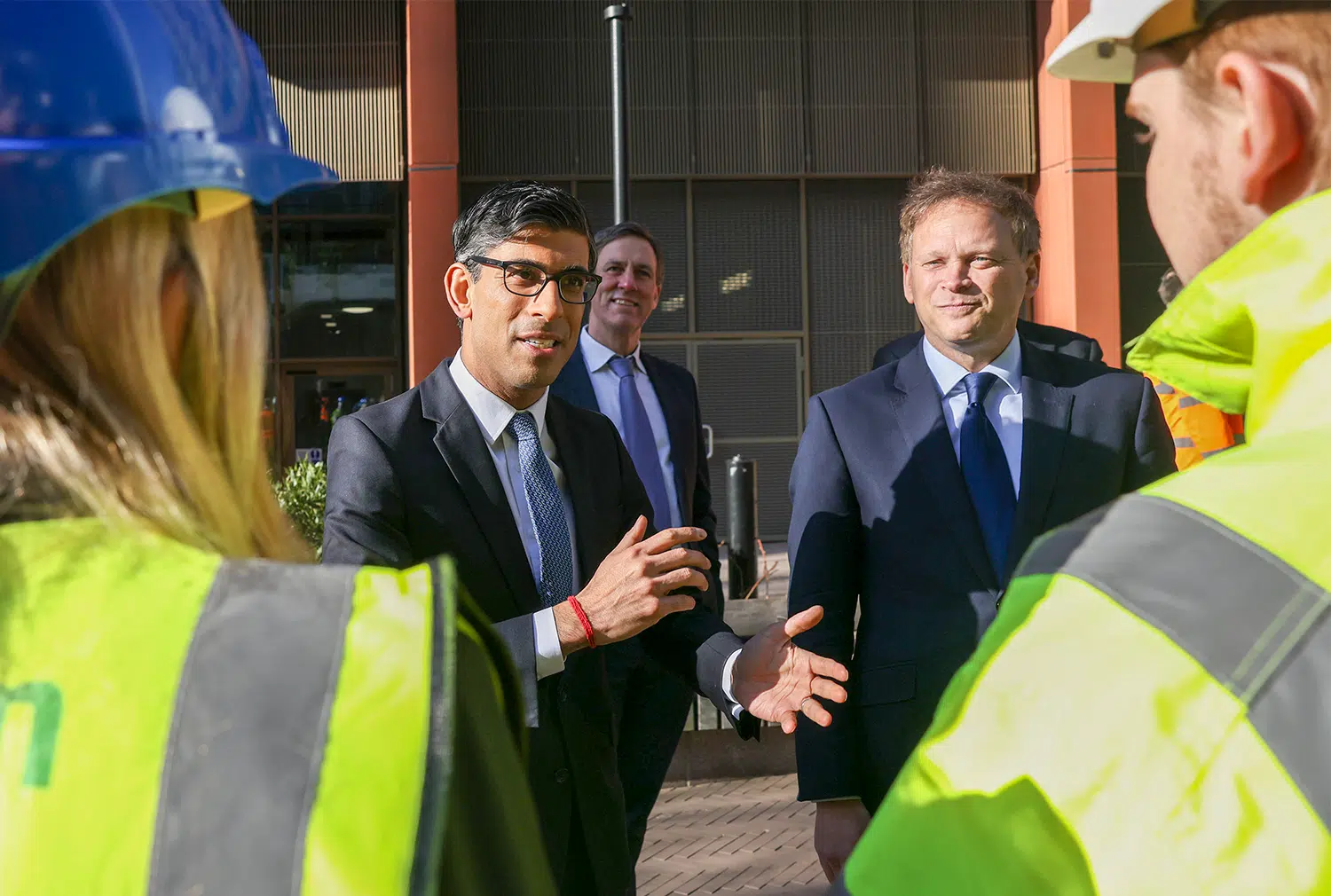
RISHI SUNAK’S five key promises, made shortly after becoming Prime Minister in January, have turned into five failures according to figures showing ministers’ lack of progress since then.
…
Taking his pledges in turn, inflation remains the highest in the G7 –with RPI still at an eye-watering 10.7 per cent in June.
NHS waiting lists in England this week hit a new record high of 7.6 million.
And Britain’s debt pile was bigger than its economic output in June – the first time this has happened in more than 60 years.
Today’s 0.2 per cent growth in Q2 GDP was hailed as an unexpected win for Britain’s spluttering economy, which the Bank of England says will remain sluggish for years to come.
And dangerous refugee crossings not only set a new record for the month of June, but fresh arrivals on Thursday saw the total number of people risking their lives to cross the English Channel on small boats reach 100,000 for the first time since 2018.