Pro-Palestine protestors calling for an arms embargo on Israel have doused the Labour Party’s headquarters in red paint in a protest against the party’s stance on the war in Gaza.
Demonstrators from the Youth Demand group insisted both the government and official opposition should commit to preventing the supply of weapons to the country.
The group wrote on social media: “Labour has blood on their hands. They are complicit in the murder of Palestinians, and millions of people around the world, as they continue to drive genocide.”
The Metropolitan Police confirmed 12 people had been arrested over the protest.
📢 Labour has blood on their hands. They are complicit in the murder of Palestinians, and millions of people around the world, as they continue to drive genocide.
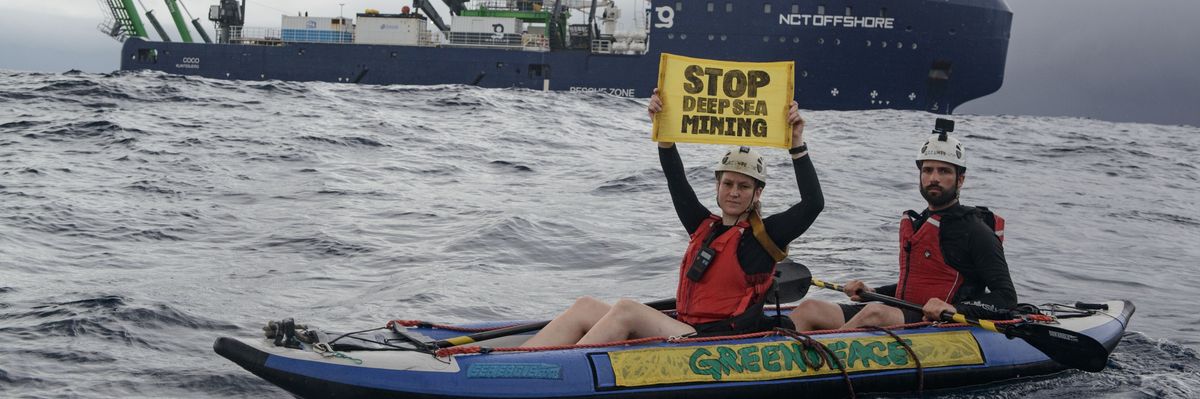
Greenpeace kayaktivists hold up a sign reading “stop deep-sea mining” during a November 2023 protest near a Nauru Ocean Resources Inc. exploration ship in the Pacific Ocean. (Photo: Martin Katz/Greenpeace/X)
“How can Greenpeace’s activists paddling on kayaks be a threat to the environment, but the plundering of the oceans be a solution to the climate catastrophe?”
As the International Seabed Authority kicked off its annual summit in Jamaica on Monday to discuss rules for extracting minerals from the ocean floor, Greenpeace—which could be expelled from the United Nations body over a demonstration targeting a mining company—is urging the ISA to “stop deep-sea mining, not protests.”
Representatives of 167 nations are gathering in Kingston to draft the regulatory framework for deep-sea mining, which ISA member states agreed to work out by July 2025. Although there are no current commercial deep seabed mining operations, the ISA has issued exploration licenses to state-owned companies and agencies in China, France, Germany, India, Japan, Russia, and South Korea, and to private corporations including U.K. Seabed Resources, a subsidiary of U.S. military-industrial complex giant Lockheed Martin.
The Metals Company, a Canadian startup looking to make a big splash in deep-sea mining, has been targeted by Greenpeace “kayaktivists,” who last November boarded a ship belonging to subsidiary Nauru Ocean Resources Inc. in the Pacific Ocean and occupied the vessel’s stern crane to draw attention to the potential harm that mineral extraction would cause to one of the world’s last untouched ecosystems.
That peaceful protest could cost Greenpeace its ISA observer status, as members will consider whether to punish the environmental group during this week’s conference. ISA Secretary-General Michael Lodge claimed that Greenpeace’s kayak protest posed a “serious threat” to company personnel and “the marine environment.”
Outrageous! While a few greedy companies are trying to plunder the seabed for profit, GREENPEACE could face expulsion from the UN body managing plans to begin deep sea mining 😡 Peaceful protest is a human right and we won't be silenced. #StopDeepSeaMininghttps://t.co/yJY71srI6W
However, last November a Dutch court rejected The Metals Company’s request for an injunction against the protesters, finding it “understandable” that Greenpeace took direct action in the face of “possibly very serious consequences” of the company’s mining plans.
Greenpeace plans to hold a side event at the ISA conference on Monday focusing on the right to protest.
“If Michael Lodge had put as much effort into properly scrutinizing deep-sea mining companies and ensuring transparent negotiations as he has chasing dissent, a pristine ecosystem would have a fair chance to remain undisturbed,” said Greenpeace International Deep-Sea Mining campaign lead Louisa Casson. “How can Greenpeace’s activists paddling on kayaks be a threat to the environment, but the plundering of the oceans be a solution to the climate catastrophe?”
This year’s ISA conference comes as two dozen nations are calling for a moratorium on deep-sea mining and campaigners are urging the United States to ratify the U.N. Convention on the Law of the Sea, under which the ISA was established.
“Over the past year, it’s been outstanding to see the growing call for a moratorium from countries in the Pacific, Europe, and Latin America,” said Casson. “Responsible nations at the ISA are listening to the mounting science that shows deep-sea mining would cause irreversible damage to the oceans… The momentum is on the side of a moratorium.”
🚨REMINDER: The deep sea mining industry wants to mine an area where over 5000 UNIQUE SPECIES were just discovered.
Anyone else think we should stop this industry before it starts?
There is also pushback. Last week, more than 350 former military and political leaders in the United States including former Secretary of State Hillary Clinton published a letter urging the U.S. Senate to sign and ratify the Law of the Sea in a bid to boost deep-sea mining amid rising international competition for minerals.
“Almost everyone agrees that the United States should ratify the Law of the Sea—it’s a no-brainer and has been since the treaty was adopted over 40 years ago. This might be the only thing that Greenpeace and Big Oil agree with each other on,” said Arlo Hemphill, who heads the Oceans Are Life campaign at Greenpeace USA.
“Now, deep-sea mining corporation The Metals Company has jumped on the bandwagon, hoping it will increase their chances of making it big after several costly failed ventures,” Hemphill added. “With two dozen countries already on the record opposing the launch of deep-sea mining any time soon, there is little possibility it will be permitted.”
However, earlier this year Norway became the first country to green-light deep-sea mining, a decision one environmental campaigner warned will have “severe impacts on ocean wildlife.”
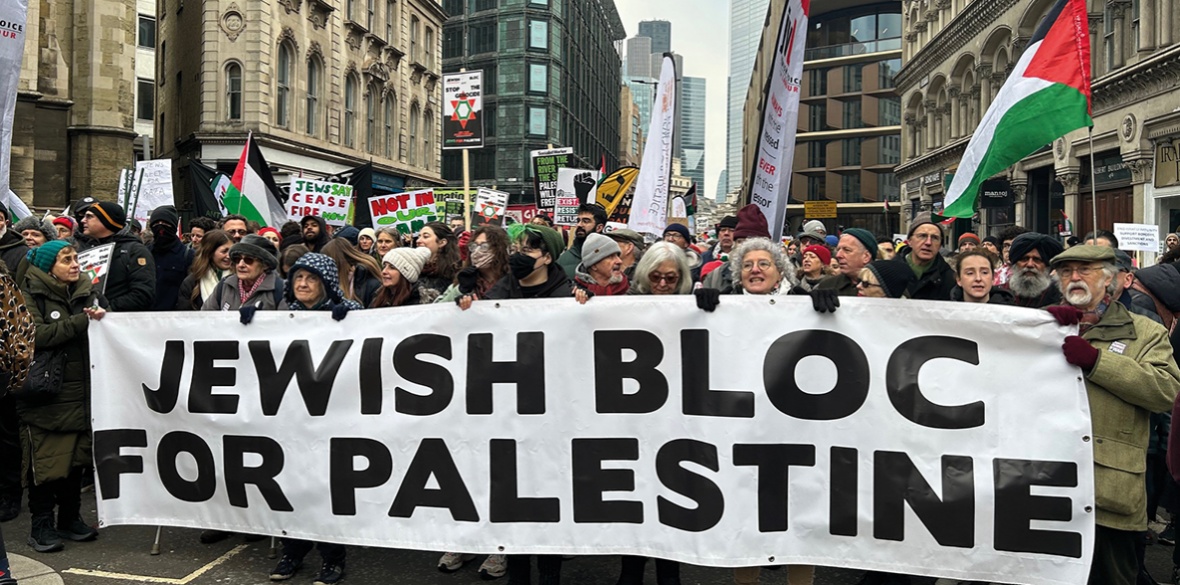
From a small group of seasoned protesters, a lively and creative coalition of Jewish groups has come together to form a growing, visible bloc in solidarity with the Palestinians on all the protests against Israel’s war crimes in Gaza. RUTH LUKOM reports
…
Our newly formed Jewish Bloc — including, among others, the Black-Jewish Alliance, Na’amod, Jews for Justice for Palestinians, the Jewish Socialists’ Group, Jewish Voice for Labour and Jewdas as well as individual Jews and activists who have come together — is now a recognised presence. No longer a curiosity.
We are getting an entirely different and sometimes quite moving response to what we have previously encountered. It is a combination of gratitude and relief as we have vindicated what everyone knew in their hearts: that what they were reading and hearing in mainstream media about British Jews being united on Israel and Palestine was a lie.
As more groups joined, our Jewish Bloc began organising more methodically. Someone knew a graphic designer and they came up with our watermelon/star logo, which has been picked up everywhere.
Before a mass demo, we talk online and arrange a meeting place which is put on to our Jewish Bloc logo and then circulated. Our numbers have grown — up to 1,000 on one demo. The people joining us are a combination of longstanding activists and other Jews who are horrified and angry at Israeli brutality but still wary of the mass protests because of the raw emotions, fear of hostility or uneasiness about the “river and sea” chants.
Since December the Jewish Bloc has met up each month with other comrades and friends for a Shabbat dinner, where we eat, drink, sing and dance with our group banners draped around the room.
But that’s just in London.
Around the country, in all the major cities, Jews are demonstrating as Jews. In Manchester, Leeds and Liverpool, Jews have joined the Palestine demos and organised vigils. Says Carla Bloom, a member of Na’amod in Brighton: “We demonstrate to all and sundry that it’s possible to be an ‘out’ Jew and not support Israel. We encourage other Jews to have the confidence to speak out against Israel — because the pro-ceasefire argument is strengthened when ‘even’ Jews espouse it.”
And Misha in Scotland says: “I will often march with a wider community group of Jewish people at the protests, or will visibilise myself as being Jewish through holding different signs. To believe in and act for Palestinian liberation is what my Judaism requires of me.
“The mainstream narrative, perpetuated by both global and mainstream British Jewish institutions, holds the belief that all Jews are zionists. I identify as Jewish at the demos to resist this narrative: to show that there is Jewish solidarity for Palestine; that there is a global community of Jews who stand in solidarity with Palestine and we are no less Jewish for this.”
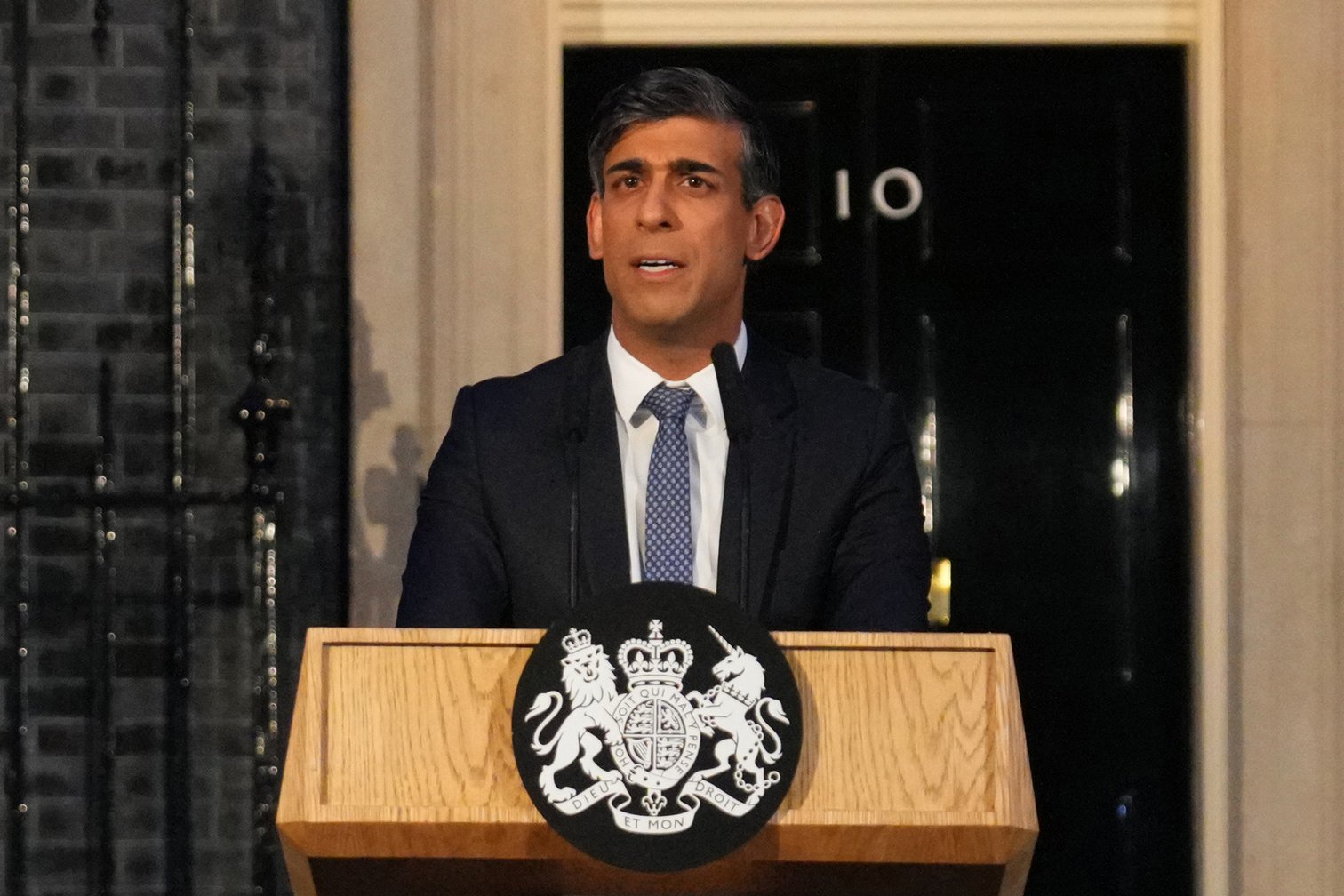
Rishi Sunak used his first speech outside 10 Downing Street to say “hateful” groups had “hijacked” the streets in recent months, in reference to pro-Palestine marches | Carl Court/Getty Images
Daughter of terror attack victim Makram Ali says politicians are ‘fuelling fire’ by equating Muslims with extremism
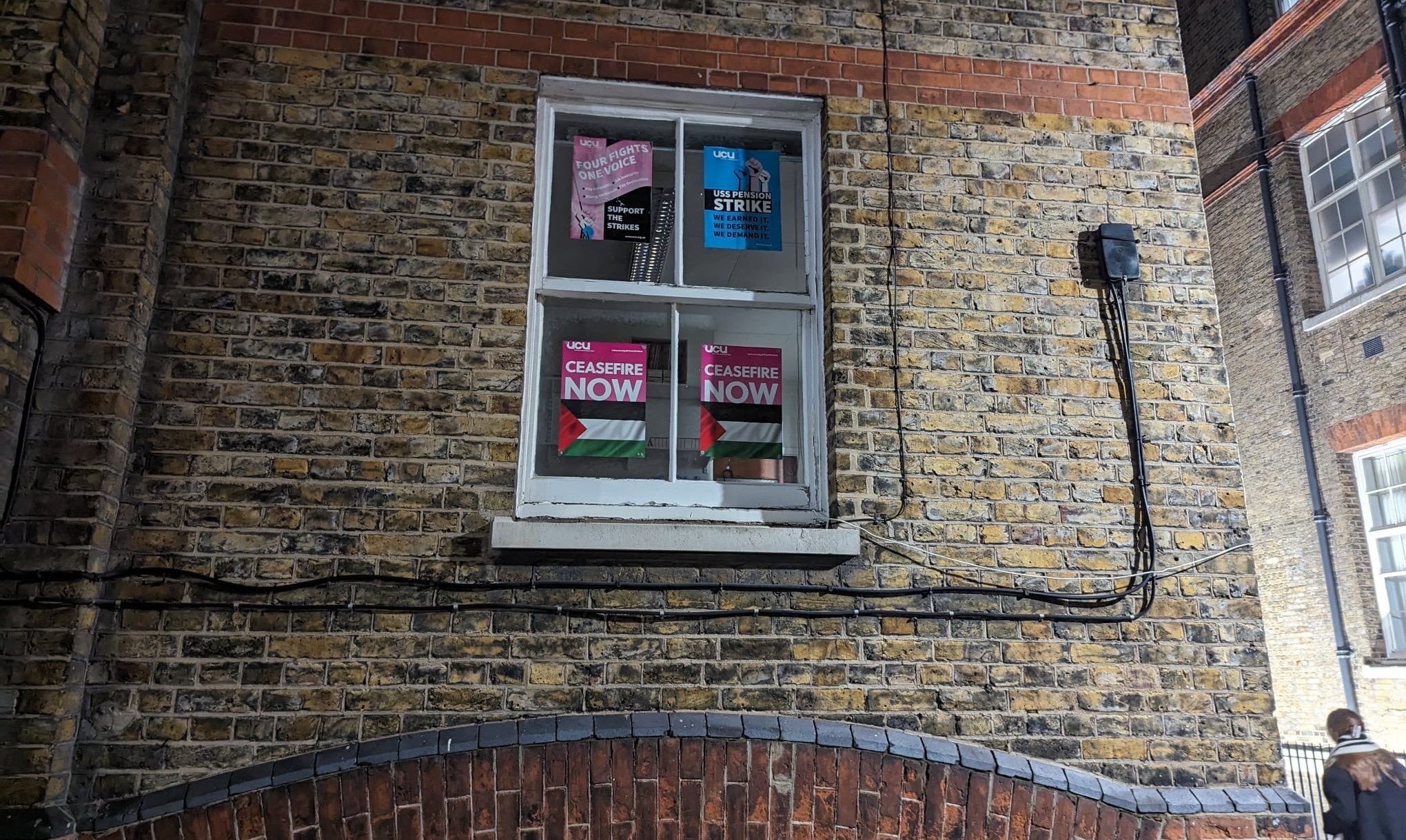
James Eastwood and his union colleagues got to their office one Tuesday afternoon to find that someone had broken in. The intruder hadn’t taken personal valuables or expensive equipment: all they had done was pull down the pro-Palestine posters in the window.
The break-in didn’t come as a huge shock to Eastwood, co-chair of the University and College Union (UCU) branch at Queen Mary University in east London. A day earlier, uni bosses had called him asking for access to the office so they could remove the posters, one of which had a Palestinian flag on it, and another of which read: “From the river to the sea, Palestine will be free.” Eastwood had agreed, requesting only that he be allowed to make the case before any action was taken.
The university was unwilling to wait, and forced the lock the next day. But Eastwood lays the blame beyond the office of the president and principal, Colin Bailey, who last year took home nearly £359,000. Instead, he holds the government responsible, feeling ministers have decided that “it’s not OK to be in solidarity with Palestine”. The university admits it took the posters down, telling openDemocracy that “such permanent displays… can stifle freedom of speech and make members of our community feel unsafe”.
Communities secretary Michael Gove is this week expected to widen the government’s definition of extremism to include “promotion or advancement of ideology based on hatred, intolerance or violence or undermining or overturning the rights or freedoms of others, or of undermining democracy itself”.
This might sound reasonable in isolation. But Gove’s intervention is the culmination of a months-long campaign by Tory politicians to paint pro-Palestine protesters as extremists.
Ahead of a march on 11 November, then home secretary Suella Braverman called the demonstrations “hate marches” and suggested the sanctity of Armistice Day was under threat. This led hundreds of far-right thugs – more than 90 of whom were arrested – to gather in Whitehall to “protect” the cenotaph from a march for Palestine that was taking place in another part of the city.
The posters were displayed on the windows of UCU’s office at Queen Mary University of London | James Eastwood
Emboldened by this narrative, former deputy Tory Party chair Lee Anderson last month claimed “Islamists” had “got control” of Sadiq Khan, London’s first Muslim mayor. He later doubled down and refused to apologise, after which he was suspended for conflating “all Muslims with Islamist extremism”. The prime minister described Anderson’s comments as “wrong” but avoided calling them Islamophobic.
This rhetoric, which also included false claims from MPs that there were “no-go” Muslim-majority areas in Birmingham and east London, climaxed in a hastily-arranged, Friday night speech from Sunak outside 10 Downing Street at the beginning of March. This was a significant intervention – it was the first time he had addressed the nation in this way since becoming PM 18 months ago.
He warned that “extremists” were “spewing hate” and “hijacking” protests. He also called on protesters “to stand together to combat the forces of division and beat this poison”.
Campaigners believe the new definition of “extremism” will in practice mean public authorities being forced to cut links with a widening circle of proscribed pro-Palestine groups. Even three former Tory home secretaries said yesterday the politicisation of extremism had gone too far.
Eastwood said the mood music from the government “filters down and creates a climate where organisations including universities feel pressure to show that they’re doing something”.
“You see a reproduction of some of the government lines on what’s acceptable speech, what’s offensive speech, what speech is to be allowed or not allowed,” he added.
Fuelling the fire
On 18 June 2017, Darren Osborne drove a van from Cardiff to London with plans to attack a pro-Palestinian march. A jury would go on to hear he had wanted to kill then Labour leader Jeremy Corbyn, as well as Sadiq Khan.
Osborne, 48, had viewed posts on social media by former English Defence League leader Stephen Yaxley-Lennon (also known as Tommy Robinson) and Britain First before driving his van directly into a crowd of people leaving the Muslim Welfare House in Finsbury Park – Corbyn’s constituency – following evening Ramadan prayers. He killed 51-year-old Makram Ali and injured 12 others.
As he tried to escape, he is reported to have said: “I want to kill more Muslims.”
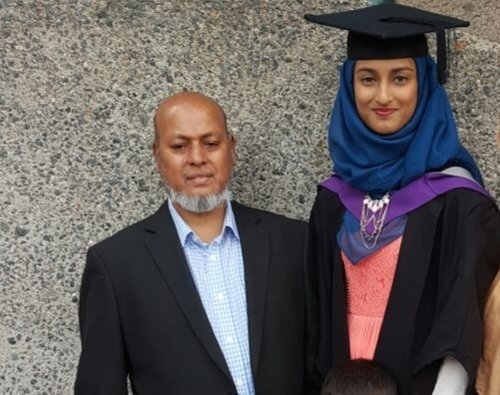
Ali’s daughter, Ruzina Akhtar, says politicians’ attempts to equate Islam with extremism are “fuelling the fire” and “inciting more hatred” towards Muslims.
“Every day, that’s going into someone’s ears who doesn’t have positive feelings towards Muslims,” she told openDemocracy. “It only takes one comment, or one thing to push someone over the edge. It’s not just actions – words speak loudly as well. Politicians need to be really careful with what they say and how they say it, because every single word could potentially be a threat to someone’s life.”
While politicians pontificate over definitions, Akhtar warned: “They’re in their own political bubble. They’re not thinking about the wider effect their words could have.
“Instead of inciting hatred, they need to be working together with communities. On the one hand, they’ll talk about how Britain is multicultural and so inclusive, but then they’re putting targets on people’s backs.”
Ruzina Akhtar and her dad, Makram Ali | Ruzina Akhtar
Akhtar will be easing into yet another Ramadan without her dad today. The one thing she wants people to remember is how dangerous these dehumanising, Islamophobic tropes can be. “Muslims can be targets as well,” she said. “It doesn’t matter who you are. At the end of the day, we’re all human beings.”
Of course, the UK government’s rebranding of pro-Palestine voices and peaceful protesters as extremists is not a new phenomenon.
For years, people who support Palestine vocally and publicly have been targeted under Prevent – the UK government-led counter-terrorism programme, which human rights organisations say is discriminatory and ineffective. In his speech, Sunak doubled down on his support for the programme.
In 2016, Rahmaan Mohammadi – a schoolboy from Luton – was referred to Prevent and questioned by anti-terrorism police for wearing ‘free Palestine’ badges and wristbands to school. He also claimed that he was told to stop talking about Palestine in school.
Now, ahead of a general election, Fatima Rajina, an academic specialising in issues on identity, race, British Muslims and postcolonialism, says long-standing Islamophobic and anti-Muslim tropes have been invoked in order to win votes and deflect from government failures.
“It’s stoking fear, because that is what has been done for the last 20-plus years,” she said. “The ‘war on terror’ rhetoric has meant that politicians rely on very well established tropes about Muslims. And they proceed with that because that is what gets into people’s minds.”
War on terror
If you’ve ever been to a march for Palestine you might have watched the prime minister’s Downing Street address and wondered if you were being gaslit. For many, the marches have been largely peaceful, with people of different faiths, backgrounds and ethnicities coming together to call for a ceasefire in Gaza.
openDemocracy recently revealed that, despite attempts by some MPs to form a narrative that the marches amounted to “mass extremism” and were “openly criminal”, only 36 people out of the millions who attended last year had been charged with a crime.
The post 9/11 so-called ‘war on terror’ touched all aspects of day-to-day life for Muslims in the UK, from Prevent referrals to surveillance in mosques and schools, as well as so-called ‘schedule 7’ stops at UK ports and airports and increased use of stop and search.
Rajina says the government relies on convincing people that such measures are for the sake of “safety” and the public good, and calls this framing “very sinister”.
“All of these concerns are packaged into ‘the Muslim is the problem’,” she said. As children starve to death in Gaza, more airtime is given to the concerns of politicians who say they feel threatened by constituents who want the attacks in Palestine to stop.
But the mood music isn’t just coming from the government. Labour politicians including deputy leader Angela Rayner and shadow chancellor Rachel Reeves last month reported feeling “unsafe” and “intimidated” by members of the public protesting the siege on Gaza, while Commons speaker Lindsay Hoyle suggested MPs could be in danger from pro-Palestinian constituents for voting against a ceasefire.
“It’s Muslims who are being targeted as the ones who are causing all this trouble outside MPs’ offices, scaring them,” said Rajina. “And that is because there’s already an established fear. Tapping into that then makes people think: ‘Oh my God, these Muslims don’t know how democracy works’.
“I think this idea of it being a Muslim issue, and framing it in that way, is really and truly about the upcoming election. It is about stoking fear and playing with established fear. It’s also to deflect from the fact that we’re going through a cost of living crisis.”
What’s also clear is that the UK government’s branding of activists and protesters as ‘extremists’ hasn’t been limited to Muslims and pro-Palestine voices.
When Black Lives Matter protests swept through the UK in 2020 following the murder of George Floyd, then prime minister Boris Johnson similarly claimed that anti-racism protests in the UK had been “hijacked by extremists intent on violence”.
And when Extinction Rebellion (XR) gained prominence after its first action in 2018, its activists were labelled as “eco-terrorists”.
The backlash bears the fingerprints of right-wing think tanks. In a 2019 report, influential right-wing think tank Policy Exchange called XR an “extremist group” that wanted to overturn democracy and ran the risk of “[breaking] with organisational discipline and [becoming] violent”. Months later, XR was designated an extremist group by counter-terror police, while openDemocracy revealed in 2022 that a controversial anti-protest law appeared to have come directly from the Policy Exchange report.
Policy Exchange has now turned its attention to pro-Palestinian voices, briefing politicians that academics on the board of equality and diversity at Research England – a government science and research body – had showed “support for radical anti-Israeli views”.
The document appears to have made its way into the hands of cabinet minister Michelle Donelan, who was last week forced to pay damages to one of the academics in question after wrongly accusing her of supporting Hamas. Her £15,000 libel bill is being footed by the taxpayer.
As well as arrests under the Policing Act – and its sequel, the Public Order Act, which also gives police more powers to restrict protests – an increased number of activists with groups such as XR and Just Stop Oil have been referred to the Prevent anti-terror scheme.
Ban
This narrative that activist movements are undemocratic or opposed to British values is underlined by John Woodcock, a peer and former Labour MP who now serves as the government’s adviser on political violence. Woodcock believes a ban on MPs and councillors having contact with groups like Palestine Solidarity Campaign, Extinction Rebellion, and Just Stop Oil, would restore faith in liberal democracy.
But the attempt to turn supposedly ‘ordinary’ Brits against ‘extremist’ protesters has very real human consequences, particularly when layered with Islamophobia and anti-Muslim hate.
As recently as last month, amid a wave of Islamophobic and antisemitic hate crime since October 7, an east London mosque reported its second bomb threat in two months.
And citing experiences of Islamophobia reported by MPs Apsana Begum and Zarah Sultana, Rajina said: “These are prominent and well known public figures here in Britain. So then imagine what it looks like when it trickles down to the ordinary person who is just going about their everyday activities, doing their shopping and catching the train and whatever other mundane activity, and then suddenly they are at the receiving end of Islamophobic abuse.”
The demonisation of protesters has also laid the foundation for violence against peaceful climate activists.
“We’re trying to teach young people to go out there, make sure you’re holding your MP to account… put pressure on councils. And now suddenly, we’re saying: ‘Hold on a second, that’s not the way to do it’. But what are we saying? What sort of citizenship are we looking for? What do you want people to do?”
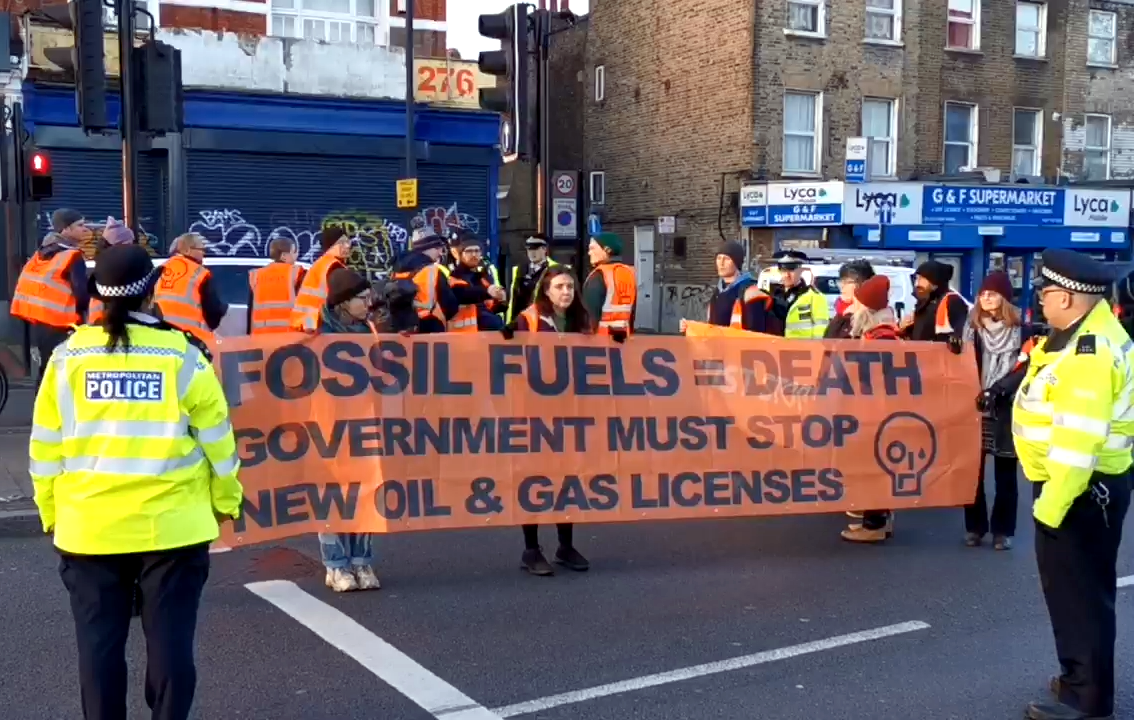
Just Stop Oil protesting in London 6 December 2022.
The United Nations Special Rapporteur on Environmental Defenders released a detailed ‘Position Paper’ yesterday which called growing repression of environmental protest and activism a “major threat to democracy and human rights”. He remarked:
“The repression that environmental activists who use peaceful civil disobedience are currently facing in Europe is a major threat to democracy and human rights. The environmental emergency that we are collectively facing, and that scientists have been documenting for decades, cannot be addressed if those raising the alarm and demanding action are criminalizedfor it. The only legitimate response to peaceful environmental activism and civil disobedience at this point is that the authorities, the media, and the public realize how essential it is for us all to listen to what environmental defenders have to say.”
The report names numerous actions and comments made by the UK Government over recent years as cause for concern for the state of democracy and civil rights. It lists an overview of “Harsh and disproportionate sentences and removal of defenses” that have been occurring in the judicial system.
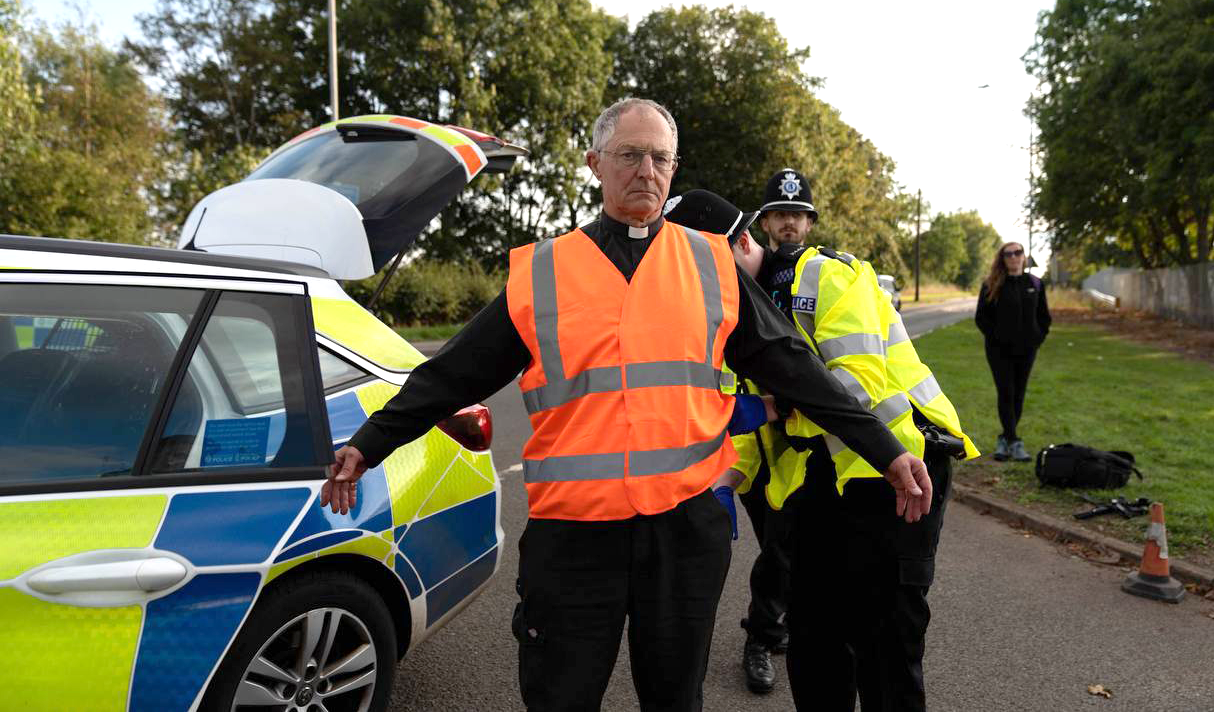
A Just Stop Oil participant getting arrested at Kingsbury oil terminal. A JSO / Vladamir Morozov image.
Recent legislations from the UK Government are described as “being used to stifle environmental protest”, such as the 2022 Police, Crime, Sentencing and Courts Act and 2023 Public Order Act – the factsheet of which mentions “Extinction Rebellion, Insulate Britain and Just Stop Oil” as leading factors.
A Just Stop Oil spokesperson said today:
“The main concern of policymakers should be on addressing this crisis and assisting the frontline victims of climate collapse – that’s the farmers in Wales whose crops are failing, or families in Ireland having to evacuate from their homes to escape flooding, or people in Bangladesh suffering under the threat of lethal wet-bulb temperatures.”
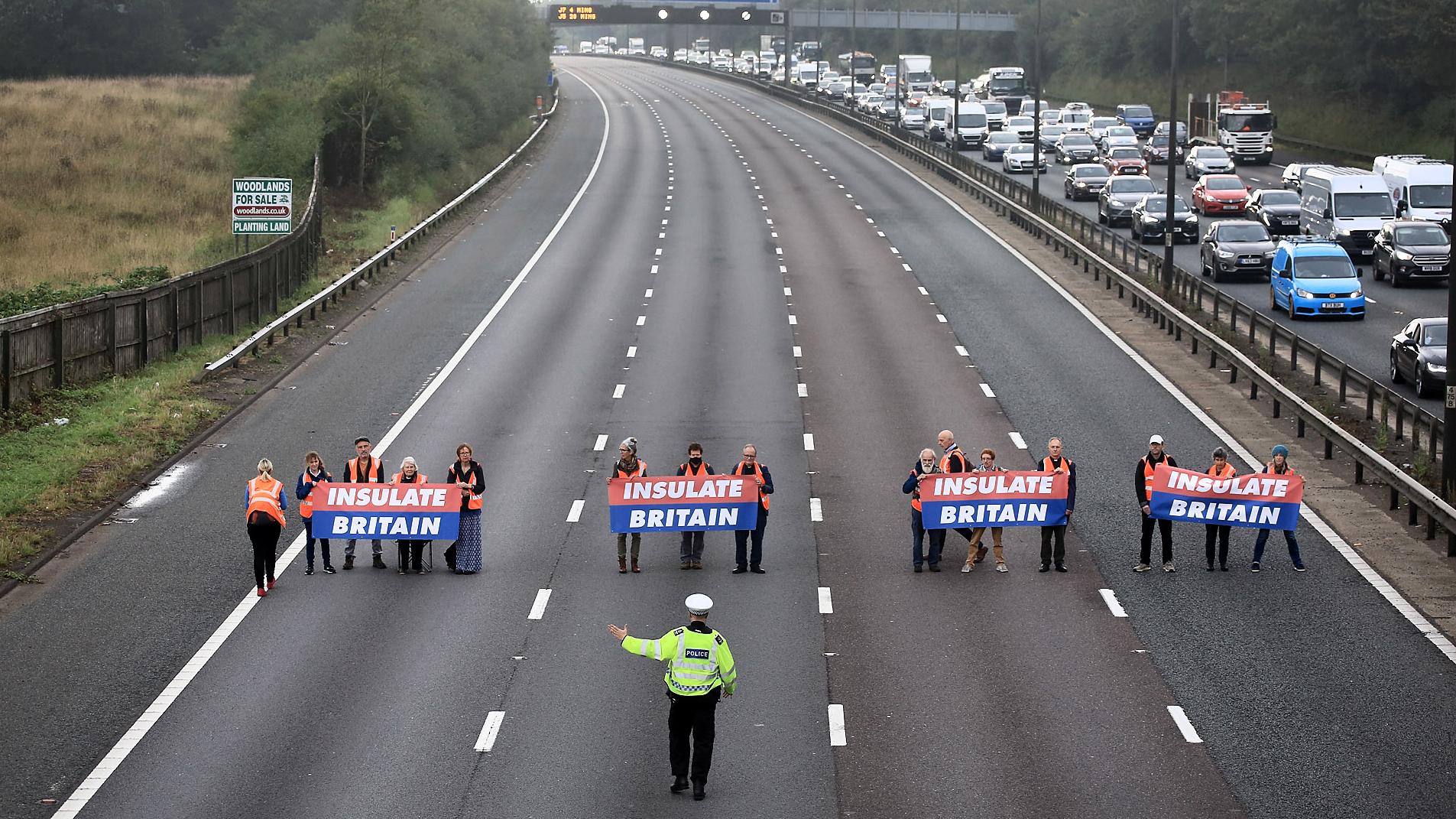
Image of an Insulate Britain roadblock September 2021
“However, the fact is that Western Governments are resorting to increasing authoritarianism to try to stop citizens from standing up to their leaders’ corrupt efforts to line their own pockets with oil money. It’s important to highlight this fact, and to note that this repression is failing as the people’s demand for real decarbonisation becomes too loud to ignore”.
As the world passes tipping points that threaten the breakdown of ordered civilization, world leaders, captured by the interests of oil lobbyists and big business, are failing to protect our communities. British citizens are sick of being led by liars and crooks. Until we stop Tory oil, supporters of Just Stop Oil will continue taking proportionate action to demand necessary change. Sign up for action at juststopoil.org.
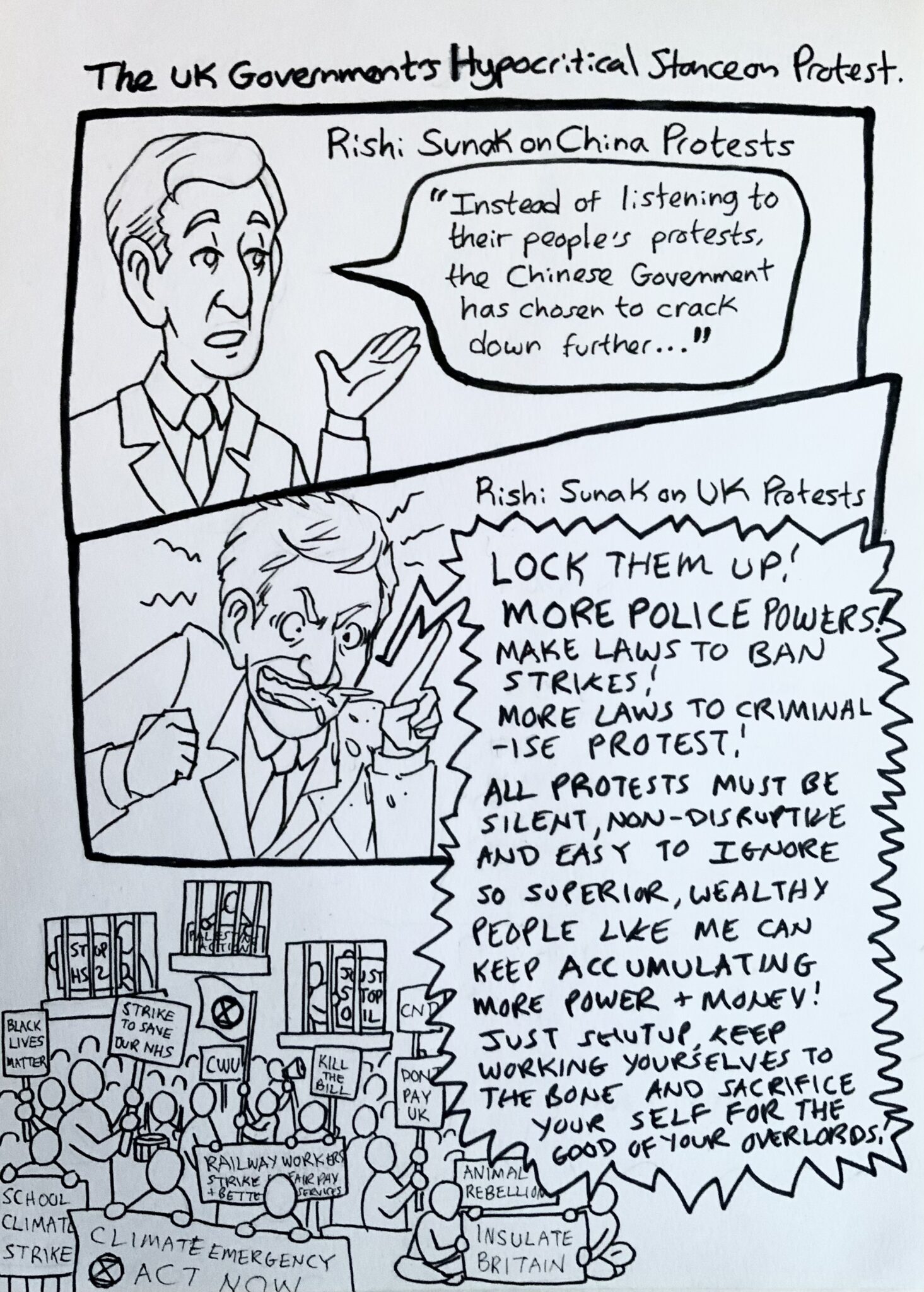
‘The Uk Government’s Hypocritical Stance on Protest’ by Mair Bain. Part of Just Stop Oil’s You May Find Yourself…
02 JUNE 2023 – 23 JUNE 2023 auction.