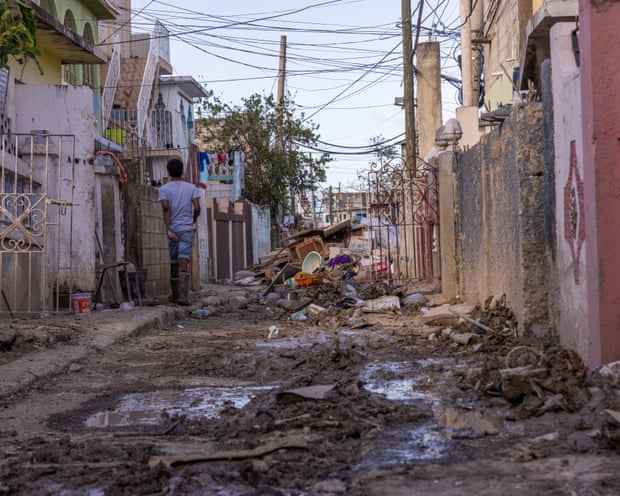
The record-breaking 252mph winds of Hurricane Melissa that devastated Caribbean islands at the end of October were made five times more likely by the climate crisis. Scorching wildfire weather in Spain and Portugal during the summer was made 40 times more likely, while June’s heatwave in England was made 100 times more likely.
Attribution science has made one thing clear: global heating is behind today’s extreme weather. That greenhouse gas emissions warmed the planet was understood. What can now be shown is that this warming produces record heatwaves and more violent storms with increasing frequency.
What we can do to minimise, or at least reduce, the risks to life from such events – as well as more gradual changes – is what climate adaptation experts think about all the time. The alarming consensus is that we are not doing anywhere near enough. The result is paid for in lives: floods and cyclonic storms across Thailand, Sri Lanka and Indonesia left hundreds dead at the end of November.
…
For the rich world, adaptation is prudent. For the poor world, it is survival. The latest UN report is unequivocal: developing countries will need more than $310bn annually by 2035, yet received just $26bn in 2023. Catastrophic floods in Asia and worsening droughts in Africa this year point to the growing need to accelerate climate adaptation.
Under the Paris agreement, nationally determined contributions (NDCs) – country plans to tackle global heating – are meant to cover both emissions reduction and adaptation to climate impacts.
But NDCs end up focusing mostly on cutting greenhouse gases and establishing decarbonisation pathways. That needs to change. National adaptation plans, which came out of Cop16, need to be foregrounded. These put adaptation centre stage – and demand real plans, real finance, real justice. They ask the question that really matters now: how do vulnerable nations survive a warming world that emissions cuts alone can’t stop?


