Revealed: The areas where more than half of disabled people could lose their benefits

Spread the love

https://www.bigissue.com/news/social-justice/benefit-cuts-pip-dwp-labour-disabled-people/

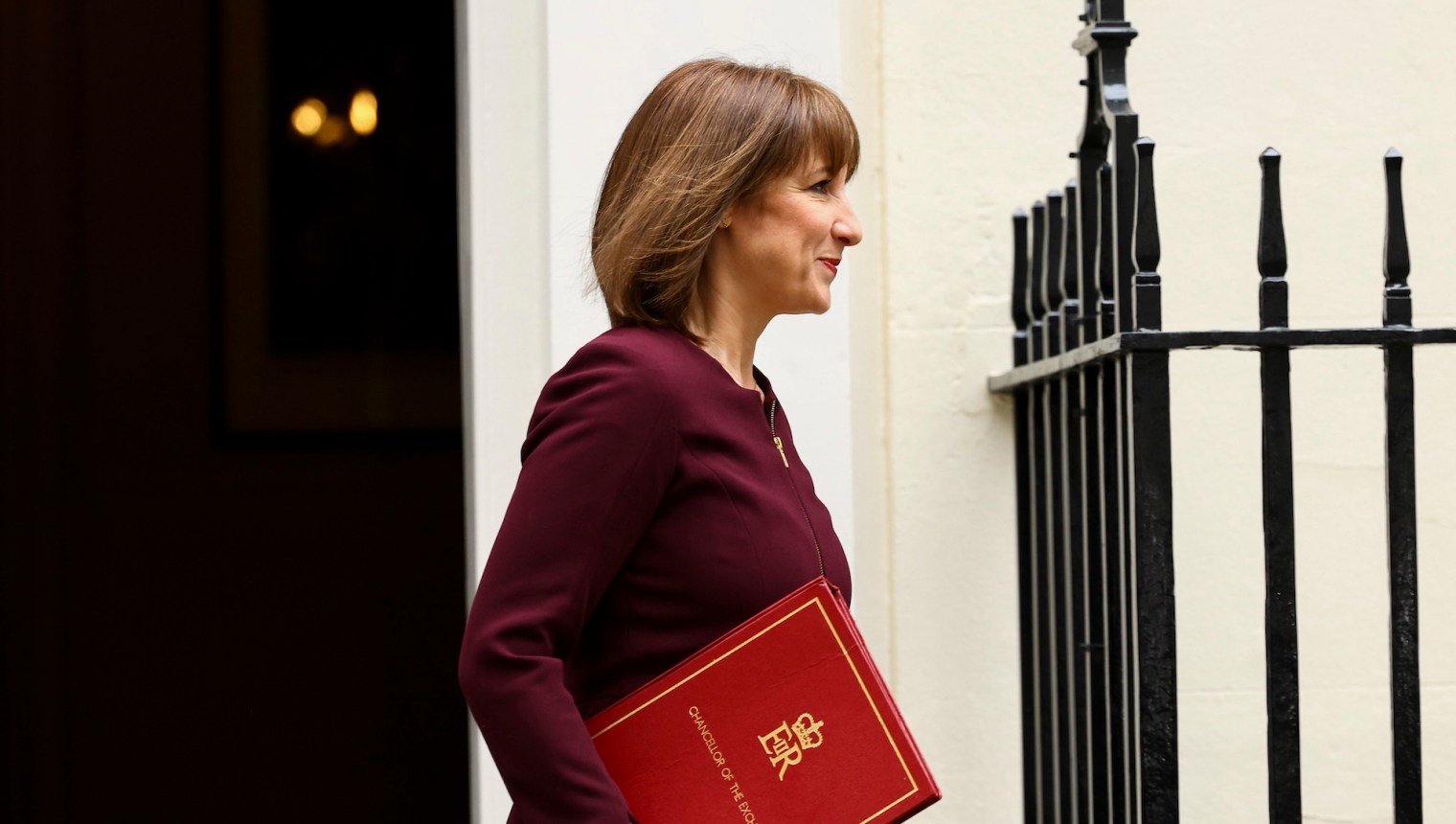
Chancellor Rachel Reeves. Image: Flickr/ Alecsandra Dragoi/ Treasury

Labour’s disability benefit cuts will impact an estimated 800,000 people, of whom half will lose their PIP entirely

More than half of disabled people with daily living needs in parts of England and Wales could lose their benefits under the government’s welfare cuts, the Big Issue can reveal.

Analysis of data from the Department for Work and Pensions (DWP), which was published in response to a written parliamentary question from Liberal Democrat work and pensions spokesman Steve Darling, shows that at least half of all current claimants of the personal independence payment (PIP) daily living allowance in ten constituencies could lose this benefit under the government’s plans, which MPs are set to vote on next month.

These include highly deprived Labour seats such as Tipton and Wednesbury and Wolverhampton South East – the constituency of senior cabinet minister Pat McFadden. Meanwhile the least affected constituencies tend to be those with much lower deprivation levels such as Guildford – although even here, more than a third of PIP daily living claimants are at risk from the cuts. 

The most exposed constituency is Boston and Skegness, where 52% of claimants are at risk. The seat is represented in parliament by Reform UK’s deputy leader Richard Tice. Polling for the Big Issue recently found that 68% of Reform voters believe Labour is failing on poverty.  

The DWP’s dataset is detailed, showing what proportion of current PIP daily living claimants with each type of disability scored under four points in all daily living assessment categories, putting them at risk from Labour’s plans:

  • There are 97 seats where at least 80% of PIP daily living claimants with arthritis are at risk, peaking at 87% in Derbyshire Dales
  • Almost three-quarters of claimants with cardiovascular disease in North Cotswolds could lose out under the cuts
  • More than 70% of claimants with multiple sclerosis and neuropathic diseases in Lewisham East and Sheffield Heeley are exposed to the rule change

The Joseph Rowntree Foundation has published an interactive breakdown of the figures by constituency, though not including figures for the overall PIP caseload in each seat.

See the original article at https://www.bigissue.com/news/social-justice/benefit-cuts-pip-dwp-labour-disabled-people/

Keir Starmer says that the Labour Party under his leadership all feel a small part of Scunthorpe.

Continue ReadingRevealed: The areas where more than half of disabled people could lose their benefits

Green party dismisses immigration white paper as ‘panicked and misguided’

Spread the love
Image of the Green Party's Carla Denyer on BBC Question Time.
Image of the Green Party’s Carla Denyer on BBC Question Time.

Green party co-leader Carla Denyer MP has slammed the government over its immigration white paper proposals and rhetoric. She said:

“The prime minister has decided to use divisive language lifted straight out of Reform’s playbook. These ill-thought-through reforms are the triumph of a panicked and misguided rush to create headlines and try to win back Reform voters.

“From closed down youth centres to shuttered pubs, people in all parts of the UK are feeling the bonds that hold their communities together dissolving. And whether it’s rebuilding intergenerational relationships, or helping those who come here from abroad to integrate, strengthening those bonds requires support and crucially funding from central government. But far from rebuilding our communities, this government’s reforms are going to make things worse.

“In particular, at a time when the care sector is already stretched to breaking point, and public support for people coming from overseas to work in our care sector is consistently strong, it’s wild that this government is ignoring public opinion and making it even harder to recruit badly-needed care staff.”

Keir Starmer chases Nigel Farage's racist bigot vote.
Keir Starmer chases Nigel Farage’s racist bigot vote.
Continue ReadingGreen party dismisses immigration white paper as ‘panicked and misguided’

Keir Starmer’s immigration plans: research shows you don’t beat the far right by becoming them

Spread the love
Chasing racist votes Keir Starmer says that he can be just as racist and cnuty as Nigel Farage.

Katy Brown, Manchester Metropolitan University

As British prime minister Keir Starmer vowed to “finally take back control of our borders” in a landmark speech on immigration on May 12, it felt a little like déjà vu.

Some nine years earlier, we had heard those exact words repeated over and over in the build-up to the Brexit referendum from former prime minister Boris Johnson and the Leave campaign. It was a refrain also used by Nigel Farage and UKIP.

Of course, this direct reference was the point. Starmer used it to claim that the Labour government’s white paper on immigration was finally going to deliver on what had been promised and desired for many years.

In these opening lines, the tone was set. And as the speech went on, there were echoes of far-right language and ideas reverberating throughout. Starmer lamented the “squalid” state of contemporary politics, the “forces” pulling the country apart, and the previous government’s so-called “experiment in open borders”.

This speech and the white paper that it unveiled are but the latest indication of the rightward direction of travel within UK politics, led by mainstream and far-right parties alike – as exemplified in recent months by the footage released of immigration raids and deportations.

Some will argue this is Labour’s response to the rising threat of Reform UK, with results in the recent local elections seen as evidence of the far right’s growing popularity. So the story goes, Labour is proving that they can be tough on immigration, showing would-be Reform defectors that they can be trusted after all.

This familiar narrative seems to follow a prevailing wisdom which is parroted in political, media and public debates – that appeasing the far right is the way to defeat it. Rather than beating the far right at their own game, however, research shows that these techniques simply legitimise their key talking points and further normalise exclusionary politics.

Starmer’s speech is a case in point. In using “take back control” from the outset, there was no hiding the intended audience or message. Starmer claimed that this project would “close the book on a squalid chapter for our politics, our economy, and our country”, implying that excessive immigration has directly caused these problems and that stopping it solves them. This chimes with classic far-right narratives where migration is framed as the root of all societal ills.

When these kinds of ideas are pushed by those in government, with great authority and influence, they are given greater credence and weight. A strikingly clear example of this came in the summer of 2024 when participants in racist riots waved posters containing the slogan “stop the boats” (a phrase popularised by the previous Tory government).

Another component of the speech that was reminiscent of far-right tropes was the idea that increased immigration was a deliberate tactic by the previous government. Starmer suggested that the Conservatives were actively pursuing a “one-nation experiment in open borders” while deceiving the British public of their intentions.

Far-right conspiracies are often premised on the idea that elites are deliberately encouraging mass immigration. It’s not hard to see how Starmer’s words could act as a dog whistle in this scenario.

These claims are especially damaging when we think about the draconian measures introduced under former Conservative governments, such as the Rwanda policy. Labour is now indicating that these proposals didn’t go far enough.

To justify bringing far stricter immigration rules, Starmer stated that “for the vast majority of people in this country, that is what they have long wanted to see”. As far-right parties so often do, Labour suggests that they are delivering on “people’s priorities”. Yet are they really a priority for people, or are we told that they are a priority which then makes them more of a priority?

Research by Aurelien Mondon, senior lecturer in politics at the University of Bath, illustrates how people’s personal and national priorities differ dramatically. When people in the UK were asked to name the two most important issues facing them personally, immigration didn’t even make it into the top ten.

However, when asked the same question about the issues facing their country, immigration topped the list. How can something that doesn’t affect you in your day-to-day life suddenly become a top priority for your country? We need to challenge the narrative that the government is simply acting on people’s wishes and acknowledge its own capacity to set the agenda.

Other priorities

Some will say that harsher anti-immigration policies are a necessary evil to defeat the far right. However, if people’s personal priorities are really the cost of living, housing and education, why is the government not focusing more of its energy on these things rather than scapegoating migrants?

What’s more, research shows that even based on these terms, these strategies are ineffective and can actually boost the success of the far right electorally. After all, its ideas are being repeatedly normalised.

In all this tactical talk, we lose sight of the fact that people are living the consequences of this rhetoric and policies right now. Rather than focus on Reform’s potential performance in a general election that is probably years away, we should recognise the immediate consequences of the rhetoric that has accompanied this white paper. Even if this did put a dent in Reform’s prospects, what is the meaning of defeating them if the policies they promote become part of the mainstream in the process?

The bottom line is that you do not beat the far right by becoming them. It doesn’t work electorally or ideologically, and even if it did, minoritised communities suffer the consequences regardless. The far right is not some threat lying waiting in the future – its normalisation is happening now.

Katy Brown, Research Fellow in Language and Social Justice, Manchester Metropolitan University

This article is republished from The Conversation under a Creative Commons license. Read the original article.

Elon Musk urges you to be a Fascist like him, says that you can ignore facts and reality then.
Keir Starmer says that the Labour Party under his leadership all feel a small part of Scunthorpe.
Continue ReadingKeir Starmer’s immigration plans: research shows you don’t beat the far right by becoming them

Zia Yusuf Wants to be the UK’s Elon Musk

Spread the love

Original article by Rei Takver republished from DeSmog.

Reform UK chair Zia Yusuf and Tesla CEO Elon Musk. DeSmog collage. Credit: Sky News / Real Time with Bill Maher / YouTube / Pexels / Graeme Maclean / Wikimedia Commons

Reform UK leader and figurehead Nigel Farage hasn’t been alone in basking in the media spotlight of late.

Farage has been accompanied by his party chair, Zia Yusuf, a multi-millionaire tech entrepreneur who has helped to orchestrate Reform’s explosive rise.

Yusuf has overseen the party’s growth to over 200,000 members and 400 regional branches since he took the role in July 2024 – helping to propel Reform to a swathe of victories at last week’s local elections.

The party is now being shaped in Yusuf’s image, who has “extraordinary” powers to kick out Reform members, and even its candidates. His position has no term limit, and there is no formal procedure to remove him – not even by Farage.

With these vast constitutional powers in place, Yusuf appears to be following the lead of his hero in business and politics: Elon Musk.

“The greatest entrepreneur of all time”

Press coverage of the Reform chair often describes him as having worked in “finance”, but Yusuf refers to himself as a “tech entrepreneur” and to Reform as a “start-up”.

While he did spend several years at the investment banks Merrill Lynch and Goldman Sachs in his early 20s, Yusuf left the world of finance for tech entrepreneurship in 2014, becoming the CEO of the luxury digital concierge company Velocity Black, which he co-founded.

Velocity Black is a mobile app for the super rich that allows them to have anything they want at the touch of a button, from exclusive restaurant reservations to private jet holidays. Yusuf founded the firm alongside Alex MacDonald, his old classmate at the private Hampton School in London.

They sold the company in 2023 to the U.S. bank Capitol One for £233 million, with Yusuf reportedly making £32 million on the sale.
 
Long before he turned to politics, Yusuf credited Musk – the CEO of the electric car company Tesla – as an inspiration for the founding of Velocity Black, telling The Independent in 2018 that “we agreed with Elon Musk – it [Velocity Black] can’t be slightly better; it’s got to be amazing”.

This fondness has continued following their mutual journeys into the political limelight. In the wake of Musk falling out with Farage over the latter’s refusal to embrace far-right organiser Tommy Robinson, Yusuf praised Musk for being, “by some distance, the greatest entrepreneur of all time”, saying that he “will be forever grateful for all [Musk] has done and will do for humanity”.

More recently, Yusuf has called Musk the “ideal person” to run Donald Trump’s Department of Government Efficiency (DOGE), which aims to radically reduce the size of the federal government. Musk’s department has made sweeping cuts to public services – including to climate agencies – sacked government staff en masse, and closed whole departments with no oversight or transparency.

And though Musk’s relationship with Farage has frayed in recent months, Yusuf hasn’t ruled out the possibility of receiving a major donation from Musk in the future – even despite his extreme unpopularity in the UK.

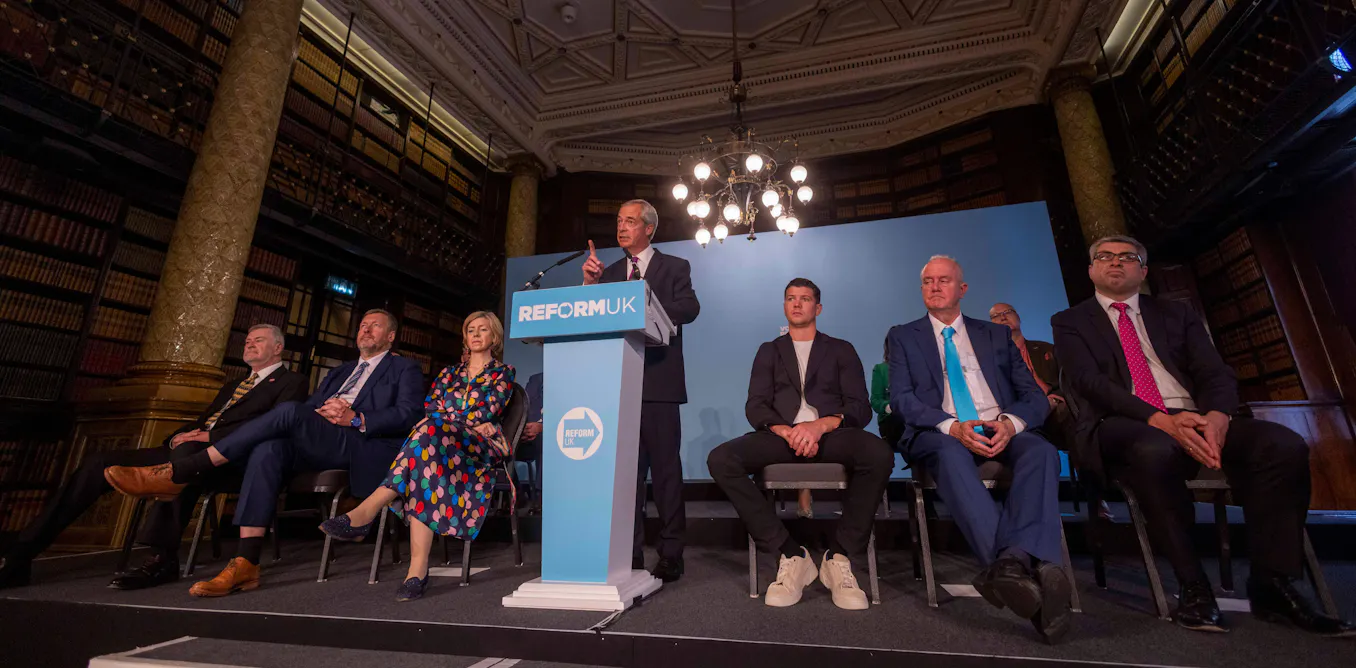
Reform UK chair Zia Yusuf and leader Nigel Farage. Credit: Imageplotter / Alamy Stock Photo

Yusuf’s admiration for Musk is clear, but to what extent will admiration lead to imitation?
 
There are clues in his recent speaking engagements. “Silicon Valley has a unique culture that’s impossible for anyone else to replicate, but look, we need to stop wasting taxpayer money,” Yusuf said in March, alluding to Musk’s attempts to eliminate “government waste”.
 
Yusuf has argued that a Reform government in Westminster should replicate the efforts of DOGE, saying that “we do need to massively cut the size of the bureaucratic state and probably cut the civil service by more than half”.

As he’s stated on X, the social media platform owned by Musk, “Reform is drafting detailed plans to identify, immobilise and remove all elements of the Blob [a derogatory reference to the civil service] hostile to the interests of the British people. This plan will be implemented on day one of Nigel Farage becoming prime minister”.

Reform has also vowed to set up “a British DOGE for every county and every local authority in this country” following its victories in last week’s local elections.

This potentially poses a threat to the UK’s climate ambitions. Farage and Yusuf have stated their intention to cut local climate schemes, advocating instead for more fossil fuel production.

Since becoming party chair, Yusuf has expressed a variety of anti-climate stances. He has claimed that North Sea oil reserves are a “gift from God”, and that the pursuit of net zero emissions by 2050 is “religious madness” and a “catastrophic act of self-harm” to the UK economy. 

“President Trump’s victory represents the rejection of open borders, socialist economics, woke ideology, net zero fanaticism and [diversity, equity, and inclusion schemes] by right thinking people in America,” Yusuf posted in November. “The UK is next.”

A Power Grab?

Yusuf crashed onto the political scene in the summer of 2024, taking on the role of Reform chair shortly after donating £200,000 to the party. His contribution was the second-highest to the party of the general election campaign and almost a-third of the total funds raised by Reform in the final week before the election.

The 38-year-old has a close relationship with Farage, who he met at a cocktail party held by Stuart Wheeler, the former treasurer of UKIP, close to a decade ago. On the general election campaign trail, Farage said that Yusuf could one day lead Reform, commenting that “aside from his generosity, [Yusuf] will be a great asset and media performer during this campaign and beyond”.

When asked by The Guardian whether he would run for a seat in Parliament in 2029, Yusuf responded: “I’m absolutely open to it. This is a sincere comment. I will serve in whatever capacity Nigel asks of me”.

Recently, there has been talk of Yusuf gaining an unusual amount of power in the party. The Independent’s political editor David Maddox wrote in early March that “the only person to regularly get top billing on Reform events along with Mr Farage is Mr Yusuf. […] Press notices for their mini conferences state that people will hear from ‘Nigel Farage, Zia Yusuf and many more’. No mention of MPs.”

Maddox added that a “senior member” inside Reform had claimed that Yusuf was plotting a leadership coup “in plain sight”.

This bears some resemblance to Musk and his role in the Trump administration. Though he is less actively involved in DOGE following plunging Tesla sales across the globe, Musk has been accused of setting the new government’s agenda from the shadows, after donating more than $290 million to Trump’s campaign.

And there are other ways in which Yusuf is mirroring Musk.

Reform has stated its intention to profile every UK voter, and is already facing allegations of breaching private data.

Though the Reform privacy policy says that it aims to comply with UK data protection laws, the party is being sued by a group of 50 claimants for failing to respond to Data Subject Access Requests, through which voters can ask political parties to disclose the information they hold on them. Following the initiation of legal proceedings, Reform told the claimants that it did not hold any of their data.

DOGE has been accused of being slapdash with data, having accessed vast amounts of highly-sensitive personal information held by the U.S. government, despite rulings from several judges that Musk’s department is violating privacy law.

Given his constitutional powers, his party’s hunger for personal data, his anti-government ideology, and his tech background, Zia Yusuf seems to have many close parallels with Elon Musk.

On the BBC’s Political Thinking with Nick Robinson in February, he was asked the question directly: “Are you Nigel Farage’s Elon Musk?”

Yusuf demurred. “I am certainly no Elon Musk. I think Elon Musk is singular,” he said.

However, he hastened to add: “I’ve tried to learn as much as I can about him”.

The sole responsibility for any content supported by the European Media and Information Fund lies with the author(s) and it may not necessarily reflect the positions of the EMIF and the Fund Partners, the Calouste Gulbenkian Foundation and the European University Institute.

Original article by Rei Takver republished from DeSmog.

Nigel Farage reminds you that he's the man that brought you Brexit and asks what could possibly go wrong.
Nigel Farage reminds you that he’s the man that brought you Brexit and asks what could possibly go wrong.
Elon Musk urges you to be a Fascist like him, says that you can ignore facts and reality then.
Nigel Farage explains the politics of Reform UK: Racism, Fake anti-establishmentism, Deregulation, Corporatism, Climate Change Denial, Mysogyny and Transphobia.

Continue ReadingZia Yusuf Wants to be the UK’s Elon Musk

Unison chief tells staff at Reform-controlled councils to join union

Spread the love

https://www.theguardian.com/uk-news/2025/may/03/unison-chief-tells-staff-at-reform-controlled-councils-to-sign-up-to-union

Reform Party leader Nigel Farage celebrates his party candidate Sarah Pochin winning the Runcorn and Helsby byelection by six votes Photograph: Anthony Devlin/Getty Images

The head of the UK’s biggest union has urged staff at Reform UK-controlled councils to sign up after Nigel Farage warned workers to seek “alternative careers”.

Farage said during a speech on Friday that he would advise council staff working on diversity or climate change initiatives to seek “alternative careers very, very quickly” after Reform UK took control of Durham county council.

The Clacton MP’s party made major gains in Thursday’s local elections, picking up 10 councils and more than 600 seats. The party also won two mayoral races and secured a fifth MP in Runcorn and Helsby with Sarah Pochin.

Responding to Farage’s comments, Unison general secretary Christina McAnea said: “Unions are there to ensure no one can play fast and loose with the law.

“Any staff working for councils now controlled by Reform, and who aren’t yet members, should sign up so they can be protected too.”

Farage has said he wants a British equivalent of Doge – referring to the Elon Musk’s so-called “department of government efficiency”, which is slashing government spending in the US, in every council.

https://www.theguardian.com/uk-news/2025/may/03/unison-chief-tells-staff-at-reform-controlled-councils-to-sign-up-to-union

Climate science denier Nigel Farage explains that it's simple to blame asylum-seekers or Muslims for everything.
Climate science denier Nigel Farage explains that it’s simple to blame asylum-seekers or Muslims for everything.
Elon Musk urges you to be a Fascist like him, says that you can ignore facts and reality then.

Continue ReadingUnison chief tells staff at Reform-controlled councils to join union