Hope in the data: Can Palestine explain America’s moral shift?

Spread the love

This work by Middle East Monitor is licensed under a Creative Commons Attribution-NonCommercial-ShareAlike 4.0 International License.

Protesters march through downtown Chicago during an “Emergency Protest” on April 8, 2026 in Chicago, Illinois, United States. [Jacek Boczarski – Anadolu Agency]

by Dr Ramzy Baroud RamzyBaroud

In the Middle East, the perception of ordinary Americans has long followed a familiar script: detached, uninformed, inward-looking, and politically shallow— a society of ‘gas guzzlers’, with little grasp of global realities beyond their immediate geography.

This perception did not emerge from thin air. It was cultivated—reinforced, even—by American political and media institutions themselves. Politicians claimed to speak on behalf of ‘the American people’, while mainstream media shaped what those people knew, and, crucially, what they did not know.

For decades, Americans overwhelmingly aligned with Israel. This was not merely ideological; it was instructional.

The public was told—repeatedly—that Israel reflected ‘American values’: democracy, civility, modernity. Palestinians and Arabs, by contrast, were framed as perpetual antagonists, initiators of violence, and ‘obstacles to peace’.

Some Americans embraced this framing on religious or ideological grounds. But for the majority, the pro-Israel position became a default—an inherited conclusion rooted in limited access to alternative information. Israel was ‘good’, Arabs were ‘bad’. The narrative was simple, binary, and rarely challenged.

With mainstream media as the primary source of information, this perception hardened over time. Support for Palestine, and for broader Arab causes, remained confined to academic spaces and activist circles—often informed by anti-colonial and anti-imperialist frameworks, but numerically marginal and politically contained.

The mainstream remained locked in place. But that lock has been broken.

The shift did not happen overnight. Among Democrats, cracks began to appear as early as the mid-2010s. In 2016, Gallup data still showed Democrats sympathizing more with Israelis than Palestinians. By 2018, that gap had narrowed. Significantly. By 2021, parity had nearly been reached. And by 2024–2025, Democrats—especially younger voters—were expressing majority sympathy for Palestinians, with some polls showing support exceeding 50 percent among those under 35.

READ: Hamas rejects US claims on Gaza aid as “misleading”

This transformation was driven in part by grassroots activism, particularly within progressive circles, where Palestine became a central moral and political issue. But it was also driven by something far more consequential: the collapse of narrative control.

The Israeli genocide in Gaza accelerated this shift dramatically. Not only because of the scale of violence in the besieged Strip, but because, for the first time, the reality of war was not mediated solely through the filters of corporate media. Independent journalism, social media, and direct visual evidence disrupted decades of curated narratives.

The informational balance—long skewed—began to tip.

At the same time, American trust in mainstream media reached historic lows. According to Gallup, by 2025, only about 31 percent of Americans expressed trust in mass media to report news “fully, accurately, and fairly,” with trust among younger Americans even lower.

Up to this point, one could still argue that the shift remained politically contained: Democrats moving toward Palestine, Republicans remaining firmly aligned with Israel. But then came a rupture.

On February 27, 2026, Gallup released a poll showing that, for the first time in modern polling history, more Americans sympathized with Palestinians than with Israelis—41 percent to 36 percent. This was not a marginal fluctuation. It was a structural break.

That moment should have been seismic. Yet, it was not treated as such. Mainstream media largely buried the story. And within days, the political conversation shifted to a new crisis: the war with Iran.

In the weeks that followed, polling attention moved rapidly to American attitudes toward military escalation. Across multiple surveys, the outcome was consistent: Americans rejected war, and an even greater number rejected the idea of a prolonged military entanglement.

Yet mainstream commentary refused to connect the dots. Palestine was treated as one issue. Iran as another. Venezuela, interventionism, and global militarism as separate, disconnected phenomena. Each was analyzed in isolation, stripped of its broader political and moral context.

READ: Russia questions Trump’s Board of Peace 

Instead of recognizing a pattern, commentators fragmented the evidence. Opposition to war was framed as ‘war fatigue’, or economic anxiety, or partisan resistance to President Donald Trump. The focus was placed on gas prices, electoral calculations, and political polarization—not on the possibility that Americans were making moral judgments independent of elite narratives.

But the pattern is there. And it is unmistakable.

True, Americans are still told what matters—Israel, Iran, energy security, the Strait of Hormuz, etc. The agenda remains largely intact. But the conclusions no longer follow automatically. The chain between attention and consent has been broken.

This is not simply a political shift. It is a cognitive and moral one. Economic concerns and partisan affiliations still shape public opinion, as they always have. But they no longer fully determine it. 

Increasingly, Americans are evaluating global events through a moral lens—one that prioritizes civilian suffering, questions power asymmetries, and challenges the legitimacy of endless war.

This is not speculation. It is confirmed by data—most clearly in the case of Palestine, which has emerged as a moral compass for a wider transformation in American public consciousness. The shift in sympathy toward Palestinians is not an isolated anomaly, but a signal of a deeper rethinking of power, justice, and resistance. And it is likely irreversible.

Mainstream media will continue to set the agenda for the foreseeable future. But it has lost something far more important: its ability to manufacture consensus at scale.

That signals possibility. And perhaps, for the first time in generations, a reason for cautious—yet unmistakable—optimism: that ordinary Americans are no longer passive recipients of power, but active participants in shaping a more morally conscious political reality.

OPINION: Trapped by his own image: Trump’s Iran war and the politics of ego 

The views expressed in this article belong to the author and do not necessarily reflect the editorial policy of Middle East Monitor.

This work by Middle East Monitor is licensed under a Creative Commons Attribution-NonCommercial-ShareAlike 4.0 International License.
Keir Starmer explains that UK is actively supporting Israel's genocidal expansion and repeats his previous quotation that he supports Zionism "without qualification". Keir Starmer said “I said it loud and clear – and meant it – that I support Zionism without qualification.” here: https://www.jewishnews.co.uk/keir-starmer-interview-i-will-work-to-eradicate-antisemitism-from-day-one/
Keir Starmer explains that UK is actively supporting Israel’s genocidal expansion and repeats his previous quotation that he supports Zionism “without qualification”. Keir Starmer said “I said it loud and clear – and meant it – that I support Zionism without qualification.” here: https://www.jewishnews.co.uk/keir-starmer-interview-i-will-work-to-eradicate-antisemitism-from-day-one/
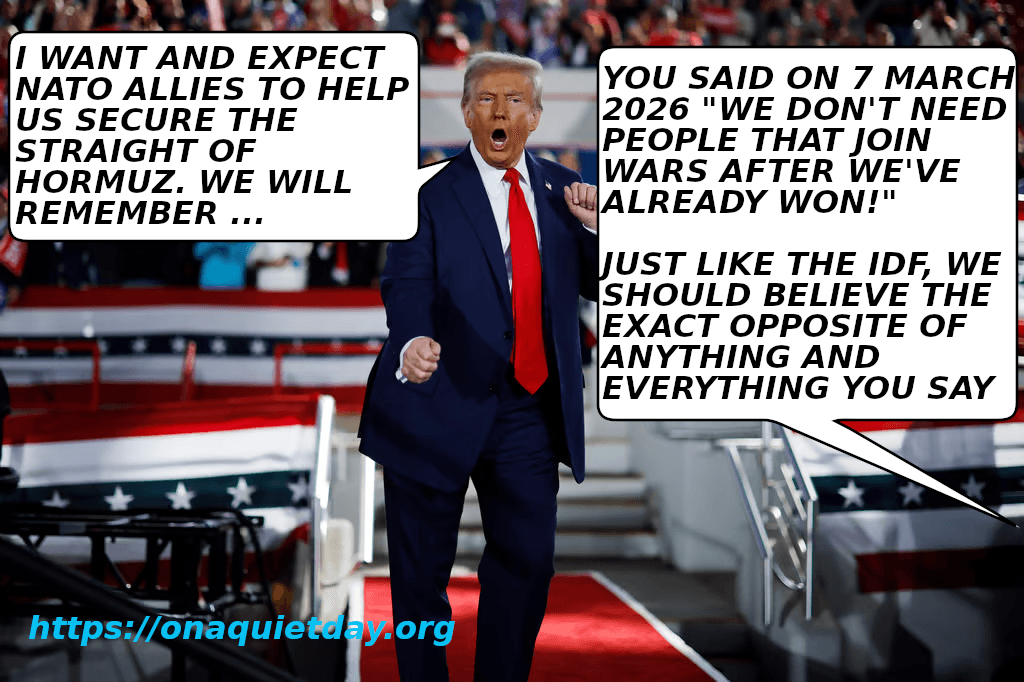
Donald Trump calls for help from NATO allies in securing the Straight of Hormuz despite saying on 7 March 2026 that they don't need people to join wars after they've already won. He's challenged with the claim that he lies as much as the IDF.
Donald Trump calls for help from NATO allies in securing the Straight of Hormuz despite saying on 7 March 2026 that they don’t need people to join wars after they’ve already won. He’s challenged with the claim that he lies as much as the IDF.
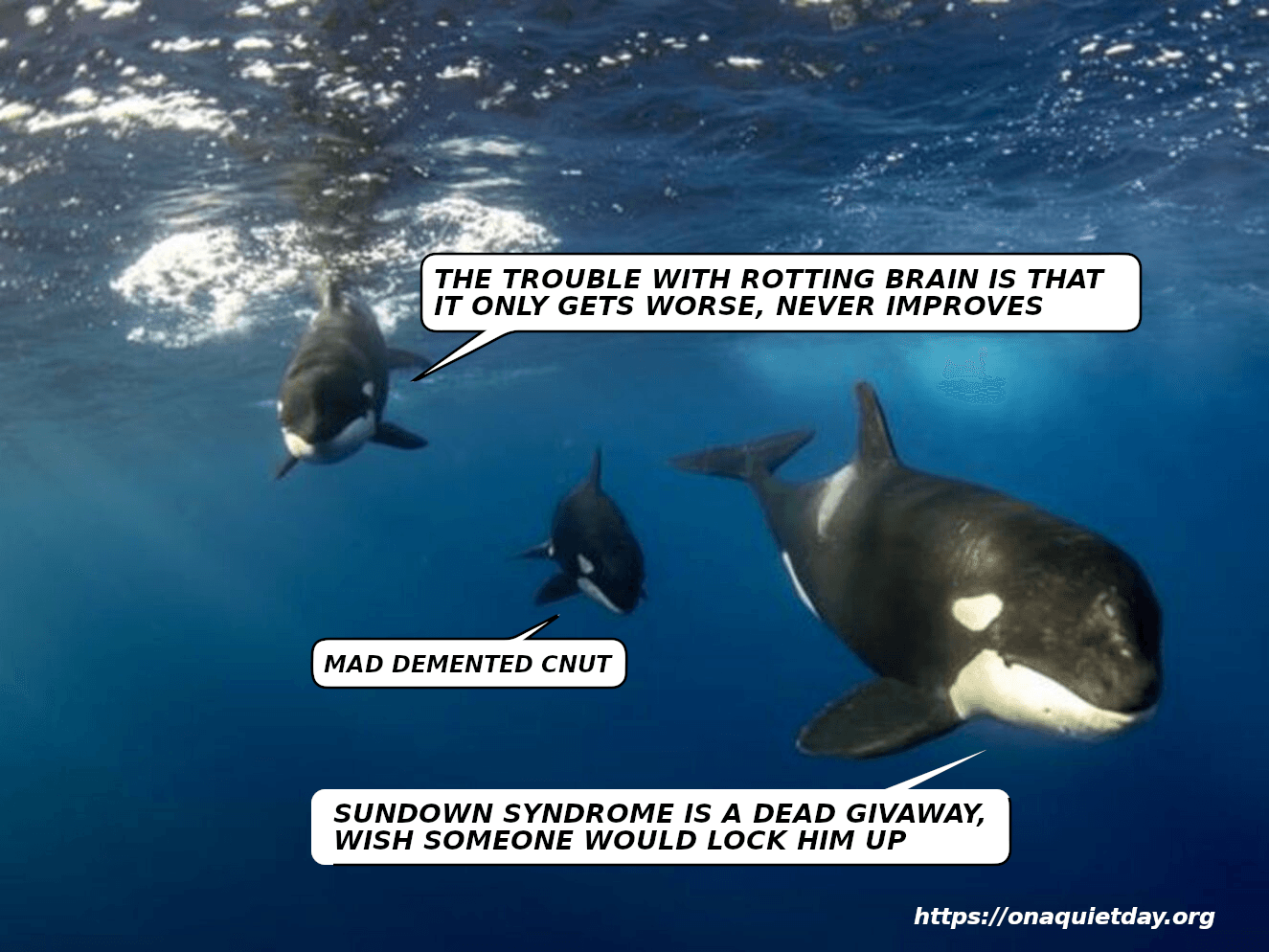
Orcas discuss how Trump was re-elected and him being an obviously insane, xenophobic Fascist.

Continue ReadingHope in the data: Can Palestine explain America’s moral shift?

After the “Iron Wall”: Israel launches another large-scale operation in northern West Bank

Spread the love

Original article by Aseel Saleh republished from peoples dispatch under a Creative Commons Attribution-ShareAlike 4.0 (CC BY-SA) license.

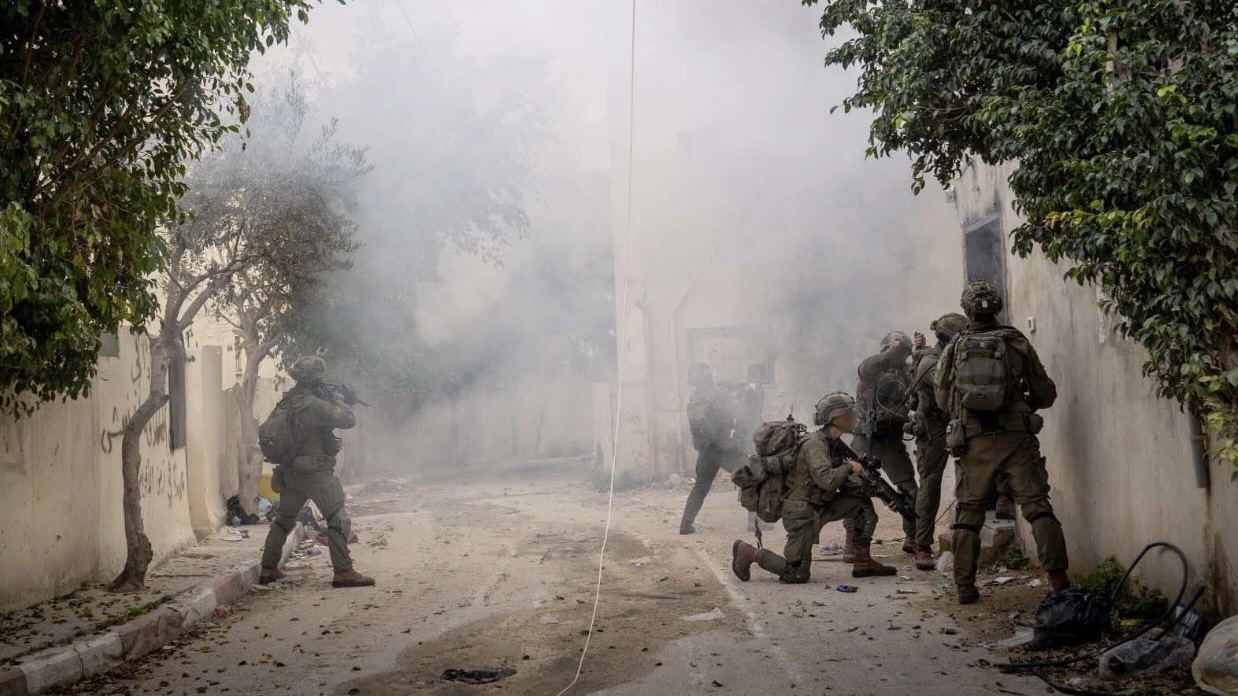
IOF soldiers carrying out a raid in Jenin, in January 2025, as part of Operation Iron Wall. Photo: IOF Spokesperson’s Unit

The IOF claims that the extensive military campaign aims to crackdown on new Palestinian armed resistance groups in the making.

After Israel’s 10-month “Iron Wall” operation in the northern governorates of the occupied West Bank had failed to eradicate Palestinian resistance, the Israeli Occupation Forces (IOF) launched yet another extensive military campaign on Wednesday, November 26, targeting the same areas.

The IOF and the Israel Security Agency (known as Shin Bet) said in a joint statement on Wednesday morning, that the new operation aims to prevent emergent Palestinian resistance groups from being established in several areas in the northeast of the West Bank, including Tubas, Tammun, and Aqaba.

According to Israeli newspaper Yedioth Ahronoth, the intensive military action involves three IOF brigades, forces from the Commando Brigade, Samaria and Menashe regional brigades, Shin Bet agents and Border Police officers.

The Israeli Air Force is also taking part in the operation by carrying out strikes “to isolate and seal off” the targeted areas.

The broad assault expanded to the northern governorate of Jenin on Wednesday night, resulting in the killing of Osama Kameel (20) in Qabatia town.

On Thursday, November 27, the IOF announced that the Israeli Air Force targeted seven sites allegedly used as hideouts by resistance groups in different parts of the West Bank with airstrikes.

Furthermore, over 220 sites were searched, dozens of Palestinians were interrogated and several others were detained.

Citing the Israeli Army Radio, Palestinian Ma’an news agency reported that the Israeli forces assassinated three Palestinian resistance fighters during a raid in the neighborhood of Jabal Abu Dhuhair, in the outskirts of Jenin refugee camp on Thursday. However, the identities of the slain Palestinian men have not been revealed yet.

The operation was preceded by bloody days across the West Bank

Israel’s new wide-scale offensive followed some of the bloodiest days across the West Bank, during which the IOF had murdered a number of Palestinian youths.

On Friday, November 21, Israeli soldiers shot dead Amr Al-Marboua (18), and Sami Mashaikha (16) during a military incursion in the town of Kafr Aqab, north of occupied Jerusalem.

Palestinian police officer Younis Shtayyeh (24) was also killed by the IOF on Friday, in the town of Tell near the northern West Bank city of Nablus.

On Sunday, November 23, Adel Qazzaz (26) succumbed to injuries he sustained after being shot by Israeli troops days earlier in Dura town, in the West Bank southern governorate of Hebron.

That same day saw the killing of Baraa Maali (20) at the hands of the IOF, while he was confronting an attack by illegal Israeli settlers on the village of Deir Jarir northeast of the Ramallah and Al-Bireh governorate, in the central occupied West Bank.

“Resistance is a viable and continuous effort”

The current Israeli military campaign in the northern West Bank marks a crucial development, because it has once again confirmed the determination of the Palestinian people to continue resisting Israel as a fascist occupying power.

Analysts claim that while Netanyahu’s government has relentlessly sought to resolve the Arab-Israeli conflict by waging a brutal indefinite multi-front war across West Asia, its goal seems to be far from attainable, as facts on the ground show that the peoples of the region continue to support the path of resistance.

This approach brings to mind the legacy of late Palestinian resistance icon and writer, Basel Al-Araj, who once said: “Resistance is a viable and continuous effort”.

Original article by Aseel Saleh republished from peoples dispatch under a Creative Commons Attribution-ShareAlike 4.0 (CC BY-SA) license.

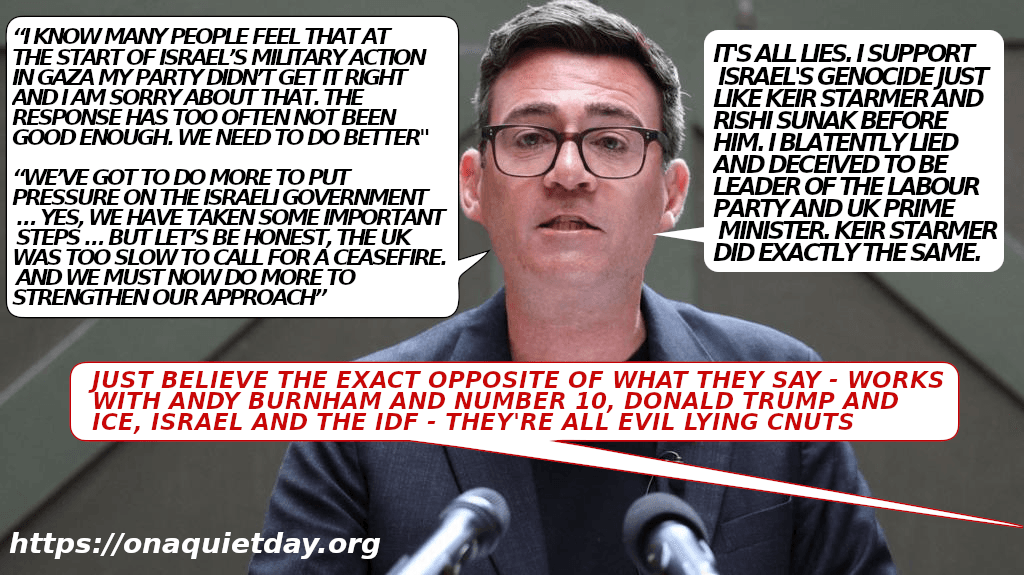
Experiencing issues with this image not appearing. I suspect because it's so critical of Zionist Keir Starmer's support of and complicity in Israel's genocides.
Genocide denier and Current UK Prime Minister Keir Starmer is quoted that he supports Zionism without qualification. He also confirms that UK air force support has been essential in Israel’s mass-murdering genocide. Includes URLs https://www.declassifieduk.org/keir-starmers-100-spy-flights-over-gaza-in-support-of-israel/ and https://youtu.be/O74hZCKKdpA
Keir Starmer objects to criticism of the IDF. He asks how could anyone object to them starving people to death, forced marches like the Nazis did, bombing Gaza's hospitals and universities, mass-murdering journalists, healthworkers and starving people queuing for food, killing and raping prisoners and murdering children. He calls for people to stop obstructing his genocide for Israel.
Keir Starmer objects to criticism of the IDF. He asks how could anyone object to them starving people to death, forced marches like the Nazis did, bombing Gaza’s hospitals and universities, mass-murdering journalists, healthworkers and starving people queuing for food, killing and raping prisoners and murdering children. He calls for people to stop obstructing his genocide for Israel.
Orcas discuss Genocide-supporting and complicit Zionists. Donald Trump, Keith Starmer, David Lammy, Rachel Reeves, Angela Rayner and Wes Streeting are acknowledged as evil genocide-complicit and supporting cnuts.
Continue ReadingAfter the “Iron Wall”: Israel launches another large-scale operation in northern West Bank

Drawing lessons from the Cuban Revolution: organization, unity, and internationalism

Spread the love

This article by republished from peoples dispatch under a Creative Commons Attribution-ShareAlike 4.0 (CC BY-SA) license.

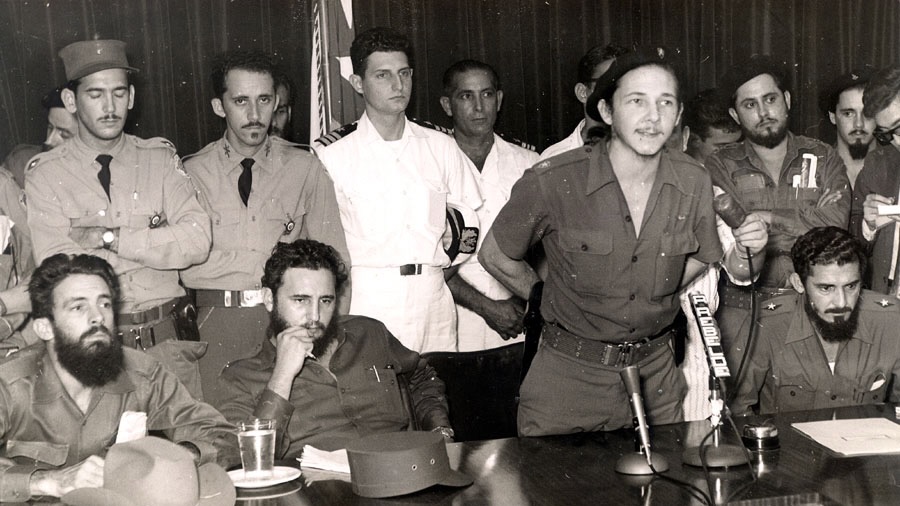
On February 16, 1959, Cuba established the Ministry of the Revolutionary Armed Forces, the executive body of their defense force, and its first Army General, Raúl Castro Ruz. Photo: Miguel Díaz-Canel/X

A recent webinar by Pan Africanism Today and the International Peoples’ Assembly looked at global struggles, from Africa to Latin America, showing how Cuba’s enduring resistance offers vital lessons in organization, unity, and internationalism for today’s movements fighting oppression and war.

The world is in an era marked by relentless wars and overlapping crises, from the devastating civil war in Sudan and violence in the Democratic Republic of Congo to the unfolding genocide in Palestine. The demand to end all wars has never carried greater urgency. And in the midst of all these visible battlegrounds persists a more enduring and insidious conflict; the hybrid war and economic blockade waged against the Cuban people and their revolution.

This was the central focus of a recent global webinar convened under the banner of Pan-African and internationalist solidarity, bringing together progressive voices to draw lessons from Cuba’s anti-imperialist struggle. The session, held on October 15, was facilitated by Mbali Gwenda from Pan Africanism Today, who situated the discussion within a broader historical and moral framework, invoking the revolutionary spirits of Thomas Sankara, martyred on the same date in 1987, and Assata Shakur who recently passed, and whose life consistently symbolized uncompromising resistance to oppression.

“We are dealing with the question of the hybrid war and blockade against the Cuban Revolution and her people,” Gwenda said. “A revolution that has been a source of inspiration for all oppressed peoples throughout the world till this day.”

The keynote address was delivered by Manolo De Los Santos, executive director of The People’s Forum and a researcher at the Tricontinental: Institute for Social Research, who framed Cuba’s defiance not as a miracle, but as the outcome of a centuries-long process of people’s struggle, organization, and consciousness.

The long arc of revolution

De Los Santos began by looking at Cuba’s revolution more than an event confined to the years 1953–1959, when Fidel Castro, Che Guevara, and others led the guerrilla war against the Batista dictatorship. Revolutions, he reminded the audience, are not events but processes, collective journeys of resistance that unfold across generations.

Cuba’s revolution, he argued, has roots reaching back to centuries of anti-colonial and anti-slavery resistance, when the island was still a colony of the Spanish Empire. Unlike many independence movements in Latin America, Cuban revolutionaries understood that genuine freedom required addressing three interlinked questions:

  1. Could Cuba truly be independent if it remained a slaveholding society?
  2. Could it be free if it continued under the exploitative system of capitalism?
  3. Could it claim sovereignty while dominated by imperial powers, first Spain and later the United States?

These questions shaped the consciousness of generations of Cuban patriots, culminating in the 1959 triumph of the socialist revolution. But as he explained, the revolution’s endurance has rested on three essential pillars: organization, unity, and internationalism.

Organization: the bedrock of resistance

Organization, De Los Santos emphasized, has been the Cuban people’s greatest weapon against imperial aggression. From the early independence wars to the 26th of July Movement led by Fidel Castro, Cubans have understood that only a disciplined, organized people can confront an empire with infinite resources.

This organizational spirit persisted after 1959, with the creation of mass democratic structures that unite workers, women, peasants, students, and youth. The Federation of Cuban Women, for example, mobilizes millions in defense of gender equality and revolutionary ideals, while student and peasant organizations remain vital spaces for political education and collective problem-solving.

Even under today’s extreme shortages such as the lack of fuel to power garbage collection, Cuban communities respond not with despair but with collective initiative, a reflection of their revolutionary organization and social consciousness.

Unity, he continued, has been the second indispensable lesson from Cuba. Every time the people were divided, the empire gained the upper hand; every time they stood together, they won. This unity has transcended class, race, and regional divisions, dismantling the legacies of slavery and racism that imperialism imposed.

The Cuban Revolution’s unity was forged not just through ideology but through practice, through collective participation in building a new society. It remains, as Manolo put it, “the most important defense the Cuban people have.”

Internationalism is the soul of the revolution

If organization is the body and unity the shield, then internationalism is the soul of the Cuban Revolution.

Quoting Fidel Castro, the New York-based researcher reminded participants that “a people who are not willing to fight for the freedom of others will never be able to fully fight for their own freedom.”

This principle drove Cuba to send tens of thousands of its sons and daughters to fight alongside liberation movements in Angola, Namibia, and South Africa, contributing directly to the defeat of apartheid. As he noted, “Cuba doesn’t need gold or minerals from Africa, it knows that its freedom is tied to the freedom of the peoples of the African continent.”

Even today, with over 24,000 Cuban doctors working abroad, many across Africa, Cuba continues this legacy of solidarity. The US, in its campaign of distortion, now accuses Cuba of “human trafficking” for this very act of humanitarianism.

Read more: Cuba’s medical brigades in Africa embody a long tradition of solidarity

The anatomy of a hybrid war

The United States’ war against Cuba has been fought through unconventional means. It is a hybrid war, a combination of economic blockade, financial strangulation, media disinformation, and covert sabotage.

For more than 65 years, the blockade has inflicted immense human and economic damage. In 2024 alone, it cost Cuba USD 7.5 billion, money that could have been used to buy food, medicine, or oil for its 11 million citizens.

The US uses its control of global financial systems to punish any country or institution that trades with Cuba. Banks in Africa or Latin America face sanctions simply for handling Cuban transactions. The blockade’s reach extends into every corner of global trade, designed to isolate Cuba and make daily life unbearable for its people.

Read More: Tens of thousands of Cubans march in support of Venezuela’s sovereignty amid US aggression

The war is also fought in the terrain of ideas. US-funded media campaigns spread false narratives about repression and poverty in Cuba while erasing the country’s achievements in health, education, and solidarity.

Socialism and survival

When asked on how Cuba has managed to survive more than six decades of blockade, Manolo’s answer was clear: because Cuba made a socialist revolution.

Socialism, he said, allowed Cuba to create a system where the needs of the people come before profit. In capitalist societies, when crises hit, the rich survive and the poor starve. In Cuba, food, healthcare, and education are distributed equitably, even in times of scarcity. This social organization transforms a siege economy into a community of resilience.

This difference, he explained, is what makes Cuba unique among nations facing US aggression. It’s also what inspires global movements seeking alternatives to neoliberalism and imperial domination.

Cuba, Sankara, and the spirit of resistance

The session also honored Thomas Sankara linking a symbolic bridge between the African and Latin American revolutionary traditions. Both embodied a commitment to self-reliance, dignity, and international solidarity.

Sankara’s vision of a self-determined Africa resonated deeply with the Cuban experience. His assassination on October 15, 1987 marked a turning point in African politics, yet his ideas continue to inspire movements across the continent, just as Cuba continues to stand as living proof that another world is possible.

Read More: Thomas Sankara’s legacy lives on in Burkina Faso 38 years after his death

A call for global solidarity

In closing, Manolo issued a clear call; the Cuban people will overcome the blockade, but they cannot and should not do it alone. Their survival depends on the solidarity of all who believe in justice, sovereignty, and equality.

Cuba’s endurance is not simply a Cuban story; it is a lesson for all peoples resisting imperial domination. As the world faces renewed militarization and economic warfare, the spirit of organization, unity, and internationalism must also be crucial as ever.

“When they stand with the Palestinians, when they stand with the Congolese, when they stand with the peoples of the African continent,” Manolo concluded, “they are breaking the blockade too.”

This article by republished from peoples dispatch under a Creative Commons Attribution-ShareAlike 4.0 (CC BY-SA) license.

Continue ReadingDrawing lessons from the Cuban Revolution: organization, unity, and internationalism

Sanders, AOC Draw Biggest Crowd of Their Careers at Rally to Fight ‘Oligarchy’ in Denver

Spread the love

Original article by Eloise Goldsmith republished from Common Dreams under Creative Commons (CC BY-NC-ND 3.0). 

Sen. Bernie Sanders (I-Vt.) speaks during a rally on March 21, 2025 at Civic Center Park in Denver, Colorado. Rep. Alexandria Ocasio-Cortez (D-N.Y.) stands next to him. (Photo: Chet Strange/Getty Images)

“The American people will not allow Trump to move us into oligarchy and authoritarianism. We will fight back. We will win,” said Sanders.

On the heels of record-breaking attendance at a “Fighting Oligarchy” event in Tempe, Arizona earlier this week, Sen. Bernie Sanders of Vermont and Rep. Alexandria Ocasio-Cortez of New York held a rally in Denver, Colorado on Friday evening that drew more than 34,000 people—making it largest event that Sanders or Ocasio-Cortez have ever held.

Sanders, an Independent, wrote on social media on Friday that the turnout is a sign that “the American people will not allow Trump to move us into oligarchy and authoritarianism. We will fight back. We will win.”

According to Anna Bahr, Sanders’ communications director, the senator’s largest rally prior to Denver took place in Brooklyn, New York in 2016, when he was running for president.

Ocasio-Cortez, a Democrat, wrote online that “something special is happening… Working people are ready to stand together and fight for our democracy. Thank you Colorado!”

At the rally, which took place at Denver’s Civic Center Park, the two lawmakers hit on the same themes they spoke about in Arizona.

“The American people are saying loud and clear, we will not accept an oligarchic form of society,” Sanders said, according to Colorado Public Radio. “We will not accept the richest guy in the world running all over Washington, making cuts to the Social Security Administration, cuts to the Veterans Administration, almost destroying the Department of Education—all so that they could give over a trillion dollars in tax breaks to the wealthiest 1%.”

“If you don’t know your neighbor, it’s easier to turn on them,” said Ocasio-Cortez, per CPR. “That’s why they want to keep us separated, alone, and apart. Scrolling on our phones thinking that the person next to us is some kind of enemy, but they’re not.”

Sanders launched his “Fighting Oligarchy: Where We Go From Here” tour in February, with the aim of talking to Americans about the “takeover of the national government by billionaires and large corporations, and the country’s move toward authoritarianism.”

The series of “Fighting Oligarchy” events have been taking place as some Democrats have gotten an earful at town halls back home, where constituents have come out to implore them to do more to counter efforts by the Trump administration.

Earlier in the day, Ocasio-Cortez and Sanders also held a rally in Greeley, Colorado—which is represented by Republican Gabe Evans in the House of Representatives—which drew more than 11,000 people.

Semaforreporter David Weigel, who attended both the Greely and Denver rally, posted online that at the Greeley rally it wasn’t easy to find people in the crowd who had voted for Sanders in the 2020 presidential primary. Weigel also wrote that the Sanders team told him that half of the RSVPs to the rallies were not from the lawmaker’s supporter list.

Eric Blanc, an assistant professor the School of Management and Labor Relations at Rutgers University, wrote on Bluesky on Saturday that it is “pretty remarkable how AOC and Bernie have become leaders not just of lefties, but of the Democratic Party’s mainstream liberal base.”

While its dangerous that “establishment liberals” are yielding to Trump, he wrote, “the silver lining is that this has enabled anti-corporate forces such as labor unions and AOC-Bernie to set the tenor of Resistance 2.0.”

“Because today’s anti-Trump resistance is more focused on economic concerns, more rooted in labor unions, and more anti-billionaire, it has the potential to sink much deeper roots among working people and, in so doing, to definitively overcome MAGA,” wrote Blanc.

Original article by Eloise Goldsmith republished from Common Dreams under Creative Commons (CC BY-NC-ND 3.0). 

Orcas discuss Donald Trump and the killer apes' concept of democracy.
Orcas discuss Donald Trump and the killer apes’ concept of democracy.
Continue ReadingSanders, AOC Draw Biggest Crowd of Their Careers at Rally to Fight ‘Oligarchy’ in Denver

Maduro sworn in for third term as Venezuelan president

Spread the love

https://morningstaronline.co.uk/article/maduro-sworn-third-term-venezuelan-president

Venezuelan President Nicolas Maduro and his wife Cilia Flores arrive at the National Assembly for his swearing-in ceremony for a third term in Caracas, Venezuela, January 10, 2025

VENEZUELAN President Nicolas Maduro was sworn in for a third term of office today.

The occasion was marked by the US government saying that it had increased the reward for information leading to Mr Maduro’s arrest, with $25 million (around £20.4m) now being offered.

During the swearing-in ceremony in the capital Caracas, the president highlighted his loyalty to the legacy of his legendary predecessor Hugo Chavez.

“If anything characterises the 500-year history of the people of this land called Venezuela, it is the history of heroic, wonderful resistance against all forms of domination, against all forms of colonialism and against all imperialisms,” Mr Maduro said.

https://morningstaronline.co.uk/article/maduro-sworn-third-term-venezuelan-president

Continue ReadingMaduro sworn in for third term as Venezuelan president