US naval blockade of Strait of Hormuz: what it involves and the risks attached

Spread the love
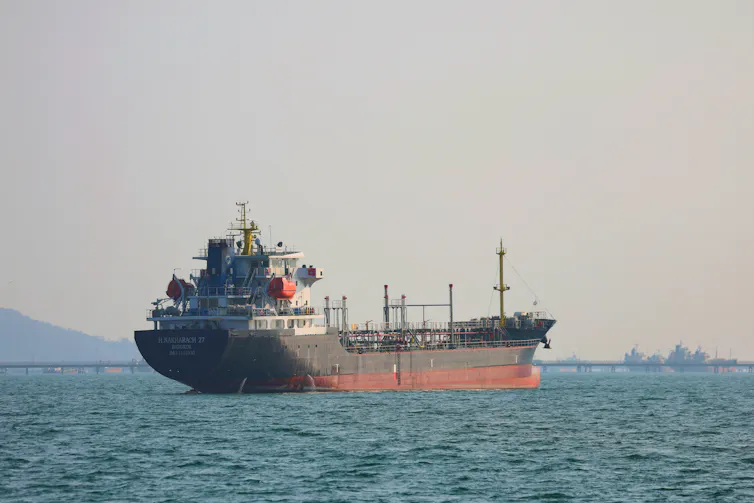
The US blockade of the Strait of Hormuz aims to cut off Iran’s oil exports and punish any ship that pays a toll for transiting the waterway. somkanae sawatdinak/Shutterstock

Basil Germond, Lancaster University

A US-sanctioned tanker with links to China, the Rich Starry, has transited the Strait of Hormuz, despite the US blockade of the waterway. According to the respected maritime news and intelligence agency Lloydslist, the Rich Starry is falsely registered in Malawi, but is Chinese owned and carrying a Chinese crew. It is subject to US sanctions for carrying Iranian goods. It is not known what the vessel is currently transporting.

Having been anchored off the UAE, the Rich Starry is not technically in breach of the blockade, but the incident has raised fears of a potential confrontation between the US and China in the region. Other vessels are reported to be waiting to transit the Strait, despite the US blockade.

The decision to impose a blockade on Iranian ports in the vicinity of the Strait was announced by the US president, Donald Trump, following the breakdown of US-Iran peace talks in Islamabad on April 11. Trump’s announcement was clarified by a statement on April 12 from US Central Command, which stipulated that the operation would prevent ships entering and exiting Iranian ports and coastal areas while not impeding vessels transiting the Strait to and from non‑Iranian ports.

Trump also announced that: “I have also instructed our Navy to seek and interdict every vessel in International Waters that has paid a toll to Iran. No one who pays an illegal toll will have safe passage on the high seas.” It remains unclear as to whether this will be implemented.

The Strait of Hormuz has been as good as closed since shortly after the US and Israel launched their attacks on Iran at the end of February. Most ship owners, charterers and insurers are unwilling to accept the financial risk – and risk to human life – that transiting the Strait under threat of Iranian attack would entail.

Blockades are used to convert naval dominance into advantage on land by preventing imports and exports of goods, in Iran’s case oil, to put pressure on an adversary’s population and government by hurting their economy. Likewise, Iran’s strategy of closing down the Strait after it was attacked intended to disrupt the global economy in order to put international pressure on the Trump administration.

Iran has long threatened to use its geographical proximity to the Strait of Hormuz to close it down. Having demonstrated how effective this can be in disrupting oil and liquid natural gas prices, Tehran has been flexing its muscles by demanding that ships wanting to transit the waterway pay a tariff of up to US$2 million (£1.5 million). Lloydslist reported on March 25 that “a total of 26 vessel transits through the strait have followed a route pre-approved under an IRGC [Islamic Republican Guard Corps] ‘toll booth’ system that requires the ship operators to submit to a vetting scheme”.

This was reportedly a sticking point in negotiations between the US and Iran in Pakistan on April 11. Tehran wants to retain control of the Strait and the ability to levy tolls from transiting ships. The US is demanding that the maritime right of free passage must be enforced. It was when the first round of talks ended in deadlock that the US president decided to impose the naval blockade.

Former US diplomat to the Middle East, David Satterfield, told the BBC on April 13 that it was now about which country could absorb more pain, adding: “The Iranians believe … that they can absorb more pain for a longer period than their opponents can.”

Expensive – and risky – gambit

The cost calculus is asymmetric. It will be more expensive for the US to maintain its blockade than it was for Iran to close the Strait. The question will be whether Washington can sustain interdiction long enough to effectively undermine the regime – always remembering that the Islamic Republic has potentially had decades to prepare for this sort of scenario.
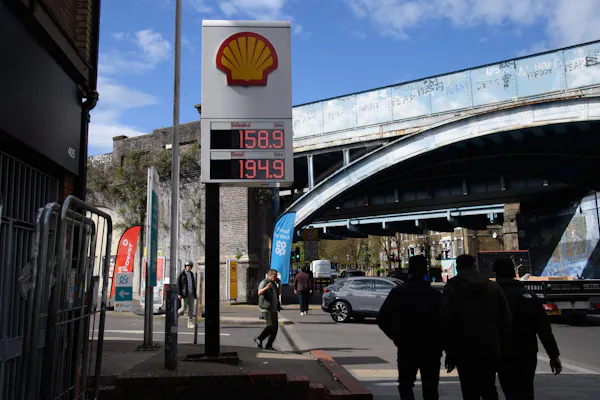
A prolonged crisis in the Gulf will inevitably affect prices and disrupt the global economy. Justin Ng/Alamy Live News

If the blockade can be implemented effectively, it could – in time – have an effect on an economy wrecked by years of sanctions and further weakened by the recent war and nationwide protests in January. The question is how long that might take.

To be effective, the blockade will require considerable naval resources. The US is reported to have as many as 21 warships in the Middle East, including the aircraft carrier USS Abraham Lincoln and the USS Tripoli, an amphibious assault ship with a complement of marines who are trained to board ships using helicopters and small boarding craft.

This introduces another layer of risk as assets operating near to the Iranian coasts will need to be protected against Iranian missiles, drones and fast attack craft. So, this would be resource‑intensive, operationally demanding and thus politically exposed for the US.

How the US will go about enforcement remains to be seen. In December and January, US naval and coastguard ships boarded and seized several vessels linked to Venezuela’s shadow fleet that had broken America’s blockade. Whether it would pursue the same action with a vessel linked to China is another matter though. And while another option would be to fire warning shots, these can be dangerous around tankers because of the risk of oil spillage, as well as the obvious political risk attached to Chinese-linked vessels.

It’s not clear at present that imposing a blockade on the Strait of Hormuz will restore free navigation of the waterway any time soon. But it now appears that, in the absence of free navigation, some countries have decided to call America’s bluff and attempt to transit the waterway in defiance of the US blockade. And the big concern must be the serious risk of escalation if the US attempts to enforce the blockade on a Chinese-owned vessel.

None of this will be welcomed by the US president and his national security team.

Basil Germond, Professor of International Security, School of Global Affairs, Lancaster University

This article is republished from The Conversation under a Creative Commons license. Read the original article.

Climate science denier Donald Trump confirms that he knows nothing about democracy and that more liquid gold is being secured according to his policy of global privateering.
Keir Starmer explains that UK is actively supporting Israel's genocidal expansion and repeats his previous quotation that he supports Zionism "without qualification". Keir Starmer said “I said it loud and clear – and meant it – that I support Zionism without qualification.” here: https://www.jewishnews.co.uk/keir-starmer-interview-i-will-work-to-eradicate-antisemitism-from-day-one/
Keir Starmer explains that UK is actively supporting Israel’s genocidal expansion and repeats his previous quotation that he supports Zionism “without qualification”. Keir Starmer said “I said it loud and clear – and meant it – that I support Zionism without qualification.” here: https://www.jewishnews.co.uk/keir-starmer-interview-i-will-work-to-eradicate-antisemitism-from-day-one/

Continue ReadingUS naval blockade of Strait of Hormuz: what it involves and the risks attached

US blockade of Strait of Hormuz ratchets up tensions with China ahead of Trump visit to Beijing

Spread the love

Tom Harper, University of East London

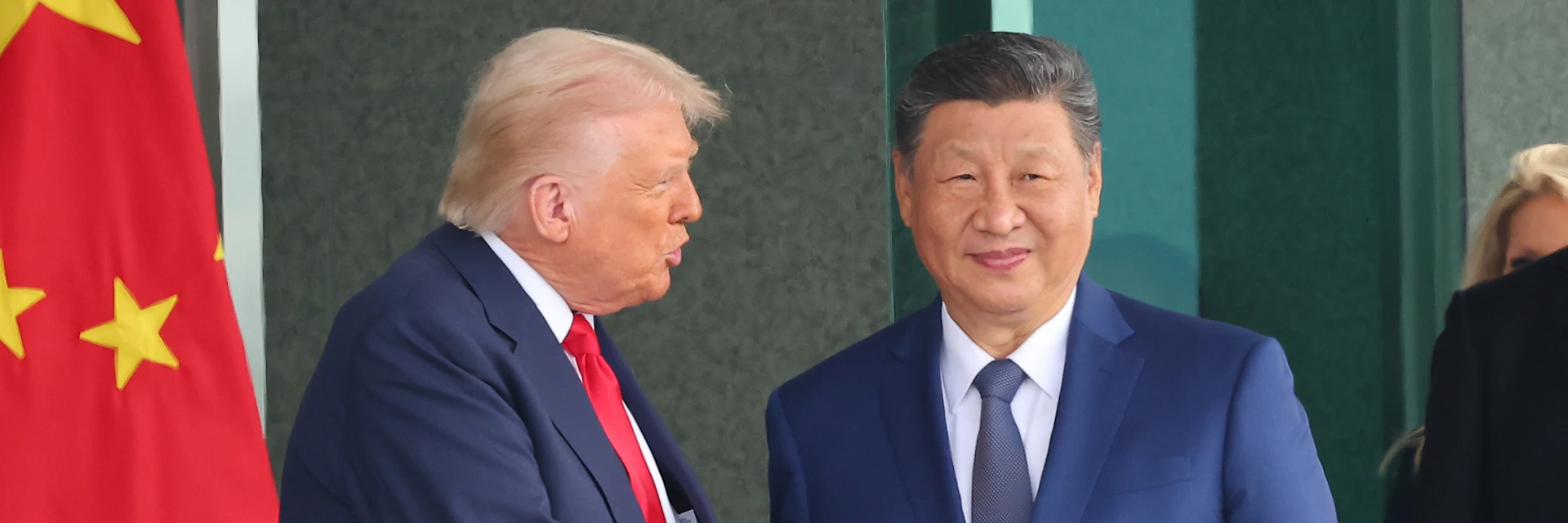
The US president is set to visit Beijing in mid-May. EPA/Yonhap

The Trump administration’s decision to carry out a naval blockade of the Strait of Hormuz has raised tensions in the Persian Gulf to new and more perilous levels. The move was announced by the US president, Donald Trump, after negotiations over a ceasefire with Iran broke down on April 11, partly due to Iran wanting to retain control of the vital Strait of Hormuz, through which one-fifth of the world’s oil transits.

The blockade is designed to neutralise Iran’s efforts to close the strait to shipping it deems unfriendly to Tehran and implement a toll system for other vessels transiting the strait.

The US blockade can be seen as the latest attempt by the Trump administration to project strength. But it also throws down a challenge to Beijing. China has been the main purchaser of Iranian oil in recent years and is one of the few nations whose shipping can enter the strait unchallenged.

It appeared very likely that this status would be tested on April 14 when the Rich Starry, a Chinese owned and operated tanker under US sanction for transporting Iranian oil, transited the strait unchallenged by the US warships in the region.

But it has since been reported that the vessel turned back in the Gulf of Oman and headed back to the Strait of Hormuz. The US now claims that six vessels that attempted to transit the strait were turned around.

The Rich Starry’s willingness to avert a potential Sino-American clash, suggests that Beijing is still unwilling to challenge Washington’s red lines, particularly so close to a state visit by the US president next month, a trip postponed from March 31 as a result of the conflict in Iran. China has called the US blockade a “dangerous and irresponsible act”.

But what appears to be a deliberate decision not to challenge the blockade may be interpreted as another instance of Chinese weakness, which will probably embolden Washington to take more active measures against China’s tanker fleets.

However, the US seizure of any Chinese shipping could certainly provoke a more dangerous outcome, with the prospect of increased tensions or even conflict with Beijing. Should the US seize a Chinese vessel, Beijing could see this as an act of war on Washington’s part, if it chooses to interpret such an incident as an American effort to strangle the Chinese economy.

While an armed clash between the US and China in the Persian Gulf is unlikely, it is possible that Beijing may deploy its fleet stationed in Djibouti to the region. China’s base in Djibouti is home to its 48th escort group which has previously performed anti-piracy operations in the region as well as escort duties for Chinese-owned ships in the region. This which raises the question over whether Washington would be willing to fire on Chinese warships to enforce its blockade.

China’s challenge to the US

China’s response to an American blockade may be more indirect in nature. One form this could take is the provision of Chinese weapons systems to Iran.

China’s Beidou satellite navigation system has already played a significant role in guiding Iran’s existing stockpile of missiles against American and Israeli targets. Further Chinese military assistance, especially in the form of missiles and drones, can help Beijing retaliate indirectly through Iran.

The New York Times recently reported intelligence sources alleging that China may have shipped shoulder-launched missiles to Iran – but this was strenuously denied by Beijing.

On the other hand, a potential Chinese retaliation may not even take place in the Middle East. Instead, it is possible that Beijing may target American assets and interests in the Asia Pacific.

This comes at a time where several American allies in the region have become increasingly vulnerable, with some missiles system being deployed to the Middle East from South Korea. Coupled with fuel shortages as a result of the closure of the Strait of Hormuz, the region is potentially even more exposed to China’s moves should Beijing choose to act.

Full Map of the Strait of Hormuz
The US is reportedly turning vessels around in the Golf Oman, where they emerge from the Strait of Hormuz. Wikimedia Commons

While Beijing prefers a more stable Middle East and global economy, having been one of the key beneficiaries of globalisation, there are several opportunities for China’s wider goals. One of the biggest is the status of the Renminbi. It has become prominent in the oil trade in the Persian Gulf, with Iran primarily dealing with transactions in the currency. This is in line with the emergence of the petroyuan in the 21 century to challenge the dominance of the petrodollar.

Alongside China’s position as a supplier of aviation fuel in the Asia Pacific, the conflict has entrenched and strengthened China’s role in the global economy.

In addition, the potential shortage of petroleum can open the door for wide-scale adoption of electric vehicles (EVs), with Chinese firms such as BYD being potential beneficiaries of a future EV boom. This echoes the popularity of Japanese cars during the Opec crisis of the 1970s, due to their comparatively high fuel efficiency in contrast to American and European models.

As a result, a prolonged Middle East oil crisis may see firms such as BYD become household names, furthering the influence of “Brand China”.

Alongside these, the crisis may further China’s push to present itself as a more stable partner in contrast to Washington’s more chaotic approach. This has gained traction due to the perceived unpredictability of the Trump administration over the past 15 months.

China already has a comparatively favourable global image when compared to the US. A wider conflict with Iran will probably take this further. As a result, the path of the Rich Starry may chart the course of the Sino-American competition and the world that this competition will shape.

Tom Harper, Lecturer in International Relations, University of East London

This article is republished from The Conversation under a Creative Commons license. Read the original article.
Climate science denier Donald Trump confirms that he knows nothing about democracy and that more liquid gold is being secured according to his policy of global privateering.
Orcas discuss how Trump was re-elected and him being an obviously insane, xenophobic Fascist.

Continue ReadingUS blockade of Strait of Hormuz ratchets up tensions with China ahead of Trump visit to Beijing