‘A System Rigged’: Untaxed Wealth of Richest 0.1% Is More Than Assets of World’s Poorest Half

Spread the love

Original article by Stephen Prager republished from Common Dreams under Creative Commons (CC BY-NC-ND 3.0). 
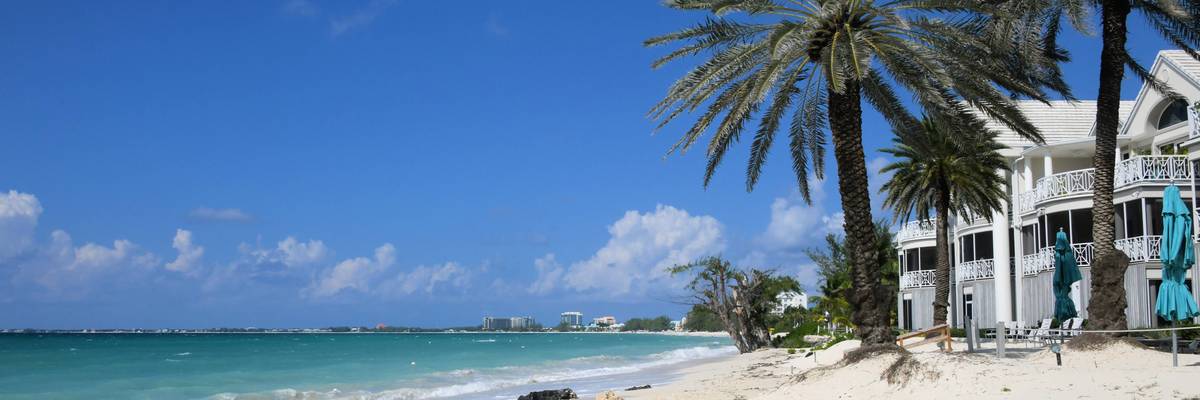
Seven Mile Beach on Grand Cayman on the Cayman Islands is photographed on March 18, 2026. (Photo by mtcurado/Getty Images)

A decade after the Panama Papers, the global rich are still hiding more than $2.8 trillion in tax havens. Just a fraction of that money could end extreme hunger and provide clean water to everyone on Earth.

The richest 0.1% of people on Earth are hiding more than $2.8 trillion in offshore accounts to avoid taxes. That money alone is more wealth than is owned by the entire bottom half of humanity, more than 4.1 billion people.

These findings were published in a report released Thursday by Oxfam International on the 10th anniversary of the 2016 Panama Papers, which provided an unprecedented look at how the world’s most powerful capitalists, financiers, political leaders, celebrities, and criminals exploited offshore tax havens to stash their money.

RECOMMENDED…

'100% Completely Unsustainable': Billionaire Wealth Manager Issues New Warning About US Inequality

‘100% Completely Unsustainable’: Billionaire Wealth Manager Issues New Warning About US Inequality
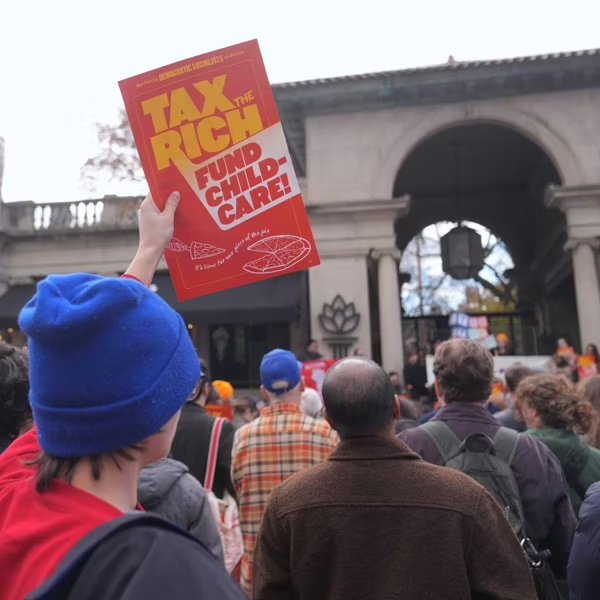
NYC-DSA holds a rally to tax the rich

‘The Current Tax Code Is Rigged,’ Plus 6.2 Trillion Other Reasons to Tax America’s Ultrarich

“Ten years on, the superrich are still sequestering oceans of wealth in offshore vaults,” said Christian Hallum, Oxfam International’s tax lead.

The percentage of untaxed wealth in offshore accounts has dropped in the past 10 years, in large part due to global reforms like the adoption of the Organization for Economic Cooperation and Development’s Automatic Exchange of Information framework (AEOI), which allows revenue authorities around the world to easily share information and crack down on cheats.

However, many nations in the Global South are excluded from this system, even though they need the tax revenue the most.

Oxfam found that a staggering $3.5 trillion, more than 3.2% of the global gross domestic product, still remains in untaxed accounts. That’s more than the entire GDP of France and is more than twice the combined wealth of the world’s 44 poorest nations.

And while the percentage of untaxed wealth is shrinking, that doesn’t mean inequality has shrunk.

On the contrary, the December 2025 “World Inequality Report” found that the richest 0.001% of humanity—fewer than 60,000 multimillionaires and billionaires—now have three times as much wealth as the poorest half of the world’s population combined.

Inequality has surged around the world in part due to taxation policies and pandemic recovery packages that overwhelmingly favor the rich. The most glaring was adopted in the world’s financial hub, the United States, last year.

The megabudget passed by Republicans and signed into law by President Donald Trump handed a $1 trillion tax cut to America’s wealthiest 1% while slashing more than $1 trillion in spending from Medicaid, food assistance, and other safety net programs. It has been described by some economists as the largest upward transfer of wealth in US history.

While the global top 0.1% holds about 80% of untaxed offshore wealth, an even smaller group of uber-wealthy individuals does most of the cheating. The world’s richest 0.01%, who hold at least $50 million apiece, control about half of all money in global tax shelters—$1.7 trillion.

According to the Tax Justice Network’s Corporate Tax Haven Index, Caribbean islands under UK ownership, including the British Virgin Islands, the Cayman Islands, and Bermuda, are among the worst offenders. Other notable tax havens include Switzerland, Singapore, Hong Kong, Ireland, and the Netherlands.

A February Oxfam report on Elon Musk, who is well on his way to becoming the world’s first trillionaire, found that his company, Tesla—which managed to pay zero dollars on its $2.3 billion income in 2024—has not published a country-by-country report on its taxes and that it has subsidiaries in many countries considered to be tax havens.

Big Pharma companies, including AbbVie and Merck, also used tax shelters to lower their total tax expense in 2025 by more than $1 billion, according to a report released earlier this month by the Financial Accountability & Corporate Transparency Coalition.

“This isn’t just about clever accounting—it’s about power and impunity,” Hallum said. “When millionaires and billionaires stash trillions of dollars in offshore tax havens, they place themselves above the obligations that bind the rest of society.”

“The consequences are as predictable as they are devastating,” he continued. “We see our public hospitals and schools starved of funds, our social fabric shredded by rising inequality, and ordinary people forced to shoulder the costs of a system rigged to enrich a tiny few.”

Even a fraction of the money currently stashed away by the world’s wealthiest could alleviate untold amounts of suffering.

In November, the United Nations’ World Food Program estimated that extreme hunger, which currently affects more than 318 million people around the world, could be eradicated by 2030 with investments of about $93 billion per year, but that global hunger programs instead remain “slow, fragmented, and underfunded.”

According to a 2021 UN Educational, Scientific, and Cultural Organization (UNESCO) report, investments of around $114 billion per year would similarly be enough to ensure that everyone on Earth has access to safe drinking water and sanitation.

Oxfam called on governments around the world to increase coordination to prevent the wealthy from hiding their riches from tax authorities. It also urged them to adopt more aggressive policies to tax the 1%’s wealth at home, including taxes on income and on extreme wealth.

Original article by Stephen Prager republished from Common Dreams under Creative Commons (CC BY-NC-ND 3.0). 

Orcas discuss Donald Trump and the killer apes' concept of democracy. Front Orca warns that Trump is crashing his country's economy and that everything he does he does for the fantastically wealthy.
Orcas discuss Donald Trump and the killer apes’ concept of democracy. Front Orca warns that Trump is crashing his country’s economy and that everything he does he does for the fantastically wealthy.
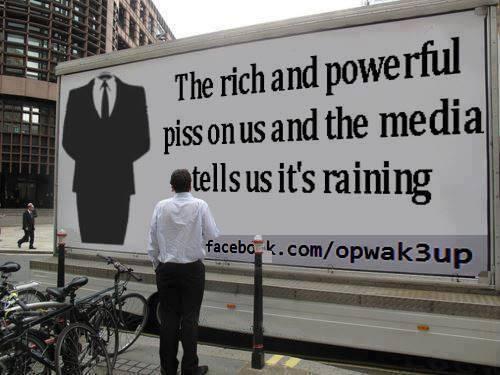
Image reads "The rich and powerful piss on us and the media tells us it's raining"
Elon Musk urges you to be a Fascist like him, says that you can ignore facts and reality then.

Continue Reading‘A System Rigged’: Untaxed Wealth of Richest 0.1% Is More Than Assets of World’s Poorest Half

Expanding Heathrow is incompatible with net zero – here’s the evidence

Spread the love

Plane Photography / shutterstock

Richard Sulley, University of Sheffield

The UK government is set to back plans for a third runway at Heathrow, the country’s busiest airport, and to expand two other airports near London: Gatwick and Luton. The move is designed to support the government’s “mission” to grow the economy.

Air transport is notoriously hard to decarbonise. Unlike the energy system, or even road transport, there is no renewable alternative to switch to immediately. If electric or hydrogen planes become reality, it won’t be for many years yet. Therefore it’s not clear this airport expansion can fit within the UK’s legal and arguably moral requirement to cut emissions and remain within its carbon budget.

It certainly goes against what the government’s official advisory body the Committee on Climate Change (CCC) recommends. The CCC’s 2023 report to parliament stated that: “No airport expansions should proceed until a UK-wide capacity management framework is in place to annually assess and, if required, control sector GHG [greenhouse gas] emissions and non-CO₂ effects.”

Those non-CO₂ effects of aviation include water vapour, soot and other gases like nitrous oxides and sulfur dioxide, all released directly into the high atmosphere where they help form heat-trapping clouds. Estimates suggest they could triple the greenhouse impact of aviation.

In 2019, the last year of available data pre-COVID, domestic and international aviation accounted for around 8% of the UK’s total emissions. The non-CO₂ effects makes aviation a larger contributor to climate change than that number suggests.

The sector itself struggles to build a coherent decarbonisation roadmap based solely on “supply-side” improvements to things like fuel efficiency or, in a recent example from EasyJet, thinner paint. The demand side – taking fewer flights, frequent flyer levies, or restrictions on domestic flights as have been introduced in France – is rarely mentioned.

Unfortunately aviation is a prime example of the Jevons effect where any improvement in efficiency has been wiped out by increased demand. With a growing global middle class pursuing a higher consumption lifestyle, aviation emissions continue to grow even while other sectors have shows some efforts to reduce their own.

'3rd runway plane stupid'
A third runway at Heathrow was first proposed back in the 2000s. This photo is from a 2016 protest. Dinendra Haria / shutterstock

The UK has mandated that synthetic aviation fuel (SAF), a more sustainable alternative to regular jet fuel, must make up 10% of aviation fuel by 2030. But only 1.2% of aviation fuel is currently SAF and the industry has not published any plans to show it can scale up in time. Indeed, the sector’s own plans for growth will outstrip efforts to decarbonise through synthetic fuel, delivering a neutral effect at best.

The consumer-facing airport sector has also been accused of greenwash. For instance, Luton Airport recently published adverts making the claim that its own expansion would be stopped if it did not meet stringent environmental targets. However, the Advertising Standards Authority found that consumers would naturally believe that would include air traffic and not just terminal operations (a terminal’s heating or lighting is, of course, largely irrelevant when its core business is as emissions-intensive as flying).

The difficulty of decarbonising aviation while the sector still grows is exemplified by the government’s recently launched consultation on adopting the Corsia carbon offsetting scheme for international flights and how it might work with existing cap and trade schemes. All of which encourage or excuse excess emissions through a charging mechanism.

Growing pains

“Kickstarting economy growth” and “Make Britain a clean energy superpower” are two of the UK government’s six “missions”. However, by expanding airports in support of the former, it risks failing the latter.

A new report by thinktank the New Economics Foundation shows that airport expansion could balance out all of the emissions saved by the government’s clean power plans by 2050.

There is evidence that airport expansion can bring some of the economic benefit that government needs. However, another New Economics Foundation report has found that air travel is no longer a catalyst for productivity growth. So the economic benefits of a new runway are really confined to the airport operation itself – projects for engineers and builders, service jobs for people living near Heathrow, and so on.

Aviation is the privilege of the richer part of society, both globally and within the UK. Figures from Our World in Data shows the richest 50% of the global population produces 90% of the aviation emissions.

While many more UK residents have experienced flying than in the past, most flights are still taken by a small, wealthy subset of the population, which will typically capture the largest share of any new capacity. Each year, around half of British residents do not fly at all.

The focus on London airports for the largest scale expansions will shift the balance of the economy further towards south-east England, and increase inequality within the UK economy. And while these plans might bring some of the GDP gains the government is desperate to deliver, all the evidence shows they will be at the expense of its environmental targets.


Don’t have time to read about climate change as much as you’d like?
Get a weekly roundup in your inbox instead. Every Wednesday, The Conversation’s environment editor writes Imagine, a short email that goes a little deeper into just one climate issue. Join the 40,000+ readers who’ve subscribed so far.


Richard Sulley, Senior Research Fellow, Sustainability Policy, University of Sheffield

This article is republished from The Conversation under a Creative Commons license. Read the original article.

Orcas comment on killer apes destroying the planet by continuing to burn fossil fuels.
Continue ReadingExpanding Heathrow is incompatible with net zero – here’s the evidence