This work by Middle East Monitor is licensed under a Creative Commons Attribution-NonCommercial-ShareAlike 4.0 International License.

by Dr Ramzy Baroud RamzyBaroud
In the Middle East, the perception of ordinary Americans has long followed a familiar script: detached, uninformed, inward-looking, and politically shallow— a society of ‘gas guzzlers’, with little grasp of global realities beyond their immediate geography.
This perception did not emerge from thin air. It was cultivated—reinforced, even—by American political and media institutions themselves. Politicians claimed to speak on behalf of ‘the American people’, while mainstream media shaped what those people knew, and, crucially, what they did not know.
For decades, Americans overwhelmingly aligned with Israel. This was not merely ideological; it was instructional.
The public was told—repeatedly—that Israel reflected ‘American values’: democracy, civility, modernity. Palestinians and Arabs, by contrast, were framed as perpetual antagonists, initiators of violence, and ‘obstacles to peace’.
Some Americans embraced this framing on religious or ideological grounds. But for the majority, the pro-Israel position became a default—an inherited conclusion rooted in limited access to alternative information. Israel was ‘good’, Arabs were ‘bad’. The narrative was simple, binary, and rarely challenged.
With mainstream media as the primary source of information, this perception hardened over time. Support for Palestine, and for broader Arab causes, remained confined to academic spaces and activist circles—often informed by anti-colonial and anti-imperialist frameworks, but numerically marginal and politically contained.
The mainstream remained locked in place. But that lock has been broken.
The shift did not happen overnight. Among Democrats, cracks began to appear as early as the mid-2010s. In 2016, Gallup data still showed Democrats sympathizing more with Israelis than Palestinians. By 2018, that gap had narrowed. Significantly. By 2021, parity had nearly been reached. And by 2024–2025, Democrats—especially younger voters—were expressing majority sympathy for Palestinians, with some polls showing support exceeding 50 percent among those under 35.
READ: Hamas rejects US claims on Gaza aid as “misleading”
This transformation was driven in part by grassroots activism, particularly within progressive circles, where Palestine became a central moral and political issue. But it was also driven by something far more consequential: the collapse of narrative control.
The Israeli genocide in Gaza accelerated this shift dramatically. Not only because of the scale of violence in the besieged Strip, but because, for the first time, the reality of war was not mediated solely through the filters of corporate media. Independent journalism, social media, and direct visual evidence disrupted decades of curated narratives.
The informational balance—long skewed—began to tip.
At the same time, American trust in mainstream media reached historic lows. According to Gallup, by 2025, only about 31 percent of Americans expressed trust in mass media to report news “fully, accurately, and fairly,” with trust among younger Americans even lower.
Up to this point, one could still argue that the shift remained politically contained: Democrats moving toward Palestine, Republicans remaining firmly aligned with Israel. But then came a rupture.
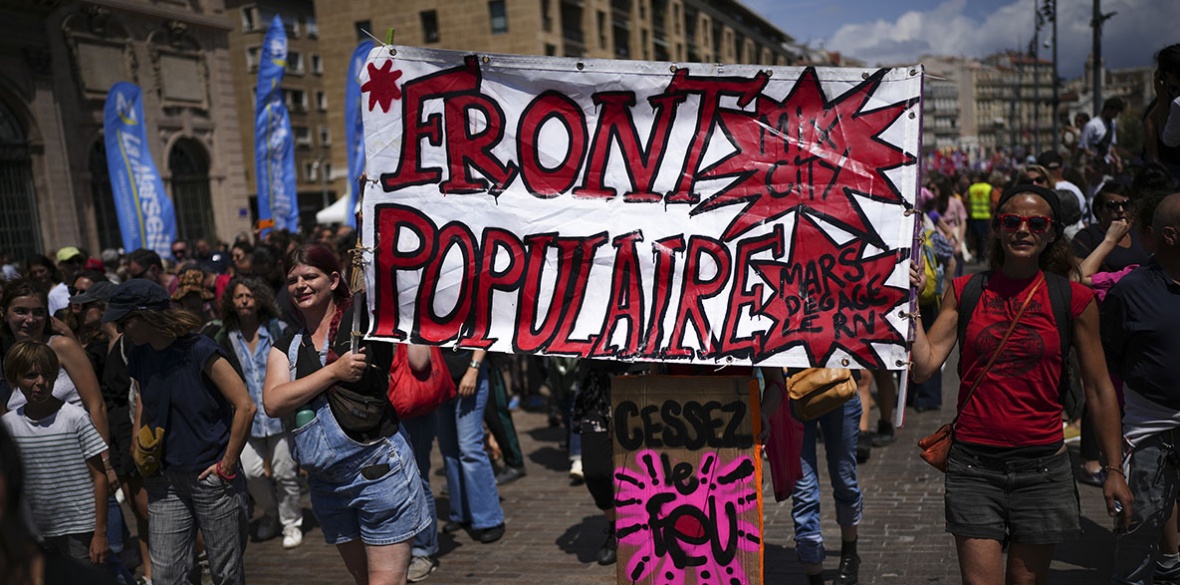
On February 27, 2026, Gallup released a poll showing that, for the first time in modern polling history, more Americans sympathized with Palestinians than with Israelis—41 percent to 36 percent. This was not a marginal fluctuation. It was a structural break.
That moment should have been seismic. Yet, it was not treated as such. Mainstream media largely buried the story. And within days, the political conversation shifted to a new crisis: the war with Iran.
In the weeks that followed, polling attention moved rapidly to American attitudes toward military escalation. Across multiple surveys, the outcome was consistent: Americans rejected war, and an even greater number rejected the idea of a prolonged military entanglement.
Yet mainstream commentary refused to connect the dots. Palestine was treated as one issue. Iran as another. Venezuela, interventionism, and global militarism as separate, disconnected phenomena. Each was analyzed in isolation, stripped of its broader political and moral context.
READ: Russia questions Trump’s Board of Peace
Instead of recognizing a pattern, commentators fragmented the evidence. Opposition to war was framed as ‘war fatigue’, or economic anxiety, or partisan resistance to President Donald Trump. The focus was placed on gas prices, electoral calculations, and political polarization—not on the possibility that Americans were making moral judgments independent of elite narratives.
But the pattern is there. And it is unmistakable.
True, Americans are still told what matters—Israel, Iran, energy security, the Strait of Hormuz, etc. The agenda remains largely intact. But the conclusions no longer follow automatically. The chain between attention and consent has been broken.
This is not simply a political shift. It is a cognitive and moral one. Economic concerns and partisan affiliations still shape public opinion, as they always have. But they no longer fully determine it.
Increasingly, Americans are evaluating global events through a moral lens—one that prioritizes civilian suffering, questions power asymmetries, and challenges the legitimacy of endless war.
This is not speculation. It is confirmed by data—most clearly in the case of Palestine, which has emerged as a moral compass for a wider transformation in American public consciousness. The shift in sympathy toward Palestinians is not an isolated anomaly, but a signal of a deeper rethinking of power, justice, and resistance. And it is likely irreversible.
Mainstream media will continue to set the agenda for the foreseeable future. But it has lost something far more important: its ability to manufacture consensus at scale.
That signals possibility. And perhaps, for the first time in generations, a reason for cautious—yet unmistakable—optimism: that ordinary Americans are no longer passive recipients of power, but active participants in shaping a more morally conscious political reality.
OPINION: Trapped by his own image: Trump’s Iran war and the politics of ego
The views expressed in this article belong to the author and do not necessarily reflect the editorial policy of Middle East Monitor.
This work by Middle East Monitor is licensed under a Creative Commons Attribution-NonCommercial-ShareAlike 4.0 International License.

- When hegemony reaches its limits
- Iran supreme leader’s adviser threatens to sink US ships in Strait of Hormuz
- Bint Jbeil ablaze as close-range battles turn city into open military test ground
- The naval blockade of Iran and the closure of the Strait of Hormuz: Long-term implications for global energy security
- Individuals and organisations from 30 countries, including the UK-based Islamic Human Rights Commission, have put their name to a blistering open letter condemning the US/Israeli war on Iran
- Beyond rhetoric, is there political will to move away from the two-state paradigm?
- 378 crimes in 40 days: Surge in West Bank settler attacks occurring under government cover
- Widespread popular activities in support of prisoners in the occupation prisons on Palestinian Prisoner’s Day
- 26 million Iranians volunteer to defend country, including public figures
- Former European officials urge suspension of EU-Israel agreement
- White House signals military option remains on table against Iran
- Hope in the data: Can Palestine explain America’s moral shift?
- Hamas rejects US claims on Gaza aid as “misleading”
- Egypt-Cyprus gas deal signals strategic shift in regional energy balance
- Hezbollah bloc chief rejects Lebanon direct talks with Israel
- Jordan welcomes UNESCO decision on Jerusalem, rejects Israeli measures
- Arab League outlines five principles to resolve Sudan crisis
- Iran and US deny reports of preliminary ceasefire extension agreement
- Celebrating division as a success in Libya
- White House says next round of talks with Iran ‘very likely’ in Islamabad
- Strait of Hormuz should not be used as political, economic pressure tool: Gulf Cooperation Council chief
- China’s Xi assured Trump of no weapons support to Iran: White House
- Israel appoints 1st ambassador to Somalia’s breakaway region in controversial move
- Senate minority leader pushes 4th war powers vote as Iran war enters day 47
- China urges stable transit and respect for Iran’s rights in Strait of Hormuz
- Pakistan army chief in Tehran for talks with Iranian foreign minister ahead of expected fresh US talks
- Israel’s New Gospel of Perpetual War | Palestine This Week with Mouin Rabbani
- UN chief calls Sudan conflict world’s ‘largest humanitarian crisis’ 3 years on
- Israel launches operation to demolish homes in frontline villages in Lebanon: Report
- 8 more Gazans killed by Israeli fire despite ceasefire, death toll nears 72,350
- Washington yet to formally agree to Iran ceasefire extension: US official
- Most Italians view Trump’s handling of Iran war negatively
- US to deploy thousands more troops to Middle East to pressure Iran: Report
- Iran threatens to block exports, imports in Gulf if US blockade continues
- Europe promotes plan to reopen Strait of Hormuz without US: report
- Marwan Barghouti subjected to “brutal” assaults in Israeli jail
- European petition exceeds one million signatures to suspend EU-Israel agreement
- Israel arrested 1,700 Palestinian children in West Bank since October, 2023, rights group says
- Afghanistan delivers 530 tons of aid to Gaza
- Pakistani premier departs for Saudi Arabia on regional tour to discuss Middle East situation
- Iran interior minister dismisses impact of blockade threats
- Drone attack hits Iranian Kurdish opposition camp in northern Iraq
- ICRC: Over 11,000 missing in Sudan war
- Tunisia court sentences Ghannouchi to 20 years in prison
- Gaza flooded with sweets as fuel and medicine withheld, health official warns
- Lebanon’s Amal Movement rejects Washington meeting, rules out direct talks with Israel
- Vance likely to lead potential 2nd round of talks with Iran: Report
- Palestinians confront Israeli occupiers attempting to seize West Bank home
- Israel envoy to US says France should be excluded from Lebanon talks
- Israeli High Court begins hearing petition seeking removal of far-right minister Ben-Gvir