A new Welsh electoral landscape puts Plaid Cymru within reach of power

Spread the love
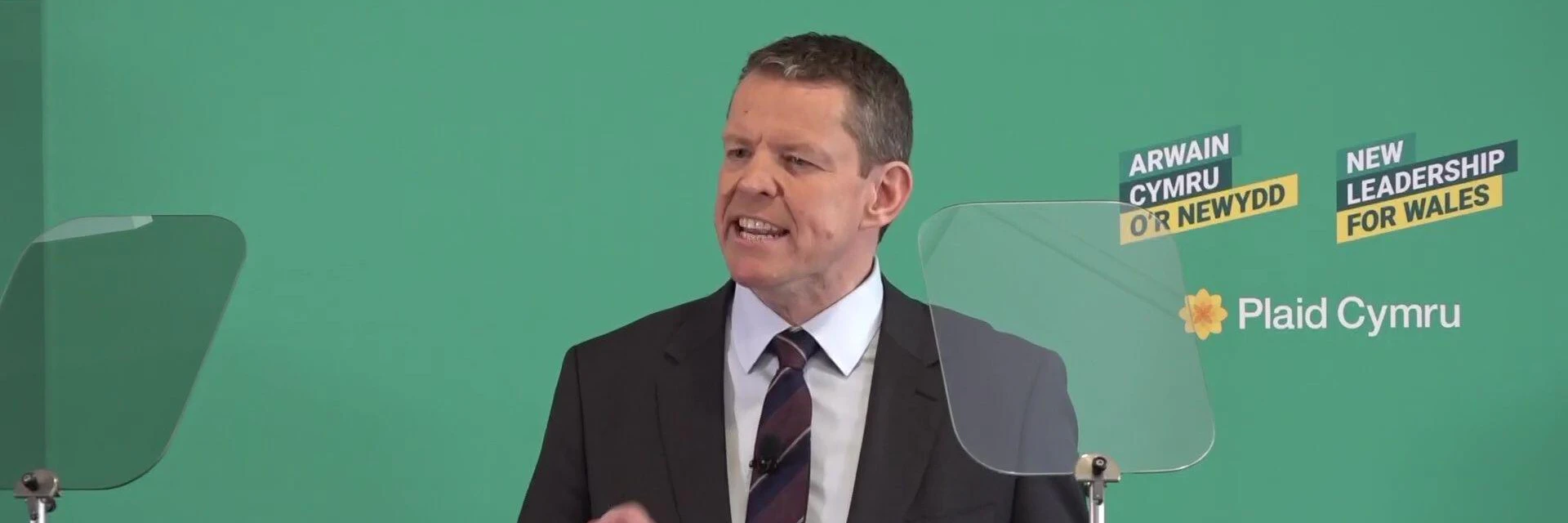
Rhun ap Iorwerth, the leader of Plaid Cymru. PA Images/Alamy

Anwen Elias, Aberystwyth University and Elin Royles, Aberystwyth University

Plaid Cymru’s electoral hopes for May’s Senedd election are high. Polls suggest the party is competing with Reform UK to emerge as the largest group in the next Welsh parliament, putting it, for the first time, within reach of leading a government in Wales.

This marks a striking shift in Plaid’s electoral fortunes. At the first election to what was then the National Assembly for Wales in 1999, the party won 28.4% of the vote. That remains its strongest performance to date in what was widely described at the time as a “quiet earthquake” in Welsh politics.

Since then, Plaid has struggled to match that breakthrough in devolved elections. From 2011 onwards it has consistently been the third-largest party in the Senedd, behind Welsh Labour – which has led every government since devolution – and the Conservatives.

Even so, the arithmetic of Welsh politics has occasionally worked in Plaid’s favour. The party entered government in coalition with Labour between 2007 and 2011, and more recently struck a co-operation agreement from 2021 to 2024. But if Plaid ends up leading a government outright after May 7, it would truly set this election apart.

Positioning itself for power

Plaid Cymru’s strategy is to present itself as a credible government-in-waiting. Its focus is less about being a party of protest and more about delivery. In other words, what it would do in office, how it would tackle Wales’s major policy challenges, and how it would represent Welsh interests at Westminster after nearly three decades of Labour dominance.

In February, the party set out its plan for its first 100 days in government. This focused on improving healthcare, raising education standards, boosting the economy and reforming government.

Alongside these priorities, its manifesto calls for further powers to be devolved to the Senedd. These include greater tax powers, justice and policing, rail services and infrastructure, and the Crown Estate, which oversees things like the sea bed and mineral rights in much of the countryside.

Yet there has also been a noticeable change in tone on the party’s long-term constitutional aims. Our research examined how Plaid Cymru covered these issues in the 2021 Senedd election. Compared with five years ago, Welsh independence is significantly less prominent in both its current manifesto and campaign.

The timetable has softened too. There’s no longer a commitment to holding a referendum on independence in its first term of government. Instead, Plaid describes Wales as being “on a journey” to independence. It has committed to producing a policy on Welsh independence but with no referendum timeframe.

By downplaying its long-term constitutional ambitions in this way, and focusing on the more immediate policy challenges facing Wales, Plaid Cymru is approaching this Senedd election as many other pro-independence parties have done across Europe. A similar strategy helped the Scottish National Party win power in 2007 and remain in government for the next 19 years.

A ‘degradation in belief that Labour stood for Wales,’ says Plaid Cymru leader – Sky News.

From polling strength to political power

Strong polling does not guarantee power, however, and Plaid faces several obstacles. Opponents continue to highlight its commitment to independence.

Support for independence among the Welsh public remains relatively low – only 26% of respondents in a recent YouGov poll agreed that Wales should be an independent country. Plaid’s challenge is to persuade sceptical voters that this isn’t the most important issue in Wales for the next four years.

The new electoral system also presents fresh uncertainties. This election will use a fully proportional model, with 96 members elected across 16 constituencies. Success will now depend on broad support across Wales. That’s a test for a party whose organisational strength has traditionally been concentrated in the north and west.

The new system is also likely to produce a more fragmented Senedd, with a wider range of parties represented. That could make post-election negotiations decisive, shaping who is able to lead a government and how stable it is.

Anwen Elias, Reader in Politics, Aberystwyth University and Elin Royles, Reader at the Department of International Politics and Centre for Welsh Politics and Society, Aberystwyth University

This article is republished from The Conversation under a Creative Commons license. Read the original article.

Keir Starmer says that the Labour Party under his leadership is intensely relaxed about assaulting those least able to defend themselves - the very poorest and most vulnerable.
Keir Starmer says that the Labour Party under his leadership is intensely relaxed about assaulting those least able to defend themselves – the very poorest and most vulnerable.
Nigel Farage explains the politics of Reform UK: Racism, Fake anti-establishmentism, Deregulation, Corporatism, Climate Change Denial, Mysogyny and Transphobia.
Keir Starmer refuses to be outcnuted by Nigel Farage's chasing the racist bigot vote.
Keir Starmer refuses to be outcnuted by Nigel Farage’s chasing the racist bigot vote.

Continue ReadingA new Welsh electoral landscape puts Plaid Cymru within reach of power

Wales Greens announce full slate of candidates for Senedd elections

Spread the love
Wales Green Party Leader Anthony Slaughter. Image: NoBeefKieth, CC0, via Wikimedia Commons.

The Wales Green Party has today announced that it will be standing a full slate of candidates in all 16 constituencies on 7 May 2026.

Wales Green Party Leader Anthony Slaughter said:  

“I am very proud to be offering every person in Wales an opportunity to vote for a candidate that will make a real difference to their lives. Someone who will take the cost of living seriously by introducing rent controls, start cleaning up our rivers by holding Dŵr Cymru/Welsh Water to account, and stand up for international law and human rights in the face of government complicity in genocide and illegal wars. 

“Since the election of Zack Polanski last September, the Green Party has seen rapid growth – with support surging the polls and in our record membership numbers followed by last month’s decisive by-election result in Gorton and Denton.  

“With Greens surging in the polls, and the new proportional voting system, we can elect candidates across Wales ready to work hard for the changes we urgently need.” 

Wales is the first nation in the UK to scrap the First-Past-The-Post system and the election in May will be the first under the full proportionate representation voting system that was introduced when the Senedd Reform Bill was approved on 9 May 2024. 

Continue ReadingWales Greens announce full slate of candidates for Senedd elections

Welsh by-election shows far right isn’t the only alternative to establishment parties

Spread the love

Original article by Ana Vračar republished from peoples dispatch under a Creative Commons Attribution-ShareAlike 4.0 (CC BY-SA) license.

Plaid Cymru celebrates by-election results. Source: Rhun ap Iorwerth/X

Plaid Cymru’s by-election win in Wales shows that space still exists for progressive politics despite Nigel Farage’s claims.

Welsh party Plaid Cymru, an advocate for independence from the United Kingdom, delivered a major blow to both the Labour Party and Reform UK in a by-election for the devolved parliament, the Senedd. Plaid candidate Lindsay Whittle won 47% of the vote in Caerphilly, leaving Reform behind at 36% and Labour at just 11% – an astonishing 35-point drop compared to the previous election. The result marks Labour’s first loss of the seat in more than a century.

“This result shows that Plaid is no longer just an alternative, we are now the real choice for Wales, the only party able to stop billionaire-backed Reform,” party leader Rhun ap Iorwerth said after the result was announced. Ahead of the election, Reform had invested substantial resources into the campaign, with Nigel Farage apparently confident a win in Wales would prove his claim that the far right has become the only true alternative to Britain’s two establishment parties.

In reality, while the by-election confirmed that both Labour and the Conservatives remain in crisis after years of backing austerity, it actually showed that the far right can still be stopped by more progressive alternatives. “In every corner of Britain, people are calling out for an alternative to the misery faced by millions and candidates who will stand up against the hate and division sold by Reform and the shameful parroting of Farage’s rhetoric by Keir Starmer and his weakling Labour government,” the Peace and Justice Project wrote on social media.

Read more: 140,000 march in Brussels against austerity

Since the 2024 general election, Prime Minister Starmer’s shift to the right on everything from austerity to migration and Palestine solidarity has alienated much of Labour’s base and beyond. Many polls now predict the party could be shattered in upcoming elections. Although Reform UK has so far benefited the most from the widespread frustration and anger, positioning itself as the main alternative, progressive political forces have also gained significant ground.

The early announcement of a new left party by independent MPs Jeremy Corbyn and Zarah Sultana drew more than 600,000 expressions of support, while the Green Party has seen thousands of new members join in recent months. Following the election of a new leadership team headed by Zack Polanski, the Greens announced their membership had doubled to 140,000. Both the groups have rejected Reform’s hate-driven narrative and scapegoating of migrants, while also condemning Labour for failing to address people’s real concerns since taking office.

“This Senedd by-election result shows that people are sick of the Westminster establishment and its persistent scapegoating of marginalized communities instead of effectively dealing with the issues we all face,” the Peace and Justice Project stated. While Reform’s failed bid in Caerphilly suggests that not everyone has accepted the idea that the far right is the only alternative to business as usual in British politics, progressives still face the enormous challenge of mobilizing on a larger scale ahead of future elections – including the 2026 run for the Senedd – to counter far-right narratives and build a vision of hope for working-class communities across Britain.

Original article by Ana Vračar republished from peoples dispatch under a Creative Commons Attribution-ShareAlike 4.0 (CC BY-SA) license.

Nigel Farage explains the politics of Reform UK: Racism, Fake anti-establishmentism, Deregulation, Corporatism, Climate Change Denial, Mysogyny and Transphobia.
Keir Starmer justifies why he has to travel abroad so much
UK Conservative Party leader Kemi Badenoch explains her reality that the Earth is flat, the Moon is made of cheese and that she was born from Unicorn horn dust
UK Conservative Party leader Kemi ‘not a genocide’ Badenoch explains her reality that the Earth is flat, the Moon is made of cheese and that she was born from Unicorn horn dust
Continue ReadingWelsh by-election shows far right isn’t the only alternative to establishment parties

Welsh First Minister accused of lying

Spread the love

https://morningstaronline.co.uk/article/welsh-first-minister-accused-of-lying. Many articles from the Morning Star today.

First Minister of Wales Vaughan Gething gives a speech during King Charles III and Queen Camilla visit to the Senedd in Cardiff, to mark its 25th anniversary, July 11, 2024

News outlet Nation.Cymru says Vaughan Gething is ‘unequivocally’ lying about Hannah Blythyn being its source

NEWS outlet Nation.Cymru said today that Hannah Blythyn was not the source of its deleted texts story that led to her sacking from the Welsh government — and accused First Minister Vaughan Gething of lying.

Nation.Cymru’s chief executive Mark Mansfield said Mr Gething had failed to behave with integrity by suggesting he had “incontrovertible evidence” that the former social partnership minister was the source of their story.

He said that following his response on Wednesday to her personal statement to the Senedd, “in this unprecedented situation, the board of Nation.Cymru does not consider we can stand by and see Ms Blythyn’s reputation unjustly besmirched by the First Minister.”

“We can state unequivocally that Mr Gething is not telling the truth when he suggests that he has incontrovertible evidence that Ms Blythyn was our source,” Mr Mansfield said.

https://morningstaronline.co.uk/article/welsh-first-minister-accused-of-lying. Many articles from the Morning Star today.

Continue ReadingWelsh First Minister accused of lying