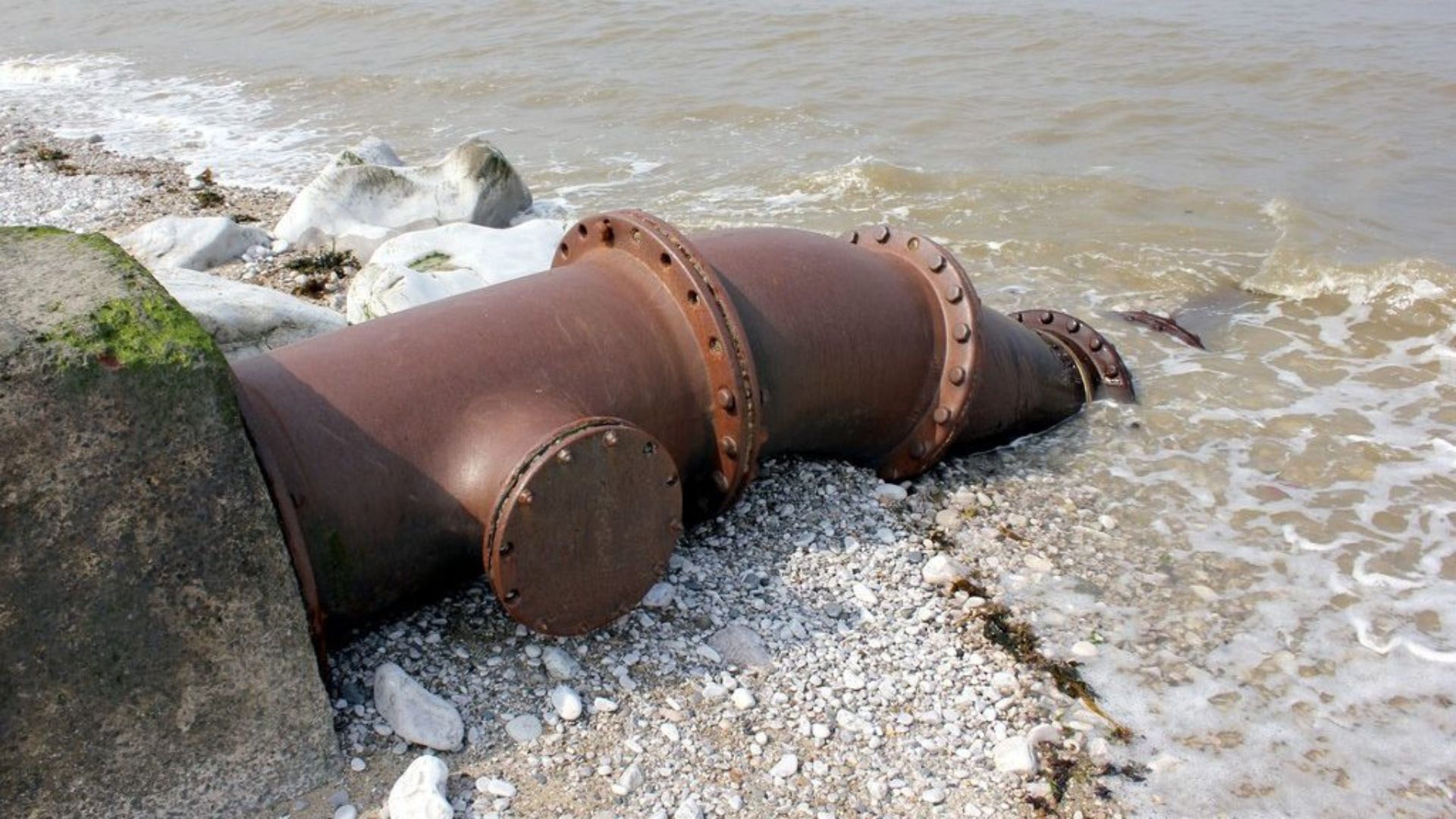
Sewage is only supposed to be discharged following extreme weather. Image: Jeff Buck (cc-by-sa/2.0)
Some 27% of English billpayers have considered withholding their bill payments due to water supplier failings, a survey shows.
The public don’t believe private companies can fix the worsening sewage crisis, a report has found – and at least a quarter are considering boycotting water bill payments.
Water bills will surge by an average of £31 per year over the next five years.
Suppliers have justified the increase – which will bring the average annual bill to £588 by the end of the decade – as the only way to fund fixes to Britain’s crumbling sewage infrastructure.
But according to a blistering new Surfers Against Sewage (SAS) report, just a third (33%) of English adults believe that their supplier will take the necessary action to end sewage pollution.
And around a quarter (27%) have considered withholding their bill payments due to the actions of their water supplier.
This disillusionment is little surprise. Pollution is surging: Water companies in England have collectively failed their targets to reduce pollution incidents, SAS’s 2024 Water Quality Report shows, with 2,487 incidents recorded in 2024.
Advertising helps fund Big Issue’s mission to end poverty
That’s more than double the target set by the Environment Agency – and it’s the tip of the iceberg. In 2024 alone, raw sewage was released into UK waterways 592,478 times, for a combined 4.7 million hours. That’s the equivalent of 535 years’ worth of waste, pouring into the lakes and rivers people swim in, kayak through and drink from.
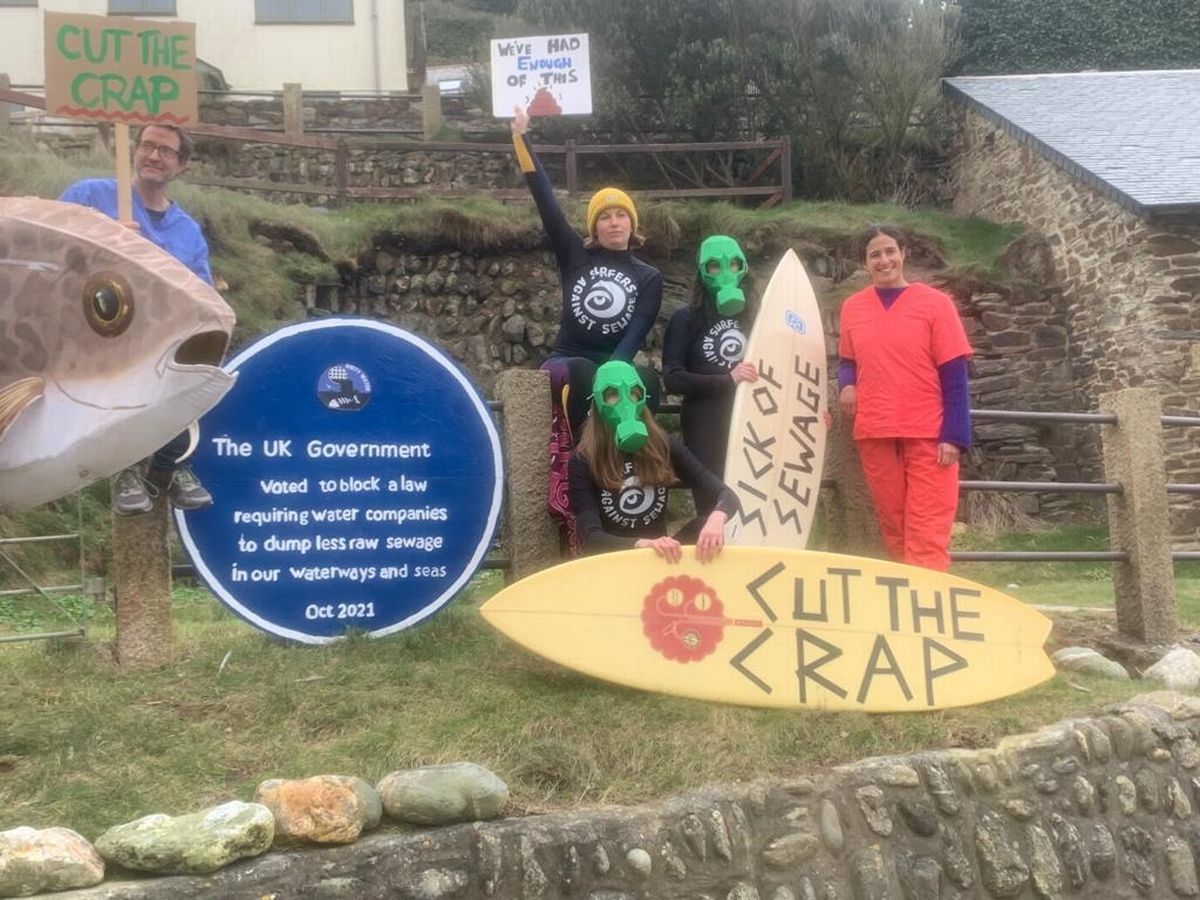
April 2023 Surfers Against Sewage and Extinction Rebellion protests in St Agnes, Perranporth, Truro and Charlestown which unveiled spoof Blue Plaques to the MPs and Conservative Government who allowed raw sewage to be dumped in the sea (Image: Surfers Against Sewage)
The snow-covered peak of Beinn Eighe and the mountains of Torridon are reflected in Loch Droma near Ullapool, Wester Ross, December 3, 2023
RAW sewage could have been pumped into Scotland’s rivers, lochs, and seas every 90 seconds last year, according to a new report by campaign group Surfers Against Sewage (SAS).
While Scottish Water recorded 23,498 sewage discharges lasting a total of 208,377 hours in 2024, this accounts for only 6.7 per cent of the company’s total network, the research found.
Just 1,116 of Scottish Water’s 4,080 “combined sewage overflows” — where sewage is released directly into waterways or the sea — appear on its real-time sewage discharge map.
That 73 per cent data gap means SAS’s Safer Seas and Rivers Service providing sewage alerts across Britain is forced to leave Scotland blank, but their latest report estimates the public are being put at risk with as many as 364,629 effectively unreported discharges a year — amounting one every 90 seconds.
SAS chief executive Giles Bristow slammed “Scottish Water’s reckless approach to monitoring and public safety.”
He said: “Scotland’s coastline, lochs and rivers are some of the most stunning on the planet, with surfers, swimmers and paddle boarders wanting to make the most of these beautiful blue spaces.
“But these waters are far from pristine.
“With no legal requirement to issue sewage alerts in Scotland, water users have no idea whether or not it’s safe to enter the water.
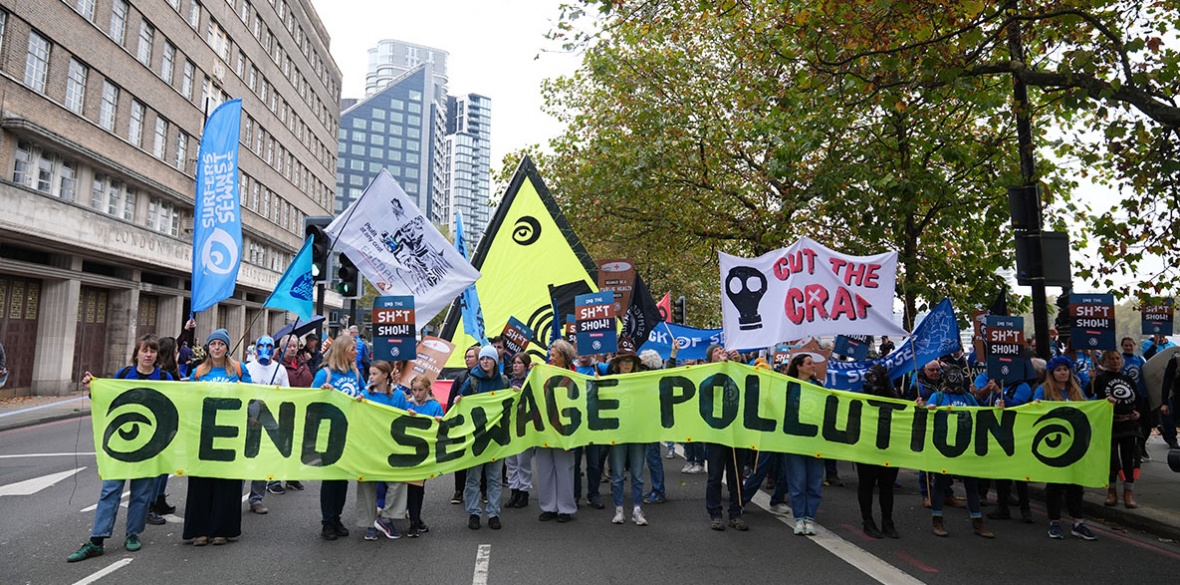
People take part in the Clean Water march in central London, to demand tougher action on keeping Britain’s rivers and seas clean, November 3, 2024
CAMPAIGNERS launched a legal challenge against Ofwat today, accusing the water regulator of unlawfully forcing customers to foot the bill for decades of neglect by the industry.
River Action launched the challenge on the same day water bills per year in England and Wales increased by an average of £123.
The challenge centres on Ofwat’s 2024 price review, which granted “enhanced funding” to United Utilities.
Campaigners say that the regulator failed to ensure the extra funds would be spent on new water and sewage projects instead of fixing historic issues.
River Action argues that such decisions mean that customers could be forced to pay twice for failing infrastructure: once through previous water bills and again through upcoming charges.
Alarmingly, campaigners warned that Ofwat relies on using simulation modelling to forecast sewage infrastructure capacity rather than real-world data when making its funding decisions.
Water bills are going up in England and Wales, even after the series of scandals around water companies. Last year water firms paid £158 million in fines following a record-breaking number of sewage dumps in rivers and seas.
Severn Trent Water and United Utilities alone reportedly made 1,374 illegal sewage spills over two years. (Both companies took issue with the analysis that led to this figure but acknowledged concerns about sewage discharges.)
There have been other notable incidents. Whistleblowers have told of water companies that fail to treat legally required amounts of sewage and divert that sewage to public waterways. To add to the disgrace, water companies have generally failed to invest enough in the UK’s water infrastructure.
Research suggests that governments have been pressured to become more “business-like”. This has given rise to the use of public-private partnerships (PPPs) to run important public services, such as water, transport and even prisons. Water companies in England and Wales are private companies that bid for their contracts, while in Scotland, the water provider is a public organisation.
While other findings show that PPPs can support important public service needs, such as public health, research by my colleagues and I examines a consistent pattern in UK PPP scandals and wrongdoing. Over the past decade and a half, billions of pounds of taxpayers’ funds are unaccounted for. This appears to be largely because private interests have been prioritised over public needs.
As a researcher of PPP wrongdoing, the reasons for many of the scandals seem obvious. My colleagues and I studied parliamentary inquiries and reports that have scrutinised PPP wrongdoing. This research can tell us a great deal about the UK’s predicament with regard to the failings in the water industry.
The first lesson is that, in general, many PPPs are motivated actually to reduce the quality of the services they deliver. One parliamentary inquiry found that contracting services out from the public to the private sector had become a “transactional process” where cost-cutting is favoured and the “knock-on cost” to users results in a lower-quality public service.
Other findings showed that companies regularly reduced the quality of a service to maximise profits. One way was to bid for a public service at a low price. A Public Accounts Committee member observed that companies coming in with low quotes for contracts can end up damaging services by under-investing in them.
Another example is Sodexo – a private prison management provider. It cut employee numbers by around 200 and a subsequent BBC Panorama documentary detailed escapes and widespread drug use in the prisons they managed and also criticised a lack of safety for both prisoners and prison officers. Sodexo acknowledged the programme had highlighted problems and said it would investigate, but added that there had been “positive actions and improvements” already.
Similar practices were observed at a children’s prison run by security firm G4S, where an officer was left with brain damage after an attack by inmates. G4S admitted liability for the officer’s injuries and agreed a settlement with him.
Pay the fine, it’s cheaper
The second lesson is it can be cost-effective to breach contracts and pay fines. Companies sometimes breach the terms of their public-private contracts because it’s in their economic interest. This even has a name – economists call it “efficiency breach”.
When observing the fines in comparison to the profitable contracts, it’s easy to posit what the motivations of many in the UK’s public service system are. In 2017, despite previous indictments of wrongdoing, G4S won £25 million of government contracts.
In 2020 the firm won another £300 million contract to run Wellingborough “mega-prison” in England. Despite some raised eyebrows, G4S said at the time it aimed to make the site a blueprint for “innovation, rehabilitation and modernisation” in the prison service.
Pay the shareholders, invest later
The third lesson is that shareholders are more important than long-term investments in a service. This is perhaps the most notable feature of the UK’s public service system, where a vast array of shareholders benefit from the profits made by PPPs. In one of the parliamentary reports we analysed, which details the collapse of the facilities management firm Carillion, it was clear that shareholders’ interests trumped good management and long-term investment.
As was noted in the report, despite Carillion’s collapse, the firm paid out £333 million more to shareholders than it generated in cash between 2012 and 2017. Often, this shareholder primacy can even go against a firm’s own employees rather than just the state and taxpayers. One MP noted that despite its pension scheme being in deficit, shareholders were still receiving dividends.
Often, shareholders are prioritised because of short-term thinking. These processes can lead to firms passing these bad practices down their supply chains.
The behaviour of water companies is suggestive of these dynamics. Since water companies have been privatised, they have loaded themselves up with debt (£64 billion) but paid out £78 billion to shareholders. Some 70% of these shareholders are “foreign investment firms, private equity, pension funds and businesses lodged in tax havens”.
So what should be done? There are plenty of ways to enhance and improve the UK’s PPP problems. The most obvious may be to renationalise public services and renew the quality of public services through New Deal-style investments. After all, this is what what most of the UK electorate wants.
There are other options. An innovative and exciting frontier is opening for businesses to recognise their environmental responsibilities – initiatives in New Zealand, India and Ecuador are giving the status of personhood to rivers and ecosystems, for example.
Outdoor fashion brand Patagonia has “the Earth” as its only shareholder, and hair and skincare brand Faith in Nature has appointed nature to its board. Imagine if the UK’s water companies had the rivers and seas represented.
In the end, only time will tell how water companies will be held accountable. But for the moment it’s the UK taxpayer and consumer paying the price.
G4S was approached about this article but declined to comment.
For far too long, the decline in the biodiversity of our rivers and lakes has been out of sight and out of mind. As a freshwater ecologist I have long felt frustrated as conservation and research is dominated by land and sea species, even though our rivers, lakes, ponds and other wetlands host a hugely disproportionate amount of the world’s biodiversity in their relatively small area.
The first comprehensive assessment of the risk of extinction of freshwater species, now published in the journal Nature, is set to change this. The scientists involved in the new study used the recently completed “red list” for freshwater fishes, and the one for dragonflies and damselflies.
Red lists are official inventories of conservation status compiled by the International Union for Conservation of Nature (IUCN). They combined this with data from the previously published red list for freshwater crabs, crayfishes and shrimps. In total, they assessed more than 23,000 species.
The authors conclude that close to a quarter (24%) of freshwater species are threatened with extinction. That is, they have been officially assessed as vulnerable, endangered, critically endangered or extinct in the wild.
These include the critically endangered European eel, and the endangered white-clawed crayfish, both of which were abundant in the streams of my childhood.
Once abundant, now endangered: a juvenile white clawed crayfish. valda butterworth / shutterstock
There is some uncertainty in the estimates, especially as there is insufficient data to establish the extinction risk for some species. The authors use an accepted and robust method to address this uncertainty but note that this lack of data affects a substantially larger proportion of freshwater species than those that live on land.
In fact, despite indications that a greater proportion of freshwater mollusc species are at risk of extinction, the authors could not include molluscs in their analysis as so many species are data deficient.
Furthermore, we have only the most rudimentary understanding of the status of the wide array other freshwater species, particularly invertebrates such as mayflies, stoneflies, or various beetles, many of which are highly sensitive to pollution. Although this new study represents an important step forward in our understanding, it should also act as a clarion call to galvanise efforts to fill these critical data gaps.
Freshwater species overlooked
While shocking, this figure of 24% of freshwater species threatened with extinction is comparable with the estimate for predominantly land-based amphibians, reptiles, birds and mammals, of which 23% are threatened. Comprehensive assessments of birds, amphibians and mammals have been available for over 20 years, with repeat assessments now available.
Rivers and lakes support whole ecosystems with all sorts of species. Martine Liu 58 / shutterstock
As the IUCN’s red lists are used to document trends in biodiversity and therefore to inform national and global strategy, data on terrestrial vertebrates has dominated conservation science and policy. Hence, to date, global environmental governance has focused on land and sea ecosystems, despite evidence that freshwaters require distinct management needs.
With this assessment, it is now clear that policy will have to be developed that protects and delivers improvements for freshwater species. That means thinking about entire river basins as a whole, rather than the immediate area occupied by the species.
It also means considering things like how rivers and lakes are connected and how the water available varies from season to season. Bodies of freshwater are like islands in a sea of land. Facilitating movement between these islands can help preserve species, particularly where they disappear seasonally.
Most species face multiple threats
In the new study, pollution, dams, water abstraction, land-use change, over-exploitation, invasive species and disease feature prominently as threats, with most species impacted by more than one. Freshwaters in areas of limestone and other porous calcium-rich rocks host consistently more threatened species than would be expected, highlighting the importance of chalk streams for example, where pressure due to exploitation of water resources and pollution is pronounced.
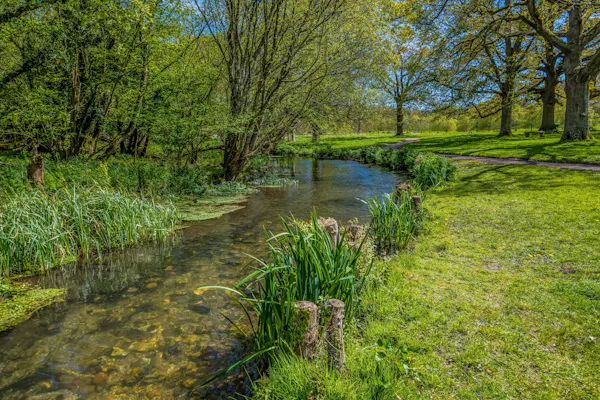
Chalk streams are valuable habitats for salmon, trout, otters, kingfishers and many other species. Tony Martin Long / shutterstock
While current efforts to hold UK water companies responsible for reducing inputs of sewage to rivers and lakes are commendable, water use efficiency and run-off should be considered throughout the decision-making process, from building design and town planning though to our individual daily use of water. Nature-based solutions such as tree planting or wetland protection offer a way forward that simultaneously benefit biodiversity and human well-being.
A lack of understanding can no longer be used as an excuse for inaction. As the authors of the new study point out, freshwaters support more than 10% of all known species, including about a third of vertebrates and half of fishes, while covering less than 1% of the surface of the Earth.
Many of the freshwater species considered in this study are socially and economically important. Freshwater fish provide an important source of protein for many human societies, and species such as Atlantic salmon support a fishing-tourism industry critical to many areas with limited opportunities to generate income.
Other species, while superficially unimportant to human society, thrive in clean water. The widespread decline in these species reflects increasing pollution and other pressures, which does not bode well for our society in the face of climate change and diminishing water availability.