Tag: Spotlight on Corruption

  • ‘Coining it in the City’: What Starmer’s Aides Did Next

    Spread the love

    Article by Ethan Shone republished from OpenDemocracy under a Creative Commons Attribution-NonCommercial 4.0 International licence.
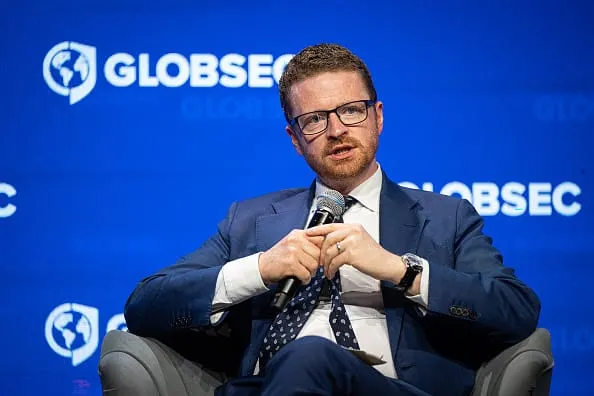
    Credit: Handout photo by GLOBSEC via Getty Images

    After failing to ‘clean up politics’ as promised, top Starmer advisers have set up advisory firms that experts warn can exploit Lobbying Act loopholes

    Soon after Morgan McSweeney left Downing Street this February in the wake of the Peter Mandelson scandal, he told the BBC he was “committing to being out of politics” for the next few years. By August however, the chief architect of Keir Starmer’s ill-fated tenure as Prime Minister had established his own firm, McSweeney Advisory, which will offer strategic advice on politics.

    McSweeney isn’t the only Starmerite alumni to set up their own ‘one-man-band’ advisory firms, openDemocracy can reveal. 

    After pledging to reform lobbying and clean-up money in politics, the so-called Starmer-project has spawned a mini-cottage industry of consultants and advisors, that includes Baroness Martin, a former top adviser to Starmer’s chancellor Rachel Reeves and Starmer’s former communications’ director Ben Nunn. 

    The irony is not lost on Labour veterans.

    “They waged a dirty tricks campaign to take control of the party, then wasted a massive opportunity. Meanwhile we’re still here, in government, fighting for working people and trying to clean up the mess they left, while they swan off to coin it in the City,” as one staffer said, adding that these advisers are now being rewarded “not for failure, but for doing what their corporate backers wanted the whole time”.

    Transparency activists and anti-corruption activists, meanwhile, describe the current lobbying rules as “pitiful”, with past research estimating that the current framework captures less than 1% of the actual lobbying which takes place in Westminster.

    Value Added Exemptions

    Advisory firms often fall outside the narrow legislative definition of ‘consultant lobbying’. Rather than contacting ministers directly on behalf of their clients (which could trigger transparency legislation), these firms skirt the rules by offering paid-for-advice to their clients on how to interact with the government, or how to pursue their policy goals based on the deep knowledge the advisors have acquired over years spent in party politics and in government.

    Campaigners have warned that the current lobbying rules also mean that small firms of this type are well-suited to make use of a loophole which means that, even if they do carry out work which meets the narrow definition of consultant lobbying, they still may never have to register or declare their clients. 

    This loophole in the Lobbying Act, known as the so-called ‘VAT exemption’, means a company or individual is not required to register as a consultant lobbyist – no matter how much actual lobbying they do which would otherwise meet the statutory definition – if they are not a VAT registered business.

    In the past, this has meant that MPs have been let off for breaching lobbying rules, because they are not VAT registered businesses, or that major lobbying firms, like the now-defunct Global Counsel, have not been required to register clients that have been billed through their overseas subsidiaries. 

    MPs and campaigners have also highlighted how this exemption means relatively small businesses whose turnover is less than the VAT threshold of £90,000 are not required to register. In practice this means that an individual lobbyist who sets up a company to serve one or two large clients could still carry out a significant amount of paid lobbying without ever needing to register. 

    Such flaws in the Lobbying Act are so self-evident that even industry representative bodies for the lobbying industry itself are in favour of a stricter, more comprehensive system to regulate the industry.

    Senior campaign lead at Spotlight on Corruption Kamila Kingstone told openDemocracy: “The fact that even powerful and influential consultant lobbyists can get away with not putting their name on the lobbying register highlights the pitiful state of the UK’s lobbying rules. 

    “Experts have repeatedly pointed out that the VAT exemption is a massive loophole, but successive governments have repeatedly ignored it.”

    A McSweet Deal

    Senior advisers that leave government to take up private sector roles must get sign-off from the Civil Service Commission, which assesses potential conflicts of interest and imposes conditions on their employment – though in practice the commission has no formal powers to investigate or enforce these rules. 

    When openDemocracy reached out to McSweeney, he said his firm offers “strategic advice and analysis on political developments, geopolitics, democratic security and related issues”. 

    “My work involves helping organisations understand political and geopolitical developments, not seeking to influence government decisions on their behalf,” he said. 

    Rachel Reeves’ top adviser throughout her time as shadow chancellor and in government has also set up shop as a corporate adviser, establishing Katie Martin Advisory earlier this year, despite sitting in the House of Lords as a serving peer. 

    The now-ennobled Baroness Martin of Brockley had as much influence over and insight into Starmerism’s economic platform as any other adviser in government. She also led on business engagement, developing relationships with City firms and other major Treasury stakeholders. 

    In addition, Baroness Martin has taken up a senior advisory role with Peel Hunt, an investment bank she met with several times in office, and will support the bank to develop relationships with ministers, while sitting as a peer in the House of Lords. 

    According to correspondence published by the Civil Service Commission, Baroness Martin “will advise Peel Hunt’s leadership on brand and positioning to expand their presence in the UK” but will also advise on “how to strengthen relationships with officials, ministers and regional leaders in government”. Baroness Martin told the commission she “would not facilitate these relationships personally” and confirmed her role “will not involve contact with, or lobbying of, government”.

    Baroness Martin met with Peel Hunt formally twice in government and acknowledged she had likely met representatives of the bank a further “two or three times at events”. She was also involved in conversations about London IPOs, a policy area she acknowledged Peel Hunt “had an interest in”. Her new job includes supporting the bank’s “emerging work with the London Stock Exchange to encourage more companies to launch on the UK stock market”.

    Alongside her advisory work Baroness Martin has also joined the board of ThinkLabour, the organisation formerly known as Labour Together; the Commission approved the unpaid role on 8 October. She sits on the board alongside veteran finance lobbyist Mike Craven, founder of  public affairs agency Lexington. 

    Beyond McSweeney and Baroness Martin, few figures have been as close to the Starmer project for as long as Ben Nunn. He was Starmer’s communications director in opposition, then Reeves’. He left the party to work for Lexington for a time, then returned in November 2025 to replace Baroness Martin as Reeves’ chief of staff, staying until the project’s collapse in July.

    He is now sole director of Arlington Road Consultants, a political advisory seemingly named after the “Arlington Road” group that plotted to oust Jeremy Corbyn and install Starmer as Labour leader. 

    Earlier this month, the Mail on Sunday reported that Nunn and Reeves had met two City firms days before the Budget, to discuss “the political advice the pair could offer”. Sources told the paper that both chief executives had met Reeves several times while she was Chancellor. The Conservative chairman, Kevin Hollinrake, has asked the independent adviser on ministerial standards to investigate.

    In response to the Mandelson scandal, Starmer’s No10 commissioned the Ethics and Integrity Commission (EIC) to produce the latest in a long series of independent reviews into lobbying reform which reported back earlier this year.

    Starmer’s administration did not act on the EIC’s recommendations, though they came not long before he was ousted by Andy Burnham, whose administration is yet to commit to any reform.

    Kingstone and other campaigners have urged the government to look seriously at the recommendations put forward by the EIC, including to broaden out the statutory definition of consultant lobbying to capture a much wider range of activity. 

    She said: “The government needs to accept the Ethics and Integrity Commission’s recommendations to require all lobbyists to have to register on a comprehensive transparency portal – whatever their tax arrangements – so that the public can see who is meeting the government, who they are representing, and what they are discussing”

    McSweeney told openDemocracy: “I do not provide lobbying services, nor do I intend to.” 

    “I therefore have no plans to register as a consultant lobbyist, as that is not the business I conduct. The suggestion that my company is well-placed to exploit a loophole in lobbying legislation is misleading. I have no intention of using any such loophole.”

    openDemocracy contacted Baroness Martin and Ben Nunn with questions about the nature of their work, but had received no response at time of publication. 

    Article by Ethan Shone republished from OpenDemocracy under a Creative Commons Attribution-NonCommercial 4.0 International licence.
    Keir Starmer confirms that he doesn't know anything about democracy.
    Keir Starmer confirms that he doesn’t know anything about democracy.
    Keir starmer warns against following the https://onaquietday.org blog.
    Keir starmer warns against following the https://onaquietday.org blog.
  • UK government met 137 businesses over AI datacentres – but no environmental groups

    Spread the love

    https://www.theguardian.com/uk-news/2026/oct/27/uk-government-environmental-groups-ai-datacentres-expansion-plans-investigation

    Members of the Save Brick Lane campaign protested against the construction of an AI datacentre in the east London neighbourhood in June. Photograph: David Levene/The Guardia

    Investigation finds dozens of ministers and civil servants moved into AI roles as government developed datacentre expansion plans

    The UK’s policy on datacentres and AI was developed without any meetings with environmental groups, an investigation has found.

    The nonprofit organisation Spotlight on Corruption said a “considerable revolving door” shaped the government’s development of “AI growth zones”, a central plank of the former prime minister Keir Starmer’s AI and economic policy, with 38 ministers, senior civil servants and special advisers hired to positions in AI companies between July 2024 and September 2026.

    Meanwhile, even as top officials left government for jobs at OpenAI and Anthropic, government departments largely failed to engage meaningfully with stakeholders outside the technology industry.

    Kamila Kingstone, a campaign lead at the NGO, said: “The government totally failed at the most senior level to speak to environmental NGOs or community groups when developing its flagship policy on AI datacentres. This is despite the serious environmental implications of its plans.”

    Over 12 months, Spotlight on Corruption filed 40 freedom of information requests to 18 government agencies, seeking details of meetings and investment figures relating to the government’s policymaking on the growth zones, covering the period between July 2024 and June 2026.

    …

    https://www.theguardian.com/uk-news/2026/oct/27/uk-government-environmental-groups-ai-datacentres-expansion-plans-investigation

  • Nigel Farage Has Personally Accepted £675,000 from Foreign Sources

    Spread the love

    Article by Sam Bright republished from DeSmog

    President Donald Trump and Reform UK leader Nigel Farage at CPAC in 2018. Credit: Shealah Craighead / White House (Public domain)

    Reform UK leader Nigel Farage has accepted more than half a million pounds from foreign companies, governments, and donors while serving as an MP, DeSmog can reveal.

    Since July 2024, when he was elected as the Member of Parliament for Clacton, Farage has received almost £2 million in income and gifts, with £675,000 coming from foreign sources. Of Farage’s 28 benefactors, 20 are based abroad (71 percent).

    This comes amid growing scrutiny of the foreign influences on British democracy following attempts by the Labour government to clamp down on overseas donations to UK political parties.

    Farage’s largest foreign income stream has been Cameo – the U.S. platform where celebrities record videos for money – earning £222,000 on the site since being elected to Parliament. Farage has now deleted his profile on the platform after a Guardian investigation found he had sold Cameo videos repeating extremist slogans and endorsing a neo-Nazi event.

    This income has been received on top of Farage’s £94,000 a year public salary.

    Labour’s chair Anna Turley said: “Nigel Farage rarely turns up to do his actual job. Yet he finds time to jet off around the world on his donor’s private plane and trouser half a million quid while families struggle. Reform are not on your side. They’re just in it for themselves.”

    A version of this article was published by The Mirror.

    The Reform leader has also been paid for a range of foreign speaking events, including £40,000 to address Nomad Capitalist Live in Kuala Lumpur, Malaysia, in September 2024. Nomad Capitalist, which is based in Hong Kong, advises the super rich on how to cut their tax bills.

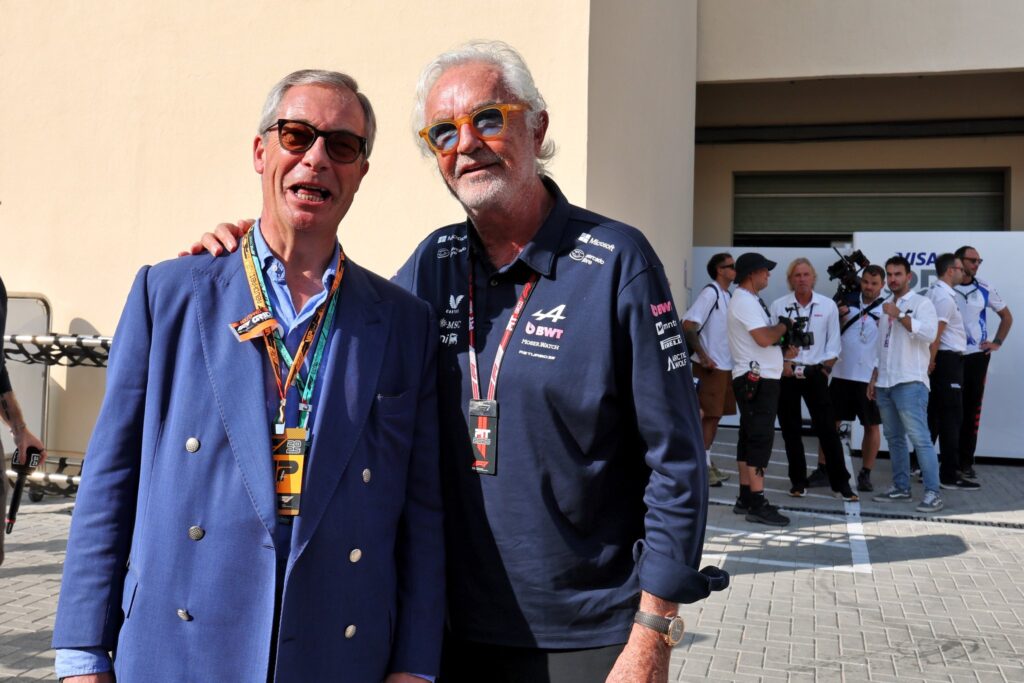
    Farage has also received gifts from foreign governments. As revealed by DeSmog, the Abu Dhabi government provided tickets and hospitality worth £10,000 for Farage to attend the local Formula One Grand Prix in December.

    “At a time when trust in politics is at rock bottom, the public deserves absolute confidence that their MPs are working solely in service of their constituents and their country, not dancing to the tune of foreign interests,” said Kamila Kingstone, senior campaign lead at Spotlight on Corruption.

    “Cases like this make it painfully clear that transparency alone is not enough and that the current system leaves far too much room for foreign influence. The government urgently needs to impose tougher limits on MPs’ second jobs and on the gifts and payments they are allowed to accept, so that public service cannot be overshadowed by private gain.”

    Despite claiming to represent working-class voters, Farage – the UK’s highest-paid MP – has also received private jet trips worth £85,000 from major Reform donor Christopher Harborne. A billionaire cryptocurrency investor, Harborne is based in Thailand, where he has lived for over 20 years.

    Farage is a major backer of cryptocurrencies, and has £215,000 invested in a UK Bitcoin treasury, Stack BTC – owned by Paul Withers, who runs the gold exchange Direct Bullion, which has paid Farage more than £500,000 since he became an MP. Farage’s Stack BTC shares have reportedly doubled in value since he bought them, largely due to the fanfare around his investment.

    Harborne is Reform’s biggest donor, having given £12 million to the party last year and more than £22 million since 2019. However, his contributions to the party are now in jeopardy after Labour introduced new rules that cap donations from overseas residents to £100,000 a year.

    Earlier this month, crypto entrepreneur and right-wing philanthropist Ben Delo said he had given £4 million to Reform and would be moving back to the UK in order to circumvent the government’s new donation rules.

    “Farage is bought and paid for by vested interests,” Green Party deputy leader Rachel Millward said. “Clearly, his disdain for foreign people does not extend to those who want to give him money to advance his hateful agenda. He loves open borders when it comes to cash!”

    Reform UK is the UK’s leading anti-climate party, with several of its senior figures – including Farage – denying basic climate science. The Reform leader has claimed it’s “absolutely nuts” for CO2 to be considered a pollutant, while his deputy Richard Tice has called it “plant food”.

    Of the £1.3 million earned by Farage from UK sources, a number are closely connected to overseas interests. GB News, Farage’s largest single source of income, is co-owned by the Legatum Group – a Dubai-based investment vehicle – and hedge fund manager Paul Marshall, whose firm is 40 percent owned by U.S. private equity giant KKR.

    Reform and Farage were approached for comment.

    Foreign Influences on Farage

    Reform has close connections to a number of foreign regimes and influential overseas interests.

    Farage is one of U.S. President Donald Trump’s most vocal European allies, having repeatedly campaigned for his election – including in 2016, when Farage was the first foreign politician to be given an audience with Trump following his presidential victory.

    Farage is also well connected in Trump’s MAGA movement.

    “He’s seen as the elder statesman. He almost has senator status. If England were the 51st state, Nigel Farage would be one of the senators,” one of his longstanding friends, Raheem Kassam, told the New Statesman in December.

    As documented by DeSmog, Farage has been helping the Heartland Institute – an influential pro-Trump climate science denial group – to extend its influence in the UK and Europe.

    The Heartland Institute was one of the groups behind Project 2025 – the authoritarian blueprint for Trump’s second term, convened by the Heritage Foundation.

    According to The Spectator, key people from Project 2025 “have been shuttling between London and Washington” to give their advice to Farage.

    And the Reform leader has earned thousands from MAGA events since he became an MP.

    In the past year, Farage has been paid more than £11,000 to speak at Hillsdale College – a conservative university in Michigan – and nearly £28,000 to speak at the ‘Club for Growth’, a lobby group that has endorsed and campaigned for Trump.

    Farage has also racked up donor-funded flights worth at least £150,000 to speak at pro-Trump events since he was elected to Parliament, and has received £47,000 from Trump-donating U.S. tech giants X Corp, Google, and Meta.

    But Trump’s America is not the only foreign regime with financial ties to Farage and his party.

    In addition to the F1 hospitality given to Farage by the Abu Dhabi government in December, other senior figures in Reform are in business with the United Arab Emirates (UAE).

    Reform UK leader Nigel Farage at the Formula 1 Grand Prix in Abu Dhabi, December 2025.

    Credit: Nigel Farage / X

    In October 2024, the party’s treasurer Nick Candy entered into a “strategic joint venture partnership” with Modon Holding – a real estate company owned by the Abu Dhabi government – via his firm Candy Capital. He has also partnered with the state-owned Dubai World Trade Centre to develop “super-prime” properties on the site. 

    Meanwhile, Reform’s Nadhim Zahawi – a former Tory minister who defected to Farage’s party in January – is a senior figure at Omniyat, a luxury property developer in Dubai. Farage convened a group of prospective patrons in Dubai earlier this year in an attempt to convince them to donate to the party.

    As a result, campaigners are urging the government to close the political finance loopholes that allow foreign regimes and big money interests to shape UK policy.

    “An MP’s only real job should be representing their constituents,” said Tom Brake, director of the campaign group Unlock Democracy. “Yet sadly, for some MPs, supplementing their own income appears to have greater appeal.

    “This is bad enough, but what is even more concerning is when MPs receive income from foreign sources, particularly foreign governments or organisations closely aligned with them. These financial relationships always risk giving undue influence and leverage to foreign entities, which UK legislators should avoid at all costs.”

    In March, the Rycroft Review was released, a government report from former Foreign Office permanent secretary Philip Rycroft, which summarised the threats to British democracy from overseas actors.

    “This country faces a persistent problem of foreign interests seeking to exert influence on, and to interfere in, our politics,” Rycroft said. “Too much of this is malign and seeks to sow distrust and exacerbate divisions in UK society, with the ultimate aim of undermining confidence in our democracy… If government does not act swiftly to gear up to counter these threats, there is a real risk they will run away from us.”

    Article by Sam Bright republished from DeSmog

    Nigel Farage urges you to ignore facts and reality and be a climate science denier like him and his Deputy Richard Tice. He says that Reform UK has received £Millions and £Millions from the fossil fuel industry to promote climate denial and destroy the planet.
    Nigel Farage urges you to ignore facts and reality and be a climate science denier like him and his Deputy Richard Tice. He says that Reform UK has received £Millions and £Millions from the fossil fuel industry to promote climate denial and destroy the planet.
    Climate science denier Nigel Farage explains that it's simple to blame asylum-seekers or Muslims for everything.
    Climate science denier Nigel Farage explains that it’s simple to blame asylum-seekers or Muslims for everything.
    Nigel Farage reminds you that he's the man that brought you Brexit and asks what could possibly go wrong.
    Nigel Farage reminds you that he’s the man that brought you Brexit and asks what could possibly go wrong.

    Who Funds Nigel Farage? Mapping His Millions

  • Top civil servant boomeranged between government and Tony Blair Institute

    Spread the love

    Original article by Ethan Shone republished from OpenDemocracy under a Creative Commons Attribution-NonCommercial 4.0 International licence. 

    Tony Blair’s think tank and consulting firm is proving to be highly influential with Labour in government 
    | (Photo by Dan Kitwood/Getty Images)

    Exclusive: Tech firms such as TBI are embedding staff in government, sparking fears AI policy is being ‘outsourced’

    The Tony Blair Institute and the Ellison Institute of Technology sent senior staff members to work in the government department tasked with developing AI policy, openDemocracy can reveal.

    UK tech firm Faculty, which has links to the TBI, also embedded a member of staff in the Department of Science, Information and Technology (DSIT).

    In one case, the TBI hired a senior civil servant tasked with leading the government’s AI programme, then seconded them straight back to their old job in the department – a potential loophole in rules intended to stop former civil servants from using their connections to lobby old colleagues.

    In another, a different TBI staffer wrote on LinkedIn that he had played a key role in drafting the government’s flagship AI Opportunities Action Plan, its far-reaching blueprint for AI policy, during an 11-month secondment to DSIT.

    The government is not required to declare secondments, meaning there is no public record of the companies that gain significant access and influence through these arrangements – nor the policies their secondees advocate for.

    But openDemocracy has found that arms firms Thales and Qinetiq, tech consultancy Capgemini, and pharmaceuticals giant AstraZeneca have also sent staff members to work in DSIT.

    Responding to our findings, Kamila Kingstone, programme lead at said: “When individuals with close ties to vested commercial interests are embedded at the heart of policymaking, it creates real risks of conflicts of interest. It enables Big Tech to capture and help set the very rules that should regulate it.

    “At a minimum, the government should publish annually a list of who has been brought in on secondment, their conflicts of interest, and any mitigations in place. At a time when public trust in politics is at rock bottom, the government should be going the extra mile to be sure it is transparent about who is influencing policy behind the scenes”

    Green Party deputy leader Rachel Millward told openDemocracy: “Starmer’s Labour Party has no values or vision, so it has outsourced its policy development process to corporate interests. Unethical companies have funnelled dirty money through ‘think tanks’ and agencies to shape the government’s positions in favour of Big Tech.”

    A government spokesperson told openDemocracy: “We make no apologies for bringing cutting-edge expertise from UK academia and industry into the heart of Government.”

    ‘Smooth transition’

    Dr Laura Gilbert left her position as the director of the UK government’s Incubator for Artificial Intelligence programme in December 2024, ending a four-year career in the heart of government.

    Less than four weeks later, she was back in the Department of Science, Information and Technology – the department tasked not only with developing the regulation of AI tech in the wider economy but also with its rollout across government.

    This time, though, Gilbert was not on the civil service payroll, but working for the Tony Blair Institute, a consultancy founded by the former Labour prime minister to advise governments on various policy areas – particularly tech – and the Ellison Institute of Technology, an organisation founded by US billionaire tech mogul Larry Ellison, reportedly the world’s second-richest man.

    The two firms had recruited her to run their joint AI for Government project before immediately seconding her back to her old office.

    Gilbert’s secondment suggests a loophole in the business appointment rules, which state that senior civil servants leaving government to work in the private sector should “not become personally involved in lobbying the UK government on behalf of your new employer and/or its clients” for two years.

    But there is no rule preventing their new employers from sending them straight back to work in government, where they can directly influence policy.

    Gilbert told openDemocracy she was sent back to the department “to support the smooth transition of my dedicated and talented technical AI team into DSIT… working with my (interim) replacement to hand over for a short period via a secondment from the Ellison Institute”.

    The TBI said Gilbert had “agreed to help oversee the transfer of her team into DSIT”, while the Ellison Institute did not respond to a request for comment.

    After four months, Gilbert left DSIT again to take up her current role as head of AI in the TBI. But openDemocracy has uncovered that her secondment is part of a broader pattern of tech firms sending staff to shape Labour’s tech policy – a pattern that began when the party was still seen as the government-in-waiting.

    In 2023, the Tony Blair Institute paid for Labour’s shadow tech secretary, Peter Kyle, to travel to Brussels to attend its programme on science and tech policy. The following year, he visited the US on a trip paid for by Lord Sainsbury, a Labour donor, and consulting firm Hakluyt & Company, which has interests in AI through an investment fund. There, Kyle met with tech giants, including Ellison’s Oracle.

    Kyle also benefited from tech companies seconding staff to him. During the 2024 election campaign, Faculty, a company that provides software and consultancy on AI, sent a staff member to support his work.

    While Labour reported that the staffer was in Kyle’s office on one day a week for two months, it valued the arrangement – a donation-in-kind – at £36,000. Based on a standard seven or eight-hour working day, this suggests their hourly salary was around £600.

    Tech consulting firm Public Digital also seconded a senior member of staff to work for Kyle before the election. Emily Middleton, the staffer in question, was later brought into DSIT as a senior civil servant on a salary of between £125,000 and £208,000 after Kyle was appointed to lead it. She had previously been seconded to Labour Together.

    In October 2024, Faculty sent a mid-level staffer to Kyle’s Department of Science, Innovation and Technology on a four-month secondment. It is not clear whether this was the same person who had been seconded to Kyle’s office earlier in the year.

    Faculty has grown its government business since Labour took office, including winning its two largest ever public contracts: a £6m deal with the Department for Education and another worth £4.5m with the Ministry of Housing, Communities and Local Government.

    The government declined to answer openDemocracy’s questions on the nature of the Faculty staffer’s work, while the firm did not respond to our request for comment.

    The following month, in November 2024, the Tony Blair Institute paid for its senior policy adviser, Tom Westgarth, to be installed in DSIT.

    Westgarth remained in the department for 11 months, with his LinkedIn page suggesting he held significant influence over public AI policy. It says he advised the government “on delivering the AI [Opportunities] Action Plan” and provided “strategic steer across a range of AI Action Plan priorities”.

    “Labour are currently doing everything they possibly can to bring predatory Big Tech into the UK economy, on Big Tech’s terms,” said Jim Killock, the executive director at Open Rights Group. “They have collapsed competition regulation, shifted data protection to favour business needs over personal data, and promised Big Tech all the help they need to establish themselves at every level of government.

    “Adding in senior officials who know how to do Big Tech’s bidding is just one more sign that the UK is being asset-stripped and locked into a future of permanent rent extraction by Big Tech. There is an alternative – a strategy for digital sovereignty that prioritises UK open source. We won’t get that by asking staff from the TBI and Ellison Institute to help write UK tech policy.”

    A government spokesperson said: “We make no apologies for bringing cutting-edge expertise from UK academia and industry into the heart of government. We are determined to drive momentum on policies supporting some of the most important research and technologies of the future, by drawing on Britain’s wealth of science and tech expertise, and our secondment schemes are a key part of this.

    “This government is a champion for our science and technology sectors across the board – not individual companies. The usual propriety and ethics rules apply for all of our secondees.”

    The TBI said: “Tom Westgarth’s secondment is public knowledge, he announced it at the time.”

    Original article by Ethan Shone republished from OpenDemocracy under a Creative Commons Attribution-NonCommercial 4.0 International licence. 

    Keir Starmer explains that UK is participating defensively in Trump and Israel's criminal war for Israel's genocidal expansion in Iran and states that he supports Zionism "without qualification".
    Keir Starmer explains that UK is participating defensively in Trump and Israel’s criminal war for Israel’s genocidal expansion in Iran and states that he supports Zionism “without qualification”. Starmer said it here:  https://www.jewishnews.co.uk/keir-starmer-interview-i-will-work-to-eradicate-antisemitism-from-day-one/
    Keir Starmer says that the Labour Party under his leadership is intensely relaxed about assaulting those least able to defend themselves - the very poorest and most vulnerable.
    Keir Starmer says that the Labour Party under his leadership is intensely relaxed about assaulting those least able to defend themselves – the very poorest and most vulnerable.
    Keir Starmer explains that he feels no shame or guilt benefiting personally from gifts from the rich and powerful while insisting on policies of severe austerity.
    Keir Starmer explains that he feels no shame or guilt benefiting personally from gifts from the rich and powerful while insisting on policies of severe austerity.

  • UK government withholding details of Palantir contract

    Spread the love

    https://democracyforsale.substack.com/p/uk-government-withholding-details

    KPMG is being paid £8 million to promote Peter Thiel’s tech in NHS hospitals – but we’re being forced to fight for information about this public contract.

    It’s been a good week for Palantir. The controversial spy-tech company, co-founded by Trump donor Peter Thiel, looks set to secure even more UK government work after the defence secretary pledged to expand the role of AI in the military.

    Palantir already holds a £330 million NHS data contract. But as Democracy for Sale revealed last week, most hospitals in England are not using the software, with many complaining that it simply isn’t up to scratch.

    To encourage hospitals to take it up, the government signed an £8 million deal with consultancy giant KPMG to “promote the adoption” of Palantir’s tech in the NHS.

    We wanted to know more about how this money is being spent. How exactly has KPMG been promoting Palantir’s software to hospitals? And has it worked?

    So, we submitted a Freedom of Information (FOI) request to the Department of Health and Social Care (DHSC), asking for reports produced by KPMG under its contract, as well as briefings prepared for Health Secretary Wes Streeting, who publicly supported the deal.

    The government’s response? Silence. They’re refusing to release the information—so now we’re fighting for transparency.

    Sue Hawley, executive director of Spotlight on Corruption, told us the government’s “impulse to secrecy around public money and public contracts” is “deeply concerning.”

    “KPMG’s contract raises a real question: if [Palantir’s] software is so good, why does the government need to give £8 million of taxpayers’ money to a management consultancy to encourage NHS hospitals to use it?,” she added.

    …

    Article continues at https://democracyforsale.substack.com/p/uk-government-withholding-details