This work by Middle East Monitor is licensed under a Creative Commons Attribution-NonCommercial-ShareAlike 4.0 International License.
Israeli army construction equipment is working to reinforce military positions in the villages of Jubata al-Khashab and Samadaniyya as the Israeli army continues its violations in the countryside of Quneitra province in southwestern Syria on November 05, 2025. [Bakr Al Kasem – Anadolu Agency]
Israeli public broadcaster sources reported on Monday evening that security negotiations between Israel and Syria have hit a dead end, with widening differences between Damascus’s demands and Tel Aviv’s conditions.
According to the sources, Israel rejected Syrian President Ahmad Al-Sharaa’s request to withdraw its forces from all areas it occupied following the fall of Bashar Al-Assad’s government on 8 December 2024.
They added that Tel Aviv will only withdraw as part of a comprehensive peace agreement, not through a limited security deal, which does not appear feasible at present.
Both sides had been expected to sign a US-brokered security agreement during last September’s UN General Assembly meetings, but media reports indicated the talks broke down at the last moment.
Israeli security sources said disagreements arose during meetings between Syrian Foreign Minister Asaad Al-Shaibani and Israeli Strategic Affairs Minister Ron Dermer. The disputes focused on Syria’s demands for Israel to return to the lines set by the 1974 disengagement agreement, stop violating Syrian airspace, and withdraw from the areas occupied by Israel in late 2024.
This work by Middle East Monitor is licensed under a Creative Commons Attribution-NonCommercial-ShareAlike 4.0 International License.
Israeli army tanks leave the area after they caused damage to civilian areas in four towns of Quneitra province in the Golan Heights, following the fall of the Baath regime in Syria on January 8, 2025. [Melik Ebu Ubeyde – Anadolu Agency]
Five Israeli military vehicles infiltrated a village in the Quneitra countryside of southwestern Syria on Sunday, in the latest violation of the country’s sovereignty, Anadolu reports.
An Israeli force of five military vehicles moved into the town of Saida al-Golan in southern Quneitra early morning, before pulling back afterwards, the state-run Syrian Arab News Agency (SANA) reported.
Israeli forces also raided the outskirts of Ma’riya village, west of Daraa province, the outlet said.
Israeli incursions in Quneitra have recently intensified, with locals complaining of Tel Aviv’s advances into their farmland as well as the destruction of hundreds of acres of forests, arrests of residents, and the establishment of military checkpoints.
According to government data, the Israeli army had carried out over 1,000 airstrikes on Syria and more than 400 cross-border raids into the southern provinces since December 2024.
After the fall of the Bashar al-Assad regime in late 2024, Israel expanded its occupation of the Syrian Golan Heights by seizing the demilitarised buffer zone, a move that violated the 1974 Disengagement Agreement with Syria.
This work by Middle East Monitor is licensed under a Creative Commons Attribution-NonCommercial-ShareAlike 4.0 International License.
Keir Starmer objects to criticism of the IDF. He asks how could anyone object to them starving people to death, forced marches like the Nazis did, bombing Gaza’s hospitals and universities, mass-murdering journalists, healthworkers and starving people queuing for food, killing and raping prisoners and murdering children. He calls for people to stop obstructing his genocide for Israel.Orcas discuss Genocide-supporting and complicit Zionists. Donald Trump, Keith Starmer, David Lammy, Rachel Reeves, Angela Rayner and Wes Streeting are acknowledged as evil genocide-complicit and supporting cnuts.Genocide denying UK Foreign Secretary David Lammy says that UK is suspending 30 of 350 arms licences to Israel. He also confirms the UK government’s support for Israel’s Gaza genocide and the UK government and military’s active participation in genocide.
Syrian interim President Ahmad al-Sharaa meets US President Donald Trump at the White House Nov. 10. Photo: Syrian presidency
The visit of Syria’s interim president to Washington has once again showcased the ambivalence of US counter-terrorism policy, which changes according to temporal interests.
Syrian interim President Ahmad al-Sharaa arrived in Washington on Monday, November 10, to discuss various issues of mutual interest with US President Donald Trump.
The occurrence, which marks Al-Sharaa’s first visit to the United States has stirred controversy, and invited the mockery of critics, as it came a mere two days after Al-Sharaa was removed from the US Specially Designated Global Terrorist (SDGT) sanctions list.
This in turn has exposed the ambivalence of US counter-terrorism policy, which apparently designates or revokes persons and organizations from terrorism lists based on US interests at any given moment.
One day before being revoked from the SDGT sanctions list, the United Nations Security Council had also adopted a US resolution to remove Al-Sharaa and his Interior Minister, Anas Khattab, from sanctions targeting members and supporters of terrorist groups, including ISIS and Al-Qaeda.
Furthermore, Al-Sharaa’s visit followed the onset of a large-scale military campaign by Syria’s government forces on Saturday, November 8, against “terrorist cells” affiliated with ISIS in different governorates, according to the Syrian Ministry of Interior.
In what was interpreted as paving the way for Al-Sharaa to remain in office after Syria’s transitional period ends, Trump praised the former Al-Qaeda militant, saying:
“He’s a very strong leader, he comes from a very tough place. He’s a tough guy. I like him. I get along with the president, the new president of Syria, and we’ll do everything we can to make Syria successful because that’s part of the Middle East.”
Al-Sharaa says the visit marks new beginning for strategic relations with the US
For his part, Al-Sharaa considered his visit a new beginning for strategic relations between his country and the United States. During an interview with Fox News following his meeting with Trump on Monday, Syria’s new ruler said:
“For the past sixty years, Syria has been isolated from the rest of the world, and the relations were cut off between the United States and Syria. This is the first time a Syrian president has visited the White House since the establishment of Syria in the 40s of the last century.”
“After the fall of the former regime, Syria has entered into a new era and this will build on a new strategy specially with the United States,” Al-Sharaa added.
Syria joins US-led international coalition against ISIS
When he was asked whether he committed to having his country join the US-led international coalition to fight ISIS in the West Asia region, Al-Sharaa answered:
“We have fought many battles against ISIS over the past ten years and endured great suffering, losing a significant number of men. While there are reasons for the US military presence in Syria, this presence must now be coordinated with the Syrian government. We need to discuss these issues and reach an agreement regarding ISIS.”
On Tuesday, November 11, Syria’s information minister, Hamza al-Mustafa, and a US official announced that Syria signed a “political declaration” with the coalition, confirming that it will have a role in “combating terrorism and supporting regional stability”.
However, Al-Mustafa clarified that “the agreement is political and until now contains no military components.”
Al-Sharaa offers extraction of Syria’s gas to become US ally
Al-Sharaa also told Fox News that he discussed with Trump future investment opportunities in Syria, particularly the extraction of gas by the United States.
“We talked about the investment opportunities in the future in Syria, so that Syria is no longer looked at as a security threat. It is now looked at as a geopolitical ally. And it’s a place where the United States can have great investments, especially extracting gas,” he noted.
Regarding Syria’s future relation with Israel, Al-Sharaa ruled out the possibility of joining the “Abraham Accords”, but he expressed his hope that the Trump administration will help his country to reach a security agreement with Israel to end its occupation of the Golan Heights.
“I believe that the situation in Syria is different from the situation of the countries that signed on to the Abraham Accords. Syria has borders with Israel, and Israel has occupied the Golan Heights since 1967. We are not going to enter into negotiations directly right now. Maybe the United States administration with President Trump will help us reach this kind of negotiation.”
Nevertheless, Al-Sharaa provided contradictory statements regarding the involvement of his government in negotiations with Israel during an interview with The Washington Post on the same day of being interviewed by Fox News.
The American newspaper cited Syria’s transitional leader saying:
“We are engaged in direct negotiations with Israel, and we have gone a good distance on the way to reach an agreement. But to reach a final agreement, Israel should withdraw to their pre-Dec. 8 borders.”
US declares partial suspension of sanctions on Syria following Al-Sharaa-Trump meeting
As both nations are looking forward to bolstering mutual security and economic interests, Al-Sharaa told The Washington Post that lifting the sanctions is essential for maintaining stability, which is, in turn, linked to economic development.
It is worth noting that shortly after the meeting, the United States Treasury Department announced that the Trump administration suspended key provisions of the Caesar Act sanctions on Syria for 180 days.
Pressure on Germany is mounting from multiple fronts: the resilience of Gaza’s people and fighters, the global solidarity movement, and even Nicaragua’s lawsuit against the German government.
Exactly 22 months after the start of the genocide against the people of Gaza, German Chancellor Friedrich Merz announced on August 8 that Germany would “no longer approve any exports of military equipment to Israel that could be used in the Gaza Strip” – at least for now.
But many left-wing, pro-Palestinian, and peace activists in Germany remain skeptical.
What weapons are we talking about?
It quickly became clear this was not a blanket halt to German arms shipments to Israel. Weapons intended for military operations in the illegally occupied West Bank, southern Lebanon, and Syria are unaffected. So are arms for aggression against neighboring Arab states, Yemen, and Iran.
Ammunition and air-defense technology are also exempt. While officially labeled “defensive”, these systems are used to intercept rockets and drones from the resistance in Gaza, Iran, Yemen’s Ansar Allah movement, and, until late last year, Hezbollah in Lebanon. So in fact they serve not just defense but also to sustain Israel’s broader policy of aggression and genocide.
The ban likely doesn’t apply to equipment for Israel’s navy either – despite its central role in enforcing the illegal blockade of Gaza’s coast. According to a 2024 study by the research group Forensis, German-built ships have also shelled Gaza from the sea. In a move that appeared to underscore this, ThyssenKrupp Marine Systems announced on August 8, that it had just secured an export license for more warships and another submarine for Israel. Between 1999 and 2016, Germany delivered five nuclear-capable submarines to the Israeli government.
Arms supplier under pressure
Despite the justified criticism and inconsistency in Germany’s announcement, this partial suspension marks a significant political shift. Immediately after the Gaza genocide began, Germany quickly became Israel’s second-largest arms supplier, behind only the United States. Recently, one-third of Israel’s weapons imports came from Germany – earning the German arms sector hundreds of billions of euros in less than two years.
Merz, a staunch pro-Zionist known for hardline conservative views, open racism, and unabashed neoliberalism, previously sat on the supervisory board of BlackRock and represents the right wing of Germany’s main conservative party, the Christian Democratic Union (CDU). His decision drew angry reactions not only from the Netanyahu government, Zionist lobby organizations, and the right-wing press in Germany, but also from high-ranking politicians in his own party.
All that shows the mounting pressure Merz and the German government face. That pressure comes from multiple fronts: the resilience of Gaza’s people and fighters, the global solidarity movement – including in Germany – and international actions such as Nicaragua’s lawsuit against the German government.
Leon Wystrychowski is a former member of the Palästina Solidarität Duisburg (Palestine Solidarity Duisburg, PSDU).
Genocide denier and Current UK Prime Minister Keir Starmer is quoted that he supports Zionism without qualification. He also confirms that UK air force support has been essential in Israel’s mass-murdering genocide. Includes URLs https://www.declassifieduk.org/keir-starmers-100-spy-flights-over-gaza-in-support-of-israel/ and https://youtu.be/O74hZCKKdpAKeir Starmer objects to criticism of the IDF. He asks how could anyone object to them starving people to death, forced marches like the Nazis did, bombing Gaza’s hospitals and universities,mass-murdering journalists, healthworkers and starving people queuing for food, killing and raping prisoners and murdering children. He calls for people to stop obstructing his genocide for Israel.
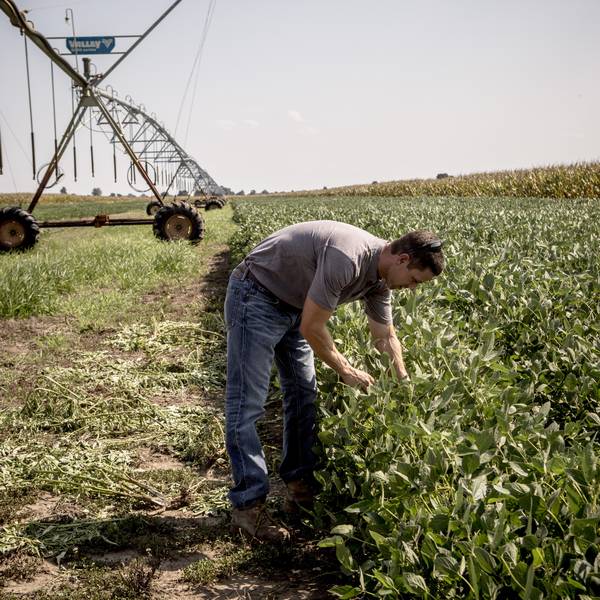
From May 11 to 20, 42 percent of soils in Europe and the Mediterranean basin lacked moisture and were at a warning level, while five percent were at an alert level, indicating vegetation was not growing normally.
Countries in northern, central and eastern Europe were at high alert levels.
Roughly 19 percent of territory in Ukraine was on alert, with other countries in concerning circumstances, including nine percent of Hungary and Slovakia, 10 percent of Poland and 17 percent of lands in Belarus.
The alert level for some territories and countries was as high as 20 percent, including the Palestinian territories, Cyprus and Syria.
Several countries were experiencing drought conditions in mid-May without being at an alert level, including 98 percent of the United Kingdom. According to the UK’s Met Office, the country had its driest spring in over 50 years, as well as its warmest spring ever recorded.