Original article by BRETT WILKINS republished from Common Dreams under Creative Commons (CC BY-NC-ND 3.0).

“We urge you to prioritize diplomatic pathways to de-escalation, which must include urgently pressing for and securing a permanent cease-fire in Gaza,” the groups said in a letter to the president.
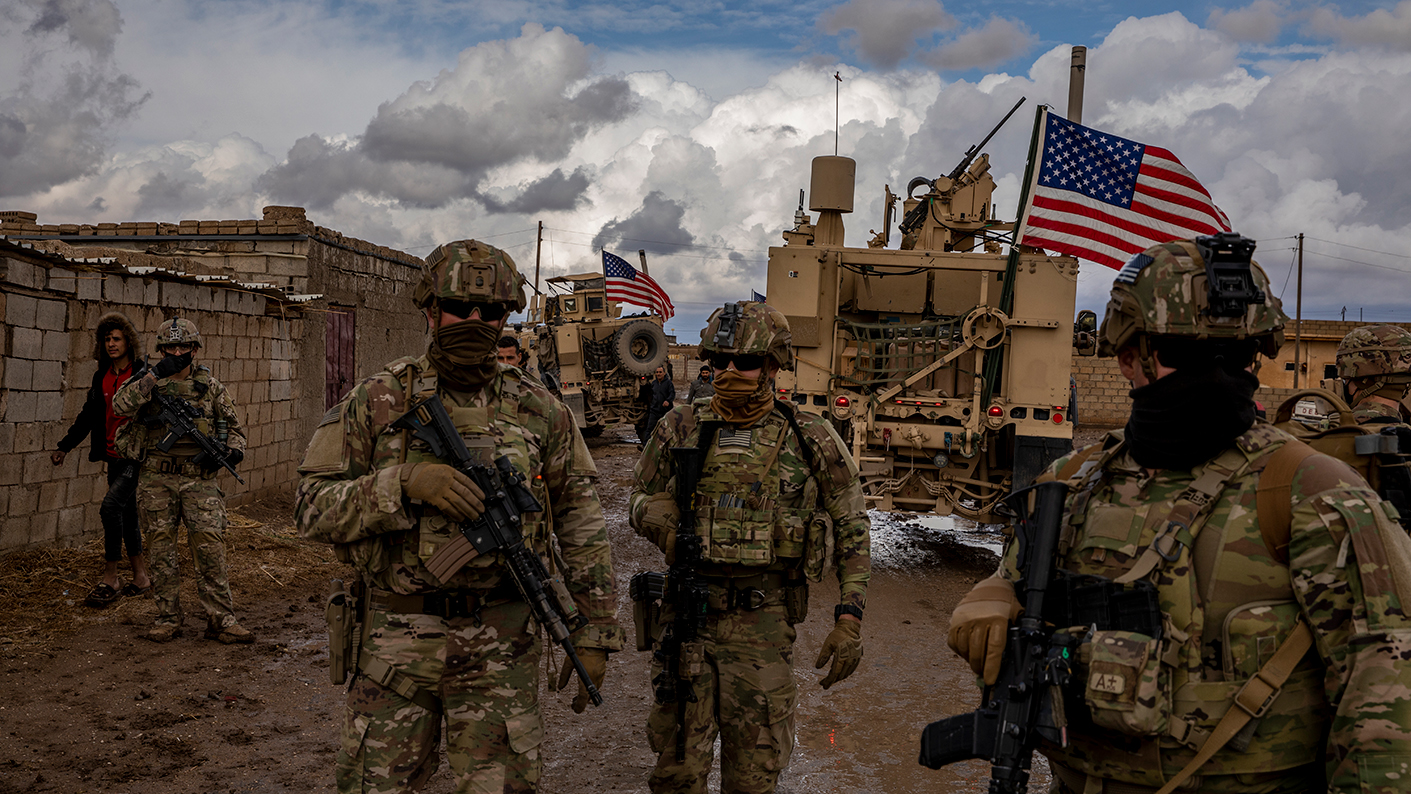
As U.S. forces on Friday launched intense airstrikes against Syria and Iraq in retaliation for this week’s deadly drone strike on an American outpost in Jordan, scores of advocacy groups urged President Joe Biden to avoid a wider Mideast war by pressing Israel for a cease-fire in Gaza.
According to U.S. Central Command (CENTCOM), American warplanes struck Iran’s Islamic Revolutionary Guards Corps (IRGC) Quds Force and “affiliated militia groups” in Syria and Iraq—countries that have suffered various degrees of U.S. bombardment since 2014 and 1991, respectively.
This, after U.S. and U.K.-led airstrikes last month targeted Houthi fighters in Yemen amid attacks on commercial shipping in the Red Sea.
“We fear that, as tensions continue in this escalatory spiral, the U.S. could become engaged in a protracted new war that spans across the entire region.”
“U.S. military forces struck more than 85 targets, with numerous aircraft to include long-range bombers flown from United States,” CENTCOM said Friday. “The facilities that were struck included command and control operations, intelligence centers, rockets and missiles, unmanned aired vehicle storages, and logistics and munition supply chain facilities of militia groups and their IRGC sponsors who facilitated attacks against U.S. and coalition forces.”
Anti-war voices condemned the latest bombings in the 22-year, open-ended U.S. War on Terror, during which millions of lives have been lost and trillions of dollars spent. A coalition of 80 advocacy groups sent a letter to Biden imploring his administration to eschew war by “leading with diplomacy.”
“We fear that, as tensions continue in this escalatory spiral, the U.S. could become engaged in a protracted new war that spans across the entire region,” the groups wrote. “To avoid such an unacceptable outcome, we urge you to prioritize diplomatic pathways to de-escalation, which must include urgently pressing for and securing a permanent cease-fire in Gaza.”
Stephen Miles, president of Win Without War—one of the signatories to the letter—said that “while these strikes come in response to the recent tragic loss of three U.S. service members, there is little reason to believe that they will be any more successful at halting the growing spread of violence across the Middle East than multiple previous rounds of similar U.S. bombing.”
“Instead, the president should do everything in his power to immediately secure a cease-fire in Gaza, the fire at the core of this regional inferno, while leading robust, regional diplomacy aimed at a genuine de-escalation of violence,” he continued. “More war will only put U.S. forces and people in the region at greater risk than they already are.”
“Finally, we remain concerned about the clear lack of appropriate legal authorization for this prolonged military engagement,” Miles added. “While the president always retains the constitutional right to engage in self-defense, planned retaliation and prolonged bombing campaigns are not self-defense.”
Both Republicans and Democrats in Congress have been demanding that Biden attack Iran in retaliation for Sunday’s drone strike on the Tower 22 outpost in northeastern Jordan that killed three soldiers serving in the Army Reserve’s 718th Engineer Company and wounded dozens more.
The Islamic Resistance in Iraq (IRI)—a coalition of Shia Islamist militant groups backed by Tehran—said it carried out the attack on the U.S. base. Iran denies any involvement in the strike, and the Biden administration admitted Monday that it has no proof that Tehran ordered the attack.
U.S. support for Israel’s genocidal war on Gaza—which has left more than 100,000 Palestinians dead, wounded, or missing—has stoked intense outrage throughout the Muslim world. IRI warned following Sunday’s strike that “if the U.S. keeps supporting Israel, there will be escalations.”
“Nothing in the region is likely to de-escalate unless there is de-escalation in Gaza.”
Trita Parsi, executive vice president of the letter signer Quincy Institute for Responsible Statecraft, said Friday that “Biden’s strategy appears more focused on reducing the militias’ capability to strike the U.S. than reducing their interest in targeting Americans.”
“This is ultimately a suboptimal strategy. It would be more effective to reduce their interest in striking against the U.S. since that would render their capacity a lesser problem,” Parsi warned. “What would reduce their interest? A cease-fire in Gaza.”
“But Biden is doing everything he can to avoid putting any real pressure on Israel. He is accepting significant risk to U.S. soldiers—even willing to risk a regional war—just to make sure he doesn’t cross the Netanyahu government on the issue of a cease-fire,” Parsi continued, referring to far-right Israeli Prime Minister Benjamin Netanyahu.
“Regardless of how Biden’s campaign is choreographed and calibrated not to elicit lethal retaliations from the militias or Iran itself, there is no escaping this reality: Nothing in the region is likely to de-escalate unless there is de-escalation in Gaza,” he added.
Original article by BRETT WILKINS republished from Common Dreams under Creative Commons (CC BY-NC-ND 3.0).
- ‘Joe Biden Just Dropped Bombs On Syria. Here We Go Again’: US Responds To Rocket Attacks With Airstrikes ›
- Amid Fears Of Wider War, US Reportedly Drafting Plans To Bomb Yemen ›
- Biden’s Choice: Gaza Cease-Fire Or Devastating Regional War? ›
- Iraq Slams US Airstrikes As ‘Unacceptable Violation’ Of Sovereignty ›
- GOP Presidential Hopefuls Agitate For War With Iran As Biden Bombs Syria Again ›
- US Bombs Syria Amid Growing Fears Of Wider Regional War ›