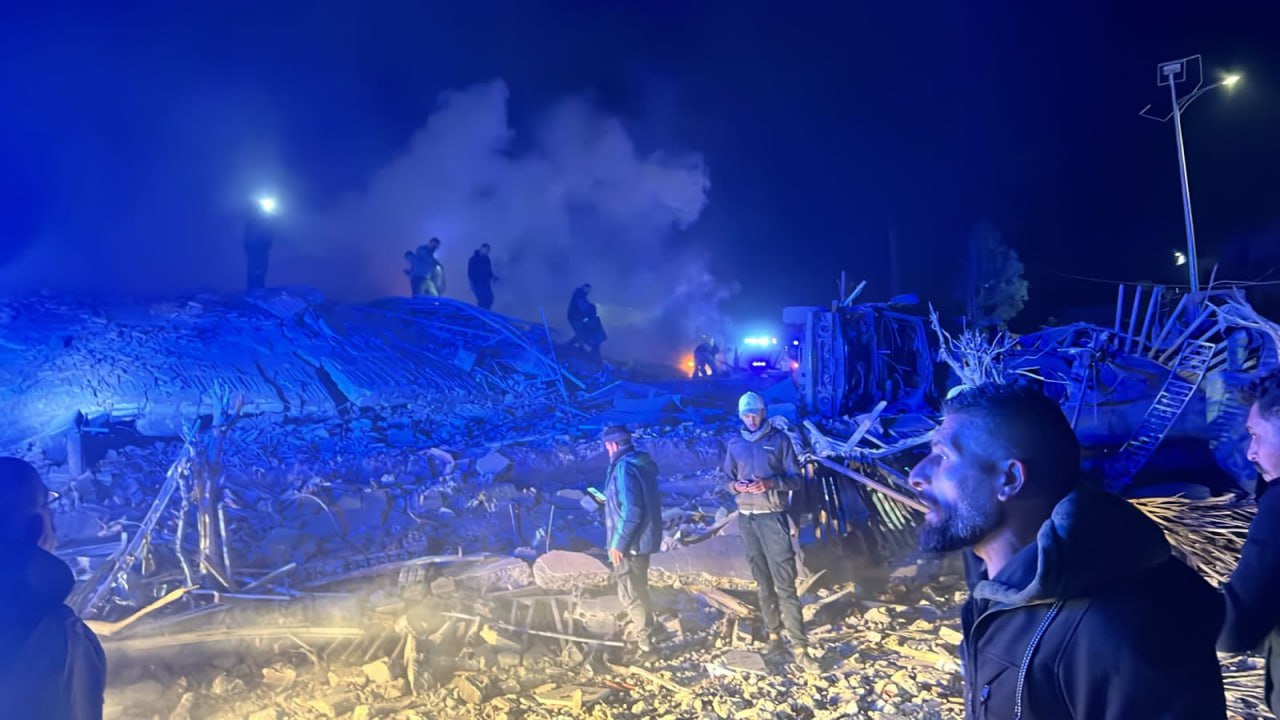
Aftermath of airstrike in Balbek. Photo: Al Akhbar
November marked an increase in Israeli airstrikes on different parts of Syria, foreshadowing a serious escalation in a third front in the region in addition to Gaza and Lebanon.
Israeli warplanes intensified their deadly attacks on different parts of the Syrian capital Damascus, and the Southern Suburb (Dahiyeh) in the Lebanese capital Beirut on Thursday, November 14.
The aerial attacks on Damascus targeted residential buildings in both Mazzeh and Qudsaya areas, leaving at least 15 people killed and 16 others injured, in addition to causing significant material damage to a number of buildings, according to a source in the Syrian military.
Thursday’s airstrikes on Damascus were preceded by a series of airstrikes that targeted different parts of Syria within the last couple of weeks. On Wednesday, November 13, Israeli fighter jets struck bridges on the Orontes River and roads in Al-Qusayr area in Homs countryside, near the Syrian Lebanese borders. The airstrikes inflicted great damage on the bridges and roads, which consequently became out of service, as per a report published by the Syrian Arab News Agency SANA.
On Sunday, November 10, Israeli warplanes targeted a residential building in the Sayyidah Zaynab area of Damascus, killing seven civilians including women and children. Previous airstrikes were launched by Israeli fighter jets on November 4, targeting a number of sites south of Damascus, resulting in material damages.
Syria’s Foreign and Expatriates Ministry condemned the Israeli attacks in a statement issued on Thursday. “The Israeli entity’s continuation of its attacks on Syria today comes only two days after the joint Arab-Islamic summit in Riyadh issued a broad condemnation of its brutal and escalating aggression on Syrian territory, and its warning of the danger of this escalation that is ravaging the region and its regional and international repercussions,” the Ministry stated.
“Syria affirms that the usurping entity’s continued disregard for international laws and regulations, and its indifference to all international demands to stop its aggression and violations, comes as a result of the Security Council’s failure to take a firm and real stance to deter it from its crimes, which also included attacks on international peacekeeping forces in Lebanon,” the Ministry added.
Meanwhile, Israel carried out at least four rounds of air raids on different targets across Beirut’s Southern Suburb (Dahiyeh), including Al-Amrousiyeh area near Beirut’s International Airport. Moreover, the Israeli aggression continued to target different areas of South Lebanon and Beqaa. The attacks across Lebanon on Thursday left at least 11 people killed and several others wounded, according to media reports.
The escalation of Israeli aggression and its expansion on different fronts has been increasing despite the mounting regional and international calls for a ceasefire and de-escalation, which indicates Israel’s total disregard of international law and its obligations. Israel insists on committing blatant violations of territorial integrity of sovereign states, due to the impunity it enjoys, and being given the greenlight by the United States.
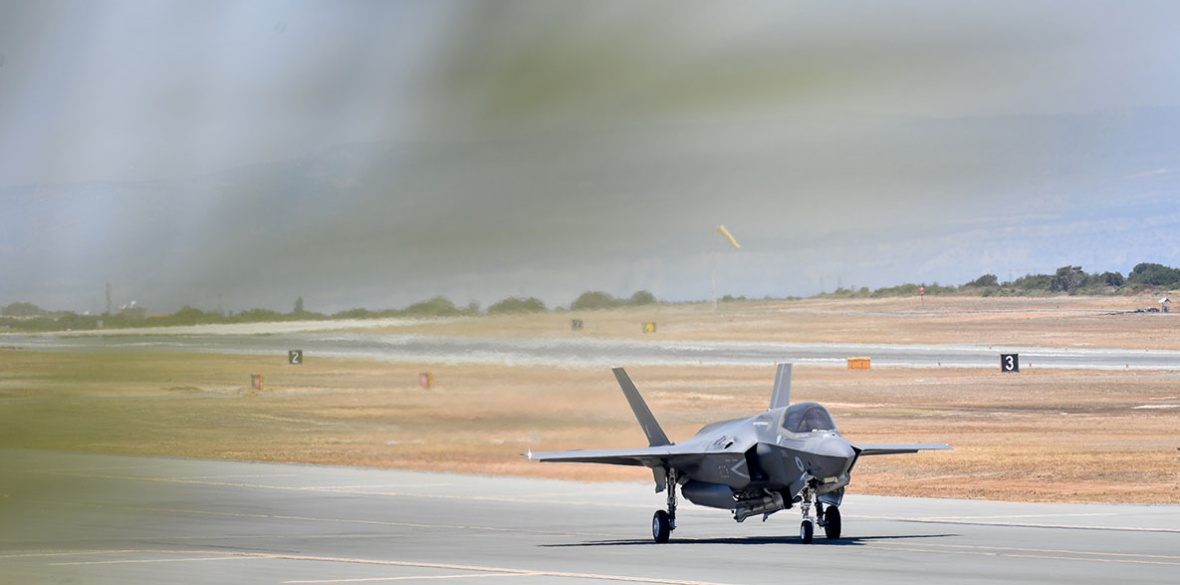
An F-35 arriving back at RAF Akrotiri in Cyprus, June 24, 2019
LABOUR remains complicit in Israel’s war crimes despite imposing a partial arms suspension, a briefing from the Campaign Against Arms Trade (CAAT) has revealed.
The government suspended 30 export licences to Israel out of about 350 last month.
But the briefing by CAAT highlights that crucial elements have been excluded, including components for F-35 combat aircraft.
F-35 components are exempt if not sent directly to Israel, despite evidence that they have been used in violations of International Humanitarian Law (IHL).
On the same day the suspension was announced, Danish NGO Danwatch revealed that an F-35 was used to drop bombs in an attack on a “safe zone” on Al-Mawasi in Khan Younis, killing 90 people.
CAAT warns this attack likely violated IHL.
Britain makes 15 per cent of all F-35s, with CAAT estimating the value of British components in the 39 planes delivered to Israel since 2016 at about £360 million — almost three times the value of other aircraft-related licences to Israel in the same period.
The F-35 is the largest and most important part of Britain’s arms trade with Israel and exports are made through an open licence, often excluded from media reporting as its financial value isn’t attached.
Freedom of information requests by CAAT revealed that the use of the Open General Export Licence for F-35 spare parts to Israel nearly tripled in 2023.
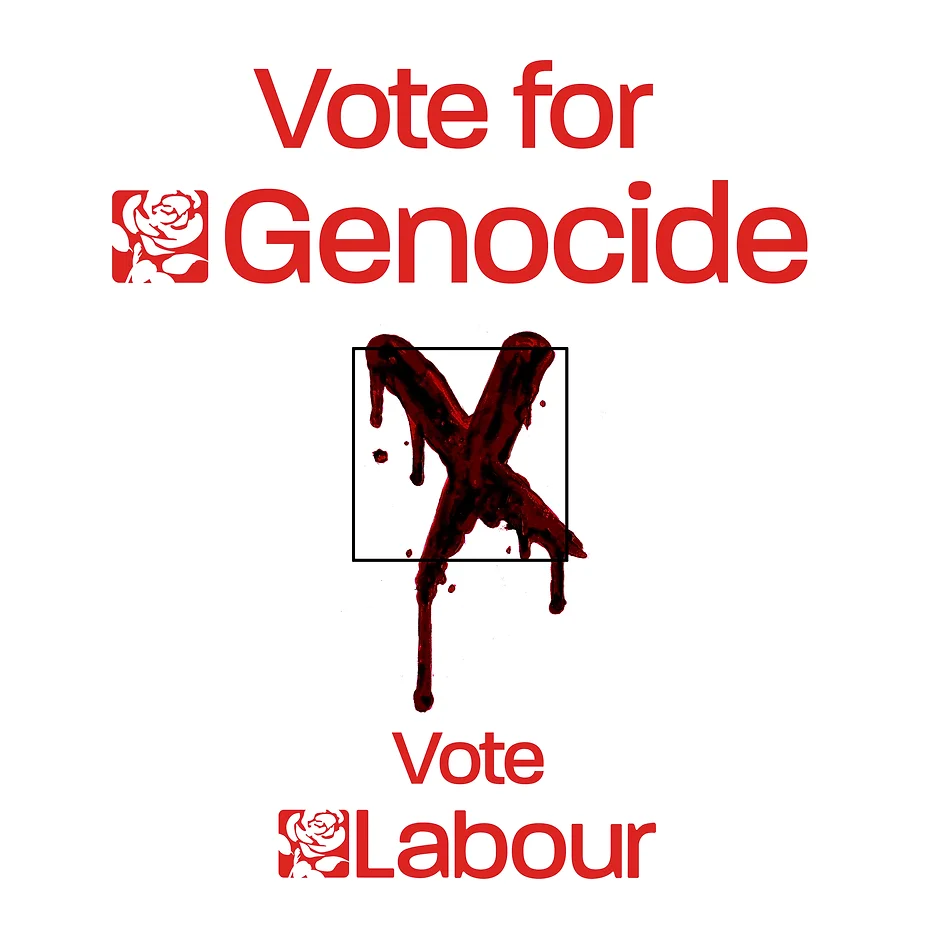
Zionist Keir Starmer is quoted “I support Zionism without qualification.” He’s asked whether that means that he supports Zionism under all circumstances, whatever Zionists do.UK Foreign Secretary David Lammy says that UK is suspeding 30 of 350 arms licences to Israel. He also confirms the UK government’s support for Israel’s Gaza genocide.Vote For Genocide Vote Labour.
The UK Ministry of Defence (MoD) refuses to publish a military pact it signed with Israel in December 2020 which could relate to the HEZUK project.
Former British soldier Joe Glenton, who works for campaign group ForcesWatch, told Declassified: “These leaks show once again how deeply entangled the UK is with Israel.
“It has to raise a number of ethical questions given the ongoing genocide in Gaza – and now the assault on Lebanon, itself a UK ally whose army is being trained by British troops”.
He added: “the public urgently need to know if the military and intelligence engagements detailed in these documents, which appear to date back a few years now, are still live programs. Because if they are, British military and intelligence personnel are being put to work supporting a genocidal state”.
The MoD refused to clarify whether HEZUK was ongoing.
A UK government spokesperson said: “We regularly work with partners and allies across the Middle East to contribute to regional security. This includes intelligence sharing, where it benefits our national security, as well as defence industrial collaboration, which supports UK economic growth”.
…
Zionist Keir Starmer is quoted “I support Zionism without qualification.” He’s asked whether that means that he supports Zionism under all circumstances, whatever Zionists do.Vote For Genocide Vote Labour.UK Foreign Secretary David Lammy says that UK is suspeding 30 of 350 arms licences to Israel. He also confirms the UK government’s support for Israel’s Gaza genocide.
Original article republished from MEMO under a Creative Commons Attribution-NonCommercial-ShareAlike 4.0 International License.
Israeli Prime Minister Benjamin Netanyahu (L) holds a meeting with the Security Cabinet after Iran’s missile attacks on Israel in West Jerusalem on October 01, 2024. [Avi Ohayon (GPO) / Handout – Anadolu Agency]
Israeli Prime Minister Benjamin Netanyahu has threatened Lebanon with “destruction and suffering” akin to that experienced by Palestinians in Gaza if the Lebanese people do not “free” themselves from Hezbollah. The ominous warning is interpreted widely as a threat to carry out a second genocide and stoke civil war in the already besieged nation.
Israel is currently under investigation by the International Court of Justice (ICJ) for genocide in Gaza. More than 42,000 people, mostly women and children, have been killed by the occupation state, in what experts have called a “textbook case of genocide”.
Netanyahu threatened to visit the same fate on the people of Lebanon. In a video address directed at the Lebanese people, the Israeli Prime Minister stated, “You have an opportunity to save Lebanon before it falls into the abyss of a long war that will lead to destruction and suffering like we see in Gaza.” He added, “I say to you, the people of Lebanon: Free your country from Hezbollah so that this war can end.”
Netanyahu’s threat comes as Israel ramps up its ground offensive against Hezbollah along the southern section of the Lebanese coast, deploying more troops and urging civilians in coastal areas to evacuate. More than a million people have been forced to flee due to the Israeli offensive. The escalation suggests that Israel has opted for a regional war rather than pursuing ceasefire deals and the return of Israeli hostages.
The widening of the conflict has not gone unnoticed within Israel’s own military ranks. Reports indicate that 130 Israeli soldiers have declared their refusal to serve unless the government actively pursues a hostage deal and ceasefire in Gaza.
Critics argue that Israel’s actions demonstrate a clear intent to provoke a regional war. Israel has expanded its military aggression beyond Gaza, conducting bombing campaigns in the illegally-occupied West Bank, Yemen, Lebanon, Iran and Syria. In Lebanon alone, Israeli strikes have killed more than 1,640 people and displaced more than one million since 23 September.
Adding to the controversy, Israel has killed a number of its own citizens being held hostage in Gaza during its genocide in the enclave, fuelling criticism further about its aggressive stance. Hezbollah, in response to the ongoing Israeli attacks, has threatened increased rocket fire on Israeli towns and cities if the bombing of Lebanese population centres continues.
Pro-Palestine protest outside the Democratic National Convention in Chicago in August 2024. | Fatih Aktas/Anadolu via Getty Images
A year on and no end in sight to genocide – thanks to US support for Israel, which will continue beyond election
A year on from the outset of Israel’s war on Gaza, Israeli forces have killed more than 42,000 Palestinians – and this is just the confirmed death toll. A recent study by the Lancet medical journal projected that the death toll could exceed 186,000 when counting indirect deaths – from starvation and diseases due to the Israeli blockade on humanitarian aid, food, water and medicines.
To take stock of where we’re at and whether this nightmare is likely to end any time soon, openDemocracy spoke to Tariq Kenney-Shawa, a foreign policy analyst based in New York and US Policy Fellow at Al-Shabaka: The Palestinian Policy Network.
openDemocracy: It’s been a year since this latest iteration of Israel’s war on Gaza commenced. Is the end in sight? What’s Israel’s end game?
Tariq: Unfortunately, I don’t see any light at the end of the tunnel here. There is no end in sight to Israel’s genocide in Gaza. And that’s mainly because Israel hasn’t faced an ounce of accountability or pressure to de-escalate from the international community (the US and other western benefactors) to end this.
I’ve tended to be doubtful when people insist that Israel doesn’t have a plan in Gaza and is just destroying and killing for the sake of it. Israel does have a plan and it has been acting on it. It truly sees this moment in history, as well as the blank check from the US, as a golden strategic opportunity to take leaps towards its ultimate goal of ‘maximum land with minimum Palestinians’ and wider regional domination through brute force.
Israel’s end game in Gaza is erasure, and for the last 12 months, they’ve been laying the foundation for a new reality in Gaza for us all to see. In addition to “thinning out the population,” as Netanyahu said, through genocide, collective punishment, and ethnic cleansing, Israel has been effectively chopping up the Strip into smaller, more controllable enclaves that will come to represent the new “facts on the ground.”
openDemocracy: Has anything about the conflict surprised you?
Tariq: I think one of the most surprising aspects about both the genocide in Gaza and now Israel’s escalation across the region is that it has gone on uninterrupted and without international intervention for so long, despite the fact that just about every massacre has been broadcast for the world to see on social media.
As someone who is part of a generation that grew up being taught that the phrase “never again” really meant something, this is what I have found most jarring. Of course, Gaza is not the first time the international “rules-based” order has been exposed as a crutch for Western hegemony. From Vietnam to Iraq, the West’s selective application of international law has long been exposed for what it is. But Gaza is the first postwar genocide both entirely perpetrated by a Western ally and funded, facilitated, and justified by the West itself, not to mention the first to be so thoroughly recorded for the world to see.
openDemocracy: Now with recent escalations including Iran, do you think realistically we’re on the verge of all-out war in the region?
Tariq: I think we are already seeing an all-out regional war by every definition of the term. Israeli fighter jets are bombing Gaza, the West Bank, Lebanon, Syria, Yemen, and Iran. This is not to mention the strikes the US, UK, and other Israeli benefactors have carried out on Israel’s behalf.
It boils down to this: Israel will continue to escalate across the region in hopes of achieving its extremist, expansionist goals as long as the US taxpayer continues to foot the bill and US assets and personnel are off the coast of Haifa to come to Israel’s defence if need be.
openDemocracy: It seems that the Biden administration actually gave Israel the green light to mount large-scale attacks on Lebanon. Has the US ever really been interested in stabilising the region? Does the US want an all-out war?
Tariq: The Biden Administration has either explicitly or implicitly (through uninterrupted weapons transfers and diplomatic shielding) given Israel the green light for a year of genocide and regional escalation.
I believe it is clear that the US ultimately shares the same strategic objectives as Israel, which range from silencing Palestinians once and for all to destroying groups like Hezbollah to causing significant damage to Iran. These are all outcomes that the US would celebrate (just take the public statement the US made following Israel’s assassination of Hassan Nasrallah as one example).
Does the Biden Administration wish Israel could go about some of their operations differently? Perhaps. But at the end of the day, the costs of Israel’s unparalleled violence, the mass death of Arabs and the destruction of their lands, is a price the US is willing to accept. If the US didn’t want an all-out war, they would stop giving Israel all the weapons and diplomatic space to keep escalating at will. Because while every US administration has been pro-Israel, other US presidents have stood up to Israel when they felt US interests were at risk.
openDemocracy: Do you think things will change after the US elections on November 5?
Tariq: Nothing will fundamentally change, regardless of who wins the elections on November 5. For Palestinians, the genocide will continue because neither candidate has exhibited any indication that they intend to hold Israel accountable for war crimes and genocide or use any of the ample leverage that the US has to influence Israel’s conduct.
In fact, it’s the opposite. Donald Trump insists he would let Israel “finish the job” in Gaza, while Kamala Harris promises that she will continue the Biden Administration’s policy of giving Israel “everything it needs” and continues to make it clear that she intends to be a carbon copy of the Biden Administration. The truth is, both Harris and Trump spell continued disaster for both Palestinians and the wider region, and there is no “lesser evil” here.
The truth is, the Biden administration’s resume on Israel-Palestine, even long before October 7, has in many ways mirrored that of Trump’s.
If Biden wanted to make good on his commitment to a “two-state solution,” he would have at least started by reversing the norm shattering pro-Israel policies of his predecessor. The Biden Administration has actually given Israel more military and diplomatic assistance than any previous administration.
The only substantial difference between Trump and Biden has been their rhetoric. But one could argue that Biden’s lofty, yet empty words actually does more harm than good by distracting us from the fact that he has given Israel everything it needed to get away with genocide right in front of our eyes. If Harris wins in November, it will be more of the same, and you don’t need to take my word for it, she has made it abundantly clear herself.