Pager and walkie-talkie attacks on Hezbollah look like war crimes – international legal expert
Spread the love
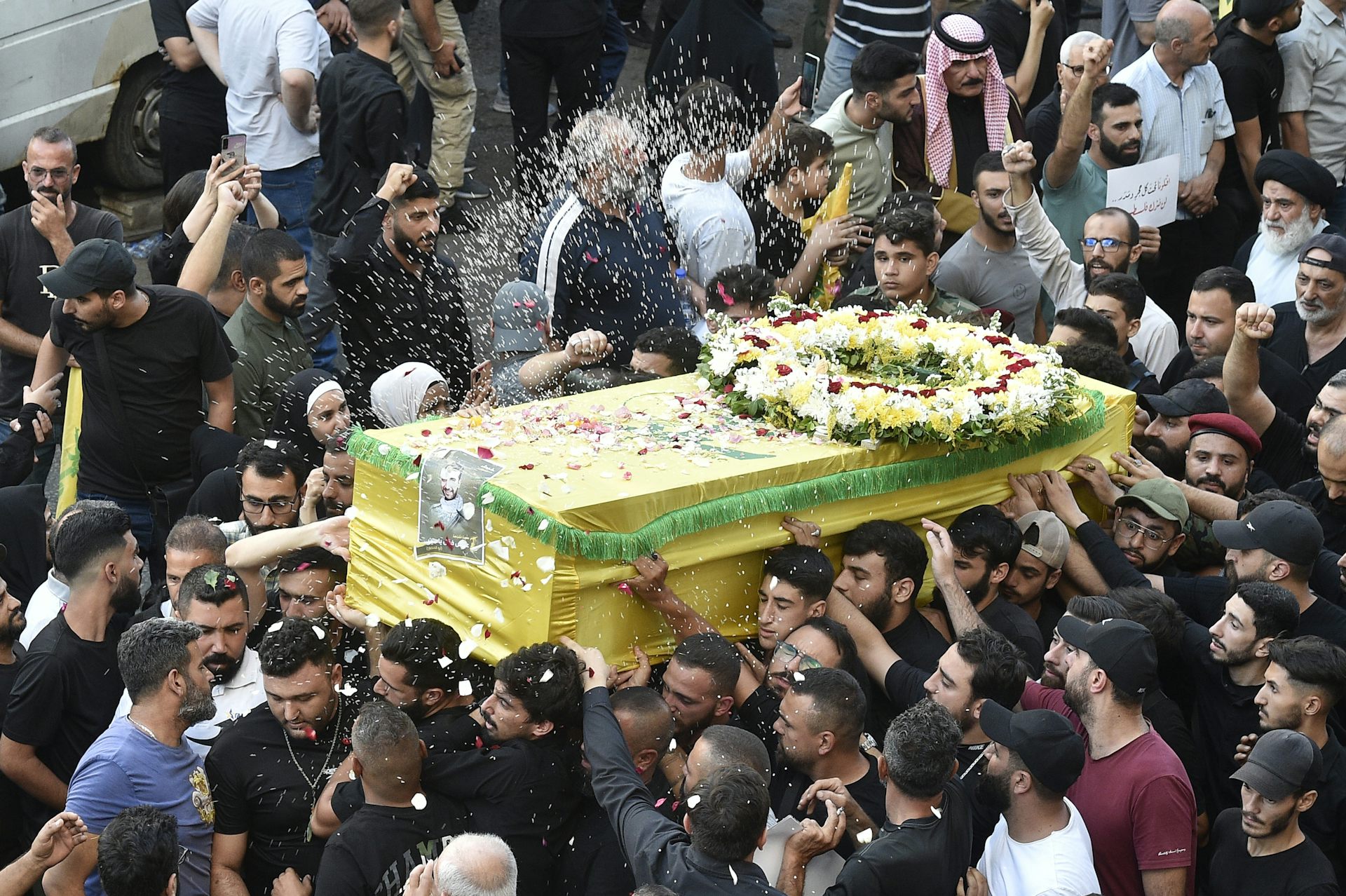
EPA-EFE/Wael Hamzeh

Giacomo Biggio, University of Bristol

Tensions in the Middle East have reached a new high after thousands of pagers and radios used by members of Hezbollah exploded across various cities in Lebanon and Syria over September 17 and 18. The attacks – which have widely been attributed to Israel, which has not commented – have resulted in at least 30 people killed and more than 3,000 wounded.

Many analysts and politicians are now speculating that the conflict between Israel and Hezbollah, which has been simmering during the 11-month conflict in Gaza, will spiral into open warfare.

Far from taking place in a legal vacuum, the attacks are governed by international humanitarian law (IHL). This is the international legal regime that regulates the conduct of hostilities in situations of armed conflict.

Since the Hamas attacks on October 7 provoked Israel’s ferocious response in Gaza, Israel and Hezbollah have been involved in a series of cross-border hostilities. These qualify as what is called a “non-international armed conflict”, to which IHL applies. This includes the rules set out in, among other instruments, the Geneva conventions.

In pursuing the objective of protecting civilians in wartime, the Geneva conventions rely on the fundamental principles of “distinction” and “proportionality”.

What international law says

The principle of distinction essentially requires belligerents to distinguish at all times between the civilian population and combatants.

Combatants are lawful targets and can be attacked at all times. But intentionally attacking civilians is prohibited and constitutes a war crime under the Rome statute of the International Criminal Court. To this end, military commanders are under an obligation to do everything feasible to verify that the target of an attack is not a civilian.

Even assuming that only Hezbollah members were using the radios and pagers at the moment of the attacks, that does not mean that they shall be presumed to be combatants (and, therefore, lawful targets). Under IHL, a combatant is a “member of the armed forces of a party to the conflict”. This comprises “all organized forces, groups and units which are under a command responsible to that party for the conduct of its subordinates”.

By contrast, whoever is not a member of the armed forces of a party to the conflict is a civilian and subject to the protection of IHL.

There is no doubt that members of the military wings of Hezbollah are “members of the armed forces”, so they qualify as combatants. But those members of Hezbollah’s political wing who are not combatants should be considered as civilians and accordingly, are protected from attack.

Civilians may lose protection from attack for such time as they take a direct part in hostilities. This includes conduct like the intentional killing of civilians and carrying out acts which adversely affect the military capacity of a party to an armed conflict – for example, the planning of attacks against Israel.

The pagers were detonated at 3:30, on September 17 in hundreds of locations in Beirut and other Lebanese cities. Abaca Press / Alamy Stock Photo

What about the attacks against members of Hezbollah’s military wing?

In this case, complying with the principle of distinction does not suffice, since the attack must also respect the principle of proportionality. This requires that the expected “collateral damage” (that is, the incidental killing or wounding of civilians) should not be excessive to the “concreted and direct military advantage” anticipated from the attacks.

Launching an attack with the knowledge that it would cause excessive collateral damage also constitutes a war crime.

Collateral damage

In this case, the attacks killed several civilians. These included the nine-year-old daughter of a Hezbollah member, an 11-year-old boy and at least two health workers. Moreover, the attacks injured thousands more, including Iran’s ambassador to Lebanon.

Although we do not know how many of those killed or injured were civilians, it seems logical that the level of collateral damage to be expected from the attacks would be substantial. After all, the pagers and radios were remotely detonated at the same time, exploding in crowded places such as markets and funerals. In these situations, the likelihood of killing and wounding civilians is extremely high.

These elements suggest that the expected incidental damage is excessive to the military advantage anticipated from the pager attacks – which, at the time of writing, remains unclear.

But it’s important to note that what amounts to “excessive” incidental damage is subject to disagreement. On the one hand there are those who, like the International Committee of the Red Cross, believe that extensive incidental damage is always excessive. Others – including the Israeli government – consider that even extensive incidental damage is allowed if the attack results in a high amount of military advantage.

In my opinion, Israel’s interpretation should be rejected. It turns IHL’s aims of protecting the civilian population on its head and allows for unrestricted warfare.

My conclusion, based on the available information, appears to be that the pager and walkie-talkie attacks purportedly carried out by Israel against Hezbollah members appear to violate the principles of distinction and proportionality. In other words, they could well amount to war crimes.

Giacomo Biggio, Lecturer in Law, University of Bristol Law School, University of Bristol

This article is republished from The Conversation under a Creative Commons license. Read the original article.

Continue ReadingPager and walkie-talkie attacks on Hezbollah look like war crimes – international legal expert

Iran Condemns Deadly Israeli Bombing of Syria as ‘Criminal Attack’

Spread the love

Original article by Jake Johnson republished from Common Dreams under Creative Commons (CC BY-NC-ND 3.0). 

Nasser Kanaani, a spokesperson for Iran’s Foreign Ministry, speaks at a press conference in Tehran, Iran. (Photo: Fatemeh Bahrami/Anadolu Agency via Getty Images)

A spokesperson for Iran’s Foreign Ministry called on Israel’s allies to “stop supporting and arming it.”

The Israeli military carried out a series of airstrikes on central Syria late Sunday, reportedly killing more than a dozen people and prompting a furious response from Syrian ally Iran.

“We strongly condemn this criminal attack,” Nasser Kanaani, a spokesperson for the Iranian Foreign Ministry, said during a press conference in Tehran.

Kanaani went on to urge Israel’s weapons suppliers, chiefly the United States and Germany, to “stop supporting and arming it” as its catastrophic assault on the Gaza Strip spills out across the region. Nearly 40 people were wounded in Israel’s strikes on Sunday, according to a Syrian health official, and several are in critical condition.

Citing two unnamed regional intelligence sources, Reuters reported early Monday that the Israeli strikes hit a “major military research center for chemical arms production located near Misyaf.”

The facility, according to Reuters, “is believed to house a team of Iranian military experts involved in weapons production.”

Kanaani denied that the facility hit was connected to Iran.

“What official sources from the Syrian government have announced is that there were attacks on some Syrian facilities, including an attack on a research center affiliated with the Ministry of Defense and the Syrian army,” he said.

Civilians were reportedly among those killed and wounded in Sunday’s strikes, which came as the world awaited Iran’s expected military response to Israel’s assassination of Hamas political leader Ismail Haniyeh in Tehran in late July.

Israeli forces have carried out dozens of airstrikes in Syria—including one targeting Iran’s consulate in Damascus—since the Hamas-led October 7 attack, which prompted Israel’s large-scale assault on Gaza.

Al Jazeera reported that Israeli forces continued to pummel the Palestinian enclave on Monday, bombing “al-Amoudi street in the Sabra neighborhood, south of Gaza City.” The outlet noted that “at least 10 people have been killed today in attacks across the Gaza Strip.”

Original article by Jake Johnson republished from Common Dreams under Creative Commons (CC BY-NC-ND 3.0). 

Continue ReadingIran Condemns Deadly Israeli Bombing of Syria as ‘Criminal Attack’

Rocket attack kills 12 children in Golan Heights – who are the Druze who live there?

Spread the love
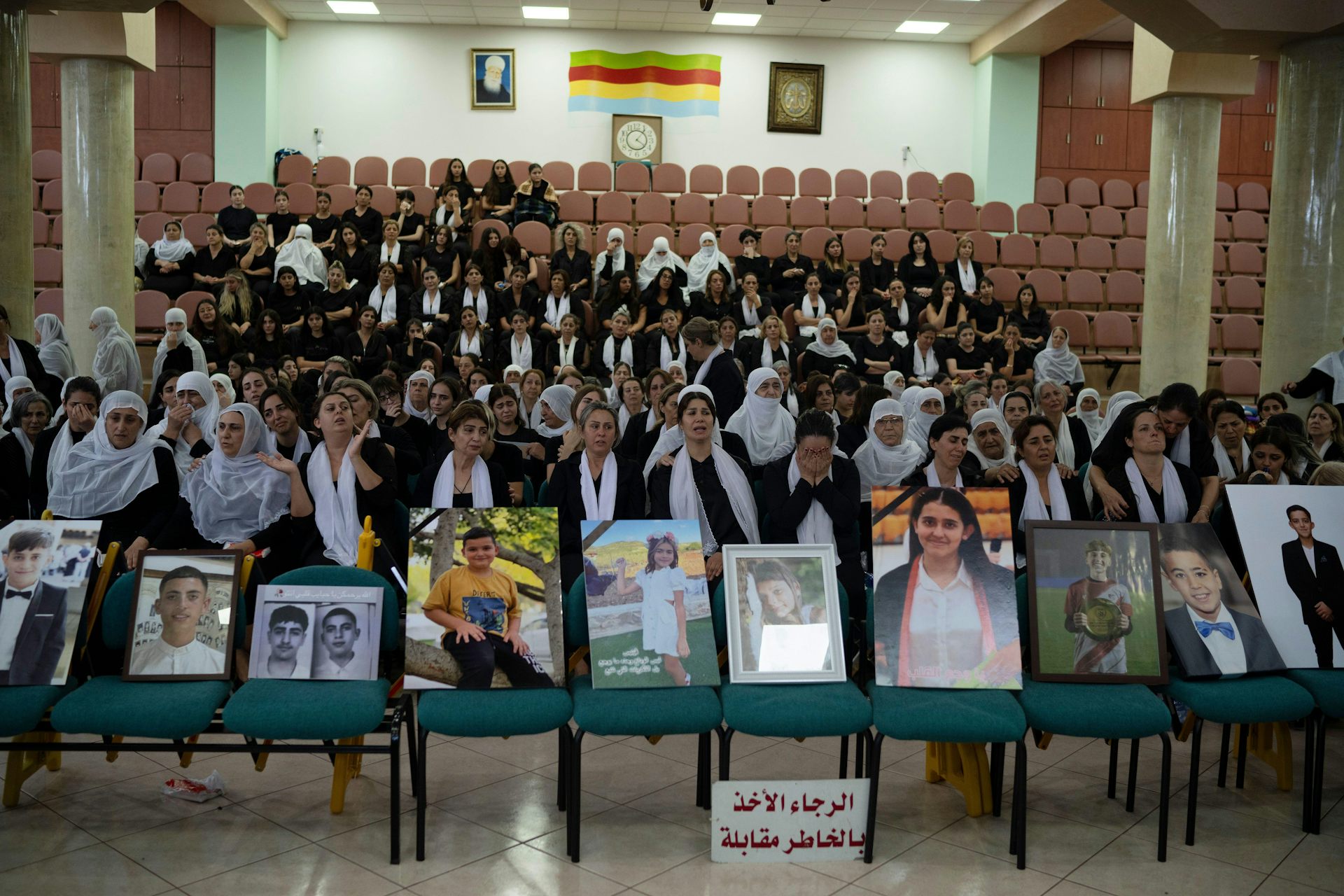
Killed while playing football: a memorial service for the 12 dead children of Majdal Shams. AP Photo/Leo Correa

Erika Jiménez, Queen’s University Belfast

Israel’s prime minister, Benjamin Netanyahu, has threatened a harsh response to a rocket attack that on July 27 struck the Israeli-occupied Syrian Golan Heights, killing 12 children and injuring about 30 more.

Visiting the small town of Majdal Shams, where the children had been playing football when the strike occurred, Netanyahu blamed Hezbollah for the attack and said it would pay a “hefty price”. He said: “Our response will come, and it will be harsh.”

While Israel is claiming the attack targeted their citizens, all the victims of the strike were members of the Druze religious minority group located across Israel, Lebanon and Syria. Hezbollah has denied responsibility for the attack, but without an independent investigation, it remains unclear who fired the rocket.

The Golan Heights, a rocky 1,000 square kilometre region south-west of Damascus, was occupied by Israel after the 1967 Arab-Israeli war in a move that, half a century on, is often referred to as the “forgotten occupation”.

After defeating Egypt, Jordan, and Syria in the short conflict, Israel occupied the West Bank, Gaza and East Jerusalem as well as the Sinai desert and two-thirds of the Syrian Golan. Around 127,000 indigenous Syrians (95% of the population) – including Christians, Muslims and Druze – fled or were forcibly displaced. Depopulated villages were razed to the ground.

Later in 1981, Israel illegally annexed the territory, passing the Golan Heights Law. The UN security council immediately condemned this as illegal and passed resolution 497 (1981) calling on Israel to rescind its action, which would have “serious consequences for peace and security in the Middle East”.

Israel’s annexation of the Golan Heights was not recognised internationally until 2019 when the then US president Donald Trump released a “Proclamation on Recognizing the Golan Heights as Part of the State of Israel”.

Israel views its control over the Golan Heights as crucial to its security, as the region shares a border with Israel, Jordan and Lebanon. There is a buffer zone between the Israeli-occupied area of the Golan Heights and Syria, which is administered by the United Nations Disengagement Observer Force (Undof). The Golan gives whoever controls the land a vantage point overlooking Syria, which has never given up on its claim over the land.

Forgotten people

But what of the indigenous people of the Golan? Roughly 20,000 Druze people now remain, members of an Arab sect which is an offshoot of Islam that allows no intermarriage or joining from outside the religion. There are about 150,000 Druze in Israel and about 1 million across the Middle East. Druze men with Israeli citizenship are subject to military service.

Historically, Golanis have resisted the occupation via non-violent means, drawing on Druze religious beliefs, secular political ideas and the continuing assertion of their Syrian identity. The main industry in the region is agriculture and the area is known for its production of apples, cherries and olive oil.

Golanis in Majdal Shams participating in peaceful demonstration in solidarity with Palestinians. Al-Marsad

Resistance

In the years before annexation of the Golan, Israel attempted to introduce Israeli identity cards for the population. But this was rejected by Syrian communities in the Golan, who issued a wathiqa wataniya (Syrian national document), which asserted their Syrian-Arab national identity and connection to the land and opposed the annexation of the Golan.

The annexation also triggered what became known as the aldrab alkabir (great strike) that began in the February of 1982 and lasted almost six months. All segments of Golani society took part in demonstrations, discarded their Israeli ID cards and refused to pay taxes or participate in Israeli land surveys. The aim was to resist the imposition of Israeli citizenship and assert their Syrian identity.

Israel responded by placing curfews on the Druze villages, setting up blockades and restricting goods from entering, including milk and baby food. Some residents were arrested, including women who played a central role in the strike.

The Golani community responded to these restrictions by sharing resources and offering free services to one another. Palestinians also mobilised in support of Golanis by taking part in demonstrations and solidarity visits to the Golan.

This non-violent action was successful in achieving its primary aim and to this day around 80% of Golani Druze have rejected citizenship. They identify as Syrian and, unlike the Druze living in Israel, do not serve in the Israeli military.

This does mean that they are “stateless” (though not landless like many stateless people) and instead of passports they hold “laissez passer” travel documents that state their nationality is “undefined”. Without Israeli citizenship they are not allowed to vote, though they can attend Israeli educational institutions.

Meanwhile there are also an estimated 25,000 Jewish-Israelis living in the Golan Heights, across more than 30 settlements, considered illegal under international law. They are supported by the Israeli military and now together control 95% of the Golan, including much of its agriculture and industries.

Fear of escalation

There are now fears in the region that an Israeli retaliation against Hezbollah could significantly escalate the conflict. I’ve been working with local partners in the Golan Heights on a research project about Golani youth and human rights.

I spoke with a colleague in Majdal Shams this week. She told me that the people of the Golan “don’t want any other mother to scream and cry”. She said: “The Golani people are and have always been a peaceful people. Our message would be, ‘Stop the killing.’”

The 12 children were killed while playing football. Let that sink in. Then remember that it should not take their deaths to bring this forgotten occupation and these people who are forced to live under a foreign power to the world’s attention.

Erika Jiménez, Leverhulme Early Career Fellow at the School of Law, Queen’s University Belfast

This article is republished from The Conversation under a Creative Commons license. Read the original article.

Continue ReadingRocket attack kills 12 children in Golan Heights – who are the Druze who live there?

‘A Declaration of War’: Israel Accused of Bombing Iranian Consulate in Syria

Spread the love

Original article by BRETT WILKINS republished from Common Dreams under Creative Commons (CC BY-NC-ND 3.0). 

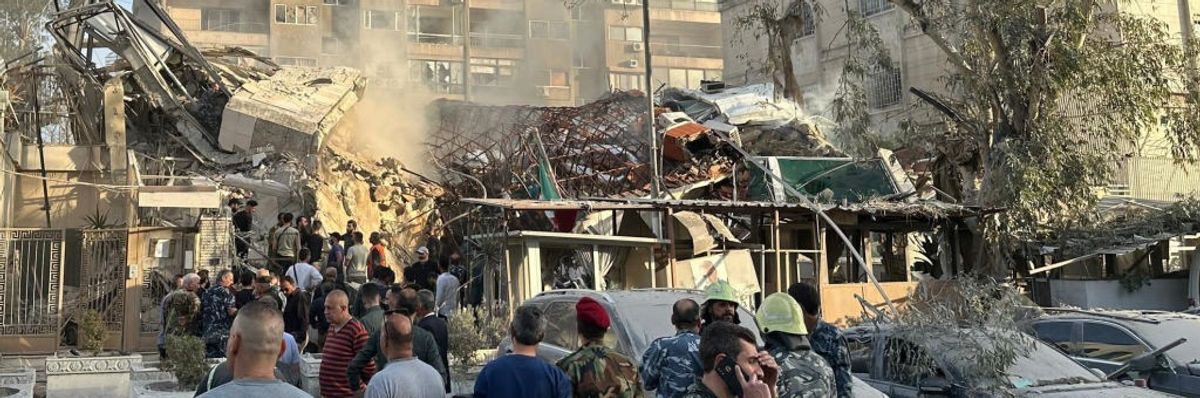
Emergency and security personnel gather at the site of strikes which hit a building next to the Iranian Embassy in Syria’s capital Damascus, on April 1, 2024.
 (Photo: Maher al Mounes/AFP via Getty Images)

One observer said Israel is “trying to provoke a war with Iran to get the U.S. directly involved.”

Iranian and Syrian officials on Monday accused Israel of bombing Iran’s consulate in Damascus, an attack one expert called a “war-abetting escalation” that U.S. President Joe Biden “claimed he was preventing” in the Middle East.

Seven people including Iranian diplomats and Islamic Revolutionary Guard Corps (IRGC) senior commander Gen. Mohammad Reza Zahedi were killed in the airstrike, which according to the BBC occurred at approximately 5:00 pm local time and flattened the multistory building adjacent to the Iranian Embassy in the Syrian capital’s Mezzeh district.

Iranian Foreign Minister Hossein Amir-Abdollahian described the strike as “a violation of all international obligations and conventions.” Faisal Mekdad, his Syrian counterpart, condemned what he called a “heinous terrorist attack.”

https://twitter.com/i/status/1774841744036597877

Israeli officials declined to comment on the attack. Israel has increased airstrikes targeting IRGC and Iran-backed Hezbollah militants inside Syria since the Hamas-led October 7 attacks. Israeli strikes against Hezbollah have also killed hundreds of militants and civilians in Lebanon.

Hamidreza Azizi, a visiting fellow at the German Institute for International and Security Affairs, called the consulate attack a “significant escalation in tensions.”

“This attack is viewed by some in Iran as a declaration of war by Israel against Iran,” Azizi wrote on social media. “It represents a shift from previous engagements, directly hitting Iranian soil represented by its consulate in Syria—as opposed to targeting IRGC officers in Syrian sites.”

“In earlier stages, Israel would refrain from targeting IRGC officers—only proxies and arms shipments,” he continued. “Since the Gaza war, a shift was already there to target high-ranking Iranian commanders. Some sources claim the attack was a response to an assault on an Israeli ship last night at the port of Eilat, attributed to Iraqi militias. This suggests another new rule of engagement by Israel: direct retaliation against Iran for any attacks by its proxies.”

Azizi added that the strike “is also seen as a message to both Iran and [President Bashar] al-Assad’s regime in Syria: Israel’s capability and willingness to escalate its response to the presence of Iranian forces in Syria.”

Numerous experts including Azizi wondered whether Israel informed the United States ahead of the attack. A White House spokesperson said that Biden is aware of reports attributing the strike to Israel and that his “team is looking into it.”

Trita Parsi of the Quincy Institute for Responsible Statecraft said on social media that “this is the exact type of conduct that usually prompts the U.S. to label a country a pariah or rogue state.”

“The U.S. accuses such states of seeking to destroy the ‘rules-based order,'” Parsi noted. “But so far, Biden has acquiesced to Israel’s conduct in this area as well as all other aspects of Israel’s slaughter in Gaza.”

Parsi accused Israel of “seeking to either destroy these norms or create a new normal in which it—much like the U.S.—will be untouchable above these laws and norms.”

He also called the Damascus strike “the kind of war-abetting escalation Biden claimed he was preventing.”

The U.S. has also bombed Syria—as well as YemenIraq, and Somalia—since October 7.

Palestinian Policy Network fellow Tariq Kenney-Shawa said: “What the Biden administration means by ‘taking every measure to avoid regional escalation’ is that they’re making sure only Israel is allowed to escalate. Deploying aircraft carriers, airstrikes in Yemen/Syria/Iraq, all of that is to make sure Israel can provoke but no one can respond.”

While Parsi wondered if Israel attacked Iran’s consulate—its sovereign territory—to elicit a response to justify a larger war, Antiwar.com editor Dave DeCamp went further, accusing Israel of “trying to provoke a war with Iran to get the U.S. directly involved.”

Iranian journalist Mona Hojat Ansari wrote for the Tehran Times that the far-right government of Israeli Prime Minister Benjamin Netanyahu “believes that by plunging the region into a maelstrom of chaos and entangling the United States in another pointless war in West Asia that would drain American resources, it may find a chance to survive as an apartheid establishment.”

“The attack on Iran’s consulate should particularly raise a red flag for Washington,” she added, “as it demonstrates Israel’s readiness to ignite the entire region, even if it means that the U.S. and all its traditional allies in the region would suffer devastating consequences.”

Original article by BRETT WILKINS republished from Common Dreams under Creative Commons (CC BY-NC-ND 3.0). 

Continue Reading‘A Declaration of War’: Israel Accused of Bombing Iranian Consulate in Syria

USUK starting WW3 for Israel

Spread the love
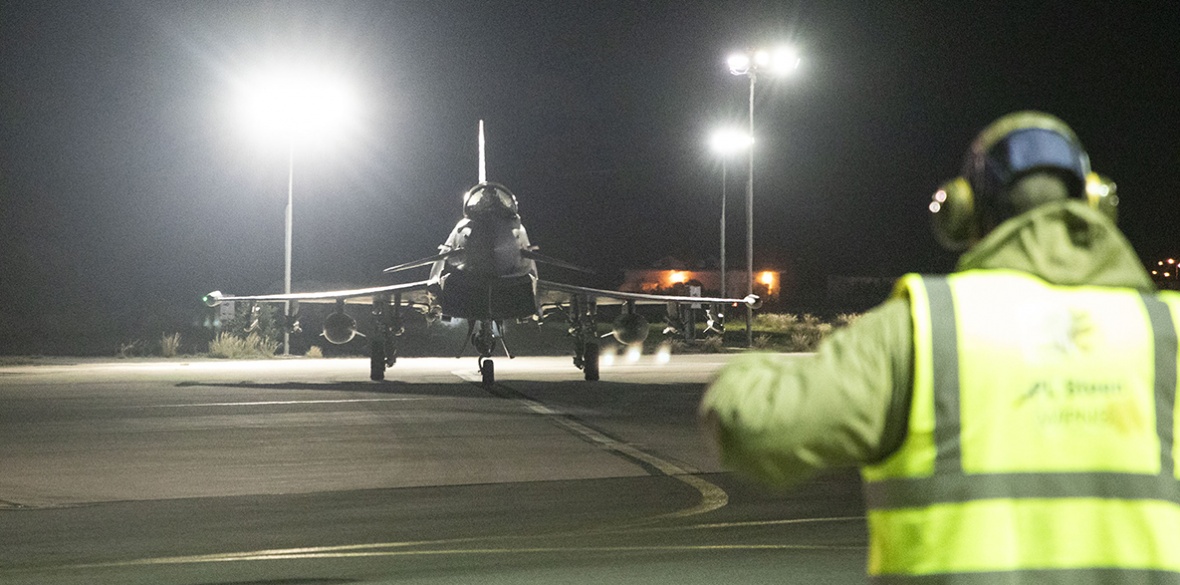
War porn image provided the Ministry of Defence, an RAF Typhoon FRG4 aircraft prepares to take off to conduct further strikes on Yemen, from RAF Akrotiri, Cyprus, February 3, 2024

https://www.theguardian.com/world/2024/feb/04/houthis-vow-more-red-sea-attacks-after-third-wave-of-us-uk-strikes-on-yemen

Speaking on NBC the day after separate overnight US and UK airstrikes against Houthi targets in Yemen, Sullivan three times rejected a chance to rule out strikes on Iran itself, which would be a major escalation that the US has so far been determined to avoid.

I suggest that we should dismiss Grant Shapps assurances that continuing attacks in the Middle East are “not an escalation” designed to “protect innocent lives and preserve freedom of navigation” as absolute BS.

We’re going to war against Iran for Israel. Israel has wanted war on Iran for decades. USUK are attacking Houthis who are fighting for Gaza. USUK say that it’s not about Israel but that’s not possible while that is their opponent’s purpose. While the Houthis are fighting over Israel’s continuing genocide in Gaza how can it be about anything else?

‘You can not bomb away people’s solidarity and determination to live in freedom and dignity’

A spokesman for Yemen’s Houthi-led government, Yahya Saree, said the capital Sana’a and other rebel-held areas were targeted.

Mr Saree said on X that “these attacks will not deter us from our stance in support of the steadfast Palestinian people in the Gaza Strip,” which Israel invaded late in October following the October 7 Hamas attack on Israel.

He said the latest strikes “will not pass without response and punishment.”

Top Yemeni diplomat Mohammed Abdulsalam said that the attacks by Washington and London will only serve to pull them into a quagmire in the region.

“Instead of escalating and opening a new war front in the region, America and Britain should listen to international public opinion, which is calling for an immediate halt to the Israeli aggression, lifting the siege on Gaza, and ending protection to Israel at the expense of the Palestinian people,” he said.

US says strikes on Iran-linked militias just ‘the beginning’ of its response

UK action against Houthis ‘not an escalation’, says Grant Shapps

Continue ReadingUSUK starting WW3 for Israel