Analysis: Attacks on Ed Miliband in UK newspaper editorials have already exceeded 2024 levels

Spread the love

Original article by Josh Gabbatiss republished from Carbon Brief under a CC license

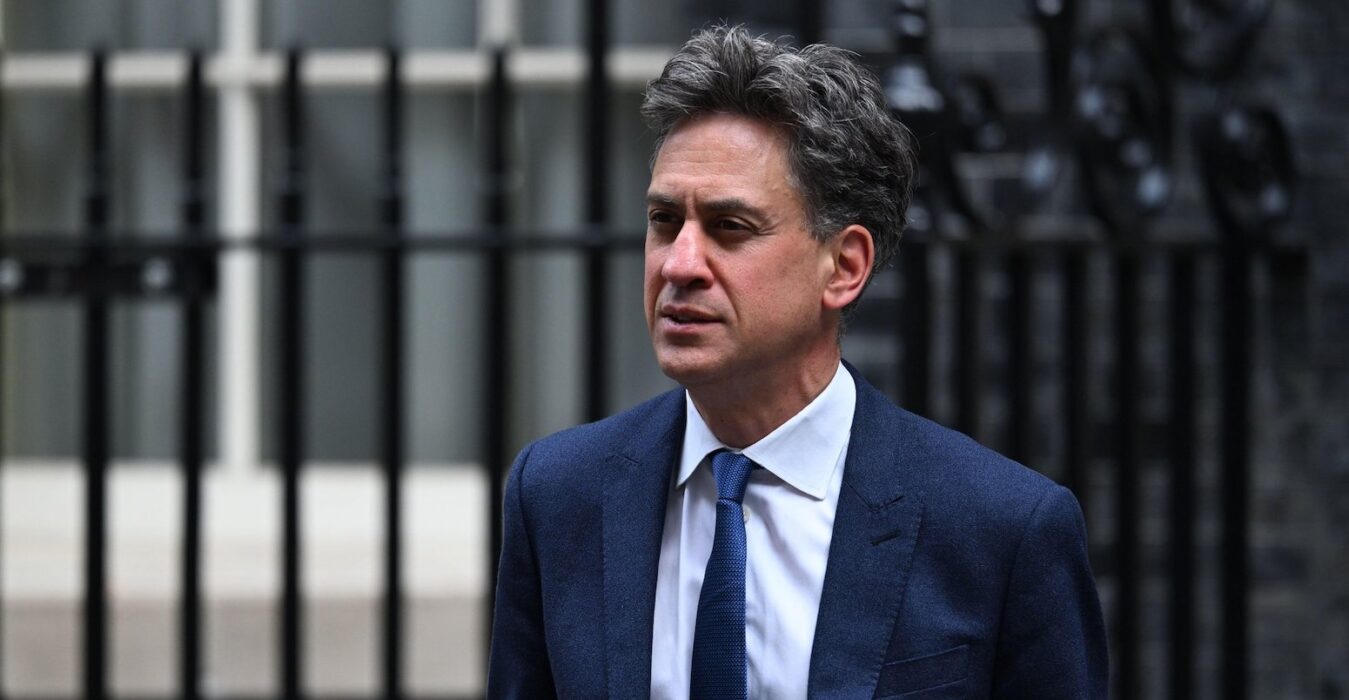
Ed Miliband, Secretary of State for Energy Security and Net Zero, at Downing Street, UK. Credit: Malcolm Park / Alamy Stock Photo.

UK newspapers have already launched more editorials attacking Ed Miliband in the first four months of 2025 than they did during the whole of 2024, Carbon Brief analysis reveals.

In the year to date, predominantly right-leaning publications have published 65 editorials – articles seen as the newspaper’s formal “voice” – criticising the UK energy secretary, compared with only 61 across the full year of 2024.

Nearly four such editorials have been published every week so far in 2025, roughly three times the rate of the previous year.

This is a significant escalation from a period that had already seen an unprecedented torrent of attacks levelled at the energy secretary.

The articles, which primarily appear in the Sun, the Daily Mail and the Daily Telegraph, frequently seek to label Miliband as a “net-zero zealot” with a “messianic” devotion to climate action.

The newspapers have focused specifically on Miliband’s support for renewables.

They have also tried to blame him for the potential closure of the UK’s remaining steel plant and – most recently – misrepresented the words of former prime minister Sir Tony Blair to falsely present them as a personal rebuke to Miliband.

Many of the articles urge prime minister Keir Starmer to “sack” Miliband due to his supposedly “radical” policy ideas, referring to him as a “liability” for the Labour government.

Despite this near-obsessive stream of criticism and constant speculation about the energy secretary’s job security, the prime minister has said unequivocally that the net-zero agenda is “in my government’s DNA” and that Miliband is “doing a great job”.

Record criticism

The UK’s Labour government won an election last summer, with a large majority, on the back of a manifesto that focused heavily on climate action.

As laid out at the time, one of the government’s “five missions” was to:

“Make Britain a clean-energy superpower to cut bills, create jobs and deliver security with cheaper, zero-carbon electricity by 2030.”

Miliband, the energy security and net-zero secretary, is the minister overseeing this brief and the public face of much of the government’s net-zero strategy.

This position has resulted in a relentless stream of criticism and personal attacks from right-leaning commentators and media organisations, against a backdrop of rising political and press opposition to net-zero.

Carbon Brief analysis in January revealed the scale of the personal attacks levelled at Miliband in newspaper editorials during 2024, both in the lead up to the general election and in the months that followed. 

However, the new analysis shows that the 61 critical editorials published last year have already been eclipsed in 2025 after barely four months of intense focus on Miliband. 

As of 2 May, predominantly right-leaning newspapers have already published 65 editorials taking aim at the energy secretary this year. The chart below, which shows the cumulative number of such editorials, highlights this rapid escalation.

Cumulative number of UK newspaper editorials criticising energy secretary Ed Miliband in 2024 (blue) and 2025 so far (red). Source: Carbon Brief analysis.

Specific events, often only vaguely related to the energy secretary, have inflated the criticism of Miliband in the media. 

One example was the imminent closure of the UK’s last remaining steel blast furnaces in Scunthorpe, in early April. Right-leaning newspapers blamed Miliband, among other things, for “banning new coal mines” in the UK, which they argued could have provided coking coal to the facility.

(The Scunthorpe site’s owners prior to government control, British Steel, had said that the coal from a planned mine in Cumbria would not have been suitable for their needs.)

More recently, right-leaning newspapers have used the furore around a report published by the Tony Blair Institute for Global Change (TBI) as a further opportunity to criticise Miliband. 

Many publications misleadingly interpreted comments by Blair as a criticism of the Starmer government’s net-zero policies and, by association, Miliband himself. They described the energy secretary as an “eco-loon” compared to the “uncontroversial” advice from Blair.

Miliband the ‘fanatic’

The majority of the criticism of Miliband in newspaper editorials in 2025 has come from the Daily Mail, the Sun and the Daily Telegraph.

The Sun remains the most consistent critic of Miliband, with 26 editorials published in 2025 so far. There have only been 18 weeks in 2025 to date. As the chart below shows, this spate of 26 editorials from the Sun is already approaching last year’s record of 29.

UK newspaper editorials criticising Ed Miliband, broken down by publication, in 2024 and 2025. Source: Carbon Brief analysis.

The attacks levelled at Miliband by right-leaning newspapers are often both highly personal and somewhat melodramatic.

They frequently imply that his focus on net-zero policies is a sign of mental instability or quasi-religious devotion, rather than being part of his job title – or acknowledging that reaching net-zero emissions is the only way scientists say climate change can be prevented from getting worse.

The Sun has referred to Miliband’s “uncontrolled fanaticism”. The Sun on Sunday has described the “madness of Ed Miliband’s green crusade” and called him the “fanatical prophet of net-zero”.

Another editorial from the Sun stated that “Miliband is so blinded by eco-ideology that he’s lost touch with reality”, referring to his “eco insanity”.

In an editorial lamenting the state of the UK’s oil-and-gas industry, which shed 10s of 1,000s of jobs under the previous Conservative government, the Daily Mail mentioned:

“Energy secretary Ed Miliband’s messianic desire to sacrifice a multi-billion pound industry on the altar of net-zero.”

The newspapers also suggest that Miliband is unwilling to listen to any criticism. “Miliband has shown himself unprepared to countenance any suggestion that his efforts to decarbonise the grid within five years might be reckless,” the Daily Telegraph claimed.

There have also been frequent calls from newspaper editorials for Starmer to sack the energy secretary. In an article titled “Miliband’s madness”, published at the end of April, the Daily Mail asked:

“Isn’t it time Sir Keir Starmer accepted his colleague’s ideological net-zero fervour is damaging the government – and sacked him?”

Beyond the editorial pages, there has also been a constant stream of comment pieces, many by climate sceptics, which often go even further in their attacks on the energy secretary. “Miliband belongs in a padded cell,” Daily Mail columnist Richard Littlejohn wrote at the start of May.

This has come amid much media speculation from commentators on both the left and right that Starmer is considering firing Miliband.

However, Starmer has not given any indication of doing this. 

On the contrary, at the recent energy security conference the UK government hosted in London, Starmer stated that he was fully committed to his government’s net-zero ambitions. “That is in the DNA of my government,” he stated in a widely covered speech.

Original article by Josh Gabbatiss republished from Carbon Brief under a CC license

dizzy: Miliband has been vilified by the same right-wing climate science deniers in a similar way to Just Stop Oil and others labelled zealots. I object to his and thereby the current Labour government’s policy of supporting Carbon Capture and Nuclear for different reasons. Both are false solutions needing huge government subsidies, carbon capture and storage is an unproved, false solution proposed by the fossil fuel industry to enable them to continue destroying the planet, nuclear supports producing nuclear weapons and [ed: is] hugely capital intensive producing radioactive waste that needs to be managed for thousands to millions of years. A far better response is rapid decarbonisation including conversion to renewables and to travel far less, prevent the rich from causing so much damage.

Continue ReadingAnalysis: Attacks on Ed Miliband in UK newspaper editorials have already exceeded 2024 levels

Zarah Sultana: The enemy of the working class travels by private jet, not migrant dinghy

Spread the love

https://www.theguardian.com/commentisfree/article/2024/aug/09/enemy-working-class-far-right

The fuse may have been set alight by online disinformation and secretive social media channels, but this explosion of far-right violence has been decades in the making. And while Stephen Yaxley-Lennon (AKA Tommy Robinson) and his mob of far-right agitators are its immediate instigators, much of Britain’s political and media class is complicit in laying the groundwork for this eruption of hate.

This truth of how we reached this point flips the normal classist narrative about racism in Britain. The reality is that racism isn’t a bottom-up expression of popular discontent, but a top-down project propagated by people in positions of power.

Just think about how the billionaire-owned rightwing press drip-feeds hate into British politics, splashing fearmongering headlines across their papers: “Islamist plotters in schools across the UK” – the Telegraph“1 in 5 Brit Muslims’ sympathy for jihadis” – the Sun“Migrants spark housing crisis” – the Daily Mail.

Or think how Conservative politicians normalise far-right rhetoric, dehumanising people and spreading hate. From “one nation” Conservatives such as David Cameron who as prime minister described migrants as a “swarm”, to the likes of Suella Braverman who as home secretary said there was a migrant “invasion”. Rishi Sunak’s “Stop the boats” slogan is now a far-right chant and just this week the Tory party leadership hopeful Robert Jenrick said the police should “immediately arrest” people shouting “Allahu Akbar” on the street, the Arabic phrase meaning “God is great” – the equivalent of a Christian saying “hallelujah”.

This rhetoric was propagated further by the privately educated, former City trader Nigel Farage, who claims to be a man of the people. In the general election campaign, he said many Muslims didn’t share “British values” and this week promoted the “two-tier policing” conspiracy.

But it’s not just rightwing politicians, pundits and publications at fault. So-called centrists too often refuse to push back against this hate as well, sometimes peddling the same dangerous tropes or dismissing the concerns of those subject to this hatred.

I was confronted by this painful reality just this week. On Monday morning I was invited on to ITV’s Good Morning Britain to talk about the recent racist riots, only to be interrogated – and it did feel like an interrogation – about why I, a Muslim MP, thought it was important to call the recent racist violence Islamophobic. “Why is it important to use that specific word?” Kate Garraway repeatedly questioned me.

Almost before I could answer, and behaving with the same sneering condescension he did throughout the segment, the former Labour shadow chancellor and now broadcaster Ed Balls repeatedly interrupted me, seemingly incredulous that I thought this hate should be called by its proper name. The show has now been hit with more than 8,200 Ofcom complaints about that morning’s episode, many of them about his handling of my interview.

This wasn’t a one-off, even for Ed Balls. In the summer of 2010, as he set out his Labour leadership pitch in the Guardian, Balls blamed “eastern European migrants” for a “direct impact on the wages, terms and conditions of too many people”. He’s far from the only Labour figure to echo rightwing talking points: from then leader of the House of Commons Jack Straw, who in 2006 said that he asked veiled Muslim women to remove their veils in meetings with him, to the former Labour MP Jonathan Ashworth recently claiming asylum seekers can stay in hotels for “the rest of their lives”.

https://www.theguardian.com/commentisfree/article/2024/aug/09/enemy-working-class-far-right

Continue ReadingZarah Sultana: The enemy of the working class travels by private jet, not migrant dinghy

UK Labour MP Says Right-Wing Politicians, Media Fueled Xenophobic Mob Attacks

Spread the love

Original article by JULIA CONLEY republished from Common Dreams under Creative Commons (CC BY-NC-ND 3.0). Ed Balls was previously a Labour Party MP.

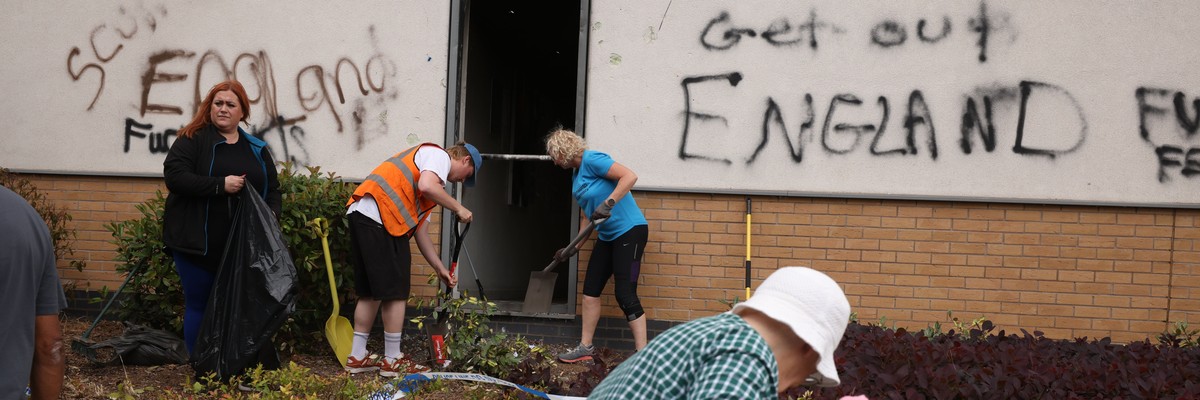
People clean up debris outside a Holiday Inn Express whose walls bear graffiti reading “Get Out England” and a racial epithet on August 5, 2024 in Tamworth, England.

“There are politicians and there are journalists who have played an active role in fanning the flames of hate and division, and we are seeing that play out,” said Zarah Sultana.

As British Prime Minister Keir Starmer covened an emergency security meeting on Monday to respond to violent attacks on immigrant and Muslim communities that have spread across the United Kingdom in recent days, progressive MP Zarah Sultana said the crisis—fueled by rampant disinformation and xenophobia—must serve as a reckoning for politicians and journalists who have “fanned the flames” of hatred for years.

Sultana, who represents Coventry South in the House of Commons, appeared on ITV’s “Good Morning Britain” to discuss the violent riots that have taken place in at least a dozen cities across the U.K. in recent days, mostly in England, with far-right protesters attacking mosques, libraries, and a hotel housing asylum-seekers.

The attacks have been in response to disinformation that has pinned the blame for a deadly stabbing attack on a children’s dance class in Southport, England last week on undocumented immigrants. The suspect was born and raised in the U.K., according to police.

“Rather than saying, this is the result of political decisions made by consecutive governments, people have blamed and scapegoated minorities.”

Sultana said that the violent attacks in cities including Blackpool, Leeds, and Manchester “shouldn’t be a surprise,” considering the years the British government—led for 14 years by the Conservative Party until the Labour Party won last month’s elections—has spent pushing anti-immigration policies and demonizing asylum-seekers, with the help of national news outlets.

“There is decades of work by the right-wing press and by politicians who have fanned the flames of this hate,” said Sultana in a panel discussion that also included journalists from The Daily Mail. “When we look at the role that media outlets like GB News has played, that The Daily Mail has played… There are politicians and there are journalists who have played an active role in fanning the flames of hate and division, and we are seeing that play out.”

Andrew Pierce of The Daily Mail took issue with Sultana’s remarks, demanding that she provide examples of anti-Muslim news stories in the paper.

The lawmaker did so after the broadcast, posting an image of 16 front pages from the outlet, including ones that asked “how many more” migrants the U.K. can take, referred to asylum-seekers as “illegals,” and claimed that migrants are taking the majority of jobs in the U.K. and sparking a “housing crisis.”

Sultana added that former Home Secretary Suella Braverman referred to refugees arriving in the U.K. as an “invasion” and far-right Reform UK leader Nigel Farage said in May that British Muslims do not share “British values.”

“So when we look at the complicity,” said Sultana, “there’s a lot of mirrors that people have to be looking into.”

Sultana also implored politicians and the British media to explicitly refer to the riots over the weekend as Islamophobic, noting that Prime Minister Keir Starmer and others have denounced the attacks as racist but have not clearly expressed solidarity with the Muslim communities that have been targeted.

“Naming it as Islamophobia is really important because that allows us to shape our response,” said Sultana. “If we’re not identifying what is happening, the language that is being used and what this is about, we’re not going to be able to address this fundamentally.”

“Why is there such controversy around calling it Islamophobia?” asked Sultana after “Good Morning Britain” host Ed Balls dismissed her concerns, displaying what the lawmaker called “sneering contempt.”

The interview took place a week after three children were killed and 10 were injured in a knife attack in Southport. The 17-year-old suspect, Axel Rudakubana, was born and raised in Britain, according to authorities, who took the unusual step of making his identity public to counter disinformation that quickly spread online and fueled riots that first began in Southport the day after the crime.

The first riot included anti-Muslim and anti-immigrant demonstrators throwing bricks at a mosque in the town, setting cars on fire, and damaging a convenience store.

The authorities’ decision to disclose the suspect’s identity did not stop the violence from escalating over the weekend, with rioters setting a library on fire in Liverpool, burning books, and attempting to block firefighters from putting out the flames on Saturday.

In Rotherham, an anti-immigration mob broke into a hotel housing asylum-seekers and attempted to set the building on fire while blocking exits.

Nearly 150 people were arrested for taking part in the attacks, and Starmer warned Sunday that “those who have participated in this violence will face the full force of the law.”

“This is not protest. It is organized, violent thuggery,” said Starmer.

BJ Harrington, the National Police Chiefs’ Council lead for public order, said in a statement Sunday that “disinformation is a huge driver of this appalling violence and we know a lot of those attending these so-called protests are doing so in direct response to what they’ve read online.”

“Often posts are being shared and amplified by high profile accounts. We’re working hard to counteract this,” added Harrington. “They won’t win.”

While calling on the government and media to directly confront the Islamophobia that has been fomented in the U.K. in recent decades, Sultana said the new Labour government should also correct the austerity policies that have caused unrest and scapegoating of immigrants and Muslim communities.

“The economic system which has allowed inequality to exacerbate in this country, has brought down living standards,” said Sultana. “Our communities have faced the brunt of Tory austerity, and what has happened on the right-wing side of politics, in the media and in politics, is that migrants, Muslims, and trans people have been blamed for people not being able to access council housing, not being able to get [National Health Service] appointments, not being able to find school places for their kids. Rather than saying, this is the result of political decisions made by consecutive governments, people have blamed and scapegoated minorities.”

Original article by JULIA CONLEY republished from Common Dreams under Creative Commons (CC BY-NC-ND 3.0). Ed Balls was previously a Labour Party MP.

Continue ReadingUK Labour MP Says Right-Wing Politicians, Media Fueled Xenophobic Mob Attacks

Analysis: Record opposition to climate action by UK’s right-leaning newspapers in 2023

Spread the love

Original article by JOSH GABBATISS & SYLVIA HAYES republished from Carbon Brief under a CC license.
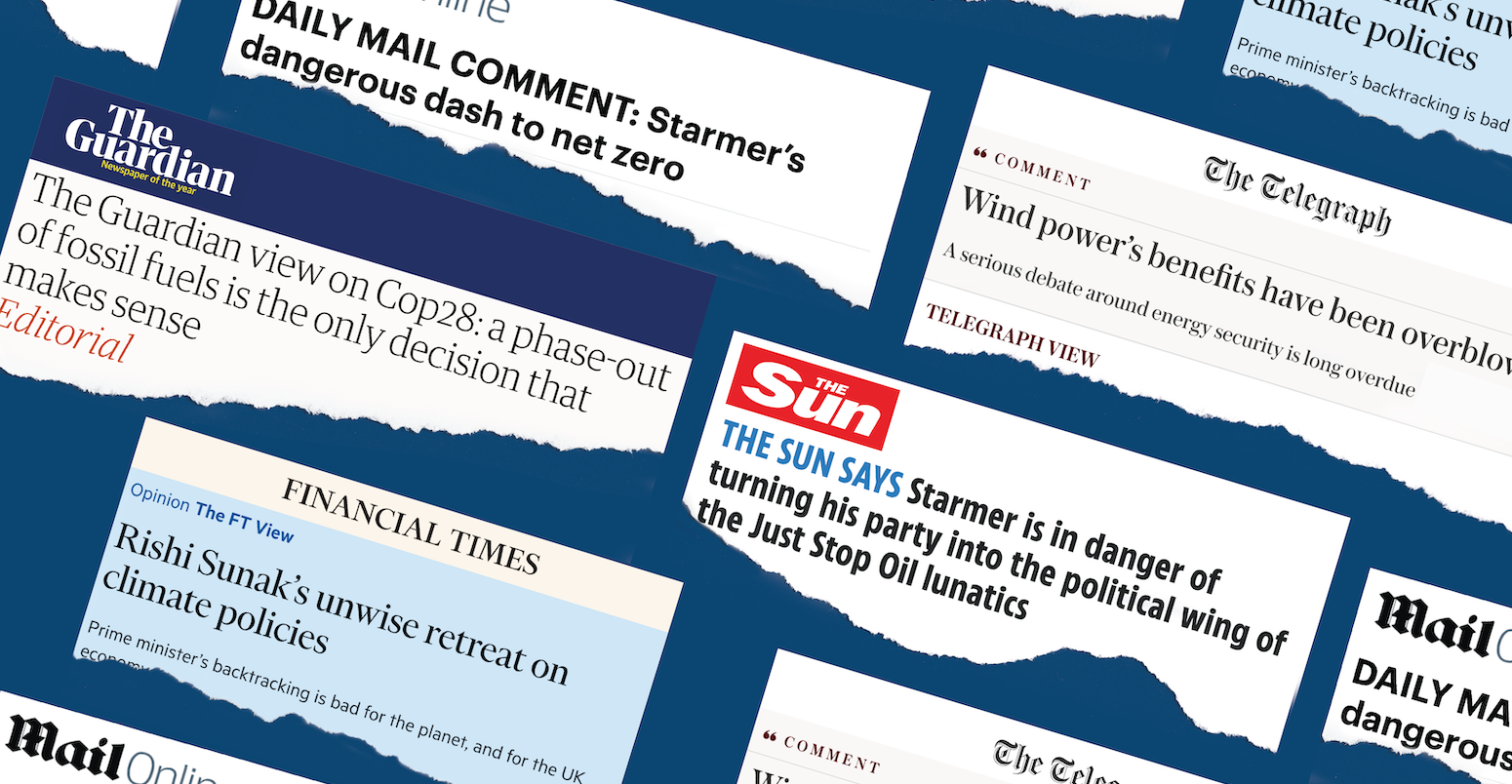
Graphic by Joe Goodman for Carbon Brief shows record opposition to climate action by UK’s right-leaning newspapers in 2023.

Last year saw a record number of UK newspaper editorials opposing climate action – almost exclusively from right-leaning titles – new Carbon Brief analysis shows.

The analysis is based on hundreds of UK national newspaper editorials, which are the formal “voice” of the publications.

The 354 editorials published in 2023 relating to energy and climate change add to thousands more collected in a long-running project started by Carbon Brief.

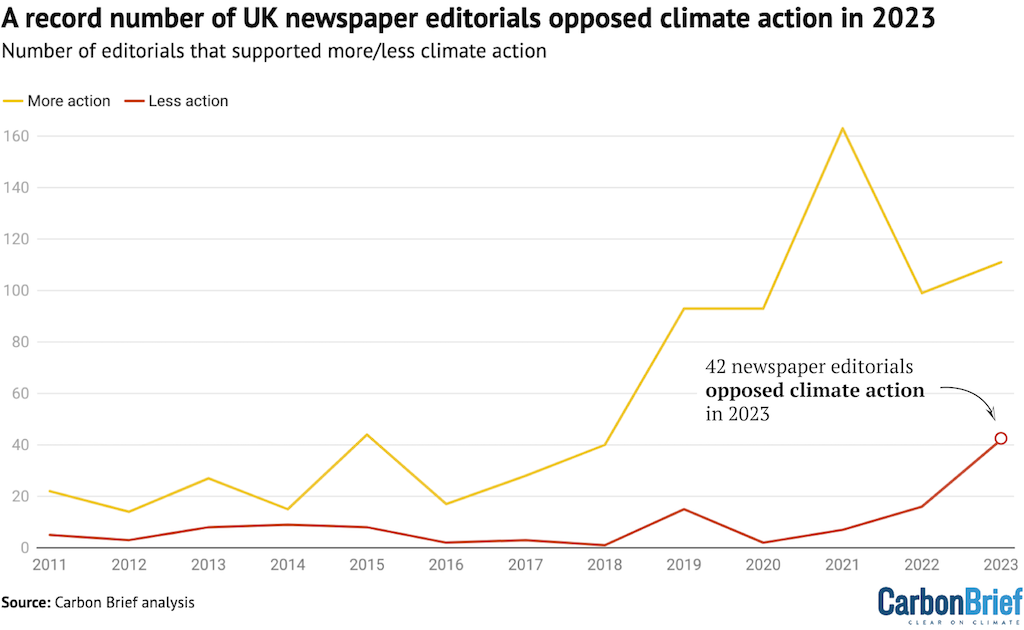
Newspapers such as the Sun and the Daily Mail published 42 editorials in 2023 arguing against climate action – nearly three times more than they have printed before in a single year.

They called for delays to UK bans on the sale of fossil fuel-powered cars and boilers, as well as for more oil-and-gas production in the North Sea. In response to such demands, prime minister Rishi Sunak performed a “U-turn” in September on some of his government’s major net-zero policies.

Last year also saw a surge in hostility towards climate protesters, with editorial attacks doubling compared to recent years.

This analysis is part of a project assessing the attitudes of UK newspapers to climate change and energy since 2011. It shows that after a period of embracing climate action, right-leaning publications have largely returned to their historic stance of arguing against climate action.

Record opposition to action

Carbon Brief captured 354 articles in its database of climate- and energy-related newspaper editorials last year, touching on topics ranging from UK energy bills to flooding in Libya.

Roughly half of these – 174 in total – specifically called for either more or less climate action. The main focus of these editorials was the UK government’s net-zero target and the policies it is implementing, or failing to implement, in order to achieve this goal. 

As the chart below shows, the 42 editorials arguing for less action last year marked a new record for the past 13 years of climate coverage.

Number of UK newspaper editorials arguing for more (yellow) and less (red) climate action, 2011-2023. Source: Carbon Brief analysis.

There was a clear partisan divide in attitudes towards climate action.

Nearly every editorial published in left-leaning and centrist titles that offered an opinion on climate action advocated for more to be taken. These made up around three-quarters of the articles calling for “more action” overall.

The Guardian, for example, published editorials calling for an end to oil exploration in the UK and for the world to get rid of fossil fuels “entirely”.

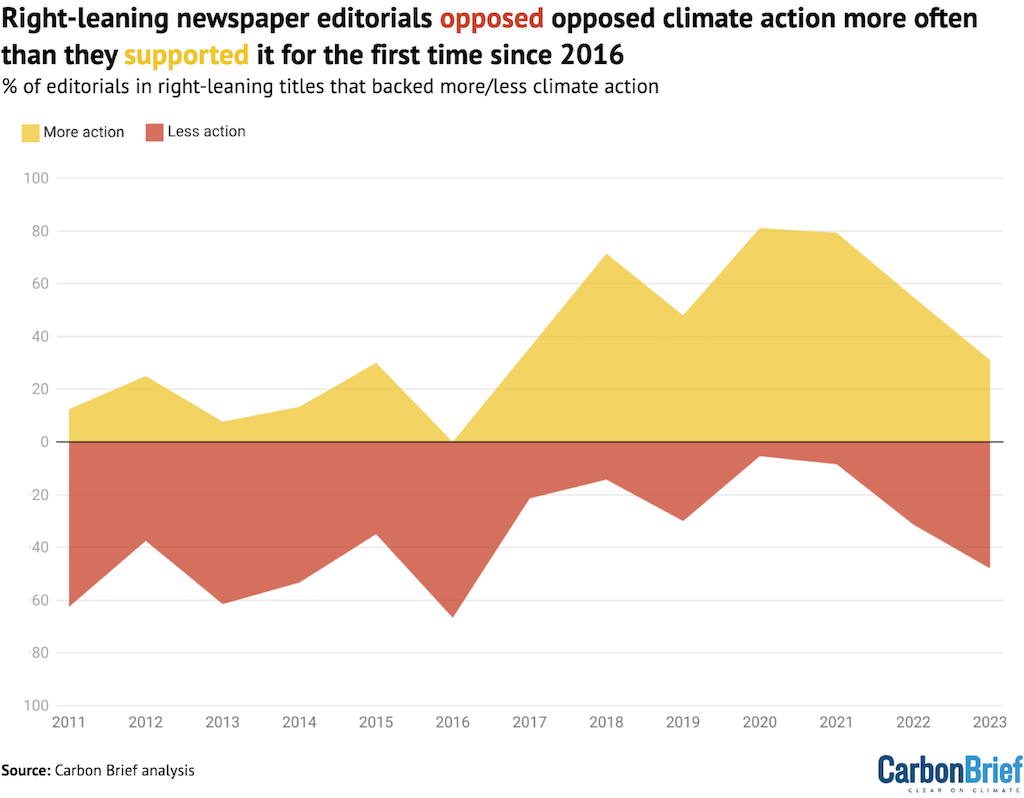
By contrast, around half of the climate-related editorials published in right-leaning titles, such as the Sun and the Daily Mail, actively opposed climate action. Only one-third of these editorials supported climate action and the remainder expressed a mix of views.

As the chart below shows, the past two years have seen a dramatic fall in the share of right-leaning newspaper editorials supporting climate action – and a rise in the share opposing it. 

Prior to this downward trend, right-leaning titles with long histories of climate scepticism had been showing growing enthusiasm for climate action. The Daily Express and the Sun even launched special climate initiatives in 2021, as the UK prepared to host the COP26 summit.

The drop in support for climate action among right-leaning newspapers was followed by the government rolling back some of its climate policies in 2023. (See: Cost of net-zero.)

The share of right-leaning UK newspaper editorials arguing for more (yellow) and less (red) climate action, 2011-2023, %. Source: Carbon Brief analysis.

Carbon Brief also analysed a smaller set of 64 editorials from the 354 published in 2023 that discussed notable energy sources – specifically, renewables, nuclear power and fracking for shale gas. 

Within this group, there were 14 editorials that were explicitly anti-renewable energy. 

This is the highest number since 2013, when there was widespread opposition to wind energy within the right-leaning press. 

Some of the criticism last year was reminiscent of that era. The Sun, for example, said solar and wind generation “will never reliably power a country this size and with such variable weather”.

(While other low-carbon energy sources would be needed, the Climate Change Committee has concluded that the UK could achieve a reliable decarbonised power system by 2035 in which wind and solar meet 70% of demand.)

Sunday Telegraph editorial said that “supposed progress” in renewables had “only been achieved thanks to lavish subsidies”. (In fact, wind and solar remain the cheapest way to generate electricity in the UK.)

Back to top

Cost of net-zero

By far the most common anti-climate action narrative in newspaper editorials last year was the economic impact of what the Sun on Sunday called “bonkers net-zero policies that will just push prices up”. (Energy prices remain elevated thanks to expensive gas.)

The cost of net-zero, especially the up-front cost of buying electric vehicles and heat pumps, was consistently framed by right-leaning newspapers as something British people, in the words of the Sun, “just cannot afford”. (These papers invariably fail to mention the costs of inaction.)

This has been a popular topic among some right-wing and climate-sceptic commentators since the net-zero target was first proposed. This is in spite of analysis indicating that a net-zero transition would, ultimately, save UK households money. 

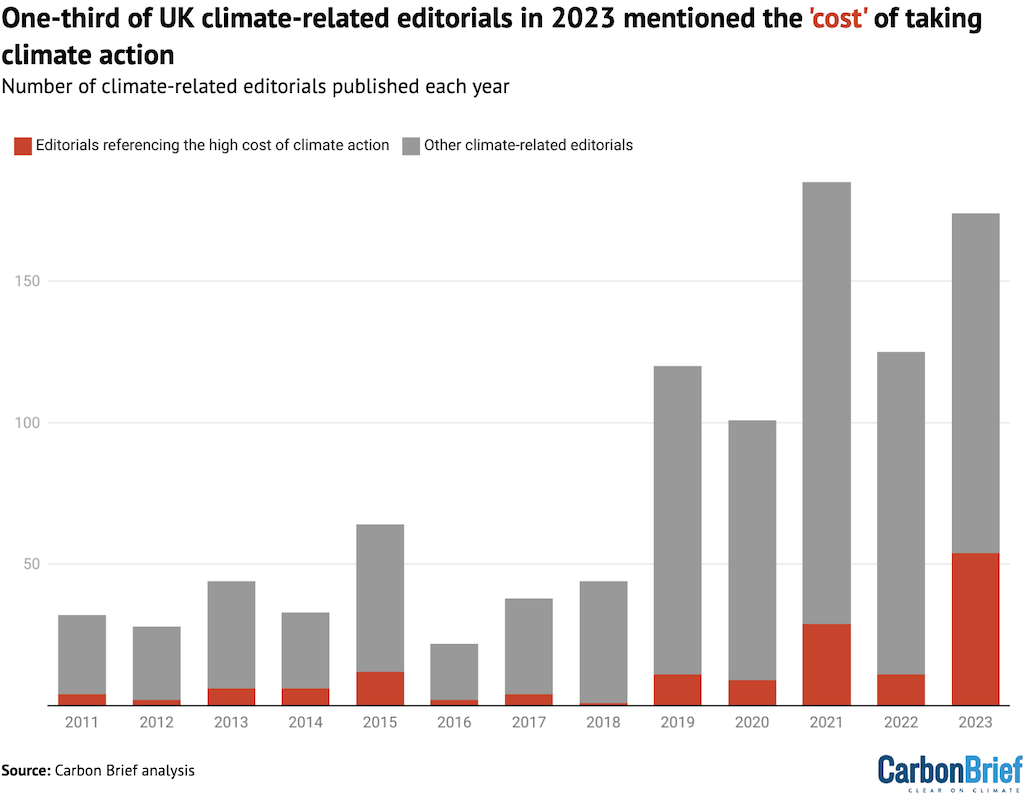
As the chart below shows, costs emerged as an even bigger talking point in 2023, with one-third of all climate-related editorials referencing the issue. There were twice as many editorials in the past year mentioning the high costs of action than there has ever been. 

Annual number of climate-related editorials mentioning the economic costs of climate action (red), with remaining climate-related editorials published that year indicated in grey, 2011-2023. Source: Carbon Brief analysis.

Many, such as the Daily Mail, cited the wider economic situation in the UK as a reason not to act on climate change:

“When net-zero was made legally binding by 2050, Britain had not had Covid, the Ukraine war and rampant inflation. Now the country is skint and can’t afford it.” 

(It is worth mentioning that publications such as the Daily Mail have been making similar arguments since long before any of these issues emerged. In 2017, it stated that climate action had only come at a “crippling cost to Western economies”.)

In light of what they argued were “unaffordable” costs, these publications argued that the best course of action would be to abandon “unrealistic” net-zero policies. 

(The Office for Budget Responsibility has said that the costs of failing to act on climate change would be “much larger” than the costs of taking action.)

Right-leaning publications published numerous editorials calling for the government to delay or scrap plans to phase out gas boilers and internal combustion engine cars, introduced under former Conservative prime minister Boris Johnson. One Daily Telegraph editorial said:

“There would surely be huge political benefits to scrapping all these pointlessly punitive measures.”

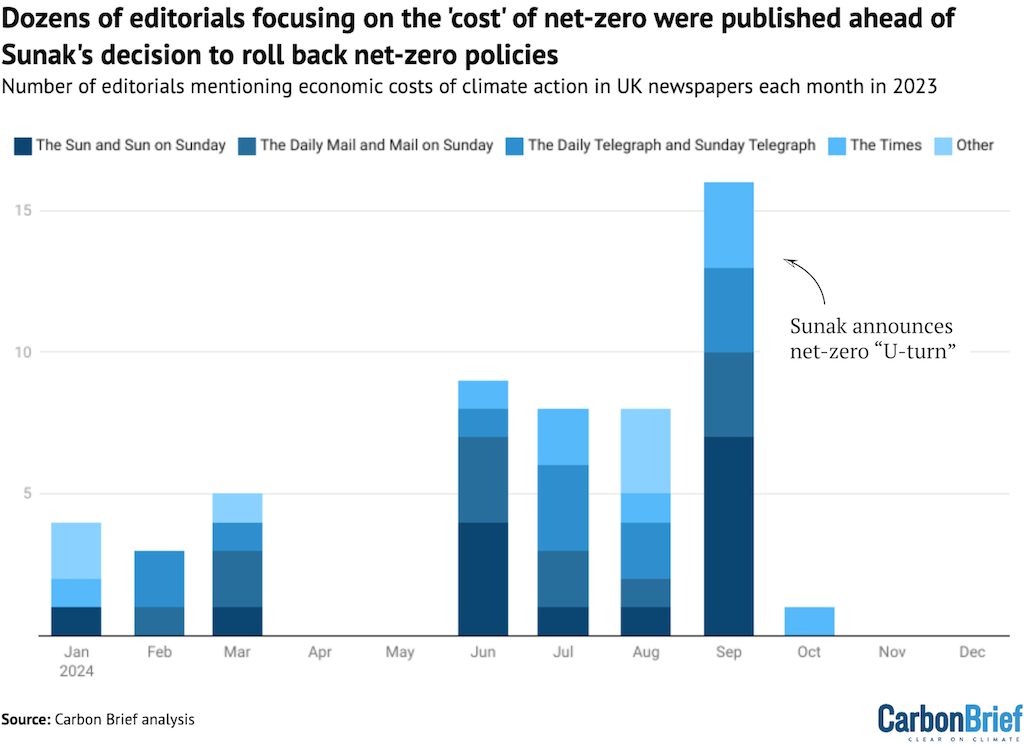
On 20 September, Conservative prime minister Rishi Sunak gave a speech in which he announced a series of rollbacks of net-zero policies that he said would protect “hard-working British people” from “unacceptable costs”. These included delays to the phase-out of fossil fuel-powered vehicles and boilers, as well as efficiency rules.

(Far from reducing costs, the rollbacks are expected to cost renters £2bn per year and drivers £6bn cumulatively, by leaving homes more draughty and cars more expensive to run.)

As the chart below shows, the speech followed a flurry of editorials warning of the costs of net-zero. After Sunak’s announcement, these editorials almost stopped entirely. 

Monthly number of editorials mentioning the cost of climate action in UK newspapers in 2023. Source: Carbon Brief analysis.

Left-leaning and centrist publications rejected the notion that net-zero policies would inevitably place an economic burden on people in the UK. 

The Guardian noted that, while “reaching net-zero will be costly and disruptive”, this just made it vital to have a “well-thought-out plan to share the cost equitably”. The Financial Times made the case for “green growth”, stating:

“True leadership…would involve finding ways to carry voters with [Sunak] through the challenges ahead and seizing on the green transition to rekindle growth and spur innovation.”

Back to top

Labour criticism

Sunak’s net-zero rollback was widely perceived by the UK press as an attempt to put “clear blue water” between himself and Keir Starmer, the leader of the opposition Labour party.

Meanwhile, there was a concerted effort in the right-leaning press to discredit Labour’s two flagship climate announcements – namely, pledges to spend £28bn each year on “green” investment and to stop issuing new oil-and-gas licences.

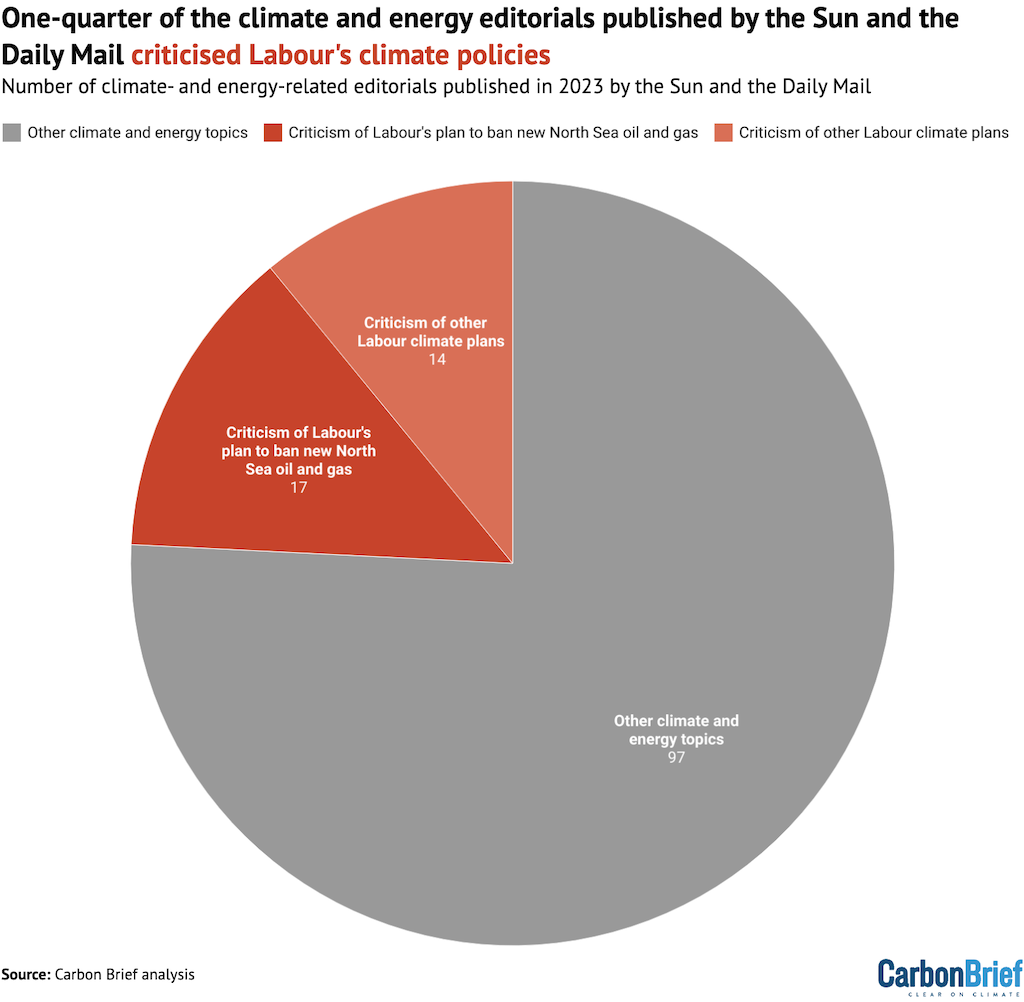
This was particularly evident in the Sun and the Daily Mail, the UK’s two most widely read national newspapers. Of the 128 climate- or energy-related editorials from these newspapers captured in Carbon Brief’s database last year, 31 took aim at Labour’s climate proposals.

Number of climate- and energy-related editorials published in the Sun and the Daily Mail in 2023 that focused on criticising Labour’s plans to end new North Sea oil and gas licensing (dark red) and other Labour climate policies (light red). The grey area represents other climate- and energy-related editorials in those newspapers that did not focus on Labour. Source: Carbon Brief analysis.

The debate around North Sea oil and gas was a major talking point last year, with many right-leaning editorials stating that new drilling licences would be vital for the UK’s energy security. (After a surge of interest in 2022, fracking was virtually forgotten last year, with just two editorials mentioning it in 2023.)

Labour officially announced in May that it planned to stop all new oil-and-gas developments. 

Right-leaning newspapers responded by implying that environmental activist group Just Stop Oil and low-carbon energy tycoon Dale Vince were responsible for setting Labour’s policies. This claim was based on the fact that Vince, who had financially supported Just Stop Oil, had also given £1.5m to Labour. 

In total, there were 16 editorials in the Sun, the Sun on Sunday and the Daily Mail about Vince’s support for Just Stop Oil and Labour. They described Vince as “bankrolling” Labour and helping to “dictate its green agenda”, framing Labour as “allies” of Just Stop Oil and “in their pocket”. 

(Vince’s £1.5m in donations to Labour were spread over 10 years. The Labour Party has received donations totalling nearly £30m in the most recent 12 months for which official data is reported. The Conservatives have received £43m over the same period.)

These narratives were later picked up by then net-zero secretary Grant Shapps, who wrote a letter to Starmer in July concerning Vince’s support, and called Labour the “political wing of Just Stop Oil”.

(Responding to criticism, Starmer said in August that Labour would honour existing North Sea licences and maintain oil-and-gas fields “for decades to come”. He called Just Stop Oil’s more radical demands “contemptible”. Vince announced in October he would stop funding Just Stop Oil.)

More broadly, there was also an effort to frame Labour’s “green” policies as what the Sun called a “turn-off for much of the electorate”. This was particularly true following the Uxbridge by-election in July, where the Labour London mayor Sadiq Khan’s anti-air pollution policy, the ultra-low emissions zone (ULEZ), was viewed as significant in Labour narrowly missing out on winning the seat.

There were also many editorials throughout 2023 attacking shadow net-zero secretary Ed Miliband, with the Sun stating: 

“Labour wanted to gamble a monstrous £28bn a year in borrowed money on a ‘green industrial revolution’ dreamed up by Ed Miliband, a man voters rejected in 2015 as incompetent.”

The media continues to fuel speculation over Labour’s £28bn “green prosperity plan”, which Starmer recently defended.

Back to top

Targeting climate activists

Climate activists have been a major target for right-leaning newspapers in recent years, especially since Extinction Rebellion’s mass protests in 2019.

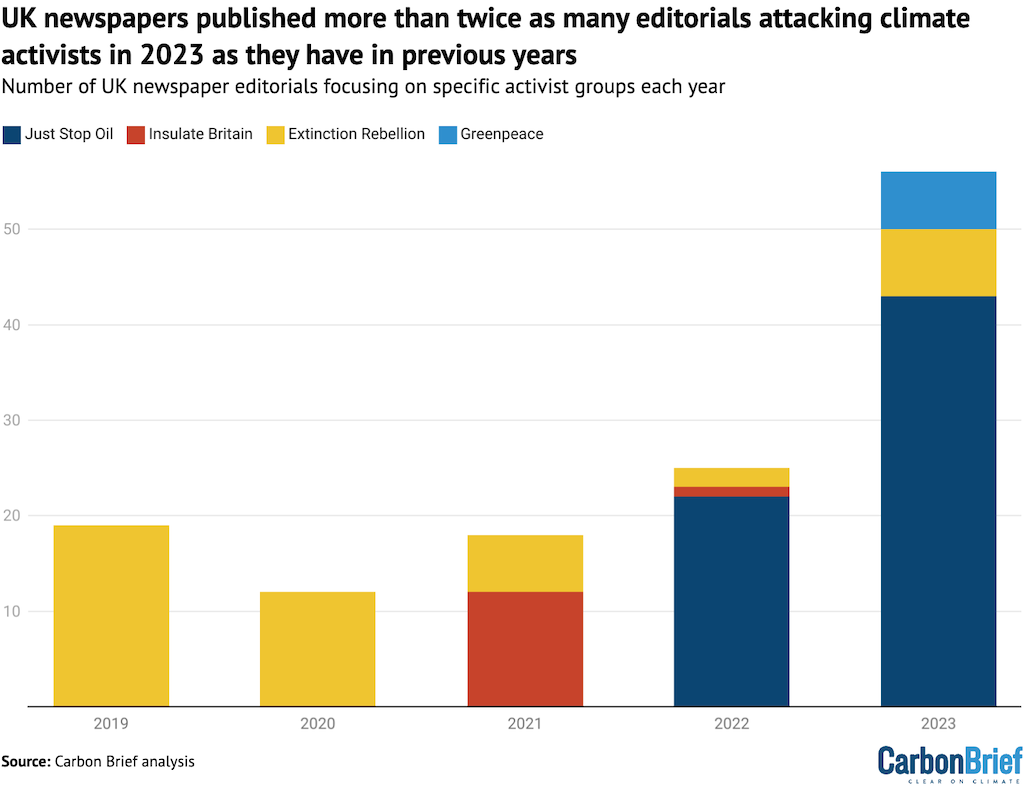
Yet their hostility towards climate activists reached new levels last year. There were 56 editorials taking aim at these groups, with 43 of these targeting Just Stop Oil. As the chart below shows, this is more than double the previous record of 25, set in 2022.

Editorials in the Sun and the Daily Mail described Just Stop Oil as a “criminal cult”, “eco-loons” and “deranged”. The Sun devoted entire editorials to targeting individual activists for taking flights or driving a car to the supermarket to buy fruit.

Number of editorials in right-leaning UK newspapers criticising climate activist groups between 2019 and 2023. Source: Carbon Brief analysis.

In a year that saw the government introduce strict and controversial new legislation to crack down on protests, UK newspapers were vocal in their support for tougher treatment of climate activists.

Prior to new penalties being introduced under the Public Order Act, a Times editorial about Just Stop Oil protests stated that “the law is as asinine as the tactics of those narcissists”.

The Sun, meanwhile, said the police were “too busy with fashionable woke causes and politely escorting Just Stop Oil protesters to bother with catching crooks”.

Methodology

This is a 2023 update of previous analysis conducted for the period 2011-2021 by Carbon Brief in association with Sylvia Hayes, a PhD researcher at the University of Exeter. The 2022 update can be found here.

The full methodology can be found in the original article, including the coding schema used to assess the language and themes used in editorials concerning climate change and energy technologies. 

The analysis is based on Carbon Brief’s editorial database, which is regularly updated with leading articles from the UK’s major newspapers.

Original article by JOSH GABBATISS & SYLVIA HAYES republished from Carbon Brief under a CC license.

Continue ReadingAnalysis: Record opposition to climate action by UK’s right-leaning newspapers in 2023