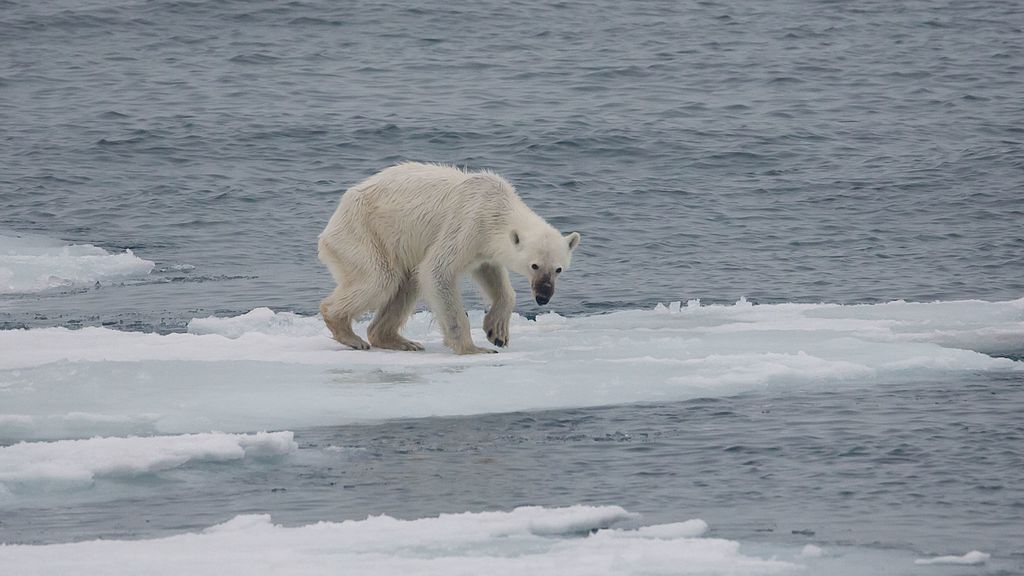
A quarter of freshwater animals threatened with extinction, finds major new study

Iwan Jones, Queen Mary University of London
For far too long, the decline in the biodiversity of our rivers and lakes has been out of sight and out of mind. As a freshwater ecologist I have long felt frustrated as conservation and research is dominated by land and sea species, even though our rivers, lakes, ponds and other wetlands host a hugely disproportionate amount of the world’s biodiversity in their relatively small area.
The first comprehensive assessment of the risk of extinction of freshwater species, now published in the journal Nature, is set to change this. The scientists involved in the new study used the recently completed “red list” for freshwater fishes, and the one for dragonflies and damselflies.
Red lists are official inventories of conservation status compiled by the International Union for Conservation of Nature (IUCN). They combined this with data from the previously published red list for freshwater crabs, crayfishes and shrimps. In total, they assessed more than 23,000 species.
The authors conclude that close to a quarter (24%) of freshwater species are threatened with extinction. That is, they have been officially assessed as vulnerable, endangered, critically endangered or extinct in the wild.
These include the critically endangered European eel, and the endangered white-clawed crayfish, both of which were abundant in the streams of my childhood.

There is some uncertainty in the estimates, especially as there is insufficient data to establish the extinction risk for some species. The authors use an accepted and robust method to address this uncertainty but note that this lack of data affects a substantially larger proportion of freshwater species than those that live on land.
In fact, despite indications that a greater proportion of freshwater mollusc species are at risk of extinction, the authors could not include molluscs in their analysis as so many species are data deficient.
Furthermore, we have only the most rudimentary understanding of the status of the wide array other freshwater species, particularly invertebrates such as mayflies, stoneflies, or various beetles, many of which are highly sensitive to pollution. Although this new study represents an important step forward in our understanding, it should also act as a clarion call to galvanise efforts to fill these critical data gaps.
Freshwater species overlooked
While shocking, this figure of 24% of freshwater species threatened with extinction is comparable with the estimate for predominantly land-based amphibians, reptiles, birds and mammals, of which 23% are threatened. Comprehensive assessments of birds, amphibians and mammals have been available for over 20 years, with repeat assessments now available.
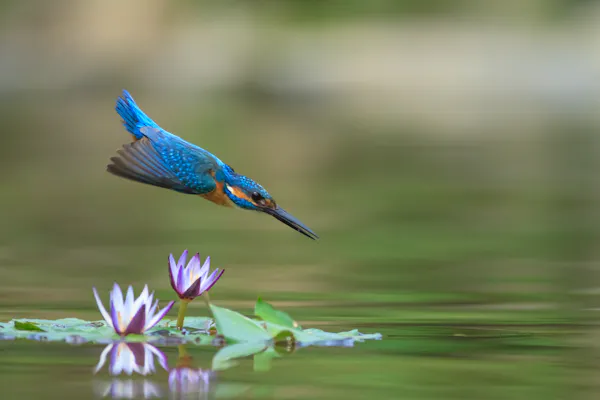
As the IUCN’s red lists are used to document trends in biodiversity and therefore to inform national and global strategy, data on terrestrial vertebrates has dominated conservation science and policy. Hence, to date, global environmental governance has focused on land and sea ecosystems, despite evidence that freshwaters require distinct management needs.
With this assessment, it is now clear that policy will have to be developed that protects and delivers improvements for freshwater species. That means thinking about entire river basins as a whole, rather than the immediate area occupied by the species.
It also means considering things like how rivers and lakes are connected and how the water available varies from season to season. Bodies of freshwater are like islands in a sea of land. Facilitating movement between these islands can help preserve species, particularly where they disappear seasonally.
Most species face multiple threats
In the new study, pollution, dams, water abstraction, land-use change, over-exploitation, invasive species and disease feature prominently as threats, with most species impacted by more than one. Freshwaters in areas of limestone and other porous calcium-rich rocks host consistently more threatened species than would be expected, highlighting the importance of chalk streams for example, where pressure due to exploitation of water resources and pollution is pronounced.
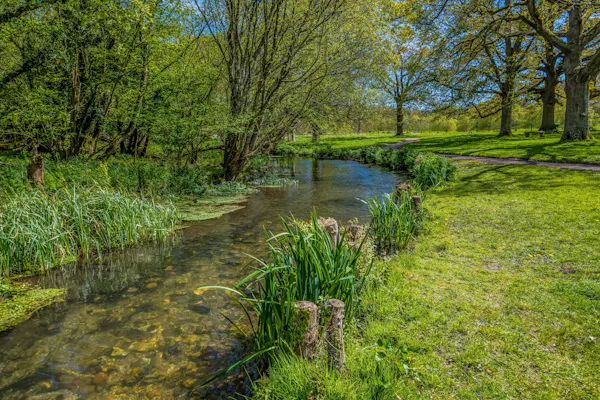
While current efforts to hold UK water companies responsible for reducing inputs of sewage to rivers and lakes are commendable, water use efficiency and run-off should be considered throughout the decision-making process, from building design and town planning though to our individual daily use of water. Nature-based solutions such as tree planting or wetland protection offer a way forward that simultaneously benefit biodiversity and human well-being.
A lack of understanding can no longer be used as an excuse for inaction. As the authors of the new study point out, freshwaters support more than 10% of all known species, including about a third of vertebrates and half of fishes, while covering less than 1% of the surface of the Earth.
Many of the freshwater species considered in this study are socially and economically important. Freshwater fish provide an important source of protein for many human societies, and species such as Atlantic salmon support a fishing-tourism industry critical to many areas with limited opportunities to generate income.
Other species, while superficially unimportant to human society, thrive in clean water. The widespread decline in these species reflects increasing pollution and other pressures, which does not bode well for our society in the face of climate change and diminishing water availability.
Iwan Jones, Freshwater Ecologist and Head of the River Communities Group, Queen Mary University of London
This article is republished from The Conversation under a Creative Commons license. Read the original article.