Plants Are Losing Their Ability to Absorb Carbon Dioxide as Emissions Rise

Spread the love

https://www.ecowatch.com/plants-co2-sequestration-rate.html

Burned trees from the Palisades Fire and dust blown by winds seen from Will Rogers State Park in the Pacific Palisades neighborhood in Los Angeles, California on Jan. 15, 2025. Apu Gomes / Getty Images

Our planet’s plants and soils reached the peak of their ability to absorb carbon dioxide in 2008, and their sequestration rate has been falling ever since, according to a new analysis by a father-and-son team in the United Kingdom.

At first, the added carbon led to warmer temperatures, vegetation growth and a longer growing season. Once a tipping point was reached, however, the combination of heat stress, wildfiresdroughtfloodingstorms and the spread of new diseases and pests led to a reduction in the amount of carbon plants can soak up.

“The rate of natural sequestration of CO2 from the atmosphere by the terrestrial biosphere peaked in 2008. Atmospheric concentrations will rise more rapidly than previously, in proportion to annual CO2 emissions, as natural sequestration is now declining by 0.25% per year,” the authors of the study wrote. “This effect will accelerate climate change and emphasises the close connection between the climate and nature emergencies. Effort is urgently required to rebuild global biodiversity and to recover its ecosystem services, including natural sequestration.”

Once the tipping point was reached, the chances of unchecked climate breakdown became more likely, reported The Guardian.

Former Chief Executive of the Scottish Environment Protection Agency James Curran, with help from his son Sam, took a detailed look at the world’s changing carbon concentration levels. Their analysis revealed that, since 2008, plants have been absorbing an average of 0.25 percent less carbon dioxide each year.

“The findings are very stark. Emissions now need to fall by 0.3% per year, just to stand still. That’s a tall order since they typically increase by 1.2% per year,” James Curran said, as The Guardian reported.

https://www.ecowatch.com/plants-co2-sequestration-rate.html
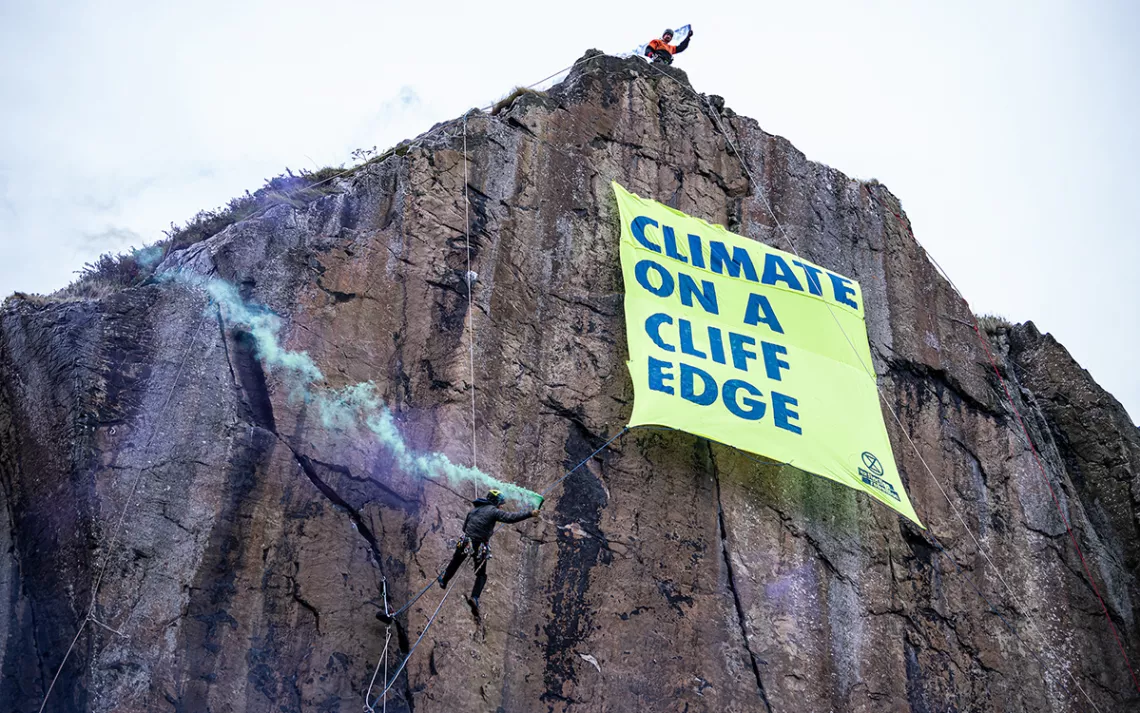
Experienced climbers scale a rock face near the historic Dumbarton castle in Glasgow, releasing a banner that reads “Climate on a Cliff Edge.” One activist, dressed as a globe, symbolically looms near the edge, while another plays the bagpipes on the shores below. | Photo courtesy of Extinction Rebellion and Mark Richards
Neo-Fascist Climate Science Denier Donald Trump says Burn, Baby, Burn.

Continue ReadingPlants Are Losing Their Ability to Absorb Carbon Dioxide as Emissions Rise

Humanity’s Chance to Reverse Amazon’s Slide Toward Tipping Point Is ‘Shrinking’

Spread the love

Original article by Eloise Goldsmith republished from Common Dreams under Creative Commons (CC BY-NC-ND 3.0).

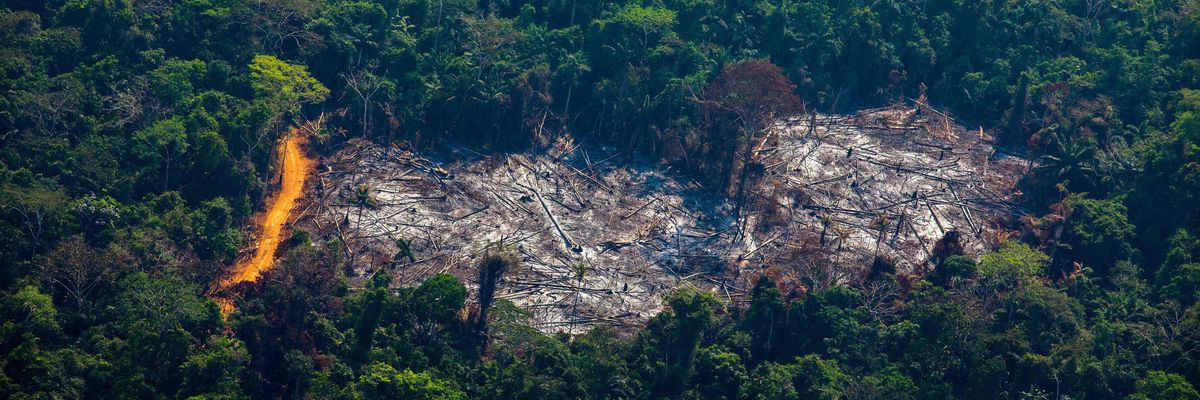
This aerial view shows Amazon forest degradation in the Menkragnoti Indigenous Territory in Altamira, Pará state, Brazil, on August 28, 2019. (Photo: Joao Laet/AFP/Getty Images)

The world’s largest rainforest showed “ominous indicators,” including wildfires and extreme drought, in 2024.

The Amazon, sometimes called the “lungs of the planet,” this year showed signs of further inching toward a much-feared tipping point, threatening the very existence of the world’s largest rainforest.

Rampant wildfires and extreme drought ravaged large parts of the Amazon in 2024. The fires and dry conditions were fueled by deforestation and the El Niño weather pattern, and also made worse by climate change, according to the World Economic Forum. “The number of fires reached its highest level in 14 years this September,” the group reported in October.

Drought has also impacted the Amazon River, causing one of the river’s main tributaries to drop to its lowest level ever recorded, according to October reporting from The Associated Press. The drop in the river has negatively impacted local economies and food supplies.

Andrew Miller, advocacy director at Amazon Watch, told the AP last week that the fires and droughts experienced across the Amazon in 2024 “could be ominous indicators that we are reaching the long-feared ecological tipping point.”

“Humanity’s window of opportunity to reverse this trend is shrinking, but still open,” he said.

The Amazon plays a vital role in keeping the planet healthy. 150-200 billion tons of carbon are stored in the Amazon, and it also carries 20% of the earth’s fresh water to sea.

According to the World Economic Forum, if the Amazon tipping point is reached, “it will release billions of tonnes of CO2 into the atmosphere through fires and plants dying off. This would further exacerbate climate change and make the 1.5°C goal impossible to achieve. It would also alter weather patterns, which would impact agricultural productivity and global food supplies.”

A paper published in the journal Nature in February indicates that up to half of the rainforest could hit a tipping point by the middle of the century. “We estimate that by 2050, 10% to 47% of Amazonian forests will be exposed to compounding disturbances that may trigger unexpected ecosystem transitions and potentially exacerbate regional climate change,” explained the researchers behind the paper.

However, it wasn’t all bad news out of the Amazon in 2024. According to the AP, the amount of deforestation in Brazil and Colombia declined in this year. In Brazil, which houses the largest chunk of the Amazon, forest loss dropped 30.6% compared to the year prior, bringing it to the lowest level of destruction in nearly a decade.

The improvement is an about-face from a couple of years ago, when the country registered 15-year high of deforestation during the leadership of former far-right President Jair Bolsonaro. Brazil is now led by the left-wing President Luiz Inácio Lula da Silva, who—despite presiding over this drop in deforestation—has also come under scrutiny, as AP noted, by environmentalist for backing projects that they argue could harm the environment.

Original article by Eloise Goldsmith republished from Common Dreams under Creative Commons (CC BY-NC-ND 3.0).

Continue ReadingHumanity’s Chance to Reverse Amazon’s Slide Toward Tipping Point Is ‘Shrinking’

Emmanuel Macron pledges €1bn to fund research into melting ice caps

Spread the love
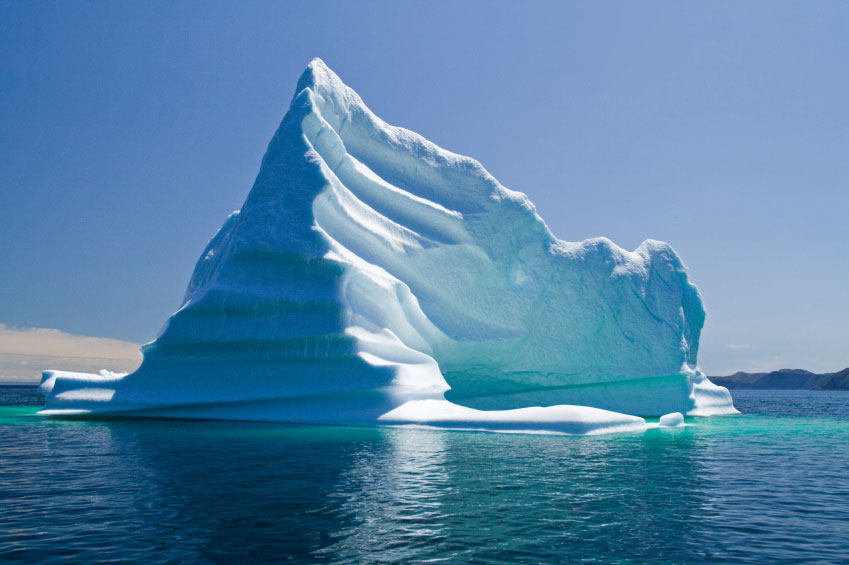
Image of an iceberg
The tip of the Iceberg

https://www.theguardian.com/environment/2023/nov/12/emmanuel-macron-pledges-1bn-to-fund-research-into-melting-ice-caps

The French president has called for action at a climate summit in Paris attended by heads of state and scientists before Cop28

France will spend €1bn (£880m) on polar research between now and 2030, amid rapidly rising scientific concern over the world’s melting ice caps and glaciers.

A new polar science vessel will spearhead the effort, and France is calling for a moratorium on the exploitation of the seabed in polar regions, to which the UK, Canada, Brazil and 19 other countries have so far signed up.

French president Emmanuel Macron told a summit of heads of state and scientists in Paris: “We are not talking about a threat for tomorrow, but one that is already present and accelerating. We are talking about a transformation of the cryosphere [the Earth’s ice] that already threatens millions and will threaten billions of the planet’s inhabitants with multiple direct and indirect consequences.”

The plight of the Earth’s polar regions and glaciers has sparked alarm among many scientists, as heatwaves at both poles, which were seen for the first time last year, look set to be a regular occurrence.

This year is already the hottest on record and probably the hottest in 100,000 years, with ocean temperatures so far above normal as to be, in the words of one scientist, “gobsmackingly bananas”.

They heard from polar and glacier experts that temperatures were rising four times more rapidly in the Arctic than the global average, half the world’s 200,000 glaciers were set to disappear by the end of the century and that the rate of sea level rise had doubled in the last two decades.

Glaciers were melting across the world, warned the head of the World Meteorological Organisation, Petteri Taalas. As they vanish irrecoverably, more than 1 billion people who depend on them for water and agriculture will face increasingly severe shortages. As well as cutting greenhouse gas emissions overall, there are also urgent measures that scientists believe could be taken now that would reduce or delay the risk of the collapse of glaciers or a tipping point at the poles.

https://www.theguardian.com/environment/2023/nov/12/emmanuel-macron-pledges-1bn-to-fund-research-into-melting-ice-caps

Continue ReadingEmmanuel Macron pledges €1bn to fund research into melting ice caps