Original article by Andrew Simms republished from DeSmog
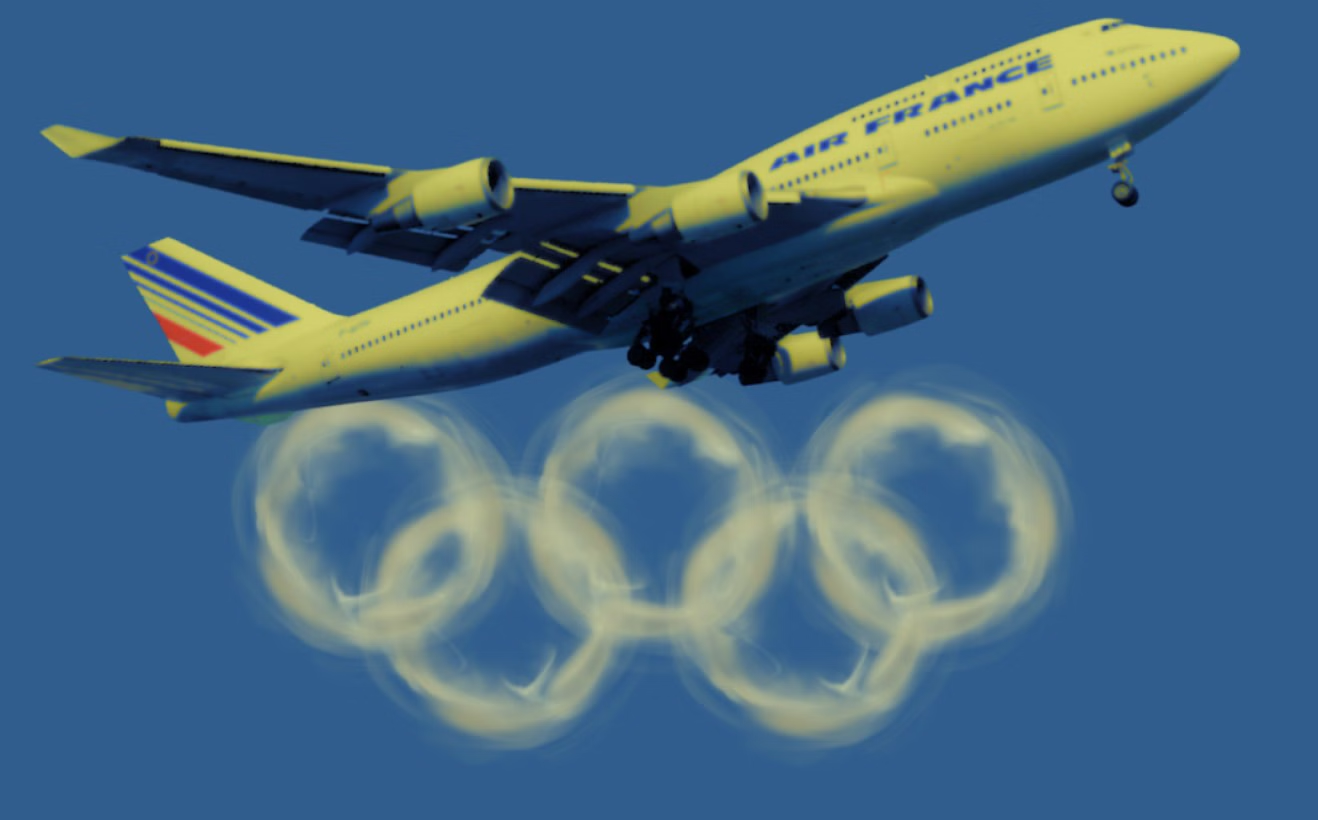
Olympic sponsorship deals with Air France, Toyota and ArcelorMittal will produce more emissions than eight coal plants running for an entire year, a new Badvertising report shows.
At the end of this month, the French capital will host humanity’s biggest and brightest celebrations of sport: the Olympic and Paralympic Games. The hype ahead of these games — the 33rd — is palpable and the organisers have promised to deliver a Games like no other.
Sustainability has been central to this promise. As humanity begins to stare down one of the greatest upheavals of the 21st century — the planetary crises of global heating and ecological catastrophe — the Games are under pressure. Almost every Olympic host nation of the recent era has promised big on environmental action, and every one has fallen short, under-delivering. For all of London’s promises back in 2012, having BP as a sponsor augured badly all along.
The question for Paris is, can it buck the trend and give the world a glimpse of what a mega sports event must look like in the era of breaking planetary ecological boundaries?
Pressure is not just coming from fans and the public. Olympians and Paralympians are increasingly speaking out about the lethal competing conditions that climate breakdown is creating. And the pioneering environmental leadership of Paris Mayor Anne Hidalgo raises expectations on those organising the Games. A major programme of urban greening and traffic reduction is under way thanks to Hidalgo which, earlier this year, also saw Parisians vote to increase charges on SUVs in the city.
But there continues to be the prospect of Olympic smoke rings made from fossil fuels hanging over the organisers’ ambitions to deliver the ‘greenest ever games’: the pervasive presence of polluting sponsors that use the Games to raise their profile, normalise high carbon products and lifestyles with billions of people, while distracting from their complicity in the worsening climate and ecological crises. At the Paris Games, just three of the sponsorship deals, those with Air France, Toyota and steelmaker ArcelorMittal, will produce more pollution than eight coal plants running for an entire year, according to new research from the Badvertising campaign ‘Olympic Smoke Rings’.
Fossil Fuel Playbook
At a larger level the oil-dependent aviation and vehicle industries have used a similar playbook to the fossil fuel companies. They’ve lobbied against climate action, sought to evade responsibility for their own pollution, and when pushed produced plans that are wildly inadequate in the face of the climate action needed. In specific, large-scale examples, some vehicle makers have been caught illegally cheating on emissions, while the aviation industry globally ignores half of its climate impact and has no realistic plans to deal with the other half.
These sectors, and the major companies within them, are responsible for a large part of global heating — and the organisers of the Games make themselves complicit through allowing the Olympics to be used for their promotion.
Historically, the Olympics has taken sponsorship from multiple oil and gas companies, airlines and vehicle makers. Fast forward to the Paris Games and little has changed. Three major polluters at these Games are not only responsible for enough carbon emissions and air pollution to make the eyes water of all the athletes and fans attending, they have also actively lobbied against ambitious climate policy and hoovered up public subsidies on the premise of decarbonisation.
Air France (an entity merged with Dutch airline KLM) continues to lobby against higher taxes or decarbonisation initiatives within the aviation sector. CEO Ben Smith argued that an EU kerosene tax would “have a negative impact on Europe’s air transport sector”. And, Air France-KLM strongly fought the proposed flight cap at the Netherlands’ Schiphol airport and took legal action against the measure.
Toyota boasts annual CO2 emissions higher than most oil and gas companies, and has production plans that will see the company overshoot Paris-aligned emissions targets by as much as 184 percent. Badvertising’s previous report, Dangerous Driving, detailed how Toyota is also ranked amongst the worst car makers globally for action on climate change, has been energetically resisting the move to cleaner, fully electric cars, and been active in lobbying against climate policy in France, the host nation of the next Olympic Games.
The steel giant ArcelorMittal is front and centre at this year’s games. In 2023 ArcelorMittal was responsible for an estimated 114.3 million tonnes of CO2 equivalent — comparable to the annual emissions of the wealthy, industrialised nation of Belgium. ArcelorMittal is producing the iconic Olympic torches for the Paris Games using ‘steel with a reduced carbon footprint’. But despite this glitzy push, ArcelorMittal does not have scientifically-validated CO2 emissions reductions targets in alignment with a 1.5C climate scenario, and continues to rely on coal-based steel production. This, however, did not stop the company from accepting around €3.5 billion in public subsidies to stimulate decarbonisation.
When keeping company like this, it’s hard to believe the Olympics and Paralympics are truly serious about the threat posed by climate breakdown to sport and all those who love it. In fact, researchers from Carbon Market Watch auditing the Paris Games’ sustainability plans noted that the sponsors are a “reflection of the credibility, or otherwise, of the games’ climate commitment” and that “all future games must break from the status quo of associating with polluting companies.”
It is clear that climate and environmental breakdown threaten the very fabric of the Games, where they can be hosted, and how well the athletes can compete at them. The Games see themselves as among the greatest gatherings of the international community. When the Secretary-General of the United Nations, another great global coming together, António Guterres, recently called on governments to ban fossil fuel adverts and phase down demand for polluting products and lifestyles, his vision would certainly have encompassed the Olympic rings. He would not want them to be made from fossil fuel smoke.
The very least the Games can do now, to play their own part in averting climate breakdown, is to cut all ties with polluting sponsors that are undermining the future of the Games and the nations, fans, Olympians and Paralympians that make it the spectacle it is.
Andrew Simms is co-director of the New Weather Institute, co-founder of the Badvertising campaign, the Rapid Transition Alliance and assistant director of Scientists for Global Responsibility. Follow on X @AndrewSimms_uk or Mastodon. @andrewsimms@indieweb.social.
Original article by Andrew Simms republished from DeSmog